Recovery · Reference
Best Peptides for Beginners: Common Starting Points, Explained Neutrally
There is no single best peptide, for beginners or anyone else: the right starting point depends on what you want help with, your history and your other medications, and it is set by a physician after reviewing your intake.
Treatments mentioned
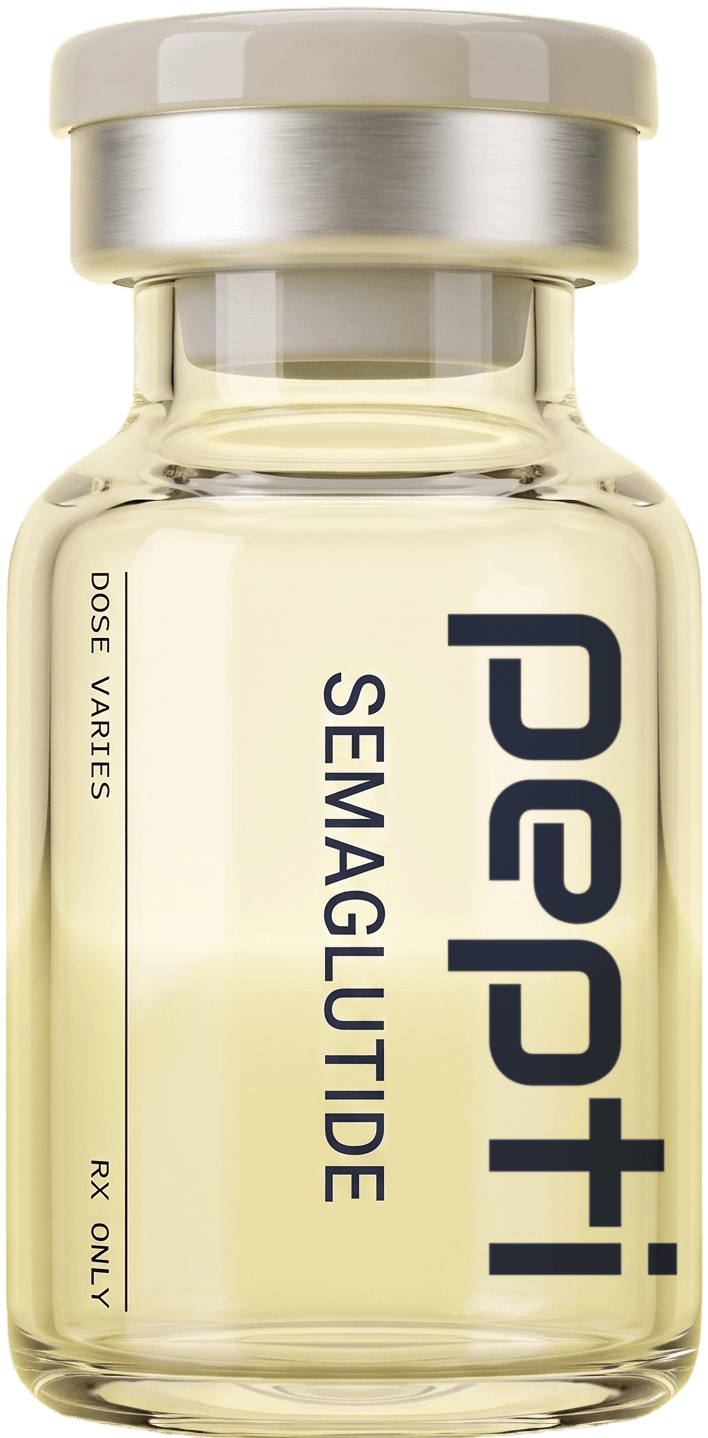
The peptides people most often start with are single agents with simple schedules, such as BPC-157 for recovery questions, GHK-Cu for skin, sermorelin or tesamorelin on the growth hormone axis, NAD+ and MOTS-c for energy and metabolism, and semaglutide or tirzepatide for weight management. The evidence behind them varies enormously, from large human trials for the GLP-1 medications to mostly animal research for several others. The most useful beginner principle is one new prescription at a time, so you can tell what it is doing.
This page gives a neutral overview of common starting points, grouped by the question people bring, with the strength of evidence for each, what a first prescription physically looks like, and the principles that make a first peptide easier to judge. It does not promise results from any of them.
Best Peptides for Beginners
The short answer
| What people ask about | Common single-agent starting point | Evidence, in one line | Price |
|---|---|---|---|
| Weight management | Semaglutide or tirzepatide | Large randomised human trials, for the approved manufactured products | From $99/mo, from $159/mo |
| Soft-tissue recovery | BPC-157 | Mostly animal and cell research; no large human trials | $209/mo |
| Skin | GHK-Cu | Small human studies of topical use; injectable route is animal research | $239/mo |
| Growth hormone axis | Sermorelin | Human endocrine trials, in children and small groups of older adults | $229/mo |
| Visceral fat, growth hormone axis | Tesamorelin | Randomised phase 3 trials in a defined population | $249/mo |
| Energy and cellular metabolism | NAD+ Injection | Most human trials are of oral precursors, not NAD+ itself | $249/mo |
| Metabolism | MOTS-c | Mouse and cell research; no randomised human trials | $259/mo |
| Sleep | DSIP | Small, mixed intravenous studies from 1981 to 1992 | $249/mo |
| Immune support | Thymosin Alpha-1 | Randomised trials in hospital populations | $249/mo |
| Calm and focus | Selank | Small Russian controlled studies | $229/mo |
Every price is all-in, covering medication, physician review, refill management and shipping, with no separate membership fee. GLP-1 prices are "from" prices because each strength is a separate vial. Compounded medications are not FDA approved.
Best Peptides for Beginners
What "best" means here
"Best peptide" is one of the most searched phrases in this category, and the honest answer is that it is the wrong question until the goal is named. A peptide is a short chain of amino acids that acts as a signal, and each one signals something different. A growth hormone releaser, a repair peptide and a GLP-1 medication have nothing in common except their chemistry.
So this page sorts starting points by the question you bring. Within each group, it describes what the peptide is and how strong the evidence is. It does not rank them, because "better" depends on your history, and that is exactly what the intake and the physician review are for.
Best Peptides for Beginners
Common starting points, by question
Weight management: semaglutide and tirzepatide
These are GLP-1 medications. Semaglutide acts on the GLP-1 receptor; tirzepatide acts on both the GLP-1 and GIP receptors. They are once-weekly injections from dose-specific vials, starting at the lowest strength and stepping up, because gastrointestinal side effects track dose increases. They have the strongest evidence base in this catalogue: large randomised trials in obesity, type 2 diabetes and other conditions, run on the approved manufactured products. Compounded versions share the active ingredient, not the trials or the approval. Comparisons are in semaglutide vs tirzepatide and what is a GLP-1.
Soft-tissue recovery: BPC-157
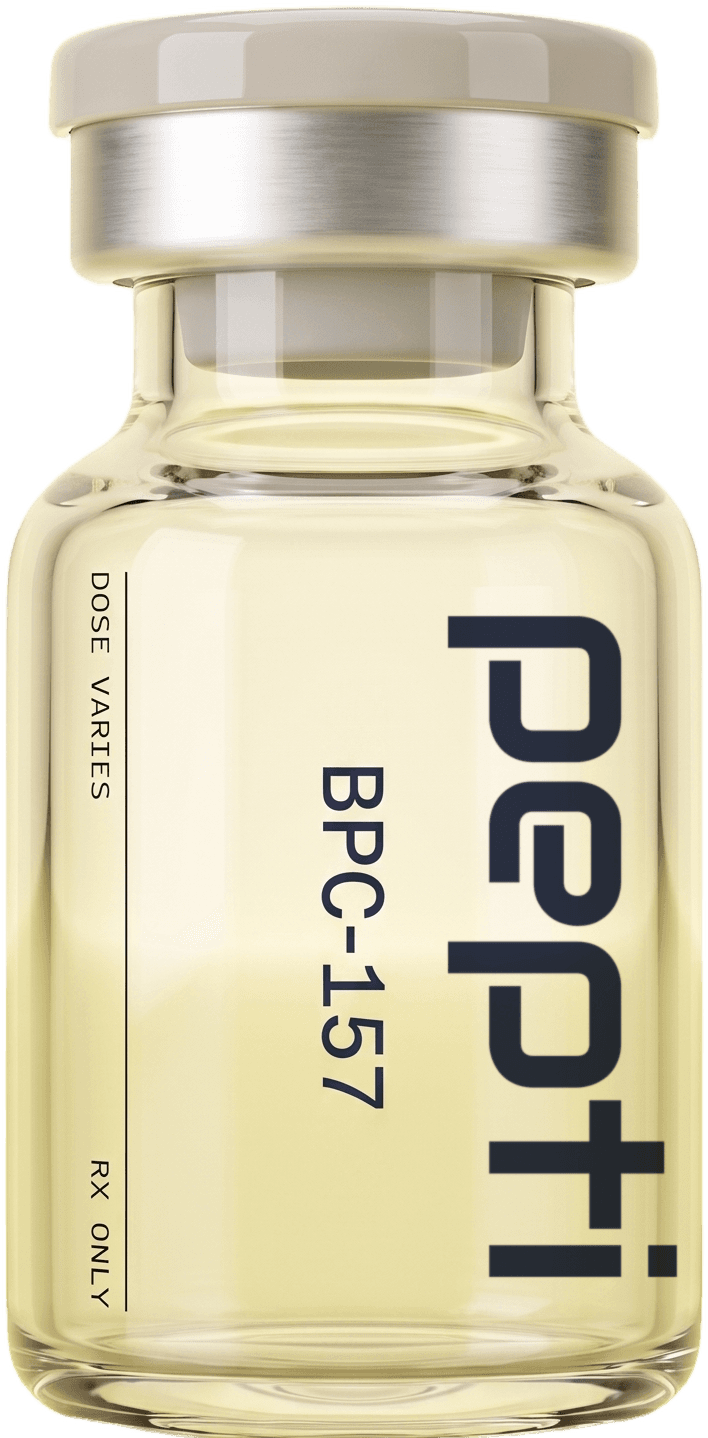
BPC-157 is a 15-amino-acid fragment of a protein from human gastric juice, described in preclinical research around new blood vessel formation and cell migration. There are no large randomised controlled trials of BPC-157 in humans; the tendon and soft-tissue case rests on animal and cell studies plus prescriber experience. The vial is 5 mg in 5 mL, printed as 0.18 mL (18 units) once daily as directed. Where a second repair mechanism is wanted, BPC-157 + TB-500 at $259 a month combines both in one vial. See what is BPC-157 and is BPC-157 safe.
Skin: GHK-Cu
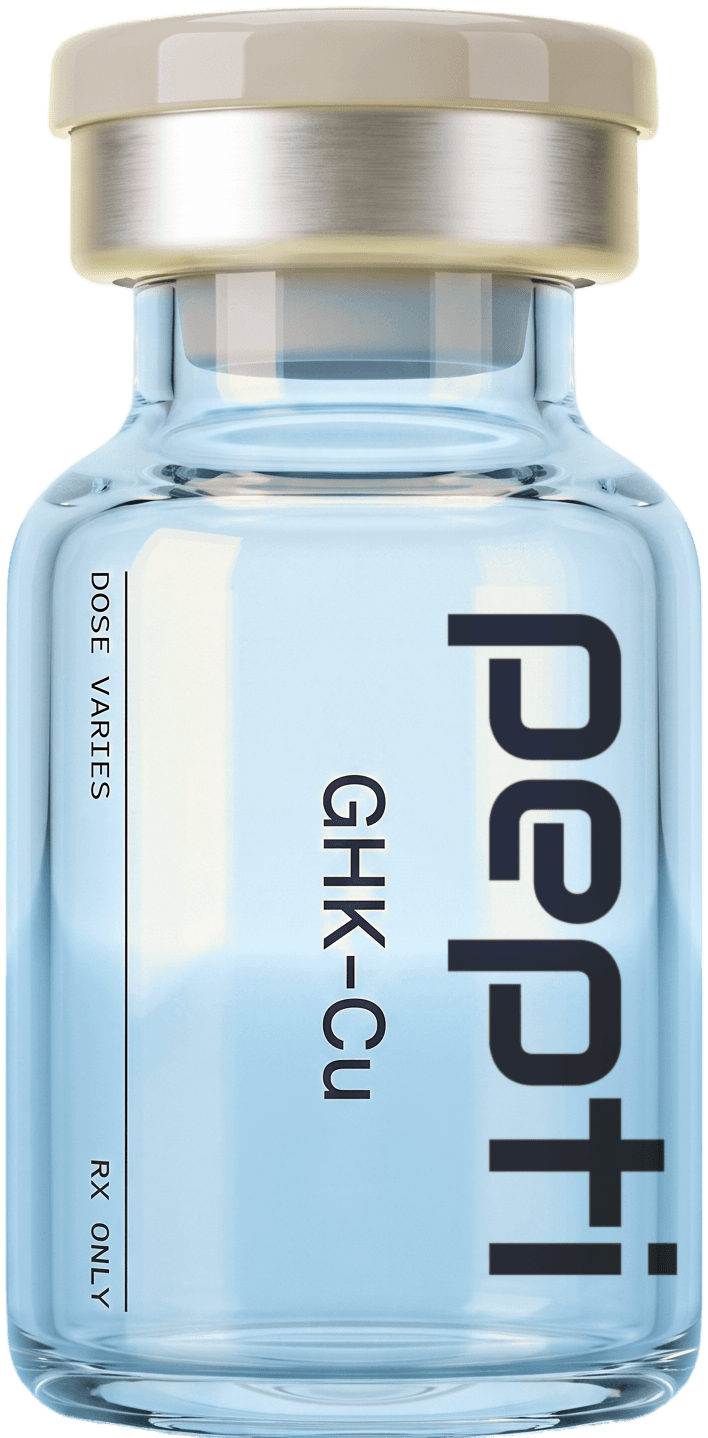
GHK-Cu is a three-amino-acid peptide bound to copper, found naturally in plasma. Its evidence divides by route: topical GHK-Cu has small human studies in skin and wounds, while injectable GHK-Cu has animal data and has not been tested in a human trial. The vial is 50 mg in 5 mL, printed as 0.25 mL (25 units) on weekdays, and it is blue because of the copper. See GHK-Cu benefits and why is GHK-Cu blue.
Growth hormone axis: sermorelin and tesamorelin
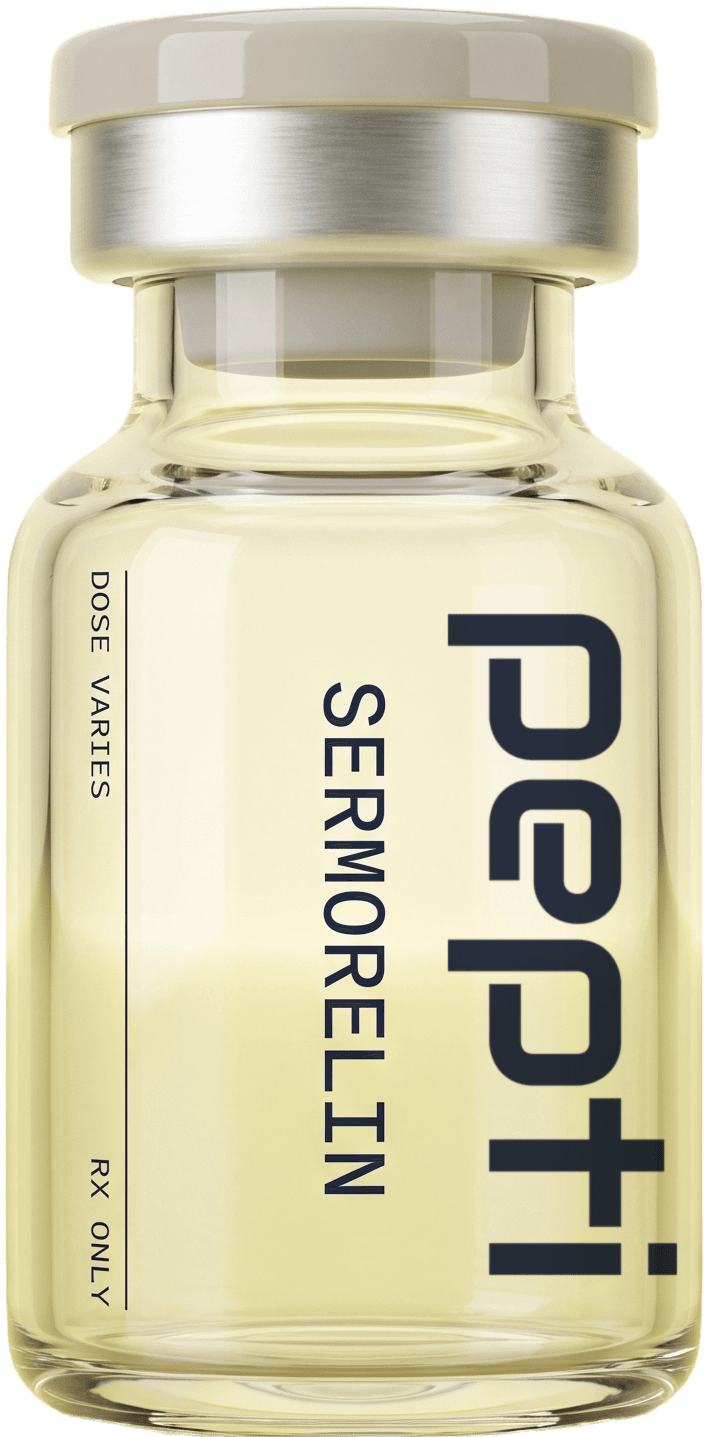
Both are analogues of growth-hormone-releasing hormone that prompt the pituitary to release your own growth hormone. Sermorelin has randomised and controlled human trials, run in children with growth hormone deficiency and in small groups of healthy older adults, with endpoints such as hormone levels rather than body composition or "anti-aging." Tesamorelin has randomised placebo-controlled phase 3 trials in people with HIV and abdominal fat accumulation. Both are printed as weekday night injections. Comparisons are in sermorelin vs tesamorelin vs ipamorelin and CJC-1295 vs sermorelin.
Energy and metabolism: NAD+ and MOTS-c
NAD+ is a coenzyme involved in cellular energy. Most human trial evidence here is about oral precursors such as NMN and NR, not about NAD+ itself, and those trials are mixed. NAD+ Injection is printed as 0.83 mL (83 units) three times per week and commonly stings, so it is injected slowly. MOTS-c is a 16-amino-acid peptide encoded in the mitochondrial genome, described in mouse and cell work; there are no randomised controlled trials of MOTS-c in humans. See NAD+ benefits and MOTS-c benefits.
Sleep, calm and immune questions
DSIP has a cluster of small intravenous studies in chronic insomnia from 1981 to 1992, with mixed results and no randomised trials of the subcutaneous form. Selank has small Russian controlled studies compared against an active drug. Thymosin Alpha-1 has randomised trials in hepatitis B, sepsis and other hospital populations, which say little about a healthy adult. More is in peptides for sleep, peptides for anxiety and mood and peptides for immune support.
Best Peptides for Beginners
Evidence at a glance
| Peptide | Strongest human evidence | What it does not establish |
|---|---|---|
| Semaglutide, tirzepatide | Large randomised trials of the approved products | Anything about a compounded preparation specifically; any individual result |
| Tesamorelin | Phase 3 trials in people with HIV and abdominal fat | Effects outside that population |
| Sermorelin | Endocrine trials in children and older adults | Body composition, recovery or sleep outcomes in adults |
| Thymosin Alpha-1 | Randomised trials in hospital populations | Effects in healthy adults |
| NAD+ | Trials of oral precursors | Effects of injected NAD+ on how you feel |
| Selank, DSIP | Small older controlled studies | Reliable effects in modern trials |
| BPC-157, GHK-Cu injectable, MOTS-c | Animal and cell research | Any effect in people |
That spread is the most important thing a beginner can understand. "Peptide" is not a level of evidence. Some starting points have trial programmes behind them; several have almost none in humans, and an honest provider says so.
Best Peptides for Beginners
Why single agents make sense as a first step
You learn what one thing does
If you start one medication and something changes, good or bad, that change has one plausible cause. Start three in a fortnight and nobody can say which did it. Six weeks on one prescription produces information; six weeks on four produces a story. More is in how do I know if peptides are working.
Simple schedules are easier to keep
Most first prescriptions are one injection on a fixed schedule: weekday mornings, weekday nights, three times a week, or once weekly for the GLP-1s. Almost every vial is sized to last about four weeks, which is why refills run every 28 days, one vial per fill.
When a blend is still a reasonable first prescription
A blend is one prescription, one start date, one set of directions and one thing to stop, so it does not break the one-change rule. Where two mechanisms are wanted from the start, such as BPC-157 with TB-500 or CJC-1295 with ipamorelin, a single vial is often the simpler and cheaper option. Blends are explained in can you take two peptides together and wolverine stack.
Blend What is in it Price BPC-157 + TB-500 5 mg BPC-157 and 5 mg TB-500 in 5 mL $259/mo CJC-1295 / Ipamorelin 6 mg CJC-1295 and 12 mg ipamorelin in 5 mL $239/mo KLOW 50 mg GHK-Cu, 10 mg KPV, 10 mg BPC-157, 10 mg TB-500 in 5 mL $259/mo
Best Peptides for Beginners
What a first prescription looks like
| What arrives | What it means |
|---|---|
| A multi-dose vial of ready-to-use solution | Nothing to mix; see do peptides come pre-mixed |
| Directions printed on the vial in mL and units | You draw to a printed line on a U-100 syringe |
| Sterile syringes and alcohol prep pads | One fresh syringe and fresh pads for every dose |
| Refrigerated shipping with ice packs | The vial goes into the refrigerator on arrival |
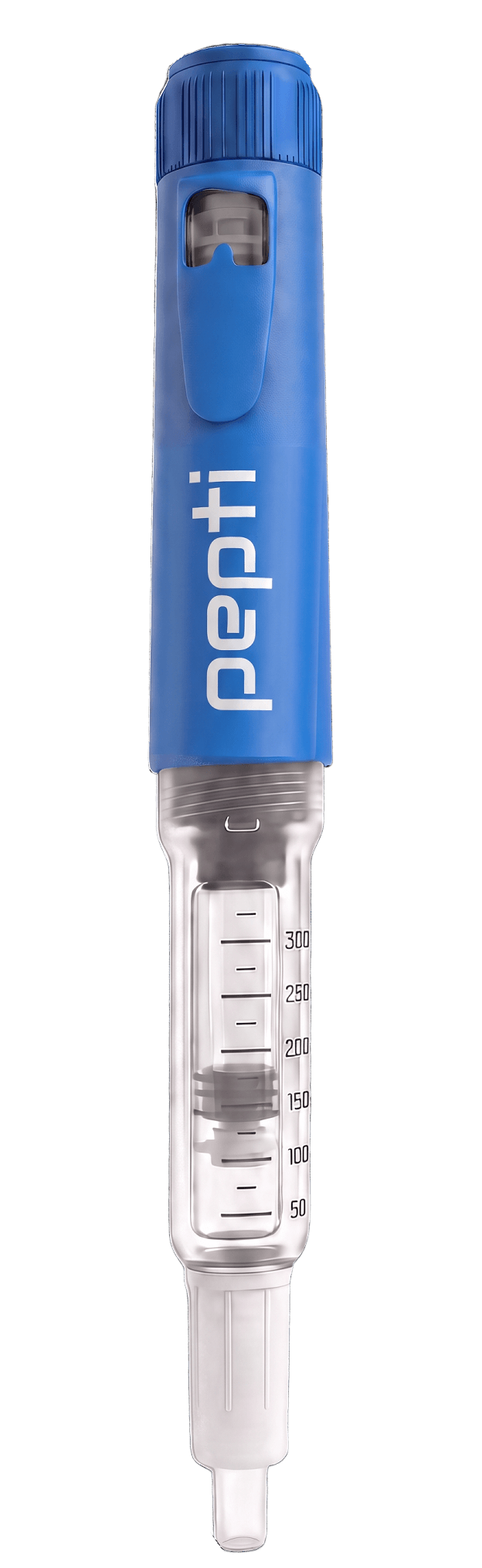
Most peptides are a small subcutaneous injection into the fat layer of the abdomen or thigh, rotated each dose. If you have never injected before, how to inject peptides safely walks through it step by step. Some products also come as a pre-filled pepti Pen cartridge dosed by dial.
Best Peptides for Beginners
Things beginners commonly get wrong
| Mistake | Why it matters |
|---|---|
| Starting several new peptides at once | Nobody can tell what is causing what |
| Buying research-use powder to save money | No prescriber, no pharmacy, no tested concentration; see research peptides vs prescription peptides |
| Reading 0.25 mL as the 2.5 mark | On a U-100 syringe, 0.25 mL is 25 units; a ten-fold error is easy |
| Expecting a timeline | No honest provider can promise when, or whether, you will notice a change |
| Changing the dose on your own | It removes your physician's ability to interpret what happens |
| Leaving out supplements on the intake | Zinc, copper, fish oil and others are pharmacologically active |
Best Peptides for Beginners
Who should talk to a physician before any peptide
| Situation | Why |
|---|---|
| Pregnancy, planning pregnancy or breastfeeding | This rules out essentially the whole category; see can you take peptides while pregnant |
| A personal history of cancer | A discuss-first item for the angiogenic repair peptides and the growth hormone axis |
| Anticoagulant or antiplatelet therapy | A discuss-first item for the vascular-mechanism repair peptides |
| Personal or family history of medullary thyroid carcinoma or MEN 2 | Rules out GLP-1 medications |
| Tested competition | Several peptides are prohibited in sport; see do peptides show up on a drug test |
Best Peptides for Beginners
What the evidence shows, honestly
The GLP-1 medications have the strongest evidence in this list, and that evidence belongs to the approved manufactured products. Tesamorelin, sermorelin and thymosin alpha-1 have real human trial records in defined populations. For BPC-157, GHK-Cu as an injection, MOTS-c and several others, the literature is animal and cell research, and anyone describing them as proven in people is overstating what has been published.
What this means for a beginner is not that only the well-studied peptides are worth considering. It means you should know which kind you are starting, expect honest uncertainty where the evidence is thin, and judge one change at a time. Compounded medications are not FDA approved; see are peptides FDA approved.
Best Peptides for Beginners
Where to get your first peptide prescribed
- Complete a free online intake covering your history, medications and what you want help with.
- A physician licensed in your state reviews it, usually within 24 hours.
- If it is appropriate, a PCAB-accredited, FDA-registered US 503A pharmacy compounds it to that prescription. Lot test results are published at /quality/lab-results.
- It ships refrigerated with ice packs, sterile syringes and alcohol prep pads, with your directions printed on the vial.
- Your physician stays reachable for questions, and refills run every 28 days, one vial per fill.
Pepti is cash-pay and does not bill insurance. Step-by-step pages: semaglutide, tirzepatide, BPC-157, GHK-Cu, sermorelin, tesamorelin, NAD+ and MOTS-c.
References
What this is based on.
References
- Chang CH, Tsai WC, Hsu YH, Pang JH. Pentadecapeptide BPC 157 enhances the growth hormone receptor expression in tendon fibroblasts · Molecules (2014) · PMID 25415472
- Krivic A, Anic T, Seiwerth S, et al.. Achilles detachment of rat and stable gastric pentadecapeptide BPC 157 · Journal of Orthopaedic Research (2006) · PMID 16583442
- Sikiric P, Seiwerth S, Rucman R, et al.. Stable gastric pentadecapeptide BPC 157: novel therapy in gastrointestinal tract · Current Pharmaceutical Design (2011) · PMID 21548867
- Cerovecki T, Bojanic I, Brcic L, Radic B, et al.. Pentadecapeptide BPC 157 (PL 14736) improves ligament healing in the rat · J Orthop Res (2010) · PMID 20225319
- Sikiric P, Seiwerth S, Rucman R, Turkovic B, et al.. Stable gastric pentadecapeptide BPC 157-NO-system relation · Curr Pharm Des (2014) · PMID 23755725
- Cox HD, Miller GD, Eichner D. Detection and in vitro metabolism of the confiscated peptides BPC 157 and MGF R23H · Drug Test Anal (2017) · PMID 28035768
- Thomas A, Görgens C, Guddat S et al.. Simplifying and expanding the screening for peptides <2 kDa by direct urine injection, liquid chromatography, and ion mobility mass spectrometry · J Sep Sci (2016) · PMID 26578461
- Farrar JT, Young JP Jr, LaMoreaux L, Werth JL et al.. Clinical importance of changes in chronic pain intensity measured on an 11-point numerical pain rating scale · Pain (2001) · PMID 11690728
- Meyer JD, Ho B, Manning MC. Effects of conformation on the chemical stability of pharmaceutically relevant polypeptides · Pharm Biotechnol (2002) · PMID 11987755
- Xu C, Sun L, Ren F, Huang P, et al.. Preclinical Safety Evaluation of Body Protective Compound-157, a Potential Drug for Treating Various Wounds · Regul Toxicol Pharmacol (2020) · PMID 32334036
- He L, Feng D, Guo H, et al.. Pharmacokinetics, distribution, metabolism, and excretion of body-protective compound 157, a potential drug for treating various wounds, in rats and dogs · Front Pharmacol (2022) · PMID 36588717
- Lee E, Padgett B. Intra-Articular Injection of BPC 157 for Multiple Types of Knee Pain · Altern Ther Health Med (2021) · PMID 34324435
Citations are provided for educational purposes. They do not constitute medical advice. Always discuss any peptide protocol with your prescribing physician.
Common questions
Best Peptides for Beginners, answered.
There is no single best one. The right starting point depends on what you want help with, your history and your other medications, and a physician sets it after reviewing your intake. Common single-agent starting points include BPC-157, GHK-Cu, sermorelin, tesamorelin, NAD+, MOTS-c and, for weight management, semaglutide or tirzepatide.
"Best" depends on the goal. Semaglutide and tirzepatide have the strongest human evidence in the catalogue; tesamorelin, sermorelin and thymosin alpha-1 have human trials in defined populations; several popular peptides rest mainly on animal research.
Usually one prescription at a time, so you can tell what it does. A blend is still one prescription with one start date, so a single blended vial can be a reasonable first step when two mechanisms are wanted.
The simplest prescriptions are a single vial on a fixed schedule, such as weekday mornings or once weekly. Every Pepti vial arrives ready to use with directions printed in mL and units, so there is nothing to mix.
Safety depends on the specific peptide and your history, not on experience level. The intake asks about pregnancy, cancer history, anticoagulants and other medications for that reason. See peptide side effects: what to watch for.
Most prescription peptides are small subcutaneous injections with an insulin syringe. Some products are also available as a pre-filled pepti Pen cartridge dosed by dial.
At Pepti, single agents start at $209 a month for BPC-157, and GLP-1s start from $99 a month for semaglutide. Each price is all-in, covering medication, physician review, refill management and shipping. See how much do peptides cost.
Nobody can honestly promise a timeline, and some people notice little. Judge one change at a time over the period your care team suggests; see how long do peptides take to work.
Prescription peptides require a physician licensed in your state. Research-use powders sold without one carry no accountability for identity, purity, sterility or concentration; see can you buy peptides without a prescription.
No. Bloodwork is not required for any Pepti treatment. If your physician wants labs for your care, they'll ask through your account. The free assessment goes to a physician licensed in your state. A consultation does not guarantee a prescription.
Related answers
Keep reading.
- Best Time to Take Glutathione: Morning, Night, and What the Directions Say
- Can You Take Peptides Without Needles? Pills, Creams and Why Most Peptides Are Injected
- Do NAD+ Patches Work? What Is and Is Not Known About NAD Patches
- Glutathione for Skin: What the Research Has Looked At, and What It Has Not
- Glutathione Injections: What They Are, How They Are Given, Cost and Where to Get Them
Next step
See what a physician recommends for you.
A licensed physician in your state reviews your intake to see whether treatment fits your history. A consultation does not guarantee a prescription.