— Recovery · Reference
Are Peptides FDA Approved? What Approval Covers and Where Compounded Sits
This page covers what an FDA approval is granted against, which peptide active ingredients have approved products in the United States and which do not, why "FDA-registered pharmacy" is a true statement that says nothing about approval, the section 503A framework that makes a compounded prescription lawful, and where the 503A bulks list stood in September 2026 after the April 2026 category changes and the July 2026 advisory committee votes. Every regulatory fact below was checked against the FDA's own documents in September 2026.
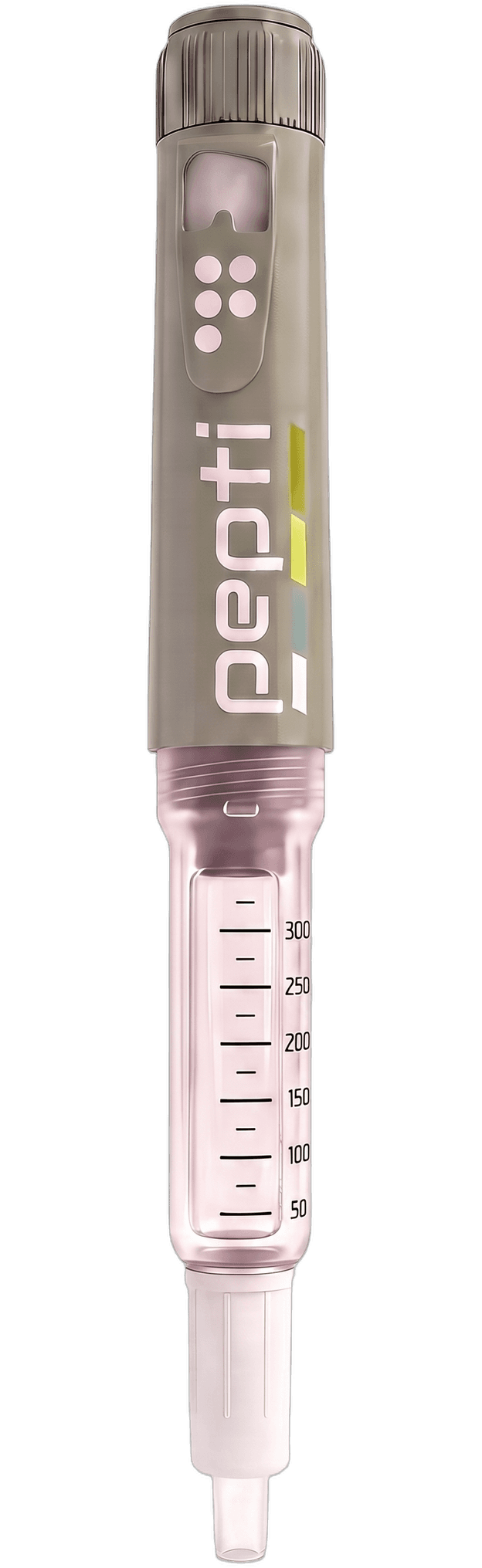
— Treatments mentioned
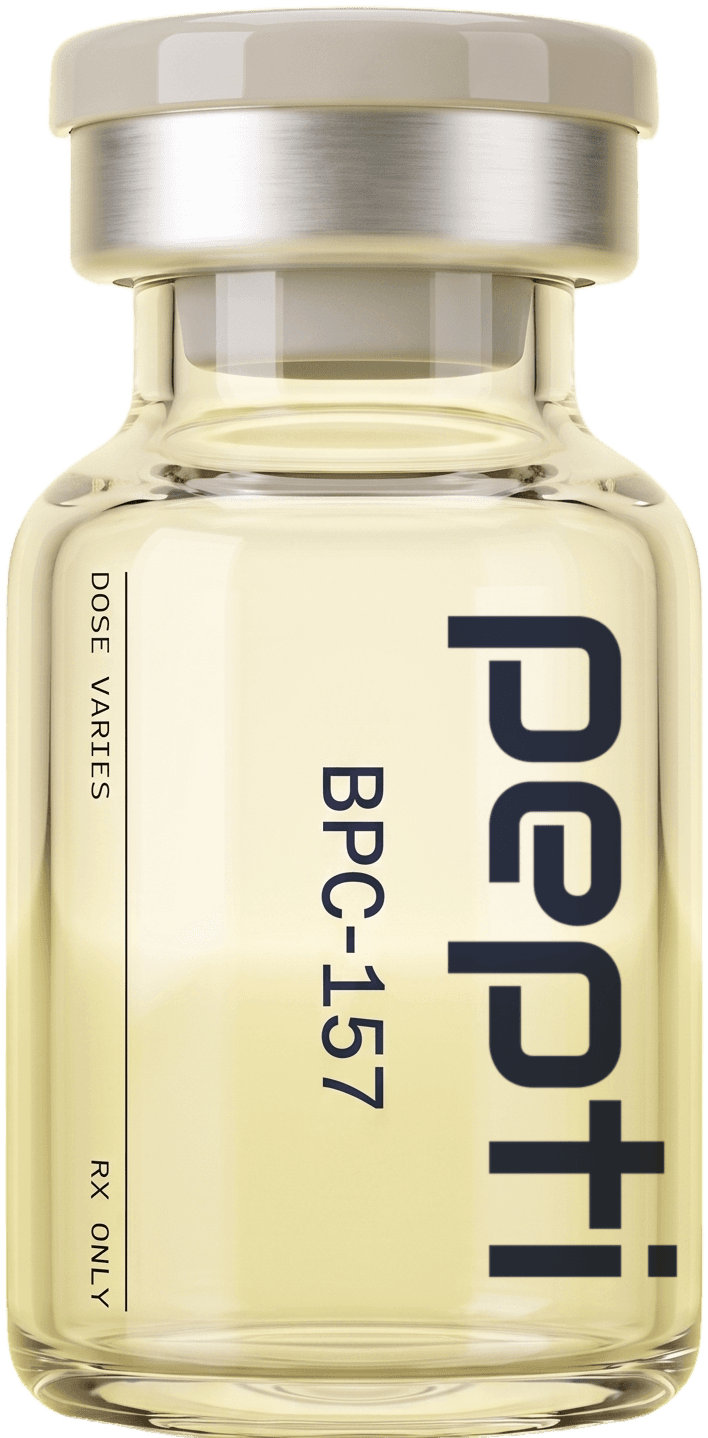
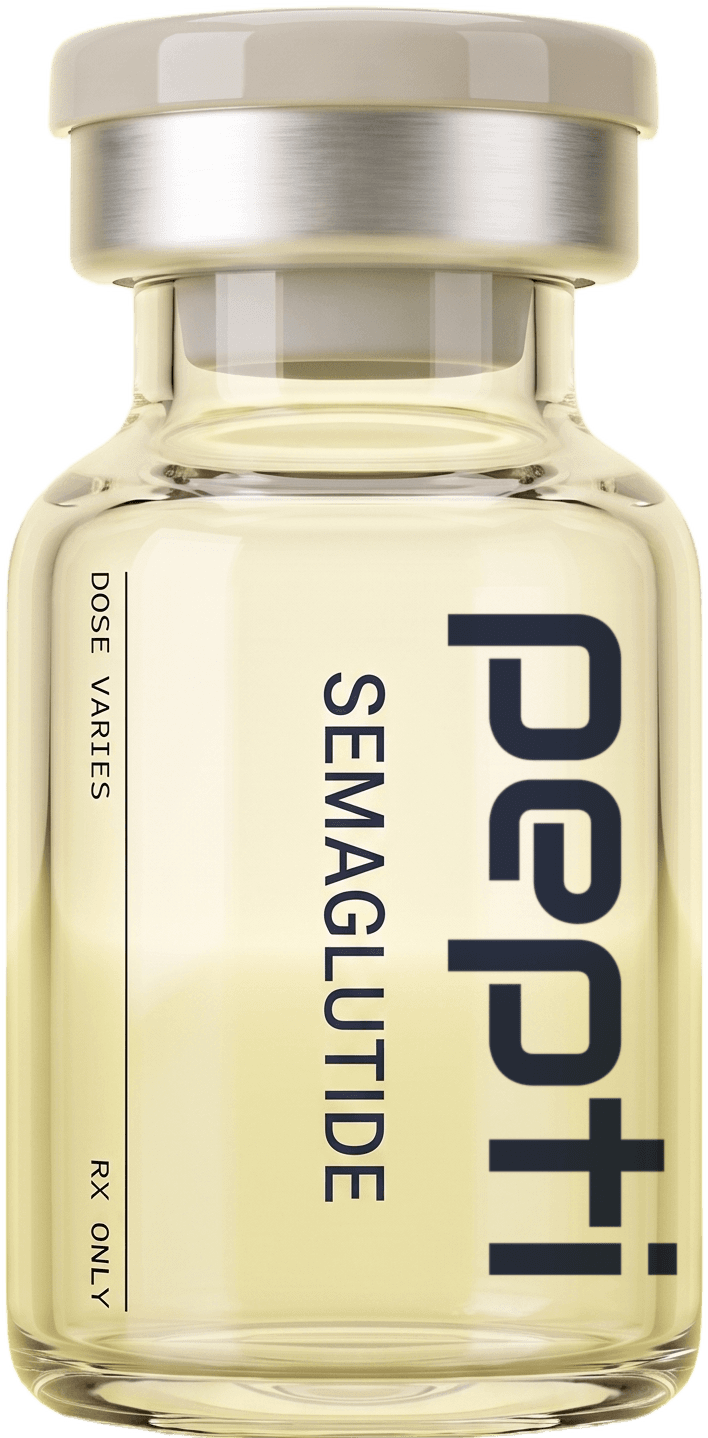
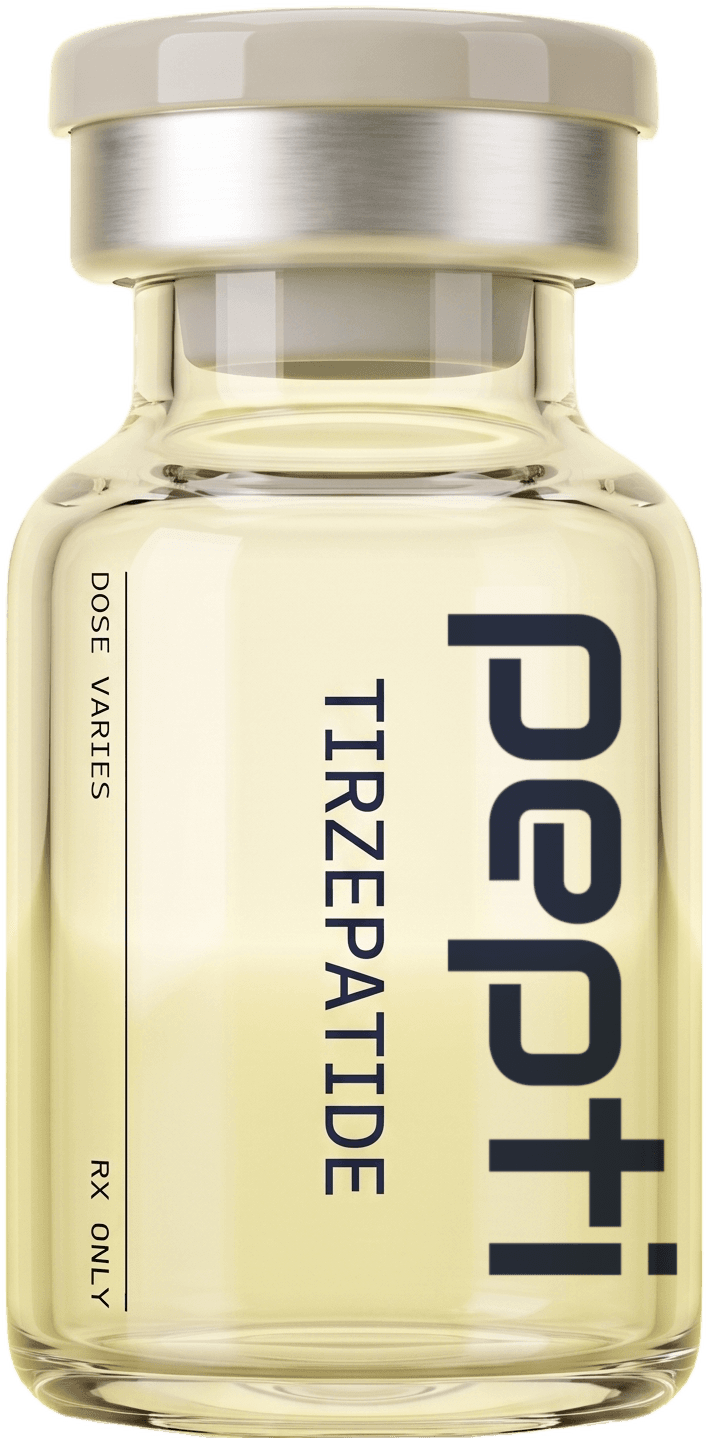
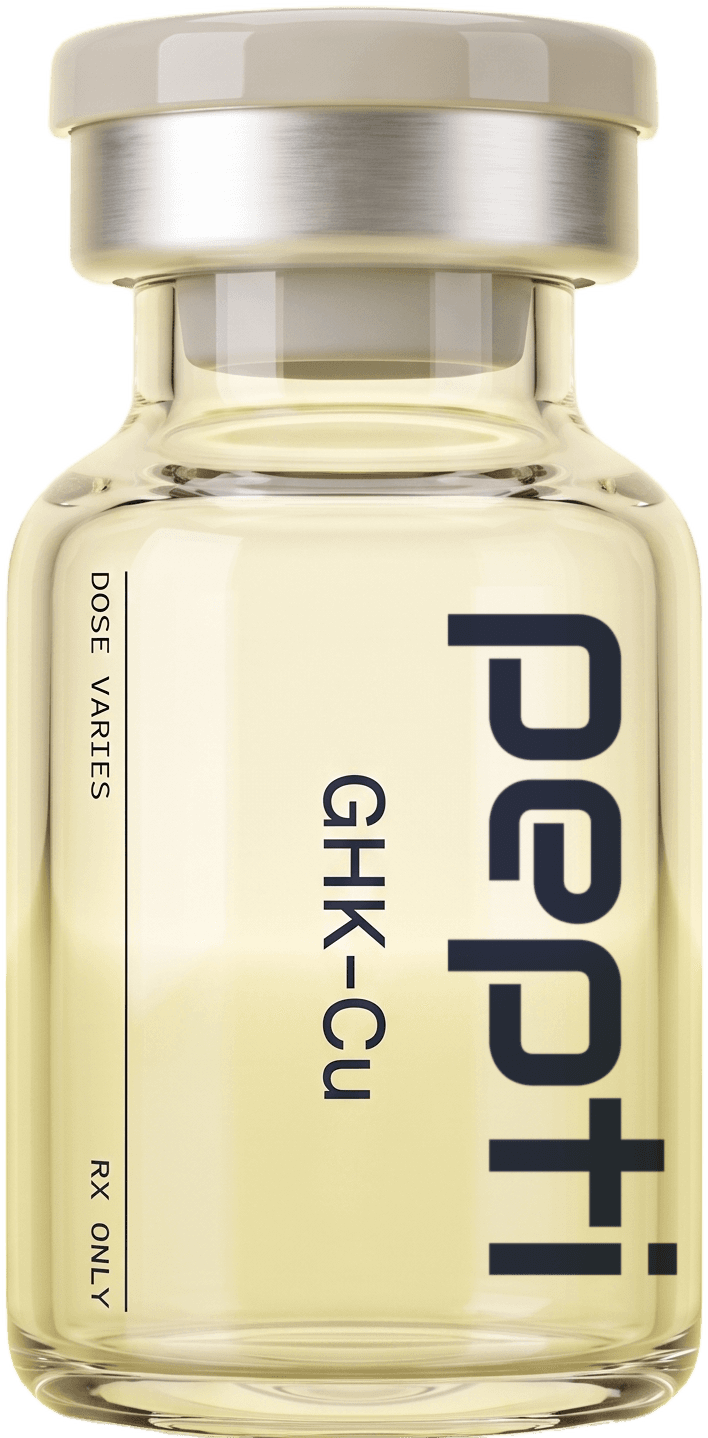
Some peptide medications have FDA-approved products, but no compounded peptide is FDA approved, because approval attaches to a specific product from a specific manufacturer and a preparation made by a pharmacy for one patient has not been through that process. Semaglutide and tirzepatide exist as approved branded medications; the compounded versions are not those products and are not approved. Most of the peptides used in wellness practice, including BPC-157, TB-500, GHK-Cu, ipamorelin and CJC-1295, have no approved product at all and their published evidence is largely preclinical. Not approved is not the same as not legal, and any provider claiming FDA approval for a compounded peptide is either mistaken or misleading you.
This page covers what an FDA approval is granted against, which peptide active ingredients have approved products in the United States and which do not, why "FDA-registered pharmacy" is a true statement that says nothing about approval, the section 503A framework that makes a compounded prescription lawful, and where the 503A bulks list stood in September 2026 after the April 2026 category changes and the July 2026 advisory committee votes. Every regulatory fact below was checked against the FDA's own documents in September 2026.
— Are Peptides FDA Approved? What Approval Covers and Where Compounded Sits
The short answer
| The molecule | Is there an approved product? | What Pepti dispenses | Price a month |
|---|---|---|---|
| Semaglutide | Yes, as branded products from the manufacturer | A compounded preparation, not approved, not the branded medication | $99, dose dependent |
| Tirzepatide | Yes, as branded products from the manufacturer | A compounded preparation with cyanocobalamin, not approved | $159, dose dependent |
| Tesamorelin | Yes, an approved product exists for a specific indication | A compounded preparation, not approved | $249 |
| Sermorelin | An approved product existed historically | A compounded preparation, not approved | $229 |
| Oxytocin, glutathione, methylcobalamin | Approved products exist in other contexts | Compounded preparations, not approved | $239, $199, $229 |
| BPC-157, TB-500, GHK-Cu, KPV | No approved product | Compounded preparations, not approved | $209 to $259 |
| Ipamorelin, CJC-1295, MOTS-c, Semax, Selank, Epithalon | No approved product | Compounded preparations, not approved | $219 to $279 |
Read the second and third columns together. The existence of an approved product for a molecule does not make a compounded preparation of that molecule approved, and it never has.
How to read the table
The second column is a fact about a molecule and a manufacturer: somewhere there is a finished product containing that active ingredient that went through a full review, carries a printed label with indications and warnings, and is made on inspected lines to a filed specification. It tells you nothing about the vial a pharmacy prepares for you, which is what the third column describes. Egrifta and a compounded tesamorelin vial both contain tesamorelin; one has an approval history in Drugs@FDA and the other is a preparation made to a prescription. The molecule is not what gets approved.
— Are Peptides FDA Approved? What Approval Covers and Where Compounded Sits
What FDA approval actually covers
Approval is narrower than most people assume. It attaches to a package of specifics, and change any one of them and you are outside it.
| Approval is granted for | Meaning |
|---|---|
| A specific product | Not a molecule, and not a class of medicines |
| From a specific manufacturer | Made on reviewed facilities to a filed specification |
| At specific strengths and in a specific formulation | A different strength or vehicle is a different product |
| For specific indications | Approved for what the trials studied, not for everything |
| On the basis of submitted trial data | Safety and efficacy demonstrated for that use, in that population |
| With ongoing manufacturing and safety obligations | Inspections, reporting, labelling control |
A compounded preparation matches none of those six. It is made per prescription, for one patient, at a strength a prescriber chose, often in a combination no manufacturer sells. That is the whole point of compounding, and it is also exactly why approval cannot attach to it.
NDA, BLA, and the line peptides sit on
A New Drug Application covers small molecules and most synthetic peptides; a Biologics License Application covers proteins. The dividing line is length: a chain of forty amino acids or fewer is regulated as a drug, a longer chain as a protein. Semaglutide, tirzepatide, bremelanotide and elamipretide are approved under NDAs. Tesamorelin is 44 amino acids, so when the statutory transition took effect its application was reclassified — Drugs@FDA records against application 022505 that "This Former NDA Was Deemed To Be a BLA on March 23, 2020." Tesamorelin is now a licensed biologic. Nothing about the medicine changed; the paperwork moved.
Indication, not benefit
An approval names a condition and a population. Egrifta is approved for reduction of excess abdominal fat in adults with HIV who have lipodystrophy, not for body composition generally. Vyleesi is approved for premenopausal women with acquired, generalised hypoactive sexual desire disorder, not for desire generally. Forzinity is approved to improve muscle strength in patients with Barth syndrome weighing at least 30 kg, not for fatigue generally.
Reading "FDA approved" as "proven to work for what I want" is the commonest misreading in this category, and it is wrong even for the approved products. Approval also does not mean the FDA tested your particular vial, and it does not travel with the molecule into another preparation.
— Are Peptides FDA Approved? What Approval Covers and Where Compounded Sits
Which peptide actives have an approved product
Verified in Drugs@FDA and the openFDA drug application database in September 2026.
— Semaglutide
Semaglutide is the active ingredient of three approved products from Novo Nordisk: Ozempic, approved 5 December 2017 under NDA 209637; Rybelsus, the oral tablet, under NDA 213051 approved 20 September 2019; and Wegovy, NDA 215256, approved 4 June 2021, which has since accumulated more than thirty supplements including a higher-strength presentation in March 2026.
The compounded semaglutide a pharmacy prepares contains the same active ingredient and is not any of those products. It has not been reviewed by the FDA for safety or effectiveness, and it should never be described as the brand under another name.
— Tirzepatide
Tirzepatide has two approved products from Eli Lilly: Mounjaro, NDA 215866, approved 13 May 2022, and Zepbound, NDA 217806, approved 8 November 2023. Same molecule, two names, two sets of indications.
Compounded tirzepatide is prepared with cyanocobalamin in a multi-dose vial. It is not Mounjaro or Zepbound and carries none of their approval. The SURMOUNT and SURPASS trials belong to the branded product; the compounded vial shares the active ingredient, not the trial programme.
— Tesamorelin
Tesamorelin is the active ingredient of Egrifta, application 022505, held by Theratechnologies and originally approved 10 November 2010, with later presentations under the same application, most recently in March 2025. The indication is specific to HIV-associated lipodystrophy, and the randomised trials behind it — in the New England Journal of Medicine in 2007 and pooled in the Journal of Clinical Endocrinology and Metabolism in 2010 — measured visceral adipose tissue in that population. Compounded tesamorelin is a different product at a different concentration, prescribed for reasons the approval does not cover, and it is not FDA approved.
— Bremelanotide
Bremelanotide is approved as Vyleesi, NDA 210557, approved 21 June 2019 and now held by Cosette. It is the same molecule sold in compounding as PT-141. PT-141 is one of the few peptides in this catalogue where the human evidence is a proper randomised programme — the bremelanotide trials in Obstetrics & Gynecology in 2019 and Women's Health in 2016 — and where the active ingredient carries an approval. The approved product is a fixed-dose autoinjector; the compounded PT-141 vial is a different strength and presentation with physician-set directions, and it is not approved.
— Elamipretide
Elamipretide received accelerated approval on 19 September 2025 as Forzinity, NDA 215244, from Stealth BioTherapeutics, for Barth syndrome. Accelerated approval means the agency accepted an intermediate endpoint on condition that a confirmatory trial is completed. The compounded SS-31 vial is not Forzinity: a different concentration prepared to an individual prescription, and not approved. What the 2025 approval changed is the compounding pathway rather than the approval status, for the reason set out below.
— Sermorelin
Sermorelin is the only peptide here whose approval is in the past tense. As Geref it was approved twice: the diagnostic presentation under NDA 019863 on 28 December 1990, and the treatment presentation for idiopathic growth hormone deficiency in children in 1997. Drugs@FDA lists NDA 019863 as discontinued. EMD Serono discontinued both in 2008, and in March 2013 the FDA published a determination in the Federal Register that Geref had not been withdrawn from sale for reasons of safety or effectiveness.
So the accurate sentence about sermorelin is "was the active ingredient of an FDA-approved drug, discontinued in 2008 for commercial reasons" — never "FDA approved." There is no currently marketed approved sermorelin product in the United States, and the compounded vial is not one.
— Oxytocin, and the injectable supplements
Oxytocin has approved injectable products, including Pitocin under NDA 018261 approved in 1980, all for obstetric use by intravenous or intramuscular route. Compounded oxytocin for the uses discussed on this site is a different product, route and purpose, and is not approved.
Glutathione, methylcobalamin, NAD and acetyl-L-carnitine sit differently again. None is approved as a finished injectable for the uses in question; all four appear in Category 1 of the FDA's 503A bulk drug substances list dated 14 May 2026, the category of substances under evaluation. That is a compounding permission, not an approval, and it is worth saying plainly because Category 1 is sometimes marketed as though it were one.
— The peptides with no approved product at all
BPC-157, TB-500, KPV, GHK-Cu, MOTS-c, Semax, Selank, epithalon, ipamorelin, CJC-1295, AOD-9604, thymosin alpha-1, dihexa, melanotan II and the rest of the catalogue have no approved product anywhere in the United States. The FDA's briefing document for the July 2026 advisory committee meeting states that BPC-157 is not the subject of an approved application, has no USP or NF monograph, and is not a component of an approved drug.
For these the honest framing is mechanism plus prescriber experience, not proof of outcome. The evidence for BPC-157 is a large animal and cell literature — the Journal of Orthopaedic Research in 2006 on Achilles tendon detachment in rats, Current Pharmaceutical Design in 2011 on the gastrointestinal work — with no large randomised human trials. Saying so is not a criticism of BPC-157; it is the difference between a reference and a sales page.
— Are Peptides FDA Approved? What Approval Covers and Where Compounded Sits
Registration is not approval, and three other words worth separating
This is where most misleading marketing lives.
| Term | What it actually means | What it does not mean |
|---|---|---|
| FDA approved | A specific product passed the approval process for stated indications | Nothing about a compounded preparation |
| FDA registered | A facility is registered with the FDA and subject to its inspection authority | That any product it makes is approved |
| Pharmaceutical grade | An informal marketing phrase with no regulatory definition | Any verified standard |
| Clinically proven | Vague; ask which trial, in whom, measuring what | That evidence exists for this preparation |
Pepti's true statement is that medications are compounded at a US FDA-registered pharmacy, prescribed by a physician licensed in your state, and that compounded medications are not FDA approved. Those two facts sit together without contradiction.
The regulation that says so in as many words
Under 21 CFR 207.77, "Registration of an establishment or listing of a drug does not denote approval of the establishment, the drug, or other drugs of the establishment," and "any representation that creates an impression of official approval or that a drug is approved or is legally marketable because of registration or listing is misleading and constitutes misbranding." Displaying a registration number or an NDC to imply approval is named in the same section.
Registration is still not nothing. It puts the facility in the FDA's establishment inventory and subjects it to the agency's inspection authority. Alongside state board licensure and inspection, that is the oversight a compounded medication actually has — real, and different in kind from approval. The agency's own compounding page is blunt about the difference: "Compounded drugs are not FDA-approved. This means that FDA does not verify the safety, effectiveness or quality of compounded drugs before they are marketed."
The two other words
"Pharmaceutical grade" has no regulatory definition for a bulk substance. What exists is documentary: a certificate of analysis for the active ingredient, compendial standards for the finished preparation, and third-party testing. Pepti publishes the ones it holds at lab results, and its sourcing standards at quality. "Clinically proven" can always be interrogated — which trial, in whom, measuring what, against what comparator — and for most peptides in this catalogue the honest answer is that the trial does not exist.
— Are Peptides FDA Approved? What Approval Covers and Where Compounded Sits
Why compounding exists at all, and what oversees it
Compounding is not a workaround. It exists because manufactured products do not cover every clinical need: a strength nobody makes, a combination that is not sold commercially, a formulation a patient needs for a specific reason such as an excipient they react to.
The oversight is real but different in kind from approval:
- A pharmacy is licensed and inspected by a state board of pharmacy.
- Sterile preparations are made to compendial standards for sterile compounding.
- The pharmacy is registered with the FDA and subject to its inspection authority.
- A physician licensed in your state must have written the prescription.
- What may be compounded is limited by the bulk drug substance rules, which is why menus change.
That framework is set out in what is a 503A compounding pharmacy, and the legality question separately in are peptides legal in the US.
— The statute, and its three conditions on an ingredient
Section 503A of the Federal Food, Drug, and Cosmetic Act exempts a compounded drug from the approval requirement and from the manufacturing rules that go with it. In exchange it imposes conditions, the first of which is about the bulk substance: a pharmacy may compound with a substance that complies with an applicable United States Pharmacopeia or National Formulary monograph, or that is a component of a drug approved by the Secretary, or that appears on a list developed by the Secretary through regulations. Three routes, and a substance needs only one.
This is why elamipretide and bremelanotide sit comfortably and BPC-157 does not. Since September 2025 elamipretide has been a component of an approved drug, satisfying the second route on its own; bremelanotide has been since 2019. BPC-157 satisfies none of the three, which is why the bulks list matters so much for it.
— The prescription condition
The statute requires compounding "for an identified individual patient based on the receipt of a valid prescription order" from a licensed prescriber, by a licensed pharmacist in a state-licensed pharmacy or by a licensed physician. There is no lawful retail route. Whatever the FDA eventually lists, a listing is permission for a licensed pharmacy to compound pursuant to a prescription — never permission to sell a peptide over a counter. The contrast with vials sold as research chemicals is covered in research peptides vs prescription peptides.
— The "essentially a copy" condition
The third condition governs every peptide with an approved counterpart. A pharmacy may not compound regularly or in inordinate amounts any drug product that is essentially a copy of a commercially available drug product. The FDA's guidance treats a compounded drug as not a copy where the prescriber determines that a change — a different strength, dosage form or route — produces a significant difference for that identified patient, and documents it on the prescription.
That is the framework under which compounded semaglutide, tirzepatide, tesamorelin, PT-141 and SS-31 are prescribed today. It puts the decision where it belongs: with a physician who has to write down why. None of the three conditions turns a compounded preparation into an approved product; they determine whether compounding it is lawful. Approval and lawfulness are separate axes, and most of the confusion in this category comes from collapsing them into one.
— Are Peptides FDA Approved? What Approval Covers and Where Compounded Sits
The 503A bulks list, and what changed in 2026
This is the part that has moved most, and most of what is published online about it is a year or more out of date.
— How the categories work
While the FDA works through nominations for the 503A bulks list, it sorts substances into three interim categories. Category 1 is "Bulk Drug Substances Under Evaluation," and the agency has said it does not intend to act against compounding with them while evaluation proceeds. Category 2 is "Bulk Drug Substances that Raise Significant Safety Concerns." Category 3 is "Bulk Drug Substances Nominated Without Adequate Support."
None of the three is an approval. Category 1 is the most favourable position a nominated substance can hold, and it still means only that the FDA is evaluating it.
— What the current list actually says
The live list is dated 14 May 2026. Category 1 includes glutathione, methylcobalamin, nicotinamide adenine dinucleotide, acetyl-L-carnitine, vasoactive intestinal peptide and "GHK-Cu (except for injectable routes of administration)." Category 2 contains six entries in total: cesium chloride, domperidone, germanium sesquioxide, ibutamoren mesylate, kisspeptin-10, and quinacrine hydrochloride for intrauterine administration. Category 3 includes GHRP-2, GHRP-6, cibinetide (ARA-290) and pegylated mechano growth factor.
Read that Category 2 list again. BPC-157 is not on it. TB-500 is not on it. KPV, MOTS-c, Semax, epithalon and GHK-Cu are not on it. A page still describing those peptides as Category 2 substances is describing 2023.
— What changed on 15 April 2026
In September 2023 the FDA had placed a group of peptides in Category 2. On 15 April 2026 the agency announced it would remove twelve peptide bulk drug substances from Category 2, effective about a week later, and would instead take them to its Pharmacy Compounding Advisory Committee. The FDA's safety-risk page, last updated 22 April 2026, now lists BPC-157, TB-500 (thymosin beta-4), KPV, MOTS-c, epitalon, Semax, Selank, CJC-1295, ipamorelin acetate, AOD-9604, GHK-Cu, dihexa acetate, cathelicidin LL-37, melanotan II, thymosin alpha-1 and emideltide among substances previously nominated and since withdrawn from that designation. Removal did not put any of them on the bulks list or into Category 1; it moved them out of the "significant safety risk" designation and into formal evaluation.
— What the advisory committee did on 23–24 July 2026
The committee met over two days. On 23 July it considered BPC-157, KPV, TB-500 and MOTS-c; on 24 July it considered emideltide — the FDA's name for delta sleep-inducing peptide — Semax and epitalon.
Six of the seven were recommended for inclusion on the 503A bulks list. The recorded votes were 8 in favour to 6 against with one abstention for BPC-157, KPV and TB-500; 7 to 5 with two abstentions for MOTS-c; 8 to 5 with one abstention for Semax; and 7 to 4 with one abstention for epitalon. Emideltide was the exception, at 6 in favour to 7 against with one abstention.
— What an advisory vote does and does not mean
It is a recommendation, not a listing. The FDA's own briefing materials state that the agency "will not issue a final determination on the issues at hand until input from the advisory committee process has been considered and all reviews have been finalized." Adding a substance to the 503A bulks list is done by notice-and-comment rulemaking, which follows the vote and takes its own time.
So the accurate description of BPC-157, TB-500, KPV, MOTS-c, Semax and epithalon in September 2026 is: no longer flagged for significant safety risk, recommended by the advisory committee, awaiting the FDA's final determination through rulemaking. None of them is an FDA-approved drug product, and none will become one by being listed.
— What is scheduled next, and the GHK-Cu wrinkle
The FDA has said it will consult the advisory committee again before the end of February 2027 on five further peptides: GHK-Cu, melanotan II, cathelicidin LL-37, dihexa acetate and pegylated mechano growth factor.
GHK-Cu is the entry whose wording repays close reading. It was removed from Category 1 on 22 April 2026 because its nominations were withdrawn; on 5 May 2026 one nominator clarified it had meant to withdraw only the injectable route, so the FDA added "GHK-Cu (except for injectable routes of administration)" back to Category 1 and stated its intention to consult the committee before the end of February 2027. Injectable GHK-Cu is therefore not in Category 1, not in Category 2, and not on the bulks list, with review scheduled. Nobody should describe it as approved, and nobody should describe it as banned.
— Kisspeptin-10, the one still in Category 2
Honesty requires naming the exception. Kisspeptin-10 remains in Category 2 on the current list. It was placed there in September 2023, reviewed by the advisory committee on 29 October 2024 for the nominated use of secondary hypogonadism in men, and voted against 0 to 11. It was not among the twelve peptides moved out of Category 2 in April 2026 and was not on the July 2026 agenda. The kisspeptin product page carries that status in full, and your physician is the person to discuss it with.
— Are Peptides FDA Approved? What Approval Covers and Where Compounded Sits
Where the GLP-1 medications sit
Semaglutide and tirzepatide are the two peptides most people are actually asking about, and their compounding story is different from the bulks list story above.
— Why they never needed the bulks list
Both are components of approved drug products, so they satisfy the second of the three statutory routes on their own. Neither appears in any category of the 14 May 2026 list. The constraint that applies to them is the "essentially a copy" rule, not the bulks list.
— The shortage years, and how they ended
Semaglutide and tirzepatide both spent years on the FDA drug shortage list, and a drug in shortage may be compounded even where it would otherwise be an essential copy. The FDA declared the tirzepatide shortage resolved in late 2024 and the semaglutide shortage resolved on 21 February 2025, with wind-down periods running to 22 April 2025 for 503A pharmacies and 22 May 2025 for 503B outsourcing facilities. Shortage-based compounding is over. What remains is the ordinary patient-specific 503A route, where a prescriber determines and documents that the compounded preparation differs from the commercial product in a way that matters for that patient.
— The 503B proposal, and why it is a different list
On 30 April 2026 the FDA proposed to exclude semaglutide, tirzepatide and liraglutide from the 503B bulks list, stating it had not identified a clinical need for outsourcing facilities to compound them from bulk substances. That is a proposal on a different list governing a different kind of facility: 503B outsourcing facilities make large batches without patient-specific prescriptions. It does not by itself change the 503A framework under which a pharmacy compounds a named patient's vial on a physician's prescription.
Whatever happens to it, compounded semaglutide and compounded tirzepatide remain what they are today: not FDA approved, not the branded medications, and prescribable only through a physician. The safety questions specific to the compounded preparation are in is compounded semaglutide safe.
— Are Peptides FDA Approved? What Approval Covers and Where Compounded Sits
What the evidence shows, honestly
Evidence quality varies enormously across this catalogue, and lumping it together is the commonest dishonesty in the category.
| Evidence level | Which molecules | What exists |
|---|---|---|
| Large randomised human trials | Semaglutide, tirzepatide | Substantial trial programmes and wide clinical use, for the branded products |
| Approved product for a narrow indication | Tesamorelin | Trial evidence for the studied indication, not for general wellness use |
| Human data, limited for injectable use | GHK-Cu | The deepest literature of the repair peptides, much of it dermatological |
| Mechanism plus clinical experience | Sermorelin, ipamorelin, CJC-1295 | Well-described physiology, no large outcome trials in wellness populations |
| Preclinical only | BPC-157, TB-500, KPV, MOTS-c, Epithalon and most others | Animal and cell studies, no large randomised human trials |
For the bottom two rows, the honest framing is that these are used on the strength of mechanism and prescriber experience, not on proof of outcome. Response varies between people and nobody can promise you a result.
The practical test of a provider is its language. A company that writes "FDA approved" beside a compounded peptide has told you it either does not understand the distinction or is counting on you not to. A company that writes "not FDA approved" on its own sales pages is doing the harder, more useful thing.
Approval status and evidence quality are two different axes
They diverge in both directions. Sermorelin has randomised human trials from its Geref years — the Geref International Study Group trial in the Journal of Clinical Endocrinology and Metabolism in 1996, and the older-adult work by Khorram and colleagues in the same journal in 1997 — and no current approval. BPC-157 has neither an approval nor a randomised human trial. PT-141 has both. Tesamorelin has trial evidence for one population and none for the use most people want it for. "Is it approved?" and "does the evidence support it?" are two questions, and a good provider answers both separately.
— Are Peptides FDA Approved? What Approval Covers and Where Compounded Sits
How to test a provider's language
Ask which specific product they say is approved, by which manufacturer, under which application number, and for which indication. An approved product has all four, and the numbers are public in Drugs@FDA. A compounded peptide has none, and the question usually ends the claim.
Sentences that are true, and sentences that are not
True and checkable: "compounded at a US FDA-registered pharmacy"; "prescribed by a physician licensed in your state"; "not FDA approved as a finished drug product"; "the active ingredient is a component of an FDA-approved drug."
Not: "FDA approved" beside a compounded peptide; "FDA registered, so it's approved"; "pharmaceutical grade, which means it meets FDA standards"; "clinically proven" with no trial named. The first two are what 21 CFR 207.77 addresses directly. If a provider's language fails these tests, the peptide is not the problem — the provider is.
— Are Peptides FDA Approved? What Approval Covers and Where Compounded Sits
What this means for your prescription
Whether a peptide is right for you is a clinical question, not a regulatory one. The regulatory position tells you what may be compounded and how it must be prescribed. It does not tell you whether your symptom should be imaged rather than injected, whether your medication list creates a problem, or whether the thing you want treated is the thing you have. What a prescriber will want to know beforehand is in how to talk to your doctor about peptides.
Monitoring, bloodwork and refills
Some products have an ordinary monitoring rhythm regardless of approval status. Growth-hormone-axis medications such as sermorelin, tesamorelin and ipamorelin are commonly prescribed with IGF-1 checked before starting and again during treatment. Metabolic medications such as semaglutide and tirzepatide usually have baseline labs. At-home blood testing is how that gets done, and your physician decides what is required. Prescriptions here are supplied on 28-day refills and prescribers generally treat these medications as long-term where they are appropriate at all; whether a refill continues is a clinical decision, separate from anything on this page.
— References
What this is based on.
References
- Chang CH, Tsai WC, Hsu YH, Pang JH. Pentadecapeptide BPC 157 enhances the growth hormone receptor expression in tendon fibroblasts · Molecules (2014) · PMID 25415472
- Krivic A, Anic T, Seiwerth S, et al.. Achilles detachment of rat and stable gastric pentadecapeptide BPC 157 · Journal of Orthopaedic Research (2006) · PMID 16583442
- Sikiric P, Seiwerth S, Rucman R, et al.. Stable gastric pentadecapeptide BPC 157: novel therapy in gastrointestinal tract · Current Pharmaceutical Design (2011) · PMID 21548867
- Cerovecki T, Bojanic I, Brcic L, Radic B, et al.. Pentadecapeptide BPC 157 (PL 14736) improves ligament healing in the rat · J Orthop Res (2010) · PMID 20225319
- Sikiric P, Seiwerth S, Rucman R, Turkovic B, et al.. Stable gastric pentadecapeptide BPC 157-NO-system relation · Curr Pharm Des (2014) · PMID 23755725
- Cox HD, Miller GD, Eichner D. Detection and in vitro metabolism of the confiscated peptides BPC 157 and MGF R23H · Drug Test Anal (2017) · PMID 28035768
- Thomas A, Görgens C, Guddat S et al.. Simplifying and expanding the screening for peptides <2 kDa by direct urine injection, liquid chromatography, and ion mobility mass spectrometry · J Sep Sci (2016) · PMID 26578461
- Farrar JT, Young JP Jr, LaMoreaux L, Werth JL et al.. Clinical importance of changes in chronic pain intensity measured on an 11-point numerical pain rating scale · Pain (2001) · PMID 11690728
- Meyer JD, Ho B, Manning MC. Effects of conformation on the chemical stability of pharmaceutically relevant polypeptides · Pharm Biotechnol (2002) · PMID 11987755
- Xu C, Sun L, Ren F, Huang P, et al.. Preclinical Safety Evaluation of Body Protective Compound-157, a Potential Drug for Treating Various Wounds · Regul Toxicol Pharmacol (2020) · PMID 32334036
- He L, Feng D, Guo H, et al.. Pharmacokinetics, distribution, metabolism, and excretion of body-protective compound 157, a potential drug for treating various wounds, in rats and dogs · Front Pharmacol (2022) · PMID 36588717
- Lee E, Padgett B. Intra-Articular Injection of BPC 157 for Multiple Types of Knee Pain · Altern Ther Health Med (2021) · PMID 34324435
Citations are provided for educational purposes. They do not constitute medical advice. Always discuss any peptide protocol with your prescribing physician.
— Common questions
Are Peptides FDA Approved? What Approval Covers and Where Compounded Sits, answered.
No. There is no FDA-approved BPC-157 product, and the FDA's own briefing document for the July 2026 advisory committee meeting states that BPC-157 is not the subject of an approved application, has no USP or NF monograph, and is not a component of an approved drug. It is prescribed as a compounded preparation where the substance qualifies under the compounding rules, and its published evidence is preclinical. As of September 2026 BPC-157 is no longer in Category 2 of the 503A list, and the advisory committee voted 8 to 6 with one abstention to recommend it for the bulks list — a recommendation, not a listing, and not an approval. BPC-157 is $209 a month all-in.
No. The branded semaglutide products are approved; a compounded preparation of the same active ingredient is a different product and is not approved. It is also not the branded medication under another name, and it should never be described as one. Shortage-based compounding ended in 2025, so what remains is patient-specific 503A compounding on a physician's documented determination. See is compounded semaglutide safe.
Yes, when a physician licensed in your state prescribes it and a licensed pharmacy compounds it. Approval and legality are separate questions, and conflating them is how both marketers and critics get this wrong. Section 503A is the provision that makes the exemption explicit: a drug compounded by a licensed pharmacist in a state-licensed pharmacy, for an identified individual patient, on a valid prescription, is exempt from the approval requirement.
That the facility is registered with the FDA and subject to its inspection authority. It is a fact about the pharmacy, not about the drug. It does not mean anything the pharmacy makes is approved, and a provider implying otherwise is misusing it. The regulation is explicit: registration "does not denote approval of the establishment, the drug, or other drugs of the establishment," and any representation creating an impression of official approval on that basis is misbranding.
Because compounding covers needs manufactured products do not, and because prescribers routinely weigh mechanism, published research and a patient's history rather than waiting for a label. What they should not do is present preclinical evidence as proof. How to have that conversation is in how to talk to your doctor about peptides.
No, but it does mean tested differently. A licensed pharmacy tests what it makes and is accountable for it to a state board. What is missing is the trial programme and manufacturing review behind an approved product, not all testing. The FDA states the position plainly: it "does not verify the safety, effectiveness or quality of compounded drugs before they are marketed." Grey-market vials are the genuinely untested category: see research peptides vs prescription peptides.
Ask which specific product they say is approved, by which manufacturer, for which indication. An approved product has all three. A compounded peptide has none, and the question usually ends the claim. Application numbers are public in Drugs@FDA, so a real approval can be looked up in a minute.
No. The 503A bulks list is the list of bulk drug substances a pharmacy may compound with when the substance has no compendial monograph and is not a component of an approved drug. Being listed is permission to compound with an ingredient, pursuant to a prescription. Approval is a decision about a finished product from a named manufacturer. A peptide could be added to the bulks list tomorrow and still not be FDA approved, because those are different things.
It was never banned. In September 2023 it was placed in Category 2 of the FDA's interim 503A list, the category for substances the agency considered to raise significant safety concerns, which is an enforcement-policy position rather than a scheduling action. On 15 April 2026 the FDA announced it was removing twelve peptides from Category 2, BPC-157 among them. The current list, dated 14 May 2026, gives Category 2 as six entries, none of them a wellness peptide.
BPC-157, KPV, TB-500 and MOTS-c on 23 July, and emideltide (DSIP), Semax and epitalon on 24 July. Six of the seven were recommended for the 503A bulks list; emideltide was not, at 6 to 7 with one abstention. The FDA has not issued a final determination; that comes through rulemaking.
The active ingredient is. Bremelanotide is approved as Vyleesi, NDA 210557, on 21 June 2019, for premenopausal women with acquired, generalised hypoactive sexual desire disorder. The compounded PT-141 vial is not Vyleesi: it is a different strength and presentation, prescribed to an individual, and it is not an approved product. Because an approved product exists, the compounded version is governed by the "essentially a copy" rule, which means your physician documents why the compounded form suits you.
No. Elamipretide received accelerated approval as Forzinity on 19 September 2025 for Barth syndrome. The compounded SS-31 vial shares the active ingredient at a different concentration and is not approved. What the approval changed is the compounding pathway: elamipretide is now a component of an approved drug, which is one of the three statutory routes for a bulk substance, so SS-31 does not depend on the bulks list the way BPC-157 does.
It makes more known. An approved product means the molecule has been characterised, dosed in trials and given a label with warnings and contraindications, and a prescriber can reason from that label. It says nothing about the preparation, sterility or concentration of any particular compounded vial, which is what pharmacy licensure, compendial sterile standards and testing are for. Both halves matter, and neither substitutes for the other.
No finished product dispensed here is FDA approved, and the site says so on every product page. Several of the active ingredients are components of approved drugs — semaglutide, tirzepatide, tesamorelin, bremelanotide, elamipretide, oxytocin — and one, sermorelin, was the active ingredient of an approved drug until 2008. That is a meaningful distinction and it is still not approval. The free assessment goes to a physician licensed in your state. A consultation does not guarantee a prescription.
— Next step
See what a physician
recommends for you.
A licensed physician in your state reviews your intake and decides what is appropriate. A consultation does not guarantee a prescription.
Important legal & safety information
The assessment process available on the Pepti website asks a series of medical questions, and the answers provided are reviewed by an independent licensed physician affiliated with our partner physician network. The licensed providers have established exclusionary criteria, and the answers provided determine if the individual is screened out of eligibility for treatment. The licensed clinicians retain the sole decision to prescribe peptide therapy and other compounded medications to patients. Treatment may be denied at the physician's sole discretion. If a prescription is not approved, you will not be charged for the medication.
Pharmacy Providers. Pepti is a technology platform and is not a healthcare provider, pharmacy, or prescriber. All medications offered through the platform are compounded by independent FDA-registered 503A or 503B compounding pharmacies based on a valid prescription written by a licensed physician for an individual patient. Compounded medications are not FDA-approved as products. The active pharmaceutical ingredients used by our partner pharmacies are sourced from FDA-registered facilities. Compounded medications may not undergo the same testing or quality control as commercially manufactured FDA-approved drugs.
Results vary. Results from peptide therapy and other compounded treatments vary based on individual factors, including age, weight, medical history, adherence to the prescribed protocol, lifestyle factors, and physiological response. Pepti makes no guarantee of any specific outcome. Statements about peptide therapy and compounded medications offered through the platform have not been evaluated by the Food and Drug Administration. These products are not intended to diagnose, treat, cure, or prevent any disease.
Product images. Product photographs and renderings shown on this website are for illustrative purposes only. The appearance of vials, packaging, labeling, and other materials you receive may vary and is determined by the dispensing compounding pharmacy.
Off-label use.Many peptides offered through the platform are prescribed for off-label use. “Off-label” means the medication is being prescribed for a use, dose, or patient population that is not specifically approved by the FDA. Off-label prescribing is legal and common in U.S. medical practice when supported by clinical experience and judgment.
Mailing & shipping. Pepti currently dispenses prescription medication to patients in all 50 states and Washington, D.C.. All orders ship in unbranded, tamper-evident packaging via expedited delivery from our partner compounding pharmacies. Temperature-sensitive medications ship with insulated packaging and ice packs. Shipping is included at no additional cost. We do not currently ship medication outside all 50 states and Washington, D.C., internationally, or to APO/FPO addresses.
Not for emergencies. Pepti is not designed for medical emergencies. If you are experiencing a medical emergency, call 911 or go to your nearest emergency room immediately. For urgent but non-emergency medical questions, contact your primary care provider or use an urgent care service.
No doctor-patient relationship with Pepti. Your use of the platform does not create a doctor-patient relationship between you and pepti LLC. A doctor-patient relationship is established only between you and the independent licensed physician who reviews your intake and prescribes your treatment. The physicians who use the platform are independent contractors and are solely responsible for the medical care they provide.
Prescription medications. All prescription products require a valid prescription from a licensed healthcare provider. By using the platform, you acknowledge that you are at least 18 years old and that the information you provide is true, accurate, current, and complete. Providing false information may result in inappropriate treatment recommendations or denial of service.
Cosmetic & wellness products.Certain products offered through Pepti — including skincare, hair care, body care, supplements, men's grooming, sports recovery, and sexual wellness products — are cosmetic or dietary supplement products, not prescription medications. These products do not require a prescription and are not reviewed or prescribed by a physician. Statements regarding dietary supplements have not been evaluated by the Food and Drug Administration. These products are not intended to diagnose, treat, cure, or prevent any disease. Results vary by individual. Consult your healthcare provider before starting any new supplement or topical product, especially if you are pregnant, nursing, or taking other medications.
pepti LLC · Delaware Limited Liability Company · 131 Continental Dr, Suite 305, Newark, DE 19713 · For media or partnership inquiries, email hello@hellopepti.com. For patient support, email support@hellopepti.com. For privacy and HIPAA inquiries, email privacy@hellopepti.com.