Sleep · Reference
Peptides for Sleep: What Is Actually Prescribed and What It Costs
If you searched this without knowing a molecule name, here is what each is, which complaint it fits, and what to rule out first.

Reviewed by Dr. Gene, MD · Board-certified Family Medicine
Every Pepti prescription is reviewed by a licensed U.S. physician before it's dispensed — and only provided if clinically appropriate.
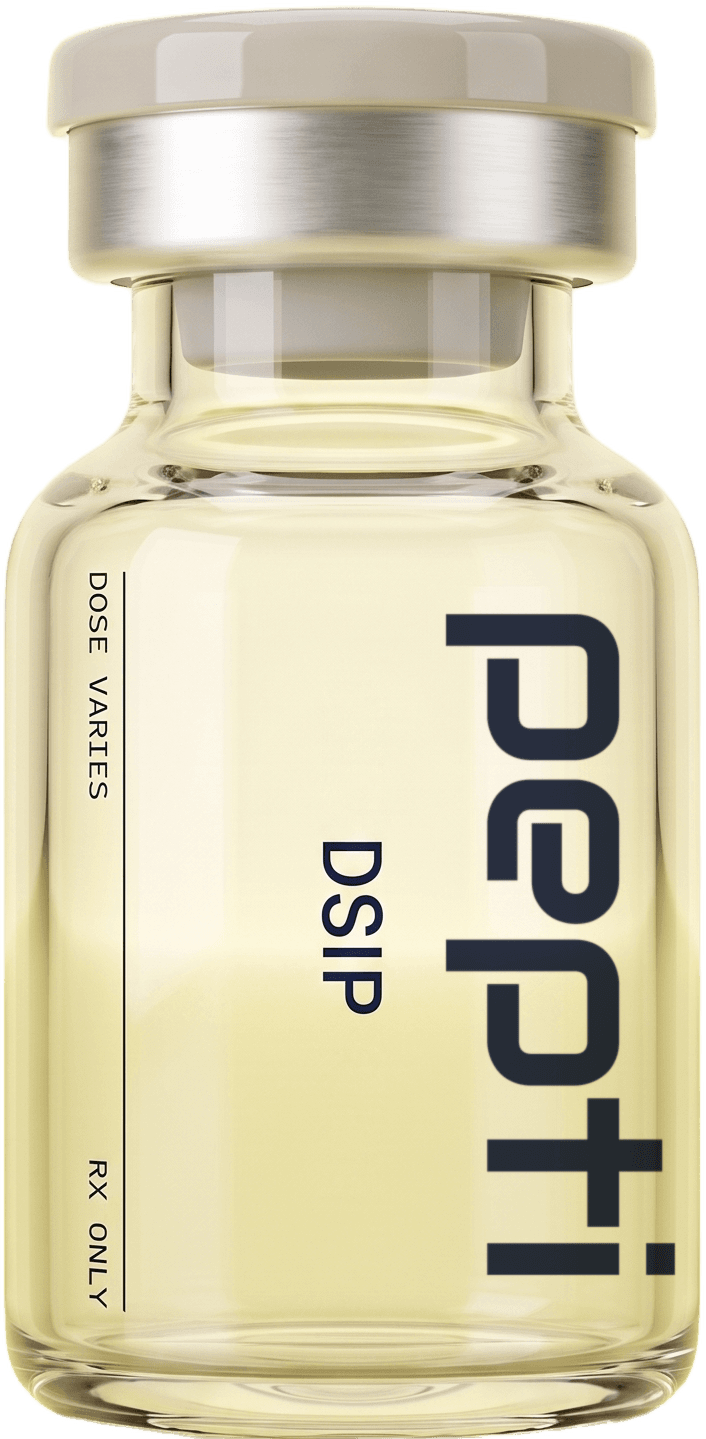
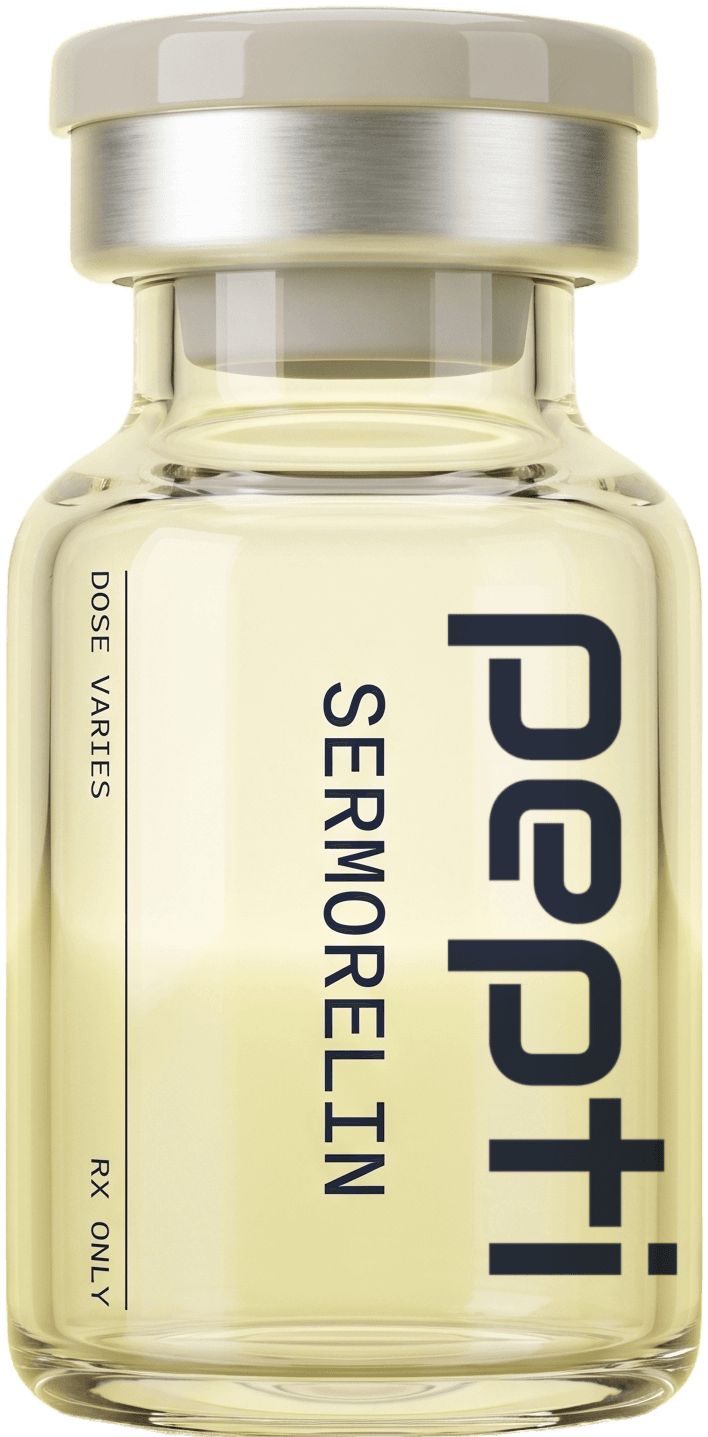
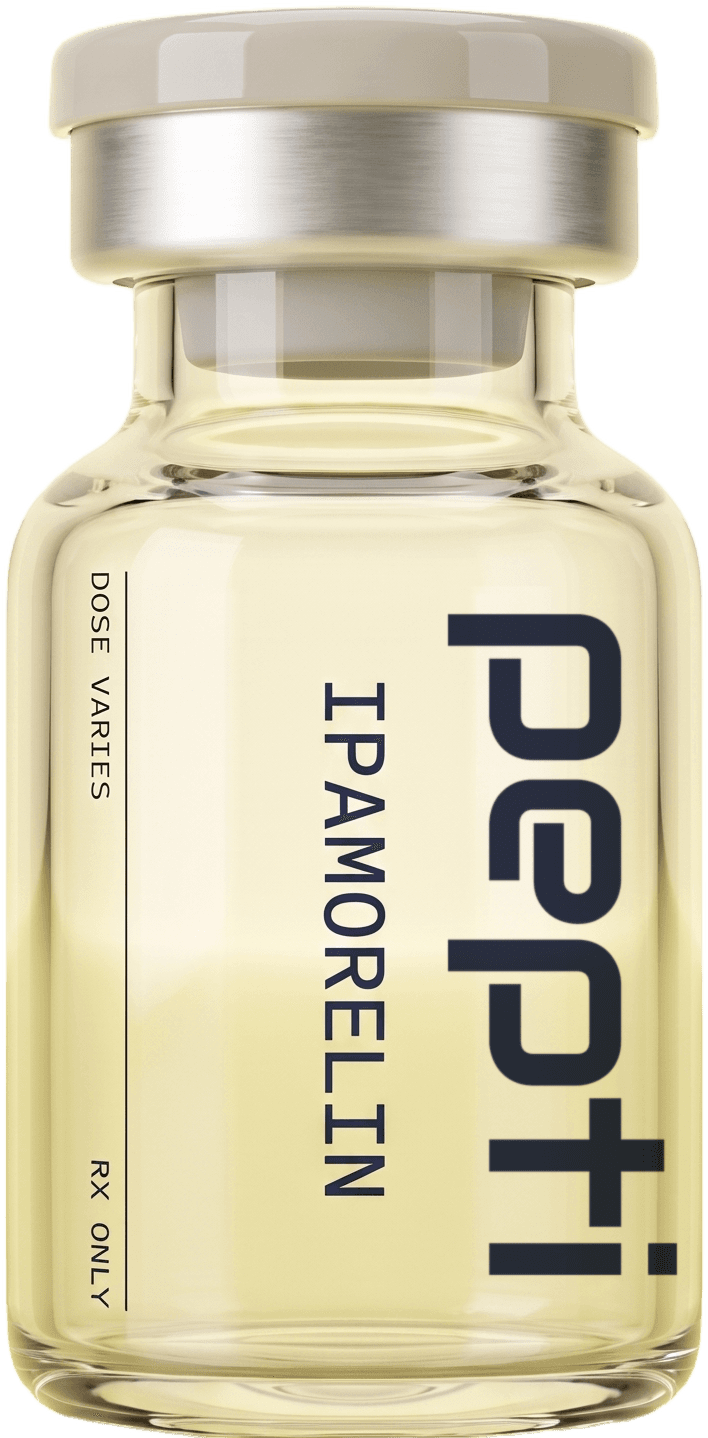
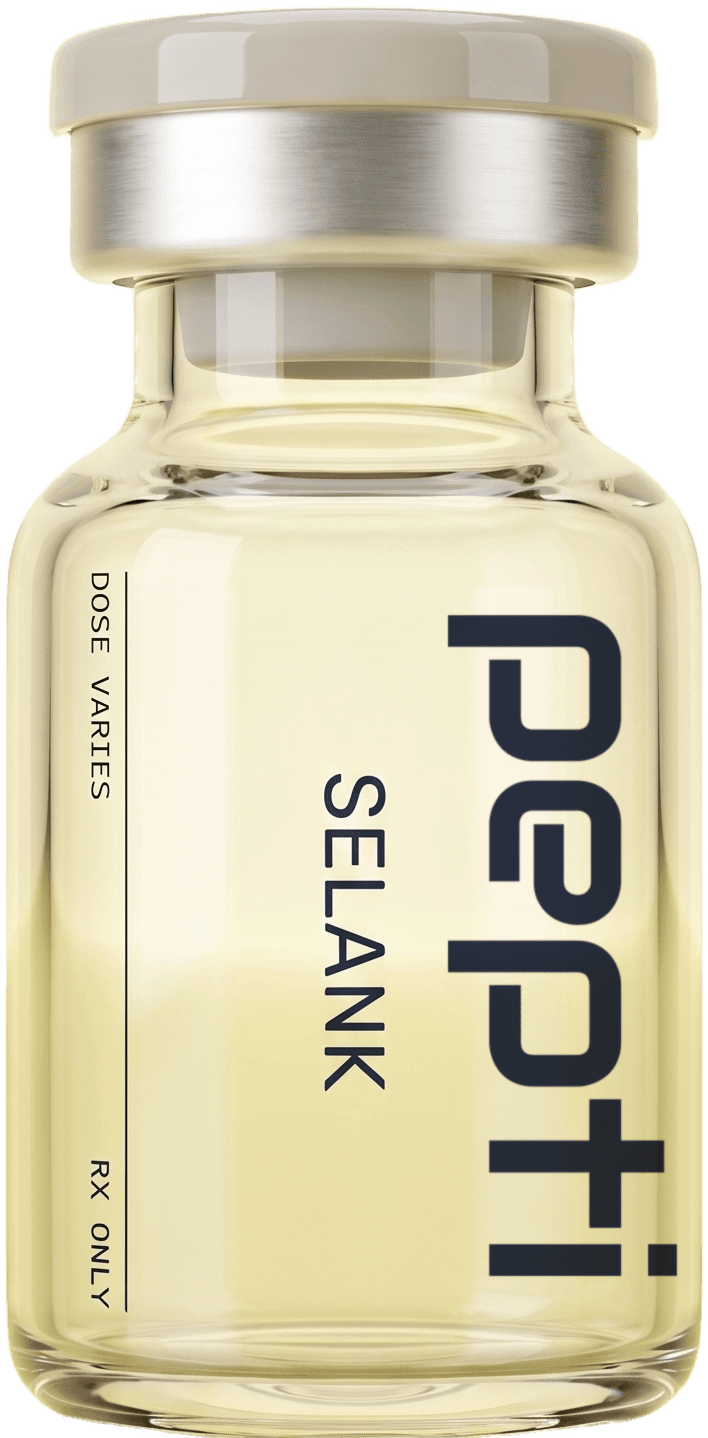
The peptides prescribed for sleep are DSIP, the growth-hormone-axis peptides dosed at bedtime, and blends that combine the two. None is a sedative, and none is aimed at how fast you fall asleep. They target the structure of the night: the deep-sleep stage and the hormone pulse inside it. All are prescription-only, compounded by licensed US pharmacies, and not FDA approved.
If you searched this without knowing a molecule name, here is what each is, which complaint it fits, and what to rule out first.
Peptides for Sleep
The short answer
| If your problem is | The usual prescription | What is in it | Price |
|---|---|---|---|
| Sleeping seven or eight hours and waking unrefreshed | SERENITY Blend | 5 mg DSIP, 5 mg Selank, 6 mg CJC-1295, 12 mg Ipamorelin in 5 mL | $279 |
| Light, fragmented sleep with a stress component | DSIP alone | 5 mg DSIP in 5 mL | $249 |
| Shallow sleep alongside slow recovery from training | CJC-1295 / Ipamorelin | 6 mg CJC-1295, 12 mg Ipamorelin in 5 mL | $239 |
| The same, with a shorter-acting GHRH analogue | Sermorelin | 10 mg sermorelin in 5 mL | $229 |
| Both signals, sermorelin side | Ipamorelin + Sermorelin | 10 mg each in 5 mL | $219 |
| A mind that will not switch off at bedtime | Selank | 10 mg Selank in 5 mL | $229 |
All-in monthly prices covering medication, physician review, refill management and shipping. Pepti is subscription based, so that price recurs while you are in treatment.
Two things follow from that table. Only DSIP was ever named for sleep, and it has the thinnest and most contradictory human data; the GH-axis peptides — CJC-1295 / Ipamorelin, sermorelin and Ipamorelin + Sermorelin — are prescribed for sleep on a physiological argument about the overnight growth hormone pulse, not on trials with sleep as the endpoint. And the complaint that fits this category is a full night that does not restore you, not a night you cannot start.
Peptides for Sleep
What is actually going on in poor sleep
How a night is built, and which part each peptide is aimed at
Sleep is not one state. It runs in cycles of roughly ninety minutes, each moving through light sleep, slow-wave sleep (also called deep sleep or N3) and REM. Deep sleep is concentrated in the first half of the night, REM in the second half, which is why an early night and a late night of equal length are not equivalent.
The largest natural growth-hormone pulse of the day occurs shortly after sleep onset, inside that first block of slow-wave sleep. GH output falls with age, and so does the share of the night spent in deep sleep. That is the whole reason GH-axis peptides appear in a sleep conversation: they are timed to a pulse that already exists rather than added as a sedative on top. It also explains the usual patient description, that sleep feels heavier rather than that it arrives faster. A 1998 review in Sleep laid out the coupling: sleep onset itself triggers the pulse even when bedtime is shifted, and the same hypothalamic releasing hormone drives both.
The decline with age is measurable
A 2000 study in JAMA pooled sleep recordings and hormone profiles from 149 healthy men aged sixteen to eighty-three. Slow-wave sleep fell steeply between young adulthood and midlife and growth hormone secretion fell in parallel; later in life the change was different, with more fragmented sleep, less REM and higher evening cortisol. The loss of deep sleep and the loss of the overnight growth hormone pulse are one event seen from two sides, and most of it happens before fifty.
Arousal, not sleepiness, is often the problem
"Bad sleep" usually means one of two things: a night that is too light and too broken, or a nervous system that will not stand down at lights-out or fires at three in the morning. The animal work on DSIP is built around the second picture. A 1985 paper in Neuroendocrinology reported that intravenous DSIP reduced the corticosterone release triggered by corticotropin-releasing factor in rats, and a 2001 paper in Stress found it reduced stress-induced activation in the hypothalamus and septum of rats. Selank is in the SERENITY Blend for the same reason: for many people the bedtime problem is arousal.
What breaks a night from outside
None of the above matters if the night is being interrupted mechanically. Obstructive sleep apnea fragments sleep dozens of times an hour without the sleeper knowing it; evening alcohol, caffeine after midday, a wake time that moves by hours across the week and an overnight blood-sugar swing all degrade deep sleep faster than any vial improves it. A physician's first job is to sort the complaint, because the peptides on this page address only one bucket.
Your actual complaint What it usually means Whether a peptide is the right tool Cannot fall asleep for an hour or more Circadian timing, caffeine, evening screens, anxiety at lights-out Poor fit. These are not sedatives Waking at 3 a.m. and not getting back down Alcohol, blood-sugar swings, apnoea, hormonal transition Investigate the cause first Seven to eight hours, still exhausted Fragmented or shallow sleep, often apnoea, sometimes less deep sleep with age Where GH-axis peptides are actually aimed Snoring, witnessed pauses, morning headache Obstructive sleep apnoea until proven otherwise No peptide substitutes for a sleep study
Peptides for Sleep
What physicians prescribe for sleep
Every product below is compounded by a state-licensed US pharmacy to an individual prescription. The directions quoted are the ones on the product pages; your physician sets your own dose, timing and nights per week, and it is printed on your vial.
DSIP
Delta sleep-inducing peptide is a nine-amino-acid peptide first isolated in the 1970s from the cerebral venous blood of rabbits during induced sleep, which is where the name comes from. Research describes it as involved in sleep regulation and stress-response signalling, not as a sedative. The reported effects concern sleep architecture, meaning how the night is distributed between stages, rather than how long it takes to fall asleep.
The defining observation is a 1977 paper in the Proceedings of the National Academy of Sciences: infused into rabbit brains, the synthetic peptide increased delta-wave and spindle activity, the EEG signatures of deep non-REM sleep. A 2006 review in the Journal of Neurochemistry called DSIP "a still unresolved riddle," because no receptor and no gene encoding it has ever been found. The FDA lists it under its international name, emideltide.
It is the only peptide here named for sleep, and also the one where the evidence is thinnest: the human studies are small, old and inconsistent. An honest prescriber says that out loud. The directions are to inject 0.25 mL (25 units) subcutaneously Monday through Friday nights at bedtime; bloodwork is not routinely required. DSIP suits light, broken sleep with a clear stress component, once apnea has been excluded. The full reference is what is DSIP.
SERENITY Blend
SERENITY Blend is four independently studied peptides — DSIP, Selank, CJC-1295 and ipamorelin — compounded together in one multi-dose vial. The combination has never been studied as a combination; every evidence question about SERENITY Blend is four questions about its parts. The rationale prescribers give is that a bad night has more than one cause: DSIP for the shape of sleep and the stress axis, Selank for the anxiety carried into the evening, CJC-1295 and ipamorelin for the overnight growth hormone pulse. Bedtime is the one time of day at which all four rationales point the same way. By mass the SERENITY Blend is mostly a secretagogue preparation, and the ratio is fixed by the formulation. The directions are to inject 0.25 mL (25 units) subcutaneously Monday through Friday nights at bedtime; bloodwork is commonly required before prescribing because of the GH-axis components. It is the usual first prescription for the person who sleeps seven or eight hours and wakes unrefreshed, with stress on top. The full reference is what is SERENITY Blend.
CJC-1295 / Ipamorelin
CJC-1295 / Ipamorelin pairs two growth hormone secretagogues that act through different receptors on the same pituitary cell. CJC-1295 is a modified fragment of growth-hormone-releasing hormone that binds the GHRH receptor; the form generally used in compounded blends is the short-acting version without the albumin-binding drug affinity complex, which is why it is dosed daily. Ipamorelin binds the ghrelin receptor. The 1998 paper in the European Journal of Endocrinology that characterised ipamorelin titled it "the first selective growth hormone secretagogue," because in animal models it released growth hormone without raising ACTH, cortisol or prolactin, which matters at bedtime; a 1999 study in Pharmaceutical Research reported dose-dependent release in human volunteers.
What is known in humans about CJC-1295 comes from the long-acting DAC form: a 2006 trial in the Journal of Clinical Endocrinology and Metabolism reported dose-dependent rises in growth hormone and IGF-1 in healthy adults, with the pituitary's pulsatile pattern preserved. No published trial of CJC-1295 / Ipamorelin, or of either component, has sleep as an endpoint. The directions are to inject 0.25 mL (25 units) subcutaneously once daily Monday through Friday on an empty stomach; it is also available as a pre-filled pepti Pen cartridge. It suits shallow sleep alongside slow recovery from training, where the GH axis is the main conversation and stress is not. The full reference is what is CJC-1295 / Ipamorelin.
Sermorelin
Sermorelin is the first twenty-nine amino acids of growth-hormone-releasing hormone, closer to the native signal than CJC-1295 and shorter acting. It has a history nothing else on this page shares: sermorelin acetate was the active ingredient of an FDA-approved drug, Geref, for two decades. Growth hormone works largely through IGF-1 made in the liver, which is the marker a physician tracks on labs. The differences between the two GHRH analogues are covered in CJC-1295 vs sermorelin.
Sermorelin also has the closest thing to bedtime-specific human data here. A 1997 study in Metabolism gave single nightly injections of GHRH(1-29) — sermorelin — to healthy elderly men for six weeks and reported increased growth hormone and IGF-1, and a 1992 study in the Journal of Clinical Endocrinology and Metabolism reported twice-daily GHRH(1-29) raising the low GH and IGF-1 levels of old men. Neither was designed around sleep. The directions are to inject 0.25 mL (25 units) subcutaneously Monday through Friday nights; bloodwork is commonly required, and it comes as a vial or a Pen cartridge. The full reference is what is sermorelin.
Ipamorelin + Sermorelin
Ipamorelin + Sermorelin is the same two-signal logic as CJC-1295 / Ipamorelin — a GHRH-receptor agonist and a ghrelin-receptor agonist converging on one pulse — built on the sermorelin side. Prescribers reach for Ipamorelin + Sermorelin when they want the shorter-acting GHRH analogue with the formerly approved history plus ipamorelin's selectivity. The directions are to inject 0.25 mL (25 units) subcutaneously Monday through Friday nights at bedtime, and bloodwork is commonly required. No trial has studied the pair together, and none has measured sleep. The full reference is what is Ipamorelin + Sermorelin.
Selank
Selank is a synthetic heptapeptide: tuftsin, a natural immune-signalling fragment, with a three-amino-acid tail added to slow its breakdown. Russian research describes it modulating GABAergic and serotonergic signalling and affecting brain-derived neurotrophic factor, with anxiolytic effects reported without benzodiazepine-style sedation. A 2018 paper in Protein and Peptide Letters described Selank as a positive allosteric modulator of the GABA-A receptor in rat brain membranes, and a 2001 paper in the Bulletin of Experimental Biology and Medicine reported it inhibiting the enzymes that degrade enkephalins.
Selank is not a sleep peptide in the strict sense. It earns its place in a sleep blend, and as a standalone prescription for a mind that will not switch off at bedtime, because for many people the obstacle is arousal. The injectable directions are 0.25 mL (25 units) subcutaneously once daily Monday through Friday; a Selank nasal spray exists for people who would rather not inject. Bloodwork is not routinely required. The full reference is what is Selank.
Epithalon
Epithalon is a synthetic tetrapeptide, Ala-Glu-Asp-Gly, modelled on a pineal gland extract, and it comes up in sleep conversations because of its circadian claims. The research is limited, comes largely from a single group, and is routinely overstated online. The circadian thread is real but mostly animal: a 2001 paper in the Bulletin of Experimental Biology and Medicine reported Epithalon affecting melatonin and cortisol rhythms in old monkeys, and a 2003 study in the Journal of Endocrinological Investigation reported it changing melatonin secretion by the pineal gland of old rats.
Pitched as a sleep fix, Epithalon is ahead of its data. The directions are to inject 0.25 mL (25 units) subcutaneously once daily Monday through Friday; bloodwork is not routinely required. It is priced on its cost page. The full reference is what is Epithalon.
Peptides for Sleep
What the evidence shows, and what it does not
DSIP: small human trials, split results
This is where the human data for the whole category sits, and it is unusual for a compounded peptide: there are randomised, double-blind, placebo-controlled studies of DSIP in people. They are small, old, intravenous and split.
The first appeared in the Lancet in 1981: six middle-aged chronic insomniacs received an intravenous infusion or placebo before bed in a crossover design, and the authors reported longer sleep with fewer interruptions and no daytime sedation. A 1986 paper in European Neurology summarised further double-blind work from the same group. Two independent groups did not agree: a 1987 crossover study in the International Journal of Clinical Pharmacology Research found no significant difference from placebo nights, and a 1992 study of sixteen chronic insomniacs in Neuropsychobiology found higher sleep efficiency but concluded that short-term treatment was not likely to be of major therapeutic benefit. Neither found slow-wave sleep itself increased, and none of the work used the subcutaneous route that is prescribed today.
The GH axis and sleep: a real physiology, a thin trial record
The link between growth-hormone-releasing hormone and deep sleep is not a marketing invention. A 1992 study in Neuroendocrinology gave repeated intravenous pulses of GHRH to healthy young men during the night and reported more slow-wave sleep, more growth hormone and lower cortisol, with somatostatin producing the opposite pattern. A 1993 study in the American Journal of Physiology, titled "sleep-promoting effects of growth hormone-releasing hormone in normal men," reported the same direction of effect when GHRH was given in the early part of the night. A 2004 review in Sleep Medicine Reviews, "GHRH and sleep," pulled together two decades of animal and human work supporting a role for GHRH in promoting non-REM sleep.
The record is not one-sided. A 1998 study in the American Journal of Physiology was titled "evidence against a role for the growth hormone-releasing peptide axis in human slow-wave sleep regulation": a ghrelin-receptor agonist of the same class as ipamorelin raised growth hormone in healthy men without changing slow-wave sleep. The one week-long trial of an oral secretagogue that did report better sleep, a 1997 study in Neuroendocrinology of MK-677, used a molecule that is not a compounded product — it currently sits in Category 2 of the FDA's 503A list — and is not something Pepti supplies.
So the honest summary for CJC-1295 / Ipamorelin, sermorelin and Ipamorelin + Sermorelin is this: GHRH itself has controlled human studies showing more slow-wave sleep when given intravenously overnight; the ghrelin-receptor side has a controlled study that found no sleep effect; and none of the compounded products has been the subject of a published trial with sleep as the endpoint.
Selank: comparator trials, all Russian, all intranasal
Selank has controlled human trials, but they are small, Russian, compared against an active benzodiazepine rather than placebo, and not described as randomised or blinded. A 2008 paper in the Korsakov Journal of Neurology and Psychiatry treated sixty-two patients with generalised anxiety disorder or neurasthenia with Selank or medazepam and reported a similar anxiolytic effect, describing Selank as mildly activating rather than sedating. A 2014 paper in the same journal compared it with phenazepam in sixty patients. A 2021 review in the Journal of Clinical Pharmacology characterised Selank as poorly studied outside its country of origin. None of the trials measured sleep.
Epithalon: animal circadian work and a gland extract
Every human circadian result attributed to Epithalon online should be checked against what was actually given. The 2004 elderly-subjects melatonin study and the geroprotection follow-ups from the same group used epithalamin, the pineal extract, not the tetrapeptide. The FDA's reviewers, preparing for the July 2026 advisory committee, found no effectiveness evidence for insomnia; the committee voted the other way, which is covered below.
What human data exists
There are no randomised controlled trials of any of these compounded products with sleep as the endpoint, and there are no randomised human trials of subcutaneous DSIP at all. What exists is: small placebo-controlled intravenous DSIP studies in chronic insomniacs from 1981 to 1992 with split results; controlled overnight infusion studies of GHRH in healthy young men that reported more slow-wave sleep; a controlled study of a ghrelin-receptor agonist that did not; human hormone-release trials for CJC-1295 and ipamorelin and long-term endocrine trials for sermorelin, none of which measured sleep; and small Russian comparator trials of intranasal Selank for anxiety. There is also a substantial body of prescriber experience, which is real but is not a trial.
That does not make the category useless; a great deal of prescribing rests on mechanism plus clinical experience. But the honest framing is "described in physiology and small older human studies, and used clinically," not "proven for sleep." Any source telling you otherwise is overselling it.
What the evidence does not establish
- It does not establish that subcutaneous DSIP at bedtime does what intravenous infusion did in the 1980s. Nobody has run that trial.
- It does not establish that a bedtime GH secretagogue increases slow-wave sleep in adults. The GHRH studies used overnight intravenous pulses in young men, not a subcutaneous injection before bed in a fifty-year-old.
- It does not establish an effect size or a timeline. The timelines later on this page are prescriber experience, not trial endpoints.
- It does not establish that four peptides together do more than one alone. No study has compared SERENITY Blend with its components.
- It does not establish long-term safety over years of continuous use.
- It does not establish efficacy for any condition as an FDA-approved treatment. None of these is approved for anything.
Peptides for Sleep
Where these stand with the FDA right now
This has moved several times in 2026 and most of what is published online is out of date. Verified against fda.gov in September 2026. One general point first: compounded drugs are not FDA approved. The FDA's own compounding Q&A states that it "does not verify the safety, effectiveness or quality of compounded drugs before they are marketed," and that applies to every product on this page. The advisory committee's next session, before the end of February 2027, is scheduled to consider GHK-Cu, Dihexa, LL-37, PEG-MGF and Melanotan II; none of the sleep peptides is on it.
The April 2026 Category 2 removals
On 15 April 2026 the FDA announced the removal of twelve peptides from Category 2 of its interim 503A bulk drug substances list — the category for nominated substances flagged as raising significant safety risks — effective about a week later, and scheduled its Pharmacy Compounding Advisory Committee to review several of them. The FDA was explicit that removal from Category 2 does not by itself place a substance on the 503A bulks list or into Category 1. The FDA's safety-risks page, current as of 22 April 2026, now lists emideltide, epitalon, Selank acetate, CJC-1295 and ipamorelin acetate under "bulk drug substances nominated but withdrawn." The 503A category list as updated 14 May 2026 carries none of the peptides on this page in Category 1, 2 or 3; Category 2 is down to six substances — cesium chloride, domperidone, germanium sesquioxide, ibutamoren mesylate, kisspeptin-10 and quinacrine for intrauterine use.
DSIP: reviewed in July 2026 and not recommended
The FDA brought emideltide to its Pharmacy Compounding Advisory Committee on 24 July 2026, evaluated for opioid withdrawal, chronic insomnia and narcolepsy. The committee voted 6 in favour, 7 against, with 1 abstention, and so did not recommend adding emideltide to the 503A Bulks List. It was the only one of the seven peptides considered that week — BPC-157, KPV, TB-500, MOTS-c, epitalon, semax and emideltide — not to receive a favourable vote. A committee vote is advice, not a decision; the FDA issues its own determination afterwards, and as of September 2026 it has not. DSIP is not in Category 2, is not on the bulks list, and continues to be prescribed and dispensed by state-licensed pharmacies pursuant to a prescription. It is not an FDA-approved drug.
Epithalon: reviewed the same day and recommended
Epitalon was discussed on the morning of 24 July 2026, evaluated for the proposed use of insomnia as a subcutaneous injection. The committee voted 7–4, with one abstention, to recommend adding Epitalon to the 503A Bulks List, against the position of the FDA's own reviewers. The FDA's final determination is pending, and no proposed rule has been published.
Selank: withdrawn from the process, never reviewed
Selank acetate was placed in Category 2 in September 2023 and came off it a year later, when the FDA recorded that the nominator had intended to nominate a different substance. It now sits among substances "nominated but withdrawn," appears in no category on the 14 May 2026 list, and was not on the July 2026 agenda. It has never been evaluated by the advisory committee.
CJC-1295 and ipamorelin: voted against in late 2024, then withdrawn
Both components of CJC-1295 / Ipamorelin went through the committee in full. On 29 October 2024 the committee considered ipamorelin, evaluated for growth hormone deficiency and post-operative ileus, and voted 0 yes, 12 no, 1 abstain against adding the free base, and the same against the acetate. At its December 2024 meeting the committee considered the CJC-1295 family, evaluated for growth hormone deficiency, and voted 0–13 against CJC-1295 free base and 1–12 against the acetate; the DAC forms were each voted against 0–13. Both nominations were subsequently withdrawn; the FDA's safety-risks page lists both as "nominated but withdrawn," and the 14 May 2026 list shows neither in any 503A category. One detail is easy to misread: ipamorelin acetate remains in Category 2 under the separate 503B policy for outsourcing facilities, a listing dated 29 September 2023, which is a different pathway from the 503A pharmacy compounding of a patient-specific prescription.
The committee evaluates a substance for the specific uses in its nomination package against the approved drugs that already exist for them. Its vote is not a finding that a peptide is unsafe at prescribed doses, and it is not a ban.
Sermorelin: a formerly approved drug, withdrawn for commercial reasons
Sermorelin acetate was the active ingredient of Geref, held by EMD Serono: the diagnostic presentation (NDA 19-863) was approved on 28 December 1990 and the treatment presentation for growth hormone deficiency in children (NDA 20-443) on 26 September 1997. EMD Serono notified the FDA in December 2008 that it was discontinuing both. On 4 March 2013 the FDA published a Federal Register determination that both Geref products "were not withdrawn from sale for reasons of safety or effectiveness," after reviewing its files and the post-marketing adverse-event data. Drugs@FDA lists the application as discontinued. Sermorelin is not on the 503A category lists at all. A compounded sermorelin vial is still not an approved product, but the active ingredient has an FDA safety and effectiveness record behind it that nothing else on this page has. The plain-English version of all of the above is in are peptides FDA approved.
Anti-doping
The 2026 WADA Prohibited List places growth hormone releasing factors in section S2, prohibited at all times, and names them: "growth hormone-releasing hormone (GHRH) and its analogues (e.g. CJC-1293, CJC-1295, sermorelin and tesamorelin)" and "growth hormone secretagogues (GHS) and their mimetics [e.g. anamorelin, capromorelin, ibutamoren (MK-677), ipamorelin, …]." So CJC-1295 / Ipamorelin, sermorelin, Ipamorelin + Sermorelin and SERENITY Blend are all prohibited for tested athletes in and out of competition. DSIP, Selank and Epithalon are not named on the list; a tested athlete should still check the current list for their sport and tell their physician before starting anything.
Peptides for Sleep
What a physician rules out first
Obstructive sleep apnea
Snoring, witnessed pauses in breathing, a dry mouth or headache on waking and a very sleepy afternoon add up to obstructive sleep apnea until proven otherwise. It is common, under-diagnosed, and it produces exactly the complaint this page is about by mechanically interrupting the night. No peptide substitutes for a sleep study, and a physician asked for a sleep peptide by someone describing those symptoms should send them for one first.
Insomnia disorder and circadian timing
If the problem is lying awake for an hour, or a schedule that drifts later every night, the diagnosis is usually insomnia disorder or a circadian timing problem. The first-line treatment for insomnia is cognitive behavioural therapy for insomnia, which has the strongest evidence in the field and is not a medication. These peptides are not sedatives and are not aimed at sleep onset.
Alcohol, caffeine and medications
Evening alcohol, caffeine after midday and an inconsistent wake time are the three most common reasons a night is shallow. Beta-blockers, corticosteroids, some antidepressants and stimulants all change sleep architecture. A physician reviews the full medication list on your intake for this reason.
Thyroid, iron, blood sugar, hormones and mood
Hyperthyroidism, low iron with restless legs, overnight blood-sugar swings and the hormonal transitions of perimenopause and menopause each fragment sleep and each has its own workup; at-home blood testing covers the thyroid, metabolic and hormone markers without a lab visit. Anxiety and depression both disturb sleep and are treated directly rather than through a sleep peptide. Selank overlaps with signalling a psychiatrist may already be managing, which is why existing psychiatric medication is on the caution list below.
Peptides for Sleep
What to expect, and when
GH-axis peptides are generally directed at bedtime and away from food, because a meal high in carbohydrate or fat blunts the growth-hormone response. The pharmacy prints your directions on the vial, and your physician sets dose, timing and nights per week.
| Timeframe | What patients commonly describe |
|---|---|
| Nights 1 to 5 | Little beyond injection-site tenderness; some report vivid dreams |
| Weeks 2 to 4 | Waking less often overnight, less of the flat feeling on getting up |
| Weeks 4 to 8 | Better daytime alertness, which is what "better sleep" usually means to people |
| Week 8 onward | Where most physicians reassess whether it earns its cost |
Those are patient reports, not trial endpoints. Response varies widely and nobody can promise a timeline. See how long peptides take to work.
The most consistent early report is nothing at all, which is normal. Vivid dreams are reported often enough with bedtime GH secretagogues to be worth mentioning in advance; injection-site redness or tenderness is the most common side effect across the category. Nobody describes falling asleep faster. Treatment is long-term: a vial covers roughly four weeks at the Monday-to-Friday directions, refills run every 28 days, and one vial ships per fill. Whether it earns its place is a judgement you and your physician make on your daytime function, not on a marker.
Peptides for Sleep
When a peptide is the wrong tool
A reference that only ever recommends its own products is not much of a reference. Sleep peptides will not:
- Sedate you. If your problem is lying awake for two hours, this category is aimed at the wrong thing.
- Treat sleep apnoea. That is a mechanical airway problem, and improving the hormonal content of an interrupted night does not stop the interruptions.
- Replace first-line insomnia treatment. Cognitive behavioural therapy for insomnia has the strongest evidence in this field, and it is not a medication.
- Survive the basics. Evening alcohol, afternoon caffeine and an inconsistent wake time degrade deep sleep faster than any vial improves it.
Sleep apnea with obesity: tirzepatide has the trial
The one sleep condition on this page with a large randomised trial behind a Pepti product is obstructive sleep apnea in adults with obesity. The SURMOUNT-OSA trials, published in the New England Journal of Medicine in 2024, randomised adults with moderate-to-severe obstructive sleep apnea and obesity to tirzepatide or placebo for a year and reported significant reductions in the apnea-hypopnea index. On 20 December 2024 the FDA approved Zepbound (tirzepatide) for moderate-to-severe obstructive sleep apnea in adults with obesity, on the basis of two randomised, double-blind, placebo-controlled studies in 469 adults. If a sleep study confirms apnea and weight is part of the picture, the conversation is tirzepatide or semaglutide alongside airway treatment, not DSIP. Compounded tirzepatide is not the approved product and is not FDA approved; the trial evidence is for the molecule.
Anxiety that follows you to bed, or fatigue that is not a sleep problem
If the honest description of your problem is daytime anxiety rather than sleep architecture, Selank on its own, the Selank nasal spray or Semax + Selank is the better conversation than a GH-axis product. And some people who search "peptides for sleep" are tired for reasons that have nothing to do with the night — iron, thyroid, B12 status — which is a bloodwork question before it is a prescription. Your physician will tell you if a sleep peptide is not the right tool for what you have described. A consultation does not guarantee a prescription, and being declined is refunded.
Peptides for Sleep
Monitoring and bloodwork
Before and during treatment
For the GH-axis products — CJC-1295 / Ipamorelin, sermorelin, Ipamorelin + Sermorelin and SERENITY Blend — baseline labs are commonly required before prescribing, typically IGF-1 and glucose markers, because growth hormone reduces insulin sensitivity and IGF-1 is the marker of GH-axis activity. For DSIP, Selank and Epithalon alone, bloodwork is not routinely required, though your physician may want it depending on history. At-home blood testing covers the usual panel; see do you need bloodwork before peptides. Prescribers typically repeat IGF-1 and a glucose marker after the first months on a GH secretagogue, and want to hear about new snoring, swelling in the hands or feet, tingling, or a rise in fasting glucose. Report a reaction that is severe, spreading or involves difficulty breathing immediately. Lot-level testing for every pharmacy is published at lab results.
Who should not take them
| Situation | Why |
|---|---|
| Personal history of cancer | A standard growth-hormone caution |
| Diabetes or impaired glucose tolerance | Growth hormone reduces insulin sensitivity |
| Pregnancy or breastfeeding | Not used; safety data is absent |
| Untreated or suspected sleep apnoea | Needs a sleep study first |
| Existing psychiatric medication | Selank overlaps with signalling your prescriber already manages |
| Tested athletes | GH secretagogues are prohibited in competition |
References
What this is based on.
References
- Raun K, Hansen BS, Johansen NL et al.. Ipamorelin, the first selective growth hormone secretagogue · Eur J Endocrinol (1998) · PMID 9849822
- Walker RF. Sermorelin: a better approach to management of adult-onset growth hormone insufficiency? · Clin Interv Aging (2006) · PMID 18046908
- Tiulpakov AN, Brook CG, Pringle PJ et al.. GH responses to intravenous bolus infusions of GH releasing hormone and GH releasing peptide 2 separately and in combination in adult volunteers · Clin Endocrinol (Oxf) (1995) · PMID 7586605
- Sigalos JT, Pastuszak AW. The Safety and Efficacy of Growth Hormone Secretagogues · Sex Med Rev (2018) · PMID 28400207
- Schneider-Helmert D. DSIP in sleep disturbances · Eur Neurol (1986) · PMID 3758119
- Teichman SL, Neale A, Lawrence B et al.. Prolonged stimulation of growth hormone (GH) and insulin-like growth factor I secretion by CJC-1295, a long-acting analog of GH-releasing hormone, in healthy adults · J Clin Endocrinol Metab (2006) · PMID 16352683
- Morin CM, Belleville G, Bélanger L, Ivers H. The Insomnia Severity Index: psychometric indicators to detect insomnia cases and evaluate treatment response · Sleep (2011) · PMID 21532953
- Jastreboff AM, Aronne LJ, Ahmad NN, et al.. Tirzepatide Once Weekly for the Treatment of Obesity (SURMOUNT-1) · New England Journal of Medicine (2022) · PMID 35658024
- Garvey WT, Frias JP, Jastreboff AM, et al.. Tirzepatide once weekly for the treatment of obesity in people with type 2 diabetes (SURMOUNT-2) · Lancet (2023) · PMID 37385275
- Frías JP, Davies MJ, Rosenstock J, et al.. Tirzepatide versus Semaglutide Once Weekly in Patients with Type 2 Diabetes (SURPASS-2) · New England Journal of Medicine (2021) · PMID 34170647
- Inagaki N, Takeuchi M, Oura T, et al.. Effects of subcutaneous tirzepatide versus placebo or semaglutide on pancreatic islet function and insulin sensitivity in adults with type 2 diabetes: a multicentre, randomised, double-blind, parallel-arm, phase 1 clinical trial · The Lancet Diabetes & Endocrinology (2022) · PMID 35468322
- Malhotra A, Grunstein RR, Fietze I, et al.. Tirzepatide for the Treatment of Obstructive Sleep Apnea and Obesity (SURMOUNT-OSA) · New England Journal of Medicine (2024) · PMID 38912654
Citations are provided for educational purposes. They do not constitute medical advice. Always discuss any peptide protocol with your prescribing physician.
Common questions
Peptides for Sleep, answered.
There is no single best one. DSIP is named for sleep, but GH-axis peptides are used more often because the complaint people bring is unrefreshing sleep, not trouble falling asleep. SERENITY Blend combines both approaches in one vial. Which, if any, is appropriate depends on what a physician finds when they sort your complaint: apnea and insomnia disorder come off the table first, and a stress component points toward DSIP or the blend rather than a secretagogue alone.
Generally no, and a provider promising that is describing a sedative. The reported effects concern sleep architecture and overnight recovery. If sleep onset is your problem, say so plainly on your intake, because it changes the answer.
That is your physician's call, and schedules range from every night to five nights a week. The product-page directions for DSIP, SERENITY Blend, Ipamorelin + Sermorelin and sermorelin are Monday through Friday nights, and CJC-1295 / Ipamorelin is once daily Monday through Friday on an empty stomach. How the body responds to repeated GH-axis dosing is covered in peptide cycling and tolerance. Follow the directions printed on your vial, not a forum protocol.
For GH-axis peptides, baseline labs including IGF-1 and glucose markers are commonly requested, and at-home blood testing covers the usual panel. See do you need bloodwork before peptides.
No, and that is the most important line on this page. Untreated apnoea fragments the night mechanically, and it is common, under-diagnosed and treatable. Snoring, witnessed pauses or a very sleepy afternoon warrant a sleep study before any prescription. Where apnea is confirmed and obesity is part of the picture, tirzepatide has randomised trial evidence and an FDA-approved indication for the branded product; that is a different conversation from any peptide on this page.
Between $219 and $279 all-in, with the blends at the upper end. What drives peptide pricing is covered in how much do peptides cost.
Yes. DSIP is the laboratory name for delta sleep-inducing peptide; emideltide is the international non-proprietary name the World Health Organization assigned it, and it is the name the FDA uses in its 503A documents and at its July 2026 advisory committee meeting. Same nine-amino-acid peptide.
No. DSIP was placed in Category 2 of the FDA's 503A bulk substances list in 2023, was among the peptides removed from Category 2 in April 2026, and was reviewed by the Pharmacy Compounding Advisory Committee on 24 July 2026, which voted 6–7 with one abstention not to recommend adding it to the 503A Bulks List. That is advice to the FDA, not a decision, and the FDA's determination is pending. DSIP remains legal to prescribe and dispense pursuant to a prescription. It is not FDA approved, and no compounded medication is.
Four peptides in one 5 mL multi-dose vial: DSIP, Selank, CJC-1295 and ipamorelin, at the amounts shown in the table at the top of this page. The proportions are fixed by the formulation. Each component is described in what is SERENITY Blend.
Only with your physician's knowledge. There is no established interaction list for any of these peptides, because the trials that would produce one have not been run, which is why the intake asks for every medication and supplement you take. A prescription hypnotic or a sedating antidepressant is exactly what your physician needs to see before deciding.
The GH-axis ones are. The 2026 WADA Prohibited List names CJC-1295, sermorelin and tesamorelin among GHRH analogues, and ipamorelin among growth hormone secretagogues, in section S2, prohibited at all times. That covers CJC-1295 / Ipamorelin, sermorelin, Ipamorelin + Sermorelin and SERENITY Blend. DSIP, Selank and Epithalon are not named; check the current list for your sport and tell your physician.
CJC-1295 / Ipamorelin and sermorelin are available as pre-filled pepti Pen cartridges with a reusable click-dial injector as well as vials. Selank is available as a nasal spray. DSIP, SERENITY Blend, Ipamorelin + Sermorelin and Epithalon are supplied as vials with syringes.
It is prescribed for its circadian rationale more than as a sleep treatment, and its human circadian evidence is largely from a gland extract rather than the tetrapeptide itself. In July 2026 the FDA's advisory committee voted 7–4 to recommend adding Epitalon to the 503A Bulks List for the proposed use of insomnia, against the FDA reviewers' position that there was no effectiveness evidence for that use. The FDA's decision is pending. It is priced on its cost page. The free assessment goes to a physician licensed in your state. A consultation does not guarantee a prescription.
Next step
See what a physician recommends for you.
A licensed physician in your state reviews your intake and decides what is appropriate. A consultation does not guarantee a prescription.