— Recovery · Reference
Can You Buy Peptides Without a Prescription? What That Vial Actually Is
This page covers the law behind the "research use only" label, the statute that makes a compounded prescription legal, where these peptides stand with the FDA as of September 2026, what the no-prescription route leaves out, and what the prescription route looks like step by step.
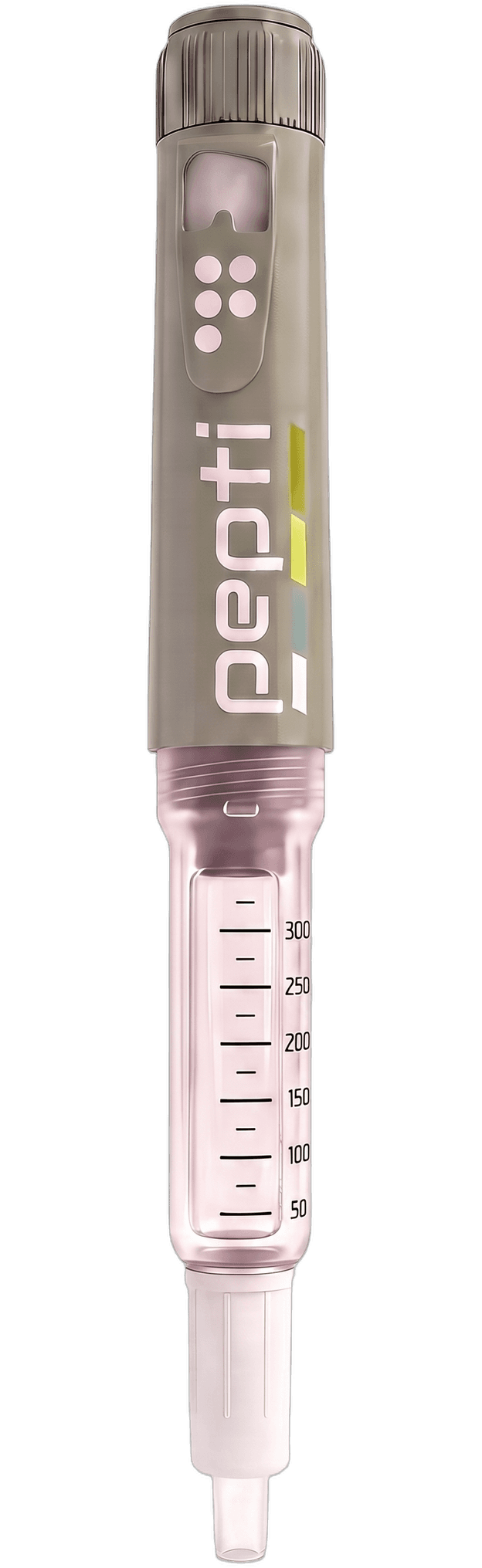
— Treatments mentioned
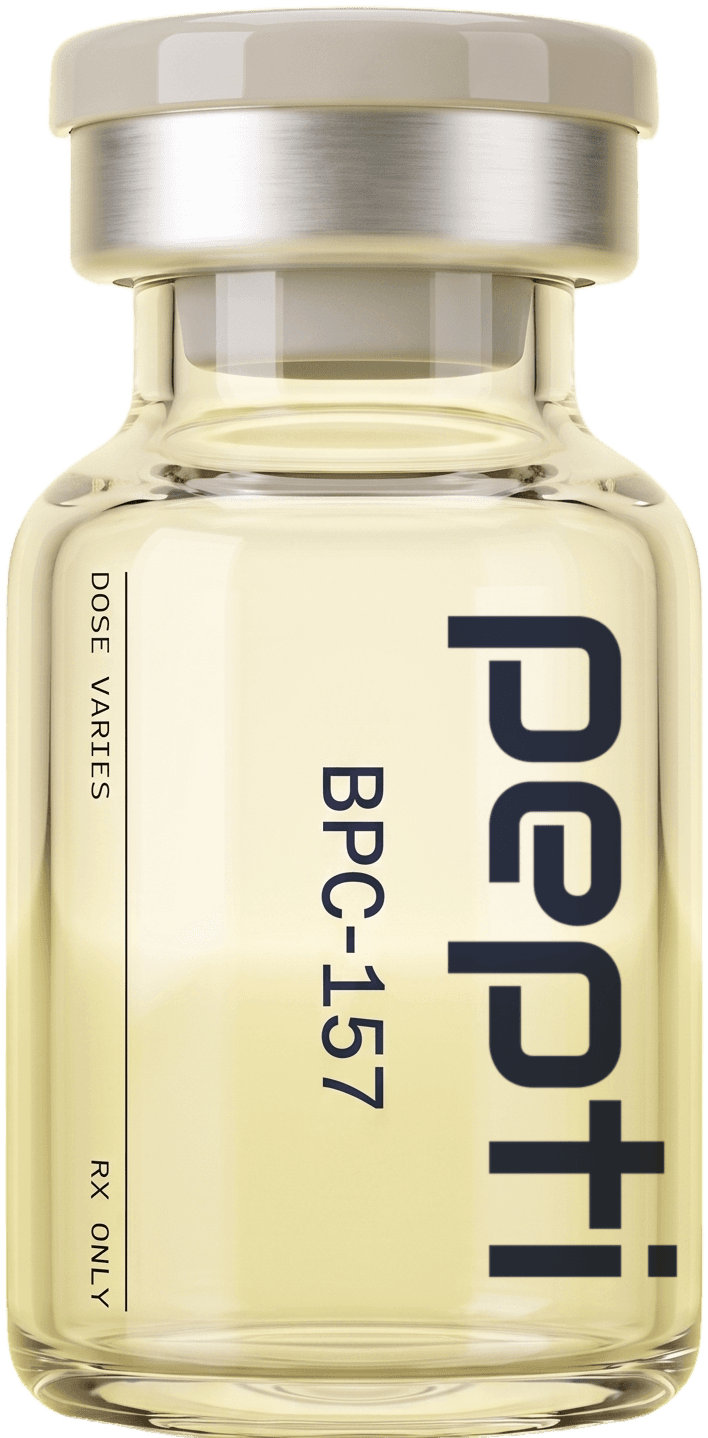
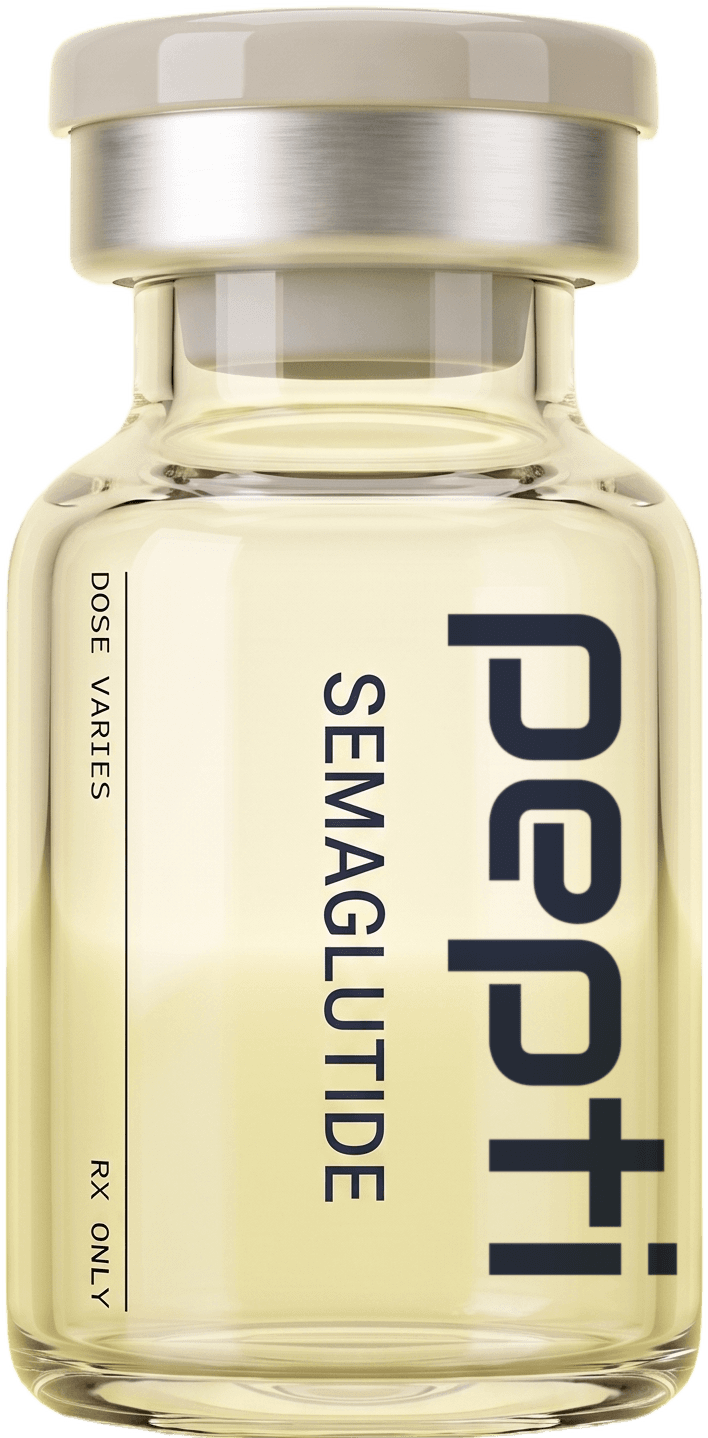
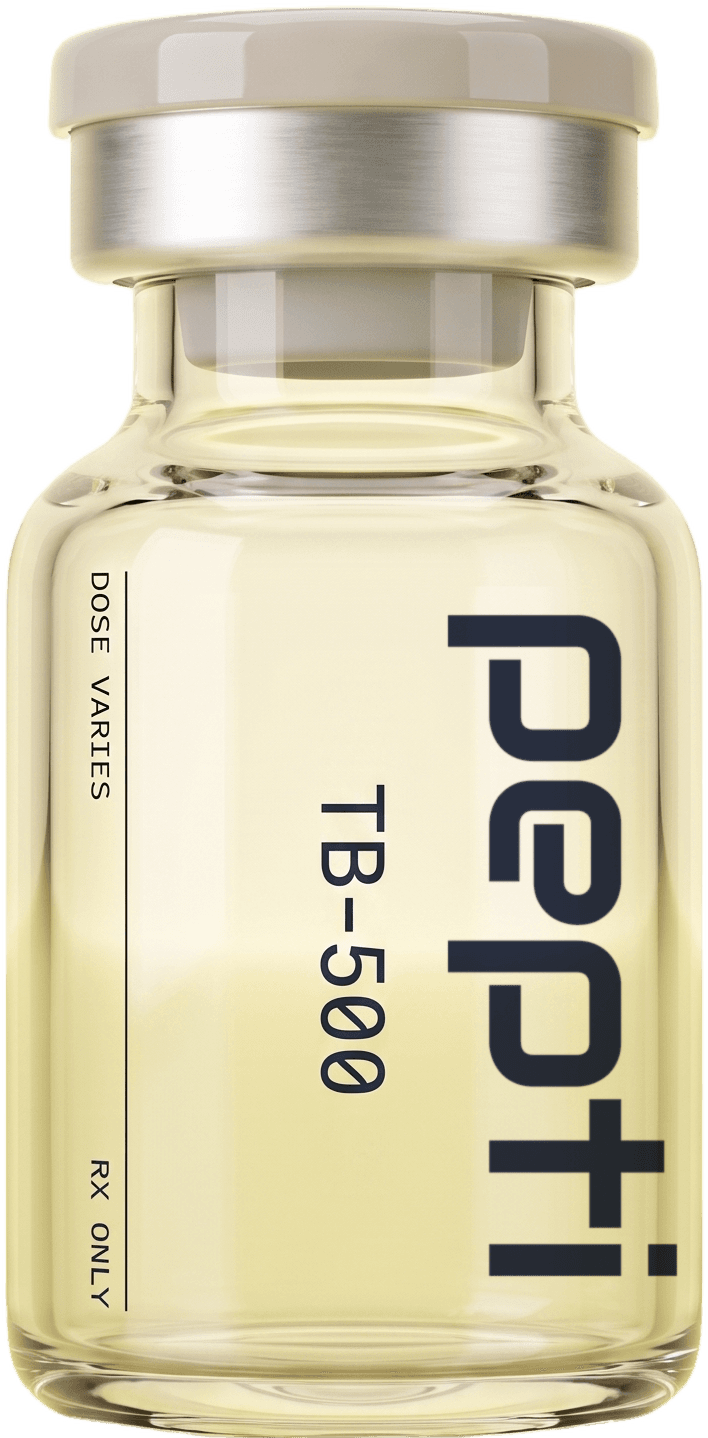
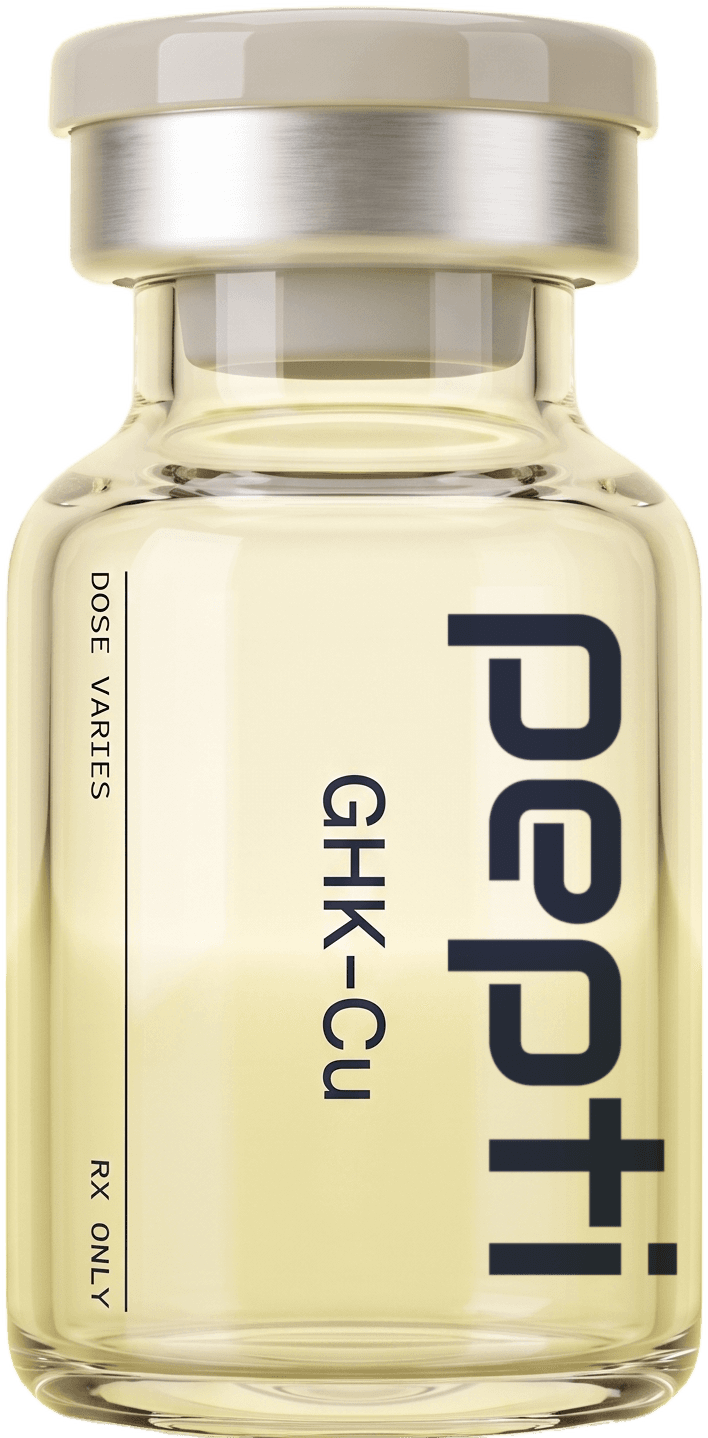
Yes, you can buy vials labelled with peptide names without a prescription, because they are sold as research chemicals for laboratory use rather than as medication. The seller's own terms say the product is not for human consumption, and that sentence is what makes shipping it legal. It also means there is no prescriber, no pharmacy licensure behind the preparation, no verified sterility or concentration, and nobody accountable to you, because in that transaction you are a laboratory rather than a patient. The same molecules are available as prescriptions compounded by licensed US pharmacies, which are not FDA approved either, but which come with all of the things the research vial does not have.
This page covers the law behind the "research use only" label, the statute that makes a compounded prescription legal, where these peptides stand with the FDA as of September 2026, what the no-prescription route leaves out, and what the prescription route looks like step by step.
— Can You Buy Peptides Without a Prescription? What That Vial Actually Is
The short answer
| If you were about to buy this from a research site | The prescription version | What is in it | Price |
|---|---|---|---|
| BPC-157 powder | BPC-157 | 5 mg BPC-157 in 5 mL, ready to use | $209 |
| BPC-157 and TB-500 separately | BPC-157 + TB-500 | 5 mg each in one 5 mL vial | $259 |
| GHK-Cu powder | GHK-Cu | 50 mg GHK-Cu in 5 mL | $239 |
| CJC-1295 and ipamorelin kits | CJC-1295 / Ipamorelin | 6 mg CJC-1295, 12 mg Ipamorelin | $239 |
| "Semaglutide sodium" | Semaglutide | Dose-specific vials, priced per rung | From $99 |
| Sermorelin powder | Sermorelin | 10 mg Sermorelin in 5 mL | $229 |
| NAD+ powder | NAD+ Injection | 1000 mg NAD+ in 10 mL | $249 |
Prescription prices are all-in per month, covering medication, physician review, refill management and shipping, on a subscription you can cancel.
— Can You Buy Peptides Without a Prescription? What That Vial Actually Is
What "research use only" means legally
Under US law, a product intended for use in the diagnosis, treatment or prevention of disease in people is a drug, and drugs for human use require either FDA approval or compounding by a licensed pharmacy against a valid prescription. A seller who states the product is for laboratory research and not for human use is asserting it is not that.
| What the seller is saying | What it means for you | |
|---|---|---|
| "Research use only" | This is not intended for a person | No claim about human safety is being made or is legally required |
| "Not for human consumption" | Do not take this | The seller is disclaiming the use you intend |
| "For laboratory use by qualified researchers" | The buyer is a lab | Customer support has no clinical obligation to you |
| No prescription needed | No prescriber is involved | Nobody has assessed whether this suits your history |
| Sold by the gram, as powder | Chemical supply pricing | You will reconstitute and dose it yourself |
Buying is not the part of this that the law focuses on. The gap is on the seller's side, and it exists because the product is not being sold as medicine. That is also why the words in their terms and conditions differ so sharply from the words in their advertising. Wider legal background is in are peptides legal in the US.
— The statute that defines a prescription drug
The Federal Food, Drug, and Cosmetic Act defines a prescription drug as one that, "because of its toxicity or other potentiality for harmful effect, or the method of its use, or the collateral measures necessary to its use, is not safe for use except under the supervision of a practitioner licensed by law to administer such drug." It may be dispensed only on a written or oral prescription, or a refill of one, and "the act of dispensing a drug contrary to the provisions of this paragraph shall be deemed to be an act which results in the drug being misbranded while held for sale." An injectable peptide meets the "method of its use" test on its face, and the violation lands on the person dispensing, not the person receiving.
— The regulation the label leans on
The "research use only" wording tracks a specific regulation, 21 CFR 201.125, which exempts a drug from carrying adequate directions for use when it is "shipped or sold to, or in the possession of, persons regularly and lawfully engaged in instruction in pharmacy, chemistry, or medicine not involving clinical use, or engaged in law enforcement, or in research not involving clinical use, or in chemical analysis, or physical testing, and is to be used only for such instruction, law enforcement, research, analysis, or testing." The exemption is for research not involving clinical use, by persons regularly and lawfully engaged in it. A consumer injecting the contents into their own abdomen is the clinical use the regulation expressly excludes.
— Why advertising decides what a product is
The second regulation, 21 CFR 201.128, says a product's intended use is determined by the "objective intent" of the people selling it, which "may, for example, be shown by labeling claims, advertising matter, or oral or written statements by such persons or their representatives," and "by circumstances in which the article is, with the knowledge of such persons or their representatives, offered or used for a purpose for which it is neither labeled nor advertised." A site that discusses dosing schedules, injection technique and results in people has, under this regulation, stated an intended use for humans, whatever the vial says. The disclaimer pulls the product back under the research exemption; the marketing pushes it out again.
— What the FDA has said about "research" labels on peptides
The FDA's current statement on unapproved GLP-1 drugs says the agency "has warned companies that have illegally sold unapproved drugs containing semaglutide, tirzepatide, retatrutide, survodutide or mazdutide that are falsely labeled 'for research purposes' or 'not for human consumption,'" noting the products were marketed directly to consumers with dosing instructions. The same page states that salt forms such as semaglutide sodium and semaglutide acetate "are different active ingredients than are used in the approved drugs," and gives the agency's advice in one sentence: "Patients should obtain a prescription from their doctor and fill the prescription at a state-licensed pharmacy." The word "falsely" is the agency's own.
None of these provisions is written against the individual buyer; misbranding attaches to the dispenser and intended use to the seller. What a buyer carries is the absence of every protection the prescription system exists to provide.
— Can You Buy Peptides Without a Prescription? What That Vial Actually Is
How a prescription peptide is actually legal: section 503A
A compounded BPC-157 or semaglutide prescription is not FDA approved, yet it is lawful to prescribe, prepare and dispense. The mechanism is section 503A of the Federal Food, Drug, and Cosmetic Act, and every condition in it is about a specific patient, a specific prescriber and a specific licensed pharmacy.
— The conditions in the statute
Section 503A exempts a compounded drug from three requirements, new-drug approval, current good manufacturing practice and labeling with adequate directions for use, provided a set of conditions is met. The product must be "compounded for an identified individual patient based on the receipt of a valid prescription order," by "a licensed pharmacist in a State licensed pharmacy or a Federal facility, or a licensed physician." The FDA's summary is one sentence: "One of these conditions is that the drugs must be compounded based on the receipt of valid patient-specific prescriptions." The prescription is not paperwork bolted onto the sale. It is the legal event that makes the sale possible.
— The bulk-substance test
The statute also restricts what a 503A pharmacy may compound from. The bulk drug substance must comply with a United States Pharmacopeia or National Formulary monograph, be a component of an FDA-approved drug, or "appear on a list developed by the Secretary," the 503A bulks list. It must also come from an FDA-registered establishment with a valid certificate of analysis. This is why a legitimate provider sometimes cannot offer a molecule a research site will happily ship: the pharmacy is bound by the list, the research site by nothing.
— What 503A pharmacies are exempt from, and what they are not
The exemption is from FDA pre-market approval, federal manufacturing regulations and full-directions labeling. It is not an exemption from state pharmacy law, from licensure of the pharmacy and pharmacist, from sterile-compounding standards, or from the prescription itself. The FDA's compounding Q&A is unambiguous on the approval point: "Compounded drugs are not FDA-approved. This means that FDA does not verify the safety, effectiveness or quality of compounded drugs before they are marketed." That applies to the prescription version of every product in the table above, and Pepti says so on each product page. (503B outsourcing facilities are a separate category, subject to CGMP and able to ship to provider orders; the peptides here are prepared under 503A, patient by patient.)
— State law sits on top of federal law
Section 503A requires a state-licensed pharmacy and a licensed prescriber, so the details are set state by state: which practitioners may prescribe, whether a telehealth visit satisfies the prescribing relationship, what a pharmacy needs to ship into a given state, and what the state board of pharmacy requires of a compounder. Those rules differ and they change, which is why a provider's availability is not identical in every state. What holds everywhere is that a valid prescription from a practitioner licensed in your state, filled by a pharmacy licensed to ship to your state, is the legal route; a legitimate provider can tell you which pharmacy is filling yours and under which license.
— Can You Buy Peptides Without a Prescription? What That Vial Actually Is
Where the peptides on this page stand with the FDA right now
Verified against the FDA's own pages as of September 2026; much of what is published online is a year or more out of date.
— How the 503A categories work
The FDA sorts substances nominated for the 503A bulks list into three categories. Category 1 substances "may be eligible for inclusion on the 503A bulks list, were nominated with sufficient supporting information for FDA to evaluate them, and do not appear on any other list," and the agency has said it does not intend to act against compounding with them while evaluation proceeds. For Category 2, "FDA has identified significant safety risks relating to the use of these substances in compounding pending further evaluation." Category 3 substances "were nominated with insufficient supporting information for FDA to evaluate them." The current list is dated 14 May 2026.
— What changed on 15 April 2026
In 2023 the FDA placed a group of peptides, including BPC-157 and TB-500, in Category 2. On 15 April 2026 the agency announced it was removing twelve peptides from Category 2 and would instead take them to its Pharmacy Compounding Advisory Committee: seven at a meeting on 23–24 July 2026 and five more before the end of February 2027. Removal from Category 2 did not by itself place them in Category 1 or on the bulks list; it moved them out of the "significant safety risk" designation and into formal evaluation. On the 14 May 2026 list, Category 2 no longer contains BPC-157, TB-500 or any of the other eleven.
— What the advisory committee did on 23–24 July 2026
The meeting discussed BPC-157, KPV, TB-500 and MOTS-c on the first day and DSIP, Semax and epitalon on the second. The committee voted 8–6 to recommend BPC-157, KPV and TB-500 for the 503A bulks list, with favorable votes on several others. An advisory vote is not a listing. The FDA's own briefing document states that the agency "will not issue a final determination on the issues at hand until input from the advisory committee process has been considered and all reviews have been finalized." Listing is done by rulemaking, which follows the vote.
— BPC-157 and TB-500
Both are in that group: no longer in Category 2, recommended by the advisory committee in July 2026, awaiting the FDA's final determination. Neither is FDA approved, neither has a USP monograph, and neither is a component of an approved drug; the FDA's BPC-157 briefing document says so in as many words. Current status is on the BPC-157 and TB-500 pages and in the BPC-157 reference.
— GHK-Cu
The 14 May 2026 update is specifically about GHK-Cu. The FDA added "GHK-Cu (except for injectable routes of administration)" back to Category 1 after a nominator clarified it was withdrawing only its injectable nomination, and the agency intends to consult the advisory committee before the end of February 2027 on GHK-Cu's potential inclusion on the list. The GHK-Cu page carries the current position.
— NAD+
Nicotinamide adenine dinucleotide appears in Category 1 on the current list, alongside methylcobalamin, glutathione and acetyl-L-carnitine. NAD+ injection remains a compounded, non-approved preparation.
— Semaglutide
Semaglutide is a different case. It is the active ingredient of FDA-approved products, so a 503A pharmacy may compound with it under the "component of an approved drug" prong rather than via the bulks list. That is exactly why the FDA's warning about "semaglutide sodium" matters: a salt form is a different active ingredient and is not a component of the approved drug. The compounded semaglutide Pepti prescribes is still not an FDA-approved product. The CJC-1295 / Ipamorelin and sermorelin pages likewise carry their own current regulatory position; a research vendor's page does not.
Whatever the FDA finally lists, none of it makes any of these peptides an approved drug and none of it creates a lawful over-the-counter route. A listing is permission for a licensed pharmacy to compound pursuant to a prescription.
— Can You Buy Peptides Without a Prescription? What That Vial Actually Is
What you actually give up
Clinical judgement. Nobody checks whether your symptom should be imaged rather than injected, whether your medication list creates an interaction, or whether the thing you are treating is the thing you have. The physician's job in the prescription route is not to sign; it is to decide whether this is the right tool at all.
Verified identity and strength. Your dose is the concentration in the vial multiplied by the volume you draw. If the stated milligram content is wrong, your dose is wrong by the same factor, and there is no way to detect it at home. A compounded prescription is prepared to a stated concentration and labeled with directions against it.
Sterility. Compounding sterile injectables is a controlled process with environmental monitoring and state board oversight. A powder plus a bottle of bacteriostatic water plus a kitchen counter is not that process.
A record. The next clinician who treats you cannot see what you took, which matters the first time a symptom needs explaining. A prescription is in your chart and on a label with your name on it.
Recourse. If a vial arrives warm, looks wrong, or you react to it, there is nobody with an obligation to respond. In the prescription route there is a reachable prescriber, a licensed pharmacy, and a state board behind both.
— Can You Buy Peptides Without a Prescription? What That Vial Actually Is
The certificate of analysis question
Research sellers post certificates as proof of purity, and buyers treat them as equivalent to pharmacy oversight. They are not.
| What a certificate does | What it does not do |
|---|---|
| Reports analysis of a batch on a date | Tell you anything about the vial in your hand unless the batch numbers match |
| Measures purity by a stated method | Confirm sterility, which is a separate test entirely |
| Names the laboratory, if it is real | Guarantee the material was handled correctly after testing |
| Shows a chromatogram | Prove the document was not made in a design tool |
Identical purity figures across every product in a catalogue, missing laboratory names, and absent chromatograms are the usual tells. The full reading guide is in how to read a peptide certificate of analysis.
There is a certificate in the prescription route too. Section 503A requires the bulk substance a pharmacy compounds from to arrive with a valid certificate of analysis from a registered establishment; the finished sterile preparation is then the licensed pharmacy's responsibility under state law. What Pepti can show about its pharmacies and their testing is at /quality and /quality/lab-results. The difference is not the piece of paper; it is who is accountable for the vial after the paper was written.
— Can You Buy Peptides Without a Prescription? What That Vial Actually Is
Red flags on any no-prescription seller
| What you see | What it means |
|---|---|
| Marketing about dosing, cycles and results, with "research use only" buried in the terms | The contradiction is deliberate and legally load-bearing for them |
| "Semaglutide sodium", "tirzepatide acetate" or similar salt names | Salt forms that FDA has stated are not the same active ingredient as the approved drug |
| Kits including bacteriostatic water and syringes | You are being equipped to compound a sterile injectable at home |
| Crypto or bank transfer only | No processor will underwrite them |
| An address that does not exist or only a contact form | Nobody to hold to anything |
| Discount codes for bulk grams | Chemical supply, priced as chemical supply |
| Claims of pharmaceutical grade | A marketing phrase with no regulatory meaning |
The FDA's own checklist
The FDA's BeSafeRx program publishes a short test for any online pharmacy. A safe one "always requires a doctor's prescription," "provides a physical address and telephone number in the United States," "has a licensed pharmacist on staff to answer your questions," and "is licensed with a state board of pharmacy." The warning signs are the mirror image: it "does not require a doctor's prescription," "is not licensed in the United States and by your state board of pharmacy," or "offers deep discounts or prices that seem too good to be true." A research-chemical site fails the first item by design. Applied to a telehealth provider, the same list is what you should be able to confirm.
— Can You Buy Peptides Without a Prescription? What That Vial Actually Is
What the prescription route looks like, step by step
The no-prescription route is one click. The prescription route has five parts, and each corresponds to something the research vial leaves out.
— 1. The intake
You complete a medical intake: history, current medications, allergies, what you are treating and what you have tried. This is the document that lets a physician rule things out. Pepti's starts at the free assessment.
— 2. Physician review
A physician licensed in your state reviews the intake. They may decline, ask for more information, or ask for bloodwork first; at-home blood testing exists for that. A consultation does not guarantee a prescription, and a provider that never declines anyone is not reviewing anything.
— 3. The prescription goes to a licensed pharmacy
If the physician prescribes, the prescription, for you by name, goes to a state-licensed pharmacy operating under section 503A, which sources a bulk substance that meets the statute, prepares it under sterile-compounding standards, and labels it with your name, the concentration and your directions. This is the step the research site replaces with a bag of powder.
— 4. Dispensing and shipping
The vial ships refrigerated, in insulated packaging, with directions printed on the label in milliliters and syringe units and beyond-use dating printed on it. What you draw is what the label says.
— 5. Refills and follow-up
Treatment is long-term and runs on 28-day refills, one vial per fill. The prescriber stays reachable for dose questions and side effects, and refills are reviewed rather than automatic. The fuller description is in where to get prescription peptides online.
— What a legitimate provider can show you
Four questions, answered without hesitation: who the prescriber is and where they are licensed; which pharmacy fills the prescription and under which license; what is in the vial, printed on the label; and what testing stands behind it (/quality/lab-results). A seller that cannot answer the first two is not a pharmacy, whatever its checkout page looks like.
— Can You Buy Peptides Without a Prescription? What That Vial Actually Is
What it costs
Prescription pricing is published on each product page and on the cost pages as a single all-in figure covering medication, physician review, refill management and shipping, with no separate membership fee: BPC-157, BPC-157 + TB-500, GHK-Cu, CJC-1295 / Ipamorelin, semaglutide, sermorelin and NAD+. The research vial is cheaper because its price excludes everything in the five steps above; what drives peptide pricing is in how much do peptides cost.
— Can You Buy Peptides Without a Prescription? What That Vial Actually Is
If you are going to do it anyway
Some people will, and pretending otherwise helps nobody.
Tell your own doctor what you are taking so it is in your record. Do not inject anything cloudy, discoloured or containing particles. Never share a vial, a syringe or a needle. Do not mix multiple new compounds at once, because if something goes wrong you will not know which one did it. Stop and seek care for signs of infection at an injection site, or for swelling, hives or breathing difficulty. And be honest at your next intake, wherever it is, because a prescriber working from a false history makes worse decisions.
One more: a physician cannot adopt a research vial into a prescription after the fact. What they can do is prescribe the same molecule properly.
— Can You Buy Peptides Without a Prescription? What That Vial Actually Is
What the evidence shows, honestly
Most peptides in this conversation are supported by preclinical research: animal and cell studies rather than large randomised human trials. That is true of BPC-157, TB-500, KPV, epithalon and most of the rest, and it is true whether the vial came from a pharmacy or a chemical supplier. GLP-1s are the exception, with large trials behind the branded products.
— BPC-157 and TB-500
BPC-157's evidence base is animal and cell work: a 2006 paper in the Journal of Orthopaedic Research on Achilles tendon detachment in rats, a 2014 paper in Molecules on growth hormone receptor expression in cultured tendon fibroblasts, and the gastrointestinal literature reviewed in Current Pharmaceutical Design in 2011 and 2018. There are no randomized controlled trials of BPC-157 in humans for tendon or soft-tissue injury. TB-500 is a fragment of thymosin beta-4, and the human trials on file are of the parent protein: a randomized, placebo-controlled dose study of intravenous thymosin beta-4 in healthy volunteers in the Annals of the New York Academy of Sciences in 2010, and a phase 2 randomized trial in severe dry eye in Cornea in 2015. The BPC-157 + TB-500 preparation exists because prescribers use the two together; it does not change what has been shown for either.
— GHK-Cu
GHK-Cu has the longest human record of the repair peptides, but for the topical route: a 1994 paper in Wound Repair and Regeneration in patients with diabetic ulcers treated topically, and a 2006 paper in Archives of Facial Plastic Surgery after laser resurfacing. The fibroblast collagen work dates to FEBS Letters in 1988. There are no randomized human trials of injectable GHK-Cu, which is the route in question here.
— CJC-1295 / ipamorelin and sermorelin
These have real human pharmacology. A 2006 study in the Journal of Clinical Endocrinology and Metabolism described prolonged growth hormone and IGF-1 secretion after CJC-1295 in healthy adults. Ipamorelin's selectivity was characterized in the European Journal of Endocrinology in 1998, and a randomized, controlled proof-of-concept study in postoperative ileus appeared in the International Journal of Colorectal Disease in 2014. Sermorelin was studied in older men in the Journal of Clinical Endocrinology and Metabolism in 1992 and in a controlled trial of cognitive function in older adults in Archives of Neurology in 2012. What these trials establish is the hormonal response, not the body-composition endpoints that sell these peptides online.
— NAD+
The randomized human trials in the NAD+ literature are of oral precursors rather than injected NAD+ itself: nicotinamide riboside in healthy middle-aged and older adults in Nature Communications in 2018, and nicotinamide mononucleotide in prediabetic women in Science in 2021 and in healthy middle-aged adults in GeroScience in 2023. Injected NAD+ has physician experience behind it, not trial endpoints of its own, and the NAD+ page says so.
— Semaglutide
Semaglutide is the exception. STEP 1 in the New England Journal of Medicine in 2021 was a randomized, placebo-controlled trial of once-weekly semaglutide in adults with overweight or obesity; SELECT in the same journal in 2023 was a cardiovascular-outcomes trial in obesity without diabetes. Those trials were of the approved products. A compounded semaglutide prescription carries the same active ingredient; a vial of "semaglutide sodium" from a research site does not, by the FDA's own statement.
— Why the source does not change the science, and why it changes everything else
So the grey market does not fail on the science of the molecule. It fails on everything around the molecule: who decided you should take it, who made it, under what conditions, at what strength, and who answers when something goes wrong. The prescription version is not FDA approved either. It is accountable, which is a different and more achievable claim.
— References
What this is based on.
References
- Chang CH, Tsai WC, Hsu YH, Pang JH. Pentadecapeptide BPC 157 enhances the growth hormone receptor expression in tendon fibroblasts · Molecules (2014) · PMID 25415472
- Krivic A, Anic T, Seiwerth S, et al.. Achilles detachment of rat and stable gastric pentadecapeptide BPC 157 · Journal of Orthopaedic Research (2006) · PMID 16583442
- Sikiric P, Seiwerth S, Rucman R, et al.. Stable gastric pentadecapeptide BPC 157: novel therapy in gastrointestinal tract · Current Pharmaceutical Design (2011) · PMID 21548867
- Cerovecki T, Bojanic I, Brcic L, Radic B, et al.. Pentadecapeptide BPC 157 (PL 14736) improves ligament healing in the rat · J Orthop Res (2010) · PMID 20225319
- Sikiric P, Seiwerth S, Rucman R, Turkovic B, et al.. Stable gastric pentadecapeptide BPC 157-NO-system relation · Curr Pharm Des (2014) · PMID 23755725
- Cox HD, Miller GD, Eichner D. Detection and in vitro metabolism of the confiscated peptides BPC 157 and MGF R23H · Drug Test Anal (2017) · PMID 28035768
- Thomas A, Görgens C, Guddat S et al.. Simplifying and expanding the screening for peptides <2 kDa by direct urine injection, liquid chromatography, and ion mobility mass spectrometry · J Sep Sci (2016) · PMID 26578461
- Farrar JT, Young JP Jr, LaMoreaux L, Werth JL et al.. Clinical importance of changes in chronic pain intensity measured on an 11-point numerical pain rating scale · Pain (2001) · PMID 11690728
- Meyer JD, Ho B, Manning MC. Effects of conformation on the chemical stability of pharmaceutically relevant polypeptides · Pharm Biotechnol (2002) · PMID 11987755
- Xu C, Sun L, Ren F, Huang P, et al.. Preclinical Safety Evaluation of Body Protective Compound-157, a Potential Drug for Treating Various Wounds · Regul Toxicol Pharmacol (2020) · PMID 32334036
- He L, Feng D, Guo H, et al.. Pharmacokinetics, distribution, metabolism, and excretion of body-protective compound 157, a potential drug for treating various wounds, in rats and dogs · Front Pharmacol (2022) · PMID 36588717
- Lee E, Padgett B. Intra-Articular Injection of BPC 157 for Multiple Types of Knee Pain · Altern Ther Health Med (2021) · PMID 34324435
Citations are provided for educational purposes. They do not constitute medical advice. Always discuss any peptide protocol with your prescribing physician.
— Common questions
Can You Buy Peptides Without a Prescription? What That Vial Actually Is, answered.
The enforcement question sits mainly with sellers and their labelling rather than with individual buyers. What is clear is that a product labelled not for human use is being sold to you on the basis that you will not use it that way. The misbranding provision attaches to dispensing without a prescription, and the "intended use" regulation to the seller's labeling and advertising. The one place your own shipment is at issue is importation, below.
Because the price excludes a physician's review, a licensed pharmacy's sterile preparation, cold-chain shipping and accountability. The raw material is the cheap part, as explained in why are compounded peptides cheaper.
Sometimes. There is no way to confirm it for your specific vial, and salt forms sold under similar names are not the same active ingredient. That uncertainty is the product you are buying. The FDA has stated specifically that semaglutide sodium and semaglutide acetate are different active ingredients from the one in the approved drugs.
Shipments of unapproved drug products can be detained or refused at the border. That is a real and routine outcome for overseas orders rather than a scare story. The FDA's personal-importation page states that "in most circumstances, it is illegal for individuals to import drugs or devices into the U.S. for personal use," and lists among the grounds for refusal a product that "appears to present a serious risk to health" or a shipment that "appears to be intended for commercial distribution." The narrow discretion the agency describes is built around a serious condition and documentation from a US doctor, neither of which describes a research vial.
No. It describes a batch on a date and measures purity, not sterility, and it cannot be verified against the vial you received unless the batch matches and the lab is real.
The lowest-priced prescription peptides are generally compounded semaglutide at its first dose rung and the repair peptides such as BPC-157, each priced all-in on its cost page. The comparison is in how much do peptides cost.
An intake, a physician licensed in your state reviewing it, a compounded medication from a licensed pharmacy with directions written for you, and a prescriber you can message. The detail is in where to get prescription peptides online.
For a peptide sold as medicine, yes. An injectable drug meets the statutory definition of a prescription drug, and a compounded version is lawful under section 503A only when it is prepared for an identified patient on a valid prescription. What is sold without a prescription is sold as a research chemical, on the seller's assertion that it is not for use in people.
No. The FDA's own wording is that "compounded drugs are not FDA-approved," and that the agency does not verify their safety, effectiveness or quality before they are marketed. That applies to every compounded peptide, including those Pepti prescribes. Approval is a property of manufactured products such as the branded semaglutide pens.
It is the FDA's list of substances that lack a monograph and are not components of approved drugs but may still be used in patient-specific compounding. It matters because a legitimate pharmacy can only compound from a substance that passes one of the statute's three tests, which is why a provider's availability can change when the FDA's lists change, and a research site's never does.
No. Both were placed in Category 2 in 2023, the FDA announced on 15 April 2026 that it was removing them, and on 23 July 2026 the Pharmacy Compounding Advisory Committee voted 8–6 to recommend each for the 503A bulks list. The FDA's final determination is pending. Neither is an approved drug, and neither was ever lawfully available without a prescription.
The federal framework, section 503A, is the same everywhere. What differs by state is who may prescribe, whether a telehealth consultation satisfies the prescribing relationship, which pharmacies are licensed to ship into the state, and what the state board of pharmacy requires of compounders. A legitimate provider can tell you which licensed pharmacy is filling your prescription for your state. The free assessment goes to a physician licensed in your state. A consultation does not guarantee a prescription.
— Next step
See what a physician
recommends for you.
A licensed physician in your state reviews your intake and decides what is appropriate. A consultation does not guarantee a prescription.
Important legal & safety information
The assessment process available on the Pepti website asks a series of medical questions, and the answers provided are reviewed by an independent licensed physician affiliated with our partner physician network. The licensed providers have established exclusionary criteria, and the answers provided determine if the individual is screened out of eligibility for treatment. The licensed clinicians retain the sole decision to prescribe peptide therapy and other compounded medications to patients. Treatment may be denied at the physician's sole discretion. If a prescription is not approved, you will not be charged for the medication.
Pharmacy Providers. Pepti is a technology platform and is not a healthcare provider, pharmacy, or prescriber. All medications offered through the platform are compounded by independent FDA-registered 503A or 503B compounding pharmacies based on a valid prescription written by a licensed physician for an individual patient. Compounded medications are not FDA-approved as products. The active pharmaceutical ingredients used by our partner pharmacies are sourced from FDA-registered facilities. Compounded medications may not undergo the same testing or quality control as commercially manufactured FDA-approved drugs.
Results vary. Results from peptide therapy and other compounded treatments vary based on individual factors, including age, weight, medical history, adherence to the prescribed protocol, lifestyle factors, and physiological response. Pepti makes no guarantee of any specific outcome. Statements about peptide therapy and compounded medications offered through the platform have not been evaluated by the Food and Drug Administration. These products are not intended to diagnose, treat, cure, or prevent any disease.
Product images. Product photographs and renderings shown on this website are for illustrative purposes only. The appearance of vials, packaging, labeling, and other materials you receive may vary and is determined by the dispensing compounding pharmacy.
Off-label use.Many peptides offered through the platform are prescribed for off-label use. “Off-label” means the medication is being prescribed for a use, dose, or patient population that is not specifically approved by the FDA. Off-label prescribing is legal and common in U.S. medical practice when supported by clinical experience and judgment.
Mailing & shipping. Pepti currently dispenses prescription medication to patients in all 50 states and Washington, D.C.. All orders ship in unbranded, tamper-evident packaging via expedited delivery from our partner compounding pharmacies. Temperature-sensitive medications ship with insulated packaging and ice packs. Shipping is included at no additional cost. We do not currently ship medication outside all 50 states and Washington, D.C., internationally, or to APO/FPO addresses.
Not for emergencies. Pepti is not designed for medical emergencies. If you are experiencing a medical emergency, call 911 or go to your nearest emergency room immediately. For urgent but non-emergency medical questions, contact your primary care provider or use an urgent care service.
No doctor-patient relationship with Pepti. Your use of the platform does not create a doctor-patient relationship between you and pepti LLC. A doctor-patient relationship is established only between you and the independent licensed physician who reviews your intake and prescribes your treatment. The physicians who use the platform are independent contractors and are solely responsible for the medical care they provide.
Prescription medications. All prescription products require a valid prescription from a licensed healthcare provider. By using the platform, you acknowledge that you are at least 18 years old and that the information you provide is true, accurate, current, and complete. Providing false information may result in inappropriate treatment recommendations or denial of service.
Cosmetic & wellness products.Certain products offered through Pepti — including skincare, hair care, body care, supplements, men's grooming, sports recovery, and sexual wellness products — are cosmetic or dietary supplement products, not prescription medications. These products do not require a prescription and are not reviewed or prescribed by a physician. Statements regarding dietary supplements have not been evaluated by the Food and Drug Administration. These products are not intended to diagnose, treat, cure, or prevent any disease. Results vary by individual. Consult your healthcare provider before starting any new supplement or topical product, especially if you are pregnant, nursing, or taking other medications.
pepti LLC · Delaware Limited Liability Company · 131 Continental Dr, Suite 305, Newark, DE 19713 · For media or partnership inquiries, email hello@hellopepti.com. For patient support, email support@hellopepti.com. For privacy and HIPAA inquiries, email privacy@hellopepti.com.