— Recovery · Reference
Can You Take Two Peptides Together? How Stacking Actually Works
Why some peptides are combined in a single vial, which pairings duplicate rather than complement, what changes in monitoring, and why adding one yourself breaks the review.
— Treatments mentioned
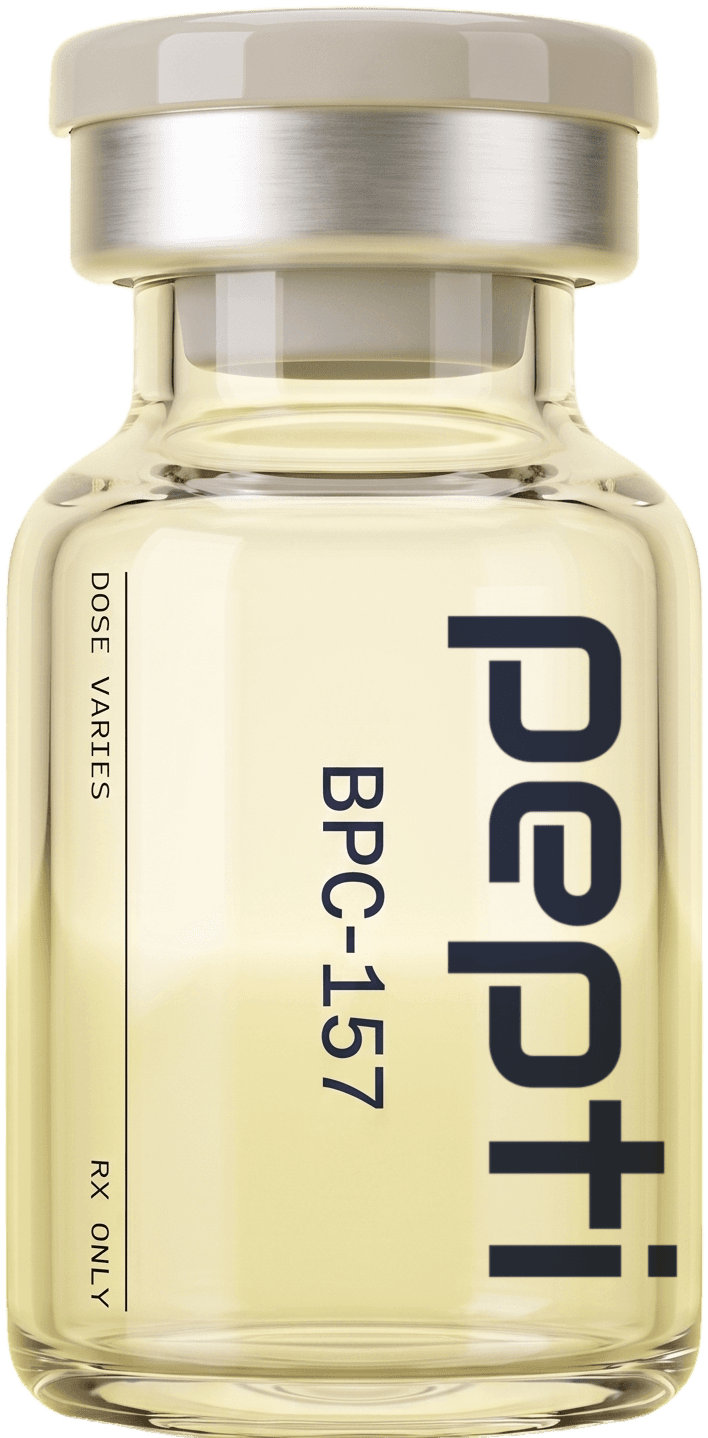
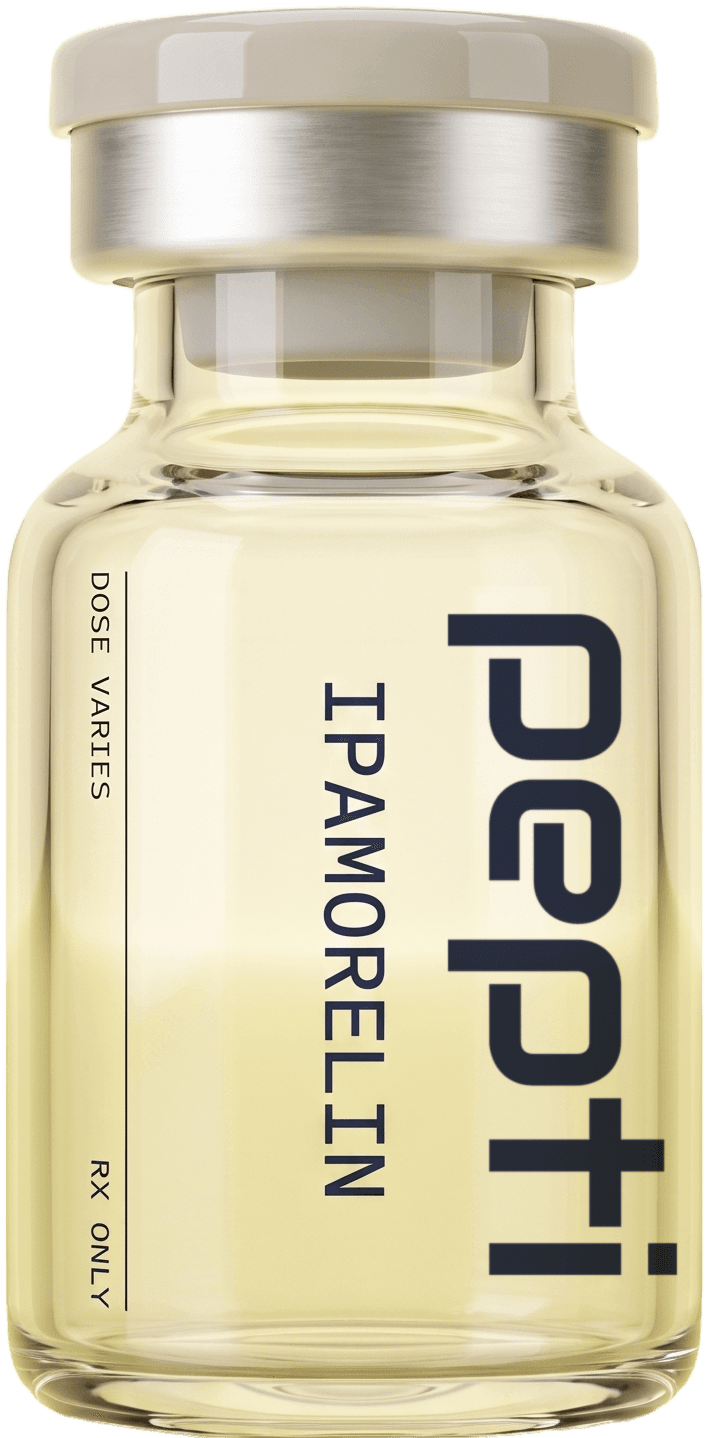
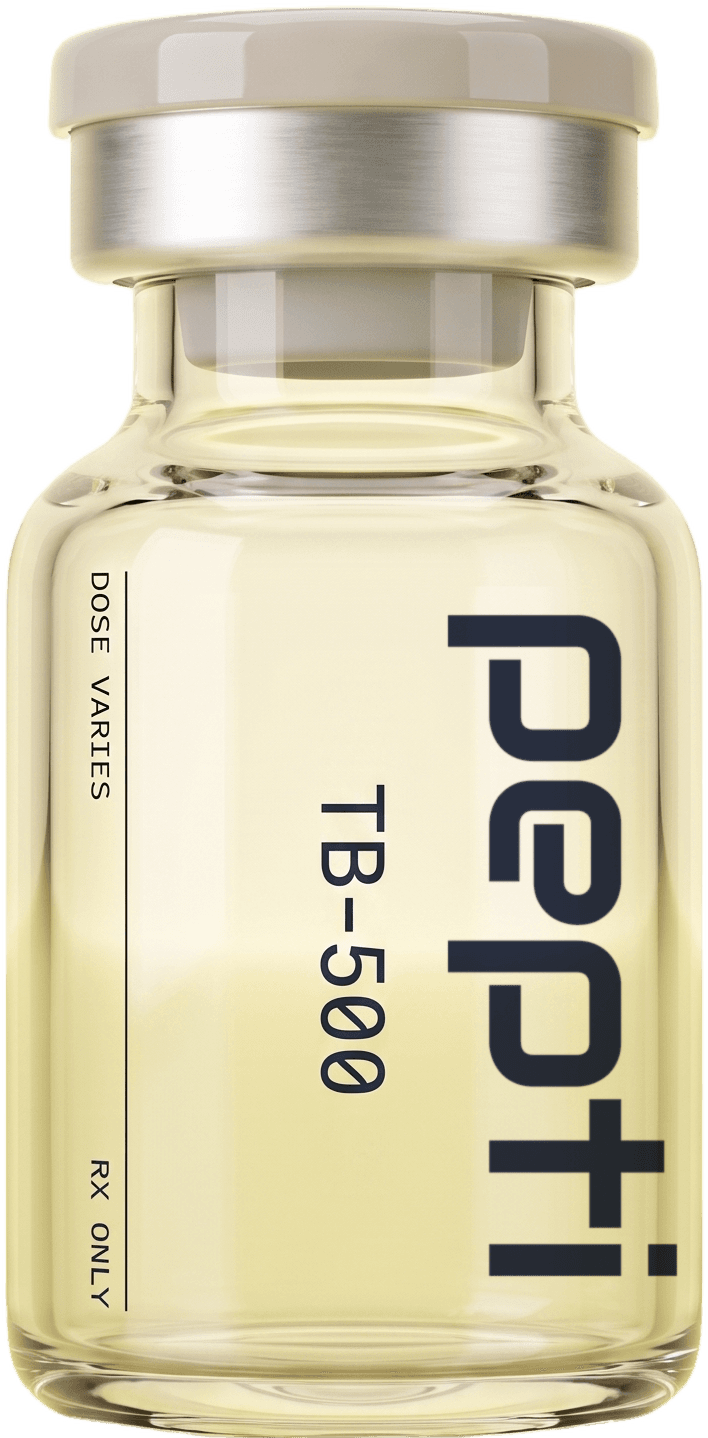
Yes, peptides are routinely combined, and most combinations are dispensed as a single vial precisely because the pairing is established clinical practice. What matters is that the combination is a prescribing decision rather than something assembled from a forum thread: the useful pairings combine different mechanisms, the pointless ones duplicate the same one, and a few genuinely change what your physician needs to monitor. Adding something yourself removes their ability to tell what is causing what, which is the practical cost most people underestimate.
— Can You Take Two Peptides Together? How Stacking Actually Works
The short answer
| If you want | The usual prescription | What is in it | Price |
|---|---|---|---|
| Two repair mechanisms in one injection | BPC-157 + TB-500 | 5 mg BPC-157 and 5 mg TB-500 in a 5 mL vial | $259/mo |
| Two GH-axis signals in one injection | CJC-1295 / Ipamorelin | 6 mg CJC-1295 and 12 mg ipamorelin in a 5 mL vial | $239/mo |
| Repair plus inflammation plus skin | KLOW | 50 mg GHK-Cu, 10 mg KPV, 10 mg BPC-157, 10 mg TB-500 | $259/mo |
| GH-axis plus repair in one vial | TITAN | 10 mg tesamorelin, 6 mg CJC-1295, 12 mg ipamorelin, 10 mg BPC-157 | $279/mo |
| Metabolic support in one vial | PHYSIQ | 10 mg tesamorelin, 10 mg ipamorelin, 10 mg AOD-9604, 10 mg MOTS-c | $279/mo |
| Sleep-focused combination | SERENITY | 5 mg DSIP, 5 mg Selank, 6 mg CJC-1295, 12 mg ipamorelin | $279/mo |
Each is an all-in monthly price covering medication, physician review, refill management and shipping. One vial means one injection, one schedule and one price, which is usually cheaper than two separate prescriptions.
— Can You Take Two Peptides Together? How Stacking Actually Works
What "one vial" actually means
— A compounded preparation is made for one person
Section 503A of the Federal Food, Drug and Cosmetic Act is the provision under which pharmacy compounding happens. The FDA states the condition plainly: drugs compounded under 503A "must be compounded based on the receipt of valid patient-specific prescriptions," and in exchange the preparation is exempt from FDA approval prior to marketing, from current good manufacturing practice requirements, and from labelling with adequate directions for use.
A blend like KLOW or TITAN is therefore not a product on a shelf you choose. It is a preparation a licensed pharmacist makes because a physician licensed in your state named those ingredients for you. A multi-ingredient vial gets no relaxed standard either: under 503A a compounder may only use a bulk drug substance that complies with a United States Pharmacopeia or National Formulary monograph, is a component of an FDA-approved drug, or appears on the 503A bulks list. Each ingredient in a four-peptide blend clears that bar separately.
— Why a blend is not the same as mixing two vials yourself
Three things differ. Sterility: a blend is compounded under the pharmacy's validated sterile process and sealed once, where drawing from two vials into one syringe adds steps nobody validated. Concentration: the directions on a blend vial were calculated against the finished concentration of every component, so if you combine two prescriptions in a syringe, neither label describes what is in the barrel. Record: a kitchen-table mixture is documented nowhere, which means the next person reviewing your case is reasoning about a prescription you are not taking.
— What compounding does not give you
The FDA is unambiguous: "Compounded drugs are not FDA approved. This means the agency does not review compounded drugs for safety, effectiveness or quality before they are marketed." That is as true of a four-peptide blend as of a single vial. What compounding gives you is a licensed pharmacy accountable for identity, purity, sterility and concentration, and a physician accountable for the prescription.
— Can You Take Two Peptides Together? How Stacking Actually Works
Why the good combinations are combinations
The logic is always the same: two mechanisms that do different jobs in the same process.
| Combination | Mechanism one | Mechanism two | Why they go together |
|---|---|---|---|
| BPC-157 with TB-500 | Angiogenesis and gut-lining protection | Actin binding, so repair cells migrate into damaged tissue | Different phases of one repair sequence, compared in BPC-157 vs TB-500 |
| CJC-1295 with ipamorelin | GHRH receptor | Ghrelin receptor | Two separate signals converging on the same pituitary pulse |
| GHK-Cu with BPC-157 and TB-500 | Collagen and matrix synthesis | Blood supply and cell migration | Repair plus the rebuilding of the matrix itself |
| KPV added to a repair blend | NF-kB and MAPK inflammatory signalling | The repair mechanisms above | Unresolved inflammation is the commonest reason a repair phase stalls |
| Thymosin alpha-1 with BPC-157 and KPV | Immune modulation | Repair and anti-inflammatory signalling | Recovery where immune function is the limiting factor |
That is what a blend is. It is not four peptides because four sounds better than one; it is four peptides because a single agent addresses one part of a sequence.
— Two receptors, one pulse: CJC-1295 with ipamorelin
CJC-1295 is a long-acting analogue of growth hormone-releasing hormone. Work in the Journal of Clinical Endocrinology and Metabolism in 2006 described prolonged stimulation of growth hormone and IGF-1 secretion in healthy adults, with a companion paper that year reporting that pulsatile secretion persisted rather than flattening. Ipamorelin acts elsewhere, as a ghrelin-receptor agonist characterised in the European Journal of Endocrinology in 1998 as the first selective growth hormone secretagogue — selective in that the reported release came without the cortisol and prolactin rise seen with earlier compounds in the class.
They are prescribed together because the two signals interact. A 2009 study in the American Journal of Physiology: Endocrinology and Metabolism examined the determinants of synergy between GHRH and a GH-releasing peptide in men and reported more growth hormone release from the combined stimulus than from either alone. That is a real combination: two doors into the same room.
— Two phases of one repair sequence: BPC-157 with TB-500
BPC-157 is described in preclinical work around new blood vessel formation and cell migration into injured tissue — a 2011 paper in the Journal of Applied Physiology reported tendon outgrowth, cell survival and cell migration in cultured tendon cells, and a 2017 paper in the Journal of Molecular Medicine described VEGFR2 activation as the proposed angiogenic mechanism. TB-500 is a fragment of thymosin beta-4 with a different described mechanism: a 2005 review in Trends in Molecular Medicine set out its role as an actin-sequestering protein, and a 1997 FASEB Journal paper described directional migration of endothelial cells.
Blood supply and cell motility are different problems, which is why BPC-157 + TB-500 exists as one preparation. It is also close to the only pairing with a published study of the two together: a 2026 paper in Joint Diseases and Related Surgery examined BPC-157 and TB-500 on Achilles tendon healing in rats. An animal study, not a human trial.
— Matrix and inflammation: GHK-Cu with KPV
GHK-Cu is a copper-binding tripeptide whose literature is about the matrix rather than blood supply: a 1988 paper in FEBS Letters reported stimulation of collagen synthesis in cultured fibroblasts, and a 2015 review in BioMed Research International collected the wider skin-regeneration work. Put GHK-Cu alongside BPC-157 and TB-500 — which is what KLOW and GLOW are — and the components address vascularisation, cell migration and matrix synthesis: three separate bottlenecks.
KPV, the C-terminal tripeptide of alpha-melanocyte-stimulating hormone, is the fourth element of KLOW and sits in FORTIFY too. A 2008 paper in Gastroenterology described PepT1-mediated uptake of KPV and reduced intestinal inflammation in animal models. If inflammatory signalling is stalling a repair phase, more repair signalling does not address it. That is the shape of a good argument for combining: name the step that is not happening, then name the agent described as acting on it.
— Where the other blend components come from
Thymosin alpha-1 has a randomised human literature in defined clinical populations — a 2013 trial in Critical Care and a 2025 multicentre trial in the BMJ in sepsis, and a 1998 randomised trial in Hepatology in chronic hepatitis B. Those are hospital populations, and nothing in them tells you what thymosin alpha-1 does for a healthy adult. What they establish is an immune-modulating agent with real clinical data behind it, which is why it heads FORTIFY.
The metabolic blends are built the same way. Tesamorelin has the strongest human record of that group: randomised placebo-controlled phase 3 trials in people with HIV and abdominal fat accumulation, in the New England Journal of Medicine in 2007 and pooled in the Journal of Clinical Endocrinology and Metabolism in 2010. MOTS-c is a mitochondrial-derived peptide described in Cell Metabolism in 2015 around metabolic homeostasis in mice, and AOD-9604 is a fragment of human growth hormone studied in Endocrinology in 2001 for effects on lipid metabolism in obese mice. A pituitary signal, a mitochondrial signal and a lipolytic fragment sit at three levels of one system in PHYSIQ and FUSION, and AOD-9604 also appears in SHRED for the same reason.
SERENITY pairs DSIP with Selank and the GH-axis components. DSIP has a small human literature, including a 1981 study in the Lancet and a 1992 study in Neuropsychobiology in chronic insomnia; the results are mixed and the studies small by modern standards. Selank is there for the anxiety-and-focus side rather than for sleep architecture, and Selank is supplied on its own where that is the whole goal. The GH-axis component is in the blend because growth hormone secretion is tied to slow-wave sleep, described in JAMA in 2000 in healthy men.
— Can You Take Two Peptides Together? How Stacking Actually Works
The combinations that need real care
| Combination | The problem |
|---|---|
| Two GHRH analogues, for instance sermorelin added to CJC-1295 | Duplication at the same receptor. More signal at one point is not more result, and it pushes IGF-1 |
| Two GLP-1 medications | Same receptor system, stacked side effects, no established benefit. Not done |
| A GH-axis peptide alongside a GLP-1 | Legitimate and common, but the two categories pull on glucose handling in different directions, so monitoring changes |
| Anything angiogenic on top of anything else angiogenic, with a cancer history | The caution is about the mechanism, and stacking it does not make it smaller |
| GHK-Cu alongside high-dose zinc supplementation | Zinc competes with copper absorption. Tell your physician what supplements you take |
| Several new peptides started in the same fortnight | Not a pharmacological problem, an interpretive one. See below |
| Prescribed peptides plus research-use-only vials bought online | Nobody is accountable for what is in the unregulated vial, so nobody can reason about the combination |
— Two GHRH analogues: sermorelin on top of CJC-1295
Sermorelin is GHRH(1-29), with a respectable human literature of its own — the Journal of Clinical Endocrinology and Metabolism published work on long-term administration in age-advanced men and women in 1997, and Archives of Neurology reported a controlled trial of GHRH on cognitive function in older adults in 2012.
Tesamorelin is also a GHRH analogue. CJC-1295 is also a GHRH analogue. Adding sermorelin to CJC-1295 is therefore not a combination; it is more of the same agonist at the same receptor. There is a reason Pepti supplies CJC-1295 / Ipamorelin / Sermorelin and Ipamorelin + Sermorelin as single preparations at fixed ratios rather than encouraging people to add a sermorelin vial to something they already hold.
— Two ghrelin-receptor agonists
The same argument applies on the other receptor, with direct published evidence about repeated stimulation. Hexarelin is a GH-releasing hexapeptide acting at the same receptor as ipamorelin. A 1998 paper in the Journal of Clinical Endocrinology and Metabolism examined growth hormone status during long-term hexarelin therapy, a companion paper in Growth Hormone and IGF Research that year asked directly whether desensitisation occurs, and a 2003 paper in the Journal of Endocrinological Investigation reported rapid desensitisation of the GH secretagogue receptor to hexarelin in vitro.
A receptor has a ceiling. Stacking hexarelin on ipamorelin is two keys in one lock. Hexarelin also has human data showing ACTH and cortisol release alongside growth hormone, in the Journal of Clinical Endocrinology and Metabolism in 1997 — a different profile from ipamorelin, which is why which one you are prescribed is a physician's decision rather than a question of taking both.
— Two repair peptides that already overlap
Repair peptides duplicate more easily than people expect, because several converge on angiogenesis. TB-500 has published work describing promotion of angiogenesis as well as cell migration, in a 2004 paper in Mechanisms of Ageing and Development, and GHK-Cu has its own angiogenic thread — a 1994 paper in the Journal of Cell Biology described copper-binding peptides from SPARC stimulating angiogenesis. That does not make KLOW wrong; the components differ in their dominant mechanism and the blend was formulated as a set. It does mean adding a separate BPC-157 vial on top of a blend that already contains BPC-157 is not adding a mechanism. It is changing a dose, without anyone having decided the dose should change.
Angiogenesis is also not selective, which is why a personal history of cancer is a discuss-first item for BPC-157, TB-500 and GHK-Cu individually and does not become less relevant when three arrive in one vial. The related caution sits on the growth-hormone side: IGF-1 rises are a documented consequence of GHRH-analogue therapy, and a 2004 meta-regression in the Lancet examined the association between circulating IGF-1 and cancer risk. That is one reason IGF-1 LR3 is not something to add on your own initiative.
— GLP-1 medications are not a place to improvise
Semaglutide and tirzepatide have the largest randomised human trial base in the catalogue — STEP 1 in the New England Journal of Medicine in 2021 and SELECT in 2023 for semaglutide, SURMOUNT-1 in 2022 and SURPASS-2 in 2021 for tirzepatide. Every one studied a single agent, including the head-to-head SURMOUNT-5 comparison in 2025. None studied both together, and the receptor overlap means the predictable result of combining them is the side-effect profile of both.
The FDA has also reported "multiple reports of adverse events, some requiring hospitalization, that may be related to dosing errors associated with compounded injectable semaglutide products," including cases where patients took doses beyond what appears in the approved labelling. Those are measurement problems, not molecule problems, and they are why directions are printed on your vial in millilitres and insulin-syringe units. A GH-axis peptide alongside a GLP-1 is a different and legitimate conversation — a prescriber decision because of the glucose interaction below.
— Copper, zinc, and anything from outside the prescription
GHK-Cu carries copper. High-dose zinc supplementation antagonises copper absorption, and zinc-induced copper deficiency is a documented clinical entity — a 2026 pharmacovigilance analysis in Clinical Nutrition ESPEN characterised its clinical patterns and associated factors across large-scale safety databases. Zinc, copper, high-dose fish oil, vitamin E and turmeric extracts are all pharmacologically active, and none of them are what most people picture when a form asks what medications they take.
On vials bought outside the prescription route the answer is simply no, and the reason is not moralistic. A research-use-only vial has no pharmacy standing behind identity, purity, sterility or concentration, so nobody can reason about a combination when one input is unknown. The problem is documented: a 2010 paper in Growth Hormone and IGF Research reported detection of a His-tagged Long-R3-IGF-I in a black market product. The comparison is in research peptides vs prescription peptides.
— Can You Take Two Peptides Together? How Stacking Actually Works
The attribution problem
This is the argument most patients have not heard, and it is the one that matters most in practice.
If you start one medication and something changes, good or bad, that change has one plausible cause. If you start three in a fortnight and then feel unwell, nobody can say which did it. Your physician cannot fix it by adjusting the right one, because they do not know which the right one is. The usual outcome is that everything gets stopped and months are lost.
Physicians introduce one change at a time for exactly this reason, and give each change long enough to judge. In a category where effects are gradual and individual response varies widely, that discipline is the only thing that turns your experience into usable information. How to judge whether something is working is covered in how do I know if peptides are working.
Why a blend does not break this rule
A four-peptide blend looks like four changes at once, and pharmacologically it is. But it is one prescription, one start date, one set of directions and one thing to stop. If something goes wrong with KLOW, your physician has one variable to remove; with a KLOW vial plus a separately sourced BPC-157 vial plus a new supplement, they have three, and two are not in the chart. The rule is not "never change more than one molecule." It is "never change more than one thing you would have to unpick."
How long is long enough
An injection-site reaction declares itself in hours. A change in sleep quality is usually assessable inside a fortnight. Anything tied to tissue or body composition is a matter of weeks, and lab markers are re-drawn on the interval your physician sets. Adding a second agent mid-window costs you the reading you were waiting for.
— Can You Take Two Peptides Together? How Stacking Actually Works
What changes when a second agent is added
| What your physician re-reviews | Why |
|---|---|
| Total load on a system, particularly growth signalling | Two agents prompting the same axis is different from one |
| Glucose handling | GH-axis peptides reduce insulin sensitivity; GLP-1s act in the other direction |
| Your other prescription medications | Anything affected by slowed gastric emptying, and anything with its own interaction profile |
| Supplements | Zinc, copper and anything with anticoagulant activity |
| Contraindications that stack | Cancer history and anticoagulant therapy apply to more than one agent here |
| Labs | Which markers, and how often, changes with the combination |
| Cost | Whether the addition earns its place, or whether one vial covers both goals |
Bloodwork is the part that people most want to skip when adding a second agent, and it is the part that makes the combination defensible. At-home blood testing covers hormone, metabolic and thyroid markers, and the general case is in do you need bloodwork before peptides.
The growth-hormone axis and glucose
Growth hormone has well-described effects on glucose metabolism and insulin sensitivity in humans, reviewed in Annals of Pediatric Endocrinology and Metabolism in 2017, and the relationship is visible at the extreme in acromegaly, reviewed in Pituitary in 2002. A GH-axis prescription such as CJC-1295 / Ipamorelin, tesamorelin or TITAN is therefore a reason to look at fasting glucose and HbA1c, particularly in anyone already carrying metabolic risk. Add semaglutide or tirzepatide and you have two agents acting on glucose handling in opposite directions — prescribed routinely, and a good example of why the monitoring plan is part of the prescription.
Gastric emptying, and contraindications that stack
GLP-1 receptor agonists slow gastric emptying, which puts them in front of every oral medication you take. Anything with a narrow therapeutic window or taken on an empty stomach is a conversation to have before adding a second injectable rather than after.
The individual cautions are short but they overlap. Anticoagulant therapy is a discuss-first item across the vascular-mechanism repair peptides. Cancer history sits across the angiogenic peptides and the GH axis. Pregnancy and breastfeeding rule out essentially the whole category. A patient with one of these does not have it once per vial — they have it once, and it applies to more of the combination than they expect.
— Can You Take Two Peptides Together? How Stacking Actually Works
How to add something properly, step by step
— 1. Name the gap, not the molecule
"I want to add BPC-157" is a worse message than "my shoulder is still the limiting factor after six weeks." The second lets the prescriber tell you whether the answer is a second peptide, a different peptide, a dose change, or something that is not a peptide at all.
— 2. Let them check for duplication first
— 3. Labs before the change, not after
A baseline taken after you have started tells you nothing about what the change did. If the addition moves markers — anything on the GH axis, anything metabolic — the draw goes first. This is the commonest sequencing mistake.
— 4. One start date, and one report afterwards
Start on a day you will remember and change nothing else that week: not the training, not the supplement stack, not the sleep schedule if you can help it. Then report what actually happened, including the boring outcome. "Nothing changed" is a result, and it is the one that most often leads to a better second decision.
— Can You Take Two Peptides Together? How Stacking Actually Works
Where compounded combinations stand with the FDA right now
None of these preparations is FDA approved
Compounded drugs are not FDA approved, and the FDA does not review them for safety, effectiveness or quality before they are marketed. That is a statement about the regulatory pathway, not a verdict on any ingredient: compounding under 503A exists so a licensed pharmacist can prepare something for an individual patient that no manufacturer makes.
The three categories, and why they move
For substances nominated for the 503A bulks list, the FDA sorted nominations into three categories. Category 1 covers substances that may be eligible and against which the agency does not intend to take enforcement action pending final rulemaking, provided conditions are met. Category 2 covers substances the agency has identified as presenting significant safety risks. Category 3 covers substances nominated without sufficient supporting information.
These lists move. The FDA's current list of bulk substances identified as potentially presenting significant safety risks, content current as of 22 April 2026, no longer carries BPC-157 among its active entries. The agency has also stated it does not intend to place substances nominated on or after 7 January 2025 into these categories at all. The Pharmacy Compounding Advisory Committee, which advises the FDA on scientific, technical and medical issues concerning compounding under sections 503A and 503B, continues to meet on substances under consideration; its votes are advice, and the FDA's determination follows separately.
What a pharmacy may compound is therefore a live question that pharmacies and prescribers track and patients should not have to. A combination assembled outside the prescription route sits outside all of it. The broader picture is in are peptides FDA approved.
— Can You Take Two Peptides Together? How Stacking Actually Works
What the evidence shows, honestly
There are almost no trials of peptide combinations. The pairings described above are grounded in mechanism and in prescriber experience, not in randomised comparisons of a blend against its components. Nobody can tell you that four peptides in one vial outperform two, because that study has not been done.
What can be said is narrower and still worth something. The mechanisms are separately described in the preclinical literature, the receptors involved are different in the pairings that matter, and clinical experience with these combinations is now extensive. That is a reasonable basis for prescribing. It is not evidence of superiority, and a provider presenting a blend as proven to work better is overstating what exists.
Dose of each component in a blend is also fixed by the formulation. That is an argument for simplicity and against precision: if you need an unusual amount of one component, a blend is the wrong tool and a single agent is the right one. Your physician makes that call.
None of these preparations is FDA approved. They are compounded at a US FDA-registered pharmacy against an individual prescription.
Where the human evidence is strong, and where it is not
Semaglutide and tirzepatide have large randomised phase 3 programmes with hard endpoints. Tesamorelin has randomised placebo-controlled trials in a defined population. Thymosin alpha-1 has randomised trials in sepsis and hepatitis B. ARA-290 has randomised human work in sarcoidosis-associated small fibre neuropathy reported in Molecular Medicine in 2012, and elamipretide, supplied as SS-31, has randomised trials in primary mitochondrial myopathy.
There are no large randomised controlled trials in humans for BPC-157 in soft-tissue injury, for TB-500 outside specific ophthalmic and dermal work, for GHK-Cu as an injection, for KPV, for MOTS-c or for epithalon. That literature is animal and cell research, and anyone describing those as proven in people is overstating what has been published — in a blend or on their own.
The fixed-ratio limitation
A blend is a set of ratios someone else chose: a feature when they suit you, a limitation when they do not. If your physician wants more of one component and less of another, the answer is single agents — BPC-157, TB-500, GHK-Cu, ipamorelin and tesamorelin are all supplied individually for exactly this reason. Per-product cost detail sits on each cost page.
— Can You Take Two Peptides Together? How Stacking Actually Works
When one peptide is the better answer
- You have not established what the single agent does for you yet. Six weeks on one prescription produces information. Six weeks on four produces a story.
- The goal is narrow. If the whole question is sleep, DSIP or SERENITY addresses it more directly than adding a GH-axis vial to a repair stack.
- The dose needs to be unusual. Fixed ratios cannot be adjusted; single agents can.
- The problem is structural. A complete rupture, a displaced fracture or a significant tear is a surgical question, and no number of peptides in a vial changes that.
- Cost is the constraint. One vial covering two goals is usually a better use of the money than two prescriptions that overlap.
Your physician will tell you if a combination is not the right tool for what you have described. A consultation does not guarantee a prescription.
— Can You Take Two Peptides Together? How Stacking Actually Works
Monitoring and bloodwork
There is no universal panel, and a provider running the same one on everyone is running a marketing exercise rather than a clinical one. What is consistent is that baseline comes before the change. GH-axis combinations commonly bring IGF-1 and glucose markers into the picture; metabolic combinations bring their own. At-home blood testing covers hormone, metabolic and thyroid markers without a lab visit.
Identity, purity, sterility, concentration and the label directions are the pharmacy's responsibility, and certificates of analysis are published at lab results. The prescription, the combination and the monitoring plan are the physician's. Your part is accurate disclosure and one change at a time.
— References
What this is based on.
References
- Chang CH, Tsai WC, Hsu YH, Pang JH. Pentadecapeptide BPC 157 enhances the growth hormone receptor expression in tendon fibroblasts · Molecules (2014) · PMID 25415472
- Krivic A, Anic T, Seiwerth S, et al.. Achilles detachment of rat and stable gastric pentadecapeptide BPC 157 · Journal of Orthopaedic Research (2006) · PMID 16583442
- Sikiric P, Seiwerth S, Rucman R, et al.. Stable gastric pentadecapeptide BPC 157: novel therapy in gastrointestinal tract · Current Pharmaceutical Design (2011) · PMID 21548867
- Cerovecki T, Bojanic I, Brcic L, Radic B, et al.. Pentadecapeptide BPC 157 (PL 14736) improves ligament healing in the rat · J Orthop Res (2010) · PMID 20225319
- Sikiric P, Seiwerth S, Rucman R, Turkovic B, et al.. Stable gastric pentadecapeptide BPC 157-NO-system relation · Curr Pharm Des (2014) · PMID 23755725
- Cox HD, Miller GD, Eichner D. Detection and in vitro metabolism of the confiscated peptides BPC 157 and MGF R23H · Drug Test Anal (2017) · PMID 28035768
- Thomas A, Görgens C, Guddat S et al.. Simplifying and expanding the screening for peptides <2 kDa by direct urine injection, liquid chromatography, and ion mobility mass spectrometry · J Sep Sci (2016) · PMID 26578461
- Farrar JT, Young JP Jr, LaMoreaux L, Werth JL et al.. Clinical importance of changes in chronic pain intensity measured on an 11-point numerical pain rating scale · Pain (2001) · PMID 11690728
- Meyer JD, Ho B, Manning MC. Effects of conformation on the chemical stability of pharmaceutically relevant polypeptides · Pharm Biotechnol (2002) · PMID 11987755
- Xu C, Sun L, Ren F, Huang P, et al.. Preclinical Safety Evaluation of Body Protective Compound-157, a Potential Drug for Treating Various Wounds · Regul Toxicol Pharmacol (2020) · PMID 32334036
- He L, Feng D, Guo H, et al.. Pharmacokinetics, distribution, metabolism, and excretion of body-protective compound 157, a potential drug for treating various wounds, in rats and dogs · Front Pharmacol (2022) · PMID 36588717
- Lee E, Padgett B. Intra-Articular Injection of BPC 157 for Multiple Types of Knee Pain · Altern Ther Health Med (2021) · PMID 34324435
Citations are provided for educational purposes. They do not constitute medical advice. Always discuss any peptide protocol with your prescribing physician.
— Common questions
Can You Take Two Peptides Together? How Stacking Actually Works, answered.
Yes, and it is the standard prescription for soft-tissue injury. They are dispensed in one vial so you take one injection on one schedule. They act at different points of the same repair sequence rather than duplicating each other, and a 2026 animal study in Joint Diseases and Related Surgery examined the two together on Achilles tendon healing in rats.
It is a common discussion, usually with a GH-axis peptide for lean-mass support during weight loss. It is a prescriber decision because the two categories affect glucose handling in different directions, and it changes what gets monitored — typically fasting glucose and HbA1c.
There is no fixed number, and the question is the wrong shape. What matters is whether each one has a distinct job, whether the combined cautions are acceptable for you, and whether your physician can still interpret what happens. Blends of four exist; four separate self-assembled prescriptions are a different situation.
Usually the blend. KLOW at $259 a month delivers four peptides for less than two separate prescriptions would cost, and it means one injection rather than several.
No, and this is the one firm answer on the page. Research-use-only vials carry no accountability for identity, purity, sterility or concentration, so neither you nor your physician can reason about what you are combining. See research peptides vs prescription peptides.
Message your prescriber, say what you are considering and why. They can tell you whether it duplicates what you already take, whether the timing makes sense and whether your labs need to change. That is a short conversation that protects months of treatment.
They can, and more importantly they make side effects harder to attribute. That is why one change at a time, given long enough to judge, is the approach a careful prescriber uses. General guidance on what to watch for is in peptide side effects: what to watch for.
Because the combination is written as one prescription and compounded as one preparation. Under section 503A a compounded drug is prepared by a licensed pharmacist against a valid patient-specific prescription, so the blend is a single medication with a single set of directions — one sterile process, one concentration calculation, one line in your chart.
No. The directions on each vial were calculated against that vial's concentration, and combining them produces something neither label describes. It also adds puncture and transfer steps the pharmacy never validated. If you want both in one injection, that is a request for a combined preparation and it goes to your prescriber.
They act at the same receptor, so this is duplication rather than combination. Published work on hexarelin specifically examined desensitisation of the GH secretagogue receptor with repeated exposure, in Growth Hormone and IGF Research in 1998 and the Journal of Endocrinological Investigation in 2003. Which one suits you is a prescribing decision, not an additive one.
Sermorelin, CJC-1295 and tesamorelin are all GHRH analogues, so adding one to another is more signal at the same receptor rather than a second mechanism. Where a prescriber wants both a GHRH analogue and a ghrelin-receptor agonist, that is what CJC-1295 / Ipamorelin and Ipamorelin + Sermorelin already are.
Not necessarily. Each component is present at the quantity the formulation specifies, which is not the same as the quantity in a single-agent vial of that peptide. Holding a single-agent vial of something already in your blend and using both does change that component's dose — a decision for your physician rather than for arithmetic.
No. Compounded drugs are not FDA approved, and the FDA does not review them for safety, effectiveness or quality before they are marketed. Compounding under section 503A exempts a preparation made against a valid patient-specific prescription from premarket approval, CGMP requirements and adequate-directions labelling, and each bulk substance used still has to satisfy the 503A conditions independently. See are peptides FDA approved.
Long enough to know what the first one did, which depends on what you are tracking rather than on a fixed number of weeks. Sleep changes read inside a fortnight; tissue and body-composition changes take longer; lab markers are re-drawn on the interval your physician sets.
That is what the intake is for. The interactions that matter most involve anything affected by slowed gastric emptying if a GLP-1 is involved, anticoagulant therapy alongside the vascular-mechanism repair peptides, and anything that moves glucose alongside a GH-axis agent. List everything, including supplements. The free assessment goes to a physician licensed in your state. A consultation does not guarantee a prescription.
— Next step
See what a physician
recommends for you.
A licensed physician in your state reviews your intake and decides what is appropriate. A consultation does not guarantee a prescription.
Important legal & safety information
The assessment process available on the Pepti website asks a series of medical questions, and the answers provided are reviewed by an independent licensed physician affiliated with our partner physician network. The licensed providers have established exclusionary criteria, and the answers provided determine if the individual is screened out of eligibility for treatment. The licensed clinicians retain the sole decision to prescribe peptide therapy and other compounded medications to patients. Treatment may be denied at the physician's sole discretion. If a prescription is not approved, you will not be charged for the medication.
Pharmacy Providers. Pepti is a technology platform and is not a healthcare provider, pharmacy, or prescriber. All medications offered through the platform are compounded by independent FDA-registered 503A or 503B compounding pharmacies based on a valid prescription written by a licensed physician for an individual patient. Compounded medications are not FDA-approved as products. The active pharmaceutical ingredients used by our partner pharmacies are sourced from FDA-registered facilities. Compounded medications may not undergo the same testing or quality control as commercially manufactured FDA-approved drugs.
Results vary. Results from peptide therapy and other compounded treatments vary based on individual factors, including age, weight, medical history, adherence to the prescribed protocol, lifestyle factors, and physiological response. Pepti makes no guarantee of any specific outcome. Statements about peptide therapy and compounded medications offered through the platform have not been evaluated by the Food and Drug Administration. These products are not intended to diagnose, treat, cure, or prevent any disease.
Product images. Product photographs and renderings shown on this website are for illustrative purposes only. The appearance of vials, packaging, labeling, and other materials you receive may vary and is determined by the dispensing compounding pharmacy.
Off-label use.Many peptides offered through the platform are prescribed for off-label use. “Off-label” means the medication is being prescribed for a use, dose, or patient population that is not specifically approved by the FDA. Off-label prescribing is legal and common in U.S. medical practice when supported by clinical experience and judgment.
Mailing & shipping. Pepti currently dispenses prescription medication to patients in all 50 states and Washington, D.C.. All orders ship in unbranded, tamper-evident packaging via expedited delivery from our partner compounding pharmacies. Temperature-sensitive medications ship with insulated packaging and ice packs. Shipping is included at no additional cost. We do not currently ship medication outside all 50 states and Washington, D.C., internationally, or to APO/FPO addresses.
Not for emergencies. Pepti is not designed for medical emergencies. If you are experiencing a medical emergency, call 911 or go to your nearest emergency room immediately. For urgent but non-emergency medical questions, contact your primary care provider or use an urgent care service.
No doctor-patient relationship with Pepti. Your use of the platform does not create a doctor-patient relationship between you and pepti LLC. A doctor-patient relationship is established only between you and the independent licensed physician who reviews your intake and prescribes your treatment. The physicians who use the platform are independent contractors and are solely responsible for the medical care they provide.
Prescription medications. All prescription products require a valid prescription from a licensed healthcare provider. By using the platform, you acknowledge that you are at least 18 years old and that the information you provide is true, accurate, current, and complete. Providing false information may result in inappropriate treatment recommendations or denial of service.
Cosmetic & wellness products.Certain products offered through Pepti — including skincare, hair care, body care, supplements, men's grooming, sports recovery, and sexual wellness products — are cosmetic or dietary supplement products, not prescription medications. These products do not require a prescription and are not reviewed or prescribed by a physician. Statements regarding dietary supplements have not been evaluated by the Food and Drug Administration. These products are not intended to diagnose, treat, cure, or prevent any disease. Results vary by individual. Consult your healthcare provider before starting any new supplement or topical product, especially if you are pregnant, nursing, or taking other medications.
pepti LLC · Delaware Limited Liability Company · 131 Continental Dr, Suite 305, Newark, DE 19713 · For media or partnership inquiries, email hello@hellopepti.com. For patient support, email support@hellopepti.com. For privacy and HIPAA inquiries, email privacy@hellopepti.com.