Cognitive · Reference
Peptides for Anxiety and Mood: Selank, Semax and What They Are Not
This page covers what is actually happening in the body when anxiety and low mood take hold, what each of these peptides is and how it is described to work, what the published research does and does not show, where each one stands with the FDA as of September 2026, what a physician rules out before prescribing any of them, and what people commonly describe once they start.

Reviewed by Dr. Gene, MD · Board-certified Family Medicine
Every Pepti prescription is reviewed by a licensed U.S. physician before it's dispensed — and only provided if clinically appropriate.
Treatments mentioned
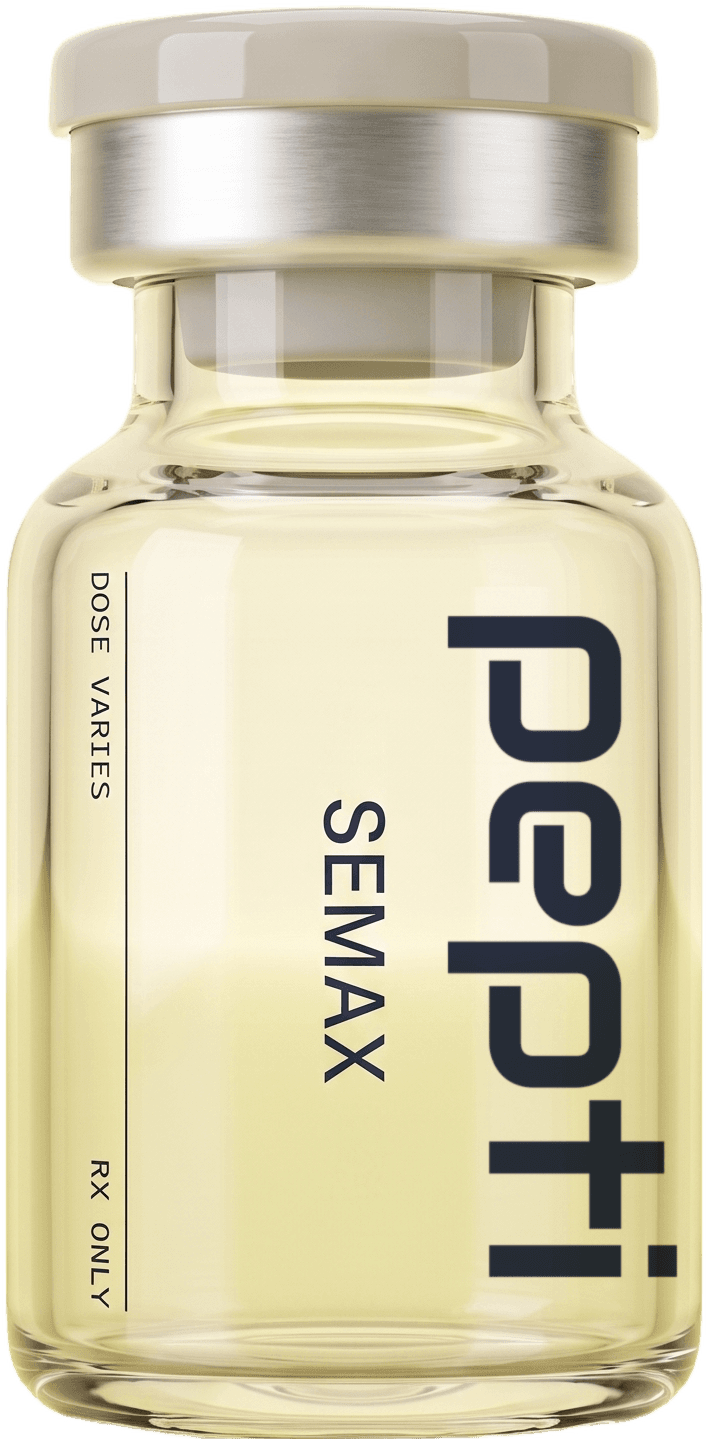
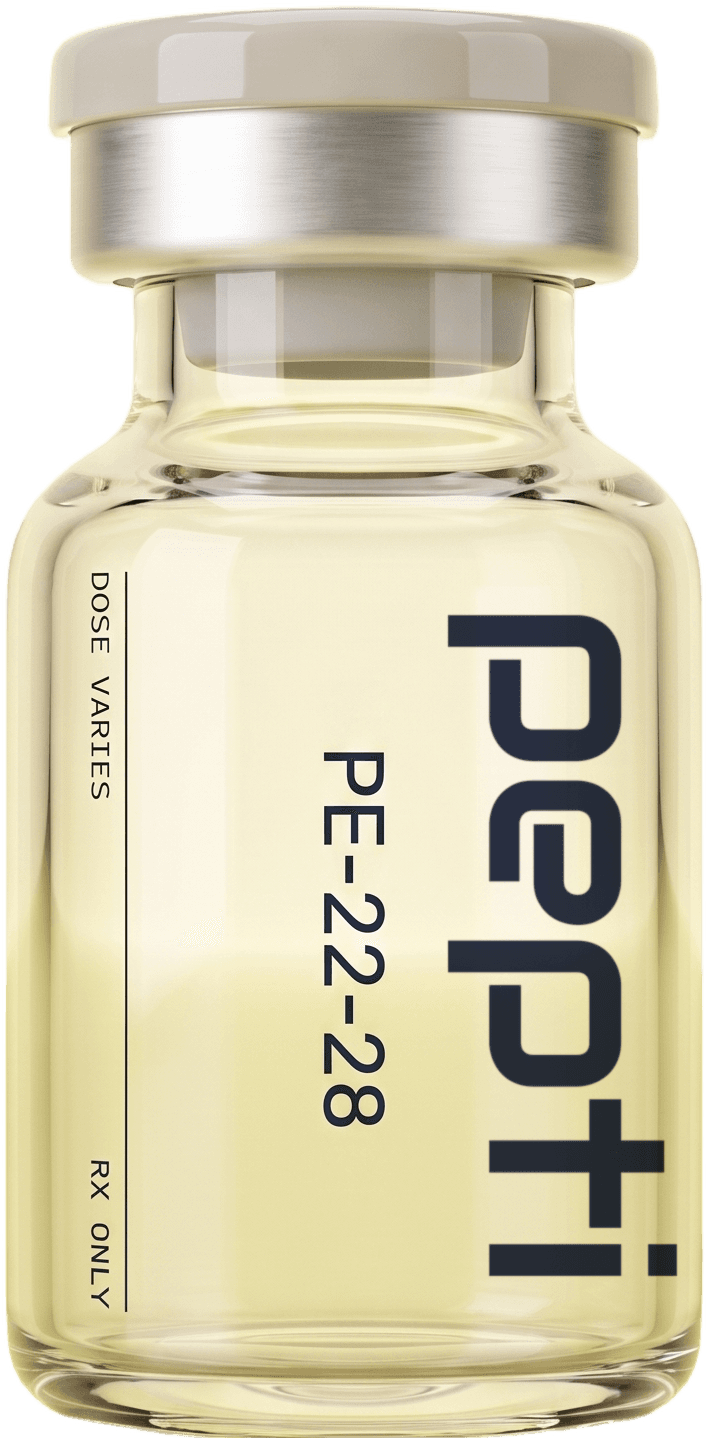
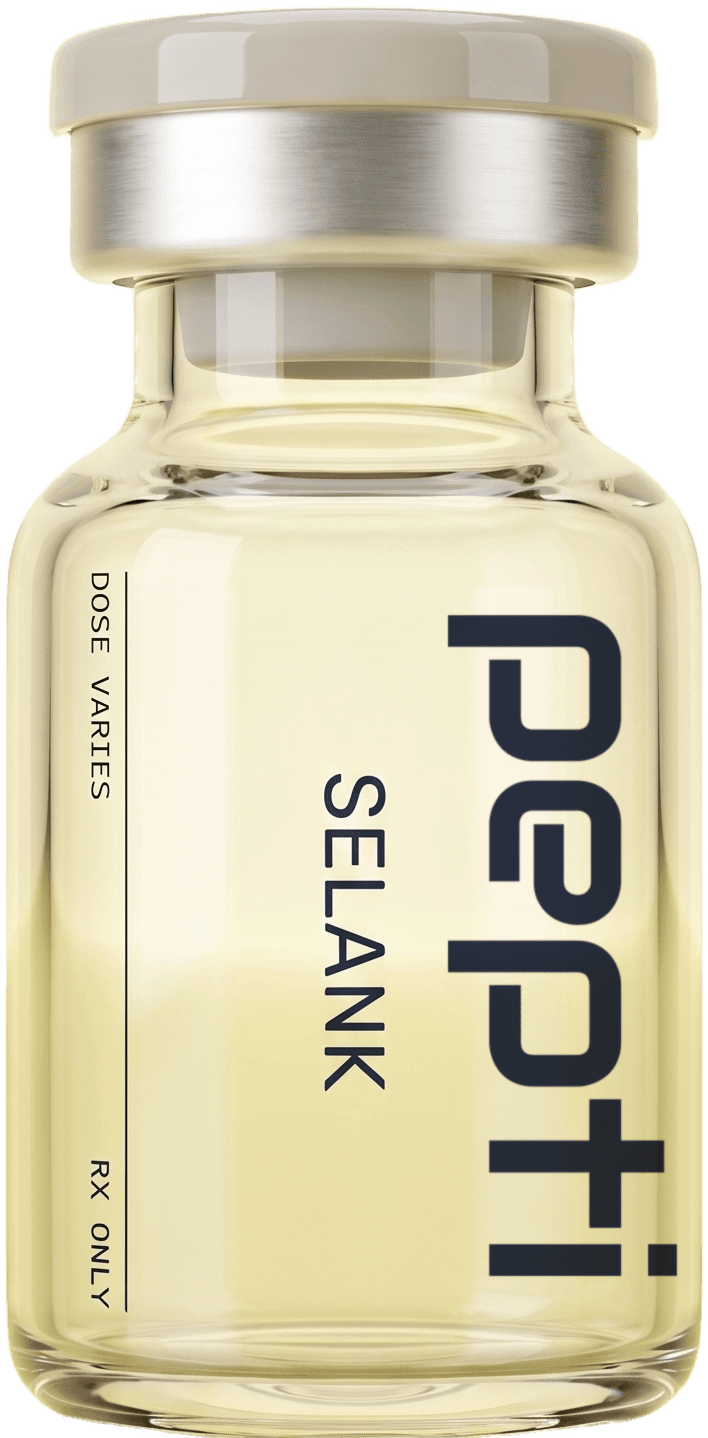
The peptides used for anxiety and mood are Selank, Semax and PE-22-28, plus blends that pair them with other molecules. Selank is studied as an anxiolytic that does not sedate, Semax for attention and mental fatigue, and PE-22-28 is a preclinical compound with no human evidence behind it. None of them is a treatment for an anxiety disorder or for depression, and none replaces therapy or an established psychiatric medication. All are prescription-only, compounded by licensed US pharmacies, and not FDA approved.
If you are in crisis or thinking about harming yourself, contact emergency services or call or text 988 in the US now. Nothing on this page is for that situation.
This page covers what is actually happening in the body when anxiety and low mood take hold, what each of these peptides is and how it is described to work, what the published research does and does not show, where each one stands with the FDA as of September 2026, what a physician rules out before prescribing any of them, and what people commonly describe once they start.
Peptides for Anxiety and Mood
The short answer
| If your situation is | The usual prescription | What is in it | Price |
|---|---|---|---|
| Situational anxiety and low stress tolerance | Selank | 10 mg Selank in 5 mL | $229 |
| The same, without injecting | Selank Nasal Spray | 50 mg Selank per 20 mL bottle | $269 |
| Mental fatigue, poor focus, flat motivation | Semax | 10 mg Semax in 5 mL | $229 |
| The same, without injecting | Semax Nasal Spray | 50 mg Semax per 20 mL bottle | $269 |
| Both in a single vial | Semax + Selank | 1 mg Semax, 1 mg Selank | $259 |
| Stress and mood alongside gut and inflammation complaints | ELEVATE Blend | 5 mg Semax, 5 mg Selank, 10 mg BPC-157, 10 mg KPV | $249 |
| Cognitive complaints alongside metabolic ones | SYNAPSE Blend | 5 mg Semax, 5 mg Selank, 10 mg MOTS-c, 10 mg Tesamorelin | $279 |
| Anxiety that mainly shows up at bedtime | SERENITY Blend | 5 mg DSIP, 5 mg Selank, 6 mg CJC-1295, 12 mg Ipamorelin | $279 |
Every price above is the all-in monthly figure: the medication itself, the physician review behind it, refill management and shipping. Treatment is a subscription, and the nasal and injectable forms of the same molecule are priced differently because the preparations differ.
In one paragraph: Selank is the peptide with human comparator trials in anxiety, all Russian and all small. Semax has a Russian clinical history in stroke and is prescribed here for mental fatigue rather than anxiety. PE-22-28 has an interesting mechanism and no human data. The blends exist for people whose anxiety or low mood arrives with something else: gut symptoms, metabolic complaints, or a night that will not settle. A physician decides whether any of them is appropriate at all, and the answer is sometimes that the problem is thyroid, sleep, alcohol or an untreated psychiatric condition, and no peptide is the right tool.
Peptides for Anxiety and Mood
What is actually going on in anxiety and low mood
Anxiety and low mood are not one thing, and the peptides on this page are aimed at different parts of the picture. Four pieces of physiology come up repeatedly in the research on Selank, Semax and PE-22-28.
The threat circuit and its brake
Anxiety, at the level of the brain, is a threat-detection system running with the gain turned up. The amygdala flags a stimulus as dangerous, the prefrontal cortex is supposed to evaluate that flag and dampen it, and when the balance tips toward the amygdala the result is a body braced for something that is not happening. The brain's main inhibitory signal, GABA, is the brake on that circuit. Benzodiazepines amplify GABA's action, which is why they calm quickly and also why they sedate, dull memory and produce dependence. The research interest in Selank rests on the claim that it touches GABA-related signaling without those three costs, which is the central question of the whole Selank literature.
The stress hormone axis
The second system is the hypothalamic-pituitary-adrenal axis. Under stress the hypothalamus releases CRH, the pituitary responds with adrenocorticotropic hormone (ACTH), and the adrenal glands make cortisol. In sustained stress that loop stops switching off cleanly, and chronically raised cortisol is one of the better-replicated biological findings in both anxiety and depression. Semax is a fragment of ACTH, which sounds alarming until the detail is understood: the fragment used is the part with effects on the brain, not the part that tells the adrenal glands to make cortisol, and it is not described as driving cortisol production. DSIP, the sleep peptide in SERENITY, was reported in a 1985 Neuroendocrinology study to reduce CRF-induced corticosterone release in animals, the same axis from the other end.
Neurotrophic signaling and the slow route to mood
The third piece is brain-derived neurotrophic factor, BDNF, a protein that governs how neurons grow, connect and adapt. Reduced BDNF signaling in the hippocampus and prefrontal cortex is a consistent finding in depression research, and the delayed onset of conventional antidepressants is often explained by the weeks it takes for BDNF-driven changes to accumulate. Both Selank and Semax are described in rat studies as raising BDNF expression in the hippocampus, and PE-22-28's whole rationale is a faster route to the same downstream changes. This is why these peptides are discussed as mood compounds at all, and also why the honest framing is "described in animals," because every one of those BDNF papers is a rodent study.
The gut and the immune system
The fourth piece is the reason ELEVATE exists. Inflammation and mood track together: people with inflammatory bowel disease have higher rates of anxiety and depression, inflammatory signaling molecules reach the brain, and the gut produces a large share of the body's serotonin. A 2016 review in Current Neuropharmacology set out the theoretical case for BPC-157 and the brain-gut axis, and Selank itself was reported to have immunomodulatory effects in patients with anxiety-asthenic disorders in a 2008 Russian clinical paper. None of this establishes that treating the gut treats the mood; it establishes that the two are connected, which is a hypothesis a physician may reasonably act on, not a settled mechanism.
Peptides for Anxiety and Mood
What physicians prescribe for anxiety and mood
Each product below is described by mechanism, evidence, what human data exists, and who it tends to suit. Directions are set by your physician and printed by the pharmacy on the vial or bottle; nothing here is a protocol.
Selank
Selank is a synthetic heptapeptide built from tuftsin, a four-amino-acid immune fragment of an antibody molecule, with a Pro-Gly-Pro tail added so it survives longer in the body. It was developed at the Institute of Molecular Genetics in Moscow, and the Russian literature on it goes back to the 1990s.
Three mechanisms are described. A 2001 Bulletin of Experimental Biology and Medicine paper reported that Selank inhibits enkephalin-degrading enzymes, which would prolong the action of the body's own opioid-family peptides that damp anxiety; the authors proposed this as a possible basis for its anxiolytic effect. A 2016 Frontiers in Pharmacology study reported that Selank changed the expression of genes involved in GABAergic neurotransmission in rats, with a 2017 follow-up in a human neuroblastoma cell line. A 2008 Doklady Biological Sciences study reported that intranasal Selank regulated BDNF expression in the rat hippocampus, and a 2019 Bulletin of Experimental Biology and Medicine paper reported it protected against ethanol-induced memory impairment in rats through BDNF in the hippocampus and prefrontal cortex. A 2018 review in Protein and Peptide Letters pulls the molecular work together.
The human evidence is what separates Selank from everything else on this page. A 2008 paper in the Zhurnal Nevrologii i Psikhiatrii imeni S.S. Korsakova reported on Selank in the treatment of generalized anxiety disorder and neurasthenia; a 2014 paper in the same journal compared its anxiolytic effect and tolerability with phenazepam, a Russian benzodiazepine, in patients with anxiety disorders; a 2015 paper looked at optimizing anxiety-disorder treatment with it. These are real patient studies with a benzodiazepine comparator, which is more than most compounded peptides can say. They are also small, published in Russian with English abstracts, conducted within one research tradition, and not replicated in a Western randomized trial. A 2021 review in the Journal of Clinical Pharmacology, written for US clinicians, covered Selank alongside other GABA-acting agents and is the most accessible English-language summary of what is and is not known.
Selank suits the person whose problem is situational anxiety and low stress tolerance: the reactivity, the bracing, the poor recovery after a stressful day. It is not a treatment for an anxiety disorder and does not replace one.
Selank Nasal Spray is the same molecule delivered through the nose, which is how it has most often been given in the research; a 2016 Eksperimental'naia i Klinicheskaia Farmakologiia study compared its effects after intranasal and intraperitoneal administration in two mouse strains and reported activity by both routes. The nasal form suits the person who will not inject, or who wants something they can use through the day; the vial carries more total peptide per container. Neither route is better in general, and your physician chooses.
Semax
Semax is a synthetic heptapeptide built from the 4–7 fragment of ACTH with the same Pro-Gly-Pro tail as Selank. The ACTH fragment retained is the one with effects on the brain; the part of the hormone that signals the adrenal glands to make cortisol is not included, so Semax is not a stress hormone and is not described as raising cortisol.
The mechanistic work is again mostly rat. A 2006 Brain Research paper reported that Semax regulated BDNF and its receptor trkB in the rat hippocampus; a 2010 Cellular and Molecular Neurobiology study reported that Semax activated neurotrophin gene transcription after cerebral ischemia; a 2014 BMC Genomics analysis described it affecting immune and vascular genes in rat focal ischemia. A 2024 European Journal of Pharmacology study reported antidepressant-like and antistress effects of Semax in male rats under chronic unpredictable stress, which is the closest the Semax literature comes to the mood question, and it is an animal study.
The human evidence is concentrated in Russian stroke work: a 1997 clinical and electrophysiological study in acute hemispheric ischemic stroke, a 2005 paper on cerebrovascular insufficiency, and a 2018 study of Semax at different stages of ischemic stroke, all in the Korsakov journal. There is also a 2018 Bulletin of Experimental Biology and Medicine fMRI study of Semax's effects on the brain's default mode network in healthy volunteers, and a 2020 Doklady Biological Sciences study of 52 healthy participants that imaged resting-state connectivity before and after Semax, Selank or placebo and reported effects of both peptides on connectivity between the right amygdala and the right temporal cortex. Semax is a registered drug in Russia, available as 0.1% and 1% nasal drops, which the FDA's own July 2026 briefing document acknowledges. A 2007 Medical Hypotheses paper proposed it for attention-deficit hyperactivity disorder; it is a hypothesis paper, not a trial.
Semax suits the person whose complaint is mental fatigue, poor sustained attention and flat motivation rather than anxiety. It is not a stimulant, it is not prescribed for anxiety, and there are no randomized human trials of Semax for depression or for attention deficit in those words.
Semax Nasal Spray is the format closest to how the molecule has been studied and how it is registered abroad; a 2006 Bioorganicheskaia Khimiia study measured Semax reaching the brain and blood of rats after intranasal administration. It suits the person who wants the attention effect without a needle.
Semax + Selank
Semax + Selank puts both molecules in a single vial for the person whose picture is both: reactivity and poor focus at once, which is common because sustained anxiety degrades attention. The two share a Pro-Gly-Pro tail and a research origin, and the 2020 Doklady Biological Sciences imaging study is the one paper that examined them side by side in the same healthy participants. Combining them is a physician's decision, and it is sensible only when both targets are actually present.
PE-22-28
PE-22-28 is a seven-amino-acid fragment of spadin, itself a fragment of the sortilin propeptide. Its target is TREK-1, a background potassium channel in neurons. The story starts with a 2006 Nature Neuroscience paper reporting that mice lacking TREK-1 had a depression-resistant phenotype, and a 2010 PLoS Biology paper describing spadin as a TREK-1 blocker with antidepressant-like activity in rodents. A 2012 Neuropharmacology paper reported spadin lacked the side effects expected from TREK-1 blockade in animals, a 2015 British Journal of Pharmacology paper described it regulating synaptogenesis, and a 2017 Frontiers in Pharmacology paper introduced the shortened analogs, of which PE 22-28 was the lead, reporting better TREK-1 inhibition, in vivo stability and antidepressant-like activity in mice. A 2019 Pharmacology and Therapeutics review summarizes the field.
Two human papers exist, and neither is a treatment trial: a 2017 Journal of Affective Disorders study reported that serum sortilin-derived propeptide concentrations were decreased in patients with major depressive disorder, and a 2018 Neuropsychiatric Disease and Treatment paper reported them rising after electroconvulsive therapy in treatment-resistant patients. Those are biomarker observations. There are no randomized human trials of PE-22-28, and no human trials of it at all. PE-22-28 is priced on its product page, and anyone presenting it as a depression treatment is well ahead of the evidence. Where a physician considers it, it is for a patient already under psychiatric care whose mood is being managed by treatments with evidence, and who understands they are using a preclinical compound.
ELEVATE Blend
ELEVATE Blend pairs Semax and Selank with BPC-157 and KPV for the person whose stress and mood complaints arrive with gut and inflammation complaints. BPC-157 is a fifteen-amino-acid fragment of a protein found in human gastric juice, studied in animals for protection of the gastrointestinal lining; the 2016 Current Neuropharmacology brain-gut review and the 2022 Neural Regeneration Research review on its central nervous system effects are the relevant reading. KPV is the last three amino acids of alpha-melanocyte-stimulating hormone; a 2008 Gastroenterology study reported that KPV taken up through the PepT1 transporter reduced intestinal inflammation in mouse models of colitis. Their place in a mood formula rests on the gut-inflammation-mood connection described above, which is a hypothesis rather than a settled mechanism. ELEVATE Blend suits the person with a documented gut complaint and a stress complaint, not the person with anxiety alone.
SYNAPSE Blend
SYNAPSE Blend pairs Semax and Selank with MOTS-c and tesamorelin for cognitive complaints that arrive alongside metabolic ones: the person whose mental fatigue tracks with weight, blood sugar or visceral fat. Tesamorelin is the one component on this page with an FDA-approved reference product, Egrifta, approved in 2010 for excess abdominal fat in HIV-associated lipodystrophy; a 2013 JAMA Neurology study reported effects of growth-hormone-releasing hormone on brain GABA levels in mild cognitive impairment and healthy aging, which is the thread that connects it to a cognition blend. MOTS-c is a mitochondrial-derived peptide described in a 2015 Cell Metabolism mouse study as promoting metabolic homeostasis. SYNAPSE Blend is the wrong choice for anxiety on its own and the right conversation only when the metabolic picture is real.
SERENITY Blend
SERENITY Blend puts Selank alongside DSIP, CJC-1295 and ipamorelin for anxiety that mainly shows up at bedtime. DSIP, delta sleep-inducing peptide, has small human trials from the 1980s and early 1990s: a 1981 Lancet report in insomniacs and a 1992 double-blind Neuropsychobiology study in chronic insomniac patients, with results a 2006 Journal of Neurochemistry review called "a still unresolved riddle." CJC-1295 and ipamorelin are growth hormone secretagogues included for the overnight growth hormone pulse. SERENITY Blend is covered in full in peptides for sleep; here the point is that Selank is the anxiety component, and a physician chooses this blend only when the night, not the day, is where the anxiety lives.
Peptides for Anxiety and Mood
What the evidence shows, and what it does not
Selank: human comparator trials, all Russian, all small
Selank is the only peptide on this page with human trials in anxiety. The 2008, 2014 and 2015 Korsakov journal papers studied patients with generalized anxiety disorder, neurasthenia and anxiety disorders, and the 2014 paper used phenazepam as an active comparator. What those papers report is anxiolytic activity with better tolerability than the benzodiazepine, and without its sedation. What they do not provide is a large, Western, placebo-controlled randomized trial, a published effect size in units a US clinician would recognize, or long-term safety data. There are no randomized human trials of Selank outside that Russian tradition.
Semax: stroke trials abroad, imaging in healthy volunteers, nothing in depression
Semax's human record is in ischemic stroke, in Russian clinical studies, and in fMRI work in healthy volunteers. The FDA's July 2026 briefing document noted that the Russian-language references could not be considered because full texts were not available in English, and that the neuroprotective and nootropic studies it could find were in healthy adults. There are no randomized human trials of Semax for depression, anxiety or attention deficit. The 2024 European Journal of Pharmacology antistress findings are in rats.
PE-22-28: animal and cell work only
There are no human trials of PE-22-28. The two human papers on sortilin-derived propeptides are biomarker studies in depressed patients, not treatment studies. Everything about its antidepressant-like activity is rodent work, and it should be read as a mechanism that has not yet been tested in people.
What the evidence does not establish
In one place, the human data: Selank has small Russian patient studies in anxiety disorders, one with a benzodiazepine comparator, and fMRI in healthy volunteers; Semax has Russian stroke studies, fMRI in healthy volunteers and a registered nasal product in Russia; PE-22-28 has none; DSIP has small insomnia trials from the 1980s and 1990s with mixed results; BPC-157 and KPV have animal and cell work and no human mood data.
- It does not establish that any of these peptides treats generalized anxiety disorder, panic disorder, social anxiety disorder or major depression. Those conditions have treatments with strong evidence, and a peptide is not one of them.
- It does not establish an effect size or a response rate in a US population.
- It does not establish a human timeline; the windows described later on this page are patient reports.
- It does not establish long-term safety over years of use.
- It does not establish an interaction profile with SSRIs, SNRIs, benzodiazepines or antipsychotics, because those studies have not been run. That is why the medication list on the intake matters.
Peptides for Anxiety and Mood
Where these stand with the FDA right now
This has moved several times in 2026 and most of what is published online is out of date. Verified against fda.gov in September 2026.
Compounded, not approved
Every product on this page is compounded by a state-licensed pharmacy to a physician's prescription. The FDA's own compounding Q&A states: "Compounded drugs are not FDA-approved. This means that FDA does not verify the safety, effectiveness or quality of compounded drugs before they are marketed." Under section 503A, a pharmacy may compound with a bulk substance only if it has a USP or NF monograph, is a component of an FDA-approved drug, or appears on the 503A bulks list; the FDA also sorts nominated substances into three interim categories, and has said it will not place substances nominated on or after 7 January 2025 into those categories at all. The positive list at 21 CFR 216.23 still holds the six substances placed there in 2019, none of them a peptide.
The April 2026 Category 2 removals
On 15 April 2026 the FDA announced the removal of twelve peptides from Category 2 of its interim 503A list, the category for nominated substances flagged as raising significant safety risks, effective about a week later, and was explicit that removal from Category 2 does not by itself place a substance on the bulks list or into Category 1. The FDA's safety-risks page, current as of 22 April 2026, now lists Semax, Selank acetate (TP-7), emideltide, CJC-1295, ipamorelin acetate, BPC-157, KPV and MOTS-c under substances "nominated but withdrawn." The categories document updated 14 May 2026 carries none of the peptides on this page in Category 1, 2 or 3; Category 2 under 503A is down to six substances: cesium chloride, domperidone, germanium sesquioxide, ibutamoren mesylate, kisspeptin-10 and quinacrine hydrochloride for intrauterine use.
Selank: withdrawn in 2024, never reviewed
Selank has a different history from the peptides that made the news in 2026. Selank acetate was placed in Category 2 in September 2023. In the FDA's list updated 27 September 2024, the agency recorded that "Selank acetate (TP-7)" had been removed from Category 2 "because FDA received additional information from the nominator indicating that they intended to nominate a different bulk drug substance." The nomination was withdrawn as a mistake rather than resolved on the science, a year and a half before the April 2026 removals. It now sits among substances nominated but withdrawn, appears in no category on the 14 May 2026 list, was not on the July 2026 advisory committee agenda, and is not among the five substances the committee will consider before the end of February 2027. So: not flagged as a safety risk since 2024, never evaluated by the committee, no active nomination.
Semax: reviewed in July 2026 and recommended
Semax was placed in Category 2 in 2023 and is now listed as nominated but withdrawn. The FDA brought it to its Pharmacy Compounding Advisory Committee on 24 July 2026, as Semax free base and Semax acetate, for the nominated uses of cerebral ischemia, migraine and trigeminal neuralgia. The FDA's briefing document concluded that "a balancing of the criteria weighs against" listing: it judged both forms not well characterized, could not rule out immunogenicity from aggregation and peptide-related impurities for the injectable and nasal routes, and found "insufficient evidence of effectiveness" for the nominated uses on the English-language material available. It also noted that Semax products are "widely marketed in the United States" for anxiety, depression and attention, among other things. The committee voted 8–5, with one abstention, to recommend adding Semax to the 503A Bulks List, one of six peptides it recommended that week over the objection of FDA's own reviewers. A committee vote is advice, not a decision. The FDA issues its own determination afterwards, and as of September 2026 it has not.
PE-22-28: not in the process at all
PE-22-28 does not appear in Category 1, 2 or 3 of the 14 May 2026 document, does not appear on the safety-risks page either in the Category 2 table or among withdrawn substances, was not on the July 2026 agenda, and is not on the 21 CFR 216.23 list. No safety notice, no vote either way; it has simply not been through the process.
The blend components
BPC-157 and KPV were reviewed on 23 July 2026 and each recommended 8–6 with one abstention; MOTS-c was recommended 7–5 with two abstentions; all three against FDA staff recommendations. DSIP, which the FDA lists as emideltide, was reviewed on 24 July 2026 for opioid withdrawal, chronic insomnia and narcolepsy; the FDA's briefing document called the insomnia evidence "inconclusive and at best preliminary," and the committee voted 6 in favor, 7 against, with 1 abstention, and so did not recommend adding emideltide, the only one of the seven peptides that week not to receive a favorable vote. CJC-1295 and ipamorelin were each voted against in late 2024 and have since been withdrawn; ipamorelin acetate remains in Category 2 only under the separate 503B policy for outsourcing facilities, which is a different pathway from the 503A pharmacy compounding of a patient-specific prescription. Tesamorelin is the active ingredient of an approved product and has never been in the 503A categories.
The plain-English version of all of this is in are peptides FDA approved. None of it changes the basic position: each of these is legal for a licensed physician to prescribe and a state-licensed pharmacy to compound, and none is an FDA-approved drug product.
Anti-doping
The 2026 WADA Prohibited List, in effect from 1 January 2026, does not name Selank, Semax, PE-22-28 or DSIP. It does name BPC-157 in section S0, non-approved substances, prohibited at all times, which covers ELEVATE Blend; and it lists CJC-1295, tesamorelin and ipamorelin under S2.2.4, growth hormone releasing factors, which covers SERENITY Blend and SYNAPSE Blend. Semax's parent hormone class, corticotrophins, appears at S2.2.2, and a tested athlete should ask their anti-doping body about an ACTH fragment before assuming anything.
Peptides for Anxiety and Mood
What a physician rules out first
A prescription for anxiety or mood is not the first step; it is what is left after the reversible causes are addressed. The intake and the physician review exist for this table.
| What is checked | Why it matters |
|---|---|
| Thyroid function | Overactive thyroid presents as anxiety, palpitations and insomnia |
| Sleep, including apnoea | Broken sleep produces anxiety and low mood directly |
| Caffeine, alcohol, cannabis, stimulants | All four are common and reversible causes |
| Existing psychiatric care and medications | Interaction review, and that team should be involved |
| Suicidal thoughts or self-harm | Needs urgent care, not a prescription from a website |
| Iron and B12 | Deficiency presents as low mood and mental fatigue |
At-home blood testing covers the thyroid and metabolic side. If something on that list is driving your symptoms, a peptide is the wrong tool and a physician should say so.
Thyroid and metabolic causes
An overactive thyroid produces a picture clinically indistinguishable from an anxiety disorder: racing heart, tremor, heat intolerance, insomnia and a mind that will not settle. An underactive one produces low mood, fatigue and slowed thinking. Both are a blood test, as are blood sugar swings and iron or B12 deficiency, which present the same way.
Sleep and substances
Fragmented sleep is one of the most reliable ways to produce anxiety and low mood in a healthy person, and obstructive sleep apnea does it every night. If the anxiety is worst in the morning, if there is snoring, or if sleep is short, the physician's first question is the night, not the peptide; that is peptides for sleep.
Caffeine past the early afternoon, alcohol in the evening, cannabis and stimulants all produce or amplify anxiety and all withdraw into low mood. Six coffees a day outrun any vial, which is why the intake asks.
A psychiatric diagnosis that needs treatment
If the picture is a generalized anxiety disorder, panic disorder, major depression, bipolar disorder or anything with suicidal thinking, the right response is a psychiatrist or a therapist and a treatment with evidence, not a peptide. A physician reviewing an intake should say so plainly. Where a patient already has psychiatric care, that team should be involved in any decision to add a peptide, and no provider should ever suggest reducing or stopping a psychiatric prescription.
Peptides for Anxiety and Mood
What to expect, and when
These are patterns described by patients and prescribers, not trial endpoints. Nobody can promise an outcome, and a physician decides whether treatment is appropriate at all.
Nasal or injectable, and how they are dosed
These are the two peptides here where a nasal spray is a genuine alternative rather than a compromise, because the nasal route is how they have most often been given in research. Your physician chooses form and schedule, and the pharmacy prints your directions on the bottle or vial.
| Form | Practical differences | Notes |
|---|---|---|
| Nasal spray | No needles, easy to carry, used through the day | 50 mg per bottle for both Selank and Semax |
| Injectable vial | Higher total content per vial, subcutaneous | 10 mg per 5 mL for both |
| Blend vial | One injection covering several targets | Sensible only if you have those targets |
The time windows people describe
| Timeframe | What patients commonly describe |
|---|---|
| Days 1 to 7 | Very little, or a mild same-day effect after dosing that fades |
| Weeks 2 to 4 | Less reactivity to ordinary stressors, easier sustained attention |
| Weeks 4 to 8 | Where a prescriber reassesses whether it earns its cost |
Those are patient reports, not trial endpoints. Response varies and nobody can promise an outcome. See how do I know if peptides are working.
The most common description with Selank is not feeling medicated; it is noticing, a few weeks in, that something which would ordinarily have produced a spike did not. With Semax it is usually that a task that would have been abandoned got finished. Neither produces a benzodiazepine-style wave of calm or a stimulant-style lift, and someone expecting either may conclude it is not working when it is doing what the literature describes. Refills run on a 28-day cycle, one vial or bottle per fill; no withdrawal or rebound is described in the Selank or Semax literature, and the decision to continue is made between patient and physician on whether the change is real and worth it.
Peptides for Anxiety and Mood
When a peptide is the wrong tool
A reference that only ever recommends its own products is not much of a reference. Some honest cases:
- The picture is a psychiatric disorder. Anxiety disorders and depression have effective, evidence-based treatment. This category is not that, and substituting it delays care that works better. The physician's job is to say so.
- The problem is the night. If anxiety is mainly a bedtime problem, or sleep is short and broken, the conversation is SERENITY Blend or DSIP and a proper look at the sleep itself, covered in peptides for sleep.
- The problem is energy, not mood. Persistent fatigue with normal mood is more often iron, B12, thyroid or sleep than anything Semax addresses. Methylcobalamin or NAD+ may be the conversation after the blood work, not before it.
- The complaint is desire and connection rather than anxiety. Oxytocin and PT-141 + Oxytocin are the intimacy products and are covered on their own pages.
- The gut is the main event. If the anxiety is secondary to a real gastrointestinal problem, BPC-157 or KPV alone may make more sense than a mood blend.
- You want a depression treatment. None exists in this category. PE-22-28 is not one, and no provider should describe it as one.
Your physician will tell you if none of these is the right tool for what you have described. A consultation does not guarantee a prescription, and being declined is refunded.
Peptides for Anxiety and Mood
Monitoring and bloodwork
Before and during treatment
Bloodwork is not routinely required for Selank or Semax; your physician decides based on your history. Where the intake shows fatigue, palpitations, weight change or sleep problems, thyroid function, iron studies, B12 and a metabolic panel are the sensible baseline, and at-home blood testing covers them without a lab visit. SYNAPSE Blend, because of the tesamorelin component, is more likely to prompt baseline metabolic labs.
There is no lab marker for whether Selank or Semax is working; the monitoring is clinical. A simple weekly record of reactivity, sleep and attention is more useful than anything a blood test shows, and it is what a physician asks about at the refill. Any new or worsening low mood, agitation, or thoughts of self-harm are reported immediately and are a reason to stop and be assessed, not to adjust the dose.
Who should not take them, or should discuss it first
| Situation | Why |
|---|---|
| Current psychiatric medication | Serotonergic and GABAergic overlap is described in the animal work; no human interaction studies exist |
| Bipolar disorder or psychosis | No safety data; any mood-active compound needs the treating psychiatrist's involvement |
| Pregnancy or breastfeeding | Not used; safety data is absent |
| Tested athletes | ELEVATE, SERENITY and SYNAPSE contain WADA-listed components; check the current list |
| Under 18 | Not prescribed |
Side effects to watch for across the category are covered in peptide side effects. What is reported clinically with Selank and Semax is mostly minor: nasal irritation with the sprays, injection-site redness with the vials, occasional headache, and with Semax a restlessness in the first days that some people describe. Anything unexpected goes to your prescriber.
References
What this is based on.
References
- Kozlovskaya MM, Kozlovskii II, Val'dman EA et al.. Selank and short peptides of the tuftsin family in the regulation of adaptive behavior in stress · Neurosci Behav Physiol (2003) · PMID 14969422
- Zozulia AA, Neznamov GG, Siuniakov TS et al.. Efficacy and possible mechanisms of action of a new peptide anxiolytic selank in the therapy of generalized anxiety disorders and neurasthenia · Zh Nevrol Psikhiatr Im S S Korsakova (2008) · PMID 18454096
- Medvedev VE, Tereshchenko ON, Israelian AIu et al.. A comparison of the anxiolytic effect and tolerability of selank and phenazepam in the treatment of anxiety disorders · Zh Nevrol Psikhiatr Im S S Korsakova (2014) · PMID 25176261
- Medvedev VE, Tereshchenko ON, Kost NV et al.. Optimization of the treatment of anxiety disorders with selank · Zh Nevrol Psikhiatr Im S S Korsakova (2015) · PMID 26356395
- Uchakina ON, Uchakin PN, Miasoedov NF et al.. Immunomodulatory effects of selank in patients with anxiety-asthenic disorders · Zh Nevrol Psikhiatr Im S S Korsakova (2008) · PMID 18577961
- Zozulya AA, Kost NV, Sokolov OY et al.. The inhibitory effect of Selank on enkephalin-degrading enzymes as a possible mechanism of its anxiolytic activity · Bull Exp Biol Med (2001) · PMID 11550013
- Vyunova TV, Andreeva L, Shevchenko K, Myasoedov N. Peptide-based Anxiolytics: The Molecular Aspects of Heptapeptide Selank Biological Activity · Protein Pept Lett (2018) · PMID 30255741
- Volkova A, Shadrina M, Kolomin T et al.. Selank Administration Affects the Expression of Some Genes Involved in GABAergic Neurotransmission · Front Pharmacol (2016) · PMID 26924987
- Filatova E, Kasian A, Kolomin T et al.. GABA, Selank, and Olanzapine Affect the Expression of Genes Involved in GABAergic Neurotransmission in IMR-32 Cells · Front Pharmacol (2017) · PMID 28293190
- Inozemtseva LS, Karpenko EA, Dolotov OV et al.. Intranasal administration of the peptide Selank regulates BDNF expression in the rat hippocampus in vivo · Dokl Biol Sci (2008) · PMID 18841804
- Kolik LG, Nadorova AV, Antipova TA et al.. Selank, Peptide Analogue of Tuftsin, Protects Against Ethanol-Induced Memory Impairment by Regulating of BDNF Content in the Hippocampus and Prefrontal Cortex in Rats · Bull Exp Biol Med (2019) · PMID 31625062
- Doyno CR, White CM. Sedative-Hypnotic Agents That Impact Gamma-Aminobutyric Acid Receptors: Focus on Flunitrazepam, Gamma-Hydroxybutyric Acid, Phenibut, and Selank · J Clin Pharmacol (2021) · PMID 34396551
Citations are provided for educational purposes. They do not constitute medical advice. Always discuss any peptide protocol with your prescribing physician.
Common questions
Peptides for Anxiety and Mood, answered.
Selank is the one studied for anxiety specifically, and it is reported to work without benzodiazepine-style sedation. Whether it suits you depends on what is driving the anxiety, which is why the screening table above exists. It is an adjunct, never a replacement for treatment that works. If the anxiety is mainly at night, SERENITY Blend puts Selank alongside DSIP; if it comes with gut symptoms, ELEVATE Blend pairs it with BPC-157 and KPV. Your physician chooses.
Both have described mechanisms and decades of clinical use in one country, and thin trial evidence everywhere else. Selank has small Russian patient studies in anxiety disorders, one with a benzodiazepine comparator, and Semax has Russian stroke studies and imaging work in healthy volunteers. Patients commonly report lower reactivity with Selank and easier focus with Semax, but those are reports, not trial results. They are prescribed on mechanism and experience rather than proof of outcome.
Tell your prescriber every psychiatric medication you take, including anything taken as needed. Both Selank and Semax touch serotonergic signalling, so this is a real interaction question rather than a formality. There are no human interaction studies, which is exactly why the review is done by a physician rather than a form. Never adjust an existing psychiatric prescription yourself, and keep your existing care team involved.
Neither is better in general. The nasal route is how these two have most often been given in research and suits people who will not inject; the vial carries more total peptide. Your physician decides which fits.
No. PE-22-28 has an antidepressant-like mechanism in animals and nothing in humans, and nothing else in this category is studied as a depression treatment. Depression has treatments with strong evidence, and they should be the conversation.
The Selank literature specifically reports anxiolytic effects without the sedation and cognitive dulling seen with benzodiazepines, and Semax is used for the opposite complaint. That said, individual responses vary, and anything unexpected goes to your prescriber. Selank also appears in the bedtime blend covered in peptides for sleep.
Between $229 and $279 all-in, with nasal sprays and blends at the upper end. What drives peptide pricing is explained in how much do peptides cost. Current figures are on each product page and at /cost/selank and /cost/semax.
No. Semax was placed in Category 2 of the FDA's interim 503A list in 2023 and is now listed as nominated but withdrawn; on 24 July 2026 the FDA's Pharmacy Compounding Advisory Committee voted 8–5 to recommend adding it to the 503A Bulks List, and the FDA's final determination is pending. Selank acetate came off Category 2 in 2024 when its nomination was withdrawn and has never been reviewed by the committee. Both remain legal to prescribe and dispense as compounded medications, and neither is an FDA-approved drug product.
No, and it has not been evaluated by the FDA at all: it is in no 503A category, is not on the safety-risks page, and has not been before the advisory committee. Like every compounded medication it is not FDA approved. It is also, unlike Selank and Semax, a compound with no human data, which is the more important fact when deciding whether to use it.
They are frequently prescribed together and Pepti supplies a combined Semax + Selank vial; the one imaging study that examined both peptides looked at them in the same healthy participants. Whether the combination is appropriate for you is your physician's decision, and it makes sense only when both reactivity and attention are real complaints.
There is no trial-established timeline. Patients commonly describe very little in the first week, less reactivity to ordinary stressors from around the second to fourth week, and a clearer picture by the second refill. If nothing has changed by then, that is a conversation with your physician rather than a reason to raise the dose yourself.
No. It is a fragment of ACTH with the cortisol-signalling part removed, described in animal work as acting on BDNF and neurotrophin signalling rather than on dopamine release the way a stimulant does. People do not describe a lift or a crash; they describe easier sustained attention. It is not a treatment for attention deficit hyperactivity disorder and has no human trials in it.
Oxytocin is the one peptide with a randomized controlled trial in an anxiety disorder: a 2009 Psychoneuroendocrinology study of intranasal oxytocin as an adjunct to exposure therapy for social anxiety disorder, which reported a change in how patients rated their own performance but no difference in overall outcome. Pepti prescribes oxytocin for intimacy and connection, not for anxiety; the approved oxytocin product, Pitocin, is an injection for obstetric use, and a compounded nasal preparation is not that product.
Neither is named on the 2026 WADA Prohibited List. BPC-157, which is in ELEVATE Blend, is named under S0, and CJC-1295, ipamorelin and tesamorelin, which are in SERENITY and SYNAPSE, are named under S2. A tested athlete should check the current list for their sport and tell their physician before starting anything.
Not routinely, though your physician may want labs depending on your history, and thyroid, iron and B12 are worth checking when fatigue or palpitations are part of the picture because they mimic anxiety and low mood. At-home blood testing covers them without a lab visit. The free assessment goes to a physician licensed in your state. A consultation does not guarantee a prescription.
Next step
See what a physician recommends for you.
A licensed physician in your state reviews your intake and decides what is appropriate. A consultation does not guarantee a prescription.