Anti-Aging · Reference
Sermorelin vs Tesamorelin vs Ipamorelin: How the Three GH Peptides Compare
This page explains each peptide on its own terms, puts them side by side, covers CJC-1295 / Ipamorelin and the other pairings, what the research does and does not show, where each stands with the FDA, how each is dosed, what each costs at Pepti, and who tends to suit which.
Medically reviewed by Dr. Gene, MD · November 4, 2026
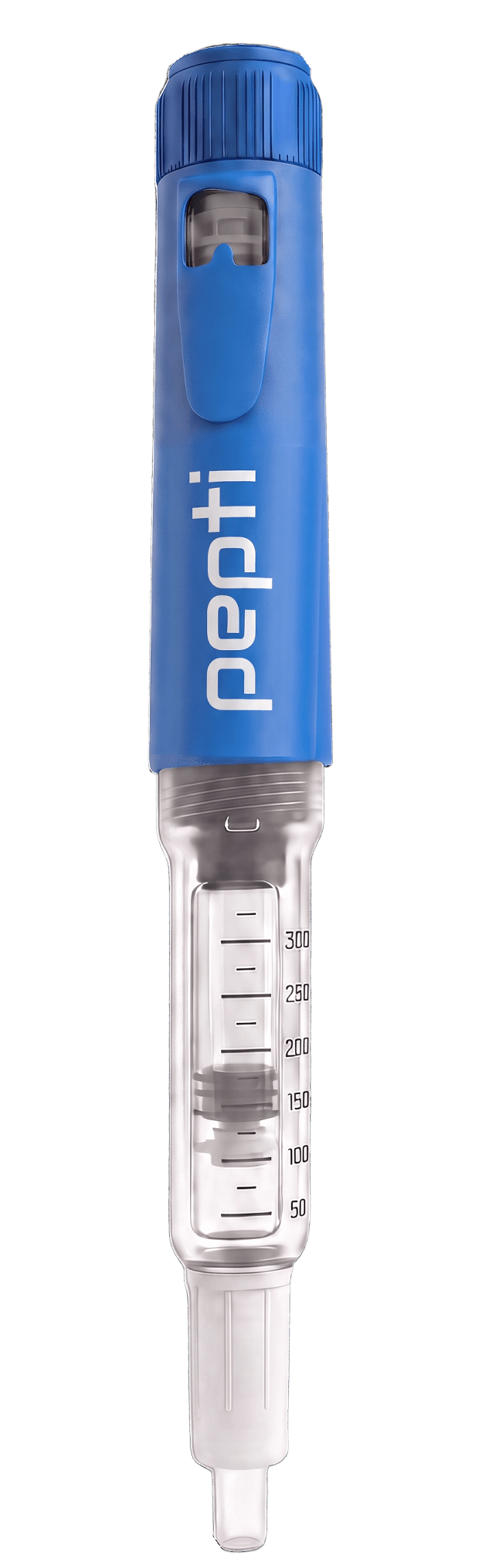
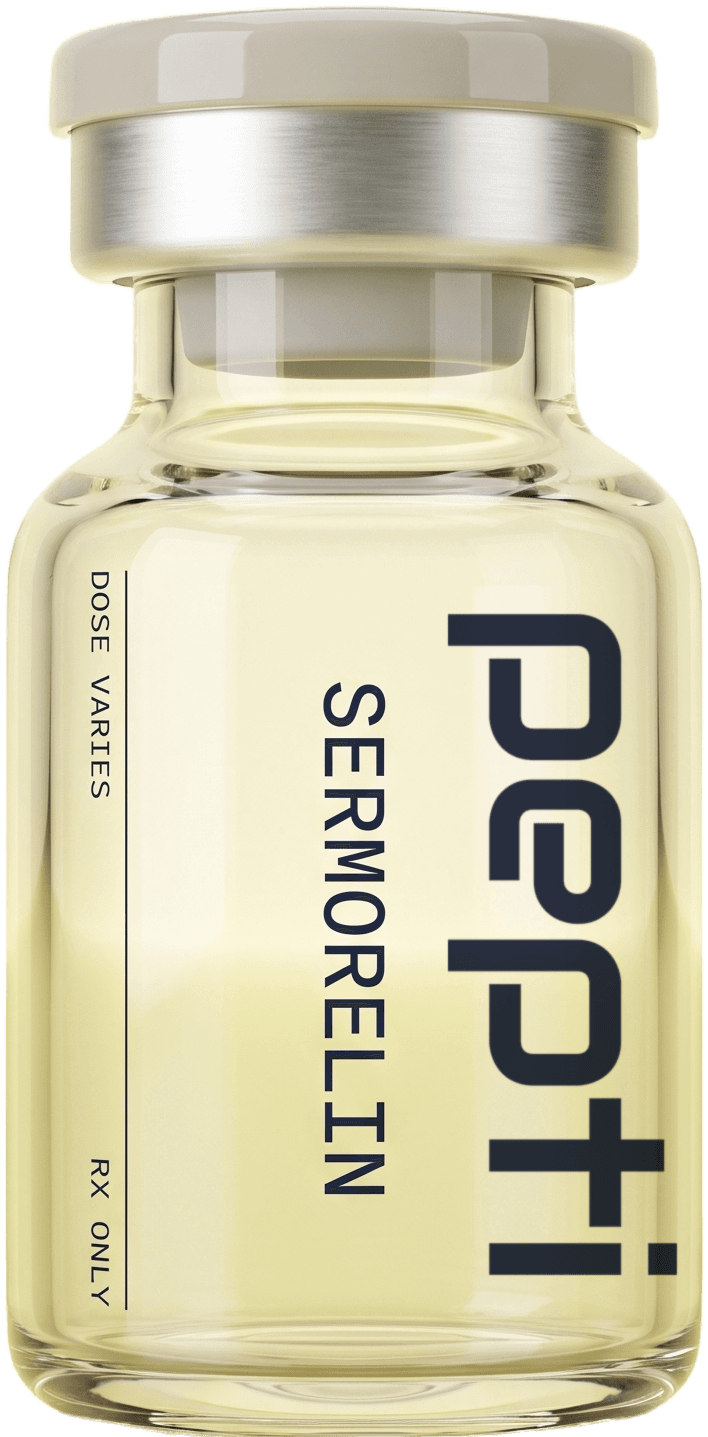
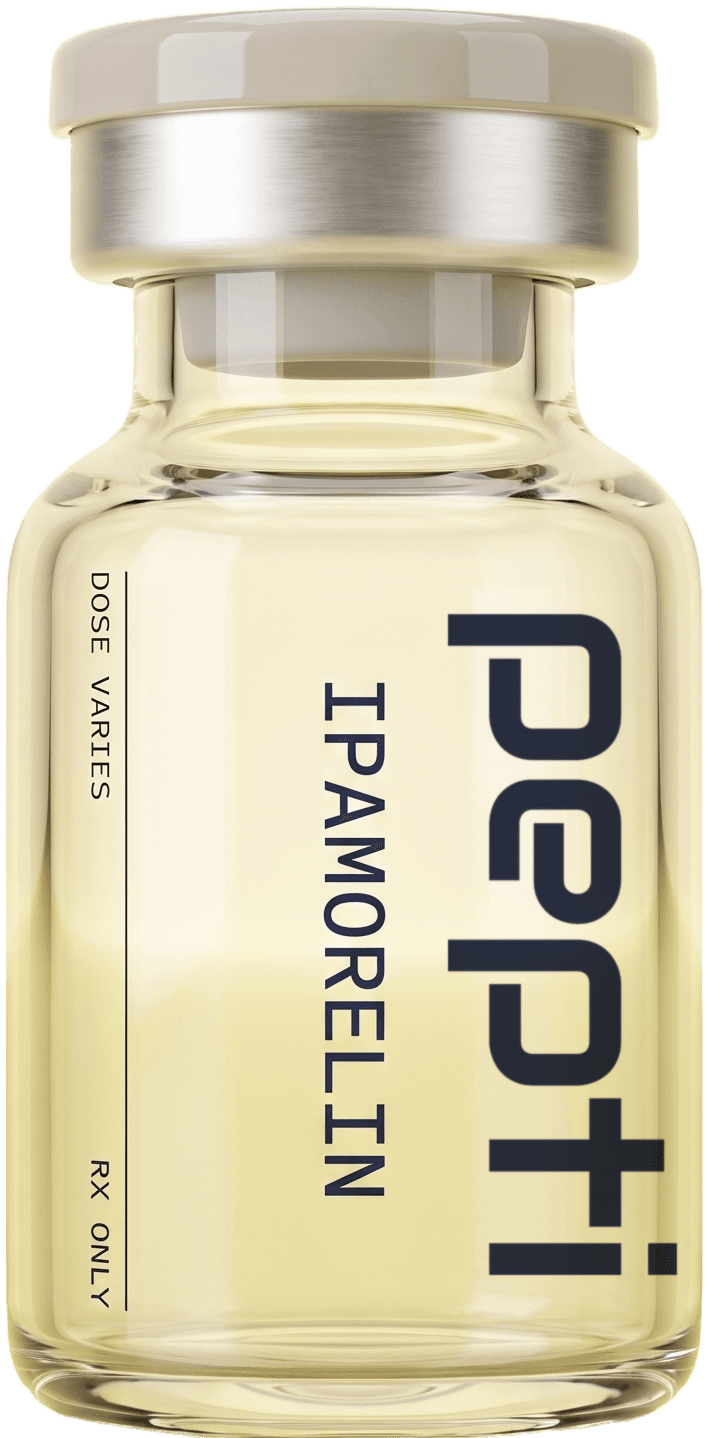
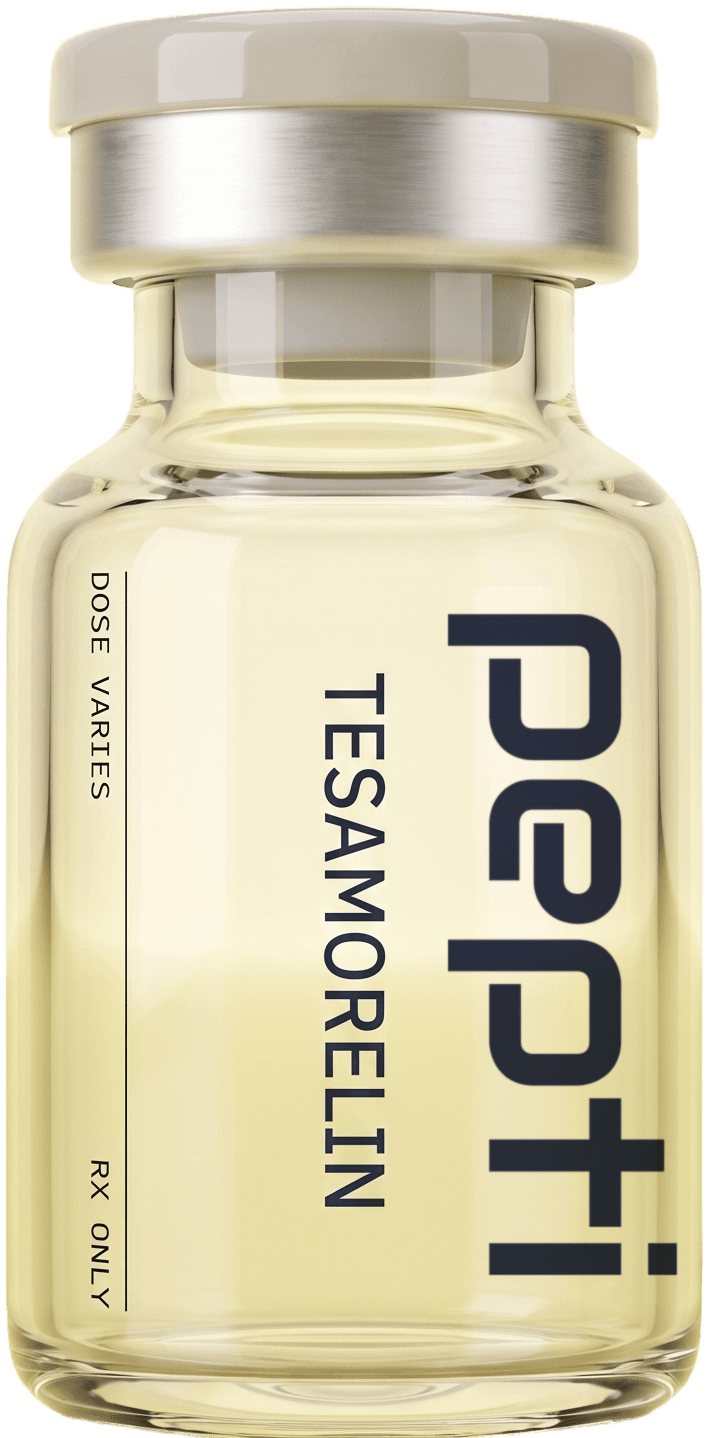
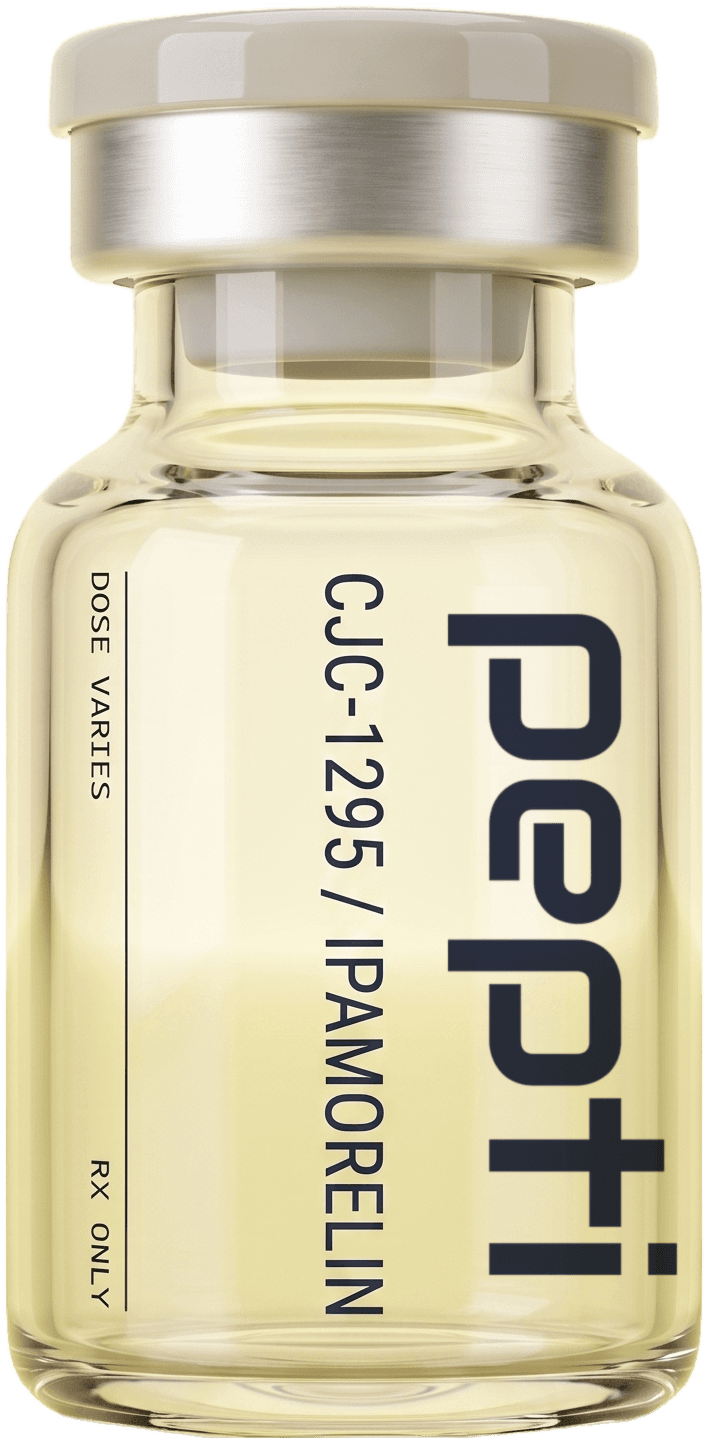
Sermorelin, tesamorelin and ipamorelin all prompt your pituitary to release its own growth hormone, but they are not three versions of the same thing. Sermorelin and tesamorelin are both growth-hormone-releasing hormone (GHRH) analogues acting on the same receptor: sermorelin is the short, older fragment with childhood trials and a former FDA approval, and tesamorelin is the full stabilised hormone with randomised adult trials on visceral fat. Ipamorelin acts on a different receptor, the one ghrelin uses, has the thinnest human evidence of the three, and is usually paired with a GHRH analogue rather than chosen instead of one. All are prescription-only, compounded by a licensed US pharmacy, and none of the compounded products is FDA approved.
This page explains each peptide on its own terms, puts them side by side, covers CJC-1295 / Ipamorelin and the other pairings, what the research does and does not show, where each stands with the FDA, how each is dosed, what each costs at Pepti, and who tends to suit which.
Sermorelin vs Tesamorelin vs Ipamorelin
The short answer
| If your main goal is | The usual prescription | What is in it | Price |
|---|---|---|---|
| A cautious first step into the GH axis, sleep and recovery | Sermorelin | 10 mg sermorelin in a 5 mL vial | $229/mo |
| Visceral (abdominal) fat specifically | Tesamorelin | 10 mg tesamorelin in a 5 mL vial | $249/mo |
| The ghrelin-receptor signal on its own | Ipamorelin | 5 mg ipamorelin in a 5 mL vial | $239/mo |
| The standard two-signal pairing | CJC-1295 / Ipamorelin | 6 mg CJC-1295 and 12 mg ipamorelin in a 5 mL vial | $239/mo |
| Sermorelin paired with ipamorelin | Ipamorelin + Sermorelin | 10 mg ipamorelin and 10 mg sermorelin in a 5 mL vial | $219/mo |
| Tesamorelin paired with ipamorelin | Tesamorelin + Ipamorelin | 10 mg tesamorelin and 5 mg ipamorelin in a 5 mL vial | $259/mo |
Every figure is an all-in monthly price covering the medication, physician review, refill management and shipping. There is no separate membership fee. Current pricing always lives on each product page; the table is a guide to which product fits which goal.
Sermorelin vs Tesamorelin vs Ipamorelin
Two doors into the same cell
The pituitary cells that make growth hormone, somatotrophs, listen to two separate inputs. One is GHRH from the hypothalamus, acting at the GHRH receptor. The other is ghrelin-type signalling, acting at the growth hormone secretagogue receptor (GHS-R1a). Sermorelin, tesamorelin and CJC-1295 use the first door. Ipamorelin uses the second. The two are described as additive, which is why so many prescriptions combine one from each side.
None of these peptides contains growth hormone. Each asks the pituitary to release what it already makes, in a pulse, with the body's brakes (somatostatin and feedback from IGF-1) still working. That is the central difference from injected growth hormone, explained in peptides vs HGH. Most of what growth hormone does in adults it does through IGF-1 made in the liver, which is why IGF-1 is the marker that reflects how the axis is responding.
Sermorelin vs Tesamorelin vs Ipamorelin
Sermorelin on its own terms
What it is
Sermorelin is the first 29 of the 44 amino acids of natural GHRH, written GHRH(1-29) in the literature. It is the shortest fragment that keeps full activity, and it is cleared within minutes, so each dose produces a short pulse and then the signal is gone. The full reference is at what is sermorelin.
Its regulatory history
Sermorelin is unusual among compounded peptides because it was once the active ingredient of an FDA-approved drug: approved in 1990 as a diagnostic test of pituitary function in children, and in 1997 as a treatment for idiopathic growth hormone deficiency in children. The manufacturer discontinued it in 2008 for commercial reasons, the FDA withdrew the approvals in 2009, and in 2013 the FDA determined in the Federal Register that the withdrawal was not for reasons of safety or effectiveness. No approved sermorelin product is on the US market today, and compounded sermorelin is not FDA approved.
What human data exists for sermorelin
Study Who What was reported 1996, Journal of Clinical Endocrinology and Metabolism 110 prepubertal children with growth hormone deficiency, up to a year, open-label Height velocity roughly doubled over the first six months; well tolerated 1992, Journal of Clinical Endocrinology and Metabolism Healthy men in their late sixties, twice daily for 14 days Growth hormone and IGF-1 rose toward levels seen in young men 1997, Metabolism (Vittone) 11 healthy men aged 64 to 76, nightly for six weeks Nocturnal growth hormone rose; IGF-1 and body composition did not change 1997, Journal of Clinical Endocrinology and Metabolism (Khorram) 19 adults aged 55 to 71, randomised, placebo-controlled, 16 weeks IGF-1 rose within two weeks, then drifted back toward baseline by week 16 2006, Neurobiology of Aging 89 healthy adults around age 68, six months vs placebo Better scores on several cognitive measures What does not exist: a large randomised trial of sermorelin in adults for body composition, recovery, sleep or ageing as an outcome.
Sermorelin vs Tesamorelin vs Ipamorelin
Tesamorelin on its own terms
What it is
Tesamorelin is the entire 44-amino-acid GHRH sequence with a trans-3-hexenoic acid group attached to one end. Native GHRH is cut apart by the enzyme DPP-4 within minutes; the cap protects the cleavage site so the peptide survives long enough to reach the pituitary. Same receptor as sermorelin, longer action. The full reference is at what is tesamorelin.
Its regulatory history
A tesamorelin product was approved by the FDA in November 2010 for one narrow indication: reducing excess abdominal fat in adults with HIV who have lipodystrophy. That approved product's label states it is not indicated for weight-loss management because its effect on scale weight is neutral. Compounded tesamorelin shares the active peptide but is not that product: it is not FDA approved, and prescribing it for anything other than HIV-associated lipodystrophy is off-label.
What human data exists for tesamorelin
Study Who What was reported 2007, New England Journal of Medicine 412 people with HIV and abdominal fat, 2 mg daily or placebo, 26 weeks Visceral fat on CT fell 15.2% on treatment and rose 5.0% on placebo 2010 pooled analysis, Journal of Clinical Endocrinology and Metabolism 806 randomised patients across two phase 3 trials Visceral fat reduction maintained to 52 weeks on treatment; returned toward baseline after switching to placebo 2012, Journal of Clinical Endocrinology and Metabolism 60 abdominally obese adults without HIV, reduced GH secretion, 12 months Visceral fat fell 16 cm² vs a 19 cm² rise on placebo; no change in subcutaneous fat 2012, Archives of Neurology 152 adults aged 55 to 87, 1 mg at bedtime, 20 weeks Favourable effect on a cognitive composite, driven mainly by executive function 2019, Lancet HIV 61 people with HIV and fatty liver, 12 months Hepatic fat fraction fell 4.1% (absolute) more than placebo Roughly 1,100 people have been randomised to tesamorelin or placebo across these trials. The limits: every trial used 1 mg or 2 mg daily, most were in people with HIV, every trial that measured subcutaneous fat reported no significant change, and none used the 0.5 mg weekday-night dose compounded at Pepti.
Sermorelin vs Tesamorelin vs Ipamorelin
Ipamorelin on its own terms
What it is
Ipamorelin is a five-amino-acid synthetic peptide that imitates ghrelin at the GHS-R1a receptor. The 1998 founding paper in the European Journal of Endocrinology called it "the first selective growth hormone secretagogue," because in pigs it released growth hormone without raising ACTH or cortisol, which older peptides in its class did. In people, that selectivity is inferred from animal work rather than measured. The full reference is at what is ipamorelin.
What human data exists for ipamorelin
There are two human studies. A 1999 dose-escalation study in Pharmaceutical Research gave healthy male volunteers intravenous ipamorelin and reported a single, sharp episode of growth hormone release at every dose. A 2014 phase 2, placebo-controlled trial in the International Journal of Colorectal Disease gave 114 bowel-surgery patients intravenous ipamorelin for postoperative ileus and did not meet its endpoints. There are no human trials of ipamorelin for sleep, recovery, body composition or ageing, and no human data for the subcutaneous route. One 2001 mouse study reported ipamorelin increasing body weight, fat and food intake, which is why "fat loss" is not a fair description of it on its own.
Sermorelin vs Tesamorelin vs Ipamorelin
Where CJC-1295 / Ipamorelin fits
CJC-1295 is another GHRH analogue: the same 29-amino-acid fragment as sermorelin with four substitutions that protect it from breakdown. The form compounded in blends is CJC-1295 without DAC (also called modified GRF 1-29), which lasts roughly half an hour, longer than sermorelin but nothing like the week-long DAC form used in the 2006 human trials. Paired with ipamorelin, it supplies the GHRH side while ipamorelin supplies the ghrelin side, and one dose is intended to produce a single fuller pulse. There are no randomised trials of the CJC-1295 / Ipamorelin blend in humans; the 2006 trials of the DAC form showed growth hormone and IGF-1 rising in healthy adults with the pulsatile pattern preserved. More is at what is CJC-1295 / Ipamorelin and CJC-1295 vs sermorelin.
Sermorelin vs Tesamorelin vs Ipamorelin
Head to head
| Sermorelin | Tesamorelin | Ipamorelin | |
|---|---|---|---|
| Class | GHRH analogue (amino acids 1 to 29) | GHRH analogue (full 44, stabilised) | Ghrelin-receptor agonist |
| Receptor | GHRH receptor | GHRH receptor | GHS-R1a |
| Duration | Short; cleared in minutes | Longer than native GHRH | Single pulse; about two-hour half-life (IV) |
| Usually chosen for | Sleep, recovery, a cautious start | Visceral fat | The second signal in a pairing |
| Best human evidence | Childhood GHD trials; small older-adult trials | Phase 3 randomised trials (visceral fat, HIV) | One volunteer study; one failed surgical trial |
| Approved product history | Formerly approved (children); discontinued 2008 | Approved product exists for one indication | Never approved |
| Vial at Pepti | 5 mL, 2 mg/mL (10 mg) | 5 mL, 2 mg/mL (10 mg) | 5 mL, 1 mg/mL (5 mg) |
| Standard directions | 0.25 mL (25 units) Monday to Friday nights | 0.25 mL (25 units) Monday to Friday nights at bedtime | 0.25 mL (25 units) Monday to Friday nights at bedtime |
| Doses per vial | 20, about 4 weeks | 20, about 4 weeks | 20, about 4 weeks |
| Pen available | Yes | No | No |
| Price at Pepti | $229 a month | $249 a month | $239 a month |
| Paired versions | Ipamorelin + Sermorelin | Tesamorelin + Ipamorelin | CJC-1295 / Ipamorelin and the two above |
Sermorelin vs Tesamorelin vs Ipamorelin
Is tesamorelin better than sermorelin?
For one specific goal, visceral fat, tesamorelin has the stronger evidence: randomised, double-blind, placebo-controlled trials measured visceral fat on CT, and sermorelin has nothing comparable. For everything else, "better" is not something the literature can answer. No trial has compared the two head to head, and neither has a trial in healthy adults for sleep, recovery or general body composition.
The practical trade-off is evidence against cost and history. Sermorelin is the shorter, older, less expensive molecule with a former approval and a documented adverse-event record. Tesamorelin costs more and brings adult trial data, but at doses two to four times the compounded dose. Prescribers often describe sermorelin as the entry point for sleep and recovery and tesamorelin as the choice when abdominal fat is the specific target.
Sermorelin vs Tesamorelin vs Ipamorelin
Who suits which
Sermorelin
Someone new to the GH axis who wants the shortest, most physiological signal, with the longest regulatory history behind the molecule. It is also available as a pen, which removes the draw step.
Tesamorelin
Someone whose stated goal is visceral fat around the waist, who understands that the trials measured that fat on imaging rather than weight on the scale. The Tesamorelin + Ipamorelin vial adds the ghrelin signal for people who want both doors.
Ipamorelin, alone or paired
Ipamorelin alone suits a physician who wants to see how someone responds to the ghrelin signal before adding a GHRH analogue. Far more often it is prescribed paired: CJC-1295 / Ipamorelin is the most commonly prescribed GH-axis combination for a general recovery and body-composition brief, and Ipamorelin + Sermorelin is the lowest-priced option in the category.
Sermorelin vs Tesamorelin vs Ipamorelin
When none of them is the right first step
| Situation | What makes more sense |
|---|---|
| The goal is scale weight | Semaglutide or tirzepatide, which have large randomised trials for weight |
| Sleep is the whole point | DSIP or the SERENITY Blend |
| A specific injury, such as a sore tendon | BPC-157 or TB-500 |
| Suspected growth hormone deficiency | An endocrinologist; that is a diagnosis with its own testing and an FDA-approved treatment |
| A pituitary condition, surgery or head irradiation | A secretagogue needs a pituitary that can respond |
Sermorelin vs Tesamorelin vs Ipamorelin
Where each stands with the FDA
The three have three different regulatory positions, and all three differ from the peptides that made the news in 2026. As of the FDA pages checked in September 2026:
| Sermorelin | Tesamorelin | Ipamorelin | |
|---|---|---|---|
| Approved product | Formerly (1990, 1997); withdrawn 2009 for commercial reasons, per a 2013 FDA determination | Yes, for HIV-associated abdominal fat only | Never |
| 503A bulks category list | Not on it | Not on it; active ingredient of an approved product | Category 2 in 2023, removed 27 September 2024 |
| Advisory committee | Never reviewed | Never reviewed | 29 October 2024: voted 0 to 12, one abstention, against adding it, for the two uses evaluated (GH deficiency and postoperative ileus) |
| Final FDA determination | Not applicable | Not applicable | Not issued |
CJC-1295 followed a similar path to ipamorelin: removed from Category 2 in September 2024, then voted against by the advisory committee on 4 December 2024 for growth hormone deficiency, with no final determination issued. An advisory vote is a recommendation, not a ban. All of these remain legal for a physician to prescribe and a state-licensed pharmacy to compound, and compounded medications are not FDA approved. Are peptides FDA approved explains the difference.
Sermorelin vs Tesamorelin vs Ipamorelin
Dosing, side by side
All are injected under the skin (subcutaneously) into the abdomen or thigh, rotating sites, at 0.25 mL, which is 25 units on a U-100 insulin syringe, on weekday nights with weekends off. Bedtime dosing lines the induced pulse up with the largest natural growth hormone pulse, which happens in deep sleep. CJC-1295 / Ipamorelin is directed on an empty stomach, because food blunts the pulse. You do not need to calculate anything: your directions are printed on the vial, and your physician sets them after reviewing your intake.
| Per 0.25 mL dose | |
|---|---|
| Sermorelin | 0.5 mg sermorelin |
| Tesamorelin | 0.5 mg tesamorelin |
| Ipamorelin | 0.25 mg ipamorelin |
| Ipamorelin + Sermorelin | 0.5 mg of each |
| Tesamorelin + Ipamorelin | 0.5 mg tesamorelin and 0.25 mg ipamorelin |
Twenty doses per vial covers about four weeks, which is why refills run every 28 days, one vial at a time. All ship refrigerated with ice packs.
Bloodwork is not required for any Pepti treatment. If your physician wants labs for your care, they'll ask through your account.
Sermorelin vs Tesamorelin vs Ipamorelin
Side effects
Shared, because of growth hormone. Fluid retention or puffiness, joint aches and tingling in the hands are classic growth hormone effects and usually mean the dose is higher than a person needs. Growth hormone reduces insulin sensitivity, so blood glucose can drift up.
Sermorelin. In the paediatric programme, the most common reactions were at the injection site, with headache, flushing and a brief warm feeling also reported. The older-adult trials reported no significant adverse effects at the doses studied.
Tesamorelin. The approved product's label, at 2 mg daily, reports injection-site reactions in 17% (against 6% on placebo), joint pain, swelling and tingling, and new-onset diabetes in 5% against 1% on placebo. The compounded dose is a quarter of that.
Ipamorelin. Reported as well tolerated in the human studies. Prescribers describe headache, flushing, hunger and light-headedness after a dose, and injection-site redness.
Stop and contact your physician for any reaction that is severe, spreading, or involves difficulty breathing.
Sermorelin vs Tesamorelin vs Ipamorelin
Who should not take them, or should discuss it first
| Situation | Why |
|---|---|
| Personal history of cancer, or active cancer | Standard caution for anything that raises a growth signal; active cancer is a contraindication on the approved tesamorelin label |
| Diabetes or impaired glucose tolerance | Growth hormone reduces insulin sensitivity |
| Pituitary disorder, surgery, head irradiation or head trauma | A secretagogue needs a pituitary that can respond |
| Pregnancy or breastfeeding | Not used |
| Tested athletes | GHRH analogues and growth hormone releasing factors are prohibited in competition; sermorelin is named in that class |
Sermorelin vs Tesamorelin vs Ipamorelin
What the evidence shows, honestly
Tesamorelin has the strongest trial record of the three, for one endpoint (visceral fat) in mostly one population (people with HIV), at doses higher than compounded dosing. Sermorelin has randomised trials in children and small endocrine trials in older adults showing it raises growth hormone and, with adequate dosing, IGF-1. Ipamorelin has a volunteer study confirming it releases growth hormone and one surgical trial that did not meet its endpoints. None has a trial in healthy adults showing better sleep, recovery or body composition, and any provider claiming otherwise is overstating it. Prescribers describe sleep changes first, often within two weeks, and body-composition changes over two to three months where diet and training are in place; response varies.
Sermorelin vs Tesamorelin vs Ipamorelin
Where to get sermorelin, tesamorelin or ipamorelin prescribed
None can be bought legitimately without a prescription. Sites selling them "for research use only" are not accountable for what is in the vial: identity, purity, sterility and concentration are untested. The prescription route:
- Complete a free online intake covering your history, medications and what you want help with.
- A physician licensed in your state reviews it, usually within 24 hours.
- If it is appropriate, a state-licensed, FDA-registered US pharmacy compounds it to that prescription. Lot test results are published at /quality/lab-results.
- It ships refrigerated with your directions printed on the vial.
- Your physician stays reachable for questions and dose changes.
Pepti prescribes all of these in all 50 states and DC. Step-by-step pages: how to get sermorelin prescribed online, how to get tesamorelin prescribed online, how to get ipamorelin prescribed online and how to get CJC-1295 / Ipamorelin prescribed online.
References
What this is based on.
References
- Raun K, Hansen BS, Johansen NL, et al.. Ipamorelin, the first selective growth hormone secretagogue · European Journal of Endocrinology (1998) · PMID 9849822
- Greenwood-Van Meerveld B, Tyler K, Mohammadi E, Pietra C. Efficacy of ipamorelin, a ghrelin mimetic, on gastric dysmotility in a rodent model of postoperative ileus · Journal of Experimental Pharmacology (2012) · PMID 27186127
- Andersen NB, Malmlöf K, Johansen PB, et al.. The growth hormone secretagogue ipamorelin counteracts glucocorticoid-induced decrease in bone formation of adult rats · Growth Hormone & IGF Research (2001) · PMID 11735244
- Lall S, Tung LY, Ohlsson C, Jansson JO, Dickson SL. Growth hormone (GH)-independent stimulation of adiposity by GH secretagogues · Biochemical and Biophysical Research Communications (2001) · PMID 11162489
- Adeghate E, Ponery AS. Mechanism of ipamorelin-evoked insulin release from the pancreas of normal and diabetic rats · Neuro Endocrinology Letters (2004) · PMID 15665799
- Semenistaya E, Zvereva I, Thomas A et al.. Determination of growth hormone releasing peptides metabolites in human urine after nasal administration of GHRP-1, GHRP-2, GHRP-6, Hexarelin, and Ipamorelin · Drug Test Anal (2015) · PMID 25869809
- Nass R, Pezzoli SS, Oliveri MC et al.. Effects of an oral ghrelin mimetic on body composition and clinical outcomes in healthy older adults: a randomized trial · Ann Intern Med (2008) · PMID 18981485
- Moreno-Reyes R, Kerkhofs M, L'Hermite-Balériaux M, Thorner MO et al.. Evidence against a role for the growth hormone-releasing peptide axis in human slow-wave sleep regulation · Am J Physiol (1998) · PMID 9612233
- Copinschi G, Leproult R, Van Onderbergen A, Caufriez A et al.. Prolonged oral treatment with MK-677, a novel growth hormone secretagogue, improves sleep quality in man · Neuroendocrinology (1997) · PMID 9349662
- Khorram O, Laughlin GA, Yen SS. Endocrine and metabolic effects of long-term administration of [Nle27]growth hormone-releasing hormone-(1-29)-NH2 in age-advanced men and women · The Journal of clinical endocrinology and metabolism (1997) · PMID 9141536
- Vittone J, Blackman MR, Busby-Whitehead J, et al.. Effects of single nightly injections of growth hormone-releasing hormone (GHRH 1-29) in healthy elderly men · Metabolism: clinical and experimental (1997) · PMID 9005976
- Thorner M, Rochiccioli P, Colle M, et al.. Once daily subcutaneous growth hormone-releasing hormone therapy accelerates growth in growth hormone-deficient children during the first year of therapy. Geref International Study Group · Journal of Clinical Endocrinology & Metabolism (1996) · PMID 8772599
Citations are provided for educational purposes. They do not constitute medical advice. Always discuss any peptide protocol with your prescribing physician.
Common questions
Sermorelin vs Tesamorelin vs Ipamorelin, answered.
For visceral fat, tesamorelin has the stronger evidence, from randomised placebo-controlled trials. For sleep, recovery or general wellbeing, no trial has compared them and neither has adult outcome trials. Sermorelin costs less and has a longer regulatory history.
Tesamorelin is the one with trial data on fat, but specifically visceral fat around the organs, not scale weight; its approved label calls it weight-neutral. Sermorelin's six-week nightly trial found no change in body composition. For scale weight, semaglutide or tirzepatide have far more evidence.
They act on different receptors on the same pituitary cells. Sermorelin is a GHRH analogue; ipamorelin acts on the ghrelin receptor. They are usually combined rather than chosen between, which is what Ipamorelin + Sermorelin does in one vial.
No study has compared them. CJC-1295 is a longer-acting relative of sermorelin, and the blend adds ipamorelin's second signal. Sermorelin alone is the shorter, more physiological signal with more human data. More in CJC-1295 vs sermorelin.
Yes. They act on different receptors, and Tesamorelin + Ipamorelin puts both in one vial. No trial has studied the pairing.
Pairing one GHRH analogue with ipamorelin is the standard approach, and Pepti supplies those pairings in single vials. Stacking sermorelin with tesamorelin adds a second signal on the same receptor rather than a new door, and no study has tested it.
Prescribers most often describe sleep as the first thing people notice on any of them, because bedtime dosing lines up with the natural deep-sleep pulse. No trial has measured sleep as an outcome for any of the three. If sleep is the only goal, peptides for sleep covers more direct options.
It was reported as well tolerated in its two human studies, but the longest human exposure on record is seven days and there is no human data for the subcutaneous route. The FDA's advisory committee voted against adding it to the 503A bulks list in 2024 for the two uses it evaluated, citing a lack of safety and efficacy data for those uses.
Prescribers describe sleep changes in the first one to two weeks and recovery or body-composition changes over two to three months; response varies. The tesamorelin trials measured visceral fat at six months.
At Pepti: sermorelin $229, ipamorelin $239, tesamorelin $249, CJC-1295 / Ipamorelin $239, Ipamorelin + Sermorelin $219 and Tesamorelin + Ipamorelin $259 a month, all-in, including medication, physician review, refill management and shipping.
No. Bloodwork is not required for any Pepti treatment. If your physician wants labs for your care, they'll ask through your account. The free assessment goes to a physician licensed in your state. A consultation does not guarantee a prescription.
Next step
See what a physician recommends for you.
A licensed physician in your state reviews your intake and decides what is appropriate. A consultation does not guarantee a prescription.