— Immune · Reference
Peptides for Immune Support: Thymosin Alpha-1, FORTIFY and the Evidence
What thymic peptides actually do to immune signalling, which ones have real clinical evidence behind them, what they cost, and who should not take an immune modulator.
— Treatments mentioned

The peptides prescribed for immune support are thymosin alpha-1, thymalin, KPV and LL-37, used alone or combined in one vial. They modulate immune signalling rather than pushing immune activity up across the board, which is the distinction that decides whether anyone with an autoimmune condition should be near them. Thymosin alpha-1 is the only one in this group with a substantial human clinical literature. All are prescription-only, compounded at a US FDA-registered pharmacy, and none is FDA approved for general immune support.
— Peptides for Immune Support
The short answer
| If your situation is | The usual prescription | What is in it | Price |
|---|---|---|---|
| You want the immune peptide with the most human data | Thymosin Alpha-1 | 10 mg thymosin alpha-1 in 5 mL | $249 |
| You want immune signalling plus repair and inflammation control in one vial | FORTIFY | 5 mg thymosin alpha-1, 5 mg BPC-157, 2 mg KPV, 1 mg LL-37 | $279 |
| The interest is age-related immune decline | Thymalin | 5 mg thymalin in 5 mL | $209 |
| The problem is inflammation rather than infection frequency | KPV | 10 mg KPV in 5 mL | $229 |
Each price is the all-in monthly subscription price covering medication, physician review, refills and shipping.
Which row applies depends on whether the problem is infection frequency, inflammation that will not settle, or a mucosal surface that keeps breaking down, and on how much weight you place on human evidence, which only thymosin alpha-1 has in any depth. Current pricing is on the cost pages: thymosin alpha-1, FORTIFY, thymalin, KPV.
— Peptides for Immune Support
What is actually going on in immune support
Two systems, and the organ that shrinks
Two systems overlap. The innate system is the fast, non-specific response: barrier tissue, neutrophils, macrophages, antimicrobial peptides, and receptors that recognise patterns shared by pathogens. The adaptive system is slower and specific: T cells and B cells that learn one target and remember it.
The thymus is the organ where T cells mature and learn to distinguish your tissue from a pathogen. It is largest in childhood and shrinks steadily through adult life, a process called thymic involution. That single fact is the origin of almost every thymic peptide product sold.
| Layer of the response | What has to happen | Which molecule here is described as acting on it |
|---|---|---|
| Barrier and first contact | Pathogens are killed or contained at the surface | LL-37 |
| Pattern recognition | Toll-like receptors register a threat and call in help | Thymosin alpha-1 |
| T-cell maturation and direction | T cells mature, differentiate and respond to a specific antigen | Thymosin alpha-1, thymalin |
| Resolution | Inflammatory signalling switches off once the threat is gone | KPV |
| Tissue repair afterwards | Damaged mucosa and tissue rebuild | BPC-157 |
Resolution is the part people forget. An immune response that never switches off is not a strong immune system, it is chronic inflammation.
Why modulation is not stimulation
An immune system pushed harder without direction is the biology of autoimmunity. What the thymosin alpha-1 literature describes instead is a better-directed response. A 2010 paper in the Annals of the New York Academy of Sciences, titled "the regulator of regulators?", describes it acting through innate receptors on dendritic cells and, downstream, on both effector and regulatory T-cell functions, able to activate or restrain a response depending on context. KPV sits at the other end of the same logic, described as interrupting the NF-kB and MAPK signalling that keeps cytokine output running. Its use in a generally healthy adult is an extrapolation from work in defined patient groups, and this page treats it as one.
— Peptides for Immune Support
The molecules, explained from zero
— Thymosin Alpha-1
A 28-amino-acid peptide cut from a larger precursor called prothymosin alpha, produced naturally by the thymus. Research describes it acting on T-cell maturation and function, on dendritic cells, which are the cells that present a captured antigen to T cells, and on Toll-like receptor signalling. The described result is a better-directed response to a specific antigen rather than a general rise in inflammatory tone.
That mechanism is why it has been studied as a vaccine adjuvant, meaning something given alongside a vaccine in populations that respond poorly. It is approved in several countries outside the United States for chronic hepatitis B, and has been studied in sepsis and critical illness with mixed results. A 2015 historical review in Expert Opinion on Biological Therapy describes its tolerability across thousands of patients as very favourable.
It is supplied as a 5 mL vial and as a pre-filled 3 mL Pen cartridge containing 15 mg.
— Thymalin
A peptide preparation derived from thymus tissue rather than a single synthesised sequence. It sits in the same family as thymosin alpha-1 and is described as restoring immune regulation through effects on T-cell populations. Most published work is Russian clinical literature, and Western trial data is limited. Anyone presenting thymalin and thymosin alpha-1 as interchangeable is skipping a real difference in evidence quality.
The literature comes almost entirely from Vladimir Khavinson's group: a 2020 paper in the Bulletin of Experimental Biology and Medicine on cultured human stem cells, 2022 and 2023 papers in the International Journal of Molecular Sciences on cytokine output from stimulated human immune cells, and a 2021 report in Stem Cell Reviews and Reports on thymalin added to standard care in hospitalised COVID-19 patients, which was not a blinded randomised trial.
— KPV
The last three amino acids, lysine-proline-valine, of alpha-melanocyte-stimulating hormone. Isolating that fragment keeps the anti-inflammatory signalling of the parent hormone without its pigmentation effect. It is described as interfering with inflammatory signalling inside the cell, including the NF-kB and MAPK pathways, which lowers output of cytokines such as TNF-alpha and IL-6. Most published work sits in models of inflammatory bowel disease and dermatitis, which is why it also appears in peptides for gut health.
The key paper is a 2008 study in Gastroenterology reporting that nanomolar KPV inhibits NF-kB signalling in human intestinal cells, enters them through the PepT1 transporter, and reduced chemically induced colitis in mice; a 2008 paper in Inflammatory Bowel Diseases reports the same in two mouse models.
— LL-37
The only human cathelicidin, an antimicrobial peptide released by neutrophils and by the epithelial cells lining skin, gut and airway. It is described as disrupting microbial membranes directly and as signalling to other immune cells. Research is preclinical. In FORTIFY it is present at 1 mg per vial, the smallest component by weight.
A 2006 review in Biochimica et Biophysica Acta is the standard reference. The only human trials are topical, for venous leg ulcers: a 2014 study in Wound Repair and Regeneration in 34 patients, and a 2021 phase IIb trial in 148 patients that found no difference from placebo overall. A 2007 paper in Nature identified LL-37 as the factor that lets dendritic cells respond to the body's own DNA in psoriasis, one reason a physician asks about autoimmune skin disease before prescribing anything containing it.
— BPC-157
A 15-amino-acid fragment of a protein found in human gastric juice. It is not an immune peptide. It is in FORTIFY because mucosal surfaces, particularly the gut lining, are where a large share of immune activity happens, and BPC-157 is the compound most studied for protecting that lining. Its separate repair role is covered in what is BPC-157. There are no randomised human trials of BPC-157 for any indication.
— Peptides for Immune Support
What physicians prescribe for immune support
— Thymosin Alpha-1
The default when the question is immune signalling itself and the person wants the compound with human trial data. Prescribers describe it suiting adults who have been through the rule-out list below and still have unexplained frequent infection. It does not suit anyone with autoimmune disease, on immunosuppression, or in active cancer treatment.
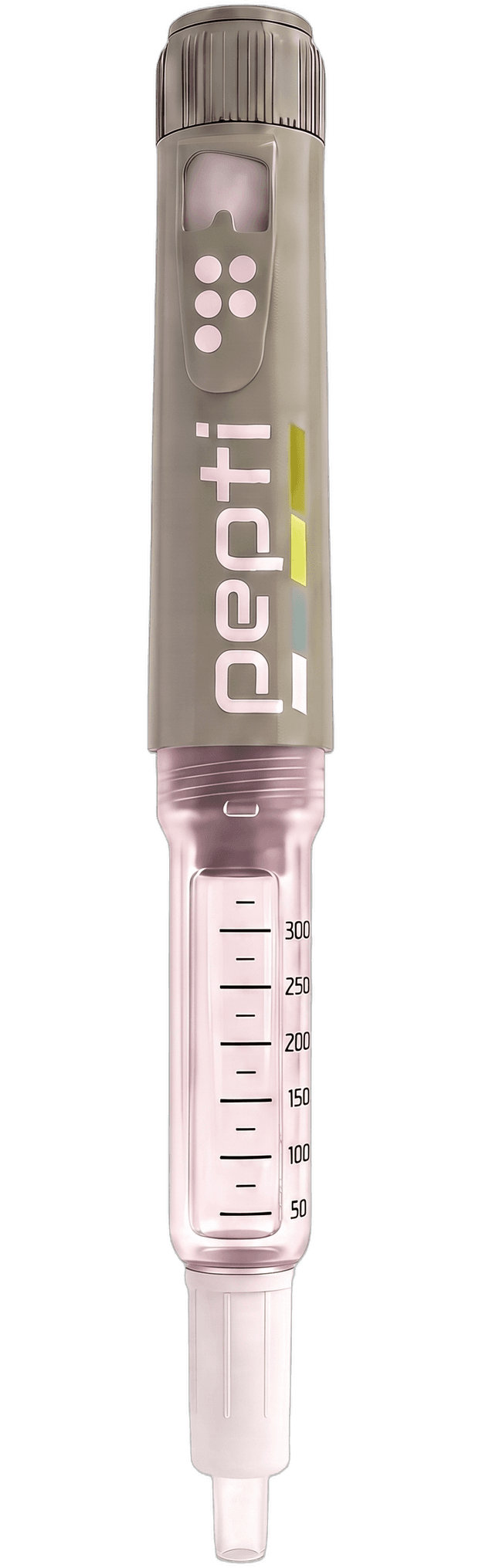
The reviewed directions run five days a week by subcutaneous injection, with the Pen cartridge dosed three times a week. Your physician sets your dose and it is printed on the medication. The vial and the pepti Pen carry the same molecule; the Pen removes the draw step and costs more, and neither is clinically better.
— FORTIFY
FORTIFY combines thymosin alpha-1, BPC-157, KPV and LL-37, following the layers table. It is chosen when the picture is not just "I get sick often" but "I get sick often, my gut is unsettled, and things take a long time to calm down."
Two honest points. The thymosin alpha-1 content per vial is half that of the single-agent product, and the blend has not been studied as a blend; what FORTIFY offers is breadth of mechanism, not a stronger evidence base. Directions run five days a week. Full reference: what is FORTIFY.
— Thymalin
Thymalin is the choice when the interest is specifically age-related immune decline, because that is what its literature is about. It suits an older adult without autoimmune disease whose physician is comfortable prescribing on an open-label literature; there is no human head-to-head with thymosin alpha-1. Directions run five days a week. Full reference: what is thymalin.
— KPV
KPV is prescribed when the problem is not infection frequency but an inflammatory response that is not switching off, usually with a gut or skin component. There are no randomised human trials of KPV for any indication. Directions run five days a week. Full reference: what is KPV.
— Peptides for Immune Support
What the evidence shows, and what it does not
— Chronic hepatitis B: the strongest human data
A 1998 randomised controlled trial in Hepatology gave 98 patients with chronic hepatitis B 26 weeks of thymosin alpha-1, 52 weeks, or no treatment. Complete virological response was 40.6 percent in the 26-week group and 9.4 percent in controls at 18 months, with the difference emerging after treatment ended. A 2008 meta-analysis in Antiviral Research of four randomised trials against interferon alpha found the same pattern of responses accumulating after treatment.
A 2026 Cochrane review of ten randomised trials with 1,349 participants is more cautious: the authors rated the certainty of evidence as very low for nearly every outcome, citing risk of bias, small numbers and heterogeneity. Consistent signals in individual trials, and a systematic review that does not consider them settled.
— Hepatitis C
A 2012 trial in the Journal of Viral Hepatitis randomised 552 patients unresponsive to peginterferon and ribavirin to the same regimen plus thymosin alpha-1 or placebo. Sustained virological response overall was no different (12.7 versus 10.5 percent); among patients who completed 48 weeks it was 41 versus 26 percent. The authors concluded it has no role in primary treatment.
— Vaccine response
This is the evidence closest to what most people mean by immune support. A 1989 double-blind placebo-controlled study in the Journal of the American Geriatrics Society gave 90 men aged 65 to 99 thymosin alpha-1 or placebo alongside the influenza vaccine and measured antibody response. A 2012 pilot trial in Vaccine gave 94 hemodialysis patients a pandemic H1N1 vaccine alone or with thymosin alpha-1; both thymosin groups met the European licensing criteria for seroconversion. What that supports is a stronger antibody response to a specific vaccine in people known to respond poorly, not fewer infections in a healthy adult, and it does not replace the vaccine.
— Sepsis and critical illness
Two randomised trials from the same Chinese group disagree. ETASS, in Critical Care in 2013, was single-blind in 361 patients and reported a borderline difference on its primary outcome. TESTS, in the BMJ in 2025, was double-blind and placebo-controlled in 1,106 adults across 22 centres, and found no difference on its primary outcome or on any secondary or safety outcome. The larger, better-designed trial did not confirm the earlier signal.
— Cancer
A 2010 phase II study in the Journal of Clinical Oncology randomised 488 patients with metastatic melanoma to dacarbazine with or without interferon alfa and thymosin alpha-1; tumour response rates were higher in two thymosin arms. It is why it is never prescribed for immune support during active cancer treatment without the oncologist's involvement.
— Thymalin, KPV and LL-37 in humans
There are no randomised human trials of thymalin for immune support in healthy adults, none of KPV for any indication, and none of injected LL-37; LL-37's only randomised human work is topical.
— What the evidence does not establish
- That any of these peptides reduces the number of ordinary infections a healthy adult gets in a year. That trial has not been run.
- An effect size or a timeline for immune support; the windows prescribers describe are clinical experience.
- That FORTIFY as a combination does anything its components do not do alone.
- Long-term safety over years of continuous use in healthy adults.
- Efficacy as an FDA-approved treatment. None of the four is FDA approved, and compounded medications are not FDA approved as finished products.
— Peptides for Immune Support
Where these stand with the FDA right now
This has moved several times since 2023 and most of what is online is out of date. Each statement below was checked against the FDA's own pages in September 2026.
— Thymosin alpha-1
Thymosin alpha-1 was nominated for the FDA's 503A bulk drug substances list and for a period sat in Category 2, the category for nominated substances the agency has flagged as raising significant safety concerns. The FDA's September 2024 category list records that it was removed from Category 2 because the nomination was withdrawn by the nominator, and that the agency would consult its Pharmacy Compounding Advisory Committee on 4 December 2024 anyway.
On 4 December 2024 the Pharmacy Compounding Advisory Committee voted 4 in favour and 17 against placing thymosin alpha-1 (free base) on the 503A Bulks List, and 4 to 17 against thymosin alpha-1 acetate. The uses reviewed included hepatitis B and C, HIV, COVID-19, depressed response to vaccination, several cancers, sepsis, COPD and ME/CFS. The minutes record that members voting no agreed there was no compelling evidence demonstrating clinical effectiveness and safety in those uses, and that members voting yes felt the substance should remain accessible to patients as an option.
That was an advisory vote. On the FDA's category list updated 14 May 2026, thymosin alpha-1 appears in none of the three categories, and the FDA's safety-risk page lists it among substances "previously in category 2" whose nominations were withdrawn. No final rule has placed it on, or excluded it from, the 503A Bulks List. It remains legal to prescribe and dispense as a compounded medication, and it is not an FDA-approved drug product.
— BPC-157, KPV and LL-37
All three were placed in Category 2 in 2023. The FDA's safety-risk page now lists BPC-157, Cathelicidin LL-37 and KPV among substances "previously in category 2" that were withdrawn by their nominators, and none appears in Category 1, 2 or 3 on the 14 May 2026 list. The removal was announced on 15 April 2026 as part of a group of twelve peptides.
On 23 July 2026 the committee reviewed BPC-157 for ulcerative colitis and KPV for wound healing and inflammatory conditions, and voted 8 in favour and 6 against, with one abstention, to recommend adding each to the 503A Bulks List. Those are recommendations; the FDA's final determinations are pending.
LL-37 was not on the July agenda. The FDA has said it will hold a further advisory committee meeting before the end of February 2027, and Cathelicidin LL-37 is among the substances named for it.
— Thymalin
Thymalin has never been nominated for the 503A list. It appears in none of the three categories on the 14 May 2026 list and has not been before the advisory committee.
— What "not FDA approved" means here
None of the four is an FDA-approved drug, and no compounded medication is: they are prepared by a state-licensed pharmacy for an individual prescription rather than approved as manufactured products. A provider describing any of these as "FDA approved" is misleading you. See are peptides FDA approved.
— Anti-doping
On the WADA 2026 Prohibited List, effective 1 January 2026, BPC-157 is named as an example under S0, the class for substances with no current approval by any regulatory health authority, prohibited at all times. FORTIFY, which contains BPC-157, is therefore prohibited for tested athletes. The other four are not named on the 2026 list, but S0 is defined by approval status rather than by name, so a tested athlete should confirm with their anti-doping organisation first.
— Peptides for Immune Support
What a physician rules out first
Immune treatment is the category where the intake matters most, because frequent infection with a findable cause is common and no immune peptide fixes any of the causes below.
| Pattern | What it points at |
|---|---|
| Repeated sinus or chest infections in the same place | A structural cause worth imaging, not an immune deficit |
| Frequent infection with poor wound healing and thirst | Undiagnosed or poorly controlled diabetes |
| Infections since childhood, or a family pattern | Immunoglobulin levels and a referral |
| Recurrent thrush or skin infection on a new drug | The medication list, including inhaled steroids |
| Constant illness with exhaustion and unrefreshing sleep | Sleep apnoea, thyroid, iron, covered in peptides for energy and fatigue |
A prescriber who writes for an immune peptide without asking any of that is dispensing rather than assessing.
What "too many infections" actually means
Adults average two to three upper respiratory infections a year, more with young children in the house; four colds in a winter is within normal range. A warning sign is different in kind: infections that repeatedly need antibiotics, infections in unusual sites, or infections that take far longer than expected to clear. That pattern gets bloodwork and often a referral, not a peptide.
— Peptides for Immune Support
Who should not take an immune modulator
| Situation | Why |
|---|---|
| Autoimmune disease | The immune system is already attacking your tissue; modulating it needs specialist input |
| Immunosuppressive therapy, including after transplant | The whole treatment goal is suppression, and this works against it |
| Active cancer treatment | Must be coordinated with the treating oncologist |
| Pregnancy or breastfeeding | Not used; safety data is absent |
| Recent live vaccine or planned immunisation | Tell the prescriber, since the interaction is the point of the adjuvant research |
The autoimmune line is the one people most often try to argue around. The thymosin alpha-1 mechanism is described as able to activate or restrain a response depending on context; in someone whose immune system is already misdirected, nobody can tell you in advance which way it will go. This is a specialist conversation, and Pepti's physicians will say so.
— Peptides for Immune Support
What to expect, and when
Immune treatment is harder to feel than a sleep or pain treatment, because the outcome is an event that does not occur. Nothing signals an infection you did not get.
| Timeframe | What patients commonly describe |
|---|---|
| Week 1 to 2 | Nothing beyond injection-site tenderness |
| Week 2 to 6 | Nothing specific; the stretch where people assume it is not working |
| One season onward | The judgement people actually make: was this winter different from the last one |
That is an uncontrolled comparison against your own memory, not a trial result, and it should be treated as such. Response varies and nobody can tell you in advance what yours will be.
These will not prevent every infection, replace vaccination, shorten an illness you already have, or regrow a thymus. They also will not explain away recurrent infection that has a findable cause.
— The first two weeks
Injection-site redness or tenderness, and for some a day or two of feeling slightly off. Nothing about the immune response itself is perceptible.
— Weeks two to six
Still nothing specific. In the hepatitis B trials the virological response emerged after treatment ended, a reminder that immune effects, where they occur, are slow. Refills run every 28 days, one vial per fill, and treatment continues for as long as you and your physician agree it should.
— One season onward
Six infections last winter and two this winter is a real observation about you, and also exactly what a milder virus season or a child leaving daycare would produce. A physician will weigh it with you rather than treating it as proof. There is no established interaction list for any of the four, which is why every medication you take goes through a physician.
— Peptides for Immune Support
When a peptide is the wrong tool
- The infections have a findable cause. Structural sinus disease, undiagnosed diabetes, a medication effect or an immunoglobulin deficiency are treated by treating the cause.
- You have an autoimmune condition or are on immunosuppression. A specialist decision; Pepti's physicians will decline rather than guess.
- The real problem is inflammation, not infection. KPV on its own, or peptides for inflammation, fits better than a thymic peptide.
- The real problem is the gut lining. BPC-157 on its own is the more direct choice; see peptides for gut health.
- The real problem is exhaustion. Thyroid, iron, sleep apnoea and metabolic causes come before immunity; see peptides for energy and fatigue.
- You want a vaccine to work better. That is the decision of the physician giving the vaccine.
Your physician will tell you if an immune peptide is not the right tool for what you have described. A consultation does not guarantee a prescription, and being declined is refunded.
— Peptides for Immune Support
Monitoring and bloodwork
| Marker | Why it is checked |
|---|---|
| Fasting glucose or HbA1c | Undiagnosed diabetes is the most common findable cause of frequent infection |
| Full blood count with differential | White-cell and lymphocyte counts; an abnormal result is a referral, not a prescription |
| Immunoglobulins (IgG, IgA, IgM) | Where the history suggests infections since childhood or a family pattern |
| Thyroid, ferritin, vitamin D | The fatigue overlap; low results explain symptoms without a peptide |
| Liver panel | Where a chronic viral history is part of the picture |
At-home blood testing covers the common metabolic, thyroid and hormone markers; immunoglobulins are ordered through a physician. There is no blood marker that measures whether an immune peptide is "working." Ongoing monitoring is a physician conversation at each refill.
— Peptides for Immune Support
How to get an immune peptide prescribed
None of the four can be bought legitimately without a prescription; sites shipping them without one are selling a research-use-only product with no pharmacy accountable for identity, purity or sterility.
- Complete a medical intake covering your history, medications, the infection pattern, and any autoimmune, transplant or cancer history.
- A physician licensed in your state reviews it, and may ask for bloodwork or decline.
- If appropriate, a state-licensed, FDA-registered pharmacy compounds it to that prescription and ships it refrigerated with your directions on the vial.
- Your physician stays reachable for dose questions, side effects and each 28-day refill.
Certificates of analysis are published at lab results, and the standards behind them at quality.
— References
What this is based on.
References
- Dominari A, Hathaway Iii D, Pandav K et al.. Thymosin alpha 1: A comprehensive review of the literature · World J Virol (2020) · PMID 33362999
- Pierluigi B, D'Angelo C, Fallarino F et al.. Thymosin alpha1: the regulator of regulators? · Ann N Y Acad Sci (2010) · PMID 20536444
- Wu J et al.. The efficacy and safety of thymosin α1 for sepsis (TESTS): multicentre, double blinded, randomised, placebo controlled, phase 3 trial · BMJ (2025) · PMID 39814420
- Wu J et al.. The efficacy of thymosin alpha 1 for severe sepsis (ETASS): a multicenter, single-blind, randomized and controlled trial · Crit Care (2013) · PMID 23327199
- Naing C et al.. Thymosin-ɑ1 for people with chronic hepatitis B · Cochrane Database Syst Rev (2026) · PMID 42713852
- Chien RN et al.. Efficacy of thymosin alpha1 in patients with chronic hepatitis B: a randomized, controlled trial · Hepatology (1998) · PMID 9581695
- Yang YF et al.. Comparison of the efficacy of thymosin alpha-1 and interferon alpha in the treatment of chronic hepatitis B: a meta-analysis · Antiviral Res (2008) · PMID 18078676
- Ciancio A et al.. Thymosin alpha-1 with peginterferon alfa-2a/ribavirin for chronic hepatitis C not responsive to IFN/ribavirin: an adjuvant role? · J Viral Hepat (2012) · PMID 22233415
- Maio M et al.. Large randomized study of thymosin alpha 1, interferon alfa, or both in combination with dacarbazine in patients with metastatic melanoma · J Clin Oncol (2010) · PMID 20194853
- Liu Y et al.. Thymosin Alpha 1 Reduces the Mortality of Severe Coronavirus Disease 2019 by Restoration of Lymphocytopenia and Reversion of Exhausted T Cells · Clin Infect Dis (2020) · PMID 32442287
- Camerini R, Garaci E. Historical review of thymosin α 1 in infectious diseases · Expert Opin Biol Ther (2015) · PMID 26098768
- Gravenstein S, Duthie EH, Miller BA, Roecker E, Drinka P, Prathipati K, Ershler WB. Augmentation of influenza antibody response in elderly men by thymosin alpha one. A double-blind placebo-controlled clinical study · J Am Geriatr Soc (1989) · PMID 2642497
Citations are provided for educational purposes. They do not constitute medical advice. Always discuss any peptide protocol with your prescribing physician.
— Common questions
Peptides for Immune Support, answered.
Thymosin alpha-1 has the most human evidence behind it, which is a different claim from being the one that will work for you. FORTIFY is chosen when immune signalling, gut lining and inflammation are all part of the picture. The choice belongs to a physician with your history in front of them.
Thymosin alpha-1 has demonstrated effects in specific clinical settings, mainly chronic hepatitis B and vaccine response, though a 2026 Cochrane review rated the hepatitis B evidence as very low certainty. Whether that translates into fewer ordinary infections in a healthy adult has not been established in trials. Anyone telling you it is proven for that is overselling it.
This is the single most important question in the category, and the honest answer is that it needs a specialist, not a telehealth form. Immune modulation in someone whose immune system is already misdirected can go either way, and the research does not settle it. Pepti's physicians decline rather than guess.
No. Thymosin alpha-1 is a defined 28-amino-acid sequence with an international clinical literature. Thymalin is a preparation derived from thymus tissue, studied mainly in Russia. They are related in family, not equivalent in evidence, and no human trial compares them.
Often yes, because the useful findings are the ones that explain the symptoms without a peptide: glucose, full blood count, and immunoglobulins where the history suggests it. At-home blood testing covers the common markers, and a prescriber should say what they want to see.
Long-term safety data in healthy adults does not exist for any of them, which is the truthful answer rather than a reassuring one. Reported tolerability in the clinical settings studied is good; the 2025 BMJ trial found no difference in safety outcomes between thymosin alpha-1 and placebo. See are peptides safe long term.
No. It is approved in several countries outside the United States for chronic hepatitis B, but has no FDA approval for any use; in the United States it is available only as a compounded medication on a prescription. On 4 December 2024 the FDA's advisory committee voted 4 to 17 against recommending it for the 503A Bulks List for the disease uses reviewed; the FDA's determination is pending.
No. It sat in Category 2 of the FDA's interim 503A list for a period, was removed after the nominator withdrew the nomination, and was voted against by the advisory committee in December 2024 for the uses reviewed. On the FDA's May 2026 list it is in none of the three categories, no final rule has been issued, and it remains legal to prescribe and dispense.
BPC-157, KPV and LL-37 were placed in Category 2 in 2023 and removed in April 2026 after their nominations were withdrawn. In July 2026 the advisory committee voted 8 to 6 to recommend adding BPC-157 and KPV to the 503A Bulks List; the FDA's final determinations are pending. LL-37 is scheduled for a further committee meeting before the end of February 2027.
A 1989 study in elderly men and a 2012 study in hemodialysis patients described stronger antibody responses to influenza vaccines with thymosin alpha-1 alongside, which is also why you must tell the prescriber about any recent or planned vaccination. The decision belongs to the physician giving the vaccine.
FORTIFY contains BPC-157, which is named on the WADA 2026 Prohibited List under S0, prohibited at all times, so a tested athlete should not take it. The other peptides here are not named, but S0 is defined by approval status rather than by name; check with your anti-doping organisation.
The reviewed directions on the product page run five days a week by subcutaneous injection, with the Pen cartridge dosed three times a week. Your physician sets your own dose and it is printed on your medication. Refills run every 28 days, one vial per fill. The free assessment goes to a physician licensed in your state. A consultation does not guarantee a prescription.
— Next step
See what a physician
recommends for you.
A licensed physician in your state reviews your intake and decides what is appropriate. A consultation does not guarantee a prescription.
Important legal & safety information
The assessment process available on the Pepti website asks a series of medical questions, and the answers provided are reviewed by an independent licensed physician affiliated with our partner physician network. The licensed providers have established exclusionary criteria, and the answers provided determine if the individual is screened out of eligibility for treatment. The licensed clinicians retain the sole decision to prescribe peptide therapy and other compounded medications to patients. Treatment may be denied at the physician's sole discretion. If a prescription is not approved, you will not be charged for the medication.
Pharmacy Providers. Pepti is a technology platform and is not a healthcare provider, pharmacy, or prescriber. All medications offered through the platform are compounded by independent FDA-registered 503A or 503B compounding pharmacies based on a valid prescription written by a licensed physician for an individual patient. Compounded medications are not FDA-approved as products. The active pharmaceutical ingredients used by our partner pharmacies are sourced from FDA-registered facilities. Compounded medications may not undergo the same testing or quality control as commercially manufactured FDA-approved drugs.
Results vary. Results from peptide therapy and other compounded treatments vary based on individual factors, including age, weight, medical history, adherence to the prescribed protocol, lifestyle factors, and physiological response. Pepti makes no guarantee of any specific outcome. Statements about peptide therapy and compounded medications offered through the platform have not been evaluated by the Food and Drug Administration. These products are not intended to diagnose, treat, cure, or prevent any disease.
Product images. Product photographs and renderings shown on this website are for illustrative purposes only. The appearance of vials, packaging, labeling, and other materials you receive may vary and is determined by the dispensing compounding pharmacy.
Off-label use.Many peptides offered through the platform are prescribed for off-label use. “Off-label” means the medication is being prescribed for a use, dose, or patient population that is not specifically approved by the FDA. Off-label prescribing is legal and common in U.S. medical practice when supported by clinical experience and judgment.
Mailing & shipping. Pepti currently dispenses prescription medication to patients in all 50 states and Washington, D.C.. All orders ship in unbranded, tamper-evident packaging via expedited delivery from our partner compounding pharmacies. Temperature-sensitive medications ship with insulated packaging and ice packs. Shipping is included at no additional cost. We do not currently ship medication outside all 50 states and Washington, D.C., internationally, or to APO/FPO addresses.
Not for emergencies. Pepti is not designed for medical emergencies. If you are experiencing a medical emergency, call 911 or go to your nearest emergency room immediately. For urgent but non-emergency medical questions, contact your primary care provider or use an urgent care service.
No doctor-patient relationship with Pepti. Your use of the platform does not create a doctor-patient relationship between you and pepti LLC. A doctor-patient relationship is established only between you and the independent licensed physician who reviews your intake and prescribes your treatment. The physicians who use the platform are independent contractors and are solely responsible for the medical care they provide.
Prescription medications. All prescription products require a valid prescription from a licensed healthcare provider. By using the platform, you acknowledge that you are at least 18 years old and that the information you provide is true, accurate, current, and complete. Providing false information may result in inappropriate treatment recommendations or denial of service.
Cosmetic & wellness products.Certain products offered through Pepti — including skincare, hair care, body care, supplements, men's grooming, sports recovery, and sexual wellness products — are cosmetic or dietary supplement products, not prescription medications. These products do not require a prescription and are not reviewed or prescribed by a physician. Statements regarding dietary supplements have not been evaluated by the Food and Drug Administration. These products are not intended to diagnose, treat, cure, or prevent any disease. Results vary by individual. Consult your healthcare provider before starting any new supplement or topical product, especially if you are pregnant, nursing, or taking other medications.
pepti LLC · Delaware Limited Liability Company · 131 Continental Dr, Suite 305, Newark, DE 19713 · For media or partnership inquiries, email hello@hellopepti.com. For patient support, email support@hellopepti.com. For privacy and HIPAA inquiries, email privacy@hellopepti.com.