— Weight Loss · Reference
How to Inject Peptides Safely: Step by Step, Units, Sites and Mistakes
A practical subcutaneous injection walkthrough: reading your sig, converting millilitres to insulin-syringe units, the ten steps, site rotation, what to do about bubbles and missed doses.
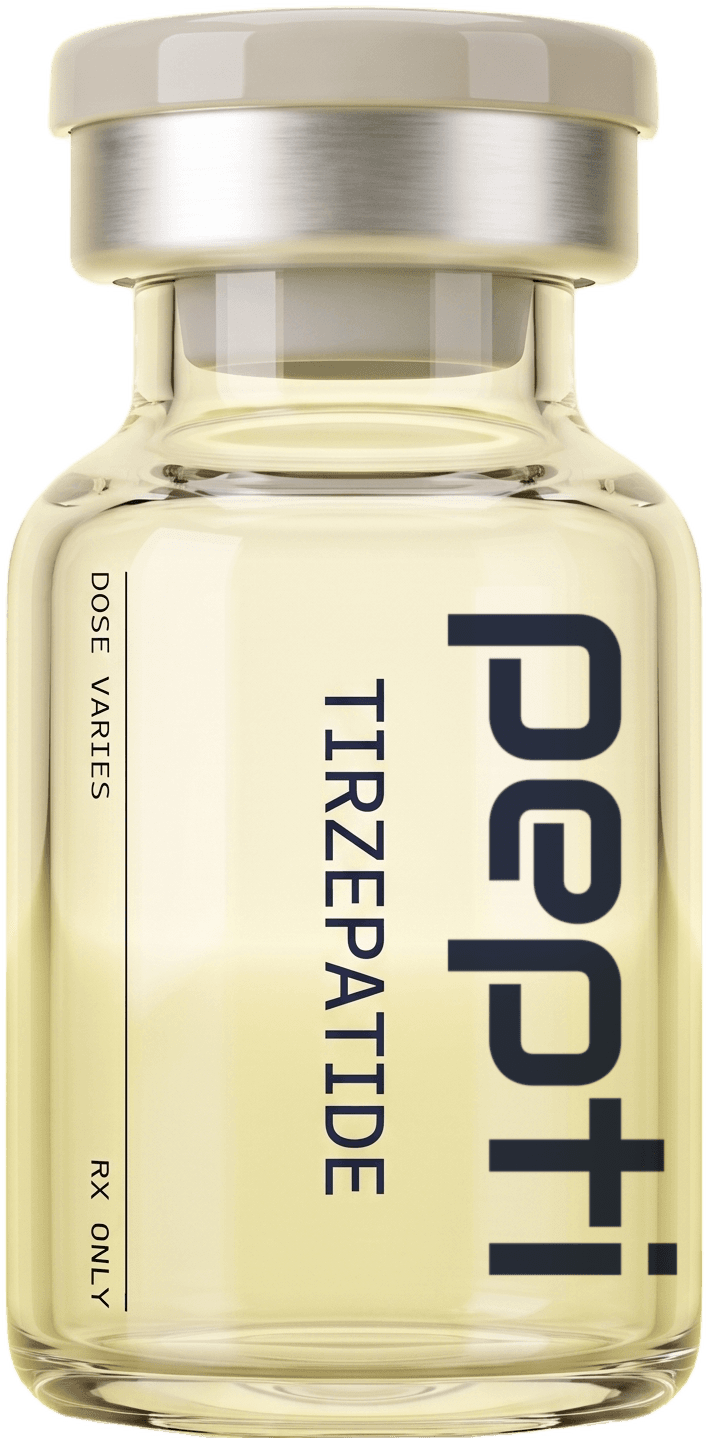
— Treatments mentioned
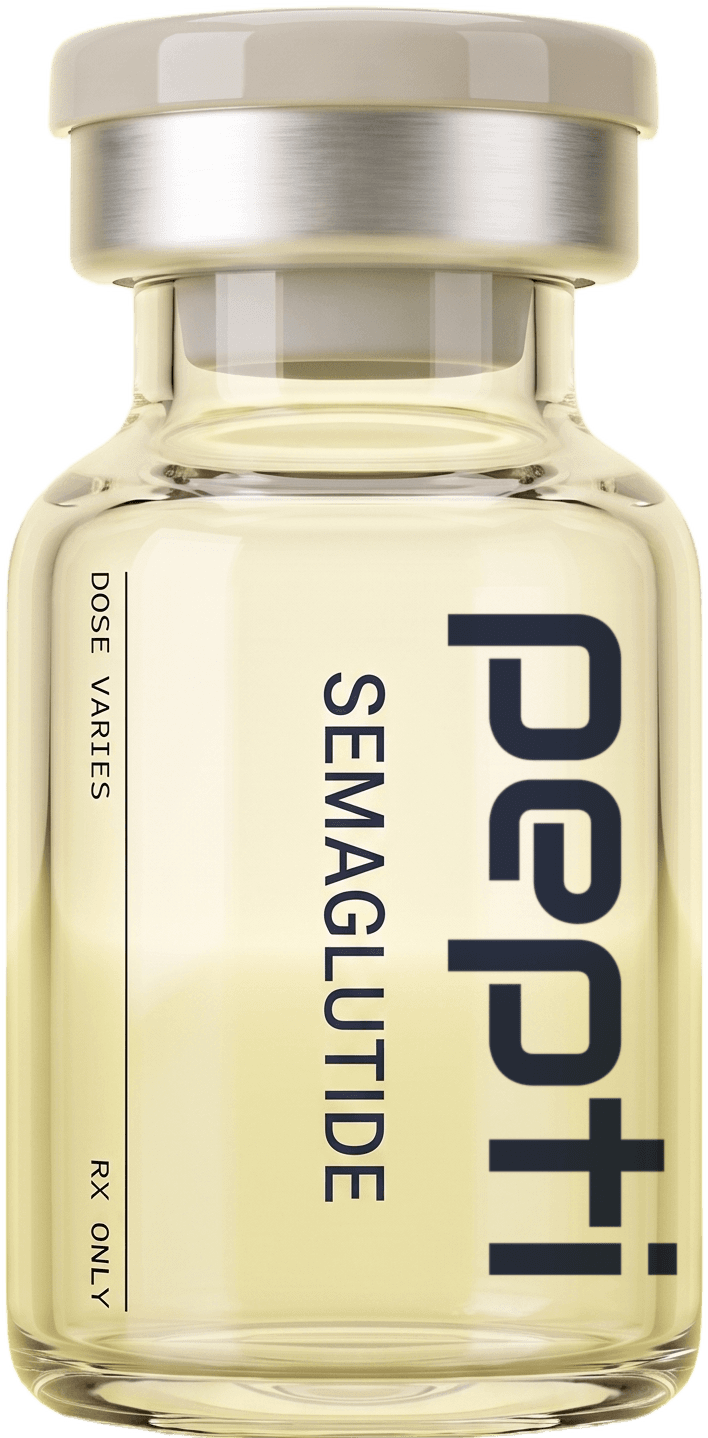
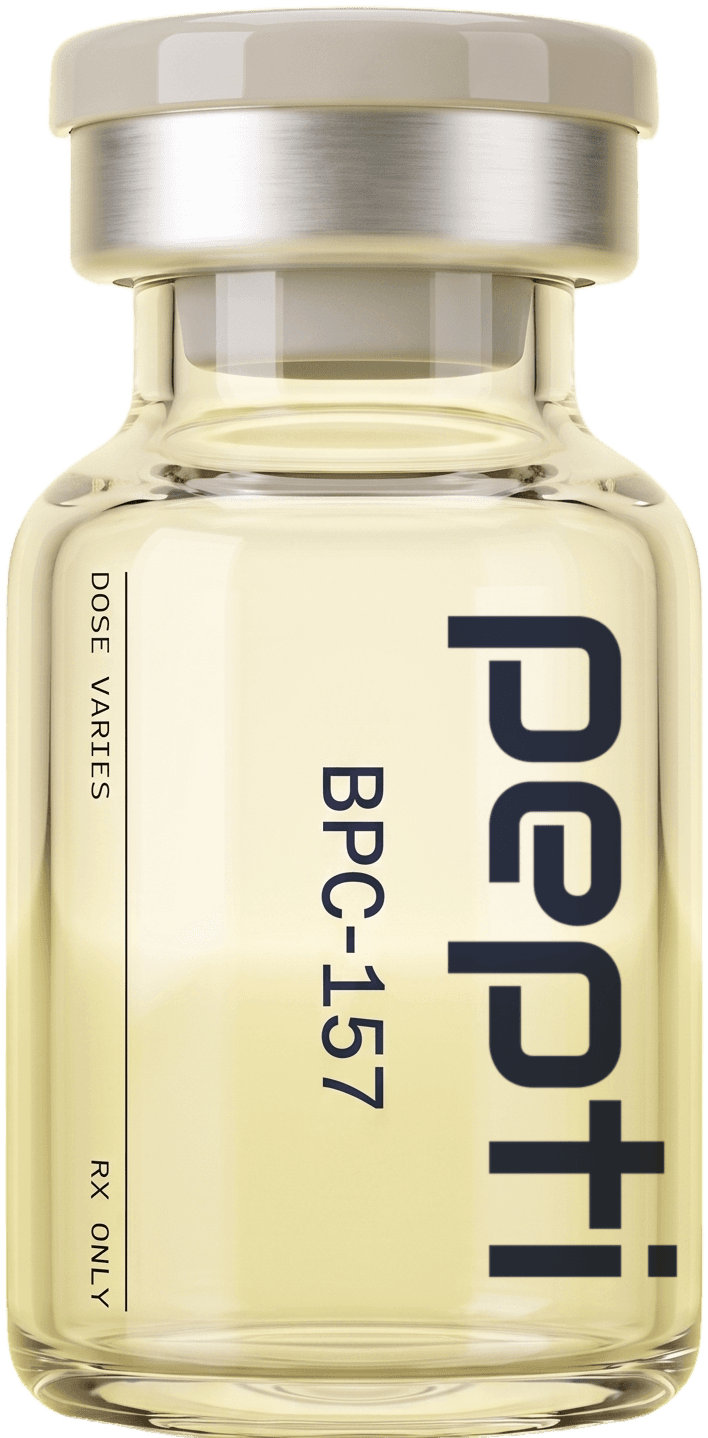
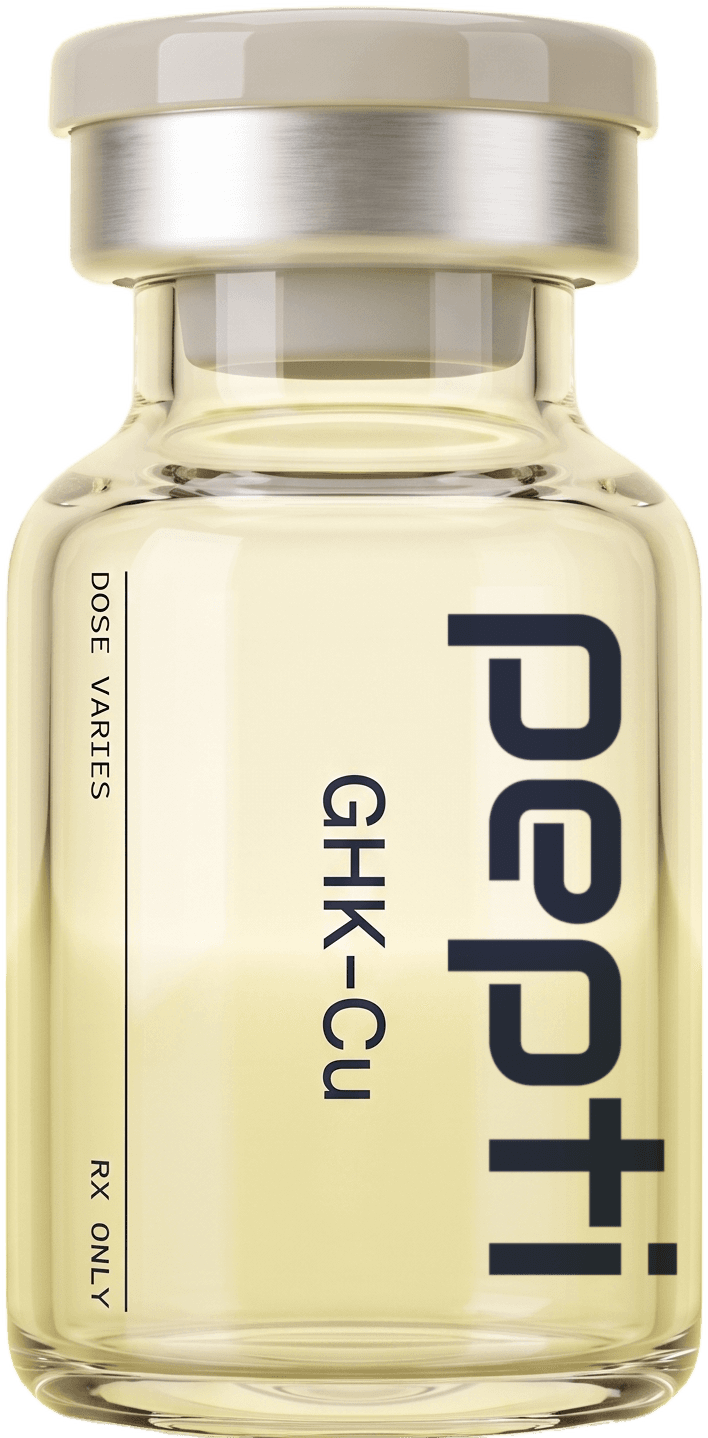
Most peptide prescriptions are a small subcutaneous injection into the fat layer of the abdomen or outer thigh, using a U-100 insulin syringe, and the single most important thing to get right is the unit conversion: on a U-100 syringe, 100 units is 1 mL, so a 0.25 mL dose is 25 units. Your dose, your schedule, your site and your storage come from the directions your physician wrote and the pharmacy printed on your vial, not from a website or a forum. This page is a general walkthrough of the technique, the conversions and the errors that actually happen. If your directions and your syringe markings seem to disagree, message your care team before you dose.
— How to Inject Peptides Safely
The short answer
| If your sig says | On a U-100 insulin syringe that is | Typical example prescription | Price a month |
|---|---|---|---|
| 0.05 mL | 5 units | Low-volume doses from a concentrated vial | Varies |
| 0.1 mL | 10 units | Sermorelin, 2 mg/mL vial | $229 |
| 0.2 mL | 20 units | CJC-1295 / Ipamorelin, 5 mL vial | $239 |
| 0.25 mL | 25 units | BPC-157 or BPC-157 + TB-500, 5 mL vial | $209, $259 |
| 0.3 mL | 30 units | KLOW, 5 mL vial | $259 |
| 0.5 mL | 50 units | GHK-Cu, 5 mL vial | $239 |
| 1.0 mL | 100 units, the whole barrel | Larger-volume preparations such as NAD+ | $249 |
Those are conversions, not prescriptions. Your physician sets the dose and the frequency after reviewing your history, and the sig on your label is the only one that applies to you. Prices are all-in monthly.
Everything below elaborates four things: read the label, get the volume right, put the needle somewhere different from last time, and put the syringe into a sharps container the moment you are finished.
— How to Inject Peptides Safely
Reading your directions before you touch anything
A typical direction reads: inject 0.25 mL, which is 25 units on a U-100 insulin syringe, subcutaneously, on the stated days. Two numbers, one amount, written twice because prescriptions are written in milliliters and insulin syringes are marked in units. Not a range, not two options — draw to 25 units and you have drawn 0.25 mL.
| What to check on the label | Why |
|---|---|
| Your name | It is a patient-specific compounded preparation, not stock |
| The medication and concentration, for example 1 mg/mL | Lets you sanity-check the milligrams your volume delivers |
| Total contents, for example 5 mg per 5 mL | Tells you roughly how many doses the vial holds |
| The sig, in both mL and units | The dose and frequency |
| Storage conditions | These govern, whatever a website says |
| The beyond-use date | The date after which the pharmacy's preparation should not be used |
— What the concentration tells you
Concentration, in milligrams per milliliter, is what turns your volume into a quantity of medication. A 1 mg/mL vial delivers 1 mg in a full milliliter, so 0.25 mL of it delivers 250 mcg. That arithmetic is a sanity check, not a way to decide a dose. But if your label says 1 mg/mL, your sig says 0.25 mL, and someone tells you that you are taking 2.5 mg, one of you is wrong and it is worth a message before the next dose.
It is also why the same medication carries different volumes on different labels: a higher strength delivers more medication in the same volume, so two people on the same peptide can be told to draw quite different marks. Both labels are correct. Neither should use the other's number.
— The route is part of the direction
Most peptide directions say subcutaneously — into the fat layer. Some do not. Methylcobalamin is directed as inject 1.25 mL (125 units) intramuscularly once weekly, and L-Carnitine as inject 0.50 mL (50 units) intramuscularly once daily Monday through Friday. Intramuscular means a different depth, angle and usually a different needle, and is not something to improvise from a subcutaneous habit. If your label says intramuscular and nobody has shown you how, ask before the first dose.
— Three checks before every single injection
Right vial, right volume, right site. Most dosing errors here are not exotic, they are somebody drawing 25 units of the wrong vial or misreading a barrel in poor light. If you are on more than one injectable — a weekly semaglutide or tirzepatide pen plus a daily peptide vial — keep them separated in the refrigerator and read the name on the label every time rather than recognizing the box.
— How to Inject Peptides Safely
Milliliters, units and the U-100 syringe
What "U-100" actually means
U-100 is a concentration standard, not a syringe size: 100 units per milliliter. Every insulin syringe sold in the US for U-100 use is marked on that basis, which is why the conversion never changes. Move the decimal two places and you are done. A "unit" here is a volume mark on a barrel, not a measure of potency — two people drawing 25 units of different medications are drawing the same volume and completely different amounts of drug.
Barrels come in several sizes, commonly 0.3 mL (30 units), 0.5 mL (50 units) and 1 mL (100 units). All are U-100, so a unit is the same volume on each, but a smaller barrel spaces the marks further apart and is easier to read for a small dose. Trouble comes from switching barrel size mid-prescription and reading the new one from habit rather than by number. Some directions exceed a 1 mL barrel altogether — the methylcobalamin example above is 125 units — and are supplied with an appropriate syringe, usually marked in milliliters. If what arrived does not match what your label asks you to measure, do not improvise with two draws. Message your care team.
Reading the barrel, and the ten-fold error
Read the flat front edge of the rubber plunger tip against the marking, not the raised ring behind it, with the syringe vertical at eye level. Reading at an angle biases every dose in the same direction, which is how someone sits a couple of units off for months without making an obvious mistake.
The error that matters most is converting in the wrong direction — reading 0.25 mL and drawing to the 2.5 mark, or reading 25 units and drawing a quarter of a barrel that holds only 0.3 mL. Four habits remove most of that risk: say the number out loud in units as you draw it, read the label rather than your memory every time, draw at a table with the light on, and never round to a mark that happens to be easier to see. If your sig says 18 units, 20 is not close enough.
— How to Inject Peptides Safely
The ten steps
Lay everything out first: vial, a new syringe, two alcohol swabs, gauze, sharps container within reach, on a clean dry surface in good light. CDC guidance asks that medications be prepared in a designated clean area away from sinks and other sources of contamination.
- Wash and dry your hands. Take the vial out of the refrigerator if that is how your label says to store it.
- Check the vial: your name, the medication, the beyond-use date, and that the solution is clear and free of visible particles. If anything looks wrong, stop and message your care team.
- Wipe the rubber stopper with an alcohol swab and let it air dry. Wet alcohol carried into the vial is a real contamination route.
- Open a new U-100 insulin syringe. Never use one twice.
- Draw air into the syringe equal to your dose, insert through the centre of the stopper, and push the air in. This keeps the vial from going into vacuum.
- Invert the vial and draw slowly to your mark. Check the plunger tip against the marking at eye level, not at an angle.
- Tap the barrel to float large bubbles to the top and push them back into the vial, then redraw to your mark. Small bubbles under the skin are not dangerous, but they displace volume and that is what matters.
- Clean the injection site with a fresh swab and let it dry.
- Pinch a fold of skin, insert at the angle your clinician described, inject slowly and steadily, then withdraw and release the pinch. Do not massage the site.
- Drop the syringe into a sharps container immediately. Do not recap.
If you see blood at the site, press gently with clean gauze. If you consistently see blood or bruising in one area, move your rotation.
The steps people get wrong
Letting the alcohol dry. Alcohol that has not evaporated stings, and is the commonest reason someone describes a peptide as burning. It also rides into the vial on the needle if you puncture a wet stopper. Ten seconds of air drying fixes both; blowing on it re-contaminates.
Pushing air in first. A sealed vial pulls toward vacuum as you withdraw liquid, which makes the plunger fight you and the draw inaccurate. Replacing the volume with air keeps the pressure neutral. This is the step people skip first and the reason their doses become hardest to read.
The pinch. Pinching lifts the fat layer clear of the muscle and gives a short needle a clean target. Thumb and forefinger only — a whole-hand grip drags muscle into the fold. With very short needles some clinicians direct a straight 90-degree injection with no pinch at all; your directions decide that.
Going slowly. A fast push delivers the volume into a smaller space than it can take, which produces both the ache and the back-leak. Counting to five before withdrawing is the most effective fix for a drop appearing at the site. Then leave it alone — rubbing changes absorption.
Needles, gauge and single use
The international injection technique recommendations produced by the Forum for Injection Technique and Therapy (FITTER), published in Mayo Clinic Proceedings in 2016 and vetted by 183 diabetes specialists from 54 countries, concluded that the shortest needles available — 4 mm on a pen, 6 mm on a syringe — are safe, effective and less painful and should be first-line in all patient categories, and that intramuscular injection should be avoided where a subcutaneous injection was intended. That work is about insulin, but it is the largest carefully assembled body of evidence on subcutaneous self-injection that exists, and peptide syringes come from the same standard. Gauge runs backwards, so 31G is thinner than 29G.
Reusing a syringe dulls and burrs the tip, which hurts more and damages tissue. The CDC states the rule as "One Needle, One Syringe, Only One Time," and adds that a syringe must not be reused even if the needle is changed. That guidance is written for clinicians, where the risk is transmission between patients; at home the reasons are tissue damage, contamination of your own vial and a blunted needle. The rule is the same either way.
— How to Inject Peptides Safely
Sites and rotation
| Site | Notes |
|---|---|
| Abdomen | The most used site. Stay at least two inches away from the navel, and avoid scars and stretch marks |
| Outer thigh | The front outer third, a hand's width above the knee and below the hip |
| Upper outer buttock | Usable, harder to reach on yourself |
| Back of the upper arm | Possible, usually needs another person to do it well |
Rotate every dose, moving at least an inch from the last site and working around an area in a pattern rather than at random. Repeatedly injecting the same spot is what produces soreness, lumps and thickened tissue, and thickened tissue absorbs unevenly, which quietly changes what your dose does.
— Two rotations, not one
Doing only one of them is the usual failure. Between-site rotation means moving between regions: abdomen this week, thigh next. Within-site rotation means that inside whichever region you are using, each injection sits at least a finger's width from the last, in a pattern you can reproduce — quadrants around the navel, one a week, or a clock face. Which scheme you pick does not matter. Having one does, because "somewhere different" is not a system and after three weeks nobody remembers where they have been.
— Lipohypertrophy: the thing rotation prevents
Lipohypertrophy is thickened, rubbery tissue that builds up where injections are repeatedly given in one place. It is the best-documented complication of self-injection there is, and the numbers are not marginal. A meta-analysis in Therapie in 2021 pooled 45 studies and 26,865 insulin-treated participants and found an overall prevalence of 41.8%, with duration of injecting the strongest predictor. An earlier systematic review in the Journal of Diabetes Investigation in 2017, covering 26 studies and 12,493 participants, put pooled prevalence at 38%. A 2022 study in the same journal examined 52 insulin-treated adults by ultrasound and biopsy and reported skin at repeatedly injected sites measurably thicker than normal skin in the same person — a median of 2.80 mm versus 1.95 mm — with thickened collagen bundles in the dermis.
Why this matters for a peptide and not only for insulin: altered tissue absorbs differently. The FITTER recommendations state plainly that lipohypertrophy distorts absorption, that injections should not be given into these lesions, and that correct site rotation helps prevent them. A dose delivered into thickened tissue is not the dose your physician wrote, and nothing about the injection will tell you so.
— The evidence that fixing it works
A randomized controlled trial in Diabetes Therapy in 2021 took 210 insulin-injecting patients who were routinely injecting into areas of lipohypertrophy and gave half of them intensive technique education — moving to normal tissue, rotating within and between sites, stopping needle reuse. Total daily insulin fell by roughly 7 to 8 units in the education group against about 1 unit in controls, while glycemic control was maintained. In the Belgian LIMO study in Diabetic Medicine in 2022, after similar education, the proportion injecting into damaged tissue fell from 51.4% to 7.5% and incorrect rotation from 37.0% to 4.1%. Technique is modifiable, and changing it changes what the medication does.
Check your own sites monthly: clean hands, fingertips flat over the areas you use, feeling for anything raised, rubbery or firmer than the tissue around it. Lipohypertrophy is easier to feel than to see and is frequently painless, which is why it goes unnoticed. If you find something, stop injecting there, move to untouched tissue and tell your physician — moving out of altered tissue can change how much medication reaches circulation, which is a conversation to have in advance.
— Never share
Never share a vial, a syringe or a pen. This is not a hygiene nicety, it is a bloodborne infection route. A pen deserves separate mention because it looks shareable in a way a vial does not, and changing the needle is not enough: CDC guidance is explicit that a syringe must not be reused between people even with a new needle, and the same logic applies to a pen cartridge.
— How to Inject Peptides Safely
Air bubbles
In a subcutaneous injection the dose goes into the fat layer, not into a vein, so the concern with a bubble is not the air but the space it occupies in the barrel. If 3 units of your 25 are a bubble, you have drawn 22 units of medication and read 25. Do that every dose and you are quietly a tenth light. That is the whole reason for step 7.
To clear them, draw a little past your mark, hold the syringe needle-up, tap the barrel firmly with a fingernail to float the bubbles to the top, then push gently until they and the excess go back into the vial and the plunger tip sits on your mark. Keep the needle in the inverted vial while you do it. Very fine bubbles clinging to the barrel wall are not worth chasing; their volume is negligible and the extra handling introduces more error than it removes.
They usually come from drawing too fast, from the needle tip rising above the liquid line, or from a vial that has been shaken. Peptide solutions are generally rolled gently rather than shaken, because shaking whips air into solution and makes the next several draws harder to read.
— How to Inject Peptides Safely
Missed doses
Missed-dose handling genuinely differs by medication, which is why it is a question for your prescriber rather than a general rule. The right answer depends on how long the medication persists and where you are in a schedule.
Many peptide directions run once daily or Monday through Friday, and a single missed day there is a small event — the usual instruction is to carry on at the next scheduled time rather than compensate. Semaglutide and tirzepatide are different: both are weekly subcutaneous injections on a schedule that steps up over months, semaglutide from 0.25 mg toward 2.4 mg over sixteen weeks and tirzepatide from 2.5 mg toward 15 mg over twenty weeks. Because the dose is escalating deliberately, a missed week has a specific answer: see what if I miss a dose of tirzepatide.
Never double up on your own
Taking two doses to make up one missed dose is the commonest self-directed error after the unit conversion, and it collapses an escalation designed to be gradual. If you are unsure where you are in a schedule, that is a message to your care team, not a calculation to perform. Most missed doses are logistical anyway: a fixed time of day, a visible sharps container and one recurring reminder solves most of it, and a paper grid on the refrigerator with a square per dose doubles as a rotation record.
— How to Inject Peptides Safely
Pen versus vial technique
A pre-filled pen cartridge doses by dial instead of by syringe. There is no draw, no vial entry and no conversion to perform. Everything else is identical: same sites, same rotation, same one-needle-one-time rule, same sharps container, same medication. The pepti Pen is a pre-filled cartridge in a reusable injector; availability varies by product and is confirmed at checkout, and the comparison is at vial vs pen.
Priming, the step people skip
Most pens require a small priming shot — dialing a test amount and expelling it with the pen held needle-up until liquid appears — before dialing the actual dose. This clears air from the needle path and confirms flow. Skip it and the first part of your dose can be air. Your pen's instructions state whether and how to prime.
Hold at the end, and take the needle off
The dose is delivered under pressure through a very fine needle and does not finish the instant the dial reaches zero. Keep the needle in the skin for the count your pen's instructions specify. Pulling out early is the main cause of a visible drop at the site with a pen. The needle then goes straight into the sharps container: leaving one attached leaves an open path into the cartridge, lets medication weep out or air in, and leaves an exposed needle on a device that lives in a refrigerator or a bag. Neither format is clinically better — a pen removes the draw, the conversion and the vial entry, and the dose your physician wrote is the same either way.
— How to Inject Peptides Safely
Sharps disposal
— The container
The FDA recommends that used needles and other sharps be immediately placed in FDA-cleared sharps disposal containers, which it describes as made of puncture-resistant plastic with leak-resistant sides and bottom and a tight-fitting, puncture-resistant lid, available through pharmacies, medical supply companies, health care providers and online. "Immediately" is doing real work there: the needle goes in as the next action after withdrawing it, not recapped and not left on the counter.
Where an FDA-cleared container is not available, the FDA states that a heavy-duty plastic household container such as a laundry detergent container can be used as an alternative, provided it closes with a tight-fitting puncture-resistant lid without sharps being able to come out, stays upright and stable during use, is leak-resistant, and is properly labeled to warn of hazardous waste inside. A glass jar, a soda bottle and a coffee can each fail at least one of those tests.
— The FDA's DOs and DON'Ts
The agency's own list is short and worth reading as written. Do immediately place used needles in a sharps disposal container; do use an FDA-cleared container if possible; do carry a portable sharps container for travel; do follow your community guidelines for getting rid of your container; do keep all sharps and containers out of reach of children and pets; and do seal and label containers when disposing of them. Don't throw loose needles into the trash, don't flush them down the toilet, don't put them in the recycling bin, and don't try to remove, bend, break or recap needles used by another person.
— When it is full, and traveling
The FDA advises that when a sharps container is about three-quarters full you follow your community guidelines for proper disposal. What happens next genuinely varies by where you live; the FDA publishes no single national method and directs people to the guidelines and programs available in their own state and community. In practice that usually means a pharmacy or health department drop-off, a household hazardous waste collection, or a mail-back program, and your own pharmacy is the fastest place to ask.
The FDA frames safe disposal as applying whether you are at home, at work, at school, traveling, or in public places such as hotels, parks and restaurants, and specifically recommends a portable sharps container for travel. That plus your medication in its original labeled packaging covers the "what is this" question at a checkpoint too.
— How to Inject Peptides Safely
Sterility, vial entry and beyond-use dates
A multi-dose vial is entered repeatedly over its life and every entry is an opportunity. CDC guidance states that a vial must never be entered with a needle or syringe that has already been used, and asks for aseptic technique throughout. The home version is exactly that: clean hands, clean surface, dried septum, new needle, nothing touching the needle before it goes in. Puncture through the middle of the stopper, straight, once — repeatedly entering at the edges or at a steep angle can core a fragment of rubber into the solution. If you ever see a fleck floating in a vial, stop and message your care team with a photograph.
CDC guidance for healthcare settings sets a default of dating an opened multi-dose vial and discarding it within 28 days unless the manufacturer states another date. That is a general default for manufactured products and is not automatically your number. A compounded preparation carries a beyond-use date assigned by the pharmacy that prepared it, printed on your label. Where the two differ, your label governs.
Storage and beyond-use dates: what actually governs
There is no universal storage rule for compounded peptides, and any page that gives you one is guessing about a preparation it has not seen. Your vial label and your pharmacy's directions govern. What is generally true: these solutions are typically dispensed refrigerated, heat and light are the practical enemies, freezing is not assumed unless your directions say so, and the beyond-use date assigned by the pharmacy assumes the labelled storage conditions were followed. The full handling detail is in how to store peptides.
A vial left on the counter for an afternoon is a question for your pharmacy, not a judgement call to make by looking at it. A solution can be perfectly clear and still have been held wrongly.
— How to Inject Peptides Safely
What goes wrong, and what to do
| Problem | What it usually means | What to do |
|---|---|---|
| The sig and the syringe markings seem to disagree | A unit and millilitre mix-up, which is the most consequential error in this category | Do not dose. Message your care team |
| You drew too much | Common when learning | Push the excess back into the vial before removing the needle, redraw carefully |
| Bubbles you cannot clear | Usually cosmetic in a subcutaneous dose | Clear the large ones, keep the volume right, carry on |
| A red, warm, painful or swollen site that is not settling | Possible injection-site reaction or infection | Message your physician, with a photograph |
| A drop of liquid leaks out after withdrawing | Withdrew too fast, or the site was under tension | Do not redose. Count it and adjust technique next time |
| You missed a dose | Very common | Ask your care team what to do for your specific medication. Do not double up on your own initiative |
| Injecting into muscle by accident | Usually just stings more | Use a shorter needle or pinch more skin next time |
| A vial arrived warm, or looks cloudy or discoloured | A cold-chain failure or a preparation problem | Do not use it. Photograph the vial and packaging and message your care team |
Three additions to that table. A needle that bends against the skin or on the stopper goes into the sharps container and you open a new one — a bent tip is burred and tears rather than pierces. Small bruises come from a nicked capillary rather than a technique failure, though bruising in the same area every time is a rotation problem. And a firm area immediately after injecting is the volume you just delivered and settles within the hour, while one still there next week is the lipohypertrophy above.
Anything that is not local is a different category. Hives away from the site, swelling of the face, lips or throat, difficulty breathing, or a spreading hot painful site with fever is emergency care, not a message. What else to watch for is in peptide side effects: what to watch for.
— How to Inject Peptides Safely
What the evidence shows, honestly
Subcutaneous self-injection is an extremely well established route. The technique above is standard practice adapted from insulin administration, which is the largest body of patient self-injection experience there is, and none of it is specific to peptides or novel. The injection-technique literature is also unusually good: the FITTER recommendations were built from a large international practice survey and vetted by 183 specialists from 54 countries, and the rotation findings come from randomized trials and meta-analyses covering tens of thousands of people. That is a stronger evidence base than exists for most of the molecules being injected.
What is not standardized is dosing
There is no approved label for a compounded peptide, no labelled dosing range, and for most of these molecules the published research is preclinical. Your sig is a physician's judgement written down, not a monograph, which is exactly why following the sig rather than a protocol from a forum matters. Compounded medications are not FDA approved.
The technique on this page is standard and evidence-backed; the dose it delivers is a clinical decision made for you individually, and for products such as BPC-157, GHK-Cu and the KLOW blend it is not derived from a phase 3 program. Where the medication does carry a substantial human trial record — semaglutide and tirzepatide are the clearest examples — the escalation schedule is part of the clinical reasoning and is not something to shortcut.
What good technique does not fix
Injection-site reactions are the commonest reported adverse effect across this category and are usually minor and local — a general pattern rather than a guarantee about your experience, and anything not settling should be reported. Technique determines whether the prescribed dose arrives. It does not determine whether that dose is the right one, or whether something else should be addressed first, which is why the intake asks for your full history and why your physician stays reachable afterward.
— References
What this is based on.
References
- Chang CH, Tsai WC, Hsu YH, Pang JH. Pentadecapeptide BPC 157 enhances the growth hormone receptor expression in tendon fibroblasts · Molecules (2014) · PMID 25415472
- Krivic A, Anic T, Seiwerth S, et al.. Achilles detachment of rat and stable gastric pentadecapeptide BPC 157 · Journal of Orthopaedic Research (2006) · PMID 16583442
- Sikiric P, Seiwerth S, Rucman R, et al.. Stable gastric pentadecapeptide BPC 157: novel therapy in gastrointestinal tract · Current Pharmaceutical Design (2011) · PMID 21548867
- Cerovecki T, Bojanic I, Brcic L, Radic B, et al.. Pentadecapeptide BPC 157 (PL 14736) improves ligament healing in the rat · J Orthop Res (2010) · PMID 20225319
- Sikiric P, Seiwerth S, Rucman R, Turkovic B, et al.. Stable gastric pentadecapeptide BPC 157-NO-system relation · Curr Pharm Des (2014) · PMID 23755725
- Cox HD, Miller GD, Eichner D. Detection and in vitro metabolism of the confiscated peptides BPC 157 and MGF R23H · Drug Test Anal (2017) · PMID 28035768
- Thomas A, Görgens C, Guddat S et al.. Simplifying and expanding the screening for peptides <2 kDa by direct urine injection, liquid chromatography, and ion mobility mass spectrometry · J Sep Sci (2016) · PMID 26578461
- Farrar JT, Young JP Jr, LaMoreaux L, Werth JL et al.. Clinical importance of changes in chronic pain intensity measured on an 11-point numerical pain rating scale · Pain (2001) · PMID 11690728
- Meyer JD, Ho B, Manning MC. Effects of conformation on the chemical stability of pharmaceutically relevant polypeptides · Pharm Biotechnol (2002) · PMID 11987755
- Xu C, Sun L, Ren F, Huang P, et al.. Preclinical Safety Evaluation of Body Protective Compound-157, a Potential Drug for Treating Various Wounds · Regul Toxicol Pharmacol (2020) · PMID 32334036
- He L, Feng D, Guo H, et al.. Pharmacokinetics, distribution, metabolism, and excretion of body-protective compound 157, a potential drug for treating various wounds, in rats and dogs · Front Pharmacol (2022) · PMID 36588717
- Lee E, Padgett B. Intra-Articular Injection of BPC 157 for Multiple Types of Knee Pain · Altern Ther Health Med (2021) · PMID 34324435
Citations are provided for educational purposes. They do not constitute medical advice. Always discuss any peptide protocol with your prescribing physician.
— Common questions
How to Inject Peptides Safely, answered.
25 units on a U-100 insulin syringe, because 100 units on that barrel is 1 mL. This conversion is the most common source of serious dosing error in self-injected peptides, and a ten-fold mistake here is not a small one. The rule is fixed for every U-100 syringe sold in the US: move the decimal two places. 0.05 mL is 5 units, 0.1 mL is 10 units, 0.5 mL is 50 units.
Subcutaneously, into the fat layer, most commonly the abdomen at least two inches from the navel or the outer thigh. Rotate every dose, staying at least an inch from the last site, and avoid scars and stretch marks. The upper outer buttock and the back of the upper arm are also usable, though both are harder to reach on yourself. Some directions are intramuscular rather than subcutaneous — check your label, because the route is part of the prescription.
Most people describe a subcutaneous insulin-syringe injection as minor, and the needles are short and fine. Stinging on injection, a small bruise, or brief tenderness at the site are common. Pain that is increasing, or a site that stays hot and red, is worth a message. Two technique fixes remove most avoidable pain: let the alcohol dry fully before the needle goes in, and use a new needle every time, because a reused tip is blunted and burred.
Yes, with a fresh alcohol swab, and let it dry before inserting the needle. A multi-dose vial is entered repeatedly, and the stopper is the route in for anything on its surface. CDC injection safety guidance also states that a vial must never be entered with a needle or syringe that has already been used, which at home means a new sterile needle for every draw.
Ask your care team what applies to your specific medication, and do not double the next dose on your own. The right answer differs between a weekly GLP-1 and a weekday-dosed repair peptide. For semaglutide and tirzepatide the schedule steps up over months, so a missed week has a specific answer: see what if I miss a dose of tirzepatide.
Not on your own initiative. Where a combination is appropriate it is compounded into a single vial by the pharmacy, which is what the blends are. Combining products yourself is not a dosing decision you can make safely at home: see can you take two peptides together.
A sharps container, never household rubbish and never recapped. Most states have specific disposal rules and many pharmacies and health departments run take-back programmes. The FDA recommends an FDA-cleared sharps container, or failing that a heavy-duty plastic household container with a tight-fitting puncture-resistant lid that is leak-resistant, stable upright and clearly labeled, and advises emptying it at about three-quarters full according to your community's guidelines.
Thickened, rubbery tissue that builds where injections are repeatedly given in the same spot. Pooled prevalence across 45 studies and 26,865 insulin-treated participants was 41.8% in a 2021 meta-analysis in Therapie. It matters because altered tissue absorbs unevenly, so the dose delivered into it is no longer the dose that was written. Avoiding it means rotating between regions and within a region on a pattern you actually follow, using a new needle every time, and feeling over your sites once a month.
Because a sealed vial moves toward vacuum as you remove liquid, which makes the plunger fight you and the draw inaccurate. Injecting a volume of air equal to your dose before drawing keeps the pressure neutral.
Clear the large ones and stop worrying about the tiny ones. On a subcutaneous route the issue is not the air, it is that a bubble occupies space in the barrel — if part of your 25 units is a bubble, you have drawn less medication than you have read. Draw slightly past your mark, hold the syringe needle-up, tap the barrel, push the bubbles back into the vial, then settle on your mark.
Hold it vertical, at eye level, and read the flat front edge of the rubber plunger tip against the marking — not the raised ring behind it, and not at an angle. Reading from an angle biases every dose in the same direction, which is how someone sits a couple of units off for months without noticing.
The site, the rotation, the single-use needle rule and the sharps container are identical. What changes is that you dial the dose rather than drawing it, so there is no conversion and no vial entry. Two pen-specific steps matter: prime the pen as its instructions direct, and keep the needle in the skin for the count the instructions specify after the dial reaches zero, because the dose is still being delivered. The pepti Pen is a pre-filled cartridge in a reusable injector; see vial vs pen.
No. Reuse blunts and burrs the needle tip, which makes injection more painful and does more damage to the tissue, and it compromises sterility on re-entry into a multi-dose vial. Reuse is extremely common in practice — 95.9% of participants at baseline in the 2022 LIMO study in Diabetic Medicine — and reducing it was part of the intervention that cut injections into damaged tissue from 51.4% to 7.5%.
For the delivered dose, yes. A randomized controlled trial in Diabetes Therapy in 2021 found that teaching insulin-injecting patients to move out of damaged tissue and rotate properly allowed a reduction of roughly 7 to 8 units in total daily insulin while maintaining glycemic control. That is insulin rather than a peptide, but the principle carries: tissue injected repeatedly absorbs differently, and where the needle goes changes how much of the dose arrives.
Because it was compounded to your prescription by a state-licensed, FDA-registered pharmacy, dispensed in your name, and batch-tested. Third-party certificates of analysis are published at lab results, and the wider testing and sourcing detail is at quality. A product arriving with no pharmacy identity and no prescription has none of that behind it. The free assessment goes to a physician licensed in your state. A consultation does not guarantee a prescription.
— Next step
See what a physician
recommends for you.
A licensed physician in your state reviews your intake and decides what is appropriate. A consultation does not guarantee a prescription.
Important legal & safety information
The assessment process available on the Pepti website asks a series of medical questions, and the answers provided are reviewed by an independent licensed physician affiliated with our partner physician network. The licensed providers have established exclusionary criteria, and the answers provided determine if the individual is screened out of eligibility for treatment. The licensed clinicians retain the sole decision to prescribe peptide therapy and other compounded medications to patients. Treatment may be denied at the physician's sole discretion. If a prescription is not approved, you will not be charged for the medication.
Pharmacy Providers. Pepti is a technology platform and is not a healthcare provider, pharmacy, or prescriber. All medications offered through the platform are compounded by independent FDA-registered 503A or 503B compounding pharmacies based on a valid prescription written by a licensed physician for an individual patient. Compounded medications are not FDA-approved as products. The active pharmaceutical ingredients used by our partner pharmacies are sourced from FDA-registered facilities. Compounded medications may not undergo the same testing or quality control as commercially manufactured FDA-approved drugs.
Results vary. Results from peptide therapy and other compounded treatments vary based on individual factors, including age, weight, medical history, adherence to the prescribed protocol, lifestyle factors, and physiological response. Pepti makes no guarantee of any specific outcome. Statements about peptide therapy and compounded medications offered through the platform have not been evaluated by the Food and Drug Administration. These products are not intended to diagnose, treat, cure, or prevent any disease.
Product images. Product photographs and renderings shown on this website are for illustrative purposes only. The appearance of vials, packaging, labeling, and other materials you receive may vary and is determined by the dispensing compounding pharmacy.
Off-label use.Many peptides offered through the platform are prescribed for off-label use. “Off-label” means the medication is being prescribed for a use, dose, or patient population that is not specifically approved by the FDA. Off-label prescribing is legal and common in U.S. medical practice when supported by clinical experience and judgment.
Mailing & shipping. Pepti currently dispenses prescription medication to patients in all 50 states and Washington, D.C.. All orders ship in unbranded, tamper-evident packaging via expedited delivery from our partner compounding pharmacies. Temperature-sensitive medications ship with insulated packaging and ice packs. Shipping is included at no additional cost. We do not currently ship medication outside all 50 states and Washington, D.C., internationally, or to APO/FPO addresses.
Not for emergencies. Pepti is not designed for medical emergencies. If you are experiencing a medical emergency, call 911 or go to your nearest emergency room immediately. For urgent but non-emergency medical questions, contact your primary care provider or use an urgent care service.
No doctor-patient relationship with Pepti. Your use of the platform does not create a doctor-patient relationship between you and pepti LLC. A doctor-patient relationship is established only between you and the independent licensed physician who reviews your intake and prescribes your treatment. The physicians who use the platform are independent contractors and are solely responsible for the medical care they provide.
Prescription medications. All prescription products require a valid prescription from a licensed healthcare provider. By using the platform, you acknowledge that you are at least 18 years old and that the information you provide is true, accurate, current, and complete. Providing false information may result in inappropriate treatment recommendations or denial of service.
Cosmetic & wellness products.Certain products offered through Pepti — including skincare, hair care, body care, supplements, men's grooming, sports recovery, and sexual wellness products — are cosmetic or dietary supplement products, not prescription medications. These products do not require a prescription and are not reviewed or prescribed by a physician. Statements regarding dietary supplements have not been evaluated by the Food and Drug Administration. These products are not intended to diagnose, treat, cure, or prevent any disease. Results vary by individual. Consult your healthcare provider before starting any new supplement or topical product, especially if you are pregnant, nursing, or taking other medications.
pepti LLC · Delaware Limited Liability Company · 131 Continental Dr, Suite 305, Newark, DE 19713 · For media or partnership inquiries, email hello@hellopepti.com. For patient support, email support@hellopepti.com. For privacy and HIPAA inquiries, email privacy@hellopepti.com.