Anti-Aging · Reference
NAD+ Benefits: What the Research Actually Shows
This page goes benefit by benefit, says what molecule and what species each finding comes from, and then covers NMN vs NAD+, side effects, FDA status and how Pepti supplies it. For the full product reference, see what is NAD+ injection.
Medically reviewed by Dr. Gene, MD · November 4, 2026
NAD+ is a coenzyme every cell uses to turn food into energy and to fuel the enzymes involved in DNA repair, and the case for its benefits rests on that well-established biochemistry plus human trials of oral precursors, not of NAD+ injections themselves. Oral NMN and NR reliably raise blood NAD+ in randomized trials, but the effects on things people care about (insulin sensitivity, walking distance, fatigue) have been small, inconsistent and strongest in older or metabolically impaired people. There are no randomized trials of subcutaneous NAD+ injection in humans. So every benefit below is something research describes, not something an injection can promise.
This page goes benefit by benefit, says what molecule and what species each finding comes from, and then covers NMN vs NAD+, side effects, FDA status and how Pepti supplies it. For the full product reference, see what is NAD+ injection.
NAD+ Benefits
The short answer
| Claimed benefit | What the evidence is | Strength of evidence |
|---|---|---|
| Raising NAD+ levels | Human (randomized trials of oral NR and NMN); one 2019 intravenous NAD+ pilot | Strong for oral precursors raising blood NAD+; not measured for subcutaneous injection |
| More energy, less fatigue | Human (small trials of oral NADH, the reduced form, some with CoQ10) | Limited, and not the injected molecule |
| Healthier aging, longevity | Human observational (NAD+ falls with age); cell and animal (sirtuins) | Mechanism only; no human aging outcome tested |
| DNA repair | Cell and animal (PARP enzymes consume NAD+) | A biochemical role, not a clinical outcome |
| Insulin sensitivity and metabolism | Human (oral NR and NMN trials) | Mixed: one positive, one negative |
| Walking distance and physical function | Human (oral NMN in healthy adults; oral NR in artery disease) | Modest, in specific groups |
| Brain health | Human (one phase I oral NR trial in Parkinson's); animal (rat stroke and brain injury) | Early; clinical change described as mild |
| Blood pressure and heart | Human (one oral NR trial flagged a signal for future study) | Weak; not claimed by the authors |
| Mitochondrial function | Textbook biochemistry | Established role; no human trial of injected NAD+ |
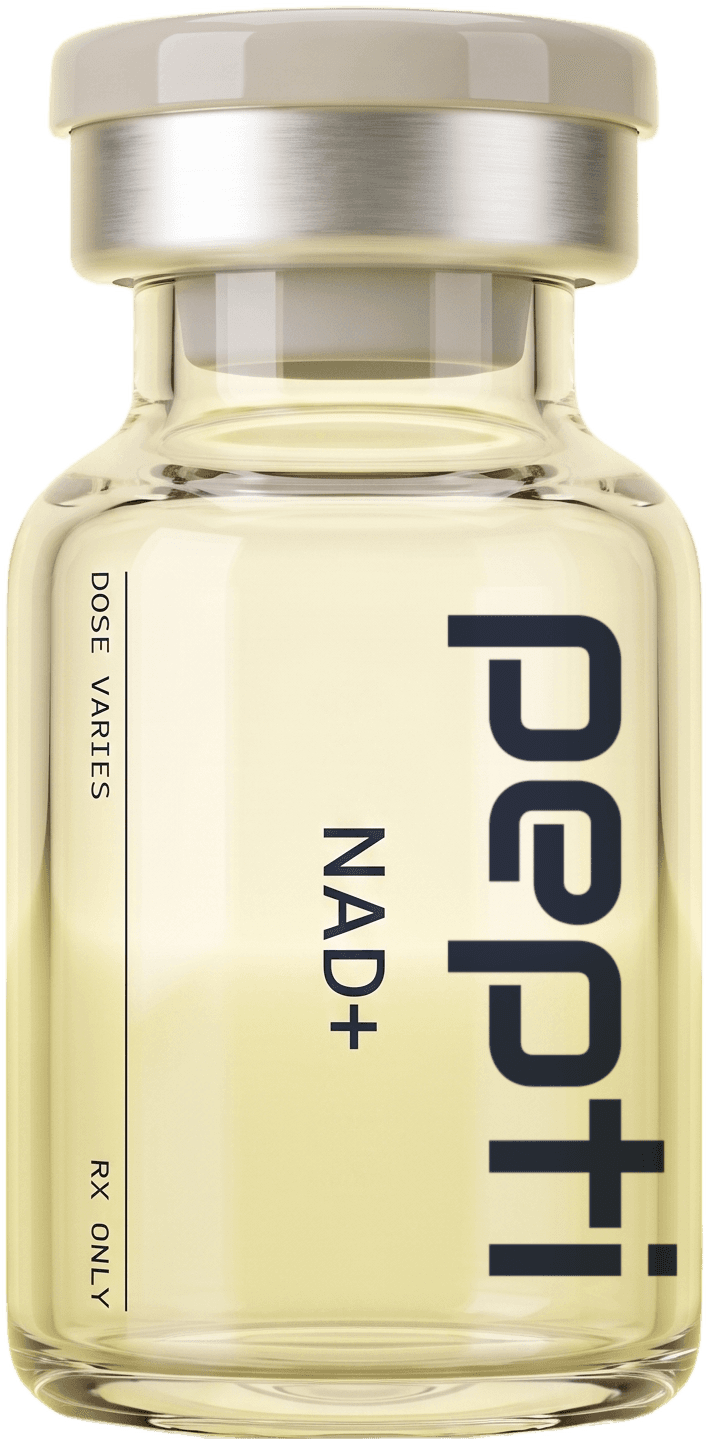
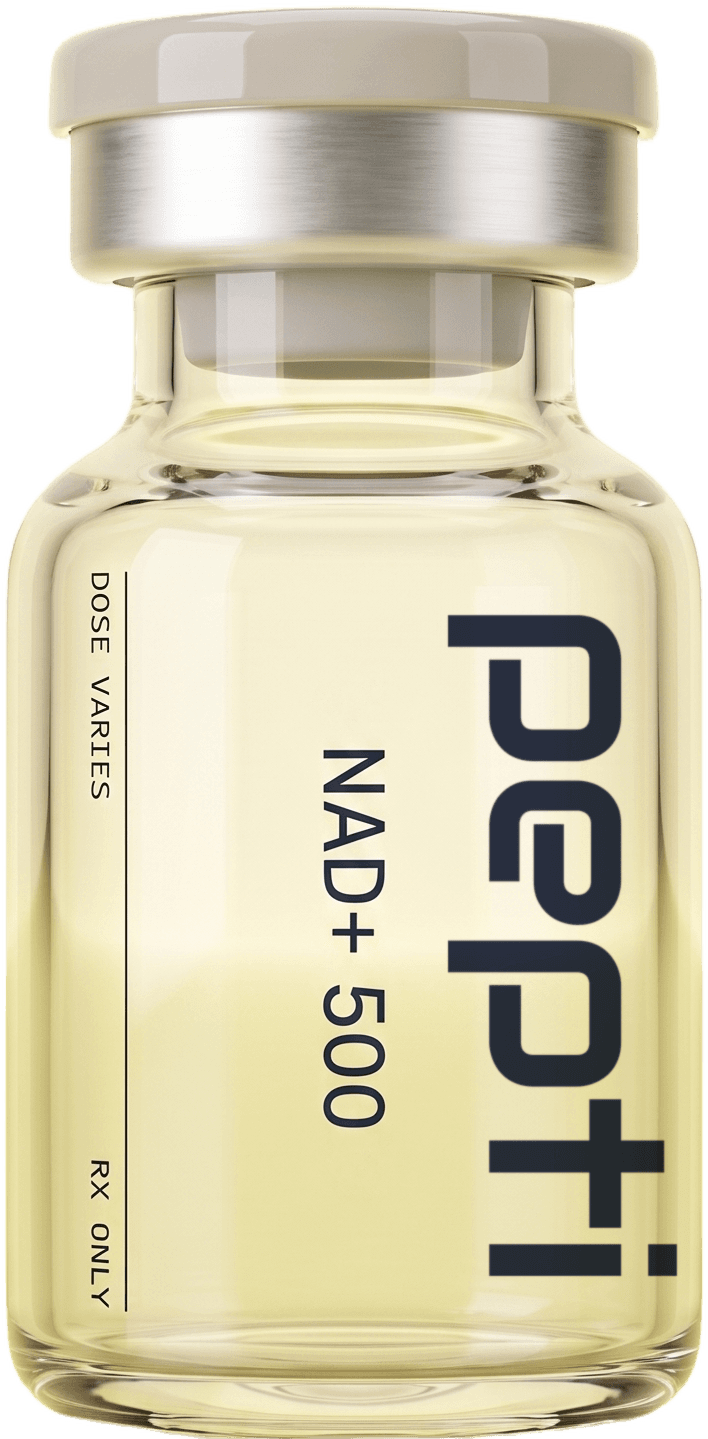
Pepti supplies NAD+ Injection (1000 mg in 10 mL) at $249/mo and NAD+ Injection (500 mg) at $229/mo, all-in.
NAD+ Benefits
What NAD+ is, in one paragraph
NAD+ is nicotinamide adenine dinucleotide. It is not a peptide, a vitamin or a hormone; it is a coenzyme made from a form of vitamin B3 that every living cell makes and uses continuously. It picks up electrons from broken-down glucose and fat, becomes NADH, and hands them to the mitochondria to make ATP, the cell's energy currency. It is also consumed as fuel by two enzyme families: sirtuins (SIRT1 to SIRT7), which regulate cell stress responses, and PARP enzymes, which respond to DNA damage. The body builds it mostly by recycling nicotinamide through nicotinamide mononucleotide (NMN), and nicotinamide riboside (NR) is another way into that recycling route. Severe NAD+ deficiency is a recognized disease, pellagra.
NAD+ Benefits
Benefit by benefit
1. Raising your NAD+ levels
What the research describes. A 2012 study in PLOS ONE measured NAD+ in human skin across age groups and reported lower levels and higher oxidative-stress markers in older tissue. That is human data, and it is observational: it shows the decline, not that reversing it changes anything. On raising levels, oral precursors have the clearest record: NR raised blood NAD+ in healthy volunteers (PLOS ONE, 2017), in healthy middle-aged and older adults (Nature Communications, 2018) and dose-dependently in healthy overweight adults (Scientific Reports, 2019), and NMN raised blood NAD+ dose-dependently over 60 days in 80 middle-aged adults (GeroScience, 2023).
What it does not show. The only published study of NAD+ given directly to people, a 2019 pilot in Frontiers in Aging Neuroscience, infused it intravenously over six hours and found plasma NAD+ and its metabolites did not rise at all for the first two hours: the molecule was cleared as fast as it arrived. The likeliest reading is that injected NAD+ is broken down outside cells into fragments, including nicotinamide and NMN, which tissues rebuild into NAD+. Nothing equivalent has been published for the subcutaneous route. And there is no validated routine clinical test for tissue NAD+, so nobody can show you your levels going up.
2. Energy and fatigue
What the research describes. This is the benefit most people are asking about. The trials that exist used oral NADH, the reduced form: a small 1999 crossover study in the Annals of Allergy, Asthma and Immunology, and two trials of NADH with coenzyme Q10 (Clinical Nutrition, 2016; Nutrients, 2021) reporting reduced fatigue perception in chronic fatigue syndrome.
What it does not show. There are no randomized human trials of subcutaneous NAD+ for fatigue. What prescribers describe, usually a change over weeks two to four in how tiring ordinary days feel or in sleep, is clinical experience, and it is also consistent with placebo. Fatigue very often has a findable cause, such as low B12, thyroid disease, iron deficiency, sleep apnea or depression, and those deserve attention first. More is in peptides for energy and fatigue.
3. Healthy aging and longevity
What the research describes. A 2015 review in Science by Verdin set out the case, from cell and animal work, that declining NAD+ limits sirtuin activity with age. CD38, an enzyme that breaks NAD+ down, is reported to rise with age and chronic inflammation in animal tissue. Reviews in Trends in Molecular Medicine (2017) and Cell Metabolism (2018) summarize animal work restoring NAD+ through precursors.
What it does not show. No human trial has tested NAD+ against any aging outcome. Claims about reversing aging run well ahead of the evidence. See peptides for longevity and anti-aging.
4. DNA repair
What the research describes. PARP enzymes respond to DNA damage by building chains at the break site, and each unit costs one NAD+. A 2014 review in Cell Cycle by Fang and Bohr describes how PARPs and sirtuins draw on the same limited pool, linking DNA repair to mitochondrial maintenance in cells and in animal models of accelerated aging.
What it does not show. "Repairs DNA" describes NAD+'s role as an enzyme substrate. It is not a clinical outcome anyone has measured in people taking NAD+.
5. Insulin sensitivity and metabolism
What the research describes. A 2021 trial in Science gave postmenopausal women with prediabetes NMN or placebo for 10 weeks and reported increased muscle insulin sensitivity on clamp testing.
What it does not show. A 2018 trial in the American Journal of Clinical Nutrition gave 40 obese, insulin-resistant men NR or placebo for 12 weeks and found no improvement in insulin sensitivity, glucose metabolism, energy expenditure or body composition. One positive and one negative trial, both of oral precursors. If weight or blood sugar is the real goal, semaglutide and tirzepatide have large randomized human trials for that purpose.
6. Walking distance and physical function
What the research describes. In the 2023 GeroScience trial, six-minute walk distances were longer than placebo in all three NMN dose groups. The 2024 NICE trial in Nature Communications randomized 90 people with peripheral artery disease to six months of NR or placebo and reported a 17.6-meter between-group improvement in six-minute walk distance.
What it does not show. Both used oral precursors, the effects were modest, and the NICE authors called for a confirmatory trial.
7. Brain health
What the research describes. The NADPARK study (Cell Metabolism, 2022) gave 30 people newly diagnosed with Parkinson's disease NR or placebo for 30 days. Brain NAD levels rose on MR spectroscopy, with altered brain metabolism on PET and lower inflammatory markers. In rats, intranasal NAD+ reduced damage after an induced stroke (Frontiers in Bioscience, 2007) and protected neurons after experimental brain injury (Journal of Neurotrauma, 2012).
What it does not show. NADPARK was a small phase I trial and the clinical change was described as mild. The rat studies are of acute injury, not everyday focus or memory.
8. Blood pressure and the heart
What the research describes. The first controlled trial of NR in healthy middle-aged and older adults (Nature Communications, 2018) reported it was well tolerated, raised NAD+ in blood cells and produced a blood-pressure signal.
What it does not show. The authors flagged it for future trials rather than claiming it.
9. Mitochondrial function
What the research describes. Carrying electrons to the mitochondria is NAD+'s core job, and this is settled biochemistry.
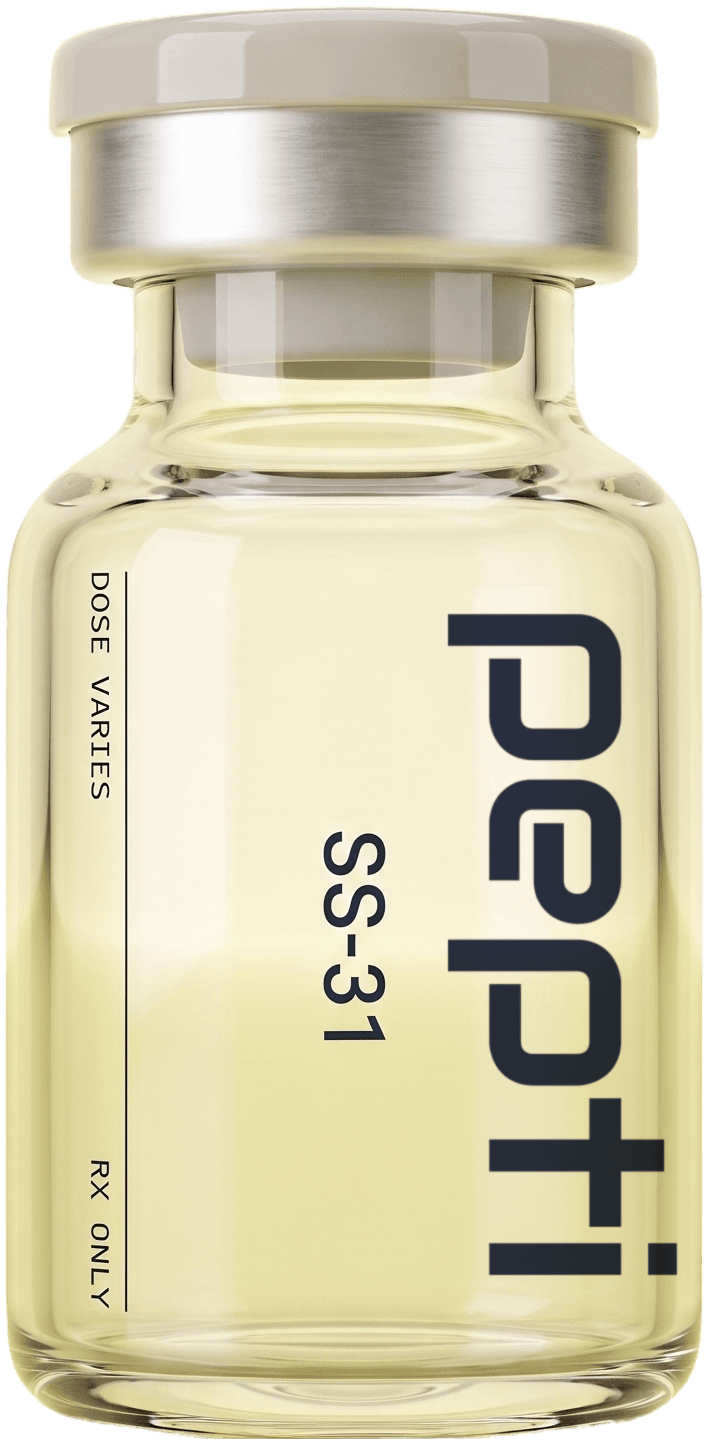
What it does not show. That injected NAD+ changes mitochondrial function in a person has not been tested. If mitochondria are the specific concern, MOTS-c and SS-31 are described around mitochondrial mechanisms through different routes, and SS-31 has been through randomized human trials for a rare mitochondrial disease.
NAD+ Benefits
NMN vs NAD+
This is the distinction that matters most when reading NAD+ research.
| Oral NMN or NR | NAD+ injection | |
|---|---|---|
| What it is | A precursor the body converts to NAD+ through its recycling pathway | NAD+ itself, the finished coenzyme |
| Human trial evidence | Randomized trials from 2018 to 2024 | No randomized trial of subcutaneous NAD+; one 2019 intravenous pilot |
| What the trials showed | Reliable rises in blood NAD+; small, mixed functional effects | Infused NAD+ cleared as fast as it arrived for two hours |
| Route | Must survive the gut | Bypasses the gut |
| Head-to-head comparison | None | None |
On the 2019 infusion data, injected NAD+ appears to be broken down into fragments, NMN among them, that cells rebuild through the same pathway a precursor uses. So the two may end up in the same place. Whether the injection is more effective, equivalent, or simply more expensive has never been tested. Precursor results cannot simply be transferred to NAD+ injections, and a provider who quotes NMN trials as evidence for an injection is skipping a step. Pepti supplies NAD+ as an injection; it does not supply NMN or NR.
NAD+ Benefits
What the evidence shows, honestly
The biochemistry is textbook and not in question. What is thin is the clinical layer on top of it. Most widely cited research uses oral precursors rather than injected NAD+, and much of the mechanism work is in cells and animals. Claims that NAD+ reverses aging, repairs DNA in a clinically meaningful way, or treats named diseases are marketing. What is fair to say: the mechanism is well described, the molecule is one the body already uses, reported tolerability is good, and human outcome data for the injection is limited. NAD+ is not approved for any condition.
NAD+ Benefits
Side effects, in summary
The fuller picture is in is NAD+ safe. Most of what people feel is driven by how fast NAD+ enters the circulation, not by the molecule.
| How often | What is reported | What to do |
|---|---|---|
| Common | Stinging or burning at the site (the solution is acidic), redness, a small lump | Inject slowly; rotate sites between abdomen and thigh |
| Common | Flushing, warmth, tightness in the chest or abdomen, or nausea during the injection, fading within minutes | Usually rate-related; inject slowly and report it |
| Uncommon | Headache, light-headedness | Report it |
| Uncommon | A wired feeling that disrupts sleep, more with evening doses | Report it; timing can be changed |
| Stop and call | Chills, shaking or vomiting after a dose | Not an expected reaction; contact your physician the same day |
| Stop and get help | Facial or throat swelling, widespread rash, difficulty breathing | Emergency care first, then tell your physician |
The randomized precursor trials, over six weeks to six months, reported no serious adverse events. There is no controlled safety dataset for subcutaneous NAD+ and no long-term data by any route. The cautions are an active or recent cancer (a 2019 mouse study in Nature Cell Biology reported that the NAD+ recycling pathway drives tumor-promoting secretions of aging cells, so the question is unsettled), significant kidney or liver disease, and pregnancy or breastfeeding. NAD+ is not named on the 2026 WADA Prohibited List, but tested athletes should check with their governing body first.
NAD+ Benefits
Where NAD+ stands with the FDA
NAD+ is in Category 1, "Bulk Drug Substances Under Evaluation," on the FDA's 503A list updated 14 May 2026. It was never in Category 2, so the April 2026 peptide changes did not involve it. In 2017 an advisory committee voted against listing a 5 mg oral capsule for fatigue in multiple sclerosis, and a 2019 proposed rule carrying that forward has not been finalized for NAD. Under the FDA's interim policy, state-licensed 503A pharmacies may compound it while the evaluation is pending. In October 2024 the FDA warned that food-grade NAD+ powder is not suitable for sterile injections after reports of endotoxin reactions, which is about ingredient sourcing, not the molecule. Compounded NAD+ is not FDA approved.
NAD+ Benefits
How Pepti supplies it
| Product | What is in it | Directions | Price |
|---|---|---|---|
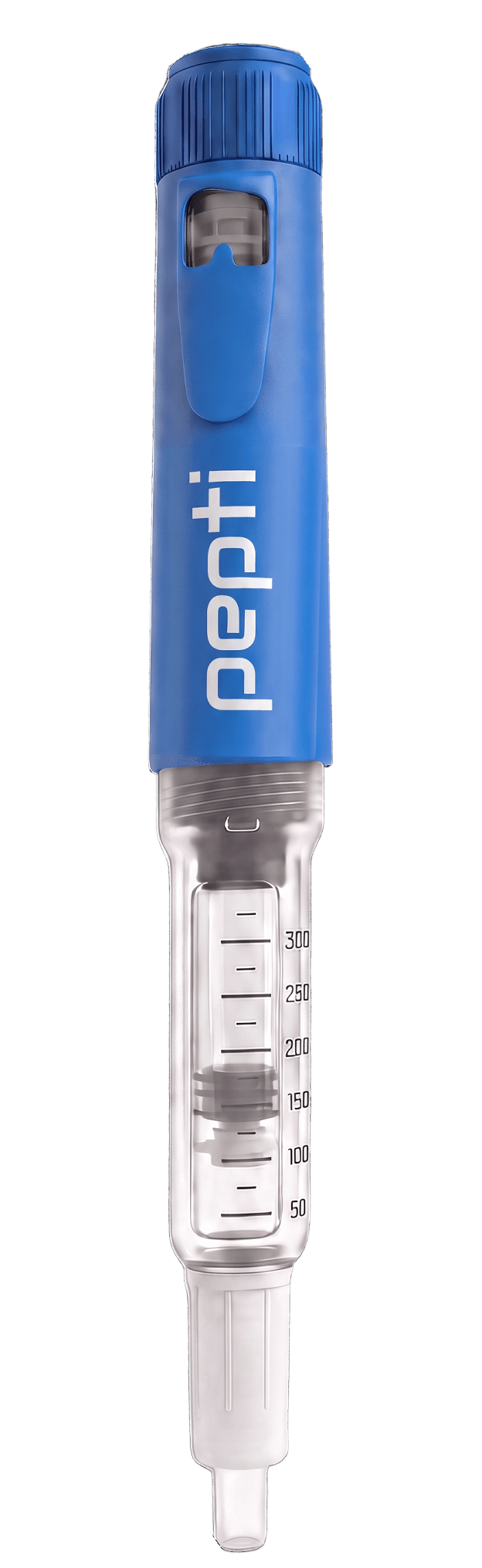
| NAD+ Injection | 10 mL vial, 100 mg/mL (1000 mg NAD+); also as a pre-filled Pen cartridge with 600 mg | 0.83 mL (83 units) subcutaneously three times per week | $249/mo |
| NAD+ Injection (500 mg) | 10 mL vial, 50 mg/mL (500 mg NAD+) | 0.83 mL (83 units) subcutaneously three times per week | $229/mo |
| 5-Amino-1MQ | 5 mL vial, 1 mg/mL (5 mg) | Not NAD+; a separate product for NAD+ pathway support | $219/mo |
Each vial holds 12 doses, about four weeks, so refills run every 28 days, one vial per fill. The 500 mg vial is the same volume at half the concentration, which some prescribers describe as easier on the injection site for people starting out; the details are in what is NAD+ 500. Prices are all-in (medication, physician review, refill management and shipping), with no membership fee, and Pepti does not bill insurance. Vials come ready to use with directions printed on the vial, sterile syringes and alcohol prep pads, shipped refrigerated with ice packs. NAD+ degrades with heat and light, so keep it in the fridge and out of light; see which peptides need refrigeration. Lot test results are at /quality/lab-results.
NAD+ Benefits
Where to get NAD+ prescribed
NAD+ injections cannot be bought legitimately without a prescription. Products sold "for research use only" are not accountable for what is in the vial, and with NAD+ the FDA has specifically warned about contaminated ingredients. The prescription route:
- Complete a free online intake covering your history, medications and what you want help with.
- A physician licensed in your state reviews it, usually within 24 hours.
- If it is appropriate, a PCAB-accredited, FDA-registered US 503A pharmacy compounds it to that prescription. Lot test results are published at /quality/lab-results.
- It ships refrigerated with your directions printed on the vial.
- Your physician stays reachable for questions and dose changes.
Pepti prescribes NAD+ in all 50 states and DC. Step by step: how to get NAD+ prescribed online.
References
What this is based on.
References
- Massudi H, Grant R, Braidy N, et al.. Age-associated changes in oxidative stress and NAD+ metabolism in human tissue · PLOS ONE (2012) · PMID 22848760
- Yoshino J, Baur JA, Imai SI. NAD+ Intermediates: The Biology and Therapeutic Potential of NMN and NR · Cell Metabolism (2018) · PMID 29249689
- Verdin E. NAD⁺ in aging, metabolism, and neurodegeneration · Science (2015) · PMID 26785480
- Martens CR, Denman BA, Mazzo MR, et al.. Chronic nicotinamide riboside supplementation is well-tolerated and elevates NAD+ in healthy middle-aged and older adults · Nature Communications (2018) · PMID 29599478
- Dollerup OL, Christensen B, Svart M, et al.. A randomized placebo-controlled clinical trial of nicotinamide riboside in obese men: safety, insulin-sensitivity, and lipid-mobilizing effects · American Journal of Clinical Nutrition (2018) · PMID 29992272
- Yoshino M, Yoshino J, Kayser BD, et al.. Nicotinamide mononucleotide increases muscle insulin sensitivity in prediabetic women · Science (2021) · PMID 33888596
- Yi L, Maier AB, Tao R, et al.. The efficacy and safety of β-nicotinamide mononucleotide (NMN) supplementation in healthy middle-aged adults: a randomized, multicenter, double-blind, placebo-controlled, parallel-group, dose-dependent clinical trial · GeroScience (2023) · PMID 36482258
- Brakedal B, Dölle C, Riemer F, et al.. The NADPARK study: A randomized phase I trial of nicotinamide riboside supplementation in Parkinson's disease · Cell Metabolism (2022) · PMID 35235774
- McDermott MM, Martens CR, Domanchuk KJ, et al.. Nicotinamide riboside for peripheral artery disease: the NICE randomized clinical trial · Nature Communications (2024) · PMID 38871717
- Shiffman S, Stone AA, Hufford MR. Ecological momentary assessment · Annu Rev Clin Psychol (2008) · PMID 18509902
- Conze D, Brenner C, Kruger CL. Safety and Metabolism of Long-term Administration of NIAGEN (Nicotinamide Riboside Chloride) in a Randomized, Double-Blind, Placebo-controlled Clinical Trial of Healthy Overweight Adults · Scientific Reports (2019) · PMID 31278280
- Nacarelli T, Lau L, Fukumoto T, et al.. NAD+ metabolism governs the proinflammatory senescence-associated secretome · Nature Cell Biology (2019) · PMID 30778219
Citations are provided for educational purposes. They do not constitute medical advice. Always discuss any peptide protocol with your prescribing physician.
Common questions
NAD+ Benefits, answered.
Nicotinamide adenine dinucleotide, a coenzyme every cell makes and uses to turn nutrients into energy and to fuel the sirtuin and PARP enzymes involved in stress responses and DNA repair. It is not a peptide or a vitamin, though it is made from vitamin B3.
Research describes its roles in energy metabolism, DNA repair and cell stress responses, and trials of oral precursors report raised blood NAD+ with small, mixed effects on insulin sensitivity, walking distance and brain NAD levels. There are no randomized trials of NAD+ injections with a clinical outcome, so those are described benefits, not promised ones.
The case for injection is that it bypasses the gut. Whether that produces any benefit beyond oral precursors has not been tested. The only published study of NAD+ given directly was a 2019 intravenous pilot that tracked the molecule in blood and urine and tested no outcome.
It is not a stimulant. The fatigue trials used oral NADH, sometimes with CoQ10, and reported reduced fatigue perception in chronic fatigue syndrome. No trial has tested subcutaneous NAD+ for fatigue, and fatigue often has a treatable cause worth ruling out first.
Benefits are described from biochemistry and oral precursor trials, as above. Side effects are mostly stinging at the injection site and flushing, chest tightness or nausea during the injection that fade within minutes, usually tied to injecting too fast. Chills or vomiting after a dose are not expected and should be reported.
Nobody has compared them head to head. NMN and NR have the randomized human trials; NAD+ injection has the direct route. On the 2019 infusion data, injected NAD+ may be broken down into fragments including NMN that cells rebuild, so the two may work through the same pathway.
No. It is a coenzyme. It is listed alongside peptides because it is compounded and prescribed the same way.
No human trial has tested that. NAD+ is reported to decline with age in human tissue, and animal work links that decline to sirtuin activity, but whether replacing it changes aging in people is unknown.
Not meaningfully. There is no validated routine clinical test for tissue NAD+, and blood is not tissue. A provider offering to show your levels rising is overselling the test.
There is no trial-based timeline for the injection. Prescribers describe subjective changes, when they occur, over weeks rather than after one dose, and many people notice nothing. Response varies.
People who are pregnant or breastfeeding, and anyone with an active or recent cancer without their oncologist involved. Significant kidney or liver disease needs a longer conversation with your physician.
No. Bloodwork is not required for any Pepti treatment. If your physician wants labs for your care, they'll ask through your account. The free assessment goes to a physician licensed in your state. A consultation does not guarantee a prescription.
Next step
See what a physician recommends for you.
A licensed physician in your state reviews your intake and decides what is appropriate. A consultation does not guarantee a prescription.