Anti-Aging · Reference
SS-31 for Women: What the Elamipretide Trials Show, and What to Check First
No SS-31 (elamipretide) trial has studied women specifically, and none of the trials in our sources reports separate results for women.
The randomized trials enrolled adults with primary mitochondrial myopathy, heart failure or dry macular degeneration, and every one missed its primary endpoints; the one trial with sustained positive results enrolled twelve males with Barth syndrome, a rare genetic disease. No trial has tested SS-31 in healthy women for energy, ageing or anything else. It is not a hormone and is not described as acting on estrogen or the cycle. It is not used in pregnancy or while breastfeeding, and in women the commonest findable causes of low energy, iron deficiency and an underactive thyroid, are worth checking first. Compounded SS-31 is a prescription injection, and compounded medications are not FDA approved.
This page covers what SS-31 is, what research has and has not looked at that applies to women, the considerations that change for women, side effects, and how Pepti supplies it. For the evidence benefit by benefit, see SS-31 benefits; for the product reference and FDA position, what is SS-31. The men's page is SS-31 for men.
SS-31 for Women
The short answer
| Question | What the live research shows | Strength of evidence |
|---|---|---|
| Has SS-31 been studied in women specifically? | No; no trial in our sources reports results by sex | None |
| What did the adult trials find? | Mitochondrial myopathy (218 people), heart failure (71) and dry macular degeneration (176): primary endpoints missed | Human, negative on the main endpoints |
| Where were results positive? | Open-label gains to 168 weeks in twelve males with Barth syndrome | Human, in a rare disease; basis of a 2025 accelerated approval |
| Has it been studied in healthy women? | No | None |
| Does it act on hormones or the cycle? | It is not a hormone and does not move anything on a standard blood panel | No evidence of a hormonal effect |
| Does it help menopause symptoms? | Not tested | None |
| Is it used in pregnancy or breastfeeding? | No; safety data is absent | Clear exclusion |
| Tested sport | Elamipretide is not named on the 2026 WADA Prohibited List | Check with your anti-doping body anyway |
The honest summary: SS-31 has a large human trial programme for a compounded peptide, none of it designed to answer a question about women, and all of it in people with a diagnosed disease at a dose eighty times a compounded weekday dose.
SS-31 for Women
What SS-31 is, in one paragraph
SS-31 is a tetrapeptide, four amino acids in an alternating aromatic and cationic pattern, developed by Hazel Szeto and Peter Schiller. Its development code was MTP-131 and its generic drug name is elamipretide; all three are the same molecule. The pattern lets it cross cell membranes and concentrate on the inner mitochondrial membrane, where it binds a single lipid, cardiolipin, that holds the membrane's folds in shape and organizes the machinery that makes ATP. In rat kidney work published in 2013 it protected that structure after a loss of blood flow and sped the recovery of ATP. It is not a hormone, not a growth hormone secretagogue and not a general antioxidant. In September 2025 the FDA granted accelerated approval to a branded elamipretide product for Barth syndrome; the compounded vial is a different strength and is not that product.
SS-31 for Women
What research has looked at that applies to women
The adult trials
Trial Who Result on the primary endpoint MMPOWER-3 (Neurology, 2023) 218 adults with primary mitochondrial myopathy, 40 mg daily for 24 weeks Missed both; walk difference minus 3.2 metres, fatigue difference minus 0.07 MMPOWER-2 (Journal of Cachexia, Sarcopenia and Muscle, 2020) 30 adults with mitochondrial myopathy, four-week crossover Walk difference not significant; a patient-reported fatigue improvement was PROGRESS-HF (Journal of Cardiac Failure, 2020) 71 adults with reduced-ejection-fraction heart failure, 4 or 40 mg daily for 28 days No difference from placebo in heart volume or ejection fraction ReCLAIM-2 (Ophthalmology Science, 2024) 176 adults with dry macular degeneration, 40 mg daily for 48 weeks Missed; a secondary measure of retinal damage favoured treatment What they show. That in adults with specific diseases, 40 mg daily of elamipretide did not meet its main goals, with a short-term fatigue signal in one small crossover and a secondary retinal finding in the eye trial.
What they do not show. Anything about women as a group. The live sources do not describe any of these trials as reporting separate results for women, and none enrolled healthy adults. The dose was 40 mg a day, not the 0.5 mg weekday dose of the compounded vial.
The trial that enrolled males only
TAZPOWER, in Genetics in Medicine in 2021, was a randomized crossover in twelve males aged 12 to 35 with Barth syndrome, a genetic disorder in which cardiolipin is not remodelled into its mature form. Neither primary endpoint was met in the randomized part; the open-label extension reported walking and strength gains sustained to 168 weeks, and the FDA's accelerated approval rested on knee extensor strength. It enrolled males only, so it tells you nothing direct about women. SS-31 for men covers it in detail.
Macular degeneration
Dry age-related macular degeneration is one of the conditions people ask about. ReCLAIM-2 is the answer the live sources give: 48 weeks of 40 mg daily missed its primary endpoints of low-luminance visual acuity and atrophy area. On a pre-specified secondary measure, treatment was associated with a 43 per cent reduction in progression of complete ellipsoid-zone loss, and more patients gained ten or more letters of low-luminance acuity. That is a finding for an ongoing eye programme, not a reason to use a compounded vial. Anyone with a retinal disease belongs with the specialist treating it.
SS-31 for Women
What changes for women
Low energy has findable causes that are more common in women
Fatigue is the reason most people ask about a "mitochondrial peptide." The live guidance is direct: iron, thyroid, B12, sleep and testosterone account for far more tiredness than mitochondrial dysfunction does. Iron deficiency and an underactive thyroid are both far more common in women than in men: iron deficiency because of menstrual blood loss, and thyroid disease because autoimmune thyroiditis is heavily skewed toward women. Ferritin can be low while a full blood count reads normal. None of these responds to SS-31, and each is inexpensive to find. If B12 is low, methylcobalamin is the direct answer. More is in peptides for energy and fatigue and peptides for women.
Pregnancy and breastfeeding
There is no safety data for SS-31 in pregnancy or breastfeeding, and it is not used in either situation. If you become pregnant on treatment, stop and contact your physician the same day. If you are trying to conceive, raise it before starting. Can you take peptides while pregnant and do peptides affect fertility cover the detail.
Perimenopause and menopause
The perimenopausal transition typically begins in the forties. Fatigue, poor sleep and low mood in these years are often the transition itself, or the night sweats and fragmented sleep it brings. SS-31 is not hormone therapy, does not act on the hormones that change, and has not been tested for hot flashes, sleep, bone or any menopause outcome. If the transition is the driver, it belongs in the conversation with your physician rather than being treated around. Pepti does not prescribe menopausal hormone therapy. See peptides for menopause.
Contraception and the cycle
SS-31 binds a lipid inside mitochondria. It is not a hormone and is not described as acting on the pituitary, the ovaries or any part of the reproductive axis, or on hormonal contraception. No study has looked at that directly, so list your contraception on the intake and report any cycle change.
Kidney function
The approved elamipretide label reduces the dose in severe kidney impairment. Kidney disease belongs on the intake.
Exercise and performance
There is no randomized human trial of elamipretide in athletic performance or in healthy adults. If exercise capacity is the goal, L-carnitine has human data on fatty-acid transport into mitochondria, a different bottleneck. Elamipretide is not named on the 2026 WADA Prohibited List; women who compete in a tested sport should still confirm with their anti-doping organization and tell their physician before starting. See is SS-31 banned in sports.
SS-31 for Women
What the evidence does not establish
- Any result specific to women. No trial in our sources reports one.
- Benefit in women without a mitochondrial disease. Every randomized trial enrolled people with a diagnosed disease.
- That the compounded dose does what the trial dose did. The trials used 40 mg daily; the typical printed direction delivers 0.5 mg on weekdays.
- An effect on walking distance or fatigue in the largest population studied. MMPOWER-3 is a clean negative.
- Any effect on energy, skin, weight, sleep, menopause symptoms or ageing in healthy women.
- An effect size or a timeline for any off-label use. What prescribers describe is clinical experience, and many people notice nothing.
- Long-term safety in healthy adults, or any safety in pregnancy.
SS-31 for Women
Side effects and considerations
SS-31's safety record comes from trials in people with diseases, at 40 mg daily. Nothing in the live sources suggests the profile differs between women and men.
| What is reported or relevant | Where it comes from | What to do |
|---|---|---|
| Injection-site reactions: itching, pain, bruising, redness | Every treated participant in TAZPOWER; 80% in MMPOWER-2 | Rotate sites; report anything spreading or worse after 48 hours |
| Adverse events of any kind | 86% on treatment against 71% on placebo in ReCLAIM-2 | Read the placebo column: most people on placebo reported something too |
| Hypersensitivity, including serious allergic reactions | A warning on the approved label | Hives beyond the site, swelling or trouble breathing: call 911 first |
| Severe kidney impairment | The approved label reduces the dose | Tell your physician |
| Pregnancy or breastfeeding | Safety data absent | Not used; tell your physician the same day |
| Systemic effects | Reported as well tolerated across hundreds of people for up to a year | Report anything new |
If you think you injected far more than your directions, call Poison Control at 1-800-222-1222 and message your care team. No withdrawal, rebound or dependency is described anywhere in the literature, and the peptide is cleared within hours. The full list is in SS-31 side effects.
SS-31 for Women
Where SS-31 stands with the FDA
Since September 2025 elamipretide has been a component of an FDA-approved drug, an 80 mg/mL solution given as 40 mg daily for Barth syndrome. That makes it eligible for 503A compounding without a bulks-list entry, subject to the FDA's "essentially a copy" rule, and it has never been on the FDA's Category 2 list of substances flagged for significant safety risk. The compounded vial is a different strength, prepared to an individual prescription, and compounded medications are not FDA approved.
SS-31 for Women
How Pepti supplies SS-31
| Product | What is in it | Typical directions | Price |
|---|---|---|---|
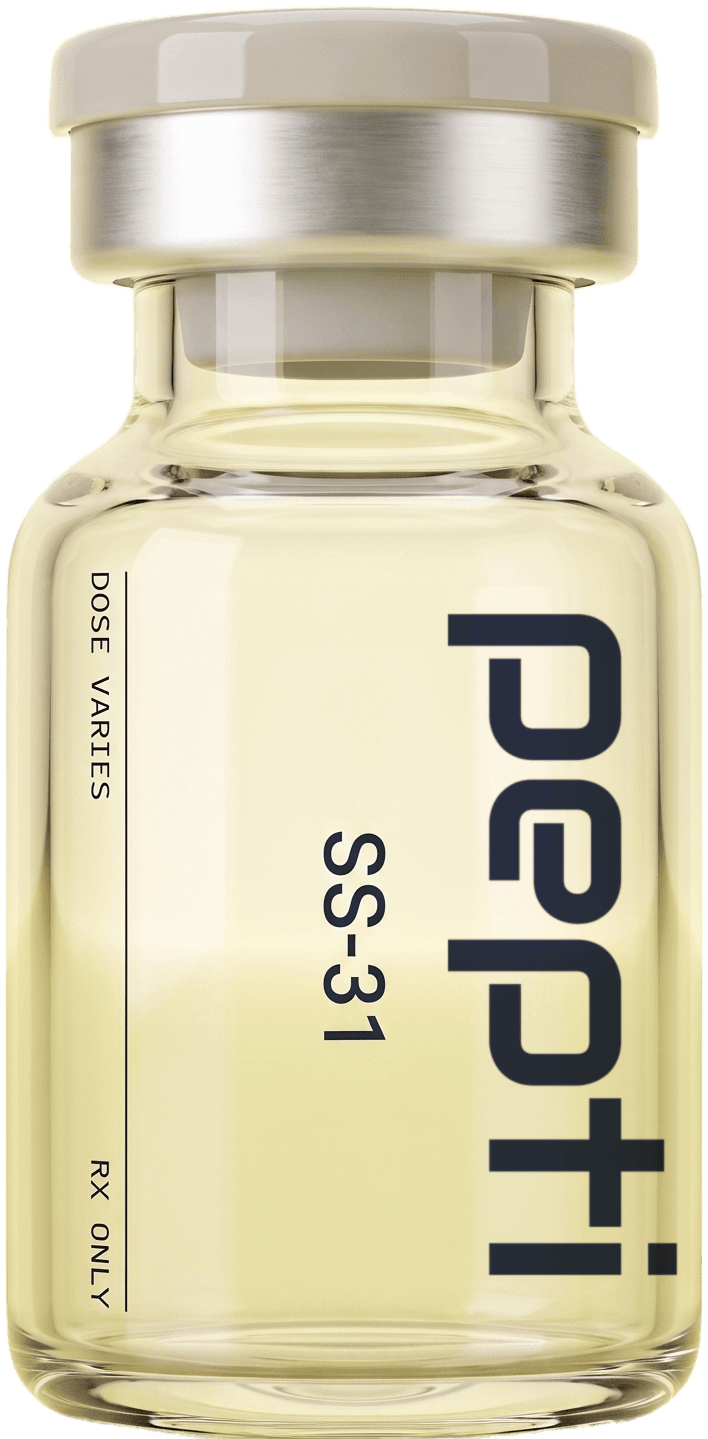
| SS-31 (Elamipretide) | 5 mL multi-dose vial, 2 mg/mL (10 mg SS-31) | 0.25 mL (25 units) subcutaneously Monday through Friday mornings; 20 doses, about 4 weeks | $249/mo |
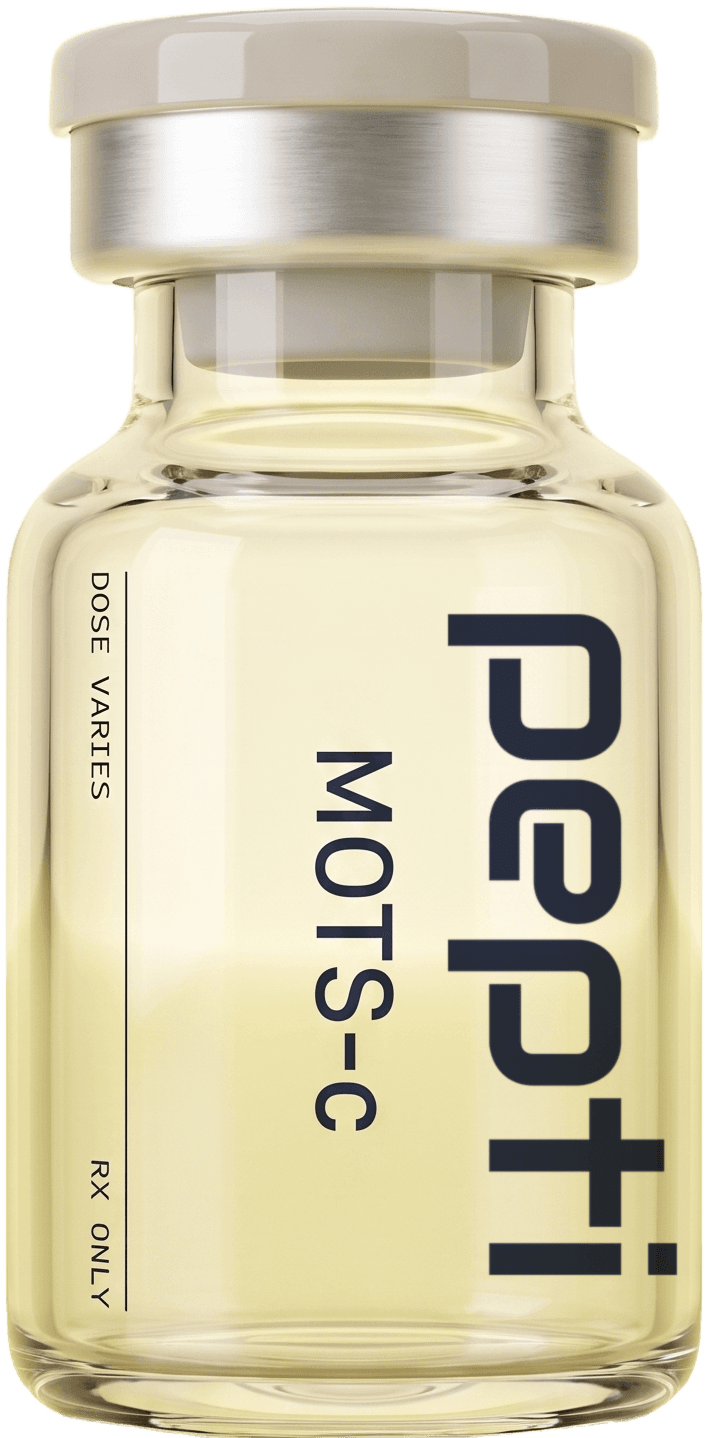
| MOTS-c | 5 mL multi-dose vial, 2 mg/mL (10 mg MOTS-c) | A different mitochondrial peptide, with no human trials | $259/mo |
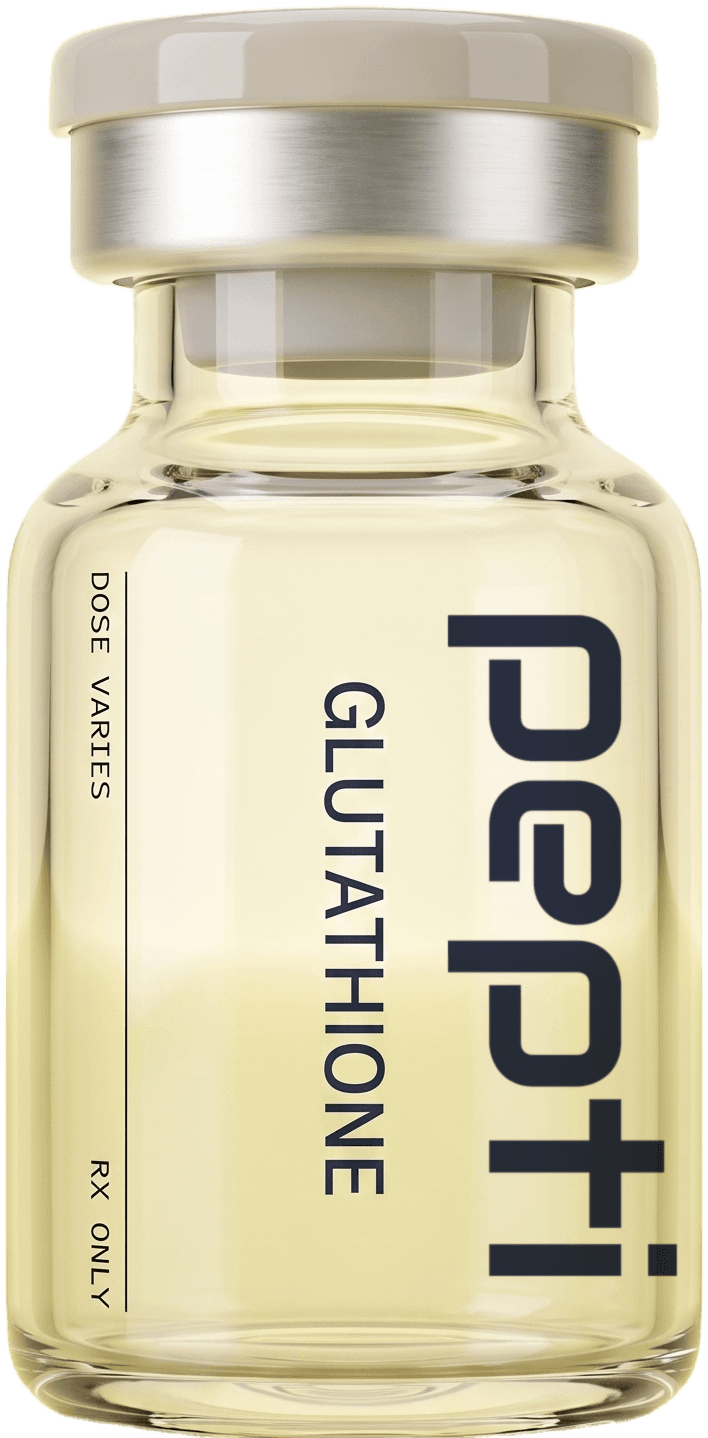
| Glutathione | 5 mL multi-dose vial, 200 mg/mL (1000 mg glutathione) | A separate product aimed at oxidative load | $199/mo |
At 2 mg/mL, 0.25 mL is 0.5 mg of SS-31 per dose (arithmetic from the vial strength, on a U-100 insulin syringe). The full conversion is in SS-31 dosage, and the comparisons are in SS-31 vs MOTS-c, SS-31 vs glutathione and NAD+ vs SS-31. Your physician sets your directions after reviewing your intake, and they are printed on the vial.
Every price is all-in, covering medication, physician review, refill management and shipping, with no membership fee. Pepti is cash-pay and does not bill insurance. Vials arrive as solutions ready to use, with sterile syringes and alcohol prep pads, shipped refrigerated with ice packs. Refills run every 28 days, one vial per fill.
SS-31 for Women
Where to get SS-31 prescribed
SS-31 cannot be bought legitimately without a prescription. Products sold "for research use only" have no accountable pharmacy behind their identity, purity, sterility or concentration. The prescription route:
- Complete a free online intake covering your history, medications, pregnancy and contraception status, kidney disease, and what you want help with.
- A physician licensed in your state reviews it, usually within 24 hours.
- If it is appropriate, a PCAB-accredited, FDA-registered US 503A compounding pharmacy prepares it to that prescription. Lot test results are published at /quality/lab-results.
- It ships refrigerated with your directions printed on the vial.
- Your physician stays reachable for questions and side effects.
Step by step: how to get SS-31 prescribed online. Bloodwork is not required for any Pepti treatment. If your physician wants labs for your care, they'll ask through your account.
References
What this is based on.
References
- Lee C, Zeng J, Drew BG et al.. The mitochondrial-derived peptide MOTS-c promotes metabolic homeostasis and reduces obesity and insulin resistance · Cell Metab (2015) · PMID 25738459
- Reynolds JC, Lai RW, Woodhead JST et al.. MOTS-c is an exercise-induced mitochondrial-encoded regulator of age-dependent physical decline and muscle homeostasis · Nat Commun (2021) · PMID 33473109
- Kim KH, Son JM, Benayoun BA et al.. The Mitochondrial-Encoded Peptide MOTS-c Translocates to the Nucleus to Regulate Nuclear Gene Expression in Response to Metabolic Stress · Cell Metab (2018) · PMID 29983246
- Zempo H, Kim SJ, Fuku N et al.. A pro-diabetogenic mtDNA polymorphism in the mitochondrial-derived peptide, MOTS-c · Aging (Albany NY) (2021) · PMID 33468709
- Ramanjaneya M, Bettahi I, Jerobin J et al.. Mitochondrial-Derived Peptides Are Down Regulated in Diabetes Subjects · Front Endocrinol (Lausanne) (2019) · PMID 31214116
- Cataldo LR, Fernández-Verdejo R, Santos JL et al.. Plasma MOTS-c levels are associated with insulin sensitivity in lean but not in obese individuals · J Investig Med (2018) · PMID 29593067
- Lu H, Wei M, Zhai Y et al.. MOTS-c peptide regulates adipose homeostasis to prevent ovariectomy-induced metabolic dysfunction · J Mol Med (Berl) (2019) · PMID 30725119
- Ming W, Lu G, Xin S et al.. Mitochondria related peptide MOTS-c suppresses ovariectomy-induced bone loss via AMPK activation · Biochem Biophys Res Commun (2016) · PMID 27237975
- Knoop A, Thomas A, Thevis M. Development of a mass spectrometry based detection method for the mitochondrion-derived peptide MOTS-c in plasma samples for doping control purposes · Rapid Commun Mass Spectrom (2019) · PMID 30394592
- Ozkaya DY, Haymana C, Demirci I et al.. MOTS-C levels in individuals with and without obesity and its association with inflammation, insulin resistance and endothelial dysfunction · Arch Endocrinol Metab (2025) · PMID 41004666
- Richie JP Jr, Nichenametla S, Neidig W et al.. Randomized controlled trial of oral glutathione supplementation on body stores of glutathione · Eur J Nutr (2015) · PMID 24791752
- Allen J, Bradley RD. Effects of oral glutathione supplementation on systemic oxidative stress biomarkers in human volunteers · J Altern Complement Med (2011) · PMID 21875351
Citations are provided for educational purposes. They do not constitute medical advice. Always discuss any peptide protocol with your prescribing physician.
Common questions
SS-31 for Women, answered.
No trial has studied it in women specifically, and none of the trials in our sources reports results by sex. The adult trials enrolled people with mitochondrial myopathy, heart failure or macular degeneration and missed their primary endpoints, so any benefit for women is described, not established.
Research describes SS-31 binding cardiolipin in the inner mitochondrial membrane and protecting ATP production in animal work. No trial has tested it for energy, skin, weight or ageing in women.
No trial in healthy women has measured that. A four-week crossover in mitochondrial myopathy reported a fatigue improvement, and the 218-person phase 3 found none at 24 weeks. In women, iron, thyroid and B12 explain far more tiredness and are worth checking first.
It has not been tested for any menopause symptom. SS-31 is not hormone therapy and does not act on estrogen or progesterone.
It is not a hormone and is not described as acting on the reproductive axis. No study has looked at cycle effects, so report any change to your physician.
No. There is no safety data in either situation. If you become pregnant on treatment, stop and contact your physician the same day.
No interaction has been described, and SS-31 does not act on hormones, but no study has looked at the combination. List your contraception on the intake.
The 48-week ReCLAIM-2 trial in dry macular degeneration missed its primary endpoints, with a secondary retinal measure favouring treatment. It is not a treatment for eye disease, and that belongs with your eye specialist.
The same as for men: injection-site itching, pain, bruising and redness dominate in every trial. The approved label warns of hypersensitivity, including serious allergic reactions, and reduces the dose in severe kidney impairment.
At Pepti, $249 a month, all-in, covering medication, physician review, refill management and shipping.
No. Bloodwork is not required for any Pepti treatment. If your physician wants labs for your care, they'll ask through your account. The free assessment goes to a physician licensed in your state. A consultation does not guarantee a prescription.
Related answers
Keep reading.
- SS-31 (Elamipretide): What It Is, Where to Get It Prescribed, and What It Costs
- SS-31 (Elamipretide) Side Effects: Injection-Site Reactions, Allergy Warnings, and What to Report
- SS-31 vs FOXO4-DRI: Mitochondrial Protector vs Senolytic, Compared
- SS-31 vs Glutathione: Targeted Mitochondrial Peptide vs the Body's Main Antioxidant
- SYNAPSE Blend for Men: What the Research Has Looked At, and What to Check First
Next step
See what a physician recommends for you.
A licensed physician in your state reviews your intake to see whether treatment fits your history. A consultation does not guarantee a prescription.