Anti-Aging · Reference
SS-31 vs MOTS-c: Two Mitochondrial Peptides, Compared Side by Side
This page explains each on its own terms, puts them side by side, covers what the research does and does not show, where each stands with the FDA, how each is dosed at Pepti, what each costs, and who tends to suit which.
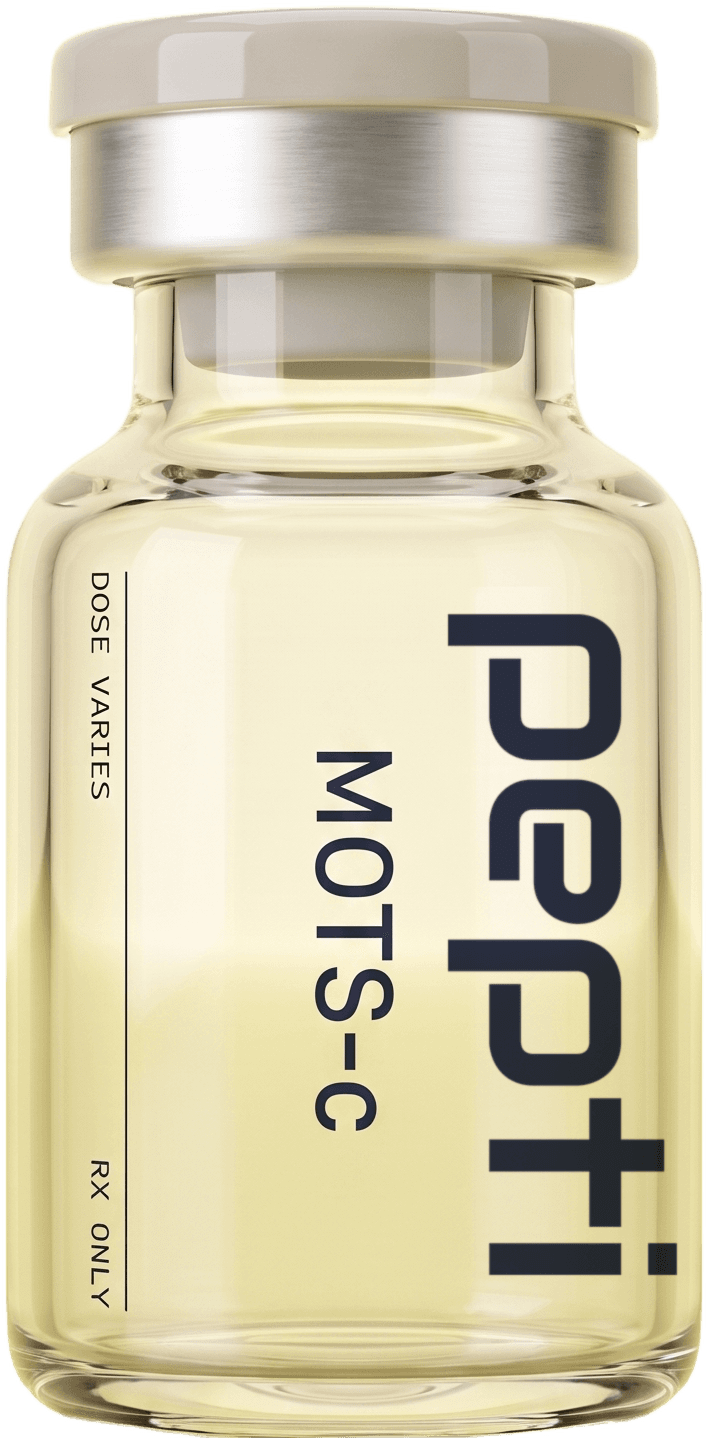
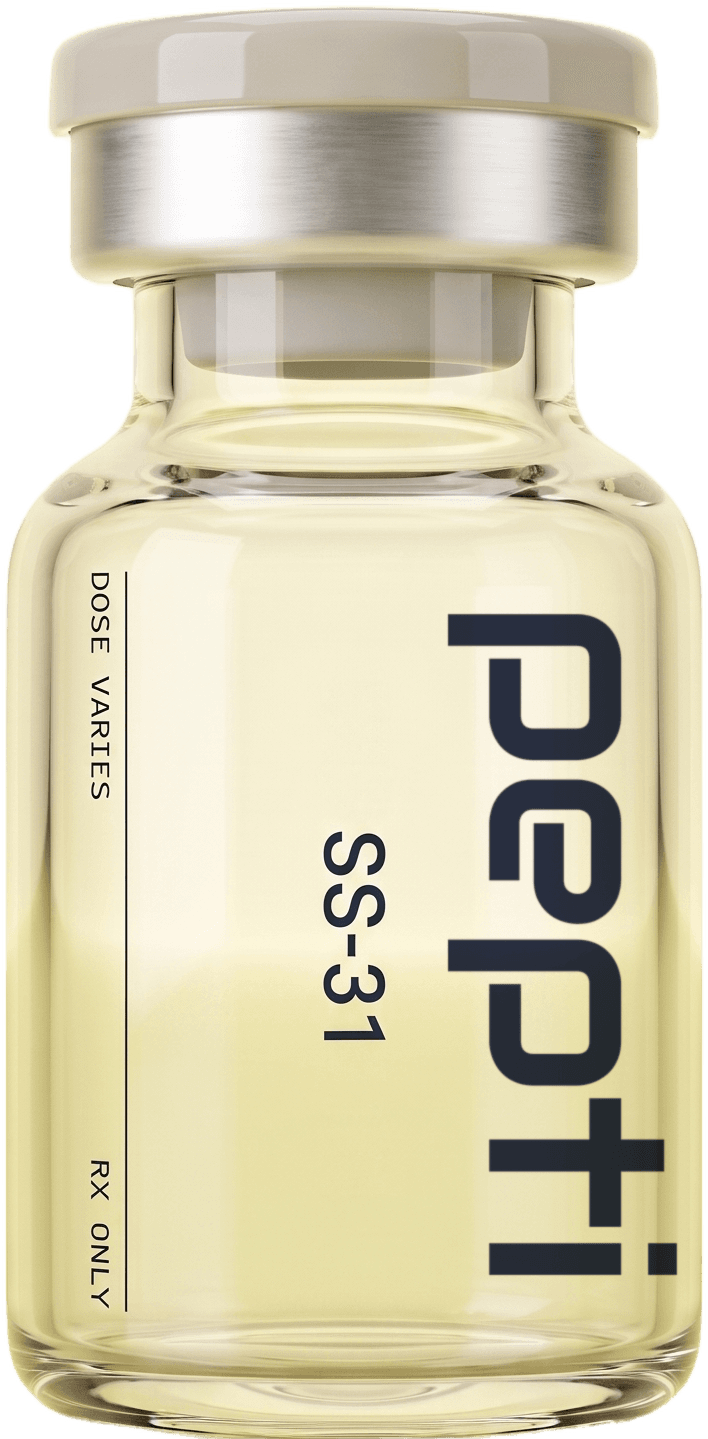
SS-31 and MOTS-c are both called "mitochondrial peptides," but they do very different jobs and sit on very different evidence. SS-31 (elamipretide) is a synthetic four-amino-acid peptide that binds cardiolipin in the inner mitochondrial membrane and is described as protecting the structure where energy is made; it has a large human trial programme, with mixed results, and an FDA-approved version for one rare disease. MOTS-c is a 16-amino-acid peptide encoded in the mitochondria's own DNA and described as a metabolic signal acting through AMPK; its findings come from mice, and there are no randomised human trials. Both are prescription-only, compounded by a licensed US pharmacy, and the compounded vials are not FDA approved.
This page explains each on its own terms, puts them side by side, covers what the research does and does not show, where each stands with the FDA, how each is dosed at Pepti, what each costs, and who tends to suit which.
SS-31 vs MOTS-c
The short answer
| If your main interest is | The usual prescription | What is in it | Price |
|---|---|---|---|
| The mitochondrial membrane itself, energy production, the peptide with human trials | SS-31 (Elamipretide) | 10 mg SS-31 in a 5 mL vial | $249/mo |
| Metabolism, insulin sensitivity research, exercise signalling | MOTS-c | 10 mg MOTS-c in a 5 mL vial | $259/mo |
| MOTS-c inside a body-composition blend | PHYSIQ Blend | Tesamorelin, ipamorelin, AOD-9604 and MOTS-c | $289/mo |
| MOTS-c with repair and skin peptides | EUPHORIA Blend | MOTS-c, BPC-157, GHK-Cu and kisspeptin | $279/mo |
| A coenzyme the respiratory chain uses, rather than a peptide | NAD+ Injection | 1000 mg NAD+ in a 10 mL vial | $249/mo |
Every figure is an all-in monthly price covering the medication, physician review, refill management and shipping. There is no separate membership fee, and Pepti is cash-pay and does not bill insurance. Current pricing always lives on each product page.
SS-31 vs MOTS-c
SS-31 on its own terms
What it is
SS-31 is a tetrapeptide, four amino acids in an alternating aromatic and positively charged pattern. That pattern lets it cross cell membranes and concentrate on the inner mitochondrial membrane without a transporter, and without depending on the membrane's electrical potential, so it still reaches mitochondria that are struggling. It was developed by Hazel Szeto and Peter Schiller, which is where the SS comes from. Its development code was MTP-131 and its generic name is elamipretide. All three names are the same molecule. The full reference is at what is SS-31.
How it is described to work
- Binding cardiolipin. A 2013 paper in the Journal of the American Society of Nephrology reported high-affinity binding to cardiolipin, a lipid found almost only in the inner mitochondrial membrane, where it holds the membrane's folds (the cristae) in shape. In rat kidneys deprived of blood flow, pre-treatment protected the cristae and prevented mitochondrial swelling.
- Stopping cytochrome c acting as a peroxidase. When cytochrome c binds oxidised cardiolipin it starts damaging the membrane it sits on. The same work reports the SS-31 and cardiolipin complex inhibiting that peroxidase activity while leaving electron transport intact.
- ATP recovery. With the cristae protected, the animal work reports faster recovery of ATP once blood flow returns.
The mechanism detail is from cell and animal studies. The human trials measured function, not mitochondrial biochemistry.
What human data exists for SS-31
SS-31 has more human trial data than almost any other compounded peptide. The randomised results were mostly negative on their primary endpoints:
Trial Who What was reported TAZPOWER, Genetics in Medicine, 2021 and 2024 12 males with Barth syndrome Primary endpoints missed in the randomised crossover; open-label gains in walk distance and strength held to 168 weeks MMPOWER-3, Neurology, 2023 218 adults with primary mitochondrial myopathy Neither primary endpoint met (walk distance, fatigue) at 24 weeks PROGRESS-HF, Journal of Cardiac Failure, 2020 71 people with reduced-ejection-fraction heart failure No difference from placebo on the primary heart MRI measure ReCLAIM-2, Ophthalmology Science, 2024 176 people with dry macular degeneration Primary endpoints missed; a secondary retinal measure favoured treatment There are no randomised trials of elamipretide in healthy adults, in age-related fatigue, in athletic performance or in any longevity use. The trials used 40 mg a day, and Pepti's typical dose is 0.5 mg, a small fraction of that, prescribed for uses the trials did not test.
SS-31 vs MOTS-c
MOTS-c on its own terms
What it is
MOTS-c is a 16-amino-acid peptide whose gene sits in the mitochondrial genome, inside the gene for the 12S ribosomal RNA, rather than in the cell nucleus. It was identified in a 2015 paper in Cell Metabolism from a group at the University of Southern California, and it belongs to a small family of mitochondrial-derived peptides alongside humanin. It is not a hormone in the classical sense, not a growth hormone secretagogue, not a GLP-1 medication and not a stimulant. The full reference is at what is MOTS-c.
How it is described to work
- The folate cycle and AMPK. The 2015 paper reported that MOTS-c slows the folate cycle in cells, a by-product called AICAR builds up, and AICAR activates AMPK, the enzyme cells use as a low-fuel sensor. Skeletal muscle appeared to be the main target.
- Moving into the nucleus. A 2018 Cell Metabolism paper reported that under glucose restriction MOTS-c travels into the nucleus and changes which nuclear genes are switched on.
- Muscle and exercise. A 2021 paper in Nature Communications reported better physical performance in treated mice of several ages, and that in humans a bout of exercise raised the body's own MOTS-c. That human finding is observational.
- Fat tissue and bone. Studies in ovariectomised mice (2016 and 2019) reported less bone loss and more brown-fat activity.
What human data exists for MOTS-c
There are no randomised controlled trials of MOTS-c in humans. Human data is observational: the body's own MOTS-c rises with exercise, and one cross-sectional study of 225 people reported lower levels in type 2 diabetes. The closest thing to a treatment trial used a modified analogue called CB4211, a different molecule, in small Phase 1 studies whose results were company announcements rather than a peer-reviewed paper, and that programme did not advance. The weight, glucose and fitness findings are from mice.
SS-31 vs MOTS-c
Head to head
| SS-31 (elamipretide) | MOTS-c | |
|---|---|---|
| Size | 4 amino acids, synthetic | 16 amino acids, encoded in mitochondrial DNA |
| Where it acts | Inner mitochondrial membrane, bound to cardiolipin | Cytoplasm and nucleus, through AMPK and gene expression |
| Described role | Structural: protecting the machinery that makes ATP | Signalling: telling the cell to burn rather than store fuel |
| Human trials | Randomised trials in four diseases, mostly missed primary endpoints | None of the peptide itself |
| Approved anywhere | An elamipretide product is FDA approved for Barth syndrome only | No |
| Status for compounding | Component of an FDA-approved drug; never in Category 2 | Removed from Category 2 in April 2026; advisory committee voted 7 to 5 for the bulks list in July 2026 |
| Anti-doping | Not named on the 2026 WADA Prohibited List | Prohibited at all times under S4.4 |
| Vial at Pepti | 5 mL, 2 mg/mL (10 mg) | 5 mL, 2 mg/mL (10 mg) |
| Typical directions | 0.25 mL (25 units) Monday through Friday mornings | 0.25 mL (25 units) Monday through Friday mornings |
| Per dose | 0.5 mg | 0.5 mg |
| Doses per vial | 20, about four weeks | 20, about four weeks |
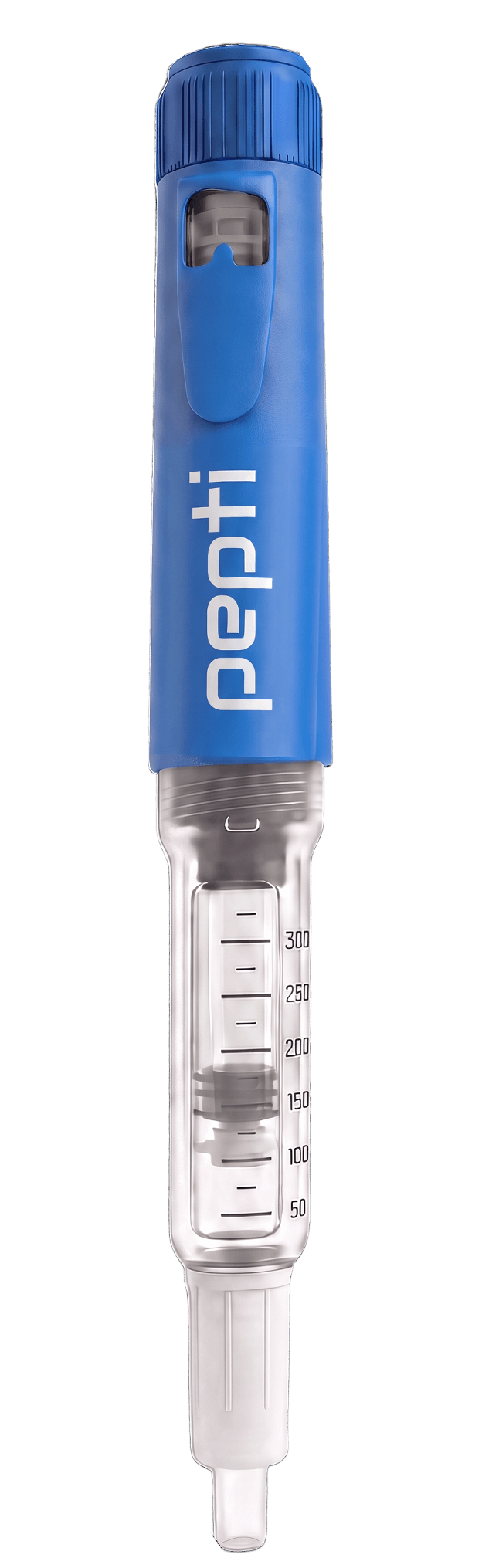
| Formats | Vial only | Vial, or a 3 mL pepti Pen cartridge with 30 mg MOTS-c |
| In a Pepti blend | No | PHYSIQ, SHRED, FUSION, EUPHORIA, SYNAPSE |
| Price at Pepti | $249 a month | $259 a month |
The real difference is what each one is
People ask which is "better for mitochondria." That framing hides the point. SS-31 is described as protecting a structure, the folded inner membrane, so the respiratory chain keeps working under stress. MOTS-c is described as a message, sent from mitochondria to the rest of the cell, about fuel use. One is closer to maintenance of the engine; the other is closer to a change in how the engine is driven. No study has given both to the same people, so there is no measured answer to which does more.
The evidence also points in different directions. SS-31 has been tested in people, and the honest reading of those trials is mixed: real signals in a rare disease and in secondary measures, and clean negatives in the largest trial. MOTS-c has a coherent mouse story and no human treatment data at all.
SS-31 vs MOTS-c
Who suits which
SS-31
SS-31 tends to suit someone whose interest is specifically mitochondrial function and who wants the compound with an actual human trial record, while understanding that the trials enrolled people with diagnosed diseases at 80 times the compounded dose. It is a single-agent vial, not part of any blend, which keeps it simple to judge on its own. Tested athletes may note that elamipretide is not named on the 2026 WADA list, though they should still confirm with their anti-doping organisation.
MOTS-c
MOTS-c tends to suit someone whose goal is metabolic and tied to training, since the mechanism is an exercise-signalling pathway and the mouse work tested animals that were exercising. It is more often prescribed inside a blend than alone. It is not an option for anyone in a tested sport: it is on the WADA list at all times, USADA has said it is not eligible for a therapeutic use exemption, and a validated test for it exists.
Can you take SS-31 and MOTS-c together?
They work through different described mechanisms, and some prescribers combine them. No trial has tested the combination, so it means two sets of unknowns at once. Starting with one makes it easier to tell what, if anything, is changing. Your physician sets your directions after reviewing your intake.
SS-31 vs MOTS-c
When neither is the right first step
| Situation | What makes more sense |
|---|---|
| You have Barth syndrome or a diagnosed mitochondrial disease | Specialist care; the approved elamipretide product has its own pathway, and a compounded vial is not a substitute |
| Fatigue with an ordinary explanation (iron, thyroid, B12, sleep) | A work-up first; methylcobalamin is the direct conversation if B12 is low |
| Weight loss is the actual goal | Semaglutide or tirzepatide, which have large human trials with weight as the primary endpoint |
| Oxidative load is the concern | Glutathione |
| You want a coenzyme rather than a peptide | NAD+ Injection |
SS-31 vs MOTS-c
Where each stands with the FDA
The two are in completely different regulatory positions, as of the FDA pages checked in September 2026.
| SS-31 | MOTS-c | |
|---|---|---|
| 2023 | Not nominated to the bulks categories | Placed in Category 2 |
| September 2025 | An elamipretide product received accelerated approval for Barth syndrome, making elamipretide a component of an FDA-approved drug | No change |
| 15 April 2026 | Not affected; never in Category 2 | Removed from Category 2 |
| July 2026 | Not on the advisory committee agenda | Advisory committee voted 7 to 5, two abstentions, to recommend adding it to the 503A bulks list, against the FDA staff recommendation |
| Today | Compoundable under 503A subject to the "essentially a copy" rule | Final FDA determination pending |
The compounded SS-31 vial is not the approved product: it is a different concentration, a multi-dose vial and prepared to an individual prescription. Neither compounded vial is FDA approved; compounded medications never are. Are peptides FDA approved explains the difference between not approved and not legal.
SS-31 vs MOTS-c
Dosing, side by side
At Pepti the two are dosed identically on paper. Both are 5 mL vials at 2 mg/mL, and the typical printed directions for both are 0.25 mL, which is 25 units on a U-100 insulin syringe, injected under the skin Monday through Friday mornings.
| SS-31 | MOTS-c | |
|---|---|---|
| Draw | 25 units (0.25 mL) | 25 units (0.25 mL) |
| Concentration | 2 mg/mL | 2 mg/mL |
| Per dose | 0.5 mg (2 mg/mL x 0.25 mL) | 0.5 mg (2 mg/mL x 0.25 mL) |
| Doses per vial | 20 (5 mL divided by 0.25 mL) | 20 |
| One vial lasts | 4 weeks at five doses a week | 4 weeks at five doses a week |
That arithmetic is a way to read a label, not a way to set a dose. Your physician sets your directions after reviewing your intake, and your exact dose is printed on the vial. Vials are multi-dose solutions shipped ready to use, refrigerated with ice packs, with sterile syringes and alcohol prep pads, and refills run every 28 days, one vial per fill. More detail is in SS-31 dosage and MOTS-c dosage.
SS-31 vs MOTS-c
Side effects
SS-31. Injection-site reactions dominate the trial record: redness, itching, pain and bruising, seen in most participants, at 40 mg a day. The approved product's label warns of hypersensitivity, including serious allergic reactions, and reduces the dose in severe kidney impairment, which belongs on your intake. More in SS-31 side effects.
MOTS-c. Reported clinically: injection-site redness, mild soreness or bruising, and in some people transient jitteriness, a faster pulse or light-headedness in the hour or two after a morning dose. Anyone taking something that lowers blood glucose should say so. More in MOTS-c side effects.
For either, hives beyond the injection site, swelling of the face or throat, or difficulty breathing need emergency care: call 911, then tell your care team.
SS-31 vs MOTS-c
Who should not take either, or should discuss it first
| Situation | Why |
|---|---|
| Pregnancy or breastfeeding | Neither is used; safety data is absent |
| Severe kidney impairment | The approved elamipretide label reduces the dose; raise it on your intake |
| Glucose-lowering medication | Relevant to MOTS-c, which acts on an energy-sensing pathway |
| Tested athletes | MOTS-c is prohibited at all times; confirm SS-31 with your anti-doping organisation |
SS-31 vs MOTS-c
What the evidence shows, honestly
Neither peptide has been shown to improve energy, fitness or ageing in healthy adults. SS-31 is the rare compounded peptide with large randomised trials, and those trials missed their primary endpoints in every disease studied, with positive open-label and secondary findings alongside. MOTS-c has mouse studies, observational human data on the body's own peptide, and no human treatment trial. Any source describing either as established for anti-ageing or energy is overstating it. The benefit-by-benefit evidence is in SS-31 benefits and MOTS-c benefits.
SS-31 vs MOTS-c
Where to get SS-31 or MOTS-c prescribed
Neither can be bought legitimately without a prescription. Sites selling them "for research use only" are not accountable for what is in the vial: identity, purity, sterility and concentration are untested. The prescription route:
- Complete a free online intake covering your history, medications and what you want help with.
- A physician licensed in your state reviews it, usually within 24 hours.
- If it is appropriate, a PCAB-accredited, FDA-registered US 503A compounding pharmacy prepares it to that prescription. Lot test results are published at /quality/lab-results.
- It ships refrigerated with your directions printed on the vial.
- Your physician stays reachable for questions and dose changes.
Pepti prescribes both in every state except Oklahoma, plus DC Step by step: how to get SS-31 prescribed online and how to get MOTS-c prescribed online. Where both sit among other options: peptides for energy and fatigue.
References
What this is based on.
References
- Lee C, Zeng J, Drew BG et al.. The mitochondrial-derived peptide MOTS-c promotes metabolic homeostasis and reduces obesity and insulin resistance · Cell Metab (2015) · PMID 25738459
- Reynolds JC, Lai RW, Woodhead JST et al.. MOTS-c is an exercise-induced mitochondrial-encoded regulator of age-dependent physical decline and muscle homeostasis · Nat Commun (2021) · PMID 33473109
- Kim KH, Son JM, Benayoun BA et al.. The Mitochondrial-Encoded Peptide MOTS-c Translocates to the Nucleus to Regulate Nuclear Gene Expression in Response to Metabolic Stress · Cell Metab (2018) · PMID 29983246
- Zempo H, Kim SJ, Fuku N et al.. A pro-diabetogenic mtDNA polymorphism in the mitochondrial-derived peptide, MOTS-c · Aging (Albany NY) (2021) · PMID 33468709
- Ramanjaneya M, Bettahi I, Jerobin J et al.. Mitochondrial-Derived Peptides Are Down Regulated in Diabetes Subjects · Front Endocrinol (Lausanne) (2019) · PMID 31214116
- Cataldo LR, Fernández-Verdejo R, Santos JL et al.. Plasma MOTS-c levels are associated with insulin sensitivity in lean but not in obese individuals · J Investig Med (2018) · PMID 29593067
- Lu H, Wei M, Zhai Y et al.. MOTS-c peptide regulates adipose homeostasis to prevent ovariectomy-induced metabolic dysfunction · J Mol Med (Berl) (2019) · PMID 30725119
- Ming W, Lu G, Xin S et al.. Mitochondria related peptide MOTS-c suppresses ovariectomy-induced bone loss via AMPK activation · Biochem Biophys Res Commun (2016) · PMID 27237975
- Knoop A, Thomas A, Thevis M. Development of a mass spectrometry based detection method for the mitochondrion-derived peptide MOTS-c in plasma samples for doping control purposes · Rapid Commun Mass Spectrom (2019) · PMID 30394592
- Ozkaya DY, Haymana C, Demirci I et al.. MOTS-C levels in individuals with and without obesity and its association with inflammation, insulin resistance and endothelial dysfunction · Arch Endocrinol Metab (2025) · PMID 41004666
Citations are provided for educational purposes. They do not constitute medical advice. Always discuss any peptide protocol with your prescribing physician.
Common questions
SS-31 vs MOTS-c, answered.
They act on different parts of the picture. SS-31 is described as protecting the inner mitochondrial membrane where ATP is made; MOTS-c is described as a signal from mitochondria that changes how cells use fuel. No study has compared them, so neither can be called better.
SS-31 is a synthetic four-amino-acid peptide that binds cardiolipin inside mitochondria. MOTS-c is a 16-amino-acid peptide the mitochondria themselves encode, described as acting through AMPK and the nucleus. SS-31 has human trials in disease; MOTS-c has none.
SS-31, by a wide margin. Elamipretide has randomised trials in Barth syndrome, mitochondrial myopathy, heart failure and macular degeneration, though most missed their primary endpoints. MOTS-c has no randomised human trials; its treatment findings are in mice.
Some prescribers combine them because the described mechanisms differ, but no trial has tested the combination. Your physician sets your directions after reviewing your intake, and starting with one makes it easier to judge.
Yes. SS-31 is the research name, MTP-131 was the development code and elamipretide is the generic name. The compounded vial is a different product from the FDA-approved elamipretide product, which is approved only for Barth syndrome.
Yes. It is on the WADA Prohibited List at all times under S4.4 as an AMPK activator, USADA has said it is not eligible for a therapeutic use exemption, and a validated test exists. Elamipretide is not named on the 2026 WADA list, but tested athletes should confirm with their anti-doping organisation.
At Pepti both are typically 0.25 mL (25 units on a U-100 syringe) under the skin Monday through Friday mornings, which is 0.5 mg per dose from a 2 mg/mL vial and 20 doses per vial. Your exact directions are printed on the vial.
At Pepti, SS-31 is $249 a month and MOTS-c is $259 a month, all-in, covering the medication, physician review, refill management and shipping, with no membership fee.
No study tells you when a person would notice anything at the compounded dose. The SS-31 trials ran from four weeks to 48 weeks, with open-label follow-up to 168 weeks, and measured walk distance, fatigue scores, strength, heart imaging and retinal imaging in people with specific diseases. MOTS-c has no human treatment trials to take a duration from.
MOTS-c is available as a vial or as a 3 mL pepti Pen cartridge containing 30 mg MOTS-c. SS-31 is a vial and syringe only.
Bloodwork is not required for any Pepti treatment. If your physician wants labs for your care, they'll ask through your account. The free assessment goes to a physician licensed in your state. A consultation does not guarantee a prescription.
Next step
See what a physician recommends for you.
A licensed physician in your state reviews your intake and decides what is appropriate. A consultation does not guarantee a prescription.