Anti-Aging · Reference
CJC-1295 vs Tesamorelin: Mechanism, Evidence, Cost, and Which One Fits
This page explains each on its own terms, puts them side by side, covers what the research does and does not show, where each stands with the FDA, how each is dosed, what each costs at Pepti, and who tends to suit which.
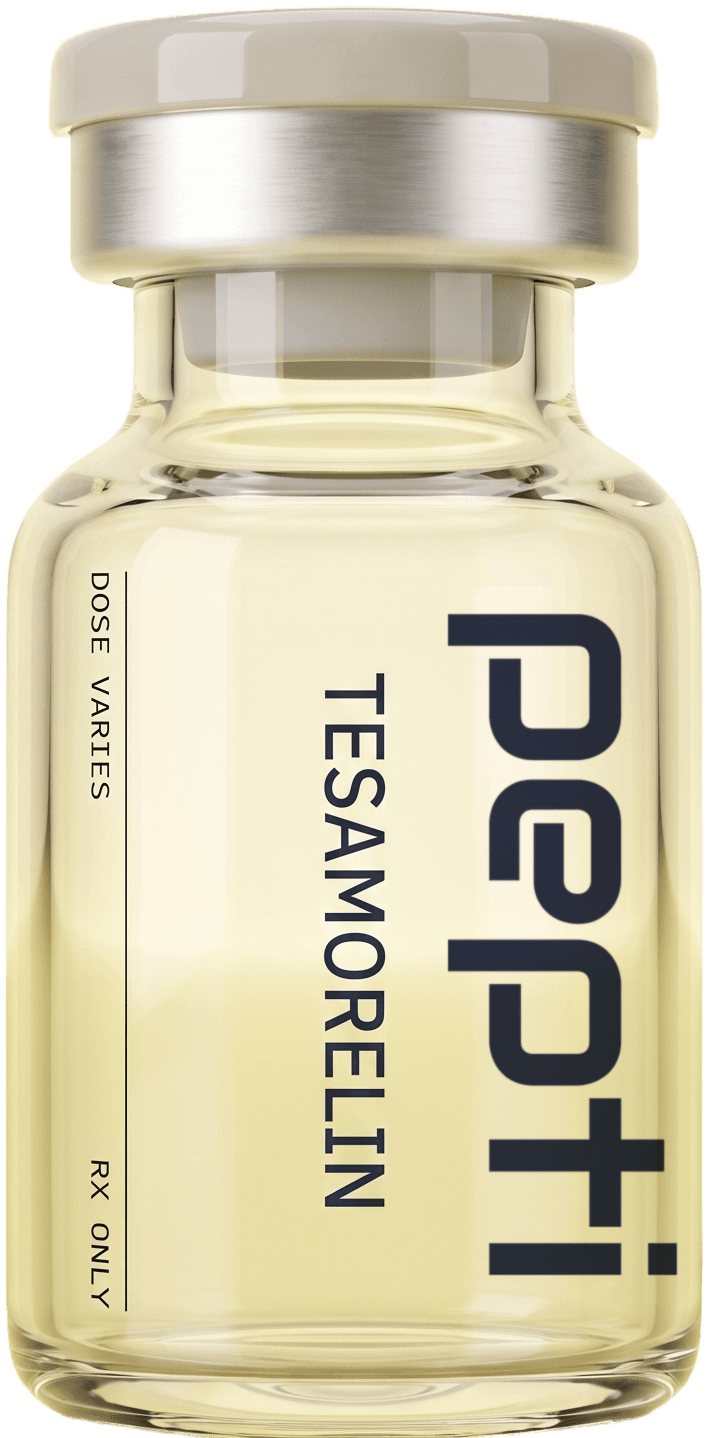
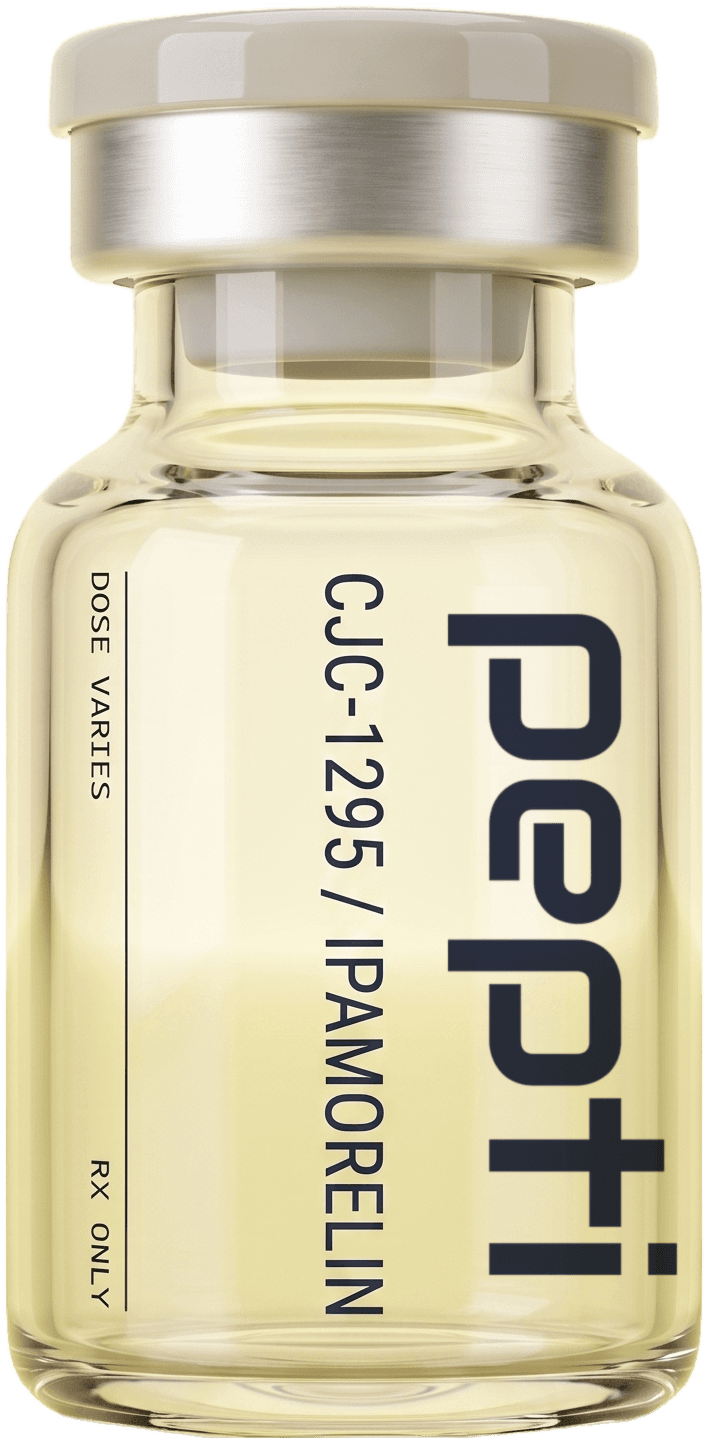
CJC-1295 and tesamorelin are both growth-hormone-releasing hormone analogues that act on the same pituitary receptor, so the choice between them is about evidence and duration rather than about two different mechanisms. Tesamorelin is the full 44-amino-acid hormone with a stabilising cap, and it has randomised, placebo-controlled human trials, including two phase 3 trials that supported an FDA approval for reducing excess abdominal fat in adults with HIV-associated lipodystrophy. CJC-1295 is a 29-amino-acid fragment with four protective substitutions, and its human data is a pair of 2006 pharmacokinetic trials of a longer-acting form that is not the one compounded today. Tesamorelin is the choice when visceral fat is the specific goal; the CJC-1295 pairing with ipamorelin is the usual choice for a general sleep and recovery brief. Both are prescription-only, compounded by a licensed US pharmacy, and neither compounded product is FDA approved.
This page explains each on its own terms, puts them side by side, covers what the research does and does not show, where each stands with the FDA, how each is dosed, what each costs at Pepti, and who tends to suit which.
CJC-1295 vs Tesamorelin
The short answer
| If your main goal is | The usual prescription | What is in it | Price |
|---|---|---|---|
| Visceral (abdominal organ) fat specifically | Tesamorelin | 10 mg tesamorelin in a 5 mL vial | $249/mo |
| Sleep and recovery, the two-signal pairing | CJC-1295 / Ipamorelin | 6 mg CJC-1295 and 12 mg ipamorelin in a 5 mL vial | $239/mo |
| Tesamorelin with the ghrelin signal added | Tesamorelin + Ipamorelin | 10 mg tesamorelin and 5 mg ipamorelin in a 5 mL vial | $259/mo |
| Both GHRH analogues plus the ghrelin signal | ASCEND Blend | 6 mg CJC-1295, 12 mg ipamorelin, 10 mg tesamorelin, 1 mg IGF-1 LR3 | $289/mo |
| The same, with BPC-157 for recovery | TITAN Blend | 10 mg tesamorelin, 6 mg CJC-1295, 12 mg ipamorelin, 10 mg BPC-157 | $289/mo |
| A shorter, more physiological GHRH signal | Sermorelin | 10 mg sermorelin in a 5 mL vial | $229/mo |
Every figure is an all-in monthly price covering the medication, physician review, refill management and shipping. There is no separate membership fee, and Pepti is cash-pay and does not bill insurance. Current pricing always lives on each product page; the table is a guide to which product fits which goal. CJC-1295 is not supplied on its own at Pepti: it comes paired with ipamorelin, or inside a blend.
CJC-1295 vs Tesamorelin
One receptor, two molecules
Growth-hormone-releasing hormone (GHRH) is the 44-amino-acid signal the hypothalamus sends to the pituitary to trigger a growth hormone pulse. Its first 29 amino acids are the smallest fragment that keeps full activity; that fragment is sermorelin. Native GHRH and sermorelin are both cut apart within minutes by the enzyme DPP-4.
Both molecules on this page are solutions to that problem. CJC-1295 starts from the 29-amino-acid fragment and changes four positions to resist the enzyme. Tesamorelin keeps the whole 44 and adds a trans-3-hexenoic acid group to one end to protect the cleavage site. Same receptor, same job, different chemistry.
Neither contains growth hormone. Each asks your own pituitary to release what it already makes, in a pulse, with somatostatin and IGF-1 feedback still working, which is the central difference from injected growth hormone; see peptides vs HGH. Most of what growth hormone does in adults it does through IGF-1 made in the liver, which is why IGF-1 is the marker that reflects how the axis is responding, and why the aim is a physiological level rather than the highest attainable.
CJC-1295 vs Tesamorelin
Tesamorelin on its own terms
What it is
The entire 44-amino-acid GHRH sequence with a stabilising cap, developed under the code TH9507. It binds the GHRH receptor on pituitary somatotrophs and prompts a pulse of your own growth hormone. The full reference is at what is tesamorelin.
Its regulatory history
A tesamorelin product was approved by the FDA in November 2010 for one narrow indication: reducing excess abdominal fat in adults with HIV who have lipodystrophy. That approval was later deemed a biologics licence, and the current formulation was approved in March 2025 as a supplemental biologics licence application. The approved label carries three limitations of use: long-term cardiovascular safety has not been established, it is not indicated for weight-loss management because its effect on weight is neutral, and there is no evidence it improves antiretroviral adherence. Compounded tesamorelin shares the active peptide but is not that product, and prescribing it for anything else is off-label.
What human data exists for tesamorelin
Study Who What was reported 2007, New England Journal of Medicine 412 people with HIV and abdominal fat, 2 mg daily or placebo, 26 weeks Visceral fat on CT fell 15.2% on treatment and rose 5.0% on placebo; triglycerides fell 50 mg/dL against a 9 mg/dL rise; IGF-1 rose 81% 2010 pooled analysis, Journal of Clinical Endocrinology and Metabolism 806 randomised patients across two phase 3 trials Visceral fat fell 24 cm² against a 2 cm² rise on placebo; maintained to 52 weeks; returned toward baseline after switching to placebo 2012, Journal of Clinical Endocrinology and Metabolism 60 abdominally obese adults without HIV, reduced growth hormone secretion, 12 months Visceral fat fell 16 cm² against a 19 cm² rise on placebo; no change in subcutaneous fat or glucose measures 2012, Archives of Neurology 152 adults aged 55 to 87, 1 mg at bedtime, 20 weeks A favourable effect on a cognitive composite, driven mainly by executive function; IGF-1 rose 117%, staying in range 2014, JAMA 50 people with HIV and abdominal fat, six months 34 cm² reduction in visceral fat against an 8 cm² rise; a modest reduction in liver fat 2019, Lancet HIV 61 people with HIV and fatty liver, 12 months Hepatic fat fraction fell 4.1% in absolute terms more than placebo Roughly 1,100 people have been randomised to tesamorelin or placebo in the published trials. The limits matter as much as the findings: every trial used 1 mg or 2 mg daily, most enrolled people with HIV, every trial that measured subcutaneous fat found no significant change, the longest ran 12 months, and none used the compounded dose. Tesamorelin benefits takes each claim in turn.
CJC-1295 vs Tesamorelin
CJC-1295 on its own terms
What it is, and which form
CJC-1295 is the GHRH (1-29) chain with four substitutions that protect it from DPP-IV. A 2005 paper in Endocrinology described the design and identified it as a long-lasting GHRH analogue activating the receptor in rats.
It exists in two forms, and the distinction decides how to read its evidence:
| With DAC | Without DAC (modified GRF 1-29) | |
|---|---|---|
| What it adds | A drug affinity complex that binds albumin | Nothing |
| How long it lasts | Half-life of roughly six to eight days | Roughly half an hour |
| Human trials | The 2006 healthy-adult trials | None of its own |
| At Pepti | Not supplied | The form in CJC-1295 / Ipamorelin and the blends |
So the published human data belongs to a week-long version, while the compounded version is a short pulse dosed daily. The full account is in CJC-1295 with DAC vs without DAC.
What human data exists for CJC-1295
| Study | Who | What was reported |
|---|---|---|
| 2006, Journal of Clinical Endocrinology and Metabolism | Healthy adults aged 21 to 61, randomised, placebo-controlled, ascending doses, 28 and 49 days, DAC form | Growth hormone rose two- to ten-fold for six days or more; IGF-1 rose 1.5- to three-fold for nine to eleven days; well tolerated, particularly at the lower doses |
| 2006, same journal, overnight sampling | Healthy men before and one week after one injection, DAC form | Pulse frequency and size unchanged; troughs rose about 7.5-fold, mean growth hormone 46% and IGF-1 45% |
| 2006, American Journal of Physiology | Mice engineered to lack GHRH | Once-daily dosing normalised growth |
What does not exist: any randomised controlled trial of either form for sleep, recovery, body composition or any clinical outcome, and any human trial of the no-DAC form on its own. Its human evidence is borrowed from the shared chain.
CJC-1295 vs Tesamorelin
Head to head
| CJC-1295 | Tesamorelin | |
|---|---|---|
| Built from | GHRH amino acids 1 to 29, four substitutions | The full 44 amino acids, with a stabilising cap |
| Receptor | GHRH receptor | GHRH receptor |
| Duration | Roughly half an hour for the no-DAC form; six to eight days for the DAC form | Longer than native GHRH; dosed daily |
| What it is usually chosen for | Sleep and recovery, paired with ipamorelin | Visceral fat |
| Best human evidence | 2006 pharmacokinetic trials of the DAC form in healthy adults | Two phase 3 randomised trials, 806 patients pooled, plus four smaller randomised trials |
| Outcome trials | None | Visceral fat, liver fat and a cognitive composite |
| Approved product history | Never | Yes, for one indication: HIV-associated abdominal fat |
| 503A bulks list | Advisory committee voted against adding it, 4 December 2024; in no category as of 14 May 2026 | Never on the list; it is the active ingredient of an approved product |
| Supplied alone at Pepti | No, paired with ipamorelin or in a blend | Yes |
| Vial at Pepti | 5 mL with ipamorelin: 6 mg CJC-1295 and 12 mg ipamorelin | 5 mL, 2 mg/mL (10 mg) |
| Typical directions | 0.25 mL (25 units) once daily Monday through Friday on an empty stomach | 0.25 mL (25 units) Monday through Friday nights at bedtime |
| Per dose | 0.3 mg CJC-1295 with 0.6 mg ipamorelin | 0.5 mg tesamorelin |
| Doses per vial | 20, about 4 weeks | 20, about 4 weeks |
| Price at Pepti | $239 a month for the pairing | $249 a month |
| Combined options | Pairings with ipamorelin; SERENITY, REVIVE, SHRED, ASCEND, TITAN | Tesamorelin + Ipamorelin; PHYSIQ, ASCEND, TITAN, FUSION, RADIANCE, SYNAPSE |
The real difference is evidence, not strength
People often ask which is "stronger". That is not a meaningful comparison: no study has measured both in the same people, both act at the same receptor, and the compounded doses are lower than the trial doses in tesamorelin's case and untested in CJC-1295's. The useful difference is how much is known. Tesamorelin has randomised human trials with imaging endpoints and an approved product behind the molecule. CJC-1295 has pharmacokinetic studies of a form nobody prescribes, no outcome trials, and an advisory committee that voted against adding it to the bulks list for lack of evidence. Both are prescribed on mechanism plus a physician's judgement; tesamorelin simply has more behind that judgement.
CJC-1295 vs Tesamorelin
Who suits which
Tesamorelin
Someone whose stated goal is visceral fat around the middle, who understands that the trials measured that fat on CT imaging rather than weight on the scale, and that the compounded dose of 0.5 mg on weekday nights is a quarter of the main trial dose. It is also the one a physician reaches for when they want the molecule with the most human data in this class.
The CJC-1295 pairing
Someone with a general brief: sleep, recovery, body composition over months. CJC-1295 / Ipamorelin is the most commonly prescribed growth-axis combination, because it reaches the pituitary through both doors at once and costs less than tesamorelin. CJC-1295 / Ipamorelin benefits sets out exactly what is and is not established for it.
Both, in one vial
ASCEND and TITAN contain CJC-1295, ipamorelin and tesamorelin together. Stacking two GHRH analogues adds a second signal on the same receptor rather than a new door, no study has tested the combination, and the IGF-1 target is the same whichever is used. PHYSIQ vs SHRED vs TITAN compares the body-composition blends.
Can you take CJC-1295 and tesamorelin together?
They are in the same vial in two Pepti blends, so the combination exists on prescription. It means two signals at one receptor, no comparative safety data, and the same monitoring either way. Two growth-axis products from separate prescriptions should never be combined without the prescriber knowing about both. Whether a combination is appropriate for you is decided by your physician after reviewing your intake.
CJC-1295 vs Tesamorelin
When neither is the right first step
| Situation | What makes more sense |
|---|---|
| The goal is scale weight | Semaglutide or tirzepatide, which have large randomised trials with weight as the primary endpoint; see best GLP-1 for weight loss |
| Sleep is the whole point | DSIP or the SERENITY Blend |
| A specific injury, such as a sore tendon | BPC-157 or TB-500 |
| Suspected growth hormone deficiency | An endocrinologist; that is a diagnosis with its own testing and an approved treatment |
| A pituitary condition, surgery, head irradiation or head trauma | A secretagogue needs a pituitary that can respond, and this is a contraindication on the approved tesamorelin label |
| A cautious, shortest-signal start | Sermorelin, the native-shaped fragment with the longest regulatory history |
CJC-1295 vs Tesamorelin
Where each stands with the FDA
| CJC-1295 | Tesamorelin | |
|---|---|---|
| Approved product | Never | Yes, since November 2010, for HIV-associated abdominal fat only |
| 503A bulks category list | Category 2 in 2023; removed September 2024 when the nominations were withdrawn; in no category as of the list updated 14 May 2026 | Never on it, because it is the active ingredient of an approved product |
| Advisory committee | 4 December 2024: 0 to 13 against the free base, 1 to 12 against the acetate, 0 to 13 against each DAC form, for growth hormone deficiency | Never reviewed |
| Final FDA determination | Not issued | Not applicable |
| Compounded version | Not FDA approved | Not FDA approved |
An advisory committee vote is a recommendation, not a decision and not a ban; the recorded reasoning was the absence of evidence for the nominated use rather than a finding of harm. Tesamorelin's position did not move in the 2026 changes that affected many peptides, because it was never on the bulks list. Compounded medications are never FDA approved as finished products. Are peptides FDA approved explains the difference between not approved and not legal.
Anti-doping
WADA's 2026 Prohibited List names both under S2.2.4, growth hormone releasing factors, prohibited at all times, in and out of competition, along with ipamorelin as a secretagogue. A prescription does not create an exemption. See do peptides show up on a drug test and peptides for athletes.
CJC-1295 vs Tesamorelin
Dosing, side by side
Both are injected under the skin into the abdomen or thigh, rotating sites, at 0.25 mL, which is 25 units on a U-100 insulin syringe, on weekdays with weekends off. Tesamorelin is directed at bedtime, so the induced pulse lands on top of the one deep sleep already produces. The CJC-1295 pairing is directed once daily on an empty stomach, because glucose and fatty acids after a meal blunt the pulse; many prescribers place it at bedtime for the same reason as tesamorelin. You do not need to calculate anything: your directions are printed on the vial, and your physician sets them after reviewing your intake. Never change your own dose.
| Per 0.25 mL dose | Doses per vial | |
|---|---|---|
| Tesamorelin | 0.5 mg tesamorelin | 20, about 4 weeks |
| CJC-1295 / Ipamorelin | 0.3 mg CJC-1295 and 0.6 mg ipamorelin | 20, about 4 weeks |
| Tesamorelin + Ipamorelin | 0.5 mg tesamorelin and 0.25 mg ipamorelin | 20, about 4 weeks |
Twenty doses covers about four weeks, which is why refills run every 28 days, one vial per fill. Both ship refrigerated with ice packs, ready to use, with sterile syringes and alcohol prep pads, and stay in the fridge between doses. Tesamorelin dosage and ipamorelin dosage go through the arithmetic, and how long does a peptide vial last explains every number on a label.
Bloodwork is not required for any Pepti treatment. If your physician wants labs for your care, they'll ask through your account.
CJC-1295 vs Tesamorelin
Side effects
Shared, because both raise growth hormone. Fluid retention or puffiness, joint aches and tingling in the hands are the recognised pattern of more growth hormone than a person needs, and they go to your care team rather than being pushed through. Growth hormone reduces insulin sensitivity, so blood glucose can drift up.
Tesamorelin. Better characterised than most compounded peptides, because the approved product's label reports pooled data from 740 treated patients at 2 mg daily, four times the compounded dose: injection-site reactions in 17 per cent against 6 per cent on placebo, joint pain 13 per cent, pain in an arm or leg, muscle aches and peripheral swelling each 6 per cent, tingling 5 per cent, hypersensitivity reactions such as itching, flushing, hives or rash in 4 per cent, and new-onset diabetes in 5 per cent against 1 per cent on placebo. There is no interaction list beyond a label note that growth hormone can alter cytochrome P450 metabolism.
The CJC-1295 pairing. In the 2006 trials, injection-site reactions and headache were the main complaints. What is reported clinically is injection-site redness or soreness, a brief flush after injecting, headache, hunger because ipamorelin acts at the ghrelin receptor, vivid dreams with evening dosing, and the fluid-related effects above. Because CJC-1295 acts for longer than ipamorelin, a dose change shows more slowly, so a prescriber acts on the first report. More in is CJC-1295 / Ipamorelin safe and ipamorelin side effects.
For both, call 911 or get emergency care first for swelling of the face, lips or throat, a widespread rash or any difficulty breathing, then tell your care team.
CJC-1295 vs Tesamorelin
Who should not take either, or should discuss it first
| Situation | Why |
|---|---|
| Active cancer | Contraindicated on the approved tesamorelin label, and growth signalling is avoided with active disease; see can peptides cause cancer |
| Cancer history in remission | A cautious conversation, taken with the oncologist's view |
| Pituitary disorder, pituitary surgery, head irradiation or head trauma | The approved tesamorelin label is contraindicated where the axis is disrupted |
| Diabetes or borderline fasting glucose | Not a bar, but growth hormone reduces insulin sensitivity |
| Pregnancy or breastfeeding | Not used; animal data for tesamorelin describe fetal harm |
| Untreated severe sleep apnoea | Fluid retention and soft-tissue change can worsen it |
| Untreated hypothyroidism | Treated first; it changes the whole axis |
| Known hypersensitivity to either peptide | Rules it out |
| Under 18 | Pepti prescribes to adults only |
| Tested athletes | Both are prohibited at all times |
CJC-1295 vs Tesamorelin
What the evidence shows, honestly
Tesamorelin has randomised, double-blind, placebo-controlled trials, two of them phase 3, with a measured effect on visceral fat and favourable secondary findings on triglycerides and liver fat. Those trials were mostly in adults with HIV, at two to four times the compounded dose, and the approved label calls the drug weight-neutral. CJC-1295 has pharmacokinetic trials showing the shared GHRH chain raises growth hormone and IGF-1 in healthy adults with pulses preserved, no outcome trials at all, and no human study of the form actually compounded.
Neither has a trial in healthy adults showing better sleep, recovery or general body composition, neither has long-term safety data over years, and no study has compared them with each other. Prescribers describe sleep first, often within the first weeks, and body-composition changes over two to three months where diet and training are in place; response varies widely. Any provider claiming either is proven for sleep, recovery or general fat loss is overstating it.
CJC-1295 vs Tesamorelin
Where to get CJC-1295 or tesamorelin prescribed
Neither can be bought legitimately without a prescription. Sites selling them "for research use only" are not accountable for what is in the vial: identity, purity, sterility and concentration are untested. The prescription route:
- Complete a free online intake covering your history, medications and what you want help with.
- A physician licensed in your state reviews it, usually within 24 hours.
- If it is appropriate, a PCAB-accredited, FDA-registered US 503A compounding pharmacy prepares it to that prescription. Lot test results are published at /quality/lab-results.
- It ships refrigerated with your directions printed on the vial.
- Your physician stays reachable for questions and side effects.
Pepti prescribes both in every state except Oklahoma, plus DC Step-by-step pages: how to get tesamorelin prescribed online and how to get CJC-1295 / Ipamorelin prescribed online.
References
What this is based on.
References
- Falutz J, Allas S, Blot K et al.. Metabolic effects of a growth hormone-releasing factor in patients with HIV · N Engl J Med (2007) · PMID 18057338
- Stanley TL, Feldpausch MN, Oh J et al.. Effect of tesamorelin on visceral fat and liver fat in HIV-infected patients with abdominal fat accumulation: a randomized clinical trial · JAMA (2014) · PMID 25038357
- Falutz J, Mamputu JC, Potvin D et al.. Effects of tesamorelin (TH9507), a growth hormone-releasing factor analog, in human immunodeficiency virus-infected patients with excess abdominal fat: a pooled analysis of two multicenter, double-blind placebo-controlled phase 3 trials with safety extension data · J Clin Endocrinol Metab (2010) · PMID 20554713
- Falutz J, Potvin D, Mamputu JC et al.. Effects of tesamorelin, a growth hormone-releasing factor, in HIV-infected patients with abdominal fat accumulation: a randomized placebo-controlled trial with a safety extension · J Acquir Immune Defic Syndr (2010) · PMID 20101189
- Stanley TL, Fourman LT, Feldpausch MN et al.. Effects of tesamorelin on non-alcoholic fatty liver disease in HIV: a randomised, double-blind, multicentre trial · Lancet HIV (2019) · PMID 31611038
- Makimura H, Feldpausch MN, Rope AM et al.. Metabolic effects of a growth hormone-releasing factor in obese subjects with reduced growth hormone secretion: a randomized controlled trial · J Clin Endocrinol Metab (2012) · PMID 23015655
- Dal J, Leisner MZ, Hermansen K et al.. Cancer Incidence in Patients With Acromegaly: A Cohort Study and Meta-Analysis of the Literature · J Clin Endocrinol Metab (2018) · PMID 29590449
- Johannsson G, Touraine P, Feldt-Rasmussen U et al.. Long-term Safety of Growth Hormone in Adults With Growth Hormone Deficiency: Overview of 15 809 GH-Treated Patients · J Clin Endocrinol Metab (2022) · PMID 35368070
- Zhou H, Sun L, Zhang S, Wang Y, Wang G. Effect of long-term growth hormone replacement on glucose metabolism in adults with growth hormone deficiency: a systematic review and meta-analysis · Pituitary (2021) · PMID 32888174
- Clemmons DR. Roles of insulin-like growth factor-I and growth hormone in mediating insulin resistance in acromegaly · Pituitary (2002) · PMID 12812310
- Clemmons DR. Consensus statement on the standardization and evaluation of growth hormone and insulin-like growth factor assays · Clinical Chemistry (2011) · PMID 21285256
- Liu H, Bravata DM, Olkin I, Nayak S, Roberts B. Systematic review: the safety and efficacy of growth hormone in the healthy elderly · Annals of Internal Medicine (2007) · PMID 17227934
Citations are provided for educational purposes. They do not constitute medical advice. Always discuss any peptide protocol with your prescribing physician.
Common questions
CJC-1295 vs Tesamorelin, answered.
For visceral fat, tesamorelin has the stronger evidence, from randomised placebo-controlled trials with CT imaging. For sleep and recovery, neither has trial evidence and no study has compared them. The CJC-1295 pairing with ipamorelin is the more common general prescription and costs less.
Both are GHRH analogues at the same pituitary receptor. CJC-1295 is the 29-amino-acid fragment with four protective substitutions; tesamorelin is the full 44-amino-acid hormone with a stabilising cap and an approved product behind the molecule.
There is no meaningful way to say. They act at the same receptor, no study has measured both in the same people, and the compounded doses differ in kind rather than in potency.
Tesamorelin is the one with trial data on fat, and specifically visceral fat inside the abdomen rather than the pinchable layer under the skin. Every trial that measured subcutaneous fat found no significant change, and the approved label calls the drug weight-neutral.
Neither has a trial with sleep as an endpoint. Both are commonly dosed at bedtime so the induced pulse lines up with the body's largest natural pulse in deep sleep, and sleep is the most common early patient report for both.
They appear together in the ASCEND and TITAN blends, so the combination exists on prescription. It stacks two signals at the same receptor, no study has tested it, and the monitoring is the same. Your physician decides whether it is appropriate after reviewing your intake.
Neither is a weight-loss medication. Tesamorelin's approved label states it is not indicated for weight-loss management because its effect on weight is neutral, and the CJC-1295 pairing includes ipamorelin, which acts at the receptor ghrelin uses to signal hunger. For scale weight, the GLP-1 medications have the trial evidence.
No. Sermorelin is the plain GHRH (1-29) fragment, cleared within minutes. CJC-1295 is that fragment with four substitutions that make it last longer. The comparison is in CJC-1295 vs sermorelin.
Pepti's products use CJC-1295 without DAC, also called modified GRF (1-29), which lasts roughly half an hour and is dosed daily. The published human trials used the DAC form, which lasts about a week. See CJC-1295 with DAC vs without DAC.
An approved tesamorelin product exists for one indication, excess abdominal fat in adults with HIV-associated lipodystrophy. CJC-1295 has never been approved. Compounded versions of either are not FDA approved.
At Pepti: tesamorelin $249 a month, CJC-1295 / Ipamorelin $239, Tesamorelin + Ipamorelin $259, and the blends containing both $289, all-in, covering medication, physician review, refill management and shipping.
No. Bloodwork is not required for any Pepti treatment. If your physician wants labs for your care, they'll ask through your account. The free assessment goes to a physician licensed in your state. A consultation does not guarantee a prescription.
Next step
See what a physician recommends for you.
A licensed physician in your state reviews your intake and decides what is appropriate. A consultation does not guarantee a prescription.