— Anti-Aging · Reference
Peptides vs HGH: How Secretagogues Differ From Growth Hormone
A head-to-head comparison of growth hormone and GH-axis peptides: mechanism, dosing rhythm, what each is prescribed for, side effects, legal status, cost and who each suits.
— Treatments mentioned
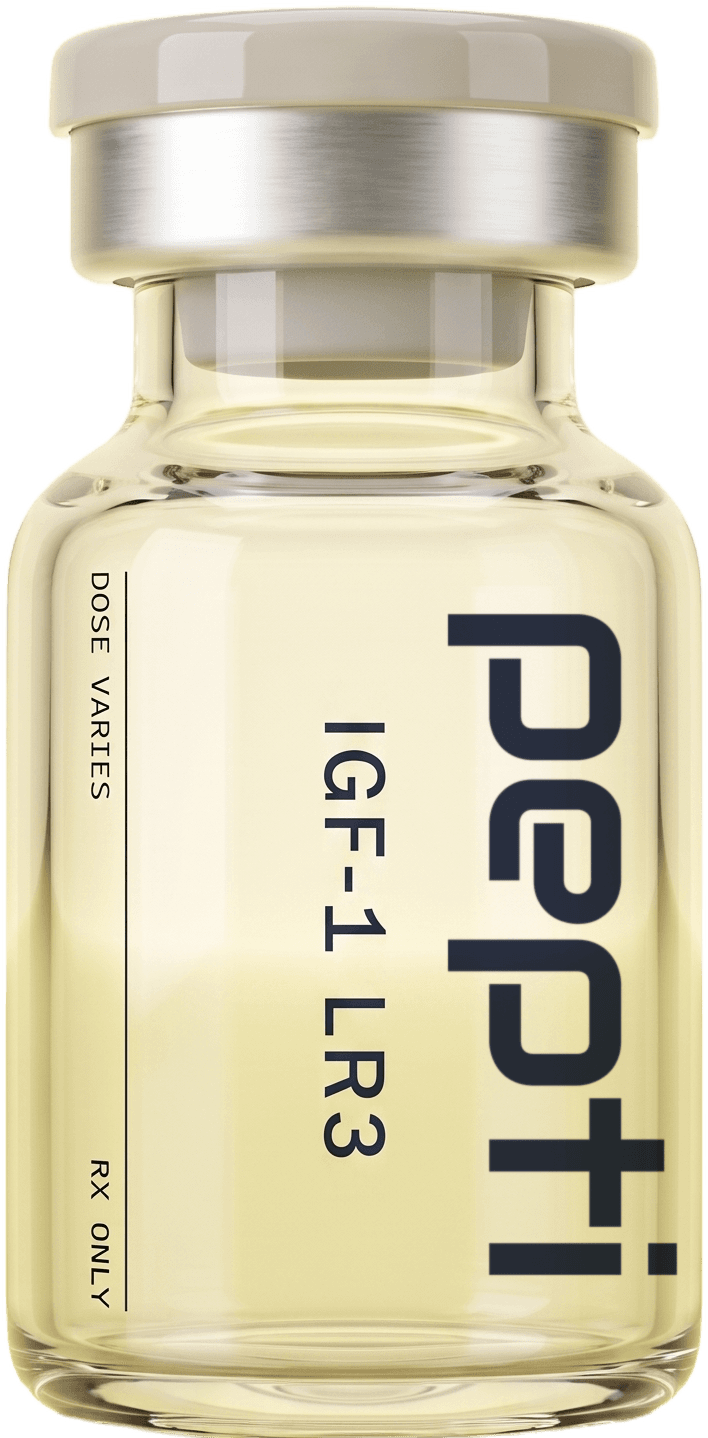
HGH is growth hormone itself, supplied from outside; GH-axis peptides are signals that prompt your own pituitary to release growth hormone in a pulse. That is a difference in kind, not in strength: one overrides your feedback loops, the other works through them. It is also a sharp legal difference, because prescribing recombinant growth hormone in the United States is restricted to specific approved indications while GH-axis peptides may be compounded against a prescription. Pepti does not prescribe growth hormone. The peptides discussed here are compounded at a US FDA-registered pharmacy and are not FDA approved.
— Peptides vs HGH
The short answer
| If you are asking about | What it actually is | What is in it | Price |
|---|---|---|---|
| Recombinant human growth hormone | A manufactured hormone, prescribed only for specific approved indications | Not offered here | Not applicable |
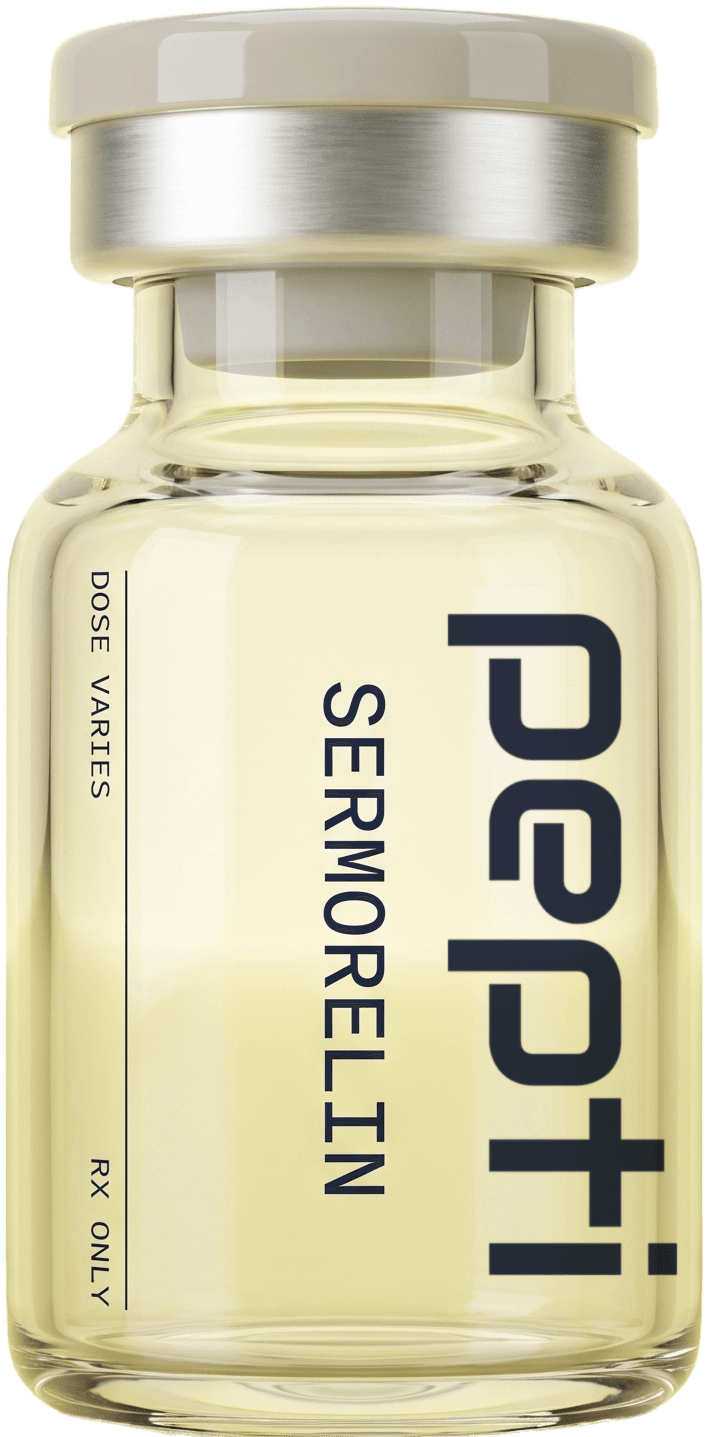
| The gentlest GH-axis starting point | Sermorelin | 10 mg sermorelin in a 5 mL vial | $229/mo |
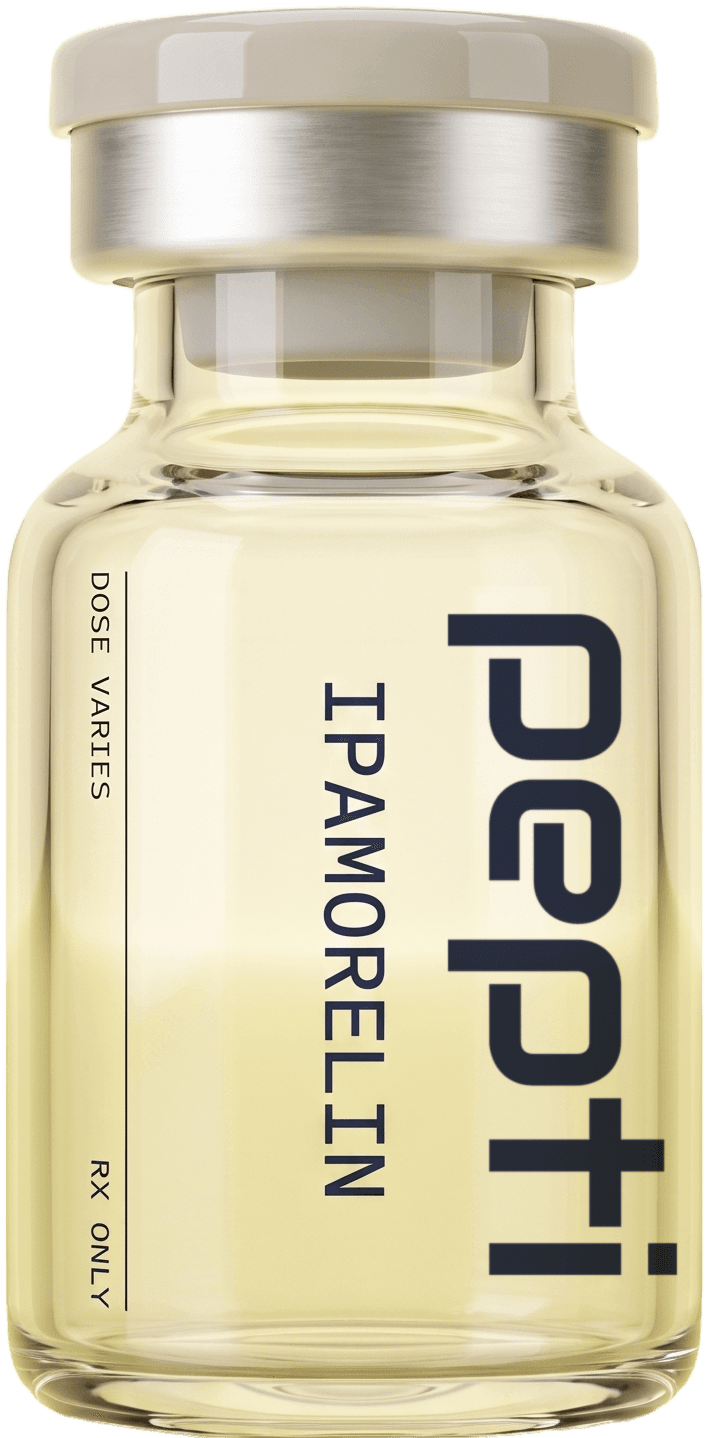
| The standard two-signal pairing | CJC-1295 / Ipamorelin | 6 mg CJC-1295 and 12 mg ipamorelin in a 5 mL vial | $239/mo |
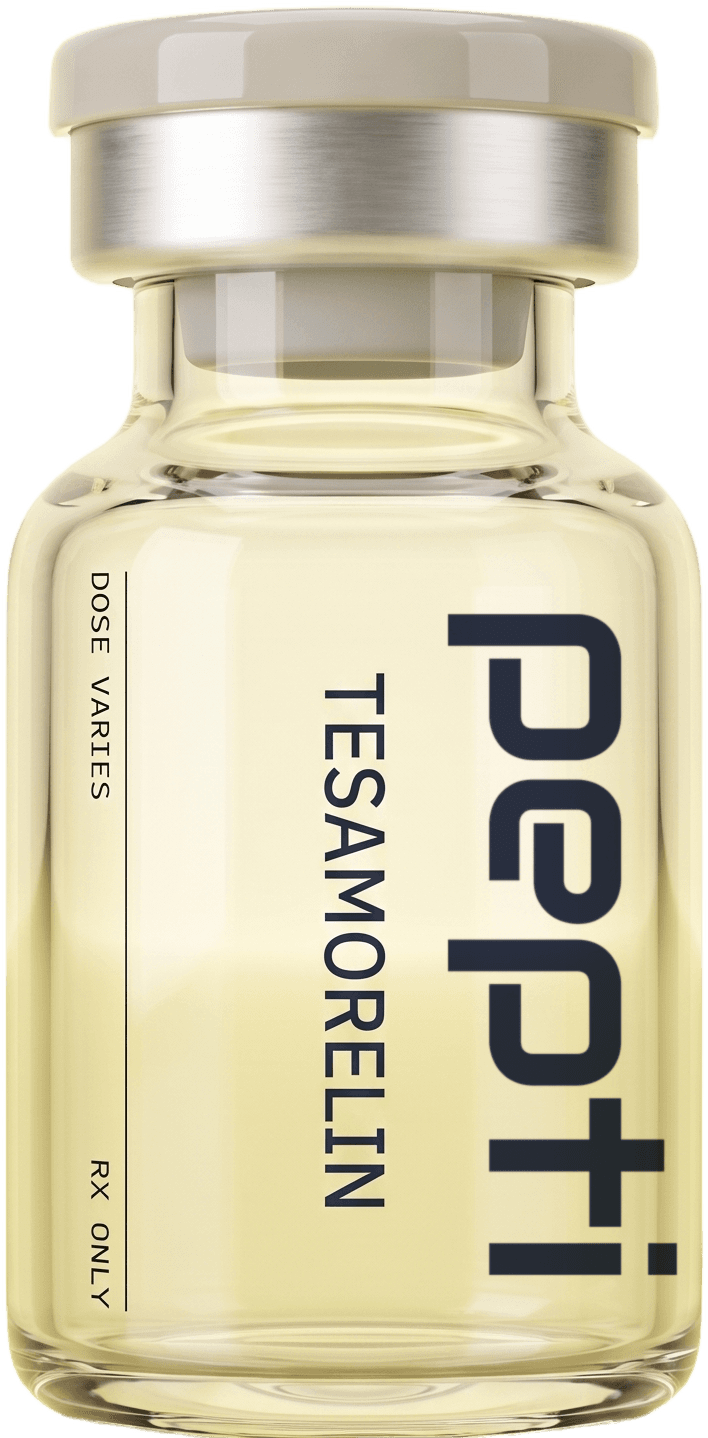
| Visceral fat as the specific goal | Tesamorelin | 10 mg tesamorelin in a 5 mL vial | $249/mo |
| GH-axis peptides alongside others in one vial | ASCEND or TITAN | Four peptides per vial | $279/mo |
Each is an all-in monthly price covering medication, physician review, refill management and shipping.
— Peptides vs HGH
What growth hormone actually is
— A pituitary hormone released in pulses
Human growth hormone is a 191-amino-acid protein made by the anterior pituitary, and it is not released steadily. The hypothalamus sends two opposing signals — growth hormone-releasing hormone (GHRH), which promotes release, and somatostatin, which restrains it — and the result is a series of pulses, the largest arriving in slow-wave sleep. A 2000 paper in JAMA that studied 149 healthy men across adulthood reported that slow-wave sleep and the growth hormone secreted during it both fall steeply between young adulthood and midlife. Growth hormone acts largely through insulin-like growth factor 1 (IGF-1), which the liver makes in response; IGF-1 integrates the pulses into a steadier number and feeds back to damp further release, which is why it is the marker physicians track.
Recombinant somatropin (Genotropin, Norditropin, Humatrope, Omnitrope) is that same protein manufactured in engineered cells. Once injected it delivers growth hormone at whatever level the dose sets; the pituitary is not involved and the pulse is replaced by an injected level.
— What it is approved for
The approved uses are narrow and named. The current Genotropin prescribing information indicates somatropin in children for growth failure due to growth hormone deficiency, Prader-Willi syndrome, being born small for gestational age without catch-up growth by age two, Turner syndrome, and idiopathic short stature meeting a defined height threshold; and in adults for replacement in growth hormone deficiency of adult onset (from pituitary or hypothalamic disease, surgery, radiation or trauma) or of childhood onset. The label states that confirming adult deficiency involves a growth hormone provocative test, with only two exceptions. A low IGF-1 on a wellness panel is not a diagnosis, and age-related decline in a healthy adult is not on the list.
— What the label warns about
The Genotropin label contraindicates somatropin in active malignancy, acute critical illness after major surgery or trauma, severe diabetic retinopathy, known hypersensitivity, and growth promotion in children whose growth plates have closed. Its warnings cover progression or recurrence of pre-existing tumors, glucose intolerance and diabetes that may be unmasked, intracranial hypertension, fluid retention presenting as edema, joint pain and carpal tunnel syndrome ("especially in adults"), hypothyroidism and adrenal insufficiency becoming evident, and pancreatitis; it directs periodic glucose monitoring in all patients. Endocrinologists titrate a daily subcutaneous dose against IGF-1 and those side effects.
— What the evidence shows in healthy older adults
The reason anyone asks about growth hormone for aging is a 1990 paper in the New England Journal of Medicine in which Rudman and colleagues gave somatropin to twelve men over sixty with low IGF-1 for six months and reported more lean mass and bone density and less adipose mass than in nine untreated controls. It was small, unblinded and short, and did not measure strength or function. A 2007 systematic review in Annals of Internal Medicine pooled 31 studies in healthy elderly people — 220 treated participants, a mean of 27 weeks — and reported small body-composition changes, no consistent improvement in strength, bone density, lipids or fitness, and significantly more edema, joint pain, carpal tunnel syndrome and gynecomastia. Its conclusion was that growth hormone cannot be recommended as an anti-aging therapy.
— Why Pepti does not prescribe it
Federal law is explicit. 21 U.S.C. § 333(e) makes it a crime to knowingly distribute, or possess with intent to distribute, human growth hormone "for any use in humans other than the treatment of a disease or other recognized medical condition, where such use has been authorized by the Secretary of Health and Human Services under section 355 of this title and pursuant to the order of a physician." The offense carries up to five years' imprisonment, ten where a person under eighteen is involved. Subsection (e)(4) defines "human growth hormone" as "somatrem, somatropin, or an analogue of either of them."
The definition covers growth hormone and its analogues; sermorelin, CJC-1295 and tesamorelin are analogues of GHRH, the releasing hormone, and ipamorelin is a ghrelin mimetic. None is growth hormone or an analogue of it, which is why the two sit under different legal frameworks.
— Peptides vs HGH
What a GH-axis peptide actually is
— Two receptors, one gland
Every peptide here acts on the pituitary rather than replacing its output, and there are two ways in. The GHRH receptor is the native target of growth hormone-releasing hormone; sermorelin, CJC-1295 and tesamorelin are modified versions of GHRH that bind it. The growth hormone secretagogue receptor is the receptor for ghrelin; ipamorelin and hexarelin are synthetic ghrelin mimetics that bind it. A 1995 paper in Clinical Endocrinology reported a larger response from the two classes together than from either alone, the basis for pairing them. Whichever receptor is used, the gland does the releasing, somatostatin can still restrain it, and IGF-1 can still feed back.
— Sermorelin
Sermorelin is the first 29 amino acids of GHRH, the shortest fragment that fully activates the receptor. It was the active ingredient of Geref, approved by the FDA in 1990 as a diagnostic test of pituitary reserve and in 1997 for growth hormone deficiency in children. The pivotal trial, in the Journal of Clinical Endocrinology and Metabolism in 1996, gave 110 children once-daily bedtime injections for up to a year and reported roughly doubled height velocity with fasting glucose unchanged. In adults, two randomized trials — Neurobiology of Aging in 2006 and Archives of Neurology in 2012 — reported that twenty weeks of daily GHRH(1-29) improved cognitive test scores in healthy older adults and in adults with mild cognitive impairment. Sermorelin is short-acting, given at bedtime, and described by prescribers as the gentlest starting point. Reference: what is sermorelin.
— CJC-1295
CJC-1295 is GHRH(1-29) with four substitutions that protect it from the enzyme that breaks GHRH down within minutes; the form compounded here is the version without the "drug affinity complex," so it acts over hours rather than a week. A 2006 study in the Journal of Clinical Endocrinology and Metabolism reported growth hormone and IGF-1 rising for days after a dose in healthy adults, and a companion paper the same year reported that the pituitary's pulsatile release persisted during continuous stimulation — larger pulses, same rhythm. There are no randomized outcome trials of CJC-1295 for any wellness endpoint; the evidence is pharmacology plus prescriber experience. It is supplied as CJC-1295 / Ipamorelin; see what is CJC-1295 / ipamorelin and CJC-1295 vs sermorelin.
— Ipamorelin
Ipamorelin is a five-amino-acid ghrelin mimetic. The paper that introduced it, in the European Journal of Endocrinology in 1998, described it as the first growth hormone secretagogue that released growth hormone without a measurable rise in cortisol, ACTH or prolactin in animal models. A 1999 paper in Pharmaceutical Research modeled its growth hormone response in human volunteers. Its only randomized human trial was unrelated to aging: a 2014 study in the International Journal of Colorectal Disease tested intravenous ipamorelin for recovery of bowel function after surgery. Ipamorelin is the ghrelin-side partner in CJC-1295 / Ipamorelin, is available alone as ipamorelin, and is described at what is ipamorelin.
— Tesamorelin
Tesamorelin is the full 44-amino-acid GHRH with a modification that slows its breakdown, and it is the one peptide in this class with an FDA-approved product on the market: Egrifta, for the reduction of excess abdominal fat in adults with HIV who have lipodystrophy. The Egrifta SV label states that long-term cardiovascular safety has not been established and that it is not indicated for weight-loss management because its effect on weight is neutral. Its evidence is randomized and placebo-controlled: the phase 3 program in the New England Journal of Medicine in 2007 and the Journal of Acquired Immune Deficiency Syndromes in 2010, measuring visceral adipose tissue by CT, and a 2012 trial in obese adults without HIV who had reduced growth hormone secretion. Compounded tesamorelin is prescribed off-label for goals outside that indication, which is an extrapolation; see what is tesamorelin.
— Hexarelin and IGF-1 LR3
Hexarelin is an older ghrelin mimetic with a large 1990s human pharmacology literature; it is less selective than ipamorelin — 1997 papers in Peptides and the Journal of Clinical Endocrinology and Metabolism reported it also raised prolactin, ACTH and cortisol — and hexarelin sits in the same feedback-intact category, with ipamorelin the usual first choice. IGF-1 LR3 does not belong in this category at all: IGF-1 LR3 is a modified IGF-1, the downstream growth factor, engineered to escape the binding proteins that buffer it. Supplying IGF-1 LR3 bypasses the pituitary as supplying growth hormone does, and IGF-1 has insulin-like effects on blood sugar.
— Peptides vs HGH
Head to head
| Recombinant HGH | GH-axis peptides | |
|---|---|---|
| What it is | Growth hormone itself, manufactured and injected | Analogues of the signals that tell the pituitary to release growth hormone |
| Mechanism | Supplies the hormone directly to the bloodstream, bypassing the pituitary entirely | Bind either the GHRH receptor (sermorelin, CJC-1295, tesamorelin) or the ghrelin receptor (ipamorelin) on the pituitary, prompting release of your own |
| Feedback | Overridden. Somatostatin and IGF-1 feedback cannot modulate a supplied dose | Intact. Somatostatin and IGF-1 feedback still regulate the output |
| Pattern of exposure | A level set by the injection, not by your physiology | A pulse, shaped by the body's own rhythm, which is largest in deep sleep |
| Dosing rhythm | As prescribed for the approved indication | Small subcutaneous dose at bedtime, to align with the natural pulse |
| Prescribed for | Growth hormone deficiency and other specific approved indications | Sleep quality, recovery, body composition, age-related decline in GH output |
| Side-effect profile | Dose-related: fluid retention, joint pain, carpal tunnel symptoms, insulin resistance | Injection-site reactions, flushing, occasional water retention or tingling early on; the same insulin-sensitivity caution applies but at a smaller scale |
| Legal status in the US | Tightly restricted; prescribing outside approved indications is not permitted | Prescription-only, compounded, not FDA approved |
| Sport | Prohibited in tested competition | Also prohibited: secretagogues and releasing factors are on the list |
| Who it suits | A patient with a diagnosed deficiency, under specialist care | An adult with age-related decline whose physician judges the axis worth prompting |
— Peptides vs HGH
What the feedback loop actually buys you
This is the substance of the comparison and it is worth stating precisely rather than as a slogan.
Pulse versus level
Growth hormone release is regulated by two opposing hypothalamic signals, GHRH which promotes it and somatostatin which restrains it, with circulating IGF-1 feeding back to damp the whole system when it rises. A secretagogue pushes on one side of that system. If IGF-1 climbs, the restraining arm responds. That is the structural reason a peptide is described as less likely to drive levels far past the intended range.
Supplied growth hormone does not work that way. The dose in the syringe is the dose, and the body's ability to modulate it is gone. This is why the side effects of growth hormone are characteristically dose-related and why specialist monitoring is required.
The 2006 paper that sampled growth hormone every ten minutes in adults on CJC-1295 is the cleanest demonstration: under continuous stimulation the pituitary kept releasing in pulses with the troughs preserved. The loop is not a ceiling, though. The Egrifta SV label reports that at the approved dose 47 percent of patients had IGF-1 above two standard deviations at 26 weeks, and directs clinicians to monitor it and consider stopping where the elevation persists. The physiology resists; it is not absent.
What the loop does not protect you from
This is an argument about the shape of the risk, not a claim of safety. Growth signalling carries the same cautions either way: cancer history, diabetes and glucose control, and existing pituitary disease all belong in the conversation. A peptide is not a risk-free version of a hormone.
Both the Genotropin and Egrifta SV labels contraindicate use in active malignancy and warn that glucose intolerance or diabetes may develop. And a secretagogue can only work through a functioning axis: the Egrifta SV label contraindicates tesamorelin where the hypothalamic-pituitary axis is disrupted by surgery, tumor, irradiation or trauma — exactly the population in which somatropin is indicated.
— Peptides vs HGH
How each is dosed and monitored
| Recombinant HGH | GH-axis peptides | |
|---|---|---|
| Where the decision sits | Endocrinology, for a diagnosed indication | A prescribing physician, with labs |
| Timing | Per the approved protocol | Bedtime, working with the natural pulse |
| Marker tracked | IGF-1, alongside glucose and clinical response | IGF-1, alongside fasting glucose, lipids and thyroid |
| What a rising IGF-1 means | Reduce the supplied dose | Reduce the dose or the frequency |
| Frequency of review | Specialist follow-up | Baseline labs, then periodic recheck |
Bloodwork is the part patients most often want to skip and the part that makes this category defensible. At-home blood testing covers IGF-1, metabolic and thyroid markers without a lab visit. The general case for testing is in do you need bloodwork before peptides.
Why bedtime, why IGF-1, why glucose
The largest natural pulse arrives in the first hours of slow-wave sleep, and a short-acting secretagogue given before bed adds to it; the Geref trials used single nightly injections. The dose and timing are your physician's decision, printed on your medication. IGF-1 is tracked because growth hormone itself pulses too fast to read on a single draw; a rise well above the reference range is the signal to reduce. Glucose comes along because growth hormone opposes insulin; the effect on a secretagogue is smaller, but it is the same direction.
— Peptides vs HGH
Side effects, side by side
Growth hormone
In adults the label singles out fluid retention — edema, joint pain, carpal tunnel syndrome — as frequent and dose-related, with glucose intolerance, headache from raised intracranial pressure, and unmasking of hypothyroidism. The 2007 systematic review found edema, arthralgia, carpal tunnel syndrome and gynecomastia all significantly more frequent than on placebo in healthy elderly adults.
GH-axis peptides
What prescribers report on sermorelin, CJC-1295, ipamorelin and tesamorelin is mostly local and early: injection-site redness or bruising, flushing after the dose, headache, and in some people transient water retention or tingling in the hands in the first weeks that settles or resolves with a dose adjustment. Sermorelin has an adverse-event profile collected during its years as Geref, where injection-site reactions, headache and flushing were the most common findings. Tesamorelin's phase 3 program reported injection-site reactions, arthralgia, peripheral edema and paresthesia more often than placebo, and a small excess of glucose-related events. There is no established interaction list for the compounded peptides, which is why a physician reviews every medication you take. On both sides the same three questions come first: any history of cancer, any diabetes or impaired glucose control, and any pituitary disease. Pregnancy and breastfeeding are excluded for lack of data.
— Peptides vs HGH
Who suits which
— A diagnosed growth hormone deficiency
Somebody with pituitary disease, a pituitary tumor treated with surgery or radiation, or a childhood deficiency carried into adulthood belongs with an endocrinologist, and where a provocative test confirms deficiency the correct treatment is somatropin under its approved indication. A secretagogue is the wrong tool for that person, and Pepti's assessment will say so.
— An adult with age-related decline
The person this page is mostly for is an adult in their forties or beyond with a working pituitary, a flattening IGF-1, worse sleep and slower recovery than a decade ago, and no diagnosable disease. Growth hormone is not lawfully available for that person, and the trial evidence for it in healthy older adults is not encouraging. A GH-axis peptide is what a physician can actually consider: sermorelin as the gentlest single agent, or CJC-1295 / Ipamorelin as the standard two-receptor pairing. Where the goal is abdominal visceral fat, tesamorelin is the peptide with that endpoint in its randomized trials. Where sleep is the primary complaint, the SERENITY blend pairs CJC-1295 and ipamorelin with DSIP and selank. For more than one goal in one injection there are the combined vials, ASCEND, TITAN, Ipamorelin + Sermorelin and Tesamorelin + Ipamorelin. Which, if any, is appropriate is a physician's decision after labs.
— Why the two are not combined
A secretagogue's value is that it works through a responsive pituitary; supplying growth hormone on top raises IGF-1, which suppresses the pituitary's own release, so the peptide has progressively less to act on. Within the peptide class the opposite applies: a GHRH analogue and a ghrelin mimetic act on different receptors of the same cell and are described as additive, which is why CJC-1295 and ipamorelin, or sermorelin and ipamorelin, are paired in one vial.
— Peptides vs HGH
Where each stands with the FDA and the law right now
This has moved recently and much of what is online is out of date. Everything below was checked against the FDA's own pages and the statute in September 2026.
— Somatropin: approved, and restricted by statute
Somatropin is an FDA-licensed biologic with the indications listed above. Its distribution for any use other than an FDA-authorized indication on a physician's order is a federal offense under 21 U.S.C. § 333(e). A site offering growth hormone for anti-aging or body composition is not offering a legal product, and Pepti does not prescribe it.
— Sermorelin: a former approved drug, not on any category list
Sermorelin acetate was the active ingredient of Geref, held by EMD Serono under NDA 19-863 (diagnostic, 1990) and NDA 20-443 (treatment, 1997). Both are listed in Drugs@FDA as discontinued, each annotated that the FDA determined in the Federal Register that the product was not withdrawn for safety or effectiveness reasons. Sermorelin does not appear in Category 1, 2 or 3 of the FDA's list of bulk drug substances nominated for compounding under section 503A, updated 14 May 2026, was not among the peptides removed from Category 2 on 15 April 2026, and was not on the agenda of the Pharmacy Compounding Advisory Committee's 23–24 July 2026 meeting. Compounded sermorelin is not an FDA-approved product.
— CJC-1295 and ipamorelin: reviewed by the advisory committee, no final rule
Both were placed in Category 2 of the interim 503A list in 2023 and left it in September 2024 when their nominations were withdrawn and the FDA referred them to its advisory committee. On 29 October 2024 the Pharmacy Compounding Advisory Committee considered ipamorelin (free base) and ipamorelin acetate, evaluated for growth hormone deficiency and postoperative ileus, and voted 0 yes, 12 no, 1 abstain on each, against recommending them for the 503A Bulks List for lack of safety and efficacy data for those uses. On 4 December 2024 the committee considered the CJC-1295 family, evaluated for growth hormone deficiency, and voted 0 yes, 13 no on CJC-1295 (free base), 1 yes, 12 no on CJC-1295 acetate, and 0–13 on each DAC form.
Those are advisory votes; the FDA has not issued a final determination. On the 503A list updated 14 May 2026, neither CJC-1295 nor ipamorelin appears in any category. The FDA's safety-risks page, current as of 22 April 2026, lists CJC-1295 among substances "nominated but withdrawn." Neither was on the July 2026 agenda, and neither is among the five substances the committee will review before the end of February 2027. They are prescribed by physicians and compounded to those prescriptions, and they are not FDA-approved drug products.
— Tesamorelin: an approved product exists; the compounded version is not it
Egrifta SV (tesamorelin) is licensed under BLA 022505 for excess abdominal fat in adults with HIV and lipodystrophy. Because tesamorelin is the active ingredient of an approved product it was never nominated for the 503A bulks list and does not appear on the 14 May 2026 list in any category. Compounded tesamorelin is prepared to an individual prescription, is not Egrifta, and is not FDA approved; prescribing it outside HIV-associated lipodystrophy is off-label.
— What "not FDA approved" means here
Compounded medications are prepared by a state-licensed pharmacy for an individual patient against a physician's prescription and are not reviewed by the FDA as finished products. That is a different statement from "illegal" — they are lawfully prescribed and dispensed — and a different statement from "safe." The pharmacy's licensure, its FDA registration and the certificate of analysis for each batch stand behind the product; see quality and lab results.
— Sport
The World Anti-Doping Agency's 2026 Prohibited List, in force from 1 January 2026, prohibits at all times under section S2 growth hormone, growth hormone-releasing factors including GHRH and its analogues (it names CJC-1295, sermorelin and tesamorelin), growth hormone secretagogues including ghrelin mimetics (it names ipamorelin and hexarelin), and IGF-1 and its analogues. A tested athlete cannot use either side of this comparison. See do peptides show up on a drug test.
— Peptides vs HGH
The marketing to distrust
- "Legal HGH." There is no such thing. A secretagogue is a different intervention with a different mechanism, a different exposure pattern and different oversight. A provider using that phrase is telling you how they think about medicine.
- "HGH without the side effects." Growth signalling carries the same cautions whichever route you take. Smaller scale is not zero.
- Before-and-after framing. Body composition changes in this category are gradual and variable. Any specific number quoted to you in advance was invented.
- Skipping labs. A provider who will prescribe a GH-axis peptide without wanting IGF-1 and glucose is not doing a proper review.
- Growth hormone offered casually online. Restricted prescribing exists for a reason, and a site willing to sell around it is worth walking away from. See how to tell if a peptide seller is legitimate.
- A low IGF-1 presented as a diagnosis. It is a marker that varies with age, nutrition, sleep and assay; adult growth hormone deficiency is diagnosed by provocative testing.
— Peptides vs HGH
What the evidence shows, honestly
Recombinant growth hormone is a well-studied medicine with approved indications and a long clinical record in those indications. Its use for age-related decline in healthy adults is a different question, and it is not an approved use. The 1990 New England Journal of Medicine study that started the conversation was twelve men for six months; the 2007 Annals of Internal Medicine review that answered it found small body-composition changes, no functional benefit, and more adverse events.
Among the peptides, tesamorelin has the strongest position: an FDA-approved product exists for reduction of excess visceral abdominal fat in HIV-associated lipodystrophy, supported by randomised trials measuring visceral adipose tissue. Compounded use for other goals is an extrapolation from that, and should be described as one. Sermorelin has an approved product in its history for diagnostic and paediatric use, so its pharmacology is well characterised, but adult wellness use rests on mechanism and clinical experience. CJC-1295 and ipamorelin are supported by preclinical work and prescriber experience, without large outcome trials.
None of the compounded peptides is FDA approved. What can honestly be said is that the mechanism is well described, the cautions are known, and the outcome data in wellness use is thin. Anyone presenting this category as proven is overstating it.
— References
What this is based on.
References
- Ghigo E, Arvat E, Gianotti L et al.. Growth hormone-releasing activity of hexarelin, a new synthetic hexapeptide, after intravenous, subcutaneous, intranasal, and oral administration in man · J Clin Endocrinol Metab (1994) · PMID 8126144
- Rahim A, O'Neill PA, Shalet SM. Growth hormone status during long-term hexarelin therapy · J Clin Endocrinol Metab (1998) · PMID 9589671
- Rahim A, Shalet SM. Does desensitization to hexarelin occur? · Growth Horm IGF Res (1998) · PMID 10990150
- Ghigo E, Arvat E, Gianotti L et al.. Short-term administration of intranasal or oral Hexarelin, a synthetic hexapeptide, does not desensitize the growth hormone responsiveness in human aging · Eur J Endocrinol (1996) · PMID 8921821
- Klinger B, Silbergeld A, Deghenghi R et al.. Desensitization from long-term intranasal treatment with hexarelin does not interfere with the biological effects of this growth hormone-releasing peptide in short children · Eur J Endocrinol (1996) · PMID 8766941
- Laron Z, Frenkel J, Deghenghi R et al.. Intranasal administration of the GHRP hexarelin accelerates growth in short children · Clin Endocrinol (Oxf) (1995) · PMID 8548949
- Loche S, Cambiaso P, Carta D et al.. The growth hormone-releasing activity of hexarelin, a new synthetic hexapeptide, in short normal and obese children and in hypopituitary subjects · J Clin Endocrinol Metab (1995) · PMID 7852535
- Massoud AF, Hindmarsh PC, Matthews DR, Brook CG. The effect of repeated administration of hexarelin, a growth hormone releasing peptide, and growth hormone releasing hormone on growth hormone responsivity · Clin Endocrinol (Oxf) (1996) · PMID 8762732
- Maccario M, Veldhuis JD, Broglio F et al.. Impact of two or three daily subcutaneous injections of hexarelin, a synthetic growth hormone (GH) secretagogue, on 24-h GH, prolactin, adrenocorticotropin and cortisol secretion in humans · Eur J Endocrinol (2002) · PMID 11888836
- Arvat E, di Vito L, Maccagno B et al.. Effects of GHRP-2 and hexarelin, two synthetic GH-releasing peptides, on GH, prolactin, ACTH and cortisol levels in man. Comparison with the effects of GHRH, TRH and hCRH · Peptides (1997) · PMID 9285939
- Ghigo E, Arvat E, Ramunni J et al.. Adrenocorticotropin- and cortisol-releasing effect of hexarelin, a synthetic growth hormone-releasing peptide, in normal subjects and patients with Cushing's syndrome · J Clin Endocrinol Metab (1997) · PMID 9253314
- Arvat E, Ramunni J, Bellone J et al.. The GH, prolactin, ACTH and cortisol responses to Hexarelin, a synthetic hexapeptide, undergo different age-related variations · Eur J Endocrinol (1997) · PMID 9437229
Citations are provided for educational purposes. They do not constitute medical advice. Always discuss any peptide protocol with your prescribing physician.
— Common questions
Peptides vs HGH, answered.
No. HGH is growth hormone supplied from outside. GH-axis peptides are signals that prompt your own pituitary to release growth hormone, leaving the body's feedback regulation in place. They are different interventions with different legal status. Federal law defines "human growth hormone" as somatrem, somatropin or an analogue of either; sermorelin, CJC-1295 and tesamorelin are analogues of GHRH and ipamorelin is a ghrelin mimetic.
The structural argument is that feedback regulation remains intact, so levels are less likely to run far past the intended range. That is a reason to expect a different risk profile, not a guarantee of safety. The cancer, diabetes and pituitary cautions apply to both.
Growth hormone prescribing in the United States is restricted to specific approved indications, and prescribing it outside them is not permitted. Compounded GH-axis peptides sit under a different framework: prescription-only, compounded by a licensed pharmacy, not FDA approved. See are peptides legal in the US. The growth hormone restriction is statutory, 21 U.S.C. § 333(e).
Raising IGF-1 is the expected downstream effect, which is why it is the marker tracked. The difference is that the pituitary and its feedback loops are still in the circuit, so the rise is shaped by your physiology rather than only by the syringe.
That depends on your goal and your labs. Sermorelin is the gentlest single agent, CJC-1295 with ipamorelin is the standard pairing, and tesamorelin is the one with visceral fat as its studied endpoint. The comparison of the two GHRH analogues is in CJC-1295 vs sermorelin.
Not on a standard employment panel, which screens for drugs of abuse. In tested sport, growth hormone secretagogues and releasing factors are prohibited and detection methods exist. See do peptides show up on a drug test.
It is a common pairing and it changes what gets monitored, because both affect markers your physician tracks. Both prescribers need to know. See can you take peptides with testosterone.
No. Pepti prescribes GH-axis peptides — sermorelin, CJC-1295 / ipamorelin, ipamorelin, tesamorelin, hexarelin and the combined vials — and does not prescribe growth hormone. A person who may have a genuine growth hormone deficiency belongs with an endocrinologist, which the assessment will say.
Yes, for named indications: pediatric growth failure from several defined causes, and replacement in adults with confirmed growth hormone deficiency. Anti-aging and body composition in healthy adults are not among them, and 21 U.S.C. § 333(e) forbids distributing it for uses the FDA has not authorized.
Not as the compounded product. Sermorelin acetate was the active ingredient of Geref, approved in 1990 as a pituitary diagnostic and in 1997 for growth hormone deficiency in children; the manufacturer discontinued it in 2008 and the FDA later determined the withdrawal was not for safety or effectiveness reasons. No approved sermorelin product is on the US market today.
No. Both left Category 2 of the 503A list in September 2024; the advisory committee then voted against recommending ipamorelin (0 yes, 12 no, 1 abstain) and CJC-1295 (0–13, free base) for the uses it examined. The FDA has not issued a final determination, and on its list updated 14 May 2026 neither sits in any category. They remain prescription-only, compounded, and not FDA approved.
Growth hormone is the pituitary hormone; IGF-1 is the growth factor the liver makes in response; IGF-1 LR3 is a modified IGF-1 that escapes the binding proteins that normally buffer it. Supplying IGF-1 LR3 bypasses the pituitary as supplying growth hormone does, and carries an additional caution about low blood sugar. It is not a secretagogue.
If you are on somatropin for a diagnosed deficiency, that is an endocrinology decision and a secretagogue is unlikely to substitute, because it depends on a pituitary that can respond. If you were obtaining growth hormone outside an approved indication, stop, tell a physician, and let them assess the axis with baseline labs first. The free assessment goes to a physician licensed in your state. A consultation does not guarantee a prescription.
— Next step
See what a physician
recommends for you.
A licensed physician in your state reviews your intake and decides what is appropriate. A consultation does not guarantee a prescription.
Important legal & safety information
The assessment process available on the Pepti website asks a series of medical questions, and the answers provided are reviewed by an independent licensed physician affiliated with our partner physician network. The licensed providers have established exclusionary criteria, and the answers provided determine if the individual is screened out of eligibility for treatment. The licensed clinicians retain the sole decision to prescribe peptide therapy and other compounded medications to patients. Treatment may be denied at the physician's sole discretion. If a prescription is not approved, you will not be charged for the medication.
Pharmacy Providers. Pepti is a technology platform and is not a healthcare provider, pharmacy, or prescriber. All medications offered through the platform are compounded by independent FDA-registered 503A or 503B compounding pharmacies based on a valid prescription written by a licensed physician for an individual patient. Compounded medications are not FDA-approved as products. The active pharmaceutical ingredients used by our partner pharmacies are sourced from FDA-registered facilities. Compounded medications may not undergo the same testing or quality control as commercially manufactured FDA-approved drugs.
Results vary. Results from peptide therapy and other compounded treatments vary based on individual factors, including age, weight, medical history, adherence to the prescribed protocol, lifestyle factors, and physiological response. Pepti makes no guarantee of any specific outcome. Statements about peptide therapy and compounded medications offered through the platform have not been evaluated by the Food and Drug Administration. These products are not intended to diagnose, treat, cure, or prevent any disease.
Product images. Product photographs and renderings shown on this website are for illustrative purposes only. The appearance of vials, packaging, labeling, and other materials you receive may vary and is determined by the dispensing compounding pharmacy.
Off-label use.Many peptides offered through the platform are prescribed for off-label use. “Off-label” means the medication is being prescribed for a use, dose, or patient population that is not specifically approved by the FDA. Off-label prescribing is legal and common in U.S. medical practice when supported by clinical experience and judgment.
Mailing & shipping. Pepti currently dispenses prescription medication to patients in all 50 states and Washington, D.C.. All orders ship in unbranded, tamper-evident packaging via expedited delivery from our partner compounding pharmacies. Temperature-sensitive medications ship with insulated packaging and ice packs. Shipping is included at no additional cost. We do not currently ship medication outside all 50 states and Washington, D.C., internationally, or to APO/FPO addresses.
Not for emergencies. Pepti is not designed for medical emergencies. If you are experiencing a medical emergency, call 911 or go to your nearest emergency room immediately. For urgent but non-emergency medical questions, contact your primary care provider or use an urgent care service.
No doctor-patient relationship with Pepti. Your use of the platform does not create a doctor-patient relationship between you and pepti LLC. A doctor-patient relationship is established only between you and the independent licensed physician who reviews your intake and prescribes your treatment. The physicians who use the platform are independent contractors and are solely responsible for the medical care they provide.
Prescription medications. All prescription products require a valid prescription from a licensed healthcare provider. By using the platform, you acknowledge that you are at least 18 years old and that the information you provide is true, accurate, current, and complete. Providing false information may result in inappropriate treatment recommendations or denial of service.
Cosmetic & wellness products.Certain products offered through Pepti — including skincare, hair care, body care, supplements, men's grooming, sports recovery, and sexual wellness products — are cosmetic or dietary supplement products, not prescription medications. These products do not require a prescription and are not reviewed or prescribed by a physician. Statements regarding dietary supplements have not been evaluated by the Food and Drug Administration. These products are not intended to diagnose, treat, cure, or prevent any disease. Results vary by individual. Consult your healthcare provider before starting any new supplement or topical product, especially if you are pregnant, nursing, or taking other medications.
pepti LLC · Delaware Limited Liability Company · 131 Continental Dr, Suite 305, Newark, DE 19713 · For media or partnership inquiries, email hello@hellopepti.com. For patient support, email support@hellopepti.com. For privacy and HIPAA inquiries, email privacy@hellopepti.com.