Weight Loss · Reference
How Long Does a Peptide Vial Last? Units, mL, mg and Doses per Vial Explained
This page explains what each number on the label means, how to work out what a vial holds, why the schedules differ, and gives a table of real directions from the Pepti catalogue, followed by the questions people ask most.
Medically reviewed by Dr. Gene, MD · November 4, 2026
Treatments mentioned
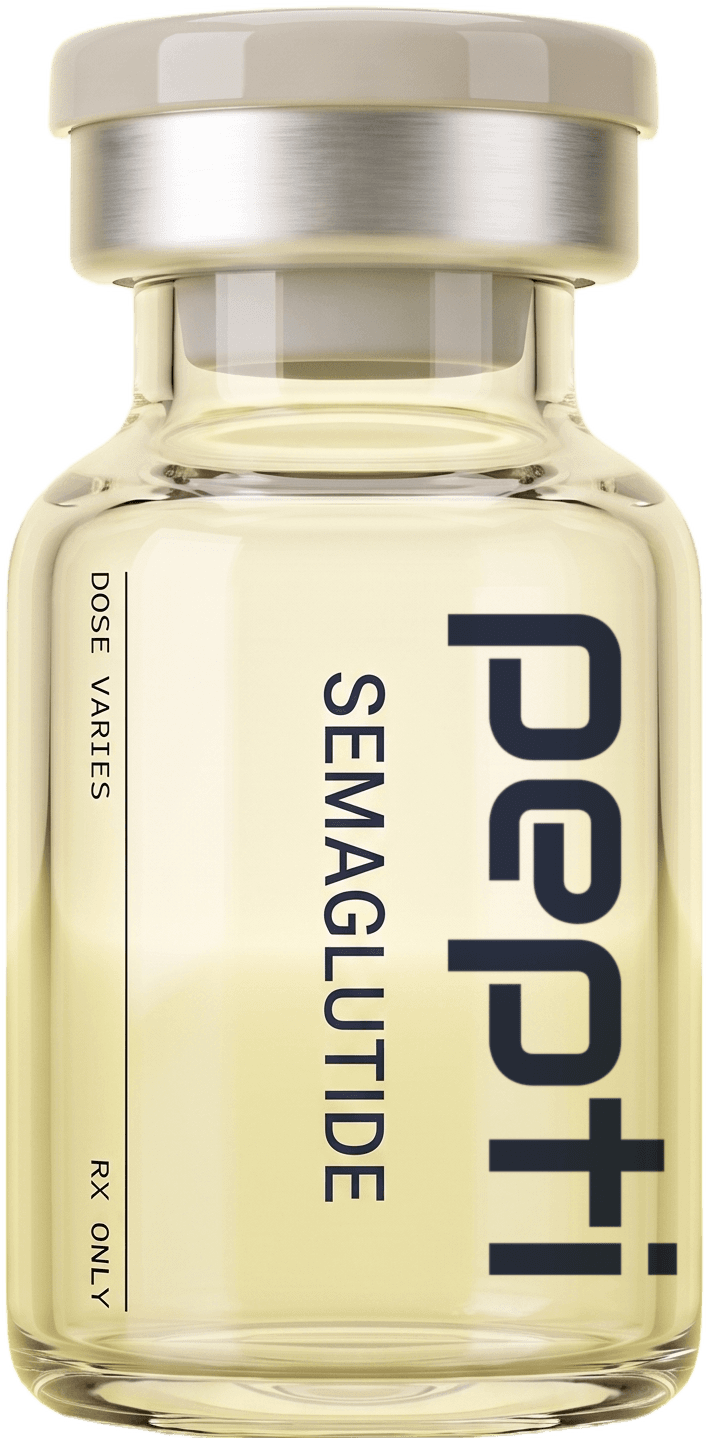
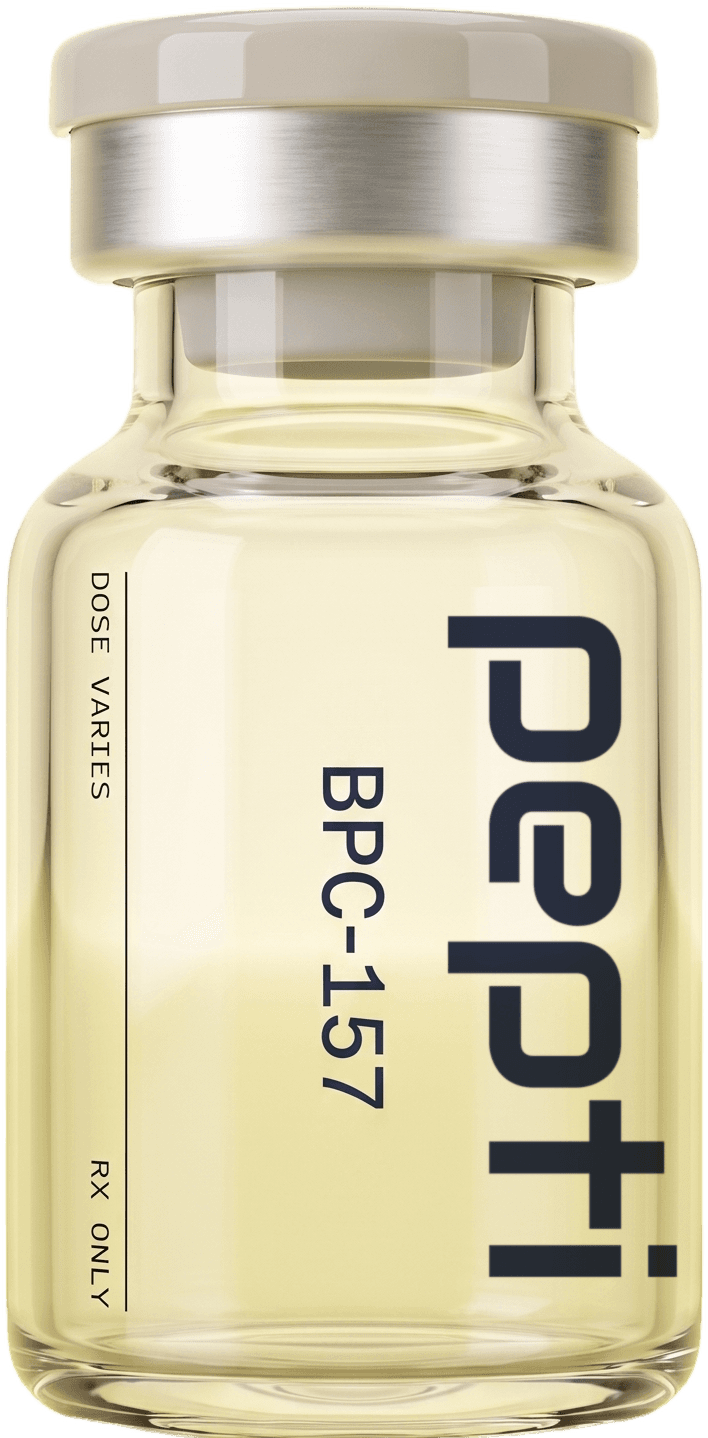
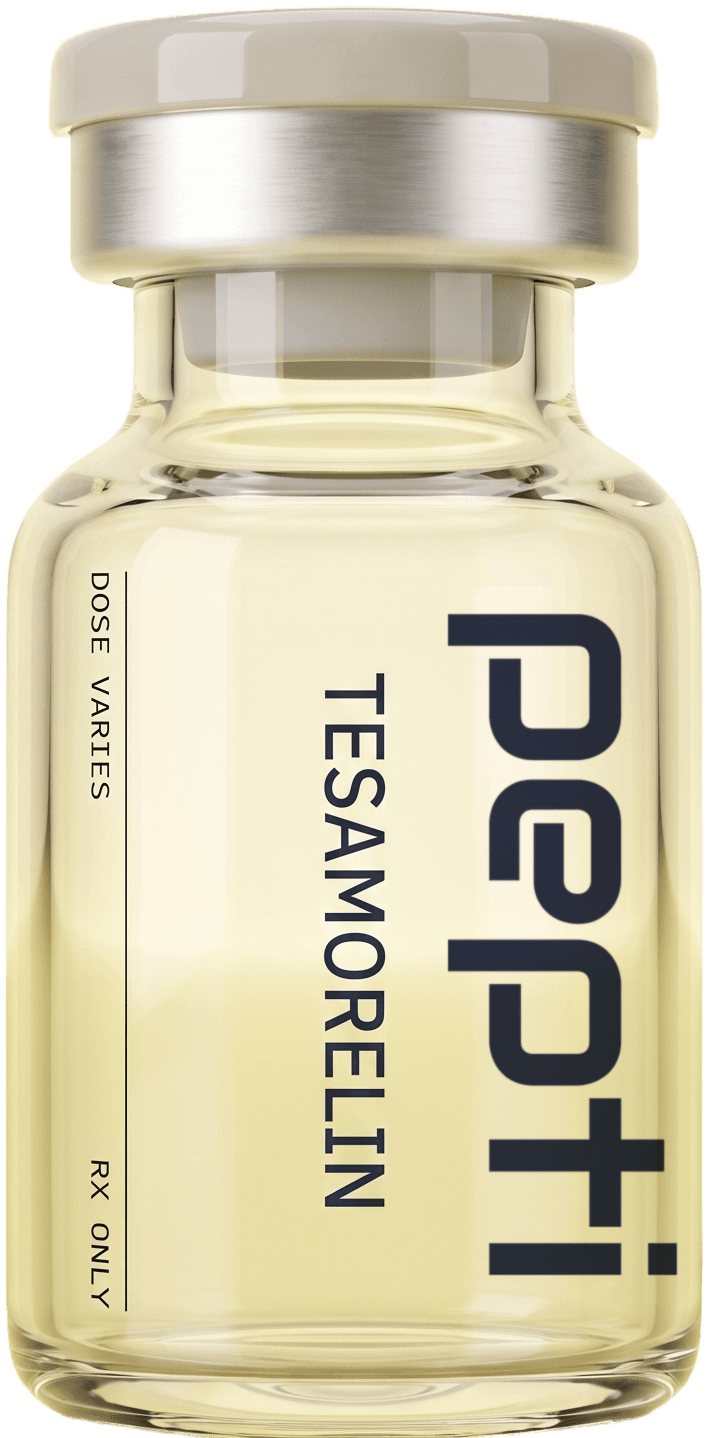
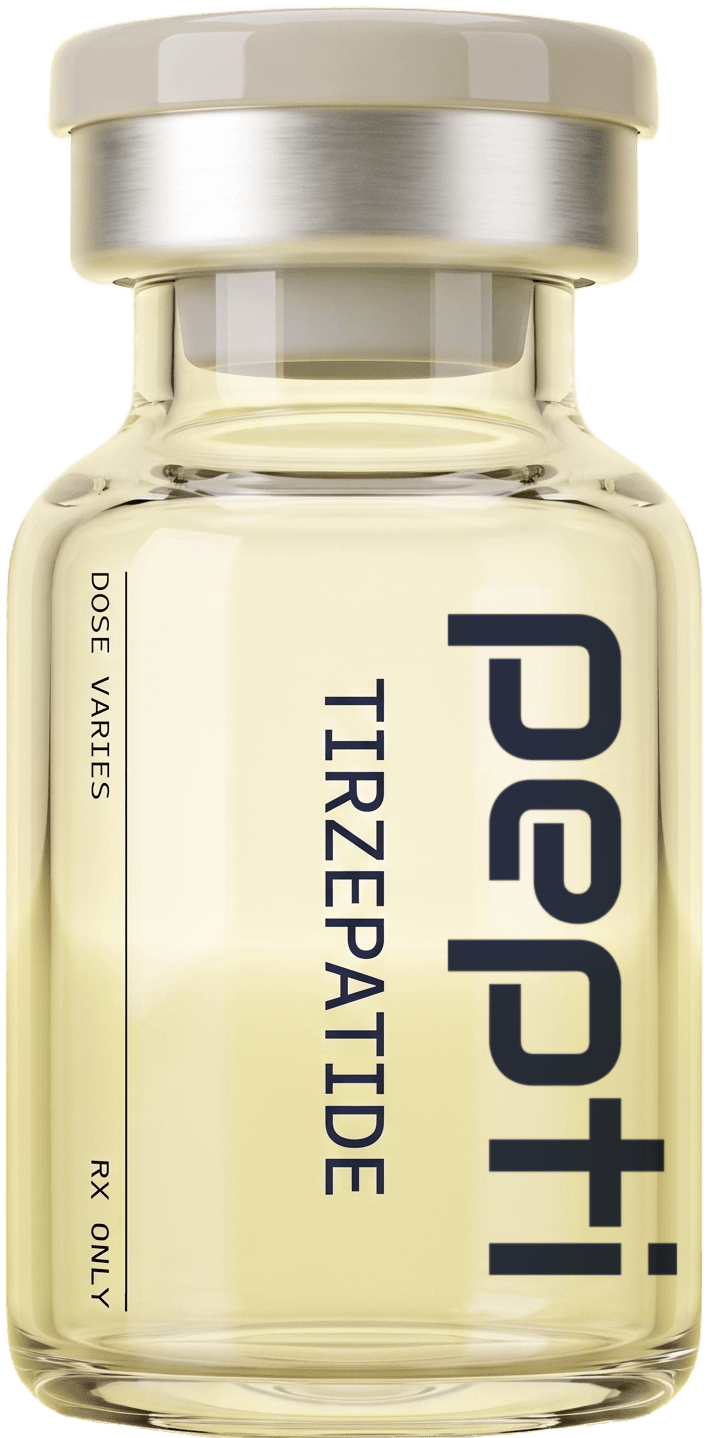
Almost every Pepti vial is sized to last about four weeks at the dose printed on it, which is why refills run every 28 days, one vial at a time. How many doses that is depends on the schedule: a Monday-to-Friday peptide is 20 doses, a three-times-weekly injection is 12, and a once-weekly medication like tirzepatide or semaglutide is 4. How much you draw each time is printed on the vial in two forms, millilitres and units on a U-100 insulin syringe, and on that syringe 100 units is 1 mL, so 0.25 mL is 25 units. The milligram figure on the label is how much medication is in the vial or in each weekly dose, not how much you draw.
This page explains what each number on the label means, how to work out what a vial holds, why the schedules differ, and gives a table of real directions from the Pepti catalogue, followed by the questions people ask most.
How Long Does a Peptide Vial Last? Units, mL, mg and Doses per Vial Explained
The short answer
| Schedule on the label | Doses per vial | How long it lasts | Example | Price |
|---|---|---|---|---|
| Monday through Friday | 20 | About 4 weeks | Tesamorelin, 0.25 mL (25 units) at bedtime | $249/mo |
| Once daily, as directed | 27 | About 4 weeks | BPC-157, 0.18 mL (18 units) | $209/mo |
| Three times per week | 12 | About 4 weeks | NAD+ Injection, 0.83 mL (83 units) | $249/mo |
| Once weekly | 4 | 4 weeks | Tirzepatide, 0.50 mL (50 units) | From $159/mo |
| As needed, with a monthly limit | 10 | Depends on use | PT-141, 0.50 mL (50 units), no more than 4 doses per month | $259/mo |
Every price is all-in, covering medication, physician review, refill management and shipping, with no separate membership fee. Your own dose and schedule are the ones printed on your vial.
How Long Does a Peptide Vial Last? Units, mL, mg and Doses per Vial Explained
The three numbers on a vial label
A typical direction reads: inject 0.25 mL, which is 25 units on a U-100 insulin syringe, subcutaneously, on the stated days. Prescriptions are written in millilitres and insulin syringes are marked in units, so the same amount is written twice. The label also carries the concentration and the total contents.
| What the label shows | Example | What it tells you |
|---|---|---|
| Total contents | 10 mg per 5 mL | How much medication is in the whole vial, and roughly how many doses it holds |
| Concentration | 2 mg/mL | How much medication is in each millilitre |
| The directions, in mL and units | 0.25 mL (25 units) Monday through Friday | How much to draw, and when |
mL and units: the same amount, two scales
U-100 is a concentration standard, not a syringe size: 100 units per millilitre. Every insulin syringe sold in the US for U-100 use is marked on that basis, so the conversion never changes. Move the decimal two places:
| Directions in mL | On a U-100 syringe |
|---|---|
| 0.10 mL | 10 units |
| 0.18 mL | 18 units |
| 0.25 mL | 25 units |
| 0.50 mL | 50 units |
| 0.83 mL | 83 units |
| 1.0 mL | 100 units, the whole barrel |
A "unit" here is a volume mark on a barrel, not a measure of potency. Two people drawing 25 units of different medications are drawing the same volume and very different amounts of medication. Some directions exceed a 1 mL barrel altogether, such as methylcobalamin at 1.25 mL (125 units), and those are supplied with an appropriate syringe, usually marked in millilitres. If what arrived does not match what your label asks you to measure, do not improvise with two draws; message your care team.
mg: what is in the vial, not what you draw
Concentration is what turns your volume into a quantity of medication. A 1 mg/mL vial delivers 1 mg in a full millilitre, so 0.25 mL of it delivers 250 mcg. That arithmetic is a sanity check, not a way to set a dose. If your label says 1 mg/mL, your directions say 0.25 mL, and someone tells you that you are taking 2.5 mg, one of you is wrong, and it is worth a message to your care team.
This is where most confusion comes from. A vial labelled 10 mg is not a 10 mg dose. A 5 mL vial holding 10 mg at 2 mg/mL, drawn at 0.25 mL, is 20 doses.
How Long Does a Peptide Vial Last? Units, mL, mg and Doses per Vial Explained
How to work out doses per vial
Divide the vial volume by the volume of one dose. That is the whole calculation.
| Vial volume | Dose volume | Doses | At this schedule | Lasts |
|---|---|---|---|---|
| 5 mL | 0.25 mL | 20 | Monday through Friday | About 4 weeks |
| 10 mL | 0.50 mL | 20 | Monday through Friday | About 4 weeks |
| 10 mL | 0.83 mL | 12 | Three times per week | About 4 weeks |
| 5 mL | 0.41 mL | 12 | Three times per week | About 4 weeks |
| 2 mL | 0.50 mL | 4 | Once weekly | 4 weeks |
| 5 mL | 1.25 mL | 4 | Once weekly | 4 weeks |
Then divide doses by how many you take a week. Twenty weekday doses at five a week is four weeks. Twelve doses at three a week is four weeks. Four doses at one a week is four weeks. The vials are built so the answer comes out the same.
Why a higher strength does not mean more doses
When a product comes in more than one strength, the vial is usually the same volume with more peptide in it, so the dose volume and the number of doses per vial do not change. AOD-9604, for example, comes as 10 mg or 15 mg in 5 mL, both drawn at 0.25 mL, both 20 doses. A higher strength delivers more medication in the same draw.
How Long Does a Peptide Vial Last? Units, mL, mg and Doses per Vial Explained
Real examples from the catalogue
These are the standard directions and doses per vial for twelve Pepti products. Your own directions are printed on your vial and are the ones that apply.
| Product | Vial | Directions | Doses per vial |
|---|---|---|---|
| Tirzepatide, any strength | 2 mL, dose-specific | Inject 0.50 mL (50 units) subcutaneously once weekly | 4 |
| Semaglutide, 0.25 mg strength | 1 mL, 1 mg/mL | Inject 0.25 mL (25 units) subcutaneously once weekly | 4 |
| BPC-157 | 5 mL, 1 mg/mL | Inject 0.18 mL (18 units) subcutaneously once daily as directed | 27 |
| BPC-157 + TB-500 | 5 mL | Inject 0.25 mL (25 units) subcutaneously Monday through Friday mornings | 20 |
| CJC-1295 / Ipamorelin | 5 mL | Inject 0.25 mL (25 units) subcutaneously once daily Monday through Friday on an empty stomach | 20 |
| Tesamorelin | 5 mL, 2 mg/mL | Inject 0.25 mL (25 units) subcutaneously Monday through Friday nights at bedtime | 20 |
| MOTS-c | 5 mL, 2 mg/mL | Inject 0.25 mL (25 units) subcutaneously Monday through Friday mornings | 20 |
| L-Carnitine | 10 mL | Inject 0.50 mL (50 units) intramuscularly once daily Monday through Friday | 20 |
| NAD+ Injection | 10 mL, 100 mg/mL | Inject 0.83 mL (83 units) subcutaneously three times per week | 12 |
| Glutathione | 5 mL, 200 mg/mL | Inject 0.41 mL (41 units) subcutaneously three times per week | 12 |
| Methylcobalamin | 5 mL, 2 mg/mL | Inject 1.25 mL (125 units) intramuscularly once weekly | 4 |
| PT-141 | 5 mL, 2 mg/mL | Inject 0.50 mL (50 units) subcutaneously 2 to 4 hours prior to sexual activity, no more than 4 doses per month | 10 |
Step-by-step pages for several of these: tirzepatide, semaglutide, BPC-157, tesamorelin, MOTS-c and NAD+.
How Long Does a Peptide Vial Last? Units, mL, mg and Doses per Vial Explained
Why the schedules differ
Monday through Friday
Most peptides on the site are directed once a day on weekdays, with weekends off. For most of them the five-days-on, two-days-off pattern is a prescribing convention rather than something derived from trials; it is common across peptide protocols and gives injection sites a rest. For the growth-hormone-axis peptides, two nights off is how prescribers describe keeping the pituitary responsive. Timing varies by product: tesamorelin, ipamorelin and the GH-axis blends at bedtime, MOTS-c and the repair blends in the morning, CJC-1295 / Ipamorelin on an empty stomach.
Three times per week
NAD+ and glutathione are larger-volume injections given three times a week. The spacing is in your directions. With NAD+, prescribers advise injecting slowly, because the flushing and nausea some people feel during the injection track with how fast it enters the circulation.
Once weekly
Tirzepatide and semaglutide are once-weekly injections on the same day each week. Their vials are dose-specific: each strength is concentrated so that one weekly dose is a single draw. That is why "is 15 mg weekly or the whole vial?" has a clear answer. The 15 mg tirzepatide vial holds 60 mg in 2 mL at 30 mg/mL; each 0.50 mL draw is the 15 mg weekly dose, and the vial holds four of them. The same 0.50 mL draw applies at every tirzepatide strength, so when the dose changes, the vial changes and the line you draw to does not.
Semaglutide is different in one way: the draw volume varies by strength, from 0.25 mL at the 0.25 mg strength to 0.68 mL at 1.7 mg. Because concentration differs between vials, the units for one strength are not the units for another. Never carry a number over from a previous fill; read the new label.
As needed
Intramuscular directions
Most directions say subcutaneously, into the fat layer. L-carnitine and methylcobalamin are directed intramuscularly, into the muscle, which means a different depth, angle and usually a different needle. The pharmacy supplies the right one. See how to inject peptides safely.
How Long Does a Peptide Vial Last? Units, mL, mg and Doses per Vial Explained
Why refills run every 28 days
Four weeks of doses per vial maps directly onto a 28-day refill. Pepti dispenses one vial per fill, always. That is a storage decision as much as a clinical one: a single vial covering roughly a month is an object you can keep in one place and keep in date. A stockpile of vials with different fill dates in a shared refrigerator is how in-use dates get lost.
The vial also carries a beyond-use date, assigned by the pharmacy that prepared it and printed on the label. Beyond-use dating runs from first puncture. Treatment here is long-term, so the question is never "how long can I make this vial last." It is "is this vial still within its date and its conditions." Write the first-use date on the carton the day you first puncture the stopper. More is in how to store peptides.
What about a pen?
Some products also come as a pre-filled pen cartridge that doses by dial, with no draw and no unit conversion. A cartridge typically covers four to five weeks at the prescribed dose, so a fresh one ships about every 28 days. Tirzepatide is supplied as a vial only. The comparison is in vial vs pen.
How Long Does a Peptide Vial Last? Units, mL, mg and Doses per Vial Explained
When the numbers do not add up
| What you notice | What it usually means | What to do |
|---|---|---|
| The directions and the syringe markings seem to disagree | A unit and millilitre mix-up, the most consequential error in this category | Do not dose. Message your care team |
| A new fill has a different number of units | The strength or concentration changed | Read the new label; never reuse the old number |
| The vial runs short before your refill | Something in the draw or the fill needs checking | Message your care team; do not adjust anything yourself |
| You missed a dose | A single missed weekday dose is a small event | Follow your directions; do not take two doses to make up one |
Bubbles matter more than people expect. If 3 units of your 25 are a bubble, you have drawn 22 units of medication and read 25. Read the flat front edge of the plunger tip against the marking with the syringe vertical at eye level. Taking two doses to make up one missed dose is the commonest self-directed error after the unit conversion. For the weekly medications, missed doses are covered in what if I miss a dose of tirzepatide.
References
What this is based on.
References
- Chang CH, Tsai WC, Hsu YH, Pang JH. Pentadecapeptide BPC 157 enhances the growth hormone receptor expression in tendon fibroblasts · Molecules (2014) · PMID 25415472
- Krivic A, Anic T, Seiwerth S, et al.. Achilles detachment of rat and stable gastric pentadecapeptide BPC 157 · Journal of Orthopaedic Research (2006) · PMID 16583442
- Sikiric P, Seiwerth S, Rucman R, et al.. Stable gastric pentadecapeptide BPC 157: novel therapy in gastrointestinal tract · Current Pharmaceutical Design (2011) · PMID 21548867
- Cerovecki T, Bojanic I, Brcic L, Radic B, et al.. Pentadecapeptide BPC 157 (PL 14736) improves ligament healing in the rat · J Orthop Res (2010) · PMID 20225319
- Sikiric P, Seiwerth S, Rucman R, Turkovic B, et al.. Stable gastric pentadecapeptide BPC 157-NO-system relation · Curr Pharm Des (2014) · PMID 23755725
- Cox HD, Miller GD, Eichner D. Detection and in vitro metabolism of the confiscated peptides BPC 157 and MGF R23H · Drug Test Anal (2017) · PMID 28035768
- Thomas A, Görgens C, Guddat S et al.. Simplifying and expanding the screening for peptides <2 kDa by direct urine injection, liquid chromatography, and ion mobility mass spectrometry · J Sep Sci (2016) · PMID 26578461
- Farrar JT, Young JP Jr, LaMoreaux L, Werth JL et al.. Clinical importance of changes in chronic pain intensity measured on an 11-point numerical pain rating scale · Pain (2001) · PMID 11690728
- Meyer JD, Ho B, Manning MC. Effects of conformation on the chemical stability of pharmaceutically relevant polypeptides · Pharm Biotechnol (2002) · PMID 11987755
- Xu C, Sun L, Ren F, Huang P, et al.. Preclinical Safety Evaluation of Body Protective Compound-157, a Potential Drug for Treating Various Wounds · Regul Toxicol Pharmacol (2020) · PMID 32334036
- He L, Feng D, Guo H, et al.. Pharmacokinetics, distribution, metabolism, and excretion of body-protective compound 157, a potential drug for treating various wounds, in rats and dogs · Front Pharmacol (2022) · PMID 36588717
- Lee E, Padgett B. Intra-Articular Injection of BPC 157 for Multiple Types of Knee Pain · Altern Ther Health Med (2021) · PMID 34324435
Citations are provided for educational purposes. They do not constitute medical advice. Always discuss any peptide protocol with your prescribing physician.
Common questions
How Long Does a Peptide Vial Last? Units, mL, mg and Doses per Vial Explained, answered.
About four weeks for almost every Pepti product, at the directions printed on the vial. A Monday-to-Friday peptide is 20 doses, a three-times-weekly injection is 12, and a once-weekly medication is 4.
The number printed on your vial. Directions are written in both millilitres and units on a U-100 insulin syringe; the most common is 0.25 mL, which is 25 units. Your physician sets your directions after reviewing your intake.
Weekly. The 15 mg vial holds 60 mg in 2 mL, and each 0.50 mL (50 units) draw is one 15 mg weekly dose. The vial holds four of them, which covers four weeks.
0.25 mL. On a U-100 insulin syringe, 100 units is 1 mL, so move the decimal two places.
At 0.25 mL per dose, 20. At 0.41 mL, 12. Divide the vial volume by the dose volume on your label.
Four, at 0.50 mL per dose once weekly, which is four weeks.
Because each semaglutide strength is a separate vial at its own concentration, and the draw volume differs between strengths, from 0.25 mL at 0.25 mg to 0.68 mL at 1.7 mg. Always read the new label.
There are 2 mg of medication in each millilitre. A 5 mL vial at 2 mg/mL holds 10 mg in total, and a 0.25 mL dose from it delivers 0.5 mg.
No. Take the dose printed on the vial, on the schedule printed on the vial. A vial also has a beyond-use date from first puncture, so stretching it is not an option. Refills run every 28 days.
Pepti dispenses one vial per 28-day fill. If travel or timing is going to be awkward, ask your care team to time the refill around it.
Message your care team rather than adjusting anything yourself. Drawing at a table in good light, clearing bubbles, and reading the plunger tip at eye level keep each draw matched to the label.
No. Bloodwork is not required for any Pepti treatment. If your physician wants labs for your care, they'll ask through your account. The free assessment goes to a physician licensed in your state. A consultation does not guarantee a prescription.
Next step
See what a physician recommends for you.
A licensed physician in your state reviews your intake and decides what is appropriate. A consultation does not guarantee a prescription.