Weight Loss · Reference
Which Peptides Need Refrigeration? Every Product, Warm Deliveries and Travel
This page lists what each product's reference page says about storage, the handling notes that differ between products, what to do after a temperature problem, how the cold shipment works, what a beyond-use date is, and how to travel with a refrigerated injectable.
Medically reviewed by Dr. Gene, MD · November 4, 2026
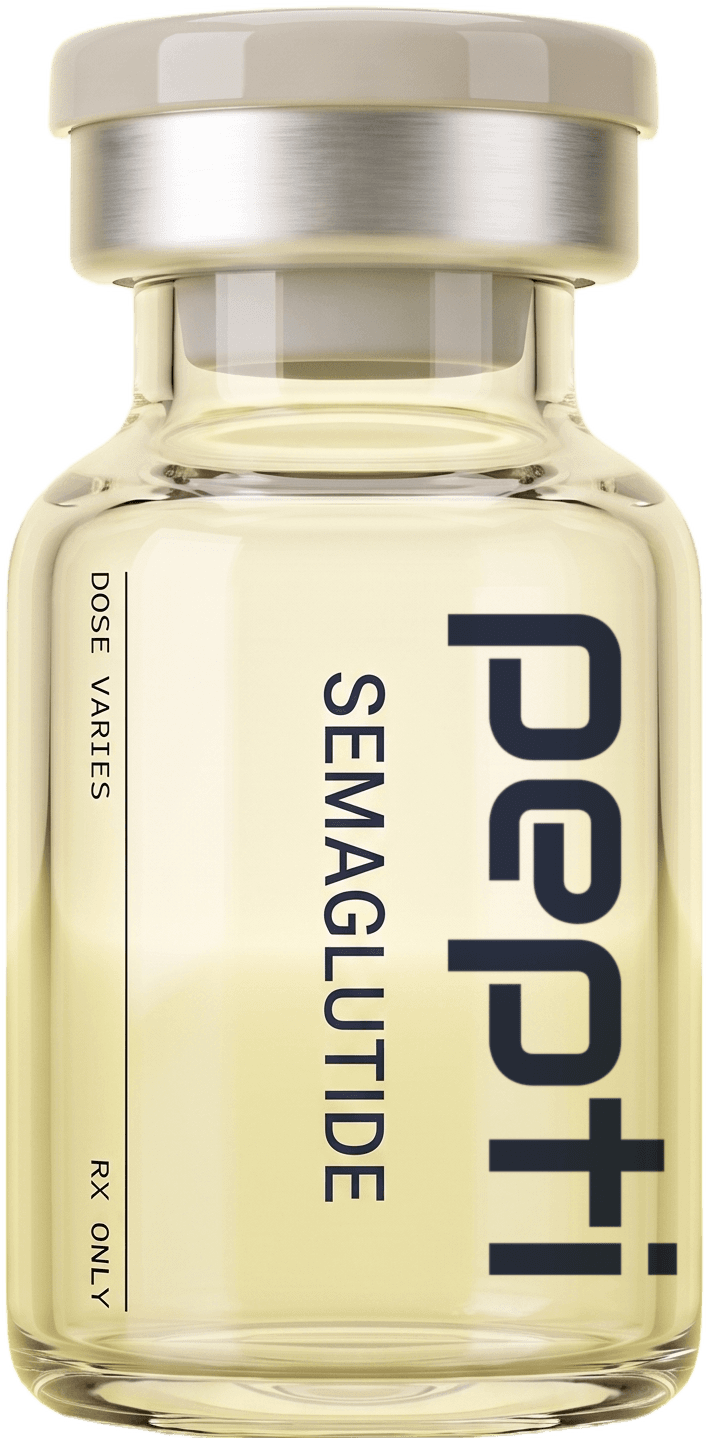
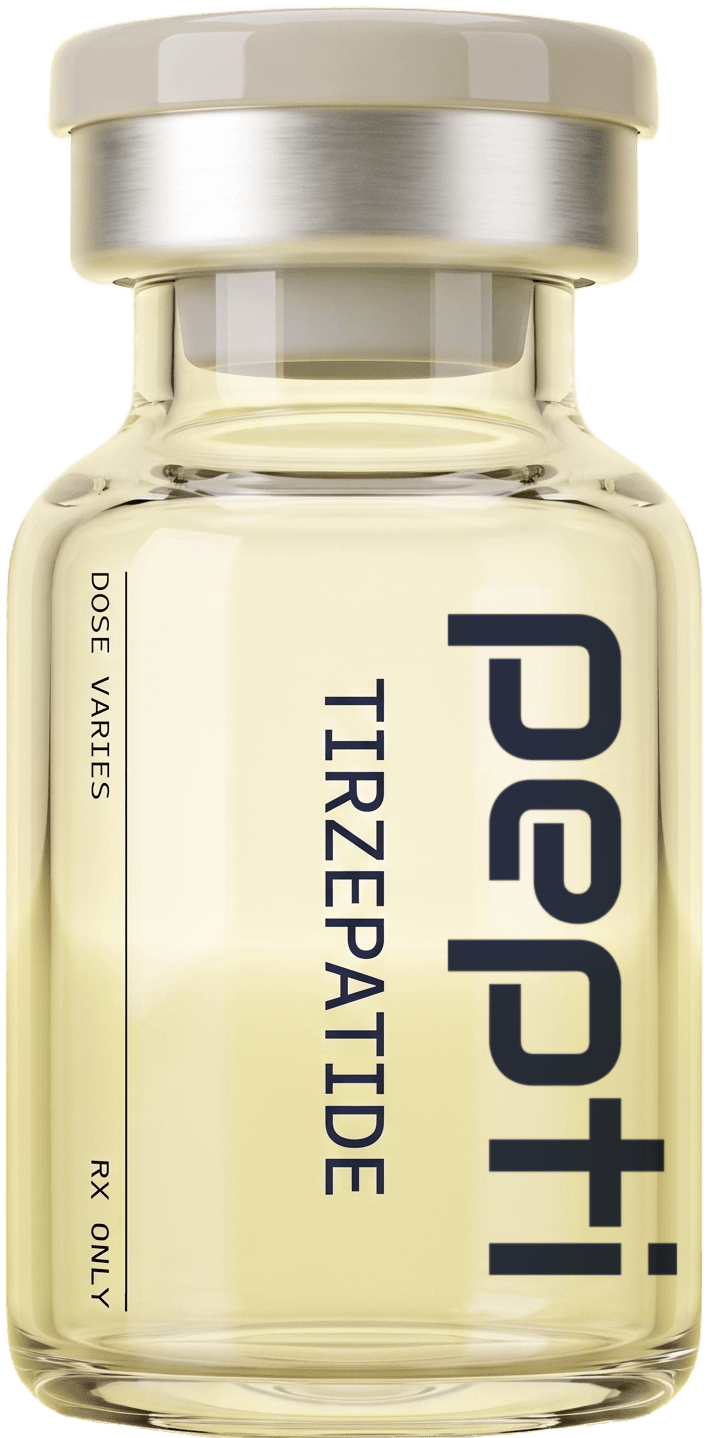
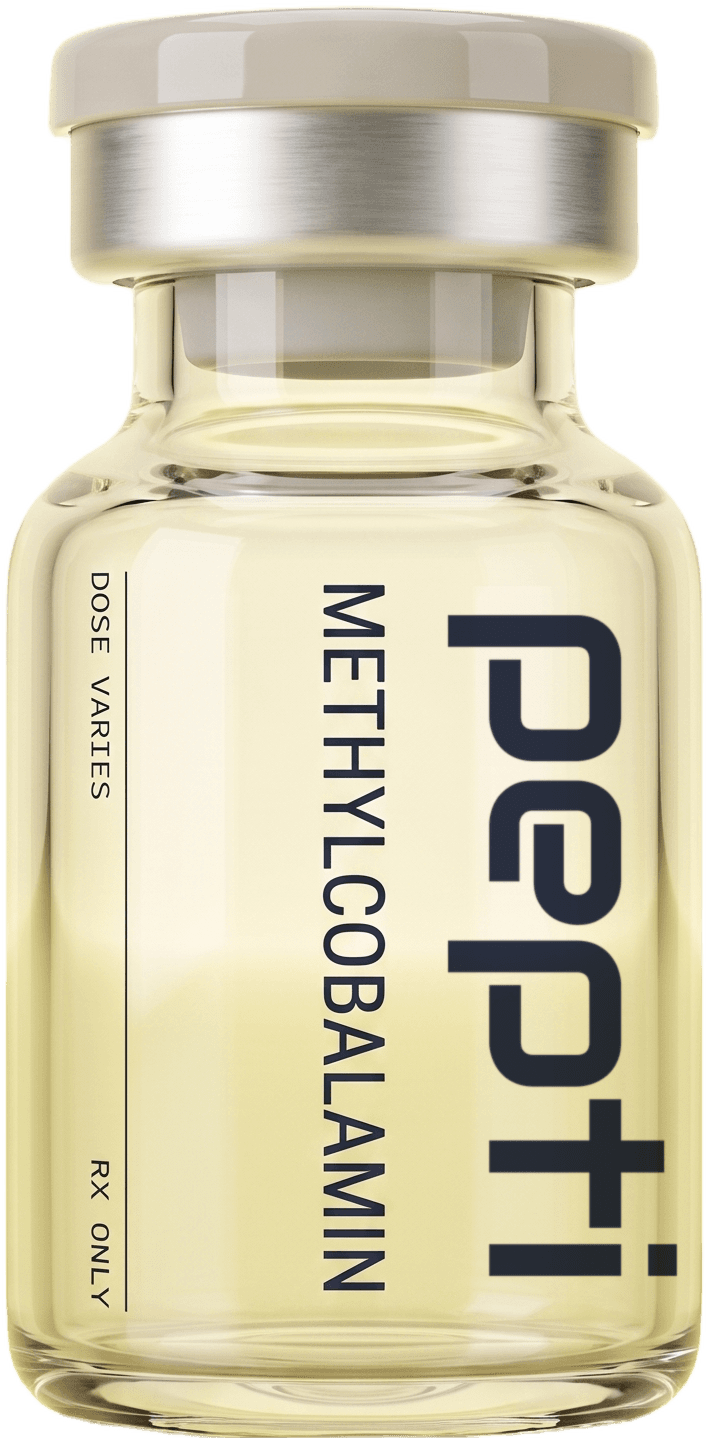
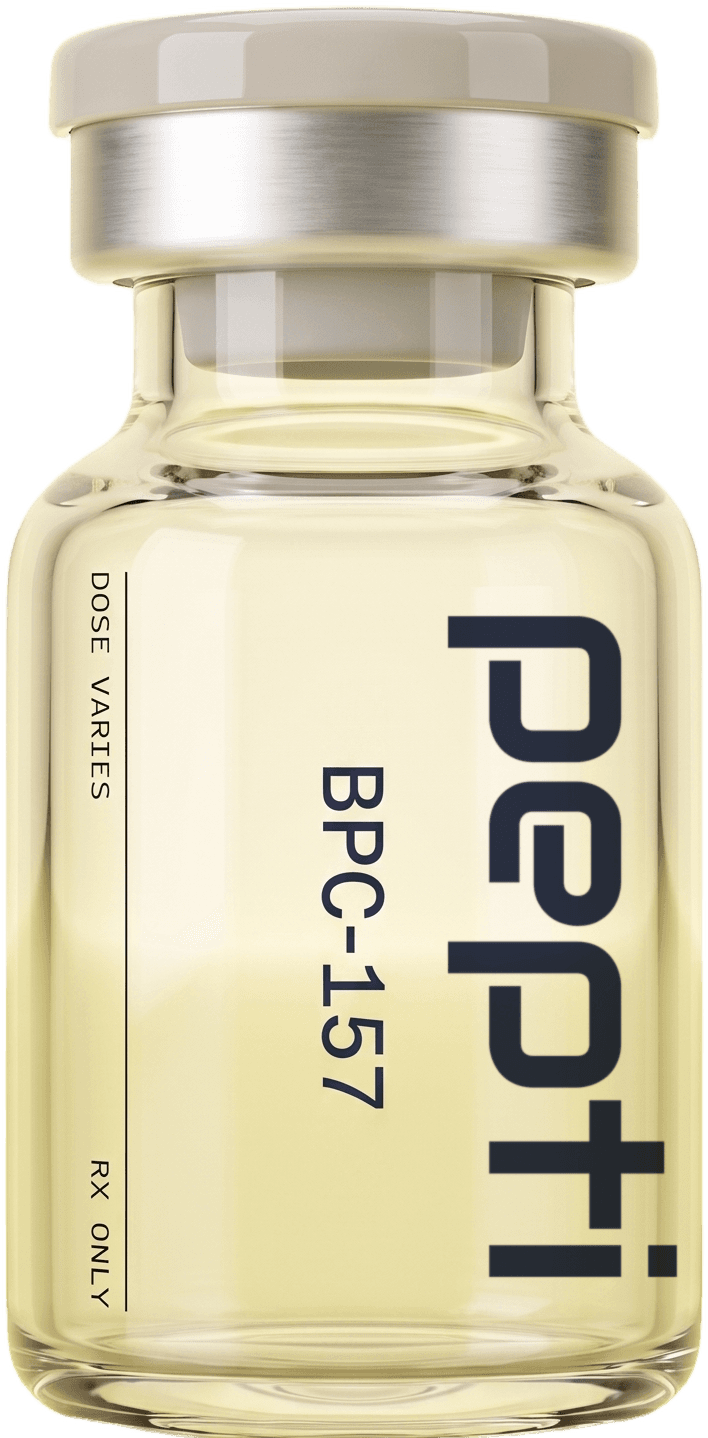
Every injectable peptide Pepti prescribes is a refrigerated medication: it ships cold in insulated packaging with ice packs, and it goes straight into the refrigerator when it arrives. That covers the single peptides, the multi-peptide blends, semaglutide and tirzepatide, NAD+ and the vitamin injections, with one exception: methylcobalamin is stored at the temperature printed on its label, in its carton, out of light. Each vial carries a beyond-use date that runs from first puncture, and the storage line on your pharmacy label is the rule for your preparation. If a vial was left out or arrived warm, do not use it and do not guess: photograph it and message your care team.
This page lists what each product's reference page says about storage, the handling notes that differ between products, what to do after a temperature problem, how the cold shipment works, what a beyond-use date is, and how to travel with a refrigerated injectable.
Which Peptides Need Refrigeration? Every Product, Warm Deliveries and Travel
The short answer
| Question | Answer |
|---|---|
| Which Pepti products are refrigerated? | Every injectable in the catalogue, including the GLP-1s, the blends, NAD+, glutathione and L-carnitine. Methylcobalamin is stored at the temperature on its label |
| How do they ship? | Refrigerated, in insulated packaging with ice packs, with sterile syringes and alcohol prep pads in the box |
| How long can a vial be used? | Until the beyond-use date on the label, which runs from first puncture |
| Can I freeze a vial to make it last? | No. Many labels say do not freeze, and a frozen vial should not be used |
| What if a vial was left out overnight? | Do not use it. Message your care team with how long it was out |
| What if a shipment arrives warm? | Do not use it. Photograph the box, the ice packs and the vial, and message your care team |
| Where does the rule for my vial come from? | The storage line and beyond-use date printed on your pharmacy label |
Every price below is the all-in monthly price, covering medication, physician review, refill management and shipping, with no membership fee. Pepti is cash-pay and does not bill insurance.
Which Peptides Need Refrigeration? Every Product, Warm Deliveries and Travel
Why peptide solutions are kept cold
A peptide is a short chain of amino acids, and in solution it is exposed to the chemistry that breaks chains down: hydrolysis, oxidation, deamidation, aggregation and sticking to container surfaces. The rate of all of these rises with temperature, which is why refrigeration is the standard for compounded peptide solutions and heat is the thing to avoid. Light is a second stress, and freezing is a third: ice formation concentrates everything that is not water into a shrinking liquid fraction and creates a surface at which peptides can unfold and clump. That is why "do not freeze" appears on so many injectable labels.
The harder part is that degradation is often invisible. Potency loss does not change how a vial looks, and there is no home test for it. The storage line and the beyond-use date exist because "it looks fine" cannot answer the question. More detail is in how to store peptides.
Which Peptides Need Refrigeration? Every Product, Warm Deliveries and Travel
Which products are refrigerated
Every row below comes from the Storage section of that product's reference page. Where a page adds a specific handling note, it is in the right-hand column. Your own label governs if it says something different.
Single peptides
Product Storage Extra handling noted Price BPC-157 Refrigerated None beyond the label $209/mo TB-500 Refrigerated Do not freeze $209/mo KPV Refrigerated Once punctured, keep in the refrigerator between doses $229/mo GHK-Cu Refrigerated A marked colour change is a reason to call the pharmacy rather than inject $239/mo AOD-9604 Refrigerated Its tendency to aggregate if mishandled is why the storage directions matter $229/mo Adipotide Refrigerated Do not freeze $239/mo ARA-290 Refrigerated Stable in the vial when kept cold $219/mo FOXO4-DRI Refrigerated Handled as a refrigerated multi-dose vial $229/mo Hexarelin Refrigerated None beyond the label $209/mo Ipamorelin Refrigerated None beyond the label $239/mo Sermorelin Refrigerated None beyond the label $229/mo Tesamorelin Refrigerated Do not shake the vial $249/mo IGF-1 LR3 Refrigerated Keep out of the freezer and out of light $259/mo MOTS-c Refrigerated Keep in the fridge between doses and out of light $259/mo SS-31 Refrigerated The pharmacy's dating governs, not the molecule's reputation for stability $249/mo Epithalon Refrigerated The FDA briefing noted it is stable for only days at fridge temperature once reconstituted, so the label date governs $249/mo Thymosin Alpha-1 Refrigerated None beyond the label $249/mo Thymalin Refrigerated Keep cold, out of light, do not freeze $209/mo Semax Refrigerated Keep in the fridge between doses rather than on the counter $229/mo Selank Refrigerated Out of light, do not freeze, do not shake $229/mo Dihexa Refrigerated Out of light, do not freeze $219/mo PE-22-28 Refrigerated Keep upright, do not freeze $219/mo DSIP Refrigerated Do not freeze $249/mo 5-Amino-1MQ Refrigerated Keep upright, do not freeze $219/mo SLU-PP-332 Refrigerated Do not freeze $229/mo PT-141 Refrigerated A vial may sit for weeks between uses, so watch the date $259/mo Kisspeptin Refrigerated Sensitive to heat, light and temperature swings $229/mo Oxytocin Refrigerated Heat degrades it, so it goes back in the fridge after each draw $239/mo Melanotan II Refrigerated A fresh sterile syringe every time $249/mo Blends and two-peptide vials
Product Storage Extra handling noted Price BPC-157 + TB-500 Refrigerated None beyond the label $259/mo KLOW Refrigerated Not something to keep past the label date $259/mo GLOW Refrigerated Not something to keep past the label date $259/mo CJC-1295 / Ipamorelin Refrigerated None beyond the label $239/mo Ipamorelin + Sermorelin Refrigerated Not something to keep past the label date $219/mo Tesamorelin + Ipamorelin Refrigerated Do not shake the vial $259/mo Semax + Selank Refrigerated Out of light, do not freeze, do not shake $259/mo PT-141 + Oxytocin Refrigerated Keep in the fridge between uses, do not freeze $259/mo ELEVATE Refrigerated Do not freeze, do not shake $249/mo SERENITY Refrigerated Do not freeze, do not shake $279/mo EUPHORIA Refrigerated Kisspeptin-10 is sensitive to heat, light and temperature swings $279/mo ASCEND, ETERNAL, FORTIFY, FUSION, PHYSIQ, RADIANCE, REVIVE, SHRED, SYNAPSE, TITAN Refrigerated A multi-peptide vial is not something to keep past the label date $249 to $289/mo GLP-1s, NAD+ and vitamin injections
Product Storage Extra handling noted Price Semaglutide Refrigerated A vial that has frozen should not be used From $99/mo Tirzepatide Refrigerated Keep in the refrigerator between weekly doses; do not freeze From $159/mo NAD+ Injection Refrigerated Degrades with heat, alkaline pH and light, so keep it cold and out of light $249/mo NAD+ Injection (500 mg) Refrigerated Degrades with light, moisture and room temperature $229/mo Glutathione Refrigerated Oxidises on exposure to air, so it stays cold and capped $199/mo L-Carnitine Refrigerated Do not freeze $219/mo Lipo-B Refrigerated B12 is light-sensitive; keep it in its carton $209/mo Lipo-Mino-Mix-C Refrigerated B vitamins degrade with light; keep in the carton and check the date before each dose $209/mo Methylcobalamin At the temperature printed on the label Light-sensitive: keep in its carton, out of direct light $229/mo The pattern is simple: if it is a Pepti injectable, assume refrigerated until your label tells you otherwise, and read the label to find out whether it also says out of light, do not freeze or do not shake.
Which Peptides Need Refrigeration? Every Product, Warm Deliveries and Travel
What "refrigerated" means at home
Refrigerated storage is a defined range, and your label states it. A food refrigerator is not automatically inside it everywhere: the back wall runs coldest and is where accidental freezing happens, and the door is the warmest and swings every time it opens.
| Do | Why |
|---|---|
| Keep the vial on a middle shelf, in the main body | Away from the freezing back wall and the warm door |
| Leave it in its carton | The carton is the light protection |
| Keep it upright | Several product labels say so |
| Take it out, draw the dose, put it back | Time on the counter adds up across a 28-day supply |
| Keep a cheap refrigerator thermometer | It turns "I think it is fine" into a fact |
| Write the first-use date on the carton | Beyond-use dating runs from first puncture |
| Never pack a vial against a frozen gel pack with nothing between | Direct contact is how vials freeze in transit and in coolers |
Do not shake a vial whose label says not to. Peptide solutions are generally rolled gently rather than shaken, because shaking whips air into the solution and makes the next draws harder to read.
Which Peptides Need Refrigeration? Every Product, Warm Deliveries and Travel
If a vial was left out
The reference pages are consistent: a vial outside its labelled conditions is not covered by its printed date, and the response is to report it rather than to judge it. The Lipo-B page puts it directly: a vial that has been out of the fridge for an extended period, or that has changed colour or gone cloudy, should not be used.
None of the product pages gives a number of minutes or hours that is acceptable outside the fridge, and this page will not invent one. If a vial was left on the counter overnight, in a bag, or in a car, do this:
- Do not dose from it.
- Put it back in the refrigerator so the situation does not get worse.
- Message your care team with an honest estimate of how long it was out and roughly how warm it was.
- Keep the vial until you are told what to do with it.
The same applies to a power cut or a refrigerator failure. An unknown temperature history is outside the conditions the date assumes, which makes it a question for your care team rather than a judgement to make by looking through glass.
Which Peptides Need Refrigeration? Every Product, Warm Deliveries and Travel
If a shipment arrives warm
Pepti vials ship refrigerated, in insulated packaging with ice packs. The packaging is sized for transit, not for an afternoon on a doorstep, and delays happen: a missed handoff, a weather hold, a box left in the sun.
| Step | What to do |
|---|---|
| 1 | Do not use the vial |
| 2 | Before unpacking further, photograph the outer box, the insulation, the ice packs and the vial |
| 3 | Note when it was delivered and how long it likely sat outside |
| 4 | Message your care team with the photographs and the timeline |
| 5 | Keep the vial and the packaging until you are told otherwise |
That report is what triggers a replacement and a ticket to the pharmacy. The photographs matter because they are the only record of how the package arrived. If you will be away when a refill is due, say so before it ships rather than after. What else is in the box is covered in do peptides come pre-mixed.
Softened ice packs on their own do not tell you the vial is ruined, and a cold vial does not prove it was cold the whole way. That is exactly why the decision sits with the care team and the pharmacy, who know the preparation and the shipment, and not with you at the front door.
Which Peptides Need Refrigeration? Every Product, Warm Deliveries and Travel
Beyond-use dates, from first puncture
Every compounded preparation carries a beyond-use date assigned by the pharmacy that made it. The FDA defines it as "the date beyond which a drug product should not be used." It is not the same as a manufacturer's expiry date, which comes from a stability programme reviewed at approval. A beyond-use date is a conservative limit assigned under the United States Pharmacopeia standards for compounding; for a sterile injectable, that is USP Chapter 797.
For a multi-dose vial, the clock that matters runs from first puncture. That is why the reference pages for nearly every product say "beyond-use dating runs from first puncture and is on the label," and why writing the date on the carton the day you first pierce the stopper is worth doing.
Three things follow:
- You cannot extend the date by refrigerating harder, by freezing, or by reasoning that the vial looks fine.
- A vial is discarded at its date regardless of how much is left. The methylcobalamin page says so explicitly.
- The date assumes the storage line was followed. A vial that has been warm is not covered by it, whatever it says.
Pepti dispenses one vial per fill, with refills every 28 days, and almost every vial is sized to last about four weeks at the printed dose. That keeps one in-date container in your refrigerator rather than a shelf of vials with different first-use dates. How long does a peptide vial last covers doses per vial.
Which Peptides Need Refrigeration? Every Product, Warm Deliveries and Travel
Pen cartridges
Some products also come as a pre-filled cartridge for the pepti Pen. The cartridge is refrigerated as its pharmacy label directs, in the pen or out of it; the pen itself needs no refrigeration. The cartridge has its own beyond-use date and its own handling directions, which are not identical to a vial's, so read its label rather than carrying over what you know about the vial. The comparison is in vial vs pen.
Which Peptides Need Refrigeration? Every Product, Warm Deliveries and Travel
Travelling with refrigerated peptides
| Situation | What to do |
|---|---|
| Flying | Hand luggage only. Checked holds can reach freezing temperatures |
| Security | Declare medically necessary liquids to TSA officers before screening and put them in a separate bin |
| Ice packs | TSA allows ice packs, freezer packs and gel packs frozen, partially frozen or melted to keep medically necessary items cool |
| Syringes | Screened with the medication they belong to; carry them together |
| Cars | Never leave a vial in a parked car, even in a cooler bag |
| Hotels | Minibars often hold temperature loosely; ask the front desk for a refrigerator |
| Long trips | Ask your care team to time a refill around the trip rather than carrying more |
| Labels | Keep the pharmacy label on the vial; it identifies the medication, the prescriber and you |
Use an insulated medical pouch with a gel pack, with something between the pack and the vial. Keep the pouch at the top of your bag, tell the officer before the bag goes on the belt, and put the pouch, the pack and the syringes in their own bin. Internationally, keep the medication in its original labelled container and check the destination's rules before you fly.
Which Peptides Need Refrigeration? Every Product, Warm Deliveries and Travel
What the evidence shows, honestly
The general chemistry is settled: temperature and the solution environment drive peptide degradation, and published formulation work on semaglutide and on other peptides shows the effect is measurable long before anything is visible. What does not exist is public, product-specific stability data for each compounded preparation. That is why the pharmacy assigns a conservative beyond-use date under USP standards, and why the honest answer to "how long can it sit out" is "ask," not a number. Compounded medications are not FDA approved, and the storage line on your label is the condition under which the pharmacy stands behind what is in the vial.
Which Peptides Need Refrigeration? Every Product, Warm Deliveries and Travel
How to get a prescription, cold-shipped
- Complete a free online intake covering your history, medications and what you want help with.
- A physician licensed in your state reviews it, usually within 24 hours.
- If it is appropriate, a PCAB-accredited, FDA-registered US 503A pharmacy compounds it to that prescription. Lot test results are published at /quality/lab-results.
- It ships refrigerated with ice packs, with your directions printed on the vial and sterile syringes and alcohol prep pads in the box.
- Your physician stays reachable for questions, and refills run every 28 days, one vial per fill.
Step-by-step pages: BPC-157, semaglutide, tirzepatide, NAD+ and KLOW.
References
What this is based on.
References
- Chang CH, Tsai WC, Hsu YH, Pang JH. Pentadecapeptide BPC 157 enhances the growth hormone receptor expression in tendon fibroblasts · Molecules (2014) · PMID 25415472
- Krivic A, Anic T, Seiwerth S, et al.. Achilles detachment of rat and stable gastric pentadecapeptide BPC 157 · Journal of Orthopaedic Research (2006) · PMID 16583442
- Sikiric P, Seiwerth S, Rucman R, et al.. Stable gastric pentadecapeptide BPC 157: novel therapy in gastrointestinal tract · Current Pharmaceutical Design (2011) · PMID 21548867
- Cerovecki T, Bojanic I, Brcic L, Radic B, et al.. Pentadecapeptide BPC 157 (PL 14736) improves ligament healing in the rat · J Orthop Res (2010) · PMID 20225319
- Sikiric P, Seiwerth S, Rucman R, Turkovic B, et al.. Stable gastric pentadecapeptide BPC 157-NO-system relation · Curr Pharm Des (2014) · PMID 23755725
- Cox HD, Miller GD, Eichner D. Detection and in vitro metabolism of the confiscated peptides BPC 157 and MGF R23H · Drug Test Anal (2017) · PMID 28035768
- Thomas A, Görgens C, Guddat S et al.. Simplifying and expanding the screening for peptides <2 kDa by direct urine injection, liquid chromatography, and ion mobility mass spectrometry · J Sep Sci (2016) · PMID 26578461
- Farrar JT, Young JP Jr, LaMoreaux L, Werth JL et al.. Clinical importance of changes in chronic pain intensity measured on an 11-point numerical pain rating scale · Pain (2001) · PMID 11690728
- Meyer JD, Ho B, Manning MC. Effects of conformation on the chemical stability of pharmaceutically relevant polypeptides · Pharm Biotechnol (2002) · PMID 11987755
- Xu C, Sun L, Ren F, Huang P, et al.. Preclinical Safety Evaluation of Body Protective Compound-157, a Potential Drug for Treating Various Wounds · Regul Toxicol Pharmacol (2020) · PMID 32334036
- He L, Feng D, Guo H, et al.. Pharmacokinetics, distribution, metabolism, and excretion of body-protective compound 157, a potential drug for treating various wounds, in rats and dogs · Front Pharmacol (2022) · PMID 36588717
- Lee E, Padgett B. Intra-Articular Injection of BPC 157 for Multiple Types of Knee Pain · Altern Ther Health Med (2021) · PMID 34324435
Citations are provided for educational purposes. They do not constitute medical advice. Always discuss any peptide protocol with your prescribing physician.
Common questions
Which Peptides Need Refrigeration? Every Product, Warm Deliveries and Travel, answered.
Every Pepti injectable is a refrigerated medication, from single peptides to blends to semaglutide and tirzepatide. Methylcobalamin is stored at the temperature printed on its label. Your pharmacy label states the storage line for your preparation, and it governs.
Yes. Pepti's semaglutide ships refrigerated with ice packs, stays in the refrigerator, and a vial that has frozen should not be used. Beyond-use dating runs from first puncture and is on the label.
Yes. Keep it in the refrigerator between weekly doses and do not freeze it. Beyond-use dating runs from first puncture and is on the label.
Yes. The compounded solution ships refrigerated in insulated packaging with ice packs and stays in the refrigerator. Beyond-use dating runs from first puncture.
Only as long as it takes to draw a dose. Take the vial out, draw, and put it back. No Pepti reference page gives a safe number of hours at room temperature, so if a vial was out longer than that, message your care team rather than guessing.
Do not use it. Put it back in the refrigerator and message your care team with how long it was out and roughly how warm it was. Potency loss is not visible, so the vial looking normal does not answer the question.
Do not use them yet. Photograph the box, the insulation, the ice packs and the vial before unpacking further, note the delivery time, and message your care team. That report is how a replacement is issued.
No. Many Pepti labels say do not freeze, a frozen semaglutide vial should not be used, and changing the storage does not extend a beyond-use date.
Until the beyond-use date on the label, which runs from first puncture. Write the first-use date on the carton. Most Pepti vials are sized to last about four weeks at the printed dose, matching the 28-day refill.
Yes, in hand luggage, in an insulated pouch with a gel pack, with the pharmacy label on. Declare the medication to TSA officers before screening. Never put it in checked baggage.
The cartridge does, as its label directs, whether it is in the pen or out of it. The pen itself does not. The cartridge has its own beyond-use date and handling directions.
No. Bloodwork is not required for any Pepti treatment. If your physician wants labs for your care, they'll ask through your account. The free assessment goes to a physician licensed in your state. A consultation does not guarantee a prescription.
Next step
See what a physician recommends for you.
A licensed physician in your state reviews your intake and decides what is appropriate. A consultation does not guarantee a prescription.