— Weight Loss · Reference
How to Store Peptides: Refrigeration, Beyond-Use Dates and Travel
This page covers what that label is actually telling you, what a beyond-use date is and why it is a different kind of number from an expiry date, how to handle refrigeration, light and freezing at home, what to do when a shipment arrives warm, and how to travel with a refrigerated injectable.
— Treatments mentioned
Your vial label and your pharmacy's written directions govern how your peptide is stored and how long it may be used, and no website can tell you either number for a preparation it has not seen. What is generally true is that compounded peptide solutions are typically dispensed refrigerated, that heat and light are the practical enemies, that freezing is not assumed unless your directions say so, and that every compounded preparation carries a beyond-use date assigned by the pharmacy which assumes the storage conditions on the label were followed. A vial left on a kitchen counter over a weekend is not covered by its printed date, whatever the date says. If you are unsure about anything on your label, ask before you dose.
This page covers what that label is actually telling you, what a beyond-use date is and why it is a different kind of number from an expiry date, how to handle refrigeration, light and freezing at home, what to do when a shipment arrives warm, and how to travel with a refrigerated injectable.
— How to Store Peptides
The short answer
| Your situation | What governs | What to do |
|---|---|---|
| Routine storage at home | The storage line on your pharmacy label | Follow it exactly, and keep the vial in its packaging |
| How long the vial may be used | The beyond-use date on your label | Do not use past it; do not extend it by reasoning about the drug |
| A shipment arrived warm | Cold-chain failure | Do not use it. Photograph the packaging and the vial and message your care team |
| A vial was left out and you do not know for how long | Unknown exposure | Do not guess. Message your care team and say honestly how long |
| The solution looks cloudy, discoloured or has particles | A reason not to use it | Do not use it. Photograph it and report it |
| A power cut or a refrigerator failure | Unknown temperature history | Report it rather than assuming it was fine |
| Travelling | Practical handling, below | Hand luggage, insulated, label attached |
| You want the storage rule for a specific product | The label for the specific preparation you were dispensed | BPC-157 at $209 and KLOW at $259 are different preparations and may carry different directions |
— How to Store Peptides
Why the label on your vial is the rule
The label is written for your preparation
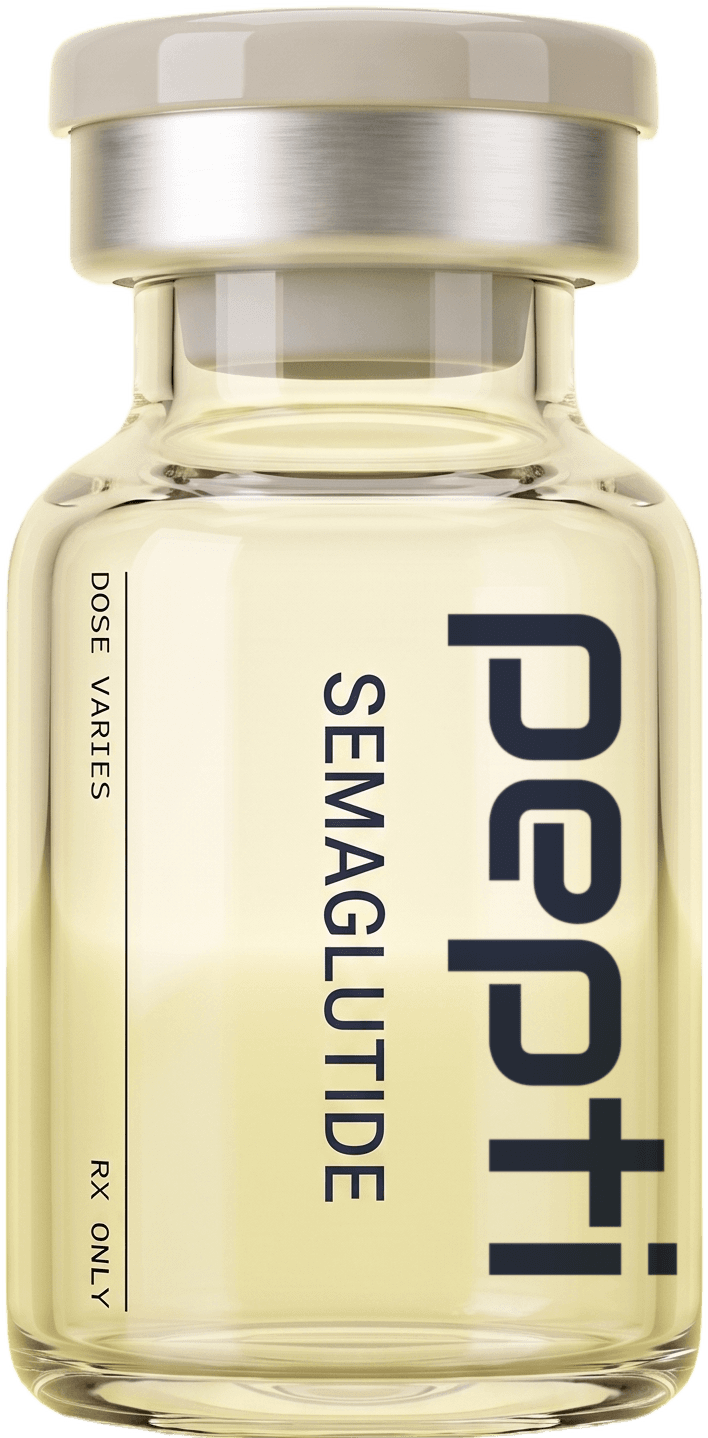
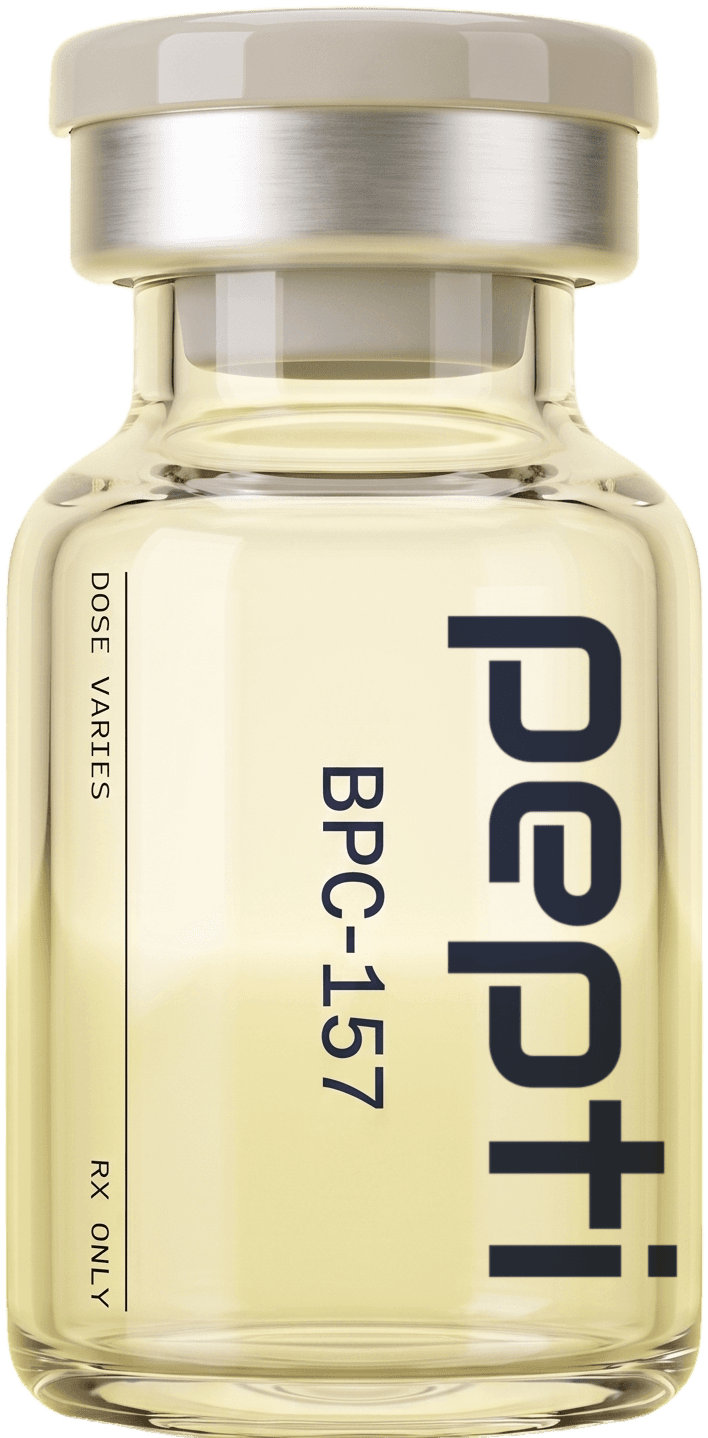
A pharmacy label is not a general safety notice. It is a set of instructions attached to one container that a pharmacist filled to one prescription, for one patient, on one date. The storage line, the beyond-use date and the directions describe that container and nothing else. Two vials in the same refrigerator — a semaglutide vial and a BPC-157 vial — can carry different storage lines and different dates, because they are different preparations.
The FDA makes the labeling link explicit. Where the source product's labeling includes storage or handling instructions — the guidance gives "protect from light, do not freeze, keep at specified storage temperature" as its examples — the label on the dispensed product is expected to specify the same storage conditions. The storage line is not decoration. It is the condition under which the container is considered suitable for holding the drug through its date.
Why no website can give you the number
A page like this one can tell you what the categories mean. It cannot tell you what your number is, because the number depends on facts it does not have: concentration, vehicle, preservative system, container and closure, whether the preparation is a solution or a lyophilized powder, and the standards the pharmacy assigned the date under. Anyone publishing "peptides last 30 days in the fridge" as a universal rule is describing one preparation they once saw, or making it up.
That is also why storage advice from forums and from sellers of research-use-only material is worth nothing: those sources describe a container nobody is accountable for. If anything here differs from your directions, follow your directions and ask your care team about the difference. A general reference page never overrides an instruction printed on the medication in your hand.
— How to Store Peptides
Why there is no universal rule, and why that is the honest answer
A compounded peptide is not one product. It is a preparation made to a prescription, which means the concentration, the vehicle, the container, the number of ingredients and the process all vary. Those are exactly the variables that determine how a preparation is stored and how long it is assigned.
| Variable | How it changes storage or beyond-use assignment |
|---|---|
| Solution or lyophilised powder | Different handling and different dating |
| Concentration and ingredient count | A four-peptide blend such as FORTIFY is a different preparation from a single peptide |
| Container and closure | A multi-dose vial entered repeatedly is dated differently from a single-entry container |
| Preservative system | Whether and how a multi-dose container may be used after first entry |
| Compounding conditions and standards applied | Beyond-use dating is assigned under the standards the pharmacy works to |
| Whether it was ever outside its labelled conditions | Excursions are not covered by the printed date |
That is why the pharmacy assigns the date rather than the internet, and why a rule such as "peptides last 30 days in the fridge" is not something anyone can responsibly write. Ask your pharmacy or your care team for your preparation.
— How to Store Peptides
What a beyond-use date is, and how it differs from an expiry date
This is the most misunderstood thing on a peptide vial, and getting it right removes most of the anxiety people have about storage.
— The definition FDA uses
The FDA's repackaging guidance defines it in one line: the beyond-use date "is the date beyond which a drug product should not be used." That is the whole definition. It is not a prediction that the medication turns harmful at midnight. It is the boundary of the period the preparer will stand behind, and past it nobody has a basis for saying what is in the vial.
— An expiry date and a beyond-use date rest on different things
An expiration date on an FDA-approved manufactured product is the output of a stability programme. During approval the FDA reviews the container closure system and the packaging to decide whether they are appropriate for maintaining the stability of the product through its expiration date — with two conditions attached: as long as the container closure and package are not breached, and as long as the drug is stored according to the conditions specified in the application.
A beyond-use date is a different instrument. Compounded drugs are exempt from the new-drug approval requirements of section 505 when the conditions of section 503A are met, so there is no approval dossier and no product-specific stability programme behind them. The date is assigned by the pharmacy, working to the United States Pharmacopeia chapters on pharmacy compounding that section 503A requires compliance with — Chapter 795 for non-sterile compounding and Chapter 797, which specifically addresses sterile compounding and is referenced in Chapter 795. A sterile injectable peptide is a Chapter 797 question.
In short: an expiry date is the end of a tested shelf life. A beyond-use date is a conservative limit assigned under a compounding standard. They are both printed on a container, and that is where the similarity stops.
— Where the clock starts
For repackaged products the guidance is explicit that the timeframes "begin from the time in which the container of the original drug product to be repackaged is punctured or otherwise opened." The same logic sits behind the in-use dating on a multi-dose vial: first puncture is an event, and the clock that matters often starts there rather than at the fill date.
Which is why writing the date of first use on the carton is worth the four seconds. If your directions give an in-use period measured from first entry, you cannot apply it unless you know when first entry was.
— The timeframes FDA has published
Real numbers help, if only to show how conservative the framework is. For non-sterile repackaged products where the source product specifies no in-use time, the guidance sets beyond-use dates not exceeding six months for nonaqueous formulations, 14 days for water-containing oral formulations, and 30 days for water-containing topical, dermal and mucosal liquid and semisolid formulations — in each case, or the expiration date of the product being repackaged, whichever is shorter. For sterile products it points to USP Chapter 797 rather than setting its own table.
Two things follow. "Whichever is shorter" governs throughout: a beyond-use date never extends past the underlying date. And a water-containing preparation is dated far more tightly than a dry one, which is the practical reason a peptide in solution is a shorter-dated object than a powder.
None of those figures are your number. Your number is on your label.
— What you cannot do with a beyond-use date
You cannot extend it — not by refrigerating harder, not by freezing, not by reasoning that the vial looks fine, not by comparing it to a figure posted about a different preparation. The date was assigned against the storage conditions on the label; changing those conditions does not buy time, it invalidates the assumption the date was built on. And if you think a vial should be discarded early, report it rather than quietly binning it. Reporting is what produces a replacement and a ticket to the pharmacy.
— How to Store Peptides
Refrigeration
— What refrigerated storage actually means
In pharmacy usage, refrigerated storage is a defined range, and your label states the range for your preparation. A domestic refrigerator set for food is not automatically in it: the typical appliance runs colder at the back and warmer in the door, and the temperature in any spot swings every time the door opens. The question is not "is it in the fridge" but "is it in the part of the fridge that holds the range on my label."
Keep the vial in the main body, on a middle shelf, in its carton, upright, away from the back wall and away from the door. The back wall is the coldest surface in the compartment and is where accidental freezing happens. The door is the warmest and the most variable. If you share a refrigerator, a labelled box stops someone else rearranging your medication into the door.
— Time at room temperature while you dose
Drawing a dose takes a minute. Leaving the vial on the counter while you make breakfast takes half an hour, and that half hour repeats every day of a 28-day supply. Cumulative time out of the refrigerator is a real exposure even though each instance feels trivial. Take the vial out, draw the dose, put it back. Some directions explicitly allow a short warming period before injection; that is a label question, not a general one.
— Power cuts and refrigerator failure
A power cut, a failed compressor, a fridge left ajar overnight or a house move are all unknown temperature histories, and an unknown history is not covered by the printed date. Report it, with an honest estimate of how long and, if you know, roughly how warm. Nobody will tell you off for reporting it, and the alternative is injecting something whose condition cannot be vouched for.
A cheap household refrigerator thermometer turns all of this from a guess into a fact. It is the highest-value thing you can add to your storage setup.
— How to Store Peptides
General good practice, which is not a substitute for your label
Everything here is ordinary handling practice for a refrigerated injectable. Your directions still win where they differ.
| Practice | Why |
|---|---|
| Keep the vial in the main body of the refrigerator | The door swings the most in temperature, and the back wall can freeze |
| Keep it in its carton | Light exposure is an avoidable stress |
| Do not freeze unless your directions say so | Freezing is not a safe default for a protein in solution |
| Return it promptly after drawing a dose | Minimise the time at room temperature |
| Swab the stopper with alcohol and let it dry before each entry | A multi-dose vial is entered many times and the stopper is the route in |
| Never share a vial, syringe or pen | A bloodborne infection route, not a hygiene preference |
| Keep a household refrigerator thermometer | It costs very little and turns "I think it is fine" into a fact |
| Write the first-use date on the carton | Makes the beyond-use question answerable rather than a memory test |
| Dispose of syringes in a sharps container | Required in most states, and free take-back programmes are common |
The drawing-up sequence itself, including swabbing and bubbles, is covered step by step in how to inject peptides safely.
— How to Store Peptides
Light
"Protect from light" is one of the storage instructions FDA names explicitly as the kind that must be carried through onto the dispensed label. Where it appears on yours, it is an instruction, not a suggestion.
The practical version is simple: keep the vial in its carton. The carton is the light protection, and taking it out so the shelf looks tidier removes a control that was put there deliberately. Photo-oxidation is one of the recognised degradation routes for peptides in solution, and some constituents are more sensitive than others — glutathione and copper-containing preparations such as GHK-Cu are the ones prescribers flag most often — but you do not need to know which molecule is sensitive if you simply leave the carton on.
Counters by a window, a vial on a car seat, and a bathroom shelf above a radiator combine the two stresses that matter most, light and heat, at once. None of them are storage locations.
— How to Store Peptides
Freezing
Why freezing is not a safe default
A peptide in aqueous solution is not made more stable by being frozen. Ice formation concentrates everything that is not water into a shrinking liquid fraction, driving up local concentration and shifting pH, and the ice–liquid interface is itself a surface at which peptides can unfold and aggregate. Repeated freezing and thawing compounds it. That is why "do not freeze" appears so often on injectable labeling, and FDA uses it as a worked example of a storage instruction that must be carried onto the dispensed label.
So: no freezer, nothing pressed against the back wall of the refrigerator, and no vial packed directly against a frozen gel pack without insulation between them. If a vial has frozen, report it rather than thawing it and carrying on.
Lyophilized powder is a different question
A lyophilized (freeze-dried) peptide is a dry solid, and the dating logic for a dry preparation genuinely differs from a solution — the distinction visible in FDA's own tiering, where nonaqueous formulations are dated in months and water-containing ones in days or weeks. If you are dispensed a powder to reconstitute, the directions state how to reconstitute it, how to store it afterwards and what date applies from that point. Never apply a powder's rule to a solution, or the reverse. Pepti's injectable peptides are dispensed as ready-to-use solutions rather than powders, which removes that step and the errors that go with it.
— How to Store Peptides
When a shipment arrives warm
Cold-chain shipping means overnight delivery with insulation and cold packs. Delays happen anyway: a missed handoff, a weather hold, a package that sat on a porch in the afternoon sun.
- Do not use it. That is the first step, not the last resort.
- Photograph the outer box, the insulation, the state of the cold packs and the vial itself, before you unpack any further.
- Note the delivery time and how long it was likely outside.
- Message your care team with the photographs and the timeline.
- Keep the vial and packaging until you are told otherwise, in case the pharmacy needs it.
That report is what triggers a replacement and a ticket to the pharmacy. It exists so you are not left making a judgement call about a medication you cannot assess by looking at it.
What happens after you report it
Your care team assesses the timeline and the photographs against what the pharmacy knows about the preparation and the shipment. If a replacement is warranted it is reissued and reshipped, and the flag on the order clears only when new tracking exists. The photographs matter because they are the only record of the condition the package arrived in, and they cannot be reconstructed later. Insulated packaging is sized for an overnight transit, not for an afternoon on a doorstep — so if you will be away, say so before a refill ships rather than after.
— How to Store Peptides
Storage and the 28-day refill
One vial per fill
Pepti dispenses one vial per fill, always. That is a storage decision as much as a clinical one: a single vial covering roughly a month is an object you can keep in one place and keep in date. A stockpile of vials with different fill dates in a shared refrigerator is how in-use dates get lost.
Treatment here is long-term and runs on 28-day refills, so the question is never "how long can I make this vial last" — it is "is this vial still within its date and its conditions." If the answer is no, the answer is a replacement.
Write the first-use date on the carton
Four seconds with a pen, on the day you first puncture the stopper. Beyond-use timeframes for repackaged products run from the moment the container is punctured or otherwise opened, and in-use periods on multi-dose containers follow the same logic. Without that date written down, "when did I open this" is a memory test you will fail at exactly the moment it matters. Write it on the carton rather than on the vial, so you are not obscuring the pharmacy label.
— How to Store Peptides
Travel
| Situation | What to do |
|---|---|
| Flying | Hand luggage always. Checked holds reach freezing temperatures |
| Security | Medication with a pharmacy label is permitted; declare it and keep it accessible |
| Cold packs on a flight | Use an insulated medical pouch with a gel pack; frozen gel packs are generally permitted alongside medication |
| Road trips | Never leave medication in a parked car. A closed car in the sun is the fastest way to ruin a vial |
| Hotels | Minibar fridges are often not cold enough or not consistent; ask for a proper refrigerator if it matters |
| Long trips | Ask your care team about timing a refill around your travel rather than carrying more than you need |
| Crossing borders | Keep the pharmacy label attached, since it identifies the medication, the prescriber and you |
The label is the single most important thing on the vial when travelling. Decanting into an unlabelled container to save space turns a prescribed medication into an unidentified liquid.
— What TSA actually says
The standard carry-on rule is the familiar one: a quart-sized bag of liquids, aerosols, gels, creams and pastes, in containers of 3.4 ounces (100 millilitres) or less per item. Medications are listed as an exemption to it.
The exemption carries a condition. TSA states that it "allows larger amounts of medically necessary liquids, gels, and aerosols in reasonable quantities for your flight, but you must declare them to TSA officers at the checkpoint for inspection." Labelling is recommended rather than required — TSA says you can facilitate screening "by clearly labeling medication" — but your vial already carries a pharmacy label naming the medication, the prescriber and you, so there is no reason not to have that working for you.
— Ice packs, gel packs and freezer packs
This is the part travellers most often get wrong, and TSA is more accommodating than people expect: "Ice packs, freezer packs, gel packs and other accessories may be presented at the screening checkpoint in a frozen, partially frozen or melted state to keep medically necessary items cool." A softened gel pack is not a problem.
Everything travelling with the medication is screened too: TSA states that "all items, including supplies associated with medically necessary liquids such as IV bags, pumps and syringes must be screened before they will be permitted into the secure area of the airport." Syringes travelling with the medication they belong to are ordinary, expected items.
— How to do it at the checkpoint
TSA's instruction is specific: "Before the screening begins, inform the TSA officer that you have medically necessary liquids and/or medications. Place them in a bin or bowl separate from other property, along with accessories associated with your liquid medication such as freezer packs, IV bags, pumps and syringes."
So: insulated pouch at the top of your bag, not buried. Say it before the bag goes on the belt, not after an officer finds it. Pouch, gel pack and syringes in their own bin. Thirty seconds, and it removes almost all of the friction.
Checked baggage is the one place a refrigerated peptide should never go. Holds routinely reach sub-freezing conditions at altitude, and freezing is precisely what most injectable labeling warns against. A checked bag also separates you from the medication if it is delayed, turning a storage problem into a supply problem.
— Cars, hotel rooms and the time in between
A closed car in summer sun is the harshest environment your medication will meet, and it gets there in under an hour. Never leave a vial in a parked car — including in a cooler bag, including "just while I go in."
Hotel minibars are frequently thermoelectric units that hold temperature loosely and are not built for a pharmacy refrigeration range. If your stay is long enough to matter, ask the front desk for a medical refrigerator; most hotels have one and will supply it without fuss for prescription medication. For a short stay, an insulated pouch with a gel pack refreshed from the ice machine covers it.
— Long trips and crossing borders
For anything long enough that you would carry more than one fill, ask your care team about timing a refill around the trip instead. That is nearly always simpler than maintaining a cold chain across two weeks of travel.
Internationally, keep the pharmacy label attached and the medication in its original container. The label identifies the preparation, the prescribing physician and the patient, and it is the document that answers a customs question. Requirements vary by country and are worth checking before you fly, particularly for GLP-1 medications such as semaglutide and tirzepatide, which are widely recognised and widely regulated.
— How to Store Peptides
What degradation looks like, and what it does not
Cloudiness, visible particles, a colour change or a stopper that looks damaged are all reasons not to use a vial. Report them rather than filtering, shaking or reasoning about them.
The harder truth is the reverse: a peptide solution can degrade without looking any different. Potency loss is not visible, and there is no home test for it. That is precisely why the beyond-use date and the storage conditions exist, and why "it looks fine" is not a substitute for either.
Three responses are never appropriate: shaking a cloudy vial to redissolve whatever is in it, drawing through a filter to remove particles, and warming a vial to sort it out. Each destroys the evidence and none addresses the cause. FDA's discussion of handling that conflicts with approved labeling names the two failure modes precisely — impurities in the product, and lack of efficacy because the active ingredient has deteriorated. Neither is visible through glass.
— How to Store Peptides
Storage by format
Multi-dose vials
A multi-dose vial is entered repeatedly, which makes the stopper the critical surface and the preservative system the thing that permits repeat entry at all. Swab the stopper with alcohol and let it dry before every entry. Never share a vial, and never draw from one with a syringe used on anyone else. Your in-use period is on the label and typically runs from first puncture.
Pens, cartridges and nasal sprays
A pre-filled cartridge is a different container with its own directions, which frequently differ from a vial's — both in the storage line and in how long it may be used once started. Pen instructions come with the pen; read them rather than transferring what you know about your vial. The Pepti Pen uses a pre-filled cartridge in a reusable click-dial injector, and vial vs pen covers the practical differences.
Non-injectable formats, such as the nasal preparations of NAD+ and Semax, carry their own storage lines and in-use periods, generally not the same as the injectable version of the same molecule. Used syringes and needles go into a sharps container, not household waste.
— How to Store Peptides
What the evidence shows, honestly
Peptide degradation chemistry is well characterised in the pharmaceutical literature: the recognised pathways include hydrolysis, oxidation, deamidation, aggregation and adsorption to container surfaces, and rate increases with temperature. That is why refrigeration is standard and heat is the thing to avoid.
What the published work covers
The general chemistry is old and settled — a review in Pharmaceutical Biotechnology in 2002 set out how conformation governs the chemical stability of pharmaceutically relevant polypeptides, the point being that the same sequence is more or less vulnerable depending on how it is folded and what surrounds it in solution.
More directly relevant, there is published stability work on the GLP-1 peptides. A 2025 paper in the European Journal of Pharmaceutics and Biopharmaceutics examined solution-state degradation of semaglutide as a function of pH, buffer, molarity and temperature; a 2026 paper in Pharmaceutical Research examined semaglutide's solid-state stability under thermal stress, tracking protein content, secondary structure and chemical degradation; and earlier work in Pharmaceutics in 2021 did the equivalent for exenatide, an older GLP-1 peptide, mapping how pH and excipients govern stability in solution. Three directions, the same conclusion: temperature and formulation environment drive peptide degradation, and the effect is measurable long before anything is visible.
What none of that does is give you a number for your vial. It is formulation science conducted on defined preparations under controlled conditions, not a shelf-life assignment for a compounded product.
The practical consequence
What does not exist is public, product-specific stability data for compounded peptide preparations. An approved manufactured drug has a stability dossier behind its expiry date, reviewed by the FDA at approval and conditioned on the package not being breached and the product being stored as specified. A compounded preparation has a beyond-use date assigned by the pharmacy under the USP compounding chapters that section 503A requires compliance with, which is a different and generally more conservative basis. That is not a criticism of compounding, it is the honest difference, and it is one of the trade-offs described in why are compounded peptides cheaper.
Treat the printed date and the printed storage line as the rule, treat any excursion as a reason to ask rather than a reason to reason, and do not extrapolate from what someone reports about a different preparation. Compounded medications are not FDA approved. If you are ever choosing between "probably fine" and "ask," ask.
— References
What this is based on.
References
- Chang CH, Tsai WC, Hsu YH, Pang JH. Pentadecapeptide BPC 157 enhances the growth hormone receptor expression in tendon fibroblasts · Molecules (2014) · PMID 25415472
- Krivic A, Anic T, Seiwerth S, et al.. Achilles detachment of rat and stable gastric pentadecapeptide BPC 157 · Journal of Orthopaedic Research (2006) · PMID 16583442
- Sikiric P, Seiwerth S, Rucman R, et al.. Stable gastric pentadecapeptide BPC 157: novel therapy in gastrointestinal tract · Current Pharmaceutical Design (2011) · PMID 21548867
- Cerovecki T, Bojanic I, Brcic L, Radic B, et al.. Pentadecapeptide BPC 157 (PL 14736) improves ligament healing in the rat · J Orthop Res (2010) · PMID 20225319
- Sikiric P, Seiwerth S, Rucman R, Turkovic B, et al.. Stable gastric pentadecapeptide BPC 157-NO-system relation · Curr Pharm Des (2014) · PMID 23755725
- Cox HD, Miller GD, Eichner D. Detection and in vitro metabolism of the confiscated peptides BPC 157 and MGF R23H · Drug Test Anal (2017) · PMID 28035768
- Thomas A, Görgens C, Guddat S et al.. Simplifying and expanding the screening for peptides <2 kDa by direct urine injection, liquid chromatography, and ion mobility mass spectrometry · J Sep Sci (2016) · PMID 26578461
- Farrar JT, Young JP Jr, LaMoreaux L, Werth JL et al.. Clinical importance of changes in chronic pain intensity measured on an 11-point numerical pain rating scale · Pain (2001) · PMID 11690728
- Meyer JD, Ho B, Manning MC. Effects of conformation on the chemical stability of pharmaceutically relevant polypeptides · Pharm Biotechnol (2002) · PMID 11987755
- Xu C, Sun L, Ren F, Huang P, et al.. Preclinical Safety Evaluation of Body Protective Compound-157, a Potential Drug for Treating Various Wounds · Regul Toxicol Pharmacol (2020) · PMID 32334036
- He L, Feng D, Guo H, et al.. Pharmacokinetics, distribution, metabolism, and excretion of body-protective compound 157, a potential drug for treating various wounds, in rats and dogs · Front Pharmacol (2022) · PMID 36588717
- Lee E, Padgett B. Intra-Articular Injection of BPC 157 for Multiple Types of Knee Pain · Altern Ther Health Med (2021) · PMID 34324435
Citations are provided for educational purposes. They do not constitute medical advice. Always discuss any peptide protocol with your prescribing physician.
— Common questions
How to Store Peptides, answered.
Compounded peptide solutions are typically dispensed refrigerated, and your label states what applies to your preparation. Follow that line rather than a general rule, because concentration, vehicle and container all change the answer. Where your label also says "protect from light" or "do not freeze," those are instructions carried through from the preparation's handling requirements, not suggestions.
Your beyond-use date is the answer, and it is assigned by the pharmacy for your specific preparation. There is no universal in-use period across compounded peptides, and anyone quoting you one is guessing. FDA defines a beyond-use date as "the date beyond which a drug product should not be used," and for repackaged products the timeframes run from the moment the container is punctured or otherwise opened — which is why writing your first-use date on the carton is worth doing.
Do not use them and do not guess. Message your care team with how long it was out and at roughly what temperature. Potency loss is not visible, so an appearance check tells you nothing useful. An unknown temperature history sits outside the conditions the printed date assumes.
Not unless your directions specifically say to. Freezing is not a safe default for a protein in solution and can damage the preparation, and extending a beyond-use date is not something a patient can do by changing storage. Ice formation concentrates the solution around the growing ice and creates an interface at which peptides can aggregate, which is why "do not freeze" is one of the storage instructions FDA names as having to be carried onto a dispensed label.
Possibly, and it is not a call you should have to make. Photograph the packaging and the vial, note the timeline and message your care team. That report is how a replacement gets issued and how the pharmacy finds out. Keep the vial and the packaging until you are told otherwise.
Cloudiness, particles or a colour change are reasons not to use it. The opposite does not hold: a clear vial can still have lost potency, which is why the date and storage conditions matter more than appearance. Do not shake it, do not filter it and do not warm it — report it as it is.
Yes, in hand luggage, in an insulated pouch with a gel pack, with the pharmacy label attached. Never in checked baggage, which reaches freezing temperatures. TSA allows larger amounts of medically necessary liquids than the standard 3.4-ounce limit, but you must declare them to officers at the checkpoint for inspection.
A pre-filled cartridge has its own storage directions, which come with it and which differ from a multi-dose vial. Availability of a pen varies by product and is confirmed at checkout: see vial vs pen.
An expiration date on an approved manufactured product comes out of a stability programme the FDA reviewed at approval, conditioned on the package not being breached and the product being stored as specified. A beyond-use date on a compounded preparation is assigned by the pharmacy under the USP compounding chapters that section 503A requires compliance with — Chapter 795 for non-sterile work, Chapter 797 for sterile. Compounded medications are not FDA approved as finished products, so there is no approval dossier behind the date, and the beyond-use date is the more conservative of the two.
Take it out, draw the dose, put it back. Some directions explicitly allow a short warming period before injection; if yours do, that is your answer, and if they do not, do not invent one. The exposure that matters is cumulative — a daily half hour on the counter across a 28-day supply adds up in a way a single dose never does.
Yes. Everything travelling with medically necessary liquids is screened, including freezer packs, pumps and syringes. TSA explicitly permits ice packs, freezer packs and gel packs to be presented frozen, partially frozen or melted to keep medically necessary items cool, so a softened pack is fine. Declare the medication before screening starts and put the pouch, the pack and the syringes in a separate bin.
Report it with an honest estimate of how long and, if you know, how warm, and do not dose from it in the meantime. An unknown temperature history sits outside the conditions the date assumes, which makes it a replacement conversation rather than a judgement call you should be making at home.
No. Pepti dispenses one vial per fill and treatment runs on 28-day refills, which keeps a single in-date container in your refrigerator rather than a shelf of vials with different fill dates. If travel or timing is going to be awkward, ask your care team to time the refill around it.
It can be. A multi-peptide preparation such as FORTIFY, KLOW or GLOW is a different preparation from a single peptide such as BPC-157, with a different composition and potentially a different assignment. Read the label on the container you were dispensed rather than carrying a rule over from another product.
It affects what is in the vial, which is the more honest way to put it. Published formulation work on peptides including semaglutide describes temperature and solution environment driving measurable chemical degradation, and FDA's own discussion of handling that conflicts with labeling names lack of efficacy from a deteriorated active ingredient as one of two failure modes. None of that tells you what a specific excursion did to a specific vial — which is exactly why the response to an excursion is to ask rather than to estimate. The free assessment goes to a physician licensed in your state. A consultation does not guarantee a prescription.
— Next step
See what a physician
recommends for you.
A licensed physician in your state reviews your intake and decides what is appropriate. A consultation does not guarantee a prescription.
Important legal & safety information
The assessment process available on the Pepti website asks a series of medical questions, and the answers provided are reviewed by an independent licensed physician affiliated with our partner physician network. The licensed providers have established exclusionary criteria, and the answers provided determine if the individual is screened out of eligibility for treatment. The licensed clinicians retain the sole decision to prescribe peptide therapy and other compounded medications to patients. Treatment may be denied at the physician's sole discretion. If a prescription is not approved, you will not be charged for the medication.
Pharmacy Providers. Pepti is a technology platform and is not a healthcare provider, pharmacy, or prescriber. All medications offered through the platform are compounded by independent FDA-registered 503A or 503B compounding pharmacies based on a valid prescription written by a licensed physician for an individual patient. Compounded medications are not FDA-approved as products. The active pharmaceutical ingredients used by our partner pharmacies are sourced from FDA-registered facilities. Compounded medications may not undergo the same testing or quality control as commercially manufactured FDA-approved drugs.
Results vary. Results from peptide therapy and other compounded treatments vary based on individual factors, including age, weight, medical history, adherence to the prescribed protocol, lifestyle factors, and physiological response. Pepti makes no guarantee of any specific outcome. Statements about peptide therapy and compounded medications offered through the platform have not been evaluated by the Food and Drug Administration. These products are not intended to diagnose, treat, cure, or prevent any disease.
Product images. Product photographs and renderings shown on this website are for illustrative purposes only. The appearance of vials, packaging, labeling, and other materials you receive may vary and is determined by the dispensing compounding pharmacy.
Off-label use.Many peptides offered through the platform are prescribed for off-label use. “Off-label” means the medication is being prescribed for a use, dose, or patient population that is not specifically approved by the FDA. Off-label prescribing is legal and common in U.S. medical practice when supported by clinical experience and judgment.
Mailing & shipping. Pepti currently dispenses prescription medication to patients in all 50 states and Washington, D.C.. All orders ship in unbranded, tamper-evident packaging via expedited delivery from our partner compounding pharmacies. Temperature-sensitive medications ship with insulated packaging and ice packs. Shipping is included at no additional cost. We do not currently ship medication outside all 50 states and Washington, D.C., internationally, or to APO/FPO addresses.
Not for emergencies. Pepti is not designed for medical emergencies. If you are experiencing a medical emergency, call 911 or go to your nearest emergency room immediately. For urgent but non-emergency medical questions, contact your primary care provider or use an urgent care service.
No doctor-patient relationship with Pepti. Your use of the platform does not create a doctor-patient relationship between you and pepti LLC. A doctor-patient relationship is established only between you and the independent licensed physician who reviews your intake and prescribes your treatment. The physicians who use the platform are independent contractors and are solely responsible for the medical care they provide.
Prescription medications. All prescription products require a valid prescription from a licensed healthcare provider. By using the platform, you acknowledge that you are at least 18 years old and that the information you provide is true, accurate, current, and complete. Providing false information may result in inappropriate treatment recommendations or denial of service.
Cosmetic & wellness products.Certain products offered through Pepti — including skincare, hair care, body care, supplements, men's grooming, sports recovery, and sexual wellness products — are cosmetic or dietary supplement products, not prescription medications. These products do not require a prescription and are not reviewed or prescribed by a physician. Statements regarding dietary supplements have not been evaluated by the Food and Drug Administration. These products are not intended to diagnose, treat, cure, or prevent any disease. Results vary by individual. Consult your healthcare provider before starting any new supplement or topical product, especially if you are pregnant, nursing, or taking other medications.
pepti LLC · Delaware Limited Liability Company · 131 Continental Dr, Suite 305, Newark, DE 19713 · For media or partnership inquiries, email hello@hellopepti.com. For patient support, email support@hellopepti.com. For privacy and HIPAA inquiries, email privacy@hellopepti.com.