Recovery · Reference
BPC-157 + TB-500 Side Effects: What Is Reported, What Is Rare, and Who Should Avoid It
The side effects reported with BPC-157 + TB-500 are mostly at the injection site: redness, itching, tenderness, a small firm lump or occasional bruising.
Some people describe tiredness, a foggy feeling or a mild headache in the first one to two weeks, and less often nausea, light-headedness or a brief flush shortly after a dose. The cautions that matter most come from how both peptides are described to work, around new blood-vessel growth and cell migration, which is why an active or recent cancer, blood thinners, pregnancy and tested sport are the situations to raise first. The combination has never been studied as a pair in people, and facial or throat swelling or difficulty breathing after a dose is a reason to call 911.
This page sets out what is in the vial, which side effects are reported and which peptide they are attributed to, the specific cautions, what needs urgent care, when to message your care team, who should not take it, and what is genuinely unknown. BPC-157 + TB-500 is a compounded prescription injection, and compounded medications are not FDA approved.
BPC-157 + TB-500 Side Effects
The short answer
| How often | What is reported | Usually attributed to | What to do |
|---|---|---|---|
| Common | Injection-site redness, itching, tenderness, a small firm lump, occasional bruising | Any subcutaneous injection; both peptides | Rotate sites; mention it at follow-up |
| Common | Tiredness, a flat or foggy feeling, or mild headache in the first one to two weeks | Described for both BPC-157 and TB-500 | Report it; usually settles |
| Uncommon | Nausea or light-headedness shortly after a dose | Described for BPC-157 and for the combination | Report it |
| Uncommon | A warm, flushed feeling or brief head-rush after dosing | Described for both | Report it |
| Uncommon | Transient joint or muscle ache | Described for TB-500 | Report it |
| Stop and call | An injection site that is hot, spreading or worse after 48 hours | Possible infection rather than irritation | Same-day message |
| Stop and call | Any new lump, unexplained bleeding or bruising away from the site, or a change in skin colour | Cautions from the vascular mechanisms and one FDA report | Stop dosing and contact your physician |
| Emergency | Facial or throat swelling, widespread rash or hives, wheeze or breathing difficulty | A possible allergic reaction to any injected peptide | Call 911 first, then tell your physician |
Serious adverse events are not commonly reported for either peptide. The reporting system behind that statement is weaker for compounded medications than for approved drugs, so read it as reassuring rather than conclusive.
BPC-157 + TB-500 Side Effects
What is in the vial, and what each dose carries
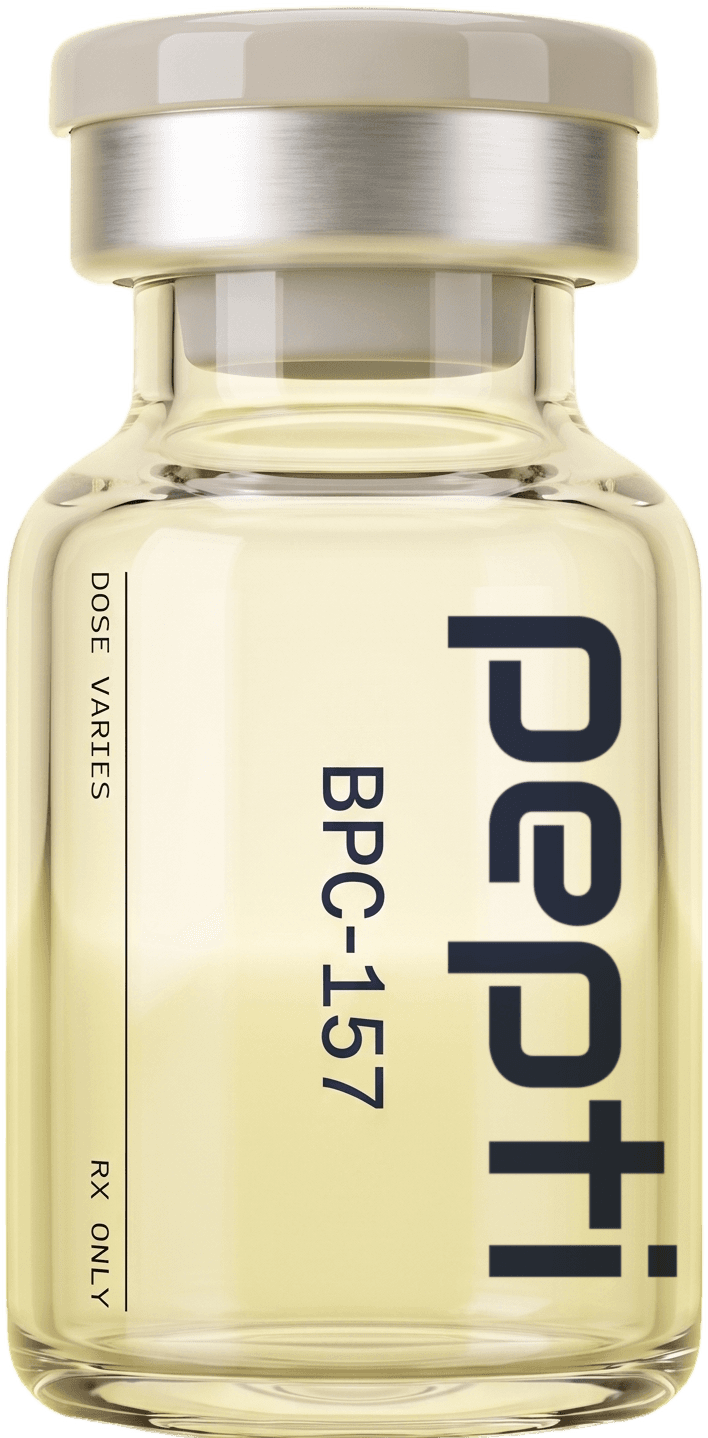
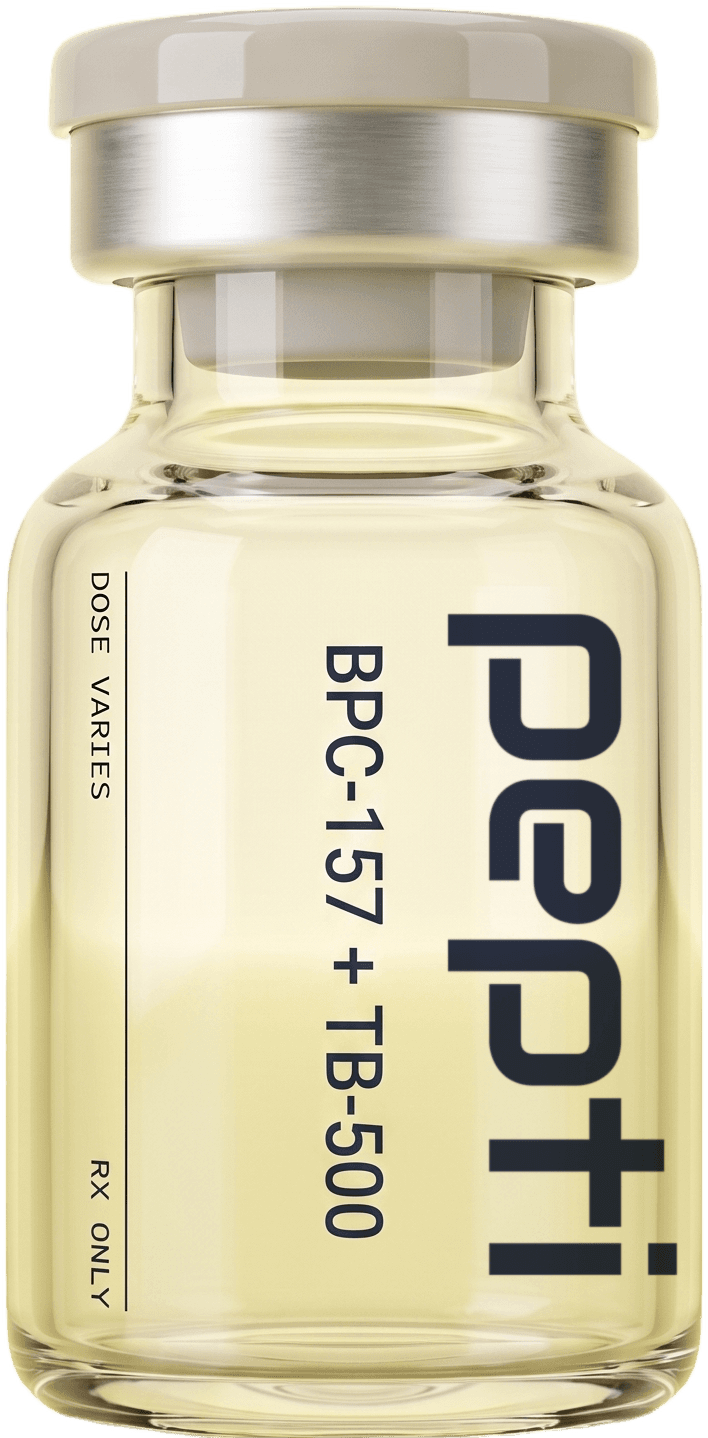
BPC-157 + TB-500 is two separate synthetic peptides dissolved together in one 5 mL multi-dose vial: 5 mg BPC-157 and 5 mg TB-500, each at 1 mg/mL. Pepti's typical printed directions are 0.25 mL, which is 25 units on a U-100 insulin syringe, under the skin Monday through Friday mornings. Your physician sets your directions after reviewing your intake, and they are printed on the vial.
| Detail | Value | Where it comes from |
|---|---|---|
| Vial | 5 mL, BPC-157 1 mg/mL and TB-500 1 mg/mL | Label |
| Typical directions | 0.25 mL (25 units) subcutaneously Monday through Friday mornings | Printed on the vial |
| BPC-157 per dose | 0.25 mg (250 mcg) | 1 mg/mL x 0.25 mL |
| TB-500 per dose | 0.25 mg (250 mcg) | 1 mg/mL x 0.25 mL |
| Doses per vial | 20, four working weeks | 5 mL divided by 0.25 mL |
| Price | $259/mo, all-in | Product page |
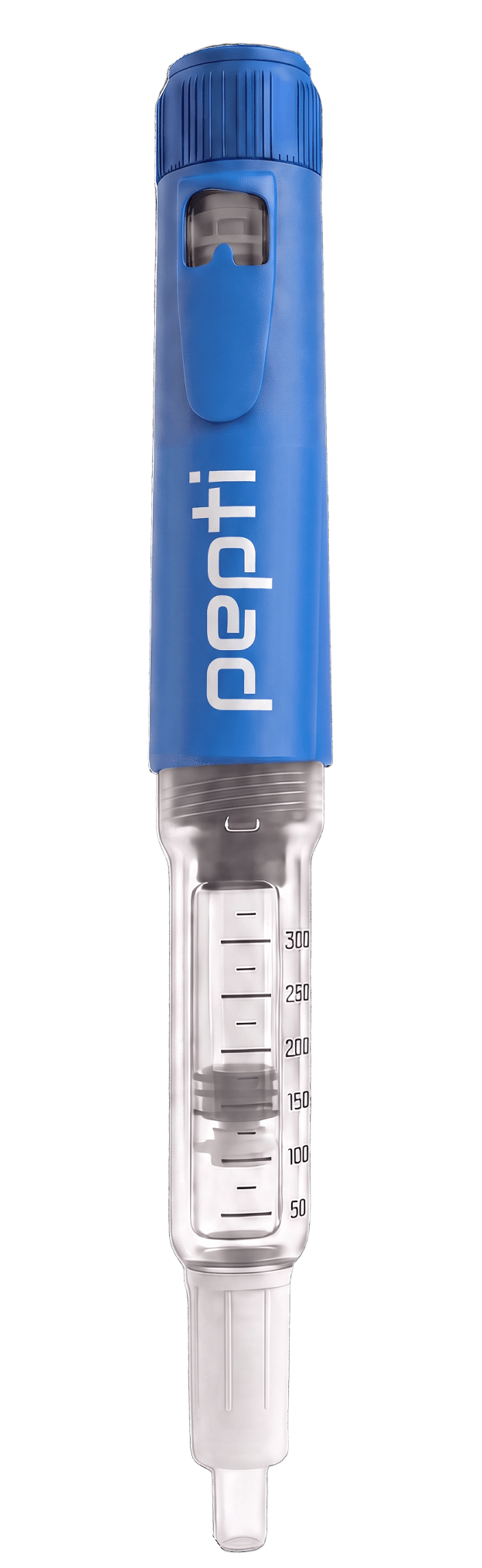
That arithmetic is for reading a label, not for setting a dose. The combination also comes as a 3 mL pre-filled Pen cartridge containing 9 mg BPC-157 and 13.5 mg TB-500, a different ratio from the vial, so Pen directions are written separately. The full reference is what is BPC-157 + TB-500, and the dose arithmetic for BPC-157 on its own is in BPC-157 dosage.
| Peptide | What it is | What it adds to the side-effect picture |
|---|---|---|
| BPC-157 | A 15-amino-acid fragment of a protein found in human gastric juice | Early tiredness, headache or nausea in some people; a vascular mechanism and animal clotting signals, which is why anticoagulants matter |
| TB-500 | A synthetic seven-amino-acid fragment of thymosin beta-4 | Early tiredness or head-fog, a brief head-rush in some people; cell-migration and blood-vessel mechanisms, which is why a cancer history matters |
Neither peptide is a hormone or a steroid. Neither binds an androgen receptor or suppresses your own hormone production, so the side effects people associate with anabolic drugs do not belong to this vial.
BPC-157 + TB-500 Side Effects
Common side effects
Injection-site reactions
The most frequent report by a wide margin, and common to every subcutaneous peptide. A small area of redness, itching or a firm lump that fades over a day or two is ordinary and is usually a response to the needle, the volume or the solution rather than to either peptide. In the FDA's adverse-event database, one of the three reports for injectable BPC-157 was nine days of redness and swelling at the injection site in a woman who was also injecting a thymosin product.
What separates irritation from something that needs attention is the direction of travel. A site that is larger, hotter or more painful at 48 hours than at 24 is behaving like an infection and should be looked at the same day. Rotating between abdomen and thigh, letting the alcohol dry fully, and using a fresh needle every time reduce how often reactions happen. Technique is in how to inject peptides safely and peptide injection sites.
Early tiredness, head-fog and headache
Some people describe feeling tired, flat or foggy, or having a mild headache, during the first one to two weeks. It is described for both BPC-157 and TB-500. There is no established mechanism; it is a prescriber-described pattern rather than a trial finding, and it usually settles without any change. In the only placebo-controlled human data that exist for BPC-157, an enema tolerability study, headache occurred at the same rate on placebo. Fatigue that persists beyond a few weeks has many possible causes and should be reported rather than put down to the vial.
Nausea, light-headedness and flushing
Nausea or light-headedness shortly after a dose is reported by a minority of people. A brief warm, flushed or light-headed feeling is also occasionally described; thymosin beta-4 is described in cell work as promoting nitric-oxide-related vessel dilation, which is one plausible reason. These are uncommon and transient. Fainting or dizziness that does not pass is not expected and should prompt a call.
BPC-157 + TB-500 Side Effects
The specific cautions
Cancer history
BPC-157 is described in animal and cell work as promoting angiogenesis, new blood-vessel growth, through the VEGFR2 pathway. Thymosin beta-4, the parent protein of TB-500, is described as promoting cell migration and new vessel growth, and oncology research reports that many tumours express it at high levels. Those are the processes a healing tendon needs and also the ones a growing tumour uses.
There is no human evidence that either peptide causes or accelerates cancer, and no carcinogenicity study of either has been run in any species, so the question has not been tested in either direction. A physician will decline the combination with an active or recent cancer, and a cancer in remission is a conversation that includes your oncologist. See can peptides cause cancer.
Clotting and bleeding
In 28-day animal studies of BPC-157 at doses far above anything prescribed, the FDA flagged changes in clotting time: shortened in rats and prolonged in dogs. No human clotting data exist. TB-500's vascular mechanisms make the same point from a different direction. In practice, anticoagulant or antiplatelet therapy goes on the intake, and unexplained bleeding or bruising away from the injection site is a reason to stop and call.
Liver enzymes, glucose and triglycerides
The same 28-day animal studies of BPC-157 showed higher ALT, glucose and triglycerides. No such change has been reported in people, but none has been looked for. For anyone with known liver disease, poorly controlled diabetes or a lipid disorder, this is a reason to put the history on the intake in full. Bloodwork is not required for any Pepti treatment. If your physician wants labs for your care, they'll ask through your account.
Skin colour change
The FDA's adverse-event database holds one case worth knowing about specifically for this combination: a 40-year-old woman using a research-use-only vial labelled as BPC-157 plus TB-500 developed diffuse darkening of the skin and gums, which came back when she restarted and resolved when she stopped. Because the product was an unlabelled research vial, the FDA could not tell whether BPC-157, TB-500, a contaminant or an impurity was responsible, and it has not been reported with pharmacy-compounded BPC-157. Any change in skin colour on treatment is a reason to stop and tell your physician.
Immune reactions
The FDA's main stated concern for both injected peptides is immunogenicity: any injected peptide can provoke an immune response, and peptides that clump or carry synthesis impurities make it more likely. No study has measured it for either. It is a theoretical concern rather than a report of reactions occurring, but it is why a systemic reaction is an emergency, and why the quality of the finished vial matters. Pepti's pharmacy testing is described at /quality, with results at /quality/lab-results.
BPC-157 + TB-500 Side Effects
Serious side effects: what to report urgently
| Symptom | What to do |
|---|---|
| Swelling of the face, lips or throat, widespread hives, wheeze or difficulty breathing | Call 911. Then tell your physician |
| An injection site that is hot, spreading or worse after 48 hours | Same-day message to your care team |
| Unexplained bleeding or bruising away from the site | Stop dosing and contact your physician |
| A new lump or mass anywhere | Stop dosing and contact your physician |
| Darkening of the skin or gums | Stop dosing and contact your physician |
| Fainting, or dizziness that does not pass | Contact your physician; call 911 if severe |
| Anything that frightens you | Stop and contact your physician rather than deciding on your own whether it counts |
If you think you may have taken too much, for example by drawing the wrong amount, call Poison Control at 1-800-222-1222 and message your care team. Do not skip, double or change a dose to compensate.
BPC-157 + TB-500 Side Effects
When to message your care team
Not every side effect is urgent. Message your care team through your account for:
- Injection-site reactions that keep happening despite rotating sites.
- Tiredness, head-fog, headache, nausea or light-headedness that has not settled after the first couple of weeks.
- A joint or muscle ache you cannot place; it is easy to confuse with the injury itself.
- Any change in your medications or supplements, especially blood thinners.
- A new diagnosis, a pregnancy, or a planned surgery.
- A vial that looks different from the last one, or a label and syringe that seem not to match. Do not inject; ask first.
Your physician may revise your directions, change the product, or stop treatment. Do not change the dose yourself. When directions change, the new numbers are printed on the new label.
BPC-157 + TB-500 Side Effects
Who should not take it, or should discuss it first
| Situation | Why it matters |
|---|---|
| Active or recent cancer | Both peptides are described as supporting new blood-vessel growth and cell migration |
| Cancer history in remission | Usually a cautious answer, with your oncologist's view |
| Anticoagulant or antiplatelet therapy | Vascular mechanisms and animal clotting signals |
| Pregnancy or breastfeeding | Not used; safety data is absent. See can you take peptides while pregnant |
| Autoimmune disease | Thymosin beta-4 is described as immunomodulatory in cell work; the effect of the fragment is unstudied |
| Significant kidney or liver disease | No human clearance data for either peptide |
| Tested athletes | BPC-157 is named under S0 and TB-500 under S2.3 of the 2026 WADA Prohibited List, prohibited at all times; a prescription does not change that |
| An undiagnosed or worsening injury | Night pain, numbness, weakness or a locking joint needs imaging first |
| Under 18 | Pepti prescribes to adults only |
There is no established interaction list for either peptide, because the trials that would produce one have not been run. That is why the intake asks for every medication and supplement you take, and why a physician reviews it rather than a form. The anti-doping detail is in is BPC-157 banned.
BPC-157 + TB-500 Side Effects
How the side effects compare with related products
| Product | What is in it | What changes in the side-effect picture | Price |
|---|---|---|---|
| BPC-157 | 5 mg BPC-157 in 5 mL | One peptide instead of two; same injection-site and early-symptom pattern | $209/mo |
| TB-500 | 5 mg TB-500 in 5 mL | One peptide; rarely prescribed alone | $209/mo |
| BPC-157 + TB-500 | 5 mg of each in 5 mL | The profile on this page | $259/mo |
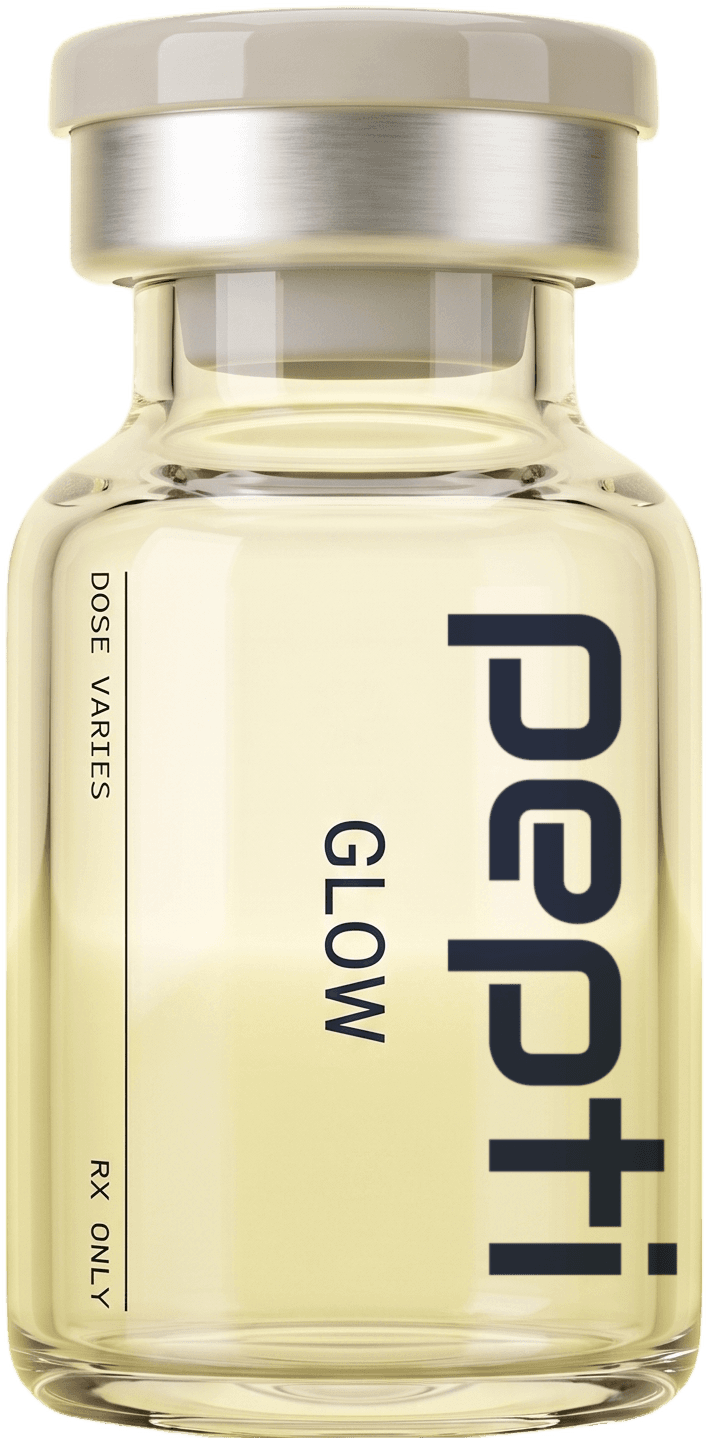
| GLOW | 50 mg GHK-Cu, 10 mg BPC-157, 10 mg TB-500 | Adds copper: a possible blue-green mark at the site, a metallic taste, and a copper-disorder contraindication | $259/mo |
| KLOW | 50 mg GHK-Cu, 10 mg KPV, 10 mg BPC-157, 10 mg TB-500 | Adds copper and KPV | $259/mo |
If skin and collagen are not part of the goal, the two-peptide vial is the simpler prescription with fewer variables. The copper-specific signs are covered in GLOW side effects and KLOW side effects.
BPC-157 + TB-500 Side Effects
What is genuinely unknown
- Side effects of the two together. No animal, cell or human study has tested BPC-157 and TB-500 as a pair.
- Long-term human outcomes. No cohort has been followed for years on either peptide by injection. The longest human BPC-157 exposure in any published study was two weeks, by enema.
- Human data for TB-500 itself. The FDA's July 2026 review found no published study in which the TB-500 fragment had been given to people; the human trials used full-length thymosin beta-4.
- Subcutaneous pharmacokinetics in humans. Not measured for either peptide.
- Whether the theoretical cancer concern is real. It is mechanistic reasoning, not an observed human signal, and it has not been ruled out.
- Immunogenicity rates. No study has measured how often either peptide produces antibodies.
BPC-157 + TB-500 Side Effects
What the evidence shows, honestly
Each peptide is generally described as well tolerated in its own published animal work, and clinical reports on the combination are consistent with that: mostly injection-site reactions, sometimes early tiredness, headache, nausea or light-headedness. BPC-157 has five small human studies that reported no serious adverse events, none of them using the subcutaneous route. Full-length thymosin beta-4 was described as well tolerated in a placebo-controlled intravenous study in healthy volunteers and in small trials of topical and eye-drop forms. The FDA's adverse-event database held no TB-500 reports through March 2025 and three uninterpretable reports for injectable BPC-157 through December 2025.
So the honest statement is narrow: short-term tolerability looks good where these peptides have been used, and long-term safety is not characterised. The separate, non-theoretical risk is supply: the one reproducible adverse-event report in the FDA's database came from a research-use-only vial of exactly this combination, as set out in research peptides vs prescription peptides. Benefits are covered separately in BPC-157 benefits and TB-500 benefits, and the component safety pages are is BPC-157 safe and is TB-500 safe.
Where both stand with the FDA: removed from Category 2 of the 503A bulks list on 15 April 2026, and recommended for the 503A Bulks List by the Pharmacy Compounding Advisory Committee on 23 July 2026 by 8 votes to 6 with one abstention, with the FDA's final determination pending. Neither is an FDA-approved drug.
BPC-157 + TB-500 Side Effects
Where to get BPC-157 + TB-500 prescribed
BPC-157 + TB-500 cannot be bought legitimately without a prescription. The prescription route:
- Complete a free online intake covering the injury, any imaging, your medications and your history.
- A physician licensed in your state reviews it, usually within 24 hours.
- If it is appropriate, a PCAB-accredited, FDA-registered US 503A compounding pharmacy prepares it to that prescription. Lot test results are published at /quality/lab-results.
- It ships refrigerated with ice packs, with sterile syringes, alcohol prep pads and your directions printed on the vial.
- Your care team stays reachable for questions and side effects. Refills run every 28 days, one vial per fill.
BPC-157 + TB-500 is $259 a month, all-in, covering medication, physician review, refill management and shipping, with no membership fee. Pepti is cash-pay and does not bill insurance. How the two peptides differ is in BPC-157 vs TB-500, and the TB-500 arithmetic is in TB-500 dosage.
References
What this is based on.
References
- Chang CH, Tsai WC, Hsu YH, Pang JH. Pentadecapeptide BPC 157 enhances the growth hormone receptor expression in tendon fibroblasts · Molecules (2014) · PMID 25415472
- Krivic A, Anic T, Seiwerth S, et al.. Achilles detachment of rat and stable gastric pentadecapeptide BPC 157 · Journal of Orthopaedic Research (2006) · PMID 16583442
- Sikiric P, Seiwerth S, Rucman R, et al.. Stable gastric pentadecapeptide BPC 157: novel therapy in gastrointestinal tract · Current Pharmaceutical Design (2011) · PMID 21548867
- Cerovecki T, Bojanic I, Brcic L, Radic B, et al.. Pentadecapeptide BPC 157 (PL 14736) improves ligament healing in the rat · J Orthop Res (2010) · PMID 20225319
- Sikiric P, Seiwerth S, Rucman R, Turkovic B, et al.. Stable gastric pentadecapeptide BPC 157-NO-system relation · Curr Pharm Des (2014) · PMID 23755725
- Cox HD, Miller GD, Eichner D. Detection and in vitro metabolism of the confiscated peptides BPC 157 and MGF R23H · Drug Test Anal (2017) · PMID 28035768
- Thomas A, Görgens C, Guddat S et al.. Simplifying and expanding the screening for peptides <2 kDa by direct urine injection, liquid chromatography, and ion mobility mass spectrometry · J Sep Sci (2016) · PMID 26578461
- Farrar JT, Young JP Jr, LaMoreaux L, Werth JL et al.. Clinical importance of changes in chronic pain intensity measured on an 11-point numerical pain rating scale · Pain (2001) · PMID 11690728
- Meyer JD, Ho B, Manning MC. Effects of conformation on the chemical stability of pharmaceutically relevant polypeptides · Pharm Biotechnol (2002) · PMID 11987755
- Xu C, Sun L, Ren F, Huang P, et al.. Preclinical Safety Evaluation of Body Protective Compound-157, a Potential Drug for Treating Various Wounds · Regul Toxicol Pharmacol (2020) · PMID 32334036
- He L, Feng D, Guo H, et al.. Pharmacokinetics, distribution, metabolism, and excretion of body-protective compound 157, a potential drug for treating various wounds, in rats and dogs · Front Pharmacol (2022) · PMID 36588717
- Lee E, Padgett B. Intra-Articular Injection of BPC 157 for Multiple Types of Knee Pain · Altern Ther Health Med (2021) · PMID 34324435
Citations are provided for educational purposes. They do not constitute medical advice. Always discuss any peptide protocol with your prescribing physician.
Common questions
BPC-157 + TB-500 Side Effects, answered.
Mostly injection-site redness, itching, tenderness, a small lump or occasional bruising. Some people describe tiredness, a foggy feeling or a mild headache in the first one to two weeks, and less often nausea, light-headedness or a brief flush after a dose. Serious effects are not commonly reported, but the combination has never been studied as a pair in people.
Short-term tolerability looks good where the two peptides have been used, but there is no human safety trial of the combination, of injected BPC-157 or of the TB-500 fragment, so long-term safety is not characterised. It is not appropriate with an active cancer or a pregnancy, and it is prohibited in tested sport.
Not on any evidence, but it adds a second peptide with even less human data and a second anti-doping listing.
Some people describe tiredness or a flat, foggy feeling in the first one to two weeks. There is no established mechanism and it usually settles. If it lasts beyond a few weeks, report it rather than assuming it is the vial.
A mild headache in the early weeks is described for both peptides. In the only placebo-controlled human BPC-157 data, headache occurred at the same rate on placebo. Report a headache that persists.
There is no human evidence that it does, and no carcinogenicity study of either peptide exists. The caution comes from mechanism: both are described as supporting new blood-vessel growth and cell migration, which tumours also use. That is why it is not prescribed with an active or recent cancer.
Raise it with your physician first. BPC-157 showed clotting-time changes in animal studies and TB-500 has vascular mechanisms; neither has human clotting data. Your physician sets your directions after reviewing your full medication list.
One case of skin and gum darkening is in the FDA's database, from a research-use-only vial labelled as BPC-157 plus TB-500; the FDA could not tell what caused it, and it has not been reported with pharmacy-compounded BPC-157. Any change in skin colour on treatment is a reason to stop and tell your physician.
Swelling of the face, lips or throat, widespread hives, wheeze or difficulty breathing after a dose: call 911, then tell your physician. For a possible overdose, call Poison Control at 1-800-222-1222 and message your care team.
Bloodwork is not required for any Pepti treatment. If your physician wants labs for your care, they'll ask through your account. The free assessment goes to a physician licensed in your state. A consultation does not guarantee a prescription.
Related answers
Keep reading.
- BPC-157 + TB-500: Full Specification, Mechanism and Dosing
- Do You Need a Prescription for BPC-157 + TB-500? Is It Legal Online?
- How Long Does BPC-157 + TB-500 Take to Work? What the Studies Measured
- Is BPC-157 + TB-500 Banned in Sports? Both Peptides, Two WADA Classes
- Dihexa Side Effects: What Is Reported, the Cancer Question, and What to Report
Next step
See what a physician recommends for you.
A licensed physician in your state reviews your intake to see whether treatment fits your history. A consultation does not guarantee a prescription.