Recovery · Reference
BPC-157 + TB-500: Full Specification, Mechanism and Dosing
This page covers what each peptide is, why they are compounded together, the pathways described for each, what the published work does and does not establish, where both stand with the FDA, how the vial is dosed, and how to get it prescribed.

Reviewed by Dr. Gene, MD · Board-certified Family Medicine
Every Pepti prescription is reviewed by a licensed U.S. physician before it's dispensed — and only provided if clinically appropriate.
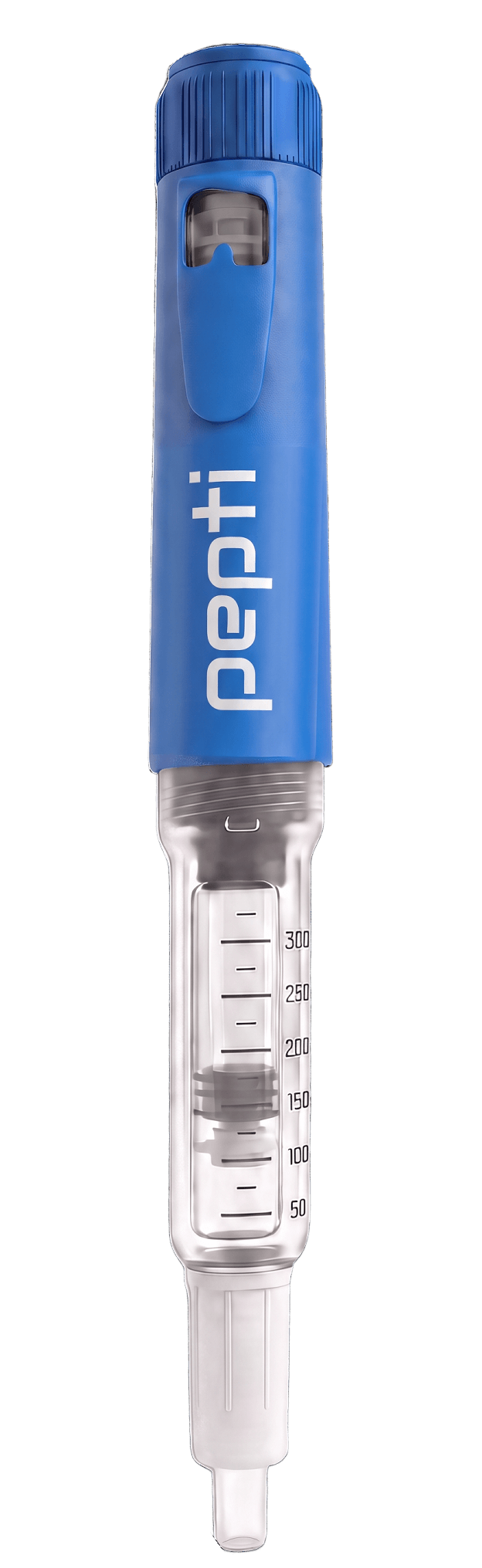
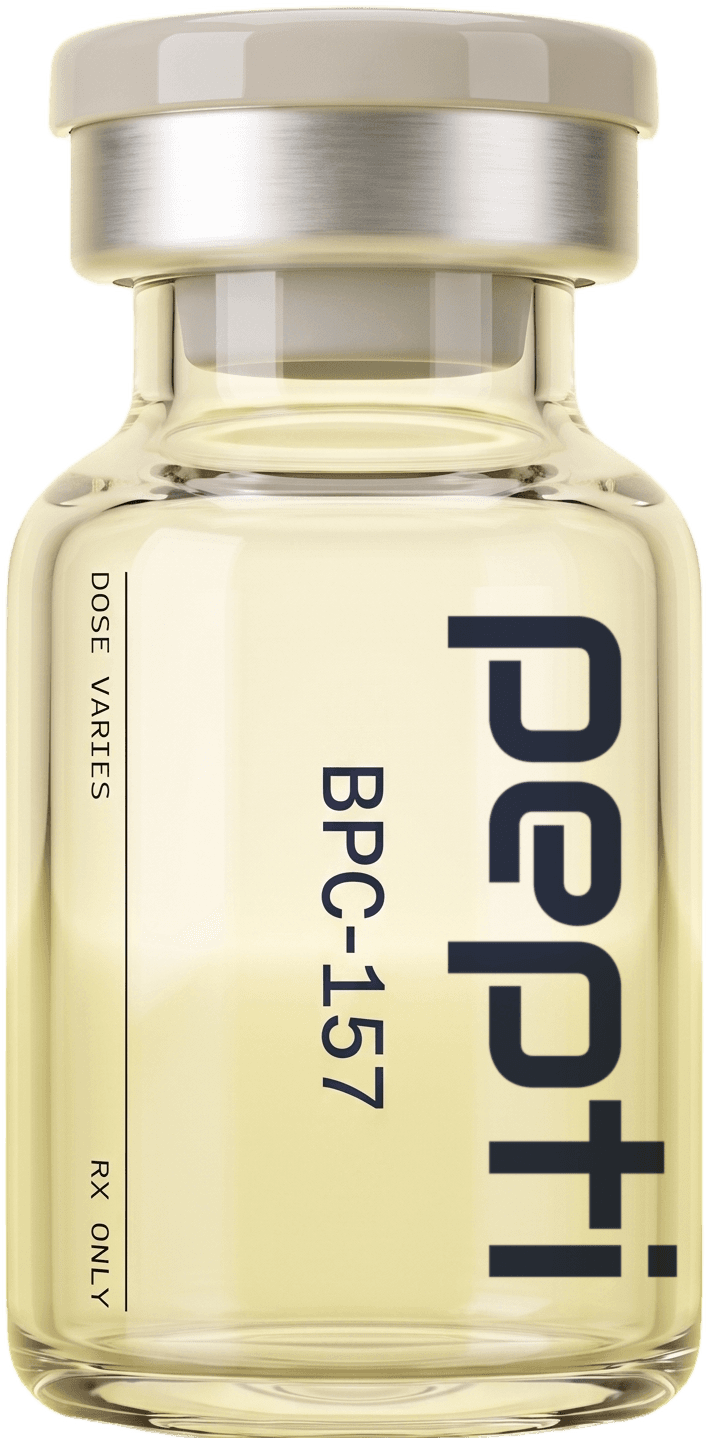
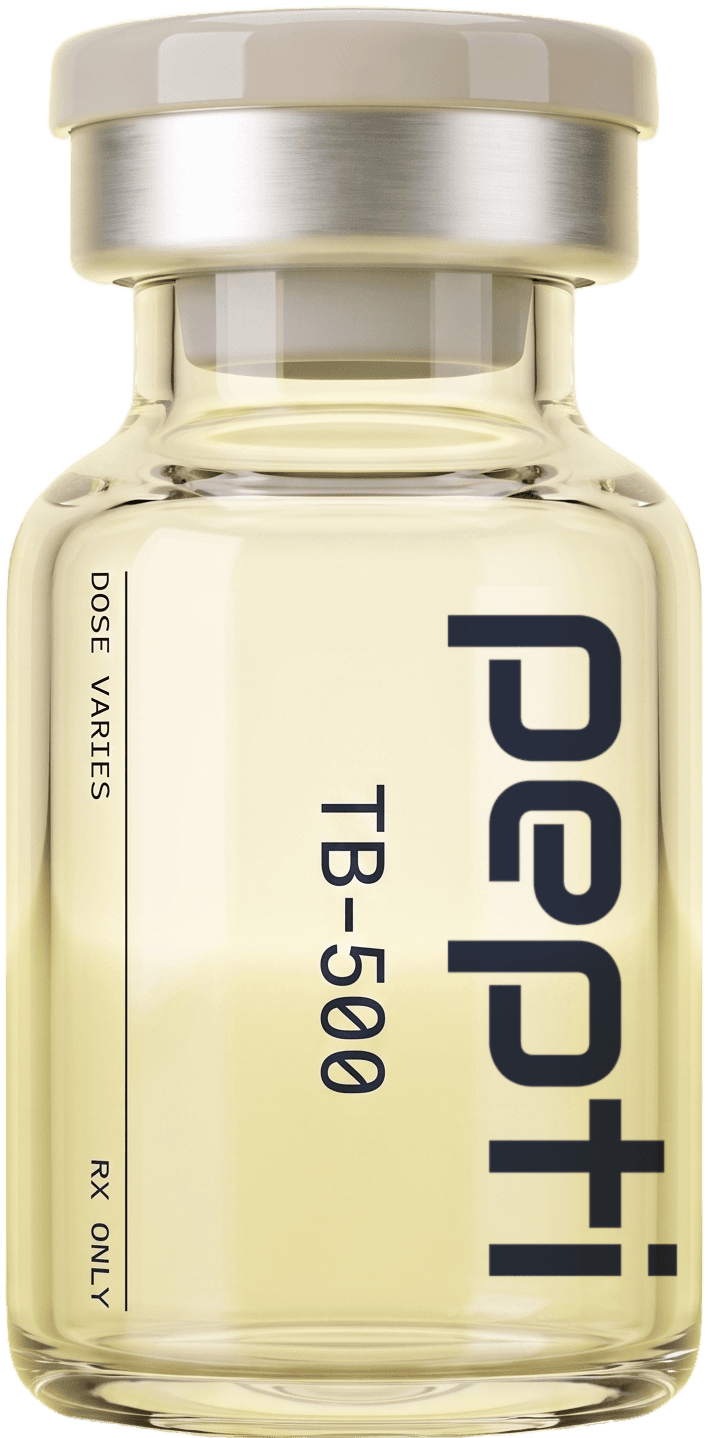
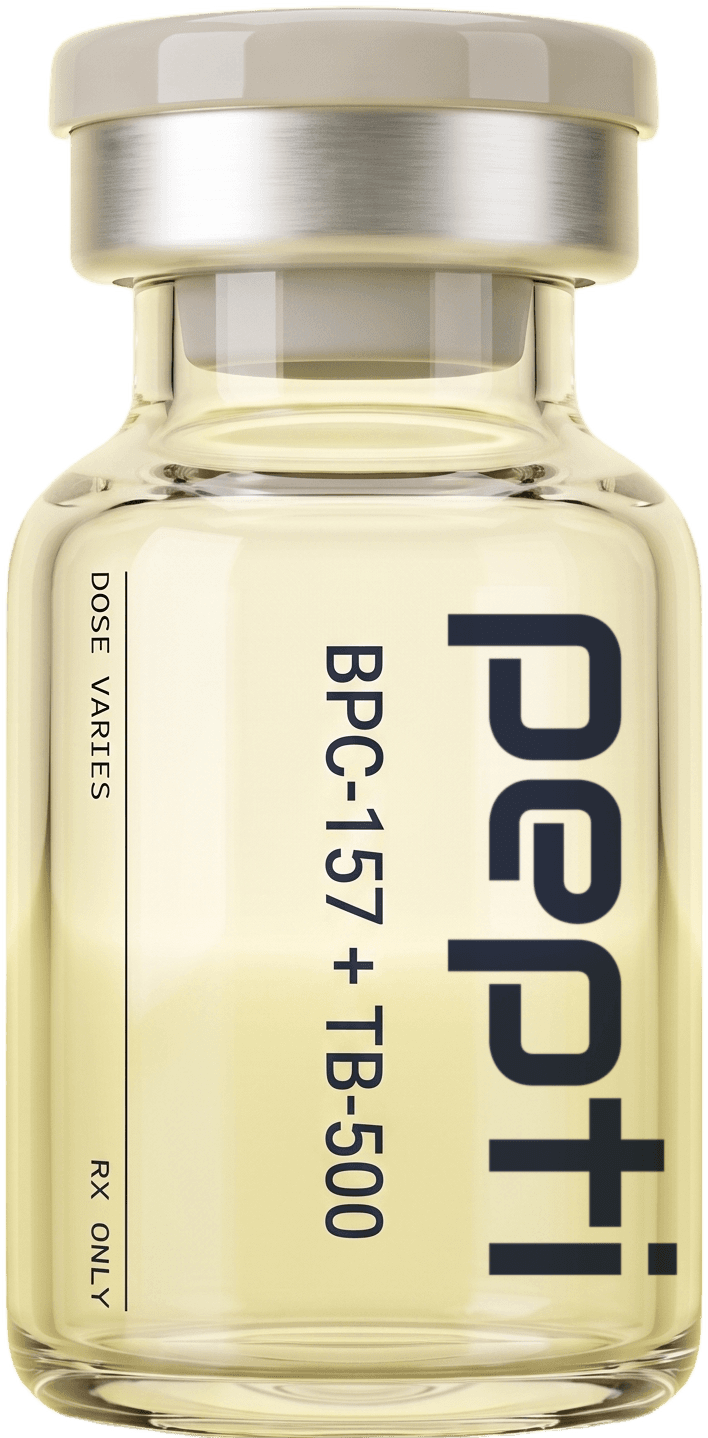
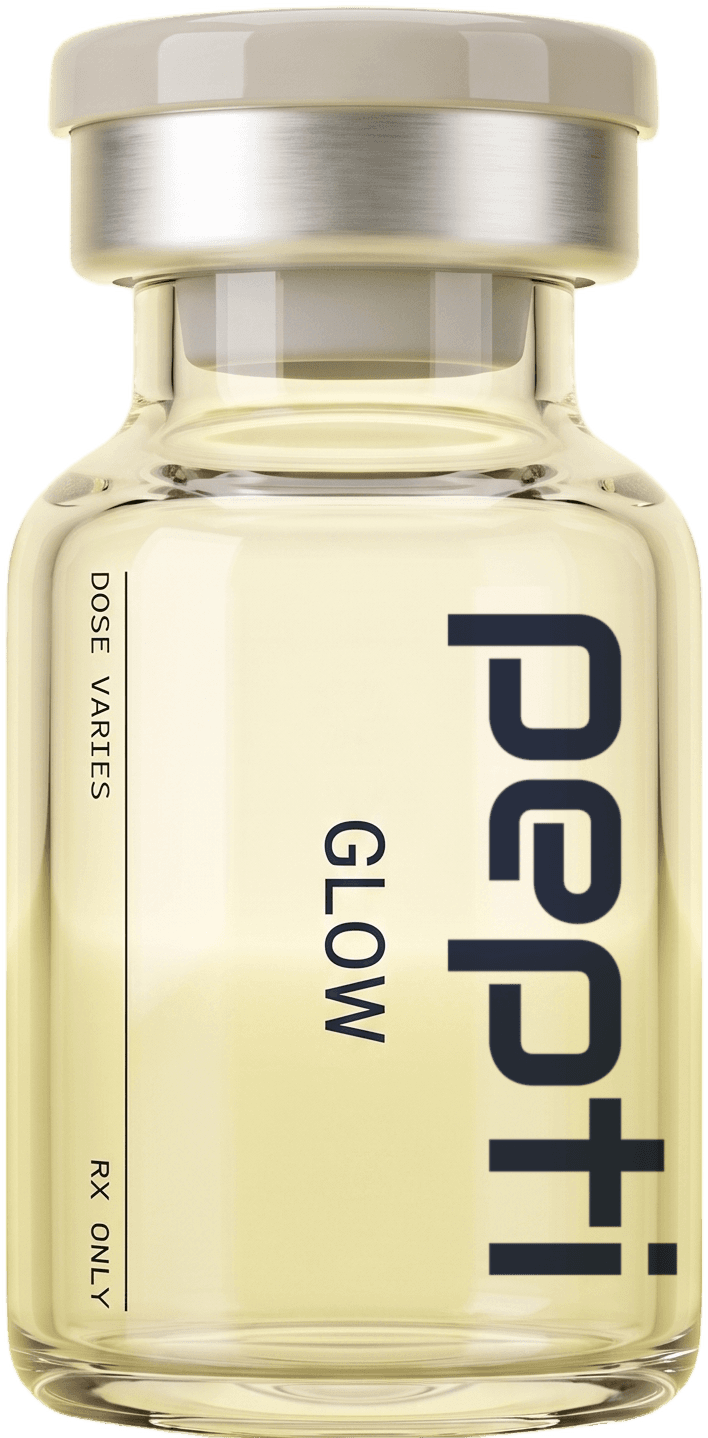
BPC-157 + TB-500 is a compounded prescription injection containing 5 mg of BPC-157 and 5 mg of TB-500 in a 5 mL multi-dose vial. It is prescribed for soft-tissue injury, tendon and ligament complaints and post-surgical recovery, dosed at 0.25 mL — 25 units on a U-100 insulin syringe — subcutaneously on weekday mornings, giving 20 doses per vial. It requires a prescription from a physician licensed in your state, is compounded by a state-licensed US pharmacy, and is not FDA approved.
This page covers what each peptide is, why they are compounded together, the pathways described for each, what the published work does and does not establish, where both stand with the FDA, how the vial is dosed, and how to get it prescribed.
BPC-157 + TB-500
What BPC-157 + TB-500 actually is
Two peptides, one vial
This is not a single molecule. It is two separate synthetic peptides, each with its own research literature, dissolved together so one draw delivers a fixed amount of both. Everything here about mechanism and evidence is about the components individually.
Where each component comes from
BPC-157 is a pentadecapeptide — fifteen amino acids, sequence GEPPPGKPADDAGLV — and a partial sequence of a larger protein called Body Protection Compound, isolated from human gastric juice. It was first investigated for the digestive tract; the tendon and soft-tissue work came later.
TB-500 is related to thymosin beta-4, a 43-amino-acid protein among the most abundant inside human cells, whose central function is binding actin. As the FDA's own review describes it, TB-500 is understood today to be a synthetic seven-amino-acid fragment of thymosin beta-4 — residues 17 to 23, the actin-binding region, with an acetyl group on the first amino acid — not the full-length protein. Most of the published work, and all of the human work, used the full-length protein.
What it is not
It is not a hormone or a steroid: neither component binds an androgen receptor, suppresses your own hormone production, or adds muscle directly. It is not a painkiller; nothing in either literature describes an analgesic mechanism. And it is not a treatment for a structural problem — a complete rupture, a displaced fracture or a torn meniscus is a surgical question.
BPC-157 + TB-500
How BPC-157 + TB-500 is described to work
The components are described around different stages of repair, which is the logic of one vial. All of the detail below is from animal and cell studies unless a human population is named.
BPC-157: new blood vessel formation through VEGFR2
The most frequently described BPC-157 mechanism is angiogenesis — new blood vessels growing into tissue. A 2017 paper in the Journal of Molecular Medicine reported BPC-157 activating the VEGFR2 receptor and the downstream Akt–eNOS pathway in cell and rodent models; rat work in the Journal of Physiology and Pharmacology in 2009 described it modulating angiogenesis in muscle and tendon healing, and several papers describe an interaction with the nitric oxide system. Injured tendon and ligament are poorly vascularised, and blood supply is often what limits recovery.
BPC-157: growth hormone receptor expression and the FAK–paxillin pathway in tendon cells
A 2014 paper in Molecules reported BPC-157 increasing growth hormone receptor expression in cultured rat tendon fibroblasts — not raising growth hormone levels, but making those cells more responsive to what is already circulating. A companion 2011 paper in the same journal described BPC-157 promoting tendon fibroblast outgrowth, survival and migration through focal adhesion kinase and paxillin, the proteins that govern how cells attach and move into a wound.
TB-500: actin binding and cell migration
Thymosin beta-4's central described function is binding monomeric actin, the protein that gives a cell its structure and lets it move. A 2005 review in Trends in Molecular Medicine describes how this actin-sequestering protein "moonlights" in tissue repair: cells migrating into a wound reorganise their actin, and thymosin beta-4 is described as central to that. Work on the full-length protein also reports new vessel growth, downregulation of inflammatory mediators, and less scar in some injury models.
TB-500: what carries over from full-length thymosin beta-4
The animal studies, reviews and human trials below used full-length thymosin beta-4. TB-500 is the fragment containing the actin-binding motif, and the working assumption in prescribing has been that it carries the relevant activity. The FDA's July 2026 review found cell work in which the fragment showed wound-closure activity in some assays and not others, and no animal or human wound-healing studies of the fragment itself. So: mechanism described in detail for the parent protein, inferred for the fragment.
Why the two are compounded together
Healing runs in overlapping phases: inflammation, cell migration, new vessel growth, collagen synthesis and remodelling. BPC-157's literature sits mainly on the vascular side and tendon-cell signalling; thymosin beta-4's on cell motility and limiting scar. Blood supply without cells is a dead end, and cells without blood supply is the same. Clinicians combine them because the described mechanisms are complementary, and one vial means one injection, one schedule and one refill.
That is a coherent mechanistic argument, not a trial result: no published study has tested the pair against either component alone.
BPC-157 + TB-500
What the research actually shows
Tendon and ligament (BPC-157)
The strongest BPC-157 area. A 2003 paper in the Journal of Orthopaedic Research reported accelerated healing of transected Achilles tendon in rats along with stimulation of tendon cell growth in vitro; a 2006 paper in the same journal reported improved reattachment and functional recovery after Achilles detachment from bone. With the cell work above, it is a consistent rodent story: better blood supply, more responsive cells, faster migration into the gap.
Muscle (BPC-157)
Rat models of transected quadriceps and crush injury, in the Journal of Orthopaedic Research in 2006 and Surgery Today in 2008, report faster functional recovery measured as limb function and force.
Gastrointestinal (BPC-157)
The deepest BPC-157 literature, and where the compound was first identified. Animal work describes protection of the gut lining against NSAID- and alcohol-induced damage and improvement in inflammatory bowel models; reviews in Current Pharmaceutical Design in 2011 and 2018 cover it, arguing the vascular effects in tendon and muscle are the same mechanism at work in the gut.
Skin, wound and other tissue repair (thymosin beta-4)
The largest thymosin beta-4 literature. A 1999 paper in the Journal of Investigative Dermatology reported topical and injected thymosin beta-4 accelerating closure of full-thickness wounds in rats, with more collagen and more cells migrating in; a 2010 review in the Annals of the New York Academy of Sciences summarises the animal work across skin, cornea and other tissues, and a 2004 paper in Nature reported it promoting cardiac cell migration and survival in mice after coronary ligation. Those are where the mechanism is best characterised, not indications for this vial, and all of it is full-length thymosin beta-4.
The combination itself
There are no published studies — animal, cell or human — of BPC-157 and TB-500 given together. Anything describing "studies on the stack" is describing studies of one component or the other.
What human data exists
This is the honest part, and worth reading before starting.
For BPC-157, there are no large randomised controlled trials in humans. The FDA's July 2026 review identified one small randomised, placebo-controlled study of a BPC-157 enema in 53 people with ulcerative colitis, reported only as a 2005 meeting abstract, in which the difference between groups was not statistically distinguishable. There are no published human trials of BPC-157 by injection for tendon, ligament or muscle injury.
For thymosin beta-4 — the full-length protein — human trials exist, but not for the TB-500 fragment. A randomised, placebo-controlled dose study of intravenous thymosin beta-4 in healthy volunteers (Annals of the New York Academy of Sciences, 2010) reported it well tolerated. Phase 2 trials of a topical thymosin beta-4 gel in pressure ulcers, venous stasis ulcers and epidermolysis bullosa (same journal, 2012) reported faster closure in some dose groups than placebo. A phase 2 randomised trial of thymosin beta-4 eye drops in severe dry eye (Cornea, 2015) reported improvement in signs and symptoms. None used TB-500, subcutaneous injection, or a tendon or muscle population.
For the combination, there are no human trials of any size. The honest framing is "described in preclinical research for each component and used clinically together," not "proven in people."
What the evidence does not establish
- It does not establish an effect size for the combination, or either component, in human injury.
- It does not establish that the combination outperforms either peptide alone. That comparison has never been made.
- It does not establish that the TB-500 fragment behaves like full-length thymosin beta-4 in people; that is an inference from the shared sequence.
- It does not establish a timeline in humans. Prescriber timelines are clinical experience, not trial endpoints.
- It does not establish long-term safety over years of continuous use.
- It does not establish efficacy for any condition as an FDA-approved treatment. Neither component is approved for anything.
BPC-157 + TB-500
Where BPC-157 + TB-500 stands with the FDA right now
This has moved recently and much of what is published online is out of date. Two bulk substances means two regulatory files, and they have moved in step.
Both BPC-157 and TB-500 — listed by the FDA as "Thymosin Beta-4, Fragment (TB-500)" — were placed in Category 2 of the FDA's 503A bulk drug substances list in 2023, the category for substances flagged for significant safety concerns. On 15 April 2026 the FDA removed both from Category 2, along with ten other peptides, effective 22 April. The FDA's current published list, updated 14 May 2026, no longer names either substance in Category 2.
On 23 July 2026 the FDA's Pharmacy Compounding Advisory Committee voted 8–6, with one abstention, to recommend adding BPC-157 to the 503A Bulks List, and by the same margin to recommend adding TB-500. The committee reviewed BPC-157 for ulcerative colitis and TB-500 for wound healing. FDA's own reviewers had proposed that neither be included, citing the thin human record and inconsistent chemical naming across commercial sources; the committee voted to recommend both anyway.
An advisory committee vote is a recommendation, not a final decision. The FDA issues its own determination after weighing the vote, public comment and its review, and adding a substance to the Bulks List requires rulemaking. That determination is pending for both as of September 2026.
So today: neither component is restricted, both are formally recommended for the positive list, and both await final FDA action. Neither is an FDA-approved drug, and compounded medications never are.
BPC-157 + TB-500
Realistic expectations
These are patterns described by prescribers, not trial endpoints. Individual response varies.
The first one to two weeks
Mostly background inflammation settling rather than the injury changing, and often nothing beyond injection-site tenderness. That is normal.
Weeks two to four
Prescribers commonly describe reduced background ache and a problem area less reactive after activity.
Weeks four to eight
Where tissue-level change would be expected if it occurs, based on the animal timelines. What prescribers describe is better tolerance to loading, which is where rehabilitation progress shows. The second vial covers this window.
Chronic versus acute injury, and after eight weeks
Chronic problems — a tendon sore for a year — are generally described as needing longer than a recent acute injury. Around eight weeks is a natural point to review with your physician whether it is earning its place. No withdrawal or rebound is described in either literature.
BPC-157 + TB-500
When something else makes more sense
Some honest cases where the combination is not the first thing to reach for:
- A structural injury. Complete ruptures, displaced fractures and significant meniscal tears are surgical problems. Night pain, numbness, weakness or a locking joint means imaging first.
- You have not tried loading the tendon properly. Progressive loading under a physiotherapist has human trial evidence for tendinopathy, which neither peptide does.
- The problem is gut-focused, or you only want one agent. BPC-157 alone is the better-matched conversation for digestive complaints.
- Your problem is primarily inflammatory and systemic. KPV or the FORTIFY blend may be the better discussion.
- Skin and connective tissue are part of the goal. KLOW adds GHK-Cu and KPV to the same two peptides; GLOW adds GHK-Cu alone.
- Longevity rather than injury is the aim. The ETERNAL blend pairs BPC-157 and TB-500 with GHK-Cu and epithalon for a different purpose.
Your physician will tell you if the combination is not the right tool. A consultation does not guarantee a prescription, and being declined is refunded.
BPC-157 + TB-500
Strengths available
| Strength | Directions |
|---|---|
| BPC-157 5mg / TB-500 5mg per 5mL | Inject 0.25 mL (25 units) subcutaneously Monday through Friday mornings |
| BPC-157 10mg / TB-500 10mg per 5mL | Inject 0.25 mL (25 units) subcutaneously Monday through Friday mornings |
A higher strength delivers more medication in the same volume. Which one you are prescribed is your physician's decision.
BPC-157 + TB-500
Dosing, and how a vial is actually used
Why the dose is measured in units
The directions are written in millilitres and insulin-syringe units because that is what you read off the barrel. 0.25 mL is 25 units on a U-100 syringe, printed on your medication. At that volume the 5 mg / 5 mg vial delivers 0.25 mg of each peptide per injection, and the 10 mg / 10 mg vial 0.5 mg of each.
Weekday mornings, and why weekends are off
The reviewed schedule is Monday through Friday, mornings. Five days on, two off is a common convention for recovery peptides: easy to keep to, and it maps the vial's 20 doses onto four working weeks. Nothing shows daily dosing is required. Your own directions are what count.
Subcutaneous, and where
Into the fat layer, not the muscle. Abdomen and thigh are the usual sites, rotated. Some prescribers direct injection near the affected area; others do not, because the mechanisms described are systemic. Your directions will say.
Why a vial covers four working weeks
20 doses at one per weekday is four weeks, which is why refills run on a 28-day cycle. One vial per fill, always — not a stockpile.
Storage
Refrigerated, and it ships that way with ice packs. Beyond-use dating runs from first puncture and is on the label.
BPC-157 + TB-500
Safety and side effects
Both components are generally described as well tolerated in the published animal work, which for BPC-157 reports a wide margin between effective and problematic doses. The human safety record for full-length thymosin beta-4 comes from the trials above, which reported no serious drug-related adverse events; there is no equivalent human dataset for the TB-500 fragment or for BPC-157 by injection.
What gets reported clinically is mostly injection-site: redness, mild soreness, occasional bruising, and sometimes early nausea, light-headedness or a brief flush. The adverse-event reports the FDA reviewed for BPC-157 were injection-site reactions, shortness of breath and skin darkening, which the agency could not attribute to the peptide either way.
There is no established interaction list for either peptide, because the trials that would produce one have not been run, which is why a physician reviews every medication you take. Because both are described around new blood vessel growth, a history of cancer and anticoagulant therapy are the two situations to discuss first.
Stop and contact your physician for any reaction that is severe, spreading, or involves difficulty breathing.
BPC-157 + TB-500
How BPC-157 + TB-500 compares
The combination vs BPC-157 or TB-500 alone
BPC-157 alone is the choice when the complaint is digestive, or when you and your physician want a single agent to judge on its own. TB-500 alone is rarely prescribed in practice. The combination is the usual choice for tendon, ligament, muscle and post-surgical recovery, where prescribers want both mechanisms at once.
The combination vs KLOW and GLOW
Vial vs Pen
Identical medication. The pepti Pen is a pre-filled 3 mL cartridge containing 9 mg BPC-157 and 13.5 mg TB-500 in a reusable click-dial injector, dosed in clicks. Its ratio of the two peptides differs from the vial's, so Pen directions are written separately. It costs more and removes the draw step. Neither is clinically better.
BPC-157 + TB-500
Availability and formats
| Question | Answer |
|---|---|
| Can I get it by telehealth? | Yes, where a physician licensed in your state prescribes it |
| Which states? | All 50 states and DC |
| Does it come as a pen? | Yes, as a pre-filled pepti Pen cartridge with a reusable click-dial injector |
| Does it come as a capsule? | No |
| Does it come as a nasal spray? | No |
| Is bloodwork required first? | Not routinely; your physician decides |
BPC-157 + TB-500
Where to get BPC-157 + TB-500 prescribed
BPC-157 + TB-500 cannot be bought legitimately without a prescription. Vials sold without a prescription are research-use-only products with no pharmacy accountable for identity, purity, sterility or concentration. See research peptides vs prescription peptides.
The prescription route works like this:
- A medical intake covering the injury, imaging, current rehabilitation, medications and history.
- A physician licensed in your state decides whether it is appropriate and at what strength.
- A state-licensed, FDA-registered pharmacy compounds it to that prescription.
- It ships refrigerated with your directions on the vial.
- Your physician stays reachable for dose questions and side effects.
Current all-in pricing for BPC-157 + TB-500 is published: medication, physician review, refill management and shipping in one figure. The free assessment starts a review. A consultation does not guarantee a prescription.
BPC-157 + TB-500
Who should not take it, or should discuss it first
| Situation | Why |
|---|---|
| Personal history of cancer | Both components are described as supporting angiogenesis |
| Pregnancy or breastfeeding | Not used; safety data absent |
| Tested athletes | Both are prohibited in competition |
| Anticoagulant therapy | Discuss first, given the vascular mechanisms |
Full specification
Everything on the label.
Formulation
Compounded multi-dose vial, 5 mL
Components
BPC-157, TB-500
Concentration
BPC-157 1 mg/mL · TB-500 1 mg/mL
Total per vial
5 mg BPC-157 · 5 mg TB-500
Typical directions
Inject 0.25 mL (25 units) subcutaneously Monday through Friday mornings
Per injection
0.25 mg BPC-157 · 0.25 mg TB-500
Doses per vial
20
Route
Subcutaneous
Also available as
pepti Pen cartridge, 3 mL, containing 9 mg BPC-157 and 13.5 mg TB-500
Legal status
Prescription-only, compounded, not FDA approved
Prohibited in sport
Yes
References
What this is based on.
References
- Chang CH, Tsai WC, Hsu YH, Pang JH. Pentadecapeptide BPC 157 enhances the growth hormone receptor expression in tendon fibroblasts · Molecules (2014) · PMID 25415472
- Krivic A, Anic T, Seiwerth S, et al.. Achilles detachment of rat and stable gastric pentadecapeptide BPC 157 · Journal of Orthopaedic Research (2006) · PMID 16583442
- Sikiric P, Seiwerth S, Rucman R, et al.. Stable gastric pentadecapeptide BPC 157: novel therapy in gastrointestinal tract · Current Pharmaceutical Design (2011) · PMID 21548867
- Cerovecki T, Bojanic I, Brcic L, Radic B, et al.. Pentadecapeptide BPC 157 (PL 14736) improves ligament healing in the rat · J Orthop Res (2010) · PMID 20225319
- Sikiric P, Seiwerth S, Rucman R, Turkovic B, et al.. Stable gastric pentadecapeptide BPC 157-NO-system relation · Curr Pharm Des (2014) · PMID 23755725
- Cox HD, Miller GD, Eichner D. Detection and in vitro metabolism of the confiscated peptides BPC 157 and MGF R23H · Drug Test Anal (2017) · PMID 28035768
- Thomas A, Görgens C, Guddat S et al.. Simplifying and expanding the screening for peptides <2 kDa by direct urine injection, liquid chromatography, and ion mobility mass spectrometry · J Sep Sci (2016) · PMID 26578461
- Farrar JT, Young JP Jr, LaMoreaux L, Werth JL et al.. Clinical importance of changes in chronic pain intensity measured on an 11-point numerical pain rating scale · Pain (2001) · PMID 11690728
- Meyer JD, Ho B, Manning MC. Effects of conformation on the chemical stability of pharmaceutically relevant polypeptides · Pharm Biotechnol (2002) · PMID 11987755
- Xu C, Sun L, Ren F, Huang P, et al.. Preclinical Safety Evaluation of Body Protective Compound-157, a Potential Drug for Treating Various Wounds · Regul Toxicol Pharmacol (2020) · PMID 32334036
- He L, Feng D, Guo H, et al.. Pharmacokinetics, distribution, metabolism, and excretion of body-protective compound 157, a potential drug for treating various wounds, in rats and dogs · Front Pharmacol (2022) · PMID 36588717
- Lee E, Padgett B. Intra-Articular Injection of BPC 157 for Multiple Types of Knee Pain · Altern Ther Health Med (2021) · PMID 34324435
Citations are provided for educational purposes. They do not constitute medical advice. Always discuss any peptide protocol with your prescribing physician.
Common questions
BPC-157 + TB-500, answered.
5 mg of BPC-157 and 5 mg of TB-500 in 5 mL, at 1 mg/mL each. A 10 mg / 10 mg strength also exists.
At the standard 0.25 mL dose, 0.25 mg of each peptide from the 5 mg / 5 mg vial, or 0.5 mg of each from the 10 mg / 10 mg vial.
Twenty at 0.25 mL, which is four working weeks on a Monday-to-Friday schedule.
Ask your prescribing physician. It depends on the injury and their clinical judgement, and your directions are written for you.
No. Compounded medications are not FDA approved; they are prepared by licensed pharmacies against a valid prescription.
Most patients do, and rehabilitation is the part that rebuilds tissue. What matters is that loading is appropriate for the injury, which is a question for your clinician or physiotherapist.
No. Both components are prohibited in competition.
Through a provider where a physician licensed in your state prescribes and a licensed US pharmacy compounds. Current pricing is on the product page, and the free assessment starts a review. A consultation does not guarantee a prescription.
No. Both were placed in Category 2 of the FDA's 503A bulk substances list in 2023 and removed from it on 15 April 2026. On 23 July 2026 the FDA's Pharmacy Compounding Advisory Committee voted 8–6, with one abstention, to recommend adding each to the 503A Bulks List; the FDA's final determination is pending. Both remain legal to prescribe and dispense.
No. There are no published animal, cell or human studies of the two in combination. The evidence is per component: rodent tendon, muscle and gut studies for BPC-157, and animal wound-healing work plus some human trials of full-length thymosin beta-4 on the TB-500 side.
Not exactly. Thymosin beta-4 is a 43-amino-acid protein; TB-500 as compounded is a seven-amino-acid fragment containing its actin-binding region. The animal research and human trials used the full-length protein. The fragment is assumed to carry the relevant activity but has not been separately tested in people.
For BPC-157, one small randomised placebo-controlled enema study in ulcerative colitis, reported only as a meeting abstract, and no injection trials for injury. For full-length thymosin beta-4, a placebo-controlled volunteer safety study and phase 2 trials in chronic skin ulcers and dry eye. For the TB-500 fragment and for the combination, none.
No. The pepti Pen cartridge holds 3 mL containing 9 mg BPC-157 and 13.5 mg TB-500, a different ratio from the 1:1 vial, dosed in clicks. Your Pen directions are written separately.
Most commonly injection-site reactions — redness, mild soreness, occasional bruising — and sometimes early nausea, light-headedness or a brief flush. There is no established interaction list for either peptide, which is why your physician reviews every medication you take.
Next step
See what a physician recommends for you.
A licensed physician in your state reviews your intake and decides what is appropriate. A consultation does not guarantee a prescription.