Recovery · Reference
Peptide Injection Sites: Where to Inject BPC-157, GHK-Cu, Tesamorelin, Sermorelin, NAD+, MOTS-c and KLOW
This page covers the subcutaneous sites and how to rotate them, the printed route and schedule for each common peptide, the intramuscular exceptions, what is normal at a site and what is not, and the questions people ask most. The full injection technique, step by step, is in how to inject peptides safely.
Treatments mentioned
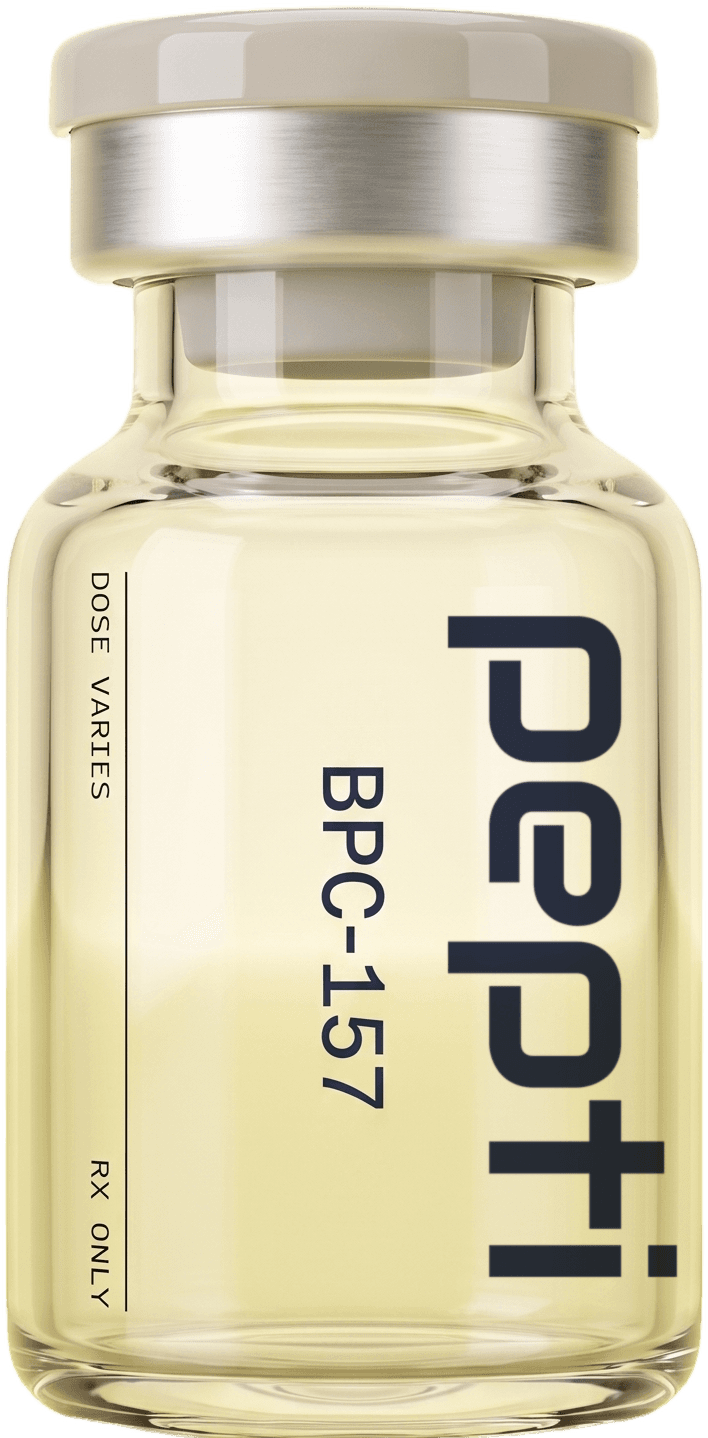
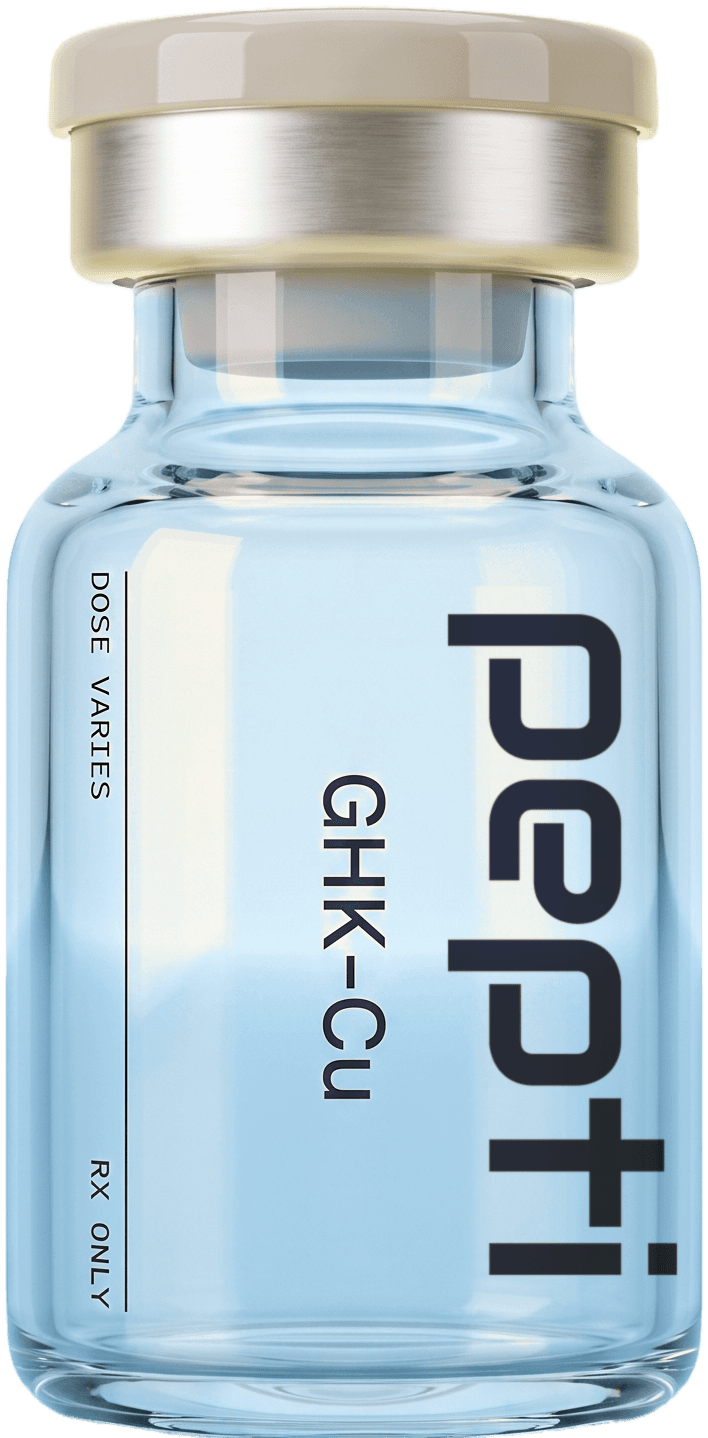
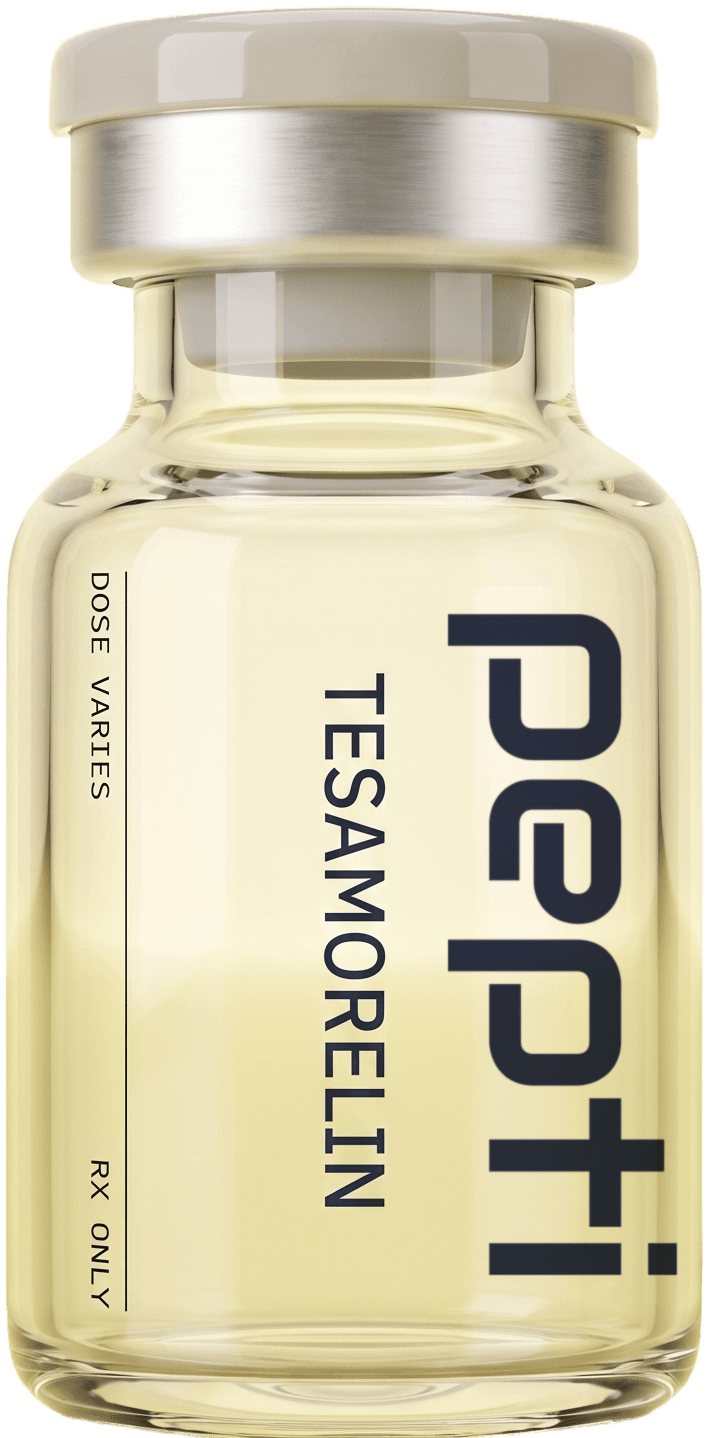
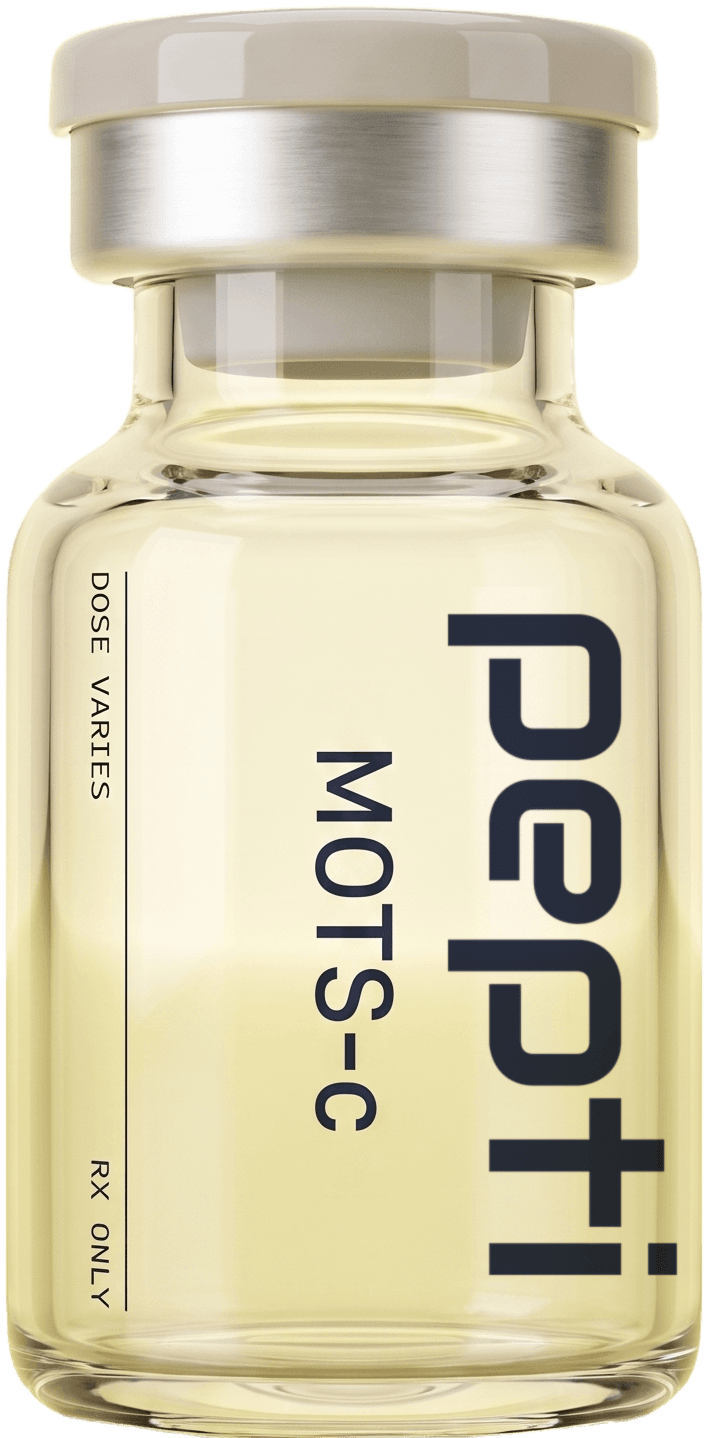
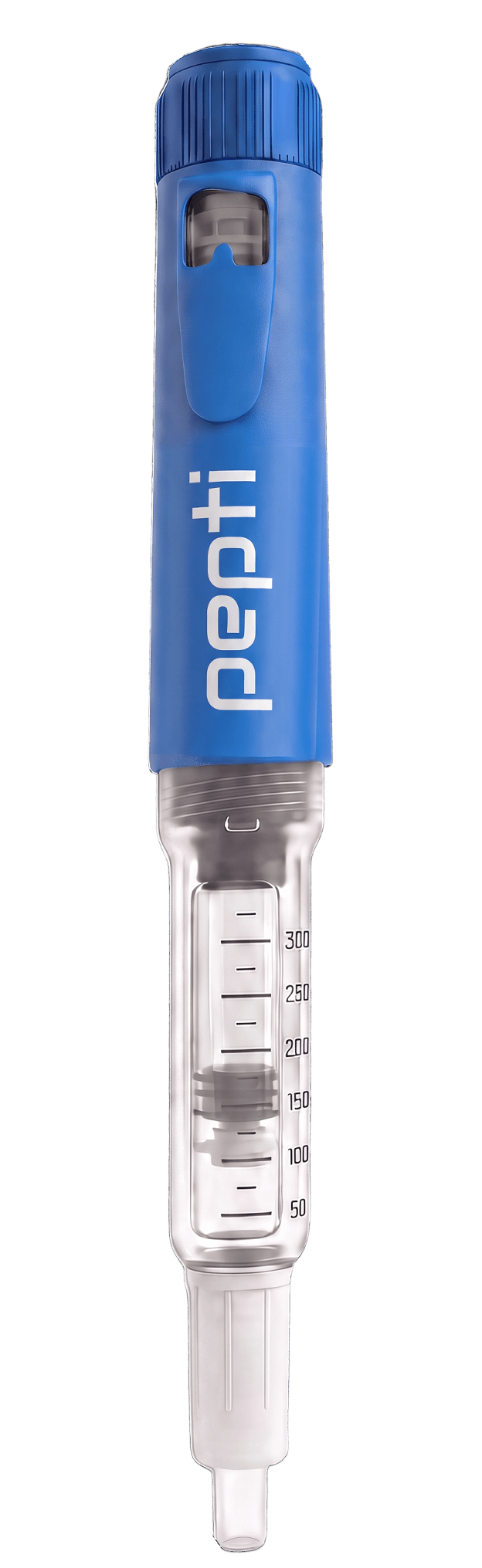
Almost every peptide is injected subcutaneously, into the fat layer just under the skin, and the usual sites are the abdomen, at least two inches from the navel, and the front outer thigh. The upper outer buttock and the back of the upper arm also work but are harder to reach on yourself. Rotate every dose, at least an inch from the last one, so the same spot is not used repeatedly. BPC-157, GHK-Cu, tesamorelin, sermorelin, NAD+, MOTS-c and KLOW are all printed as subcutaneous injections at Pepti; a few products, such as L-carnitine and methylcobalamin, are intramuscular instead. Your route, site and schedule are the ones printed on your vial.
This page covers the subcutaneous sites and how to rotate them, the printed route and schedule for each common peptide, the intramuscular exceptions, what is normal at a site and what is not, and the questions people ask most. The full injection technique, step by step, is in how to inject peptides safely.
Peptide Injection Sites
The short answer
| Site | Route | Notes |
|---|---|---|
| Abdomen | Subcutaneous | The most used site. Stay at least two inches from the navel and avoid scars and stretch marks |
| Front outer thigh | Subcutaneous | The front outer third, a hand's width above the knee and below the hip |
| Upper outer buttock | Subcutaneous or intramuscular | Usable, harder to reach on yourself |
| Back of the upper arm | Subcutaneous | Possible, usually easier with another person |
| Deltoid, upper outer thigh, upper outer buttock | Intramuscular | Only for products whose directions say intramuscular |
The route is part of the prescription. Subcutaneous means into the fat layer; intramuscular means into the muscle, at a different depth and angle and usually with a different needle, which the pharmacy supplies.
Peptide Injection Sites
Where to inject each peptide
These are Pepti's standard printed directions for each product. Your own directions are printed on your vial and are the ones that apply.
| Product | Vial | Printed directions | Route | Price |
|---|---|---|---|---|
| BPC-157 | 5 mL, 1 mg/mL | 0.18 mL (18 units) once daily as directed | Subcutaneous | $209/mo |
| GHK-Cu | 5 mL, 10 mg/mL | 0.25 mL (25 units) once daily Monday through Friday | Subcutaneous | $239/mo |
| Tesamorelin | 5 mL, 2 mg/mL | 0.25 mL (25 units) Monday through Friday nights at bedtime | Subcutaneous | $249/mo |
| Sermorelin | 5 mL, 2 mg/mL | 0.25 mL (25 units) Monday through Friday nights | Subcutaneous | $229/mo |
| NAD+ Injection | 10 mL, 100 mg/mL | 0.83 mL (83 units) three times per week | Subcutaneous | $249/mo |
| MOTS-c | 5 mL, 2 mg/mL | 0.25 mL (25 units) Monday through Friday mornings | Subcutaneous | $259/mo |
| KLOW | 5 mL, four peptides | 0.25 mL (25 units) Monday through Friday mornings | Subcutaneous | $259/mo |
| Semaglutide | Dose-specific | Once weekly, volume set by strength | Subcutaneous | From $99/mo |
| Tirzepatide | 2 mL, dose-specific | 0.50 mL (50 units) once weekly | Subcutaneous | From $159/mo |
| L-Carnitine | 10 mL | 0.50 mL (50 units) once daily Monday through Friday | Intramuscular | $219/mo |
| Methylcobalamin | 5 mL, 2 mg/mL | 1.25 mL (125 units) once weekly | Intramuscular | $229/mo |
Every price is all-in, covering medication, physician review, refill management and shipping, with no separate membership fee. GLP-1 prices are "from" prices because each strength is a separate vial. Compounded medications are not FDA approved.
Peptide Injection Sites
Subcutaneous injection sites, in detail
Abdomen
The abdomen is the most used site because it has a reliable fat layer and is easy to see and reach. Stay at least two inches away from the navel, and avoid scars, stretch marks, moles and any area that is bruised, tender or hard. Pinch a fold of skin between thumb and forefinger to lift the fat layer clear of the muscle.
Front outer thigh
Use the front outer third of the thigh, roughly a hand's width above the knee and a hand's width below the hip. It is a good second region for rotation and easy to reach sitting down.
Upper outer buttock and back of the upper arm
Both are usable for a subcutaneous injection. The buttock is harder to see on yourself, and the back of the arm usually needs another person to do it well. Most people rotate between abdomen and thigh and keep these as extra regions.
Peptide Injection Sites
How to rotate
Rotation is what prevents the most common complication of repeated self-injection, and it needs two layers.
| Rotation | What it means | Example |
|---|---|---|
| Between sites | Moving between regions | Abdomen this week, thigh next week |
| Within a site | Each injection at least a finger's width from the last, on a pattern | Quadrants around the navel, or a clock face |
Which scheme you pick does not matter. Having one does, because "somewhere different" is not a system and after three weeks nobody remembers where they have been. A paper grid on the refrigerator with a square per dose doubles as a rotation record.
Why rotation matters: lipohypertrophy
Lipohypertrophy is thickened, rubbery tissue that builds up where injections are repeatedly given in one place. It is the best-documented complication of self-injection. A 2021 meta-analysis in Therapie pooled 45 studies and 26,865 insulin-treated participants and found an overall prevalence of 41.8%. The FITTER injection-technique recommendations, published in Mayo Clinic Proceedings in 2016, state that lipohypertrophy distorts absorption, that injections should not be given into these lesions, and that correct rotation helps prevent them. That evidence is from insulin, but the principle carries: a dose delivered into thickened tissue is not absorbed the way it would be from healthy tissue.
Check your sites monthly with clean fingertips flat over the areas you use, feeling for anything raised, rubbery or firmer than the tissue around it. If you find something, stop injecting there, move to untouched tissue and tell your care team.
Peptide Injection Sites
Product by product
Where to inject BPC-157
Pepti's printed direction is 0.18 mL (18 units) subcutaneously once daily as directed, into the abdomen or thigh, rotated. People often ask whether BPC-157 should go next to an injury. Some prescribers direct injection near the affected area on the theory that local concentration matters; others do not, because the mechanisms described are systemic. Pepti's standard direction is subcutaneous without naming an injury site, and your directions will say if yours differ. Do not inject into a joint, a tendon or a muscle on your own initiative. The reference is at what is BPC-157, and the same applies to the BPC-157 + TB-500 vial, printed as 0.25 mL (25 units) on weekday mornings.
Where to inject GHK-Cu
GHK-Cu goes into the fat layer of the abdomen or thigh at 0.25 mL (25 units) on weekdays. The solution is blue because of the copper, and a faint blue-green mark at the site is copper that has not yet dispersed, which clears; people who have not been told about it assume bruising. A reaction at a GHK-Cu site is almost always irritation rather than allergy, should fade over a day or two, and rotation is the fix. More is in why is GHK-Cu blue and is GHK-Cu safe.
Where to inject tesamorelin
Tesamorelin is printed as 0.25 mL (25 units) subcutaneously on weekday nights at bedtime, into the abdomen or thigh. Injection-site reactions were the most common adverse reaction more frequent than placebo in the approved product's trials, 17% against 6%, so rotation matters here. See tesamorelin dosage.
Where to inject sermorelin
Sermorelin is printed as 0.25 mL (25 units) subcutaneously on weekday nights. In the paediatric trial programme, the most common reactions were at the injection site: redness, swelling and pain. Abdomen and thigh, rotated, are the usual sites. See sermorelin dosage.
Where to inject NAD+
NAD+ Injection is the largest subcutaneous volume in this table at 0.83 mL (83 units), three times per week. NAD+ solutions are acidic, so stinging and burning during and shortly after the injection are the norm, and a small firm lump that resolves over a day or two is common. Prescribers consistently advise injecting slowly, because the flushing and nausea some people feel track with how fast it enters the circulation. Abdomen and thigh are the usual sites, rotated. See NAD+ injection dosage and is NAD+ safe.
Where to inject MOTS-c
MOTS-c is printed as 0.25 mL (25 units) subcutaneously on weekday mornings, into the abdomen or thigh. What is reported clinically is mostly at the injection site: redness, mild soreness and occasional bruising. See MOTS-c dosage.
Where to inject KLOW
KLOW, the four-peptide blend of GHK-Cu, KPV, BPC-157 and TB-500, is printed as 0.25 mL (25 units) subcutaneously on weekday mornings. Because it contains GHK-Cu it is blue, and the same faint blue-green mark at the site can appear. Reported effects are mostly at the site: redness, mild soreness, occasional bruising. See KLOW dosage.
Semaglutide and tirzepatide
Both are once-weekly subcutaneous injections into the abdomen, thigh or upper arm, on the same day each week, rotated. Semaglutide's draw volume changes with strength, from 0.25 mL at 0.25 mg to 0.68 mL at 1.7 mg; tirzepatide is 0.50 mL at every strength. Never carry a unit number over from a previous vial. The charts are in semaglutide dosing chart and tirzepatide dosing chart.
Peptide Injection Sites
The intramuscular exceptions
A few products are directed into the muscle rather than the fat layer.
| Product | Printed directions | Usual muscle sites |
|---|---|---|
| L-Carnitine | 0.50 mL (50 units) intramuscularly once daily Monday through Friday | Deltoid, upper outer thigh or upper outer buttock, rotated |
| Methylcobalamin | 1.25 mL (125 units) intramuscularly once weekly | As your directions describe |
| Lipo-B | 0.8 mL (80 units) intramuscularly three times weekly | As your directions describe |
Intramuscular means a different depth, angle and usually a longer needle, which the pharmacy supplies. It is not something to improvise from a subcutaneous habit, and if nobody has shown you how, ask before the first dose. A dose above a 1 mL barrel, like methylcobalamin's 1.25 mL, comes with an appropriate syringe, usually marked in millilitres.
Peptide Injection Sites
What is normal at a site, and what is not
| What you notice | What it usually means | What to do |
|---|---|---|
| Stinging during the injection | Wet alcohol on the skin, or an acidic solution such as NAD+ | Let the alcohol dry fully; inject slowly |
| A small bruise | A nicked capillary | Press gently with gauze; move your rotation if it keeps happening in one area |
| A firm area right after injecting | The volume you just delivered | Usually settles within the hour |
| A lump still there next week | Possible lipohypertrophy | Stop using that spot; tell your care team |
| A faint blue-green mark after GHK-Cu or KLOW | Copper not yet dispersed | Clears on its own |
| A drop leaking out after withdrawing | Withdrew too fast | Do not redose; count to five before withdrawing next time |
| A red, warm, painful or swollen site that is not settling | Possible site reaction or infection | Message your care team with a photograph |
| Hives away from the site, swelling of the face, lips or throat, or difficulty breathing | A possible allergic reaction | Emergency care: call 911 |
A site that is hot, spreading or increasingly painful after 48 hours is a different thing from ordinary irritation and needs same-day contact with your care team.
Peptide Injection Sites
Mistakes that change what a site does
- Injecting the same spot repeatedly. This is what produces thickened tissue and uneven absorption.
- Massaging the site afterwards. Rubbing changes absorption; leave it alone.
- Injecting through clothing or into a bruise or scar. Use clean, unbroken skin.
- Using a needle twice. A reused tip is blunted and burred, which hurts more and damages tissue.
- Mixing two vials in one syringe. Combinations are compounded into one vial by the pharmacy; see can you take two peptides together.
Peptide Injection Sites
What the evidence shows, honestly
Subcutaneous self-injection is one of the best-established home techniques in medicine. The site and rotation guidance above comes from insulin practice, which has the largest body of self-injection evidence there is: the FITTER recommendations were vetted by 183 specialists from 54 countries, and the lipohypertrophy findings come from meta-analyses covering tens of thousands of people. That is a stronger evidence base than exists for most of the molecules being injected.
What that evidence does not do is say anything about whether a peptide works. For BPC-157, GHK-Cu as an injection, MOTS-c and KLOW, the research is largely animal and cell work, and the injection site does not change that. Whether injecting near an injury makes any difference for BPC-157 has not been tested in a human trial. Technique decides whether the prescribed dose arrives; it does not decide what that dose does.
Peptide Injection Sites
Where to get a peptide prescribed
- Complete a free online intake covering your history, medications and what you want help with.
- A physician licensed in your state reviews it, usually within 24 hours.
- If it is appropriate, a PCAB-accredited, FDA-registered US 503A pharmacy compounds it to that prescription. Lot test results are published at /quality/lab-results.
- It ships refrigerated with ice packs, sterile syringes and alcohol prep pads, with your route, dose and schedule printed on the vial.
- Your physician stays reachable for questions, and refills run every 28 days, one vial per fill.
Pepti is cash-pay and does not bill insurance. Step-by-step pages: BPC-157, GHK-Cu, tesamorelin, sermorelin, NAD+, MOTS-c and KLOW.
References
What this is based on.
References
- Chang CH, Tsai WC, Hsu YH, Pang JH. Pentadecapeptide BPC 157 enhances the growth hormone receptor expression in tendon fibroblasts · Molecules (2014) · PMID 25415472
- Krivic A, Anic T, Seiwerth S, et al.. Achilles detachment of rat and stable gastric pentadecapeptide BPC 157 · Journal of Orthopaedic Research (2006) · PMID 16583442
- Sikiric P, Seiwerth S, Rucman R, et al.. Stable gastric pentadecapeptide BPC 157: novel therapy in gastrointestinal tract · Current Pharmaceutical Design (2011) · PMID 21548867
- Cerovecki T, Bojanic I, Brcic L, Radic B, et al.. Pentadecapeptide BPC 157 (PL 14736) improves ligament healing in the rat · J Orthop Res (2010) · PMID 20225319
- Sikiric P, Seiwerth S, Rucman R, Turkovic B, et al.. Stable gastric pentadecapeptide BPC 157-NO-system relation · Curr Pharm Des (2014) · PMID 23755725
- Cox HD, Miller GD, Eichner D. Detection and in vitro metabolism of the confiscated peptides BPC 157 and MGF R23H · Drug Test Anal (2017) · PMID 28035768
- Thomas A, Görgens C, Guddat S et al.. Simplifying and expanding the screening for peptides <2 kDa by direct urine injection, liquid chromatography, and ion mobility mass spectrometry · J Sep Sci (2016) · PMID 26578461
- Farrar JT, Young JP Jr, LaMoreaux L, Werth JL et al.. Clinical importance of changes in chronic pain intensity measured on an 11-point numerical pain rating scale · Pain (2001) · PMID 11690728
- Meyer JD, Ho B, Manning MC. Effects of conformation on the chemical stability of pharmaceutically relevant polypeptides · Pharm Biotechnol (2002) · PMID 11987755
- Xu C, Sun L, Ren F, Huang P, et al.. Preclinical Safety Evaluation of Body Protective Compound-157, a Potential Drug for Treating Various Wounds · Regul Toxicol Pharmacol (2020) · PMID 32334036
- He L, Feng D, Guo H, et al.. Pharmacokinetics, distribution, metabolism, and excretion of body-protective compound 157, a potential drug for treating various wounds, in rats and dogs · Front Pharmacol (2022) · PMID 36588717
- Lee E, Padgett B. Intra-Articular Injection of BPC 157 for Multiple Types of Knee Pain · Altern Ther Health Med (2021) · PMID 34324435
Citations are provided for educational purposes. They do not constitute medical advice. Always discuss any peptide protocol with your prescribing physician.
Common questions
Peptide Injection Sites, answered.
Subcutaneously, into the fat layer, most commonly the abdomen at least two inches from the navel or the front outer thigh. Rotate every dose, at least an inch from the last site. Check your label for the route, because a few products are intramuscular.
The abdomen, the front outer thigh, the upper outer buttock and the back of the upper arm. Abdomen and thigh are the easiest to reach on yourself.
Pepti's printed direction is subcutaneous, into the abdomen or thigh, rotated, at 0.18 mL (18 units) once daily as directed. Some prescribers direct injection near an injury and others do not; your directions will say.
Only if your directions say so. The theory is that local concentration matters, but the mechanisms described are systemic, and no human trial has compared injection near an injury with injection elsewhere. Never inject into a joint, tendon or muscle on your own initiative.
Into the fat layer of the abdomen or thigh, rotated. A faint blue-green mark at the site is copper that has not yet dispersed and clears on its own.
Both are subcutaneous injections into the abdomen or thigh on weekday nights, tesamorelin at bedtime. Rotate sites, because injection-site reactions are the most commonly reported effect for both.
Subcutaneously into the abdomen or thigh, rotated, three times per week. Inject slowly: NAD+ commonly stings, and the flushing and nausea some people feel track with how fast it goes in.
Both are subcutaneous injections on weekday mornings into the abdomen or thigh, rotated. KLOW is blue because it contains GHK-Cu.
Either works for a subcutaneous injection. What matters more is rotating between them and within each region so no spot is used repeatedly.
At least an inch from the last site, or a finger's width within a region, on a pattern you can repeat, such as quadrants around the navel.
For a subcutaneous injection it usually just stings more. Use a shorter needle or pinch more skin next time, and message your care team if it keeps happening.
No. Bloodwork is not required for any Pepti treatment. If your physician wants labs for your care, they'll ask through your account. The free assessment goes to a physician licensed in your state. A consultation does not guarantee a prescription.
Next step
See what a physician recommends for you.
A licensed physician in your state reviews your intake and decides what is appropriate. A consultation does not guarantee a prescription.