Recovery · Reference
How Long Does BPC-157 + TB-500 Take to Work? What the Studies Measured
No study has measured how long BPC-157 and TB-500 take to work in people, together or apart, because neither has been tested by injection in a human trial.
Treatments mentioned
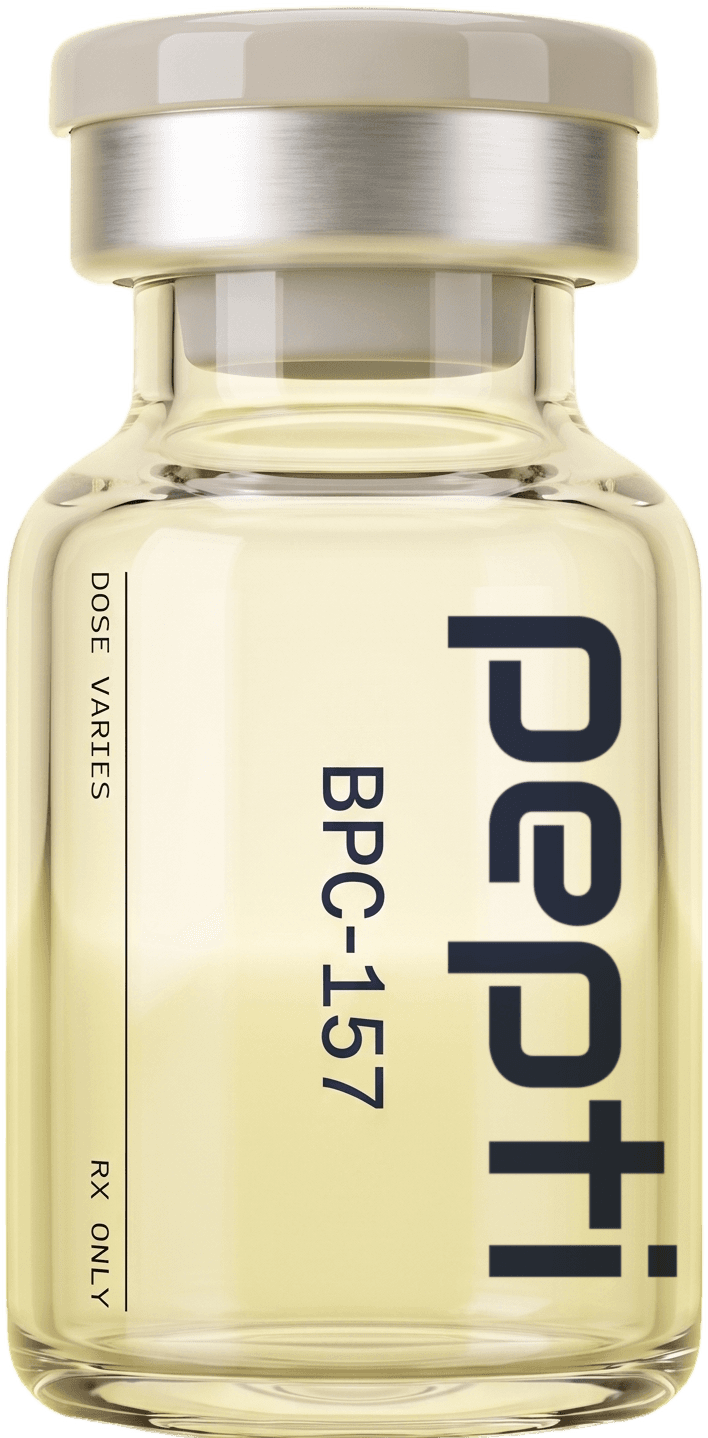
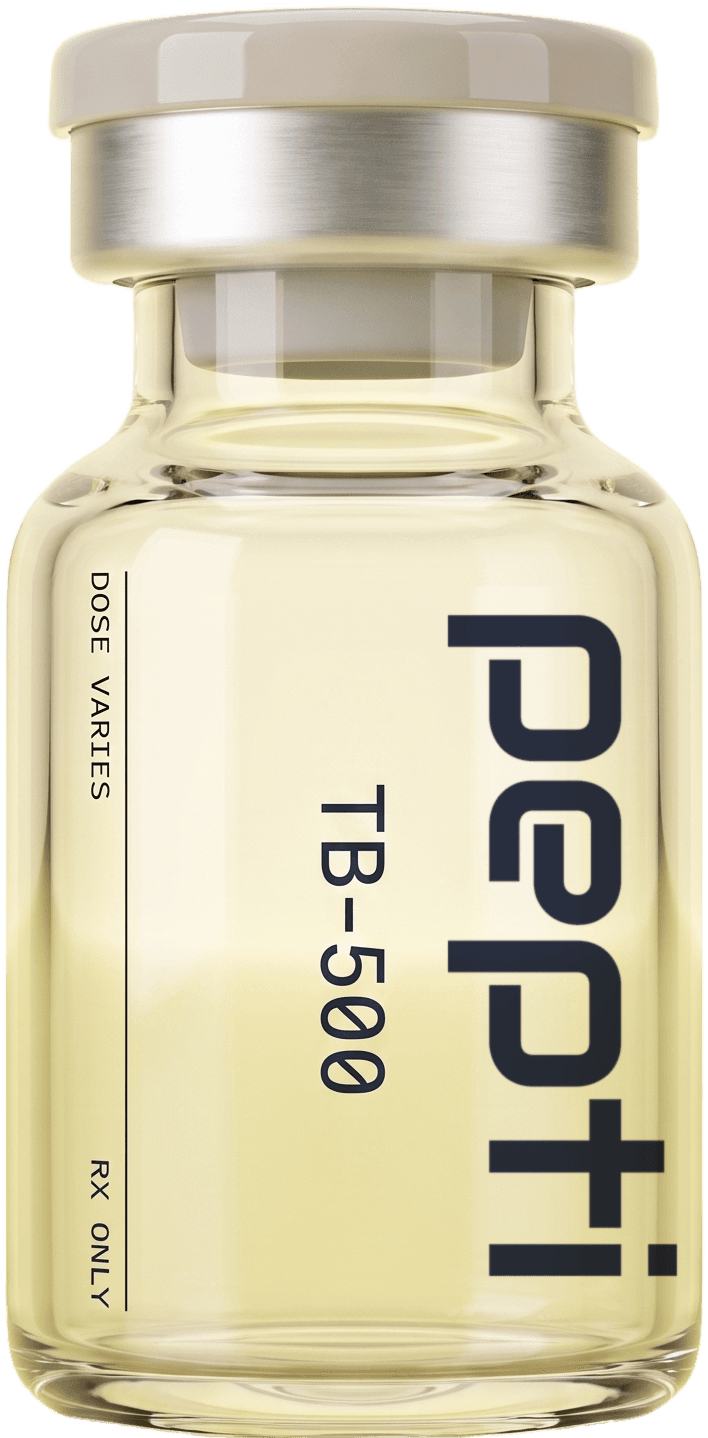
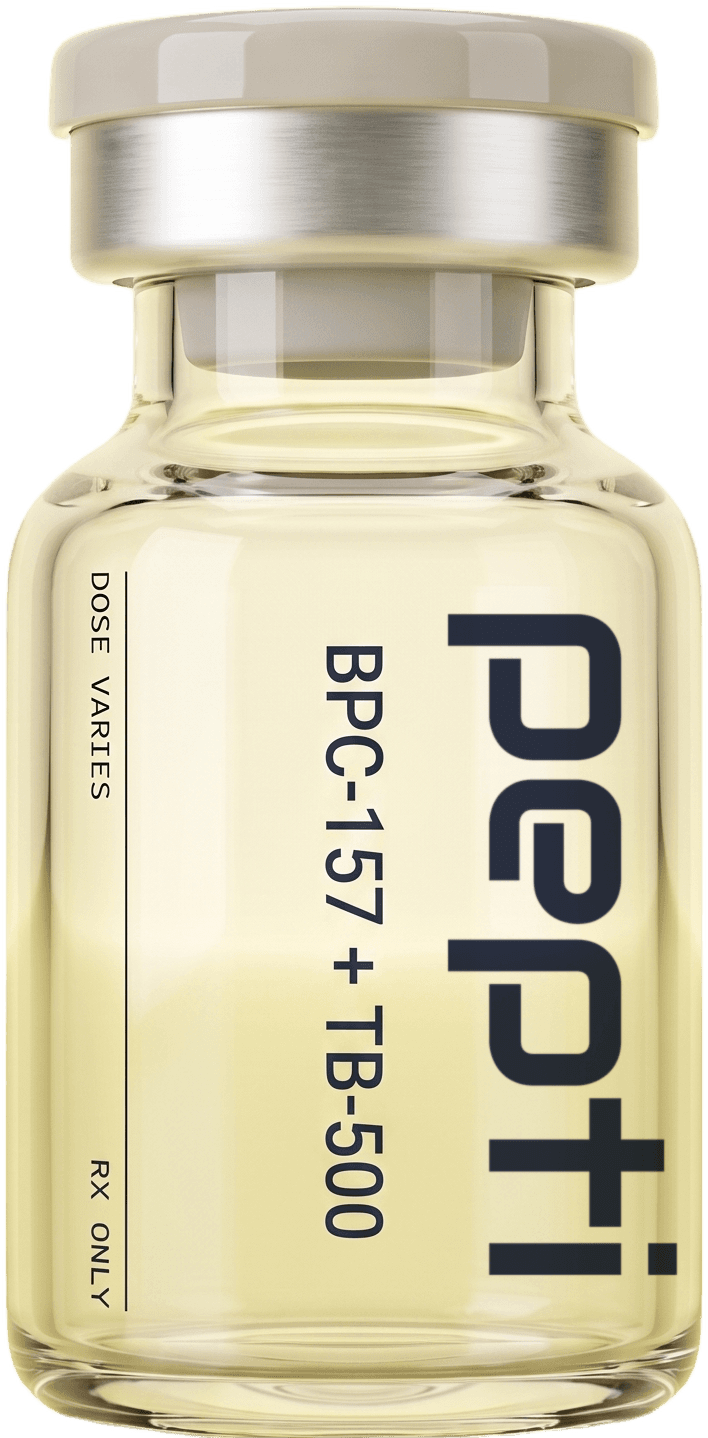
The only study of the pair is a 2026 rat study in Joint Diseases and Related Surgery that treated repaired Achilles tendons daily for four weeks and found the combination did no better than either peptide alone. Everything else is each peptide's own animal work on its own clock, plus small human trials of full-length thymosin beta-4 for unrelated conditions. Any source quoting you a number of days for the stack is quoting opinion, not a measurement.
This page sets out what each study measured and for how long, why animal endpoints do not convert into a human schedule, why two peptides in one vial do not compress the timeline, and how to judge the combination honestly on the 28-day vial it comes in. The combination is a compounded prescription injection, and compounded medications are not FDA approved. For the product itself, see what is BPC-157 + TB-500.
How Long Does BPC-157 + TB-500 Take to Work? What the Studies Measured
The short answer
| Study | Who or what | Molecule | How long it ran | What it measured |
|---|---|---|---|---|
| Joint Diseases and Related Surgery, 2026 | 32 rats with a repaired Achilles tendon | BPC-157, TB-500, or both | Four weeks of daily treatment | Load to failure and tissue scores; the combination did no better than either alone |
| Journal of Orthopaedic Research, 2010 | Rats with a cut knee ligament | BPC-157 | Ninety days | Ligament healing |
| Journal of Orthopaedic Research, 2003 and 2006 | Rats with a cut or detached Achilles tendon | BPC-157 | Healing followed in the animal | Tendon healing, reattachment, function |
| Journal of Investigative Dermatology, 1999 | Rats with full-thickness skin wounds | Thymosin beta-4 | Through wound closure | Speed of closure, collagen, cell migration |
| 2005 meeting abstract | 53 people with ulcerative colitis | BPC-157 by enema | Two weeks | Disease activity; inconclusive |
| Annals of the New York Academy of Sciences, 2010 and 2012 | Healthy volunteers; people with chronic skin ulcers | Full-length thymosin beta-4, intravenous or gel | Dose study; phase 2 trials | Tolerability; wound closure |
| Cornea, 2015 | People with severe dry eye | Thymosin beta-4 eye drops | Phase 2 trial | Signs and symptoms |
Not one of these used the under-the-skin injection that is prescribed, and only the first used both peptides. The vial this page is about:
| Product | What is in it | Typical directions | Price |
|---|---|---|---|
| BPC-157 + TB-500 | 5 mL multi-dose vial, BPC-157 1 mg/mL + TB-500 1 mg/mL (5 mg of each) | 0.25 mL (25 units) subcutaneously Monday through Friday mornings | $259/mo |
The price is all-in, covering medication, physician review, refill management and shipping, with no membership fee.
How Long Does BPC-157 + TB-500 Take to Work? What the Studies Measured
The one study of the pair
What it did
The 2026 paper in Joint Diseases and Related Surgery is the first to test BPC-157 and TB-500 by name, alone and together, in the same experiment. Thirty-two rats had the Achilles tendon cut and repaired, and were assigned to control, BPC-157, TB-500 or both, treated daily for four weeks.
What it found
Maximum load to failure was higher in both peptide groups than in controls, reaching statistical significance for TB-500. TB-500 also produced significantly better tendon architecture scores, while BPC-157 alone showed numerically better scores that did not reach significance. The combination did not do better than either peptide by itself. The authors call the study exploratory.
What it does and does not tell you about time
It measured one point, the end of four weeks, rather than tracking when a difference first appeared. That tells you the tissue was different at four weeks in a rat. It does not tell you on which day a change began, it does not tell you when a person would feel anything, and it says nothing about a human tendon, which remodels on its own, slower schedule. Eight rats per group is also small. Its most useful contribution is the opposite of what people hope: the first data on the pair suggest it was not additive in a rat at four weeks.
How Long Does BPC-157 + TB-500 Take to Work? What the Studies Measured
Why there is no human timeline
No human study of either peptide by injection
The FDA's July 2026 review identified one small randomised, placebo-controlled study of a BPC-157 enema in 53 people with ulcerative colitis, reported only as a 2005 meeting abstract, in which the difference between groups was not statistically distinguishable. There are no published human trials of BPC-157 by injection for tendon, ligament or muscle injury. On the TB-500 side, the human trials used full-length thymosin beta-4 as an intravenous dose, a skin gel and eye drops, not TB-500 and not a tendon population. For the combination there are no human trials of any size.
The fragment is not the full protein
TB-500 is a synthetic seven-amino-acid fragment of thymosin beta-4, the actin-binding region, not the 43-amino-acid protein that most of the research used. The FDA's July 2026 review found cell work in which the fragment showed wound-closure activity in some assays and not others. A time course measured on the full protein cannot simply be transferred to the fragment.
Rat time is not human time
Reading a four-week rat result as a four-week human result is the commonest mistake made with this literature, as the general guide how long do peptides take to work puts it. The rat studies also measured things at a fixed end point, such as tensile strength or collagen under a microscope, rather than when change started.
Two peptides do not make repair go faster
The case for the combination is that the described mechanisms are complementary: BPC-157's literature sits mainly on new blood vessel growth and tendon-cell signalling, thymosin beta-4's on cell migration and limiting scar. That is a coherent mechanistic argument. It is not a claim about speed, and the one study of the pair found no added effect. Repair still runs in its own sequence, inflammation settling, cells migrating, vessels forming, collagen laid down and remodelled under load, and that sequence is set by the tissue rather than by how many peptides are in a vial.
How Long Does BPC-157 + TB-500 Take to Work? What the Studies Measured
What prescribers describe, and how to read it
The live reference for the combination describes patterns prescribers report. These are clinical experience, not trial endpoints, and individual response varies; many people notice little.
| Period | What prescribers describe | What it is not |
|---|---|---|
| First one to two weeks | Often nothing beyond injection-site tenderness | A sign the vial is or is not working |
| Weeks two to four | Some describe a problem area less reactive after activity | A measured trial result |
| Weeks four to eight | Better tolerance to loading, where rehabilitation progress shows | Evidence of tissue change in a person |
| Around eight weeks | A natural point to review with your physician | A promised end point |
Chronic problems, such as a tendon that has been sore for a year, are generally described as behaving differently from a recent injury. No withdrawal or rebound is described in either peptide's literature.
How Long Does BPC-157 + TB-500 Take to Work? What the Studies Measured
Rehabilitation sets the pace
For tendinopathy, progressive loading under a physical therapist has human trial evidence behind it that neither peptide has. A 2015 randomised trial in the American Journal of Sports Medicine reported that both heavy slow resistance and eccentric training improved Achilles tendinopathy. Someone doing graded loading and someone only injecting are running different experiments, and the difference between them is not the vial.
The early sign worth watching is not "the pain is gone" but "the area is less reactive the day after I load it", and that only shows if the tissue is being loaded. More on the evidence by injury type is in peptides for tendon and ligament injuries.
How Long Does BPC-157 + TB-500 Take to Work? What the Studies Measured
How to judge the combination on a 28-day vial
| What the label shows | Value |
|---|---|
| Typical directions | Inject 0.25 mL (25 units) subcutaneously Monday through Friday mornings |
| Per dose | 0.25 mg BPC-157 and 0.25 mg TB-500 (1 mg/mL x 0.25 mL) |
| Doses per vial | 20, about four weeks |
| Refills | Every 28 days, one vial per fill |
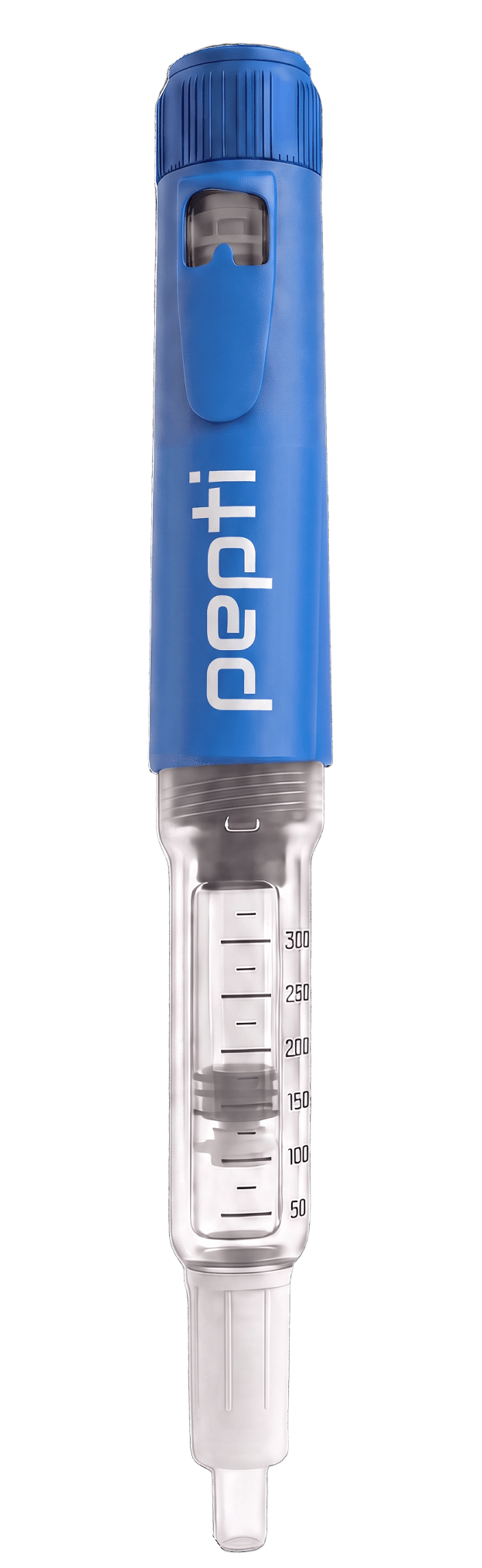
Your physician sets your directions after reviewing your intake, and they are printed on the vial. A higher-strength vial and a pepti Pen cartridge exist, with their own directions. Each refill is a natural checkpoint, and a few habits make it worth something:
- Write one measurable thing down before the first dose. "A full session without the tendon sore the next morning" can be checked; "feeling better" cannot.
- Keep the rehabilitation going. It is the part with human evidence.
- Change one thing at a time. Starting the stack and another new treatment in the same week leaves no way to tell what did what.
- Do not adjust the dose. Taking more, or doubling up after a missed dose, removes your care team's ability to read what happens. Follow the directions on your vial.
The arithmetic is in BPC-157 dosage and TB-500 dosage.
How Long Does BPC-157 + TB-500 Take to Work? What the Studies Measured
When waiting is the wrong answer
Some problems are not a question of time. A complete rupture, a displaced fracture or a significant meniscal tear is a surgical problem no peptide changes. Night pain, numbness, weakness or a locking joint means imaging first. Message your care team rather than continuing to wait if a side effect is not settling, an injection site is hot, spreading or more painful after 48 hours, or you notice nothing by the review point your physician described.
Swelling of the face, lips or throat, a widespread rash or difficulty breathing is an emergency: call 911, then tell your physician. The full safety picture is in BPC-157 + TB-500 side effects.
How Long Does BPC-157 + TB-500 Take to Work? What the Studies Measured
What the evidence shows, honestly
Each component has an animal literature: BPC-157's rodent tendon, ligament, muscle and gut work, and thymosin beta-4's animal wound and heart work plus small human trials of the full protein in unrelated conditions. The pair has one exploratory rat study, which found no added benefit over either alone at four weeks. There is no human timeline for the combination, for either component by injection, or for any injury. The accurate framing is "described in preclinical research for each component and used clinically together," not "shown to work in people by a given week."
On regulation: both BPC-157 and TB-500 were placed in Category 2 of the FDA's 503A bulk substances list in 2023 and removed on 15 April 2026. On 23 July 2026 the Pharmacy Compounding Advisory Committee voted 8 to 6, with one abstention, to recommend adding each to the 503A Bulks List; the FDA's final determination is pending. Both remain legal to prescribe and dispense. Both are prohibited in tested sport; see is BPC-157 + TB-500 banned in sports.
How Long Does BPC-157 + TB-500 Take to Work? What the Studies Measured
Where to get BPC-157 + TB-500 prescribed
The combination cannot be bought legitimately without a prescription. Vials sold "for research use only" carry no pharmacy accountability for identity, purity, sterility or concentration. The prescription route:
- Complete a free online intake covering the injury, any imaging, your rehabilitation, medications and history.
- A physician licensed in your state reviews it, usually within 24 hours.
- If it is appropriate, a PCAB-accredited, FDA-registered US 503A compounding pharmacy prepares it to that prescription. Lot test results are published at /quality/lab-results.
- It ships refrigerated with ice packs, as a multi-dose solution ready to use, with sterile syringes, alcohol prep pads and your directions printed on the vial.
- Your care team stays reachable for questions and side effects.
Pepti is cash-pay and does not bill insurance. Step by step: how to get BPC-157 + TB-500 prescribed online. The single-peptide versions of this question are how long does BPC-157 take to work and how long does TB-500 take to work.
References
What this is based on.
References
- Chang CH, Tsai WC, Hsu YH, Pang JH. Pentadecapeptide BPC 157 enhances the growth hormone receptor expression in tendon fibroblasts · Molecules (2014) · PMID 25415472
- Krivic A, Anic T, Seiwerth S, et al.. Achilles detachment of rat and stable gastric pentadecapeptide BPC 157 · Journal of Orthopaedic Research (2006) · PMID 16583442
- Sikiric P, Seiwerth S, Rucman R, et al.. Stable gastric pentadecapeptide BPC 157: novel therapy in gastrointestinal tract · Current Pharmaceutical Design (2011) · PMID 21548867
- Cerovecki T, Bojanic I, Brcic L, Radic B, et al.. Pentadecapeptide BPC 157 (PL 14736) improves ligament healing in the rat · J Orthop Res (2010) · PMID 20225319
- Sikiric P, Seiwerth S, Rucman R, Turkovic B, et al.. Stable gastric pentadecapeptide BPC 157-NO-system relation · Curr Pharm Des (2014) · PMID 23755725
- Cox HD, Miller GD, Eichner D. Detection and in vitro metabolism of the confiscated peptides BPC 157 and MGF R23H · Drug Test Anal (2017) · PMID 28035768
- Thomas A, Görgens C, Guddat S et al.. Simplifying and expanding the screening for peptides <2 kDa by direct urine injection, liquid chromatography, and ion mobility mass spectrometry · J Sep Sci (2016) · PMID 26578461
- Farrar JT, Young JP Jr, LaMoreaux L, Werth JL et al.. Clinical importance of changes in chronic pain intensity measured on an 11-point numerical pain rating scale · Pain (2001) · PMID 11690728
- Meyer JD, Ho B, Manning MC. Effects of conformation on the chemical stability of pharmaceutically relevant polypeptides · Pharm Biotechnol (2002) · PMID 11987755
- Xu C, Sun L, Ren F, Huang P, et al.. Preclinical Safety Evaluation of Body Protective Compound-157, a Potential Drug for Treating Various Wounds · Regul Toxicol Pharmacol (2020) · PMID 32334036
- He L, Feng D, Guo H, et al.. Pharmacokinetics, distribution, metabolism, and excretion of body-protective compound 157, a potential drug for treating various wounds, in rats and dogs · Front Pharmacol (2022) · PMID 36588717
- Lee E, Padgett B. Intra-Articular Injection of BPC 157 for Multiple Types of Knee Pain · Altern Ther Health Med (2021) · PMID 34324435
Citations are provided for educational purposes. They do not constitute medical advice. Always discuss any peptide protocol with your prescribing physician.
Common questions
How Long Does BPC-157 + TB-500 Take to Work? What the Studies Measured, answered.
Nobody has measured it in people. The only study of the pair treated rat Achilles tendons for four weeks and measured them at the end. No human trial has used either peptide by injection, so no honest source can give a number of days.
No study shows that. In the 2026 rat study, the combination did no better than either peptide alone. The combination is prescribed for complementary mechanisms, not speed.
Four weeks of daily treatment in 32 rats with a repaired Achilles tendon, split into control, BPC-157, TB-500 and combination groups.
No. There are no human trials of the combination of any size, and none of either peptide by injection for an injury.
No study has measured that. Prescribers describe little beyond injection-site tenderness in the first week or two, and a change in how an area tolerates load showing before a change in resting pain. Many people notice little.
Until the review point your physician set, judged against something specific you wrote down at the start. A vial covers about four weeks and refills run every 28 days. Prescribers describe around eight weeks as a natural point to review.
No. Take the dose printed on your vial, on the schedule printed on your vial. Tissue repair is paced by the tissue and the rehabilitation, not the dose.
No study has compared injection sites for speed, and the mechanisms described are systemic. Follow the directions on your label.
About four weeks: 20 doses of 0.25 mL, Monday through Friday mornings.
No. Bloodwork is not required for any Pepti treatment. If your physician wants labs for your care, they'll ask through your account. The free assessment goes to a physician licensed in your state. A consultation does not guarantee a prescription.
Related answers
Keep reading.
- BPC-157 + TB-500: Full Specification, Mechanism and Dosing
- Is BPC-157 + TB-500 Banned in Sports? Both Peptides, Two WADA Classes
- Best Place to Get BPC-157 + TB-500 Online: Choosing a Provider
- BPC-157 + TB-500 Benefits: What the Research Actually Shows
- How Long Does CJC-1295 / Ipamorelin Take to Work? What the Studies Actually Timed
Next step
See what a physician recommends for you.
A licensed physician in your state reviews your intake to see whether treatment fits your history. A consultation does not guarantee a prescription.