Recovery · Reference
TB-500 Dosage: How Pepti Prescribes It, in Units, mL and mg
This page explains the TB-500 dosage Pepti prescribes, what the units on the syringe mean, a dosage chart that converts units to millilitres and milligrams, how much TB-500 is in each Pepti product that contains it, when it is taken, how long a vial lasts, why the published research cannot give you a dose, and the side effects to know about. It covers how Pepti's TB-500 is typically prescribed, not dosing protocols from the internet. Nothing here is a reason to change your own dose.
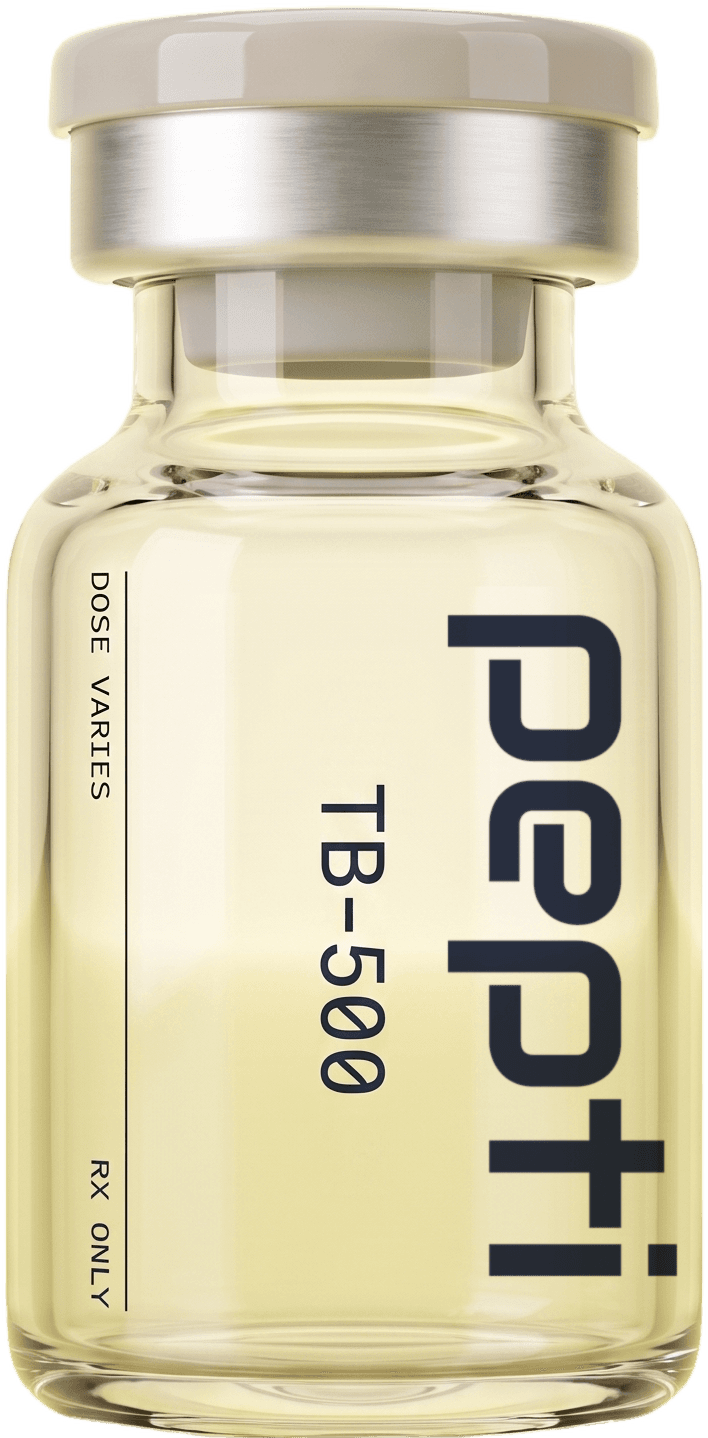
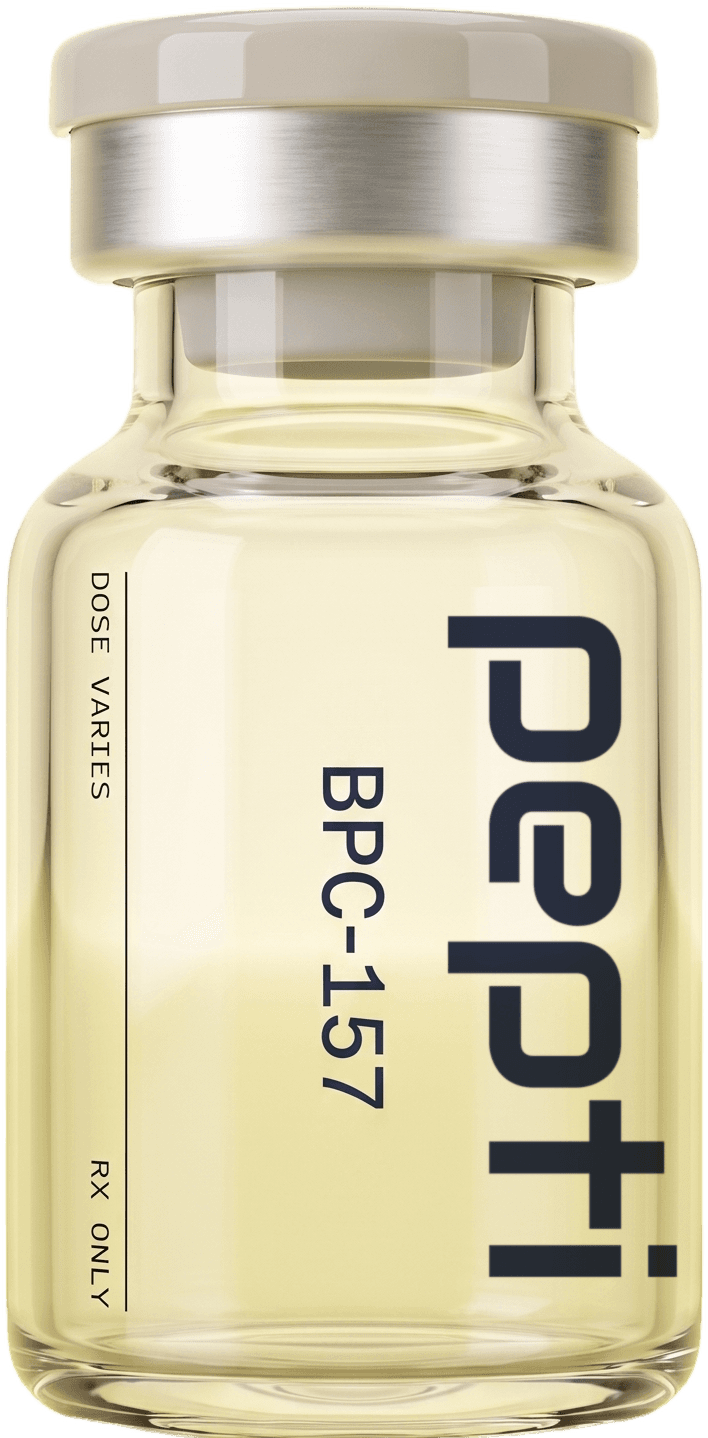
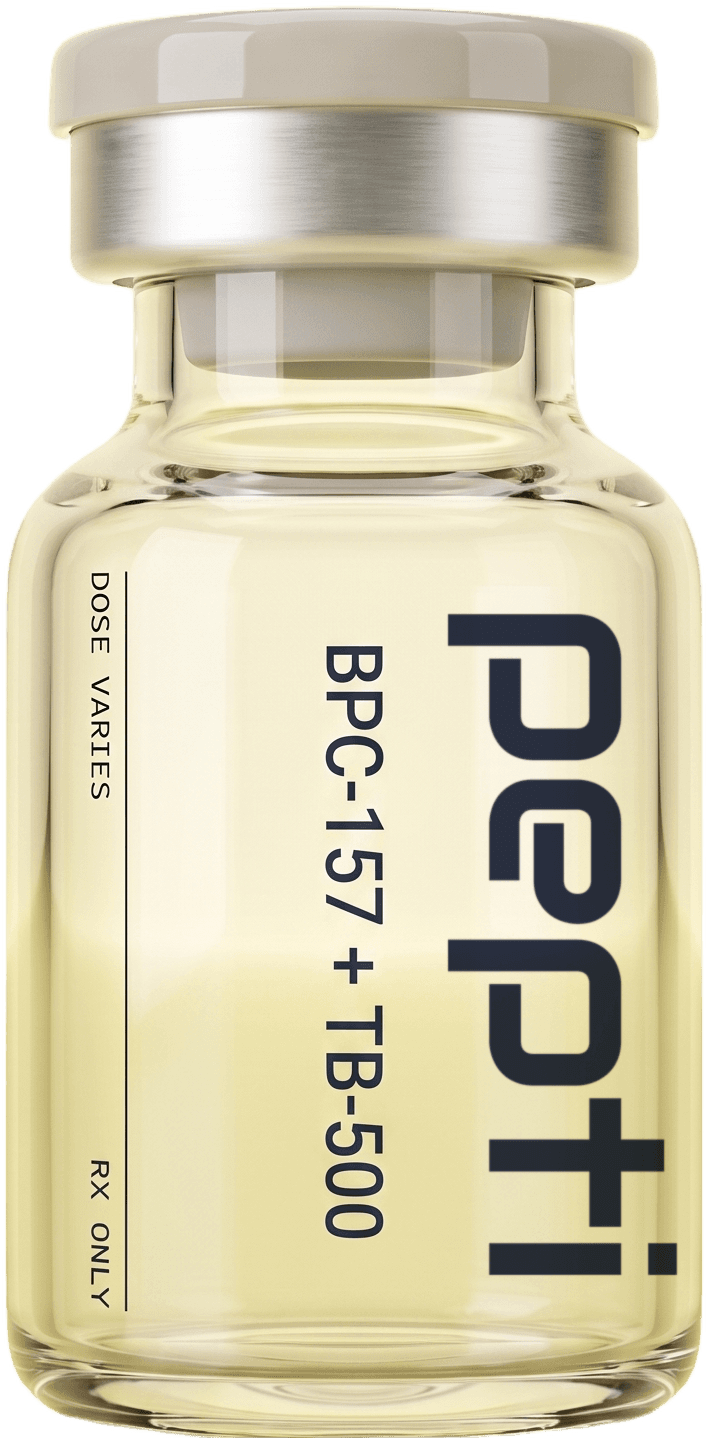
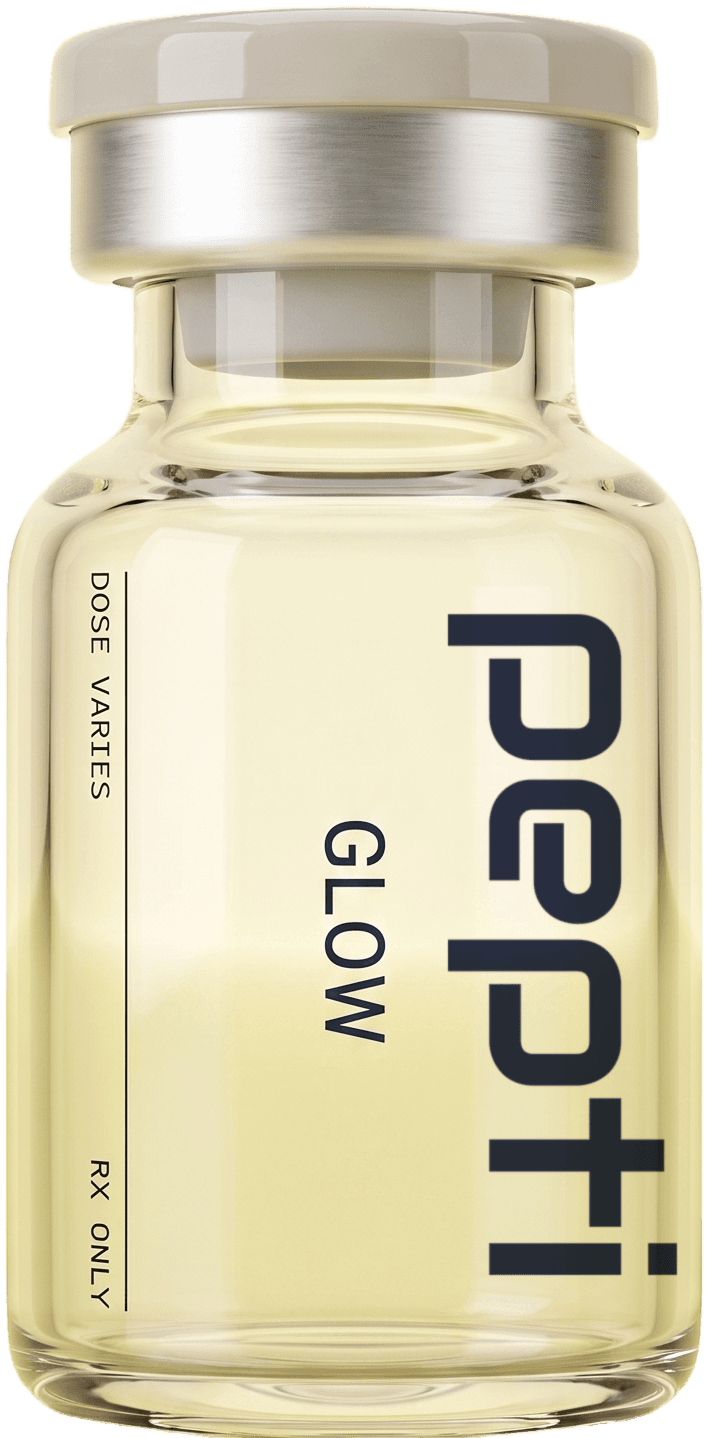
At Pepti, TB-500 is prescribed as 0.25 mL, which is 25 units on a U-100 insulin syringe, injected under the skin Monday through Friday mornings. The vial is 5 mL at 1 mg/mL, so each dose carries 0.25 mg of TB-500 and the vial holds 20 doses, about four weeks. Your physician sets your directions after reviewing your intake, and your exact dose and units are printed on the vial. No human trial has ever tested a TB-500 dose, so the directions come from prescribing practice, not from a study.
This page explains the TB-500 dosage Pepti prescribes, what the units on the syringe mean, a dosage chart that converts units to millilitres and milligrams, how much TB-500 is in each Pepti product that contains it, when it is taken, how long a vial lasts, why the published research cannot give you a dose, and the side effects to know about. It covers how Pepti's TB-500 is typically prescribed, not dosing protocols from the internet. Nothing here is a reason to change your own dose.
TB-500 Dosage
The short answer
| Product | Vial | Typical directions | TB-500 per dose | Doses per vial | Price |
|---|---|---|---|---|---|
| TB-500 | 5 mL, 1 mg/mL (5 mg per vial) | Inject 0.25 mL (25 units) subcutaneously Monday through Friday mornings | 0.25 mg | 20 | $209/mo |
| BPC-157 + TB-500 | 5 mL, BPC-157 1 mg/mL + TB-500 1 mg/mL (5 mg of each per vial) | Inject 0.25 mL (25 units) subcutaneously Monday through Friday mornings | 0.25 mg, with 0.25 mg BPC-157 | 20 | $259/mo |
Every price is all-in, covering medication, physician review, refill management and shipping, with no separate membership fee. Pepti is cash-pay and does not bill insurance. These are the typical printed directions; your own directions are the ones on your vial.
TB-500 Dosage
TB-500 dosage in units, mL and mg
Pepti's directions are written in two forms, millilitres and units, because prescriptions are written in millilitres and insulin syringes are marked in units. On a U-100 insulin syringe, 1 unit is 0.01 mL, so 100 units is 1 mL and 25 units is 0.25 mL. A unit is a volume mark on the barrel, not a measure of how strong the medication is. "How many units of TB-500" only has an answer once you know the concentration on the label.
The milligram figure comes from that concentration. Pepti's single-agent TB-500 is supplied at 1 mg/mL, so:
| What you read | Value | Where it comes from |
|---|---|---|
| Dose volume | 0.25 mL | Printed on the vial |
| On a U-100 insulin syringe | 25 units | 0.25 mL x 100 units per mL |
| Concentration | 1 mg/mL | Printed on the vial |
| TB-500 per dose | 0.25 mg (250 mcg) | 1 mg/mL x 0.25 mL |
| Total in the vial | 5 mg in 5 mL | Printed on the vial |
| Doses per vial | 20 | 5 mL divided by 0.25 mL |
That arithmetic is a way to read a label, not a way to set a dose. A vial labelled 5 mg is not a 5 mg dose: it is twenty 0.25 mg doses. If your label and your syringe seem to disagree, do not dose; message your care team. How long does a peptide vial last explains every number on a vial label in more detail.
TB-500 Dosage
TB-500 dosage chart: units to mL to mg
People search for a "TB-500 dosage chart" because charts online quote doses in milligrams, micrograms and units interchangeably, and the numbers only line up if you know the concentration. The chart below is the conversion for a 1 mg/mL vial, drawn with a U-100 insulin syringe. It is math only. It is not a menu of doses, and the only line that applies to you is the one that matches the number printed on your vial.
| Syringe mark (U-100) | Volume | TB-500 from a 1 mg/mL vial |
|---|---|---|
| 5 units | 0.05 mL | 0.05 mg (50 mcg) |
| 10 units | 0.1 mL | 0.1 mg (100 mcg) |
| 15 units | 0.15 mL | 0.15 mg (150 mcg) |
| 20 units | 0.2 mL | 0.2 mg (200 mcg) |
| 25 units (Pepti's typical directions) | 0.25 mL | 0.25 mg (250 mcg) |
| 30 units | 0.3 mL | 0.3 mg (300 mcg) |
| 40 units | 0.4 mL | 0.4 mg (400 mcg) |
| 50 units | 0.5 mL | 0.5 mg (500 mcg) |
| 100 units | 1 mL | 1 mg |
The rule behind every row: units divided by 100 gives millilitres, and at 1 mg/mL the millilitres and the milligrams are the same number. That only holds at 1 mg/mL. A chart from another source, written for a different concentration, gives different milligram figures for the same units, which is the main reason not to dose from a chart, including this one.
TB-500 Dosage
How much TB-500 is in each Pepti product
TB-500 is in more Pepti products than the single vial, and the same 25 unit draw delivers a different amount of TB-500 in each, because the concentrations differ. This is the table people are usually looking for when they compare a TB-500 dose across products:
| Product | TB-500 concentration | Typical directions | TB-500 per dose | Everything else in the same draw |
|---|---|---|---|---|
| TB-500 | 1 mg/mL | 0.25 mL, Monday through Friday mornings | 0.25 mg | Nothing |
| BPC-157 + TB-500 | 1 mg/mL | 0.25 mL, Monday through Friday mornings | 0.25 mg | 0.25 mg BPC-157 |
| GLOW | 2 mg/mL | 0.25 mL, Monday through Friday mornings | 0.5 mg | 2.5 mg GHK-Cu, 0.5 mg BPC-157 |
| KLOW | 2 mg/mL | 0.25 mL, Monday through Friday mornings | 0.5 mg | 2.5 mg GHK-Cu, 0.5 mg KPV, 0.5 mg BPC-157 |
| ETERNAL | 2 mg/mL | 0.25 mL, once daily Monday through Friday | 0.5 mg | 2.5 mg GHK-Cu, 0.5 mg BPC-157, 0.5 mg epithalon |
| REVIVE | 0.4 mg/mL | 0.25 mL, Monday through Friday nights at bedtime | 0.1 mg | 2.5 mg GHK-Cu, 0.3 mg CJC-1295, 0.6 mg ipamorelin |
The per-dose figures are concentration multiplied by 0.25 mL. They show why a number of units means nothing on its own: 25 units is 0.1 mg of TB-500 from REVIVE and 0.5 mg from GLOW. In every blend the proportions are fixed by the pharmacy's formulation, so there is no way to take more TB-500 and less of the other components from the same vial. If a different balance is wanted, the components are prescribed separately.
The BPC-157 + TB-500 stack also comes as a 3 mL pre-filled pepti Pen cartridge containing 9 mg BPC-157 and 13.5 mg TB-500, a different ratio from the 1:1 vial. It is dosed by dial rather than drawn with a syringe, so the units chart above does not apply to it; the directions come printed with your prescription. Single-agent TB-500 is vial and syringe only. The formats are compared in vial vs pen.
TB-500 Dosage
How long a TB-500 vial lasts
At Pepti's typical directions, one 5 mg vial lasts four weeks:
| Step | Value |
|---|---|
| Dose | 25 units, 0.25 mL, 0.25 mg |
| Doses per week | 5 (Monday through Friday) |
| Doses per vial | 20 (5 mL divided by 0.25 mL) |
| TB-500 used | 20 x 0.25 mg = 5 mg, the whole vial |
| Time per vial | 20 doses divided by 5 per week = 4 weeks |
Four weeks is why refills run every 28 days, one vial per fill. Vials are multi-dose solutions shipped ready to use, refrigerated with ice packs, with sterile syringes and alcohol prep pads. Nothing is mixed at home. Keep the vial in the fridge between doses, do not freeze it, and follow the beyond-use date printed on the label, which runs from first puncture. How to store peptides covers storage.
If a vial runs short before the refill, message your care team rather than adjusting anything yourself. If you miss a dose, follow your directions and do not take two doses to make up for one.
TB-500 Dosage
When to take TB-500
Mornings, Monday through Friday
Pepti's TB-500 directions say Monday through Friday mornings, with weekends off. Five days on and two off is a common convention for recovery peptides: it is easy to keep to, and it maps the vial's 20 doses onto four working weeks. Nothing shows that daily dosing is required, and weekends off are part of the schedule, not missed doses.
Under the skin, and where
Subcutaneous means into the fat layer, not the muscle. Abdomen and thigh are the usual sites, rotated so the same spot is not used repeatedly. The mechanisms described in the research are systemic, so most prescribers do not direct injection near the injured area; if yours does, your directions will say. Technique is covered in how to inject peptides safely.
| Directions say | What it means in practice |
|---|---|
| 0.25 mL (25 units) | Draw to the 25 mark on a U-100 insulin syringe |
| Subcutaneously | Into the fat layer, abdomen or thigh, rotating sites |
| Monday through Friday | Five doses a week, weekends off |
| Mornings | Early in the day |
| 20 doses per vial | About four weeks, then the next refill |
TB-500 Dosage
What the research used, and why it cannot give you a dose
Most questions about TB-500 dosing assume there is a studied human dose somewhere. There is not.
| What exists | What it tells you about dosing |
|---|---|
| Human trials of TB-500, the fragment | None. The FDA's July 2026 review found no published study in which TB-500 itself had been given to people by any route |
| Human trials of full-length thymosin beta-4 | An intravenous study in healthy volunteers (Annals of the New York Academy of Sciences, 2010), eye drops in severe dry eye (Cornea, 2015) and wound trials in chronic ulcers (2012). A different molecule, by different routes, for different conditions |
| Animal studies | Mostly the full-length protein in skin, cornea and heart models. A 2026 rat Achilles study in Joint Diseases and Related Surgery used the fragment, dosed intraperitoneally for four weeks, with no dose-ranging |
| Pharmacokinetics | Only in thoroughbred horses: after a subcutaneous dose, plasma levels peaked within one to two hours and were unquantifiable within six to ten hours (Journal of Chromatography A, 2012) |
The honest reading is that the dosing conventions in circulation come from practice and forum lore, not from human dose-ranging trials. That includes the schedules quoted online with "loading" and "maintenance" phases: no human study has tested any of them. Animal doses were set by body weight and given by routes that have no equivalent in routine care, so they do not convert into a human figure. That is why your directions come from a physician who has reviewed your intake, not from a study table. The full evidence picture is in what is TB-500.
TB-500 Dosage
What changes the directions
Your physician sets your directions after reviewing your intake. Things that can lead to different directions, or a different product, include:
| What can change | How it shows up |
|---|---|
| TB-500 alone or combined | The stack and the blends have their own labels and their own TB-500 amounts per dose |
| Whether TB-500 is the right tool | A gut complaint points to BPC-157; a skin goal alongside an injury to GLOW |
| Your medical history | A cancer history, anticoagulant or antiplatelet therapy, autoimmune disease or an injury that has not been imaged change the conversation |
| Your other medications | There is no established interaction list, so the intake asks for everything you take |
| How you respond | Reactions you report go to your physician, who may revise your directions |
When directions change, the new numbers are printed on the new label. Never carry a number over from a previous fill. Bloodwork is not required for any Pepti treatment. If your physician wants labs for your care, they'll ask through your account.
TB-500 Dosage
Side effects, in summary
The full safety picture is in is TB-500 safe.
| What is reported | How often | What to do |
|---|---|---|
| Injection-site redness, itching, a small lump, tenderness | Common | Rotate sites; mention it at follow-up |
| Tiredness or a head-fog feeling in the first one to two weeks | Common | Report it; usually settles |
| A brief headache or head-rush after a dose | Some people | Report it if it persists |
| Light-headedness or a flushed feeling shortly after dosing | Uncommon | Message your care team. Do not change the dose yourself |
| An injection site that is hot, spreading or worse after 48 hours | Uncommon | Same-day message; it can be infection rather than irritation |
| Facial or throat swelling, widespread rash, breathing difficulty | Rare | Call 911 first, then tell your physician |
Serious adverse events are not commonly reported. The FDA's search of its adverse-event system through March 2025 found no TB-500 reports, though the reporting base for compounded medications is thin, so treat that as reassuring rather than conclusive.
Who should not take TB-500, or should discuss it first: anyone with an active or recent cancer, because cell migration and new blood-vessel growth are processes tumours use; anyone on anticoagulants or antiplatelet drugs; anyone pregnant or breastfeeding, where it is not used; and tested athletes, because the 2026 WADA Prohibited List names thymosin beta-4 and its derivatives, including TB-500, under S2.3, prohibited at all times.
TB-500 was removed from Category 2 of the FDA's 503A bulks list in April 2026, and on 23 July 2026 the Pharmacy Compounding Advisory Committee voted 8 to 6, with one abstention, to recommend adding it to the 503A Bulks List; the FDA's final determination is pending. It remains legal to prescribe and dispense. Compounded medications are not FDA approved, and TB-500 is not an approved drug.
TB-500 Dosage
Where to get TB-500 prescribed
TB-500 cannot be bought legitimately without a prescription. Sites selling it "for research use only" are not accountable for what is in the vial: identity, purity, sterility and concentration are untested, so even the concentration your units chart depends on is unknown. The FDA has also reported several different substances being sold under the one name "TB-500." The prescription route:
- Complete a free online intake covering your history, medications and what you want help with.
- A physician licensed in your state reviews it, usually within 24 hours.
- If it is appropriate, a PCAB-accredited, FDA-registered US 503A compounding pharmacy prepares it to that prescription. Lot test results are published at /quality/lab-results.
- It ships refrigerated with your directions printed on the vial.
- Your physician stays reachable for questions and dose changes.
Pepti prescribes TB-500 in every state except Oklahoma, plus DC Step by step: how to get TB-500 prescribed online. How it compares with its usual partner: BPC-157 vs TB-500 and what is BPC-157 + TB-500. If the name is the confusion, thymosin alpha-1 vs TB-500 separates the two thymic peptides.
References
What this is based on.
References
- Goldstein AL, Hannappel E, Kleinman HK. Thymosin beta4: actin-sequestering protein moonlights to repair injured tissues · Trends Mol Med (2005) · PMID 16099219
- Malinda KM, Sidhu GS, Mani H et al.. Thymosin beta4 accelerates wound healing · J Invest Dermatol (1999) · PMID 10469335
- Malinda KM, Goldstein AL, Kleinman HK. Thymosin beta 4 stimulates directional migration of human umbilical vein endothelial cells · FASEB J (1997) · PMID 9194528
- Philp D, Badamchian M, Scheremeta B et al.. Thymosin beta 4 and a synthetic peptide containing its actin-binding domain promote dermal wound repair in db/db diabetic mice and in aged mice · Wound Repair Regen (2003) · PMID 12581423
- Philp D, Goldstein AL, Kleinman HK. Thymosin beta4 promotes angiogenesis, wound healing, and hair follicle development · Mech Ageing Dev (2004) · PMID 15037013
- Philp D, Scheremeta B, Sibliss K et al.. Thymosin beta4 promotes matrix metalloproteinase expression during wound repair · J Cell Physiol (2006) · PMID 16607611
- Smart N, Risebro CA, Melville AA et al.. Thymosin beta4 induces adult epicardial progenitor mobilization and neovascularization · Nature (2007) · PMID 17108969
- Sosne G, Szliter EA, Barrett R et al.. Thymosin beta 4 promotes corneal wound healing and decreases inflammation in vivo following alkali injury · Exp Eye Res (2002) · PMID 11950239
- Sosne G, Hafeez S, Greenberry AL 2nd et al.. Thymosin beta4 promotes human conjunctival epithelial cell migration · Curr Eye Res (2002) · PMID 12324865
- Sosne G, Xu L, Prach L et al.. Thymosin beta 4 stimulates laminin-5 production independent of TGF-beta · Exp Cell Res (2004) · PMID 14729067
- Sosne G, Qiu P, Christopherson PL et al.. Thymosin beta 4 suppression of corneal NFkappaB: a potential anti-inflammatory pathway · Exp Eye Res (2007) · PMID 17254567
- Sosne G, Qiu P, Goldstein AL et al.. Biological activities of thymosin beta4 defined by active sites in short peptide sequences · FASEB J (2010) · PMID 20179146
Citations are provided for educational purposes. They do not constitute medical advice. Always discuss any peptide protocol with your prescribing physician.
Common questions
TB-500 Dosage, answered.
At Pepti, TB-500 is typically prescribed as 0.25 mL, which is 25 units on a U-100 insulin syringe, injected subcutaneously Monday through Friday mornings. From the 1 mg/mL vial that is 0.25 mg per dose. Your physician sets your directions after reviewing your intake, and your exact dose is printed on the vial.
The amount printed on your vial, on the schedule printed on your vial. Pepti's typical directions are 25 units five mornings a week, but your own directions are set by your physician after reviewing your intake. If you have questions about your dose, message your care team.
The number printed on your vial. Pepti's typical directions are 25 units, which is 0.25 mL on a U-100 insulin syringe, where 1 unit is 0.01 mL.
From a 1 mg/mL vial, 0.25 mg, or 250 mcg. From GLOW, KLOW or ETERNAL, which carry TB-500 at 2 mg/mL, the same 25 units is 0.5 mg. From REVIVE, at 0.4 mg/mL, it is 0.1 mg.
The chart above converts units to millilitres to milligrams for a 1 mg/mL vial, the concentration of Pepti's single-agent TB-500. It is a conversion, not a list of doses to choose from. Your own label is the one that applies.
Pepti's directions have one schedule, printed on the vial; there is no separate loading phase to work out yourself. No human trial has tested any TB-500 dosing schedule, loading or otherwise.
Pepti's typical directions are once each morning, Monday through Friday, with weekends off. That is five doses a week and 20 per vial.
About four weeks. A 5 mg vial at 25 units (0.25 mg) five mornings a week is 20 injections, which uses the whole vial in four weeks, matching the 28-day refill.
The draw is the same, 0.25 mL or 25 units, and the TB-500 per dose is the same 0.25 mg, because the stack carries TB-500 at 1 mg/mL too. Each draw also delivers 0.25 mg of BPC-157.
Under the skin of the abdomen or thigh, rotating sites. Most prescribers do not direct injection near the injury, because the mechanisms described are systemic. If yours does, your directions will say.
No. Take the dose printed on your vial, on the schedule printed on your vial. No study has shown that a larger dose does more in people, because no human dose study exists. If you have questions about your dose, message your care team.
No. Pepti vials are multi-dose solutions shipped ready to use, with sterile syringes and alcohol prep pads. Nothing is reconstituted at home.
Bloodwork is not required for any Pepti treatment. If your physician wants labs for your care, they'll ask through your account. The free assessment goes to a physician licensed in your state. A consultation does not guarantee a prescription.
Next step
See what a physician recommends for you.
A licensed physician in your state reviews your intake and decides what is appropriate. A consultation does not guarantee a prescription.