Recovery · Reference
BPC-157 + TB-500 for Men: What the Research Has Looked At, and What It Is Not
BPC-157 + TB-500 has not been studied in men specifically: the research behind it is rodent and cell work on each peptide separately, plus one 2026 rat Achilles tendon study of the pair that found the combination did no better than either peptide alone, and no human trial of the combination exists.
Treatments mentioned
For men, the useful points are what it is not and where it sits. Neither peptide is a hormone, a steroid or a testosterone booster, and neither is described as moving testosterone, PSA, haematocrit or estradiol, which is why the pair is one of the more common additions for men on testosterone therapy whose limit is a shoulder, knee or Achilles. Both are prohibited at all times in tested sport, and the combination is a compounded prescription injection that is not FDA approved.
This page covers what is in the combination, what research has and has not looked at, the questions men most often ask (testosterone, TRT, muscle, hair, fertility, sport), what a physician rules out first in men over 40, and how Pepti supplies it. The single-peptide versions are BPC-157 for men and TB-500 for men, and the product reference is what is BPC-157 + TB-500.
BPC-157 + TB-500 for Men
The short answer
| Question | What the live research shows | Strength of evidence |
|---|---|---|
| Has the combination been studied in men specifically? | No; no study of either peptide reports sex-specific findings, and no human study of the pair exists | None |
| Tendon and ligament repair | Rat Achilles and knee ligament studies of BPC-157 (Journal of Orthopaedic Research, 2003, 2006, 2010); one 2026 rat study of both | Animal only |
| Does the pair beat either peptide alone? | The 2026 rat study found it did not | One small animal study |
| Muscle injury | Rat crush and transection models of BPC-157 (2006, 2008) | Animal only |
| Does it raise testosterone? | Neither peptide is described as acting on any hormone axis | Not a testosterone booster |
| Does it build muscle? | Neither is an anabolic; nothing describes added muscle or strength | Not a performance drug |
| Can it be used with TRT? | Not described as moving the markers TRT is monitored by | No combined study |
| Fertility | One rat teratogenicity study of BPC-157; no reproductive studies of TB-500 | No data |
| Tested sport | BPC-157 under S0 and TB-500 under S2.3 of the 2026 WADA Prohibited List | Clear exclusion |
The honest summary: two coherent animal literatures for soft-tissue repair, no human trial of the injected form of either, and nothing that makes the pair a men's hormone product.
BPC-157 + TB-500 for Men
What is in the combination, in one paragraph
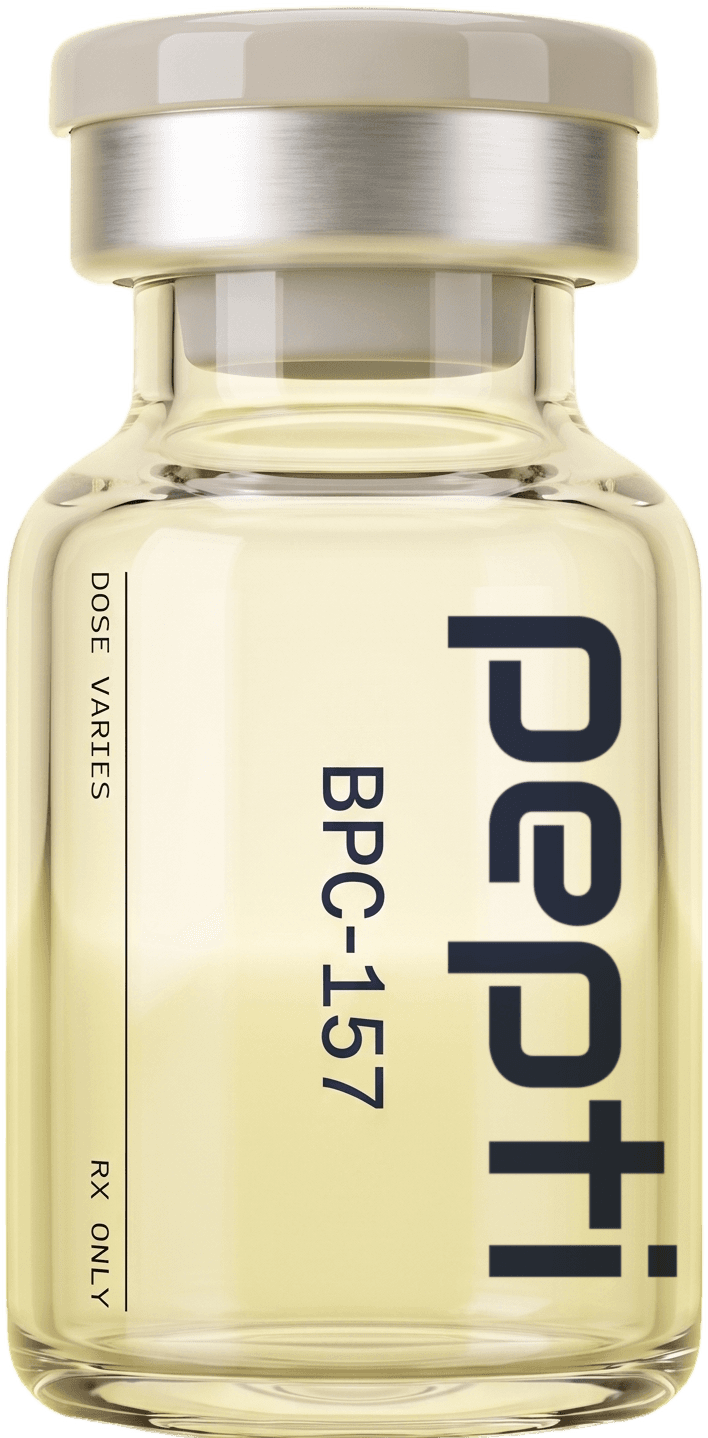
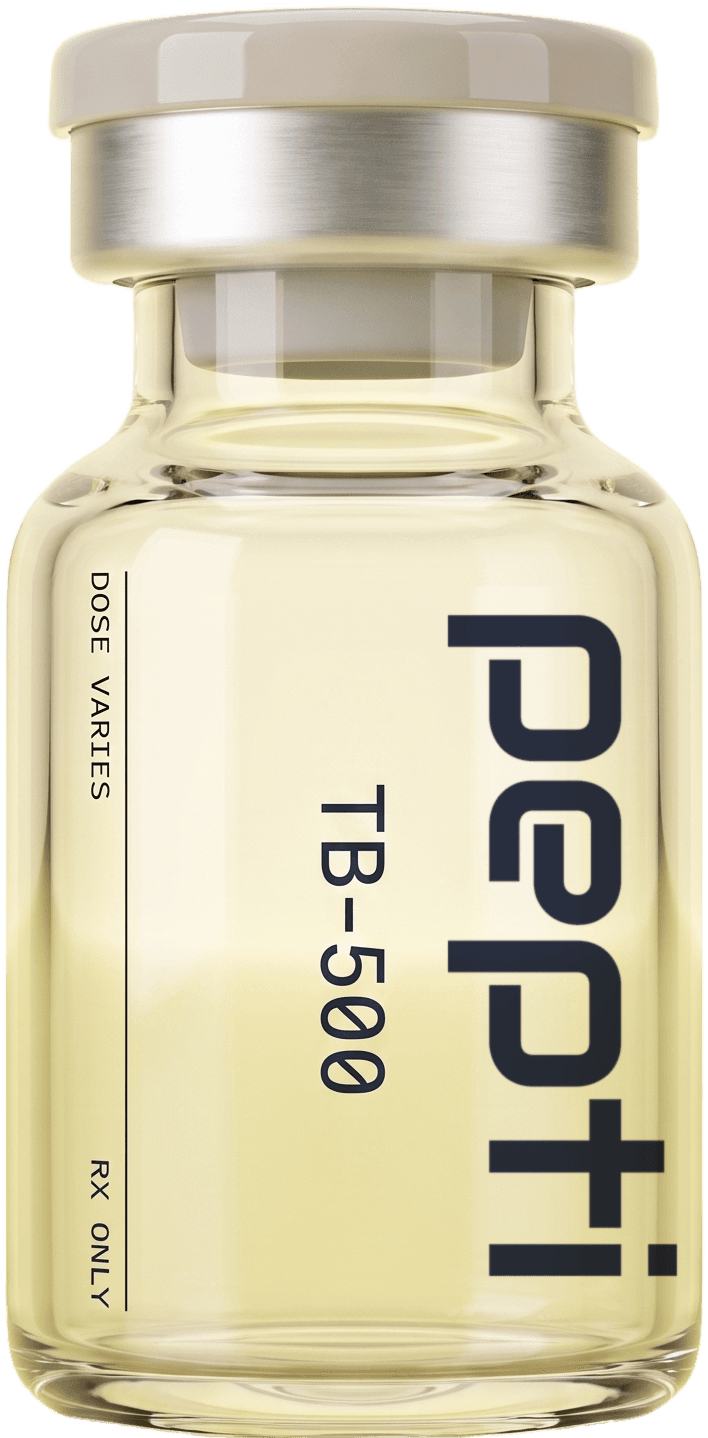
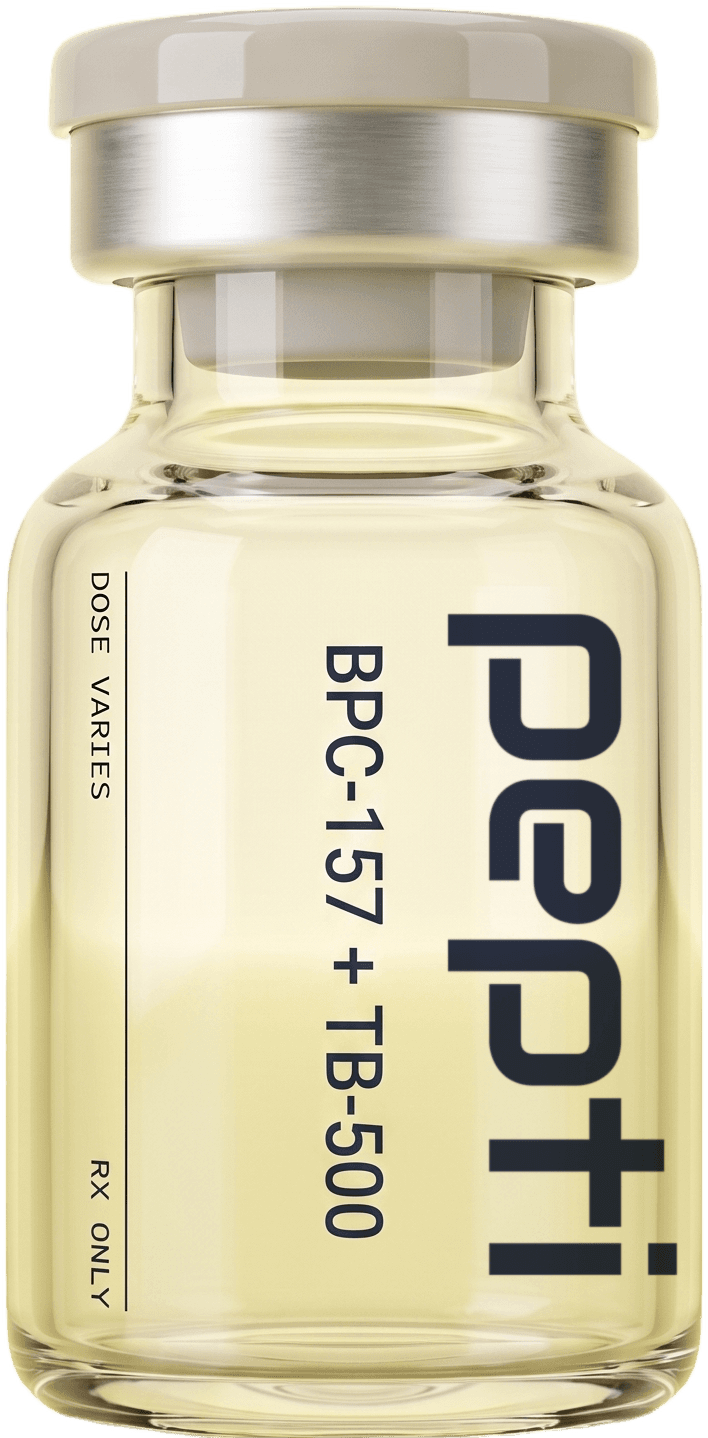
BPC-157 + TB-500 is two synthetic peptides in one vial: 5 mg of each in 5 mL. BPC-157 is a fifteen-amino-acid fragment of Body Protection Compound, a protein first isolated from human gastric juice, described in animal work around new blood-vessel growth through the VEGFR2 pathway and more growth hormone receptor on tendon cells. TB-500 is a seven-amino-acid fragment of thymosin beta-4, the actin-binding region of a protein that lets cells move, described around repair cells migrating into damaged tissue. Neither binds an androgen receptor, suppresses your own hormone production or acts as a painkiller. The pairing is known online as the Wolverine stack.
BPC-157 + TB-500 for Men
What research has looked at
Tendon, ligament and muscle in rodents
This is the work most relevant to the injuries men usually bring. For BPC-157, a 2003 paper in the Journal of Orthopaedic Research reported faster healing of a cut rat Achilles tendon, a 2006 paper reported improved reattachment after Achilles detachment from bone, and a 2010 paper reported improved healing of a cut knee ligament. Rat models of transected quadriceps and crush injury (Journal of Orthopaedic Research, 2006; Surgery Today, 2008) reported faster functional recovery measured as limb function and force. For TB-500, almost all the work is the full thymosin beta-4 protein in skin, heart and cornea models.
What it shows. A consistent rodent picture for BPC-157: better blood supply, more responsive tendon cells, faster migration into the injury.
What it does not show. That any of this happens in a person, how large an effect would be, or how long it would take. There are no published human trials of either peptide by injection for any tendon, ligament or muscle injury.
The one study of the pair
A 2026 paper in Joint Diseases and Related Surgery randomised 32 rats with a repaired Achilles tendon to control, BPC-157, TB-500 or both for four weeks. Load to failure was higher in both peptide groups than in controls, reaching significance for TB-500, and the combination did not outperform either peptide alone. It was exploratory: eight animals per group, intraperitoneal dosing and a four-week endpoint. It is the only direct test of the idea that the two work better together, and it did not support it.
The human studies
BPC-157 has five small human studies, none by subcutaneous injection: two enema studies, a 17-person knee-injection chart review, a 12-woman bladder-injection pilot and a two-person intravenous pilot. None reported results separately for men. TB-500 itself has no human study by any route; full-length thymosin beta-4 has a volunteer safety study and small trials as a skin gel and eye drops. There is no human study of the combination.
BPC-157 + TB-500 for Men
What changes for men
It is not a testosterone booster
Neither peptide acts on any hormone axis, and neither is described as moving testosterone, estradiol, PSA or haematocrit. The BPC-157 growth hormone receptor finding in tendon cells is sometimes misread as "raises growth hormone"; it describes cells becoming more responsive to growth hormone already present, and no study describes a change in circulating growth hormone or IGF-1. If low testosterone is the question, peptides for testosterone covers what has and has not been studied, and this combination is not on that list.
It is not an anabolic
The pair does not add muscle or strength directly, and nothing in either literature describes it as a performance enhancer. The animal muscle work measured recovery in injured rats, not muscle growth in healthy ones. Its place in a man's plan is the joint or tendon that is capping training, not the training itself.
Alongside testosterone therapy
BPC-157 with TB-500 is one of the more common additions for men already on TRT, because the limiting factor is often a shoulder, knee or Achilles rather than a hormone level, and the repair peptides work on a different problem from any hormone. They are not described as moving the markers testosterone therapy is monitored by. There is no study of the combination with testosterone and no established interaction list, because those trials have not been run. List your testosterone prescription, dose and whoever manages it on your intake. The wider picture is in can you take peptides with testosterone.
Hair
The hair claim belongs to TB-500's parent protein: a 2004 paper in the FASEB Journal reported thymosin beta-4 increasing hair growth in rats and mice and acting on follicle stem cells. There is no human hair trial of thymosin beta-4, TB-500 or BPC-157, so the combination is not a hair-loss treatment. See peptides for hair growth.
Fertility
The only reproductive data for BPC-157 is a rat teratogenicity study by intramuscular injection, which found no effect on fetal development, and the FDA noted nothing covered fertility. The FDA's July 2026 review identified no developmental or reproductive studies of TB-500. No study has looked at sperm or male fertility in either direction for either peptide. If conception is a goal in any timeframe you can name, raise it with your physician before starting. See do peptides affect fertility.
Tested sport
The 2026 World Anti-Doping Agency Prohibited List names BPC-157 under S0, non-approved substances, and TB-500 under S2.3 as a thymosin beta-4 derivative, both prohibited at all times, in and out of competition. A prescription does not create an exemption. If you are tested by any body, this combination is not open to you, and the same applies to GLOW and KLOW, which contain both. See is BPC-157 banned and peptides for athletes.
BPC-157 + TB-500 for Men
Men over 40: what a physician rules out first
Tendons and ligaments heal slowly at any age, and the shoulder from a decade ago can still be there. But the complaints men bring with an old injury, low energy, poor recovery and a soft middle, often have causes no vial addresses.
| What it is | How it shows up | Why it comes first |
|---|---|---|
| A structural injury | Night pain, numbness, weakness, a locking joint | Needs imaging; a complete rupture or significant tear is a surgical question no peptide changes |
| Tendinopathy that has not been loaded properly | A tendon that flares with use | Progressive loading under a physical therapist has human trial evidence that neither peptide has |
| Obstructive sleep apnoea | Exhaustion, low testosterone, poor recovery | Suppresses testosterone and IGF-1 and fragments deep sleep |
| Genuinely low testosterone | Low drive, lost muscle, poor recovery | A different treatment with its own monitoring |
| Alcohol intake | Fragmented sleep, low testosterone, central fat | A common reversible cause, and one rarely raised |
More on this is in peptides for men over 40. The combination suits a specific tendon or soft-tissue problem alongside the loading and rehabilitation that have actual trial evidence.
BPC-157 + TB-500 for Men
Safety and who should not take it
Nothing in the live research suggests the side-effect profile differs between men and women.
| What is reported or relevant | How often | What to do |
|---|---|---|
| Injection-site redness, itching, tenderness, a small lump, occasional bruising | Common | Rotate sites; mention it at follow-up |
| Tiredness, head-fog or a mild headache in the first one to two weeks | Common | Report it; it usually settles |
| Nausea, light-headedness or a brief flush after a dose | Uncommon | Report it |
| Transient joint or muscle ache | Uncommon | Report it; it is easy to confuse with the injury |
| A hot, spreading site after 48 hours; a new lump; unexplained bleeding; a change in skin colour | Stop and call | Stop dosing and contact your physician |
| Facial or throat swelling, widespread rash, difficulty breathing | Rare | Call 911 first, then tell your physician |
| Active or recent cancer | Before treatment | Both peptides are described around new blood-vessel growth and cell migration; not prescribed |
| Anticoagulant or antiplatelet therapy | Before treatment | Animal clotting-time changes with BPC-157; discuss first |
The FDA's central stated concern for both peptides is immunogenicity, an immune reaction to aggregated peptide or impurities, which is an argument for a tested pharmacy preparation. The full detail is in BPC-157 + TB-500 side effects.
BPC-157 + TB-500 for Men
Where BPC-157 and TB-500 stand with the FDA
Both were placed in Category 2 of the FDA's 503A bulks list in 2023 and removed from it on 15 April 2026. On 23 July 2026 the Pharmacy Compounding Advisory Committee voted 8 to 6, with one abstention, to recommend adding BPC-157 to the 503A Bulks List, and by the same margin to recommend adding TB-500, against the FDA staff's proposal; the FDA's final determination is pending. Both remain legal to prescribe and compound against a valid prescription. Compounded medications are not FDA approved.
BPC-157 + TB-500 for Men
How Pepti supplies BPC-157 + TB-500
| Product | What is in it | Typical directions | Price |
|---|---|---|---|
| BPC-157 + TB-500 | 5 mL vial, 1 mg/mL of each (5 mg BPC-157, 5 mg TB-500) | 0.25 mL (25 units) subcutaneously Monday through Friday mornings; 0.25 mg of each per dose, 20 doses | $259/mo |
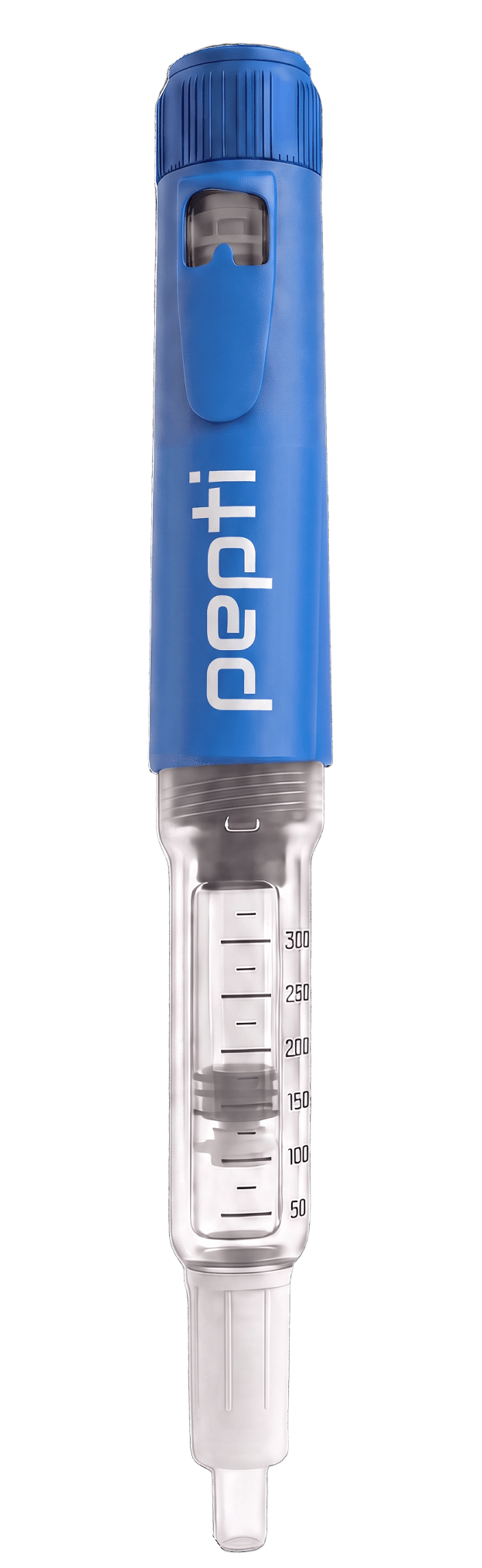
| BPC-157 + TB-500 Pen | 3 mL cartridge with 9 mg BPC-157 and 13.5 mg TB-500 | Dosed in clicks; Pen directions are written separately | Per the product page |
| BPC-157 | 5 mL vial, 1 mg/mL (5 mg) | 0.18 mL (18 units) once daily | $209/mo |
| TB-500 | 5 mL vial, 1 mg/mL (5 mg) | 0.25 mL (25 units) Monday through Friday mornings | $209/mo |
| KLOW | 50 mg GHK-Cu, 10 mg KPV, 10 mg BPC-157, 10 mg TB-500 in 5 mL | 0.25 mL (25 units) Monday through Friday mornings | $259/mo |
KLOW carries twice as much BPC-157 and TB-500 per 0.25 mL as the two-peptide vial and adds GHK-Cu and KPV; for a single tendon problem with nothing else in the picture, the two-peptide vial is the simpler prescription. The arithmetic is in BPC-157 + TB-500 dosage. Your physician sets your directions after reviewing your intake, and they are printed on the vial.
Every price is all-in, covering medication, physician review, refill management and shipping, with no membership fee. Pepti is cash-pay and does not bill insurance. Vials arrive as ready-to-use solutions with sterile syringes and alcohol prep pads, shipped refrigerated with ice packs. Refills run every 28 days, one vial per fill.
BPC-157 + TB-500 for Men
Where to get BPC-157 + TB-500 prescribed
The combination cannot be bought legitimately without a prescription; research-use-only vials have no pharmacy accountable for what is in them, and the one reproducible adverse-event case in the FDA's database came from such a vial of this exact pair. See research peptides vs prescription peptides. The prescription route:
- Complete a free online intake covering the injury, imaging, your medications (including any testosterone), whether you are drug tested, and what you want help with.
- A physician licensed in your state reviews it, usually within 24 hours.
- If it is appropriate, a PCAB-accredited, FDA-registered US 503A compounding pharmacy prepares it to that prescription. Lot test results are published at /quality/lab-results.
- It ships refrigerated with your directions printed on the vial.
- Your care team stays reachable for questions and side effects.
Step by step: how to get BPC-157 + TB-500 prescribed online. Bloodwork is not required for any Pepti treatment. If your physician wants labs for your care, they'll ask through your account.
References
What this is based on.
References
- Chang CH, Tsai WC, Hsu YH, Pang JH. Pentadecapeptide BPC 157 enhances the growth hormone receptor expression in tendon fibroblasts · Molecules (2014) · PMID 25415472
- Krivic A, Anic T, Seiwerth S, et al.. Achilles detachment of rat and stable gastric pentadecapeptide BPC 157 · Journal of Orthopaedic Research (2006) · PMID 16583442
- Sikiric P, Seiwerth S, Rucman R, et al.. Stable gastric pentadecapeptide BPC 157: novel therapy in gastrointestinal tract · Current Pharmaceutical Design (2011) · PMID 21548867
- Cerovecki T, Bojanic I, Brcic L, Radic B, et al.. Pentadecapeptide BPC 157 (PL 14736) improves ligament healing in the rat · J Orthop Res (2010) · PMID 20225319
- Sikiric P, Seiwerth S, Rucman R, Turkovic B, et al.. Stable gastric pentadecapeptide BPC 157-NO-system relation · Curr Pharm Des (2014) · PMID 23755725
- Cox HD, Miller GD, Eichner D. Detection and in vitro metabolism of the confiscated peptides BPC 157 and MGF R23H · Drug Test Anal (2017) · PMID 28035768
- Thomas A, Görgens C, Guddat S et al.. Simplifying and expanding the screening for peptides <2 kDa by direct urine injection, liquid chromatography, and ion mobility mass spectrometry · J Sep Sci (2016) · PMID 26578461
- Farrar JT, Young JP Jr, LaMoreaux L, Werth JL et al.. Clinical importance of changes in chronic pain intensity measured on an 11-point numerical pain rating scale · Pain (2001) · PMID 11690728
- Meyer JD, Ho B, Manning MC. Effects of conformation on the chemical stability of pharmaceutically relevant polypeptides · Pharm Biotechnol (2002) · PMID 11987755
- Xu C, Sun L, Ren F, Huang P, et al.. Preclinical Safety Evaluation of Body Protective Compound-157, a Potential Drug for Treating Various Wounds · Regul Toxicol Pharmacol (2020) · PMID 32334036
- He L, Feng D, Guo H, et al.. Pharmacokinetics, distribution, metabolism, and excretion of body-protective compound 157, a potential drug for treating various wounds, in rats and dogs · Front Pharmacol (2022) · PMID 36588717
- Lee E, Padgett B. Intra-Articular Injection of BPC 157 for Multiple Types of Knee Pain · Altern Ther Health Med (2021) · PMID 34324435
Citations are provided for educational purposes. They do not constitute medical advice. Always discuss any peptide protocol with your prescribing physician.
Common questions
BPC-157 + TB-500 for Men, answered.
It has not been studied in men specifically, and there is no human study of the combination. For men it is most often prescribed for a tendon, ligament or old injury that limits training, on the strength of rodent work on each peptide and prescriber experience rather than human trials.
No. Neither peptide acts on any hormone axis, and neither is described as moving testosterone, estradiol, PSA or haematocrit.
No. Neither is an anabolic. The animal muscle studies looked at recovery after injury in rats, not muscle growth.
It is one of the more common additions, because it works on a different problem from any hormone and is not described as moving the markers TRT is monitored by. There is no study of the combination with testosterone, so list your testosterone prescription and whoever manages it on your intake.
No. Both are short peptide fragments that do not bind an androgen receptor and do not suppress your own hormone production.
No study has looked. There is one rat teratogenicity study of BPC-157 and no reproductive studies of TB-500. Raise conception plans with your physician before starting.
Not on current evidence. The hair findings used full-length thymosin beta-4 in rats and mice, and there is no human hair trial of either peptide.
Yes, at all times. BPC-157 is named under S0 and TB-500 under S2.3 of the 2026 WADA Prohibited List. A prescription does not create an exemption.
It is commonly prescribed for that. A physician first rules out a structural injury, sleep apnoea, low testosterone and other causes, and progressive loading under a physical therapist has human evidence that neither peptide has.
Not on current evidence. The one study that compared them, in rats, found the pair did not outperform either peptide alone. BPC-157 vs TB-500 covers the differences.
At Pepti, $259 a month, all-in, covering medication, physician review, refill management and shipping. BPC-157 or TB-500 alone is $209 a month.
No. Bloodwork is not required for any Pepti treatment. If your physician wants labs for your care, they'll ask through your account. The free assessment goes to a physician licensed in your state. A consultation does not guarantee a prescription.
Related answers
Keep reading.
- BPC-157 + TB-500: Full Specification, Mechanism and Dosing
- BPC-157 + TB-500 for Women: What the Research Has Looked At, and What to Know First
- BPC-157 + TB-500 Side Effects: What Is Reported, What Is Rare, and Who Should Avoid It
- Do You Need a Prescription for BPC-157 + TB-500? Is It Legal Online?
- CJC-1295 / Ipamorelin for Men: What the Research Has Looked At, and What to Check First
Next step
See what a physician recommends for you.
A licensed physician in your state reviews your intake to see whether treatment fits your history. A consultation does not guarantee a prescription.