Recovery · Reference
BPC-157 for Men: What the Research Has Looked At, and What It Is Not
This page covers what BPC-157 is, what research has and has not looked at, the questions men most often ask (testosterone, TRT, muscle, fertility, sport), what a physician rules out first in men over 40, and how Pepti supplies it. The general reference is what is BPC-157, and the evidence benefit by benefit is in BPC-157 benefits.
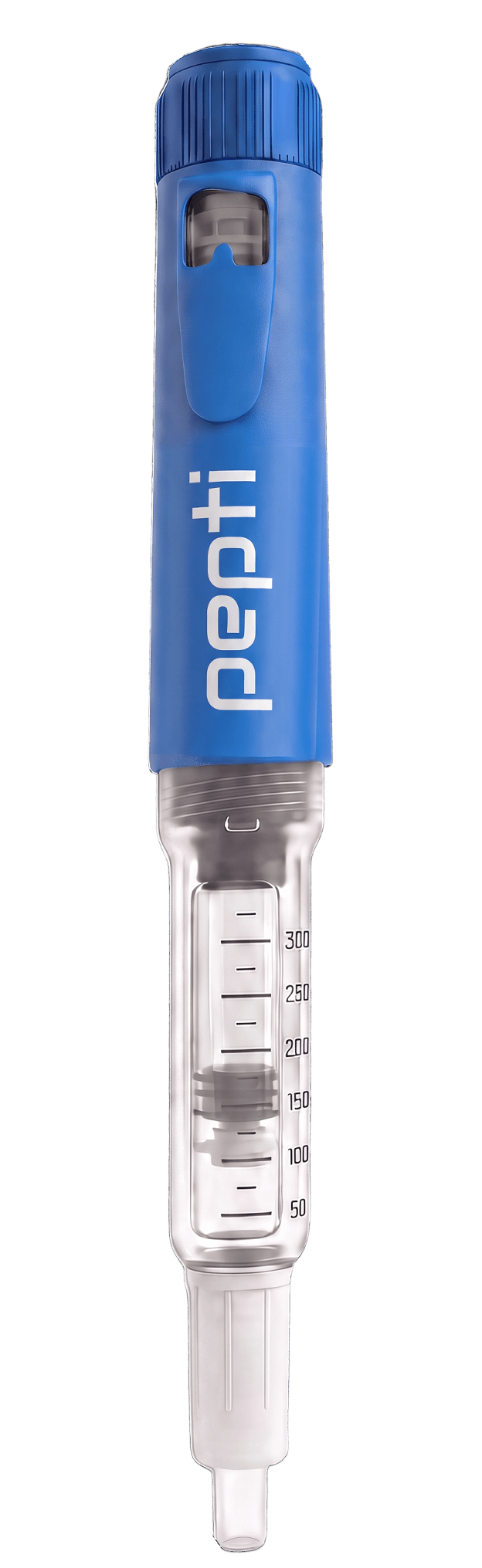
Treatments mentioned
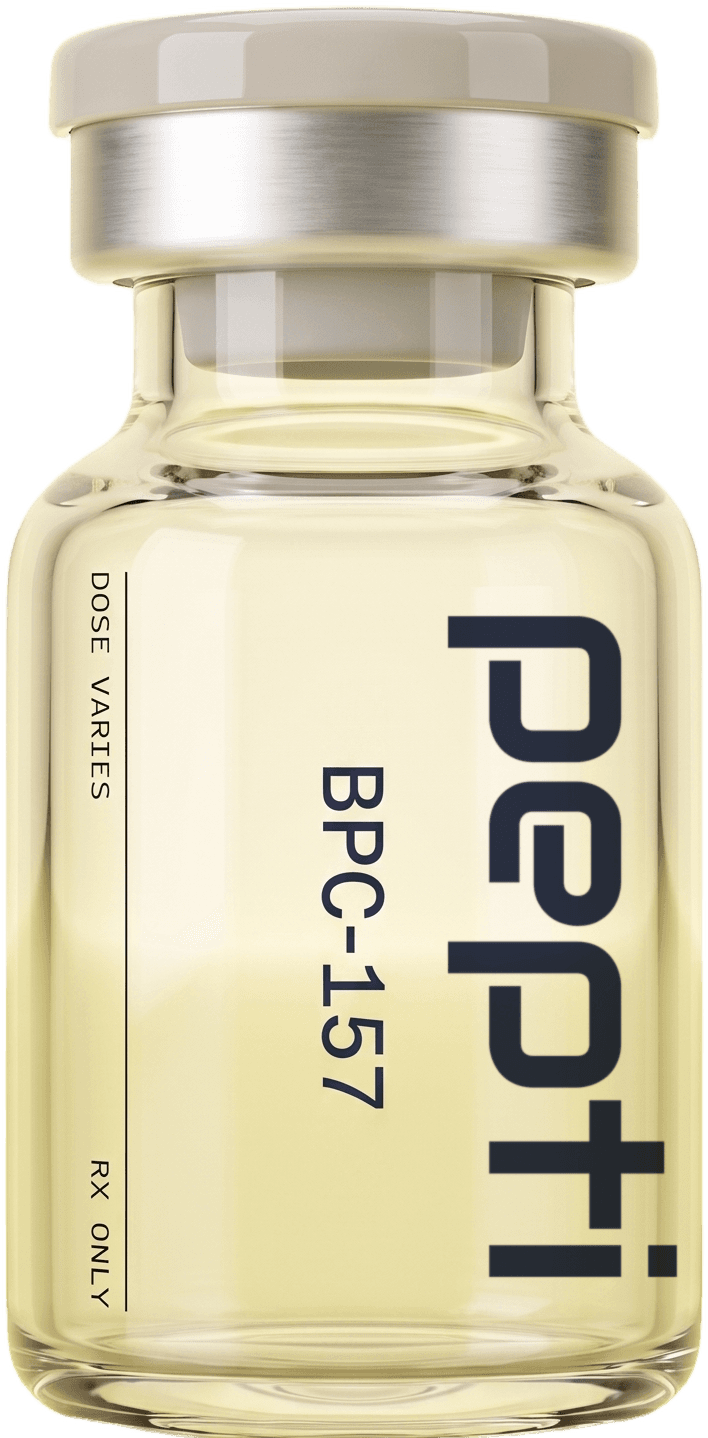
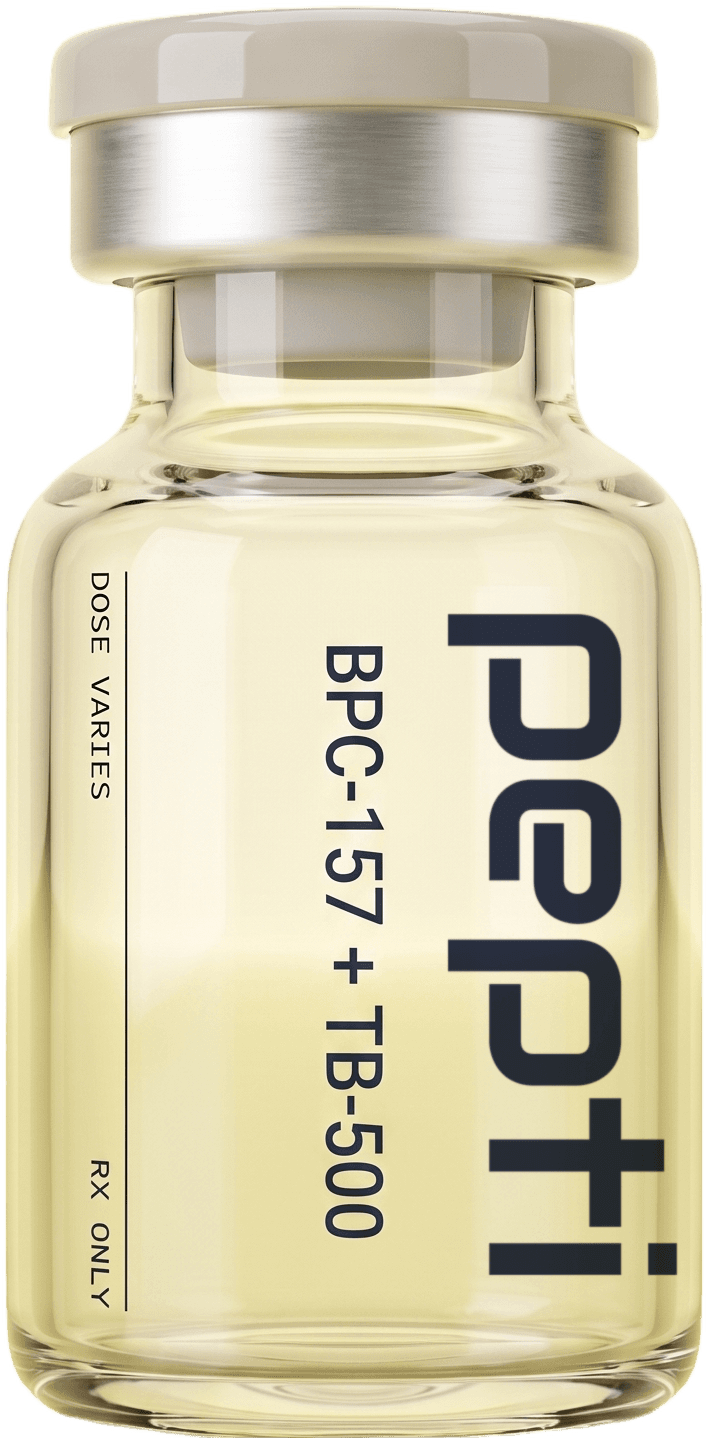
BPC-157 has not been studied in men specifically: its research is mostly rodent and cell work on tendon, muscle and the gut lining, and the five small human studies the FDA identified did not report findings by sex and none used the subcutaneous injection that is prescribed. For men, the practical points are what it is not and where it sits. It is not a hormone, a steroid or a testosterone booster, and it is not described as moving testosterone, PSA, haematocrit or estradiol, which is why it is a common addition alongside testosterone therapy for a shoulder or tendon that limits training. It is prohibited at all times in tested sport, and it is a compounded prescription injection that is not FDA approved.
This page covers what BPC-157 is, what research has and has not looked at, the questions men most often ask (testosterone, TRT, muscle, fertility, sport), what a physician rules out first in men over 40, and how Pepti supplies it. The general reference is what is BPC-157, and the evidence benefit by benefit is in BPC-157 benefits.
BPC-157 for Men
The short answer
| Question | What the live research shows | Strength of evidence |
|---|---|---|
| Has BPC-157 been studied in men specifically? | No; no study reports sex-specific findings | None |
| Tendon and ligament repair | Rodent Achilles studies (Journal of Orthopaedic Research, 2003 and 2006) and tendon-cell work | Animal and cell only |
| Muscle injury | Rat crush and transection models (Journal of Orthopaedic Research, 2006; Surgery Today, 2008) | Animal only |
| Does it raise testosterone? | Not described as moving testosterone or any hormone axis | Not a testosterone booster |
| Does it build muscle? | Not an anabolic; it does not add muscle directly | Not a performance drug |
| Can it be used with TRT? | Not described as moving haematocrit, PSA, estradiol or testosterone | No combined study |
| Fertility | One rat teratogenicity study; nothing on fertility | No data |
| Tested sport | Named under S0 of the 2026 WADA Prohibited List, prohibited at all times | Clear exclusion |
The honest summary: a coherent animal story for soft-tissue repair, no human trial of the injected form, and nothing that makes it a men's hormone product.
BPC-157 for Men
What BPC-157 is, in one paragraph
BPC-157 is a pentadecapeptide, a chain of fifteen amino acids, taken from a larger protein called Body Protection Compound that was first isolated from human gastric juice. Animal and cell research describes it promoting new blood-vessel growth through the VEGFR2 pathway (Journal of Molecular Medicine, 2017), interacting with the nitric oxide system, increasing growth hormone receptor expression in tendon fibroblasts (Molecules, 2014), and helping tendon cells attach and migrate through the FAK and paxillin pathway (Molecules, 2011). It is not a hormone and it is not a steroid. It does not bind an androgen receptor, does not suppress your own hormone production, and is not a painkiller.
BPC-157 for Men
What research has looked at
Tendon, ligament and muscle in rodents
This is the work most relevant to the injuries men usually ask about. A 2003 paper in the Journal of Orthopaedic Research reported accelerated healing of transected Achilles tendon in rats, and a 2006 paper in the same journal reported improved reattachment and functional recovery after Achilles detachment from bone. Rat models of transected quadriceps and crush injury (Journal of Orthopaedic Research, 2006; Surgery Today, 2008) reported faster functional recovery measured as limb function and force.
What it shows. A consistent rodent picture: better blood supply, more responsive tendon cells, faster migration into the injury.
What it does not show. That any of this happens in a person, how large an effect would be, or how long it would take. There are no published human trials of BPC-157 by injection for tendon, ligament or muscle injury.
The human studies, all five
The FDA's 2026 review found five clinical studies in which BPC-157 was given to people: a phase 1 enema tolerability study in 32 healthy volunteers; a randomized enema study in 53 people with ulcerative colitis, reported only as a 2005 meeting abstract, with no statistically distinguishable difference from placebo; a 2021 chart review of 17 people given knee injections; a 2024 pilot of bladder-wall injections in 12 women with interstitial cystitis; and a 2025 two-person intravenous pilot. None reported serious adverse events, none reported results separately for men, and none used subcutaneous injection.
The gut
The original and largest body of BPC-157 research is rodent work on protecting the stomach and intestinal lining against NSAIDs and alcohol. That is relevant to men who train hard and take anti-inflammatories regularly, but it remains animal work. See peptides for gut health.
BPC-157 for Men
What changes for men
It is not a testosterone booster
BPC-157 is studied around tissue repair and does not act on any hormone axis. It is not described as moving testosterone, haematocrit, PSA or estradiol. The growth hormone receptor finding in tendon cells is sometimes misread as "raises growth hormone"; it does not. It describes cells becoming more responsive to growth hormone already present, and no study describes a change in circulating growth hormone or IGF-1. If low testosterone is the question, peptides for testosterone covers what has and has not been studied, and BPC-157 is not on that list.
It is not an anabolic
BPC-157 does not add muscle or strength directly, and nothing in its research describes it as a performance enhancer. The animal muscle work is about recovery after injury, measured in injured rats, not about building muscle in healthy ones. Men who are told otherwise are being sold a steroid story about a repair peptide.
Alongside testosterone therapy
BPC-157 with TB-500 is one of the more common additions for men already on TRT, because the limiting factor is often a shoulder, knee or Achilles rather than a hormone level, and BPC-157 works on a different problem from any hormone. It is not described as moving the markers that testosterone therapy is monitored by. There is no study of the combination, so list your testosterone prescription, dose and whoever manages it on your intake. The wider picture is in can you take peptides with testosterone.
Fertility
The only reproductive data for BPC-157 is a rat teratogenicity study by intramuscular injection, which found no effect on fetal development. The FDA noted that nothing covered fertility, a full reproductive cycle, or the subcutaneous route. No study has looked at sperm or male fertility in either direction. If conception is a goal in any timeframe you can name, raise it with your physician before starting.
Tested sport
The 2026 World Anti-Doping Agency Prohibited List names BPC-157 under S0, non-approved substances, which is prohibited at all times, in and out of competition. All S0 substances are Specified Substances, which is not a lesser prohibition. The NCAA names it in its peptide hormones and growth factors class. A prescription does not create an exemption, USADA describes a therapeutic use exemption for it as unlikely, and a validated urine detection method was published in Drug Testing and Analysis in 2017. If you are tested by any body, this is not open to you. See is BPC-157 banned and peptides for athletes.
BPC-157 for Men
Men over 40: what a physician rules out first
Tendon and ligament heal slowly at any age and more slowly with less growth hormone and IGF-1 signalling, which is why the shoulder from a decade ago is still there. But the complaints men bring with an old injury, low energy, poor recovery and a soft middle, often have causes no vial addresses.
| What it is | How it shows up | Why it comes first |
|---|---|---|
| A structural injury | Night pain, numbness, weakness, a locking joint | Needs imaging; a complete rupture or significant tear is a surgical question |
| Tendinopathy that has not been loaded properly | A tendon that flares with use | Progressive loading under a physiotherapist has human trial evidence that BPC-157 does not |
| Obstructive sleep apnoea | Exhaustion, low testosterone, poor recovery | Suppresses testosterone and IGF-1 and destroys deep sleep |
| Genuinely low testosterone | Low drive, lost muscle, poor recovery | A different treatment with its own monitoring |
| Alcohol intake | Fragmented sleep, low testosterone, central fat | The most common reversible cause, and the least often raised |
More on this is in peptides for men over 40.
BPC-157 for Men
Safety and who should not take it
| What is reported or relevant | How often | What to do |
|---|---|---|
| Injection-site redness, itching, tenderness, a small lump | Common | Rotate sites; mention it at follow-up |
| Mild tiredness or headache in the first week or two | Common | Usually settles; report it if it does not |
| Nausea, light-headedness or a warm flush after a dose | Uncommon | Report it |
| Unexplained bleeding or bruising, a new lump, a change in skin colour | Stop and call | Stop dosing and contact your physician |
| Facial or throat swelling, widespread rash, difficulty breathing | Rare | Call 911 first, then tell your physician |
| Active or recent cancer | Before treatment | BPC-157 is described as promoting new blood-vessel growth; not prescribed |
| Anticoagulant or antiplatelet therapy | Before treatment | Animal studies showed clotting-time changes; discuss first |
Nothing in the live research suggests the profile differs between men and women. The full detail is in is BPC-157 safe.
BPC-157 for Men
Where BPC-157 stands with the FDA
BPC-157 was placed in Category 2 of the FDA's 503A bulks list in 2023 and removed from it on 15 April 2026. On 23 July 2026 the Pharmacy Compounding Advisory Committee voted 8 to 6, with one abstention, to recommend adding it to the 503A Bulks List, against the FDA staff recommendation; the FDA's final determination is pending. It remains legal to prescribe and compound against a valid prescription. No BPC-157 product is approved in any country, and compounded medications are not FDA approved.
BPC-157 for Men
How Pepti supplies BPC-157
| Product | What is in it | Typical directions | Price |
|---|---|---|---|
| BPC-157 | 5 mL vial, 1 mg/mL (5 mg BPC-157) | 0.18 mL (18 units) subcutaneously once daily; 0.18 mg per dose, 27 doses per vial | $209/mo |
| BPC-157 + TB-500 | 5 mL vial, 1 mg/mL of each | 0.25 mL (25 units) Monday through Friday mornings; 0.25 mg of each per dose, 20 doses | $259/mo |
| TITAN Blend | 10 mg tesamorelin, 6 mg CJC-1295, 12 mg ipamorelin, 10 mg BPC-157 in 5 mL | 0.25 mL (25 units) Monday through Friday nights at bedtime; 0.5 mg BPC-157 per dose | $289/mo |
TITAN adds growth-hormone-axis peptides to BPC-157, which brings their own considerations, including glucose. The arithmetic for each vial is in BPC-157 dosage, and the comparison with TB-500 is in BPC-157 vs TB-500. Your physician sets your directions after reviewing your intake, and they are printed on the vial.
Every price is all-in, covering medication, physician review, refill management and shipping, with no membership fee. Pepti is cash-pay and does not bill insurance. Vials arrive as ready-to-use solutions with sterile syringes and alcohol prep pads, shipped refrigerated with ice packs. Refills run every 28 days, one vial per fill.
BPC-157 for Men
Where to get BPC-157 prescribed
BPC-157 cannot be bought legitimately without a prescription; vials sold without one are research-use-only products with no pharmacy accountable for what is in them. See research peptides vs prescription peptides. The prescription route:
- Complete a free online intake covering the injury, imaging, your medications (including any testosterone), whether you are drug tested, and what you want help with.
- A physician licensed in your state reviews it, usually within 24 hours.
- If it is appropriate, a PCAB-accredited, FDA-registered US 503A compounding pharmacy prepares it to that prescription. Lot test results are published at /quality/lab-results.
- It ships refrigerated with your directions printed on the vial.
- Your care team stays reachable for questions and side effects.
Step by step: how to get BPC-157 prescribed online. Bloodwork is not required for any Pepti treatment. If your physician wants labs for your care, they'll ask through your account.
References
What this is based on.
References
- Chang CH, Tsai WC, Hsu YH, Pang JH. Pentadecapeptide BPC 157 enhances the growth hormone receptor expression in tendon fibroblasts · Molecules (2014) · PMID 25415472
- Krivic A, Anic T, Seiwerth S, et al.. Achilles detachment of rat and stable gastric pentadecapeptide BPC 157 · Journal of Orthopaedic Research (2006) · PMID 16583442
- Sikiric P, Seiwerth S, Rucman R, et al.. Stable gastric pentadecapeptide BPC 157: novel therapy in gastrointestinal tract · Current Pharmaceutical Design (2011) · PMID 21548867
- Cerovecki T, Bojanic I, Brcic L, Radic B, et al.. Pentadecapeptide BPC 157 (PL 14736) improves ligament healing in the rat · J Orthop Res (2010) · PMID 20225319
- Sikiric P, Seiwerth S, Rucman R, Turkovic B, et al.. Stable gastric pentadecapeptide BPC 157-NO-system relation · Curr Pharm Des (2014) · PMID 23755725
- Cox HD, Miller GD, Eichner D. Detection and in vitro metabolism of the confiscated peptides BPC 157 and MGF R23H · Drug Test Anal (2017) · PMID 28035768
- Thomas A, Görgens C, Guddat S et al.. Simplifying and expanding the screening for peptides <2 kDa by direct urine injection, liquid chromatography, and ion mobility mass spectrometry · J Sep Sci (2016) · PMID 26578461
- Farrar JT, Young JP Jr, LaMoreaux L, Werth JL et al.. Clinical importance of changes in chronic pain intensity measured on an 11-point numerical pain rating scale · Pain (2001) · PMID 11690728
- Meyer JD, Ho B, Manning MC. Effects of conformation on the chemical stability of pharmaceutically relevant polypeptides · Pharm Biotechnol (2002) · PMID 11987755
- Xu C, Sun L, Ren F, Huang P, et al.. Preclinical Safety Evaluation of Body Protective Compound-157, a Potential Drug for Treating Various Wounds · Regul Toxicol Pharmacol (2020) · PMID 32334036
- He L, Feng D, Guo H, et al.. Pharmacokinetics, distribution, metabolism, and excretion of body-protective compound 157, a potential drug for treating various wounds, in rats and dogs · Front Pharmacol (2022) · PMID 36588717
- Lee E, Padgett B. Intra-Articular Injection of BPC 157 for Multiple Types of Knee Pain · Altern Ther Health Med (2021) · PMID 34324435
Citations are provided for educational purposes. They do not constitute medical advice. Always discuss any peptide protocol with your prescribing physician.
Common questions
BPC-157 for Men, answered.
It has not been studied in men specifically. Research describes it in rodent tendon, muscle and gut models, and the five small human studies did not report findings by sex. For men it is most often prescribed for a tendon, ligament or old injury that limits training, on the strength of animal work and prescriber experience rather than human trials.
No. It does not act on any hormone axis and is not described as moving testosterone, estradiol, PSA or haematocrit.
No. It is not an anabolic and does not add muscle or strength directly. The animal muscle studies looked at recovery after injury in rats.
It is one of the more common additions, because it works on a different problem from any hormone and is not described as moving the markers TRT is monitored by. There is no study of the combination, so list your testosterone prescription on your intake.
No study has looked. The only reproductive data is a rat teratogenicity study, and nothing covers male fertility. Raise conception plans with your physician before starting.
No. It is a 15-amino-acid peptide fragment that does not bind an androgen receptor and does not suppress your own hormone production.
No. Cell work describes it increasing growth hormone receptor expression in tendon fibroblasts, making those cells more responsive to growth hormone already present. No study describes a change in circulating growth hormone or IGF-1.
Yes, at all times. The 2026 WADA Prohibited List names it under S0, and the NCAA names it in its peptide hormones class. A prescription does not create an exemption.
It is commonly prescribed for that, usually with TB-500, on the strength of animal tendon work. A physician first rules out a structural injury, sleep apnoea, low testosterone and other causes, and progressive loading under a physiotherapist has human evidence that BPC-157 does not.
The same as for anyone: mostly injection-site redness, itching or a small lump, and sometimes mild tiredness or headache in the first couple of weeks. Facial or throat swelling or difficulty breathing after a dose needs 911.
At Pepti, BPC-157 is $209 a month and BPC-157 + TB-500 is $259 a month, all-in, covering medication, physician review, refill management and shipping.
No. Bloodwork is not required for any Pepti treatment. If your physician wants labs for your care, they'll ask through your account. The free assessment goes to a physician licensed in your state. A consultation does not guarantee a prescription.
Next step
See what a physician recommends for you.
A licensed physician in your state reviews your intake and decides what is appropriate. A consultation does not guarantee a prescription.