Recovery · Reference
BPC-157 + TB-500 Dosage: How Pepti Prescribes the Combination, in Units, mL and mg
This page explains the BPC-157 + TB-500 dosage Pepti prescribes, what the units on the syringe mean, a dosage chart for the combination vial, the Pen, how long a vial lasts, how the dose compares with BPC-157 or TB-500 alone and with the GLOW and KLOW blends, what the published research does and does not say about dose, and the side effects to know about. It covers how Pepti prescribes the combination, not online protocols. Nothing here is a reason to change your own dose.
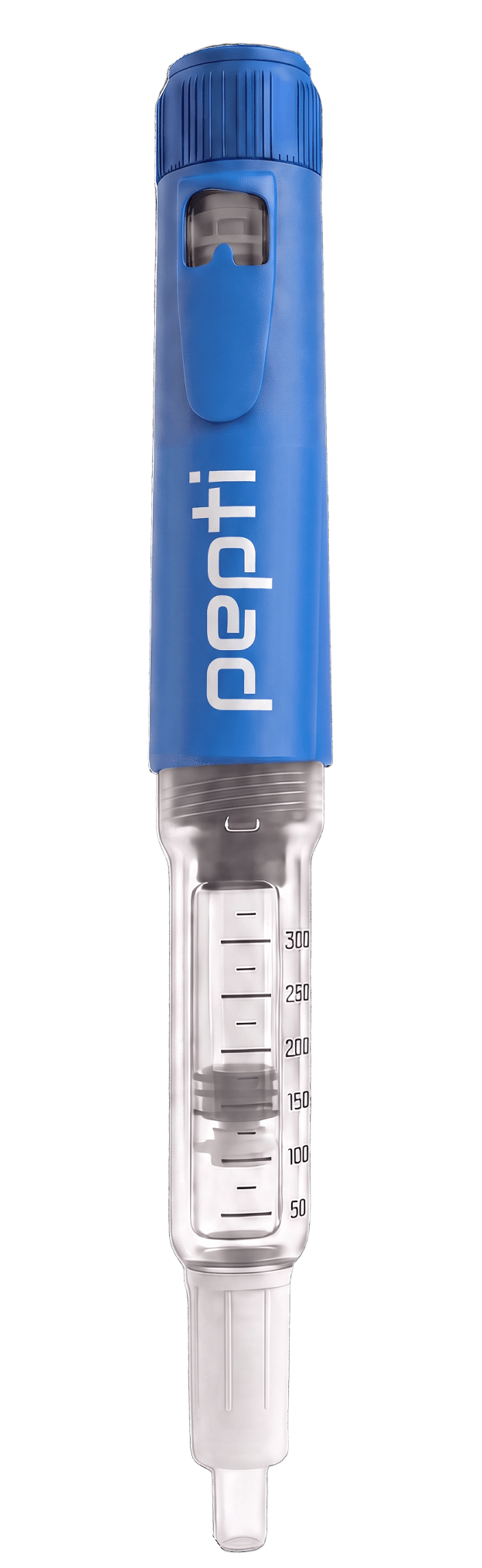
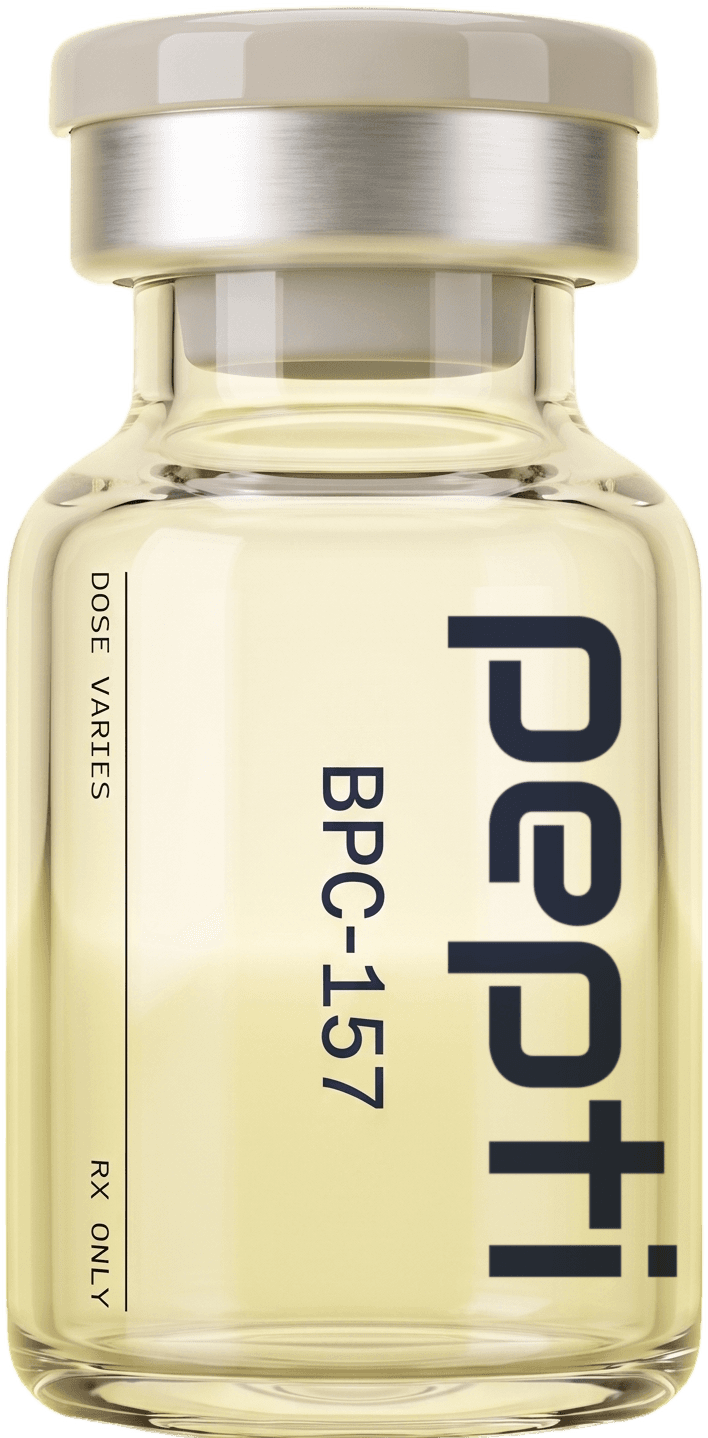
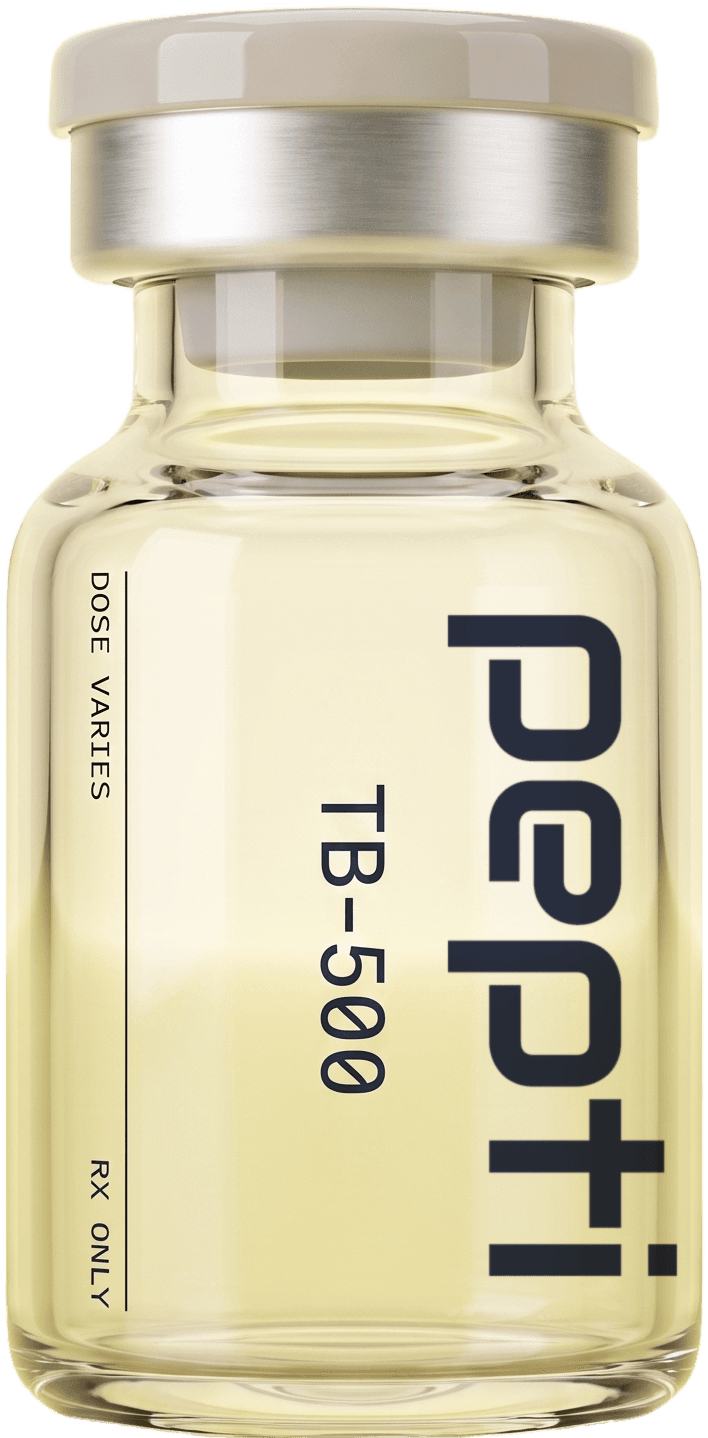
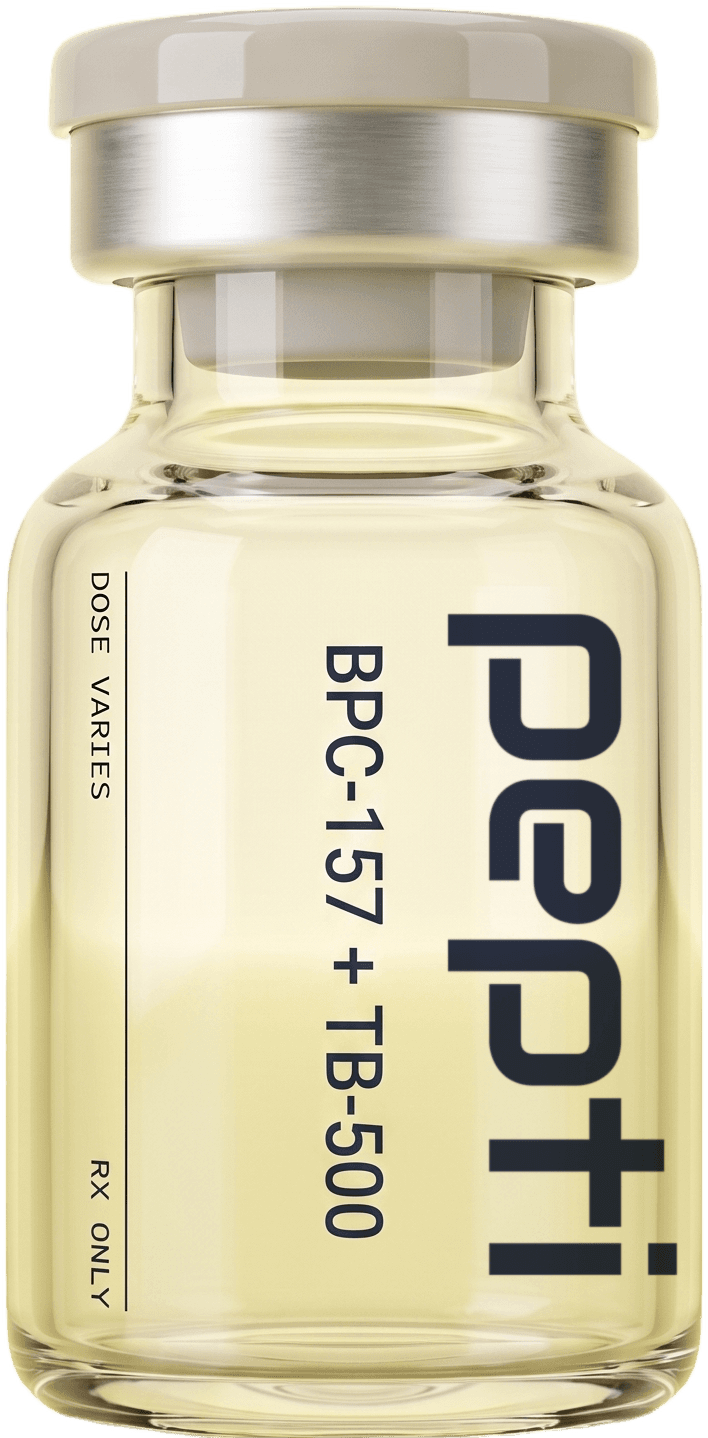
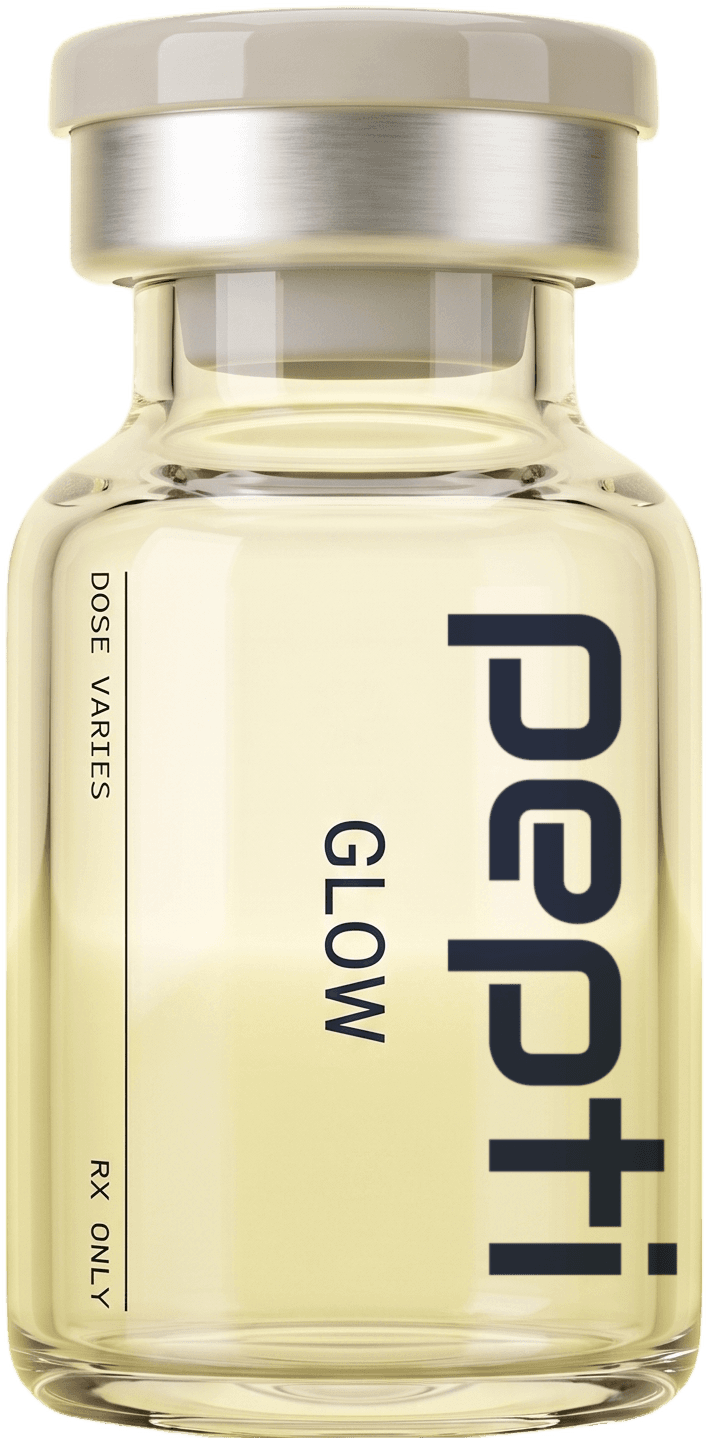
At Pepti, BPC-157 + TB-500 is prescribed as 0.25 mL, which is 25 units on a U-100 insulin syringe, injected under the skin Monday through Friday mornings. The 5 mL vial holds 5 mg of BPC-157 and 5 mg of TB-500, each at 1 mg/mL, so every 0.25 mL dose delivers 0.25 mg (250 mcg) of each peptide and the vial holds 20 doses, four working weeks. Your physician sets your directions after reviewing your intake, and your exact dose and units are printed on the vial.
BPC-157 + TB-500 Dosage
The short answer
| Product | Vial | Typical directions | Per dose | Doses per vial | Price |
|---|---|---|---|---|---|
| BPC-157 + TB-500 | 5 mL: BPC-157 1 mg/mL, TB-500 1 mg/mL (5 mg of each) | Inject 0.25 mL (25 units) subcutaneously Monday through Friday mornings | 0.25 mg BPC-157 and 0.25 mg TB-500 | 20 | $259/mo |
Every price is all-in, covering medication, physician review, refill management and shipping, with no separate membership fee. Pepti is cash-pay and does not bill insurance. These are the typical printed directions; your own directions are the ones on your vial. The pairing is known online as the Wolverine stack, and the full product reference is what is BPC-157 + TB-500.
BPC-157 + TB-500 Dosage
BPC-157 + TB-500 dosage in units, mL and mg
Pepti's directions are written in millilitres and units, because prescriptions are written in millilitres and insulin syringes are marked in units. On a U-100 insulin syringe, 1 unit is 0.01 mL, so 100 units is 1 mL and 25 units is 0.25 mL. A unit is a volume mark on the barrel, not a measure of how strong the medication is.
The two peptides are dissolved together in one solution, so one draw carries both. The milligrams per dose come from each concentration multiplied by the volume:
| What you read | Value | Where it comes from |
|---|---|---|
| Dose volume | 0.25 mL | Printed on the vial |
| On a U-100 insulin syringe | 25 units | 0.25 mL x 100 units per mL |
| BPC-157 concentration | 1 mg/mL | Printed on the vial |
| TB-500 concentration | 1 mg/mL | Printed on the vial |
| BPC-157 per dose | 0.25 mg, which is 250 mcg | 1 mg/mL x 0.25 mL |
| TB-500 per dose | 0.25 mg, which is 250 mcg | 1 mg/mL x 0.25 mL |
| Combined per dose | 0.5 mg | 0.25 mg + 0.25 mg |
| Total in the vial | 5 mg BPC-157 and 5 mg TB-500 in 5 mL | Printed on the vial |
| Doses per vial | 20 | 5 mL divided by 0.25 mL |
That arithmetic is a way to read a label, not a way to set a dose. A vial labelled 5 mg / 5 mg is not a 5 mg dose of anything: it is twenty doses of 0.25 mg of each. Online protocols are usually quoted in micrograms, which is why micrograms are shown: 1 mg is 1,000 mcg. If your label and your syringe seem to disagree, do not dose; message your care team. How long does a peptide vial last explains every number on a vial label.
A fixed 1:1 ratio
The pharmacy's formulation fixes the two peptides at the same concentration, so every dose delivers equal amounts of each. There is no way to take more of one and less of the other from the same vial. If a different balance were wanted, the peptides would be prescribed separately, as BPC-157 and TB-500.
BPC-157 + TB-500 Dosage
BPC-157 + TB-500 dosage chart: units to mL to mg
The chart below is the conversion for the 1 mg/mL + 1 mg/mL combination vial, drawn with a U-100 insulin syringe. It is math only. It is not a menu of doses, and the only line that applies to you is the one that matches the number printed on your vial.
| Syringe mark (U-100) | Volume | BPC-157 | TB-500 | Each, in micrograms |
|---|---|---|---|---|
| 5 units | 0.05 mL | 0.05 mg | 0.05 mg | 50 mcg |
| 10 units | 0.1 mL | 0.1 mg | 0.1 mg | 100 mcg |
| 15 units | 0.15 mL | 0.15 mg | 0.15 mg | 150 mcg |
| 20 units | 0.2 mL | 0.2 mg | 0.2 mg | 200 mcg |
| 25 units (Pepti's typical directions) | 0.25 mL | 0.25 mg | 0.25 mg | 250 mcg |
| 50 units | 0.5 mL | 0.5 mg | 0.5 mg | 500 mcg |
| 100 units | 1 mL | 1 mg | 1 mg | 1,000 mcg |
The rule behind every row: at 1 mg/mL, units divided by 100 gives both millilitres and milligrams of each peptide, and units multiplied by 10 gives micrograms of each. That neat equivalence only holds for this vial. A chart written for a research powder mixed at a different strength, or for a blend at 2 mg/mL, gives different figures for the same units, which is the main reason not to dose from a chart, including this one.
BPC-157 + TB-500 Dosage
The Pen
The combination also comes as a 3 mL pre-filled pepti Pen cartridge containing 9 mg BPC-157 and 13.5 mg TB-500, used in a reusable click-dial injector. That is a different ratio of the two peptides from the 1:1 vial, and the Pen is dosed in clicks rather than drawn with a syringe, so the units chart above does not apply to it. Pen directions are written separately and come with your prescription. It removes the draw step; neither format is clinically better. The Pen is sold into every state Pepti serves except Alabama. The comparison is in vial vs pen.
BPC-157 + TB-500 Dosage
When and how the dose is taken
Monday through Friday mornings
Pepti's directions say Monday through Friday mornings, with weekends off. Five days on and two off is a common convention for recovery peptides: easy to keep to, and it maps the vial's 20 doses onto four working weeks. Weekends off are part of the schedule, not missed doses. Nothing in the research shows daily dosing is required, and your own directions are what count.
Under the skin, and where
Subcutaneous means into the fat layer, not the muscle and never into a vein. Abdomen and thigh are the usual sites, rotated so the same spot is not used repeatedly. People often ask whether to inject near the injury. Some prescribers have directed that on the theory that local concentration matters; others do not, because the mechanisms described for both peptides are systemic. Pepti's standard directions are subcutaneous at the usual sites. If your directions say something different, follow your directions. Technique is in how to inject peptides safely.
| Directions say | What it means in practice |
|---|---|
| 0.25 mL (25 units) | Draw to the 25 mark on a U-100 insulin syringe |
| Subcutaneously | Into the fat layer, abdomen or thigh, rotating sites |
| Monday through Friday | Five doses a week, weekends off |
| Mornings | Early in the day |
| 20 doses per vial | Four weeks, then the next refill |
The vial arrives as a ready-to-use solution, so there is no powder to mix and no bacteriostatic water to add. Research-use powders are sold as two separate vials that the buyer reconstitutes and calculates for, which is where most dosing errors start.
BPC-157 + TB-500 Dosage
How long a BPC-157 + TB-500 vial lasts
| Step | Value |
|---|---|
| Dose | 25 units, 0.25 mL |
| Doses per week | 5 (Monday through Friday) |
| Doses per vial | 20 (5 mL divided by 0.25 mL) |
| Used over the vial | 5 mg BPC-157 and 5 mg TB-500, the whole vial |
| Time per vial | 20 doses divided by 5 per week = 4 weeks |
Refills run every 28 days, one vial per fill. Vials ship refrigerated with ice packs, with sterile syringes and alcohol prep pads, and stay in the fridge between doses. Follow the beyond-use date on the label, which runs from first puncture. How to store peptides covers storage.
If a vial runs short before the refill, message your care team rather than adjusting anything yourself. If you miss a weekday dose, follow your directions and do not take two doses to make up for one.
BPC-157 + TB-500 Dosage
How the dose compares with the products next to it
People often compare a combination dose with BPC-157 or TB-500 alone, or with the blends that contain the same pair.
| BPC-157 + TB-500 | BPC-157 | TB-500 | GLOW | KLOW | |
|---|---|---|---|---|---|
| Vial | 5 mL: 5 mg BPC-157, 5 mg TB-500 | 5 mL: 5 mg BPC-157 | 5 mL: 5 mg TB-500 | 5 mL: 50 mg GHK-Cu, 10 mg BPC-157, 10 mg TB-500 | 5 mL: 50 mg GHK-Cu, 10 mg KPV, 10 mg BPC-157, 10 mg TB-500 |
| Typical directions | 0.25 mL weekday mornings | 0.18 mL once daily | 0.25 mL weekday mornings | 0.25 mL weekday mornings | 0.25 mL weekday mornings |
| BPC-157 per dose | 0.25 mg | 0.18 mg | None | 0.5 mg | 0.5 mg |
| TB-500 per dose | 0.25 mg | None | 0.25 mg | 0.5 mg | 0.5 mg |
| Doses per vial | 20 | 27 | 20 | 20 | 20 |
| Price | $259/mo | $209/mo | $209/mo | $259/mo | $259/mo |
What the numbers show
Three things stand out. First, the combination vial delivers the same TB-500 per dose as TB-500 alone, and slightly more BPC-157 per dose than BPC-157 alone, on five days a week rather than seven. Second, GLOW and KLOW deliver twice as much BPC-157 and TB-500 per 0.25 mL, because their vials hold 2 mg/mL of each rather than 1 mg/mL, and both add 2.5 mg GHK-Cu per dose, with KLOW adding 0.5 mg KPV as well. Third, the draw is 25 units for all four vials on a weekday schedule, so the same mark on the syringe means different milligram amounts depending on which vial is in your hand.
There is no reason to take the combination alongside GLOW or KLOW: both blends already contain BPC-157 and TB-500, and the two together would double them. The blend comparison is in KLOW vs GLOW, and the single-peptide arithmetic is in BPC-157 dosage and TB-500 dosage.
BPC-157 + TB-500 Dosage
Why the research cannot give you a combination dose
Search results for BPC-157 and TB-500 dosing are full of microgram-per-kilogram figures and multi-week protocols. Almost none come from people, and none come from a human study of the pair.
| What exists | Route and dose | What it means for a person |
|---|---|---|
| Rat tendon, ligament and muscle studies of BPC-157 (Journal of Orthopaedic Research, 2003, 2006 and 2010) | Animal doses by body weight, several routes | Not convertible to a human subcutaneous dose |
| Animal and cell work on thymosin beta-4, the parent protein of TB-500 | Mostly the full 43-amino-acid protein, not the fragment | A different molecule from what is injected |
| The one study of the pair (Joint Diseases and Related Surgery, 2026) | 32 rats, intraperitoneal dosing, four weeks, no dose-ranging | The combination did not outperform either peptide alone |
| Human studies of BPC-157 | Five small studies; none used subcutaneous injection | No human dose-ranging for the route that is prescribed |
| Human studies of TB-500 | None; the FDA found no human exposure data for the fragment by any route | No human dose of any kind |
So the directions on the vial are a prescribing standard, set to deliver one vial over four working weeks, not a dose derived from a trial. That is also why there is no "beginner" or "loading" protocol to work out yourself: at Pepti there is one set of directions on the label, set by your physician after reviewing your intake. What research describes for each peptide is in BPC-157 benefits and TB-500 benefits.
BPC-157 + TB-500 Dosage
What changes the directions
| What can change | How it shows up |
|---|---|
| Whether the combination is the right product | A gut complaint may point to BPC-157 alone; skin and connective tissue as part of the goal may point to GLOW or KLOW |
| Where to inject | Some directions name a site near the affected area |
| Your medical history | A cancer history, anticoagulants, pregnancy, autoimmune disease or liver disease change the conversation |
| Your format | The Pen has its own directions, written in clicks |
| How you respond | Reactions you report go to your physician, who may revise your directions |
When directions change, the new numbers are printed on the new label. Never carry a number over from a previous fill or from a different product. Bloodwork is not required for any Pepti treatment. If your physician wants labs for your care, they'll ask through your account.
BPC-157 + TB-500 Dosage
Side effects, in summary
| What is reported | How often | What to do |
|---|---|---|
| Injection-site redness, itching, tenderness, a small lump, occasional bruising | Common | Rotate sites; mention it at follow-up |
| Tiredness, head-fog or a mild headache in the first one to two weeks | Common | Report it; it usually settles |
| Nausea, light-headedness or a brief flush after a dose | Uncommon | Report it |
| Transient joint or muscle ache | Uncommon | Report it |
| A hot, spreading site after 48 hours; a new lump; unexplained bleeding; a change in skin colour | Stop and call | Stop dosing and contact your physician |
| Facial or throat swelling, widespread rash, difficulty breathing | Rare | Call 911 first, then tell your physician |
If you think you have drawn too much, call Poison Control at 1-800-222-1222 and message your care team; do not skip or change the next dose to compensate. Who should not take it, or should discuss it first: an active or recent cancer, anticoagulant therapy, pregnancy or breastfeeding, and tested athletes, because BPC-157 is named under S0 and TB-500 under S2.3 of the 2026 WADA Prohibited List, prohibited at all times. The full detail is in BPC-157 + TB-500 side effects.
Both peptides were placed in Category 2 of the FDA's 503A bulks list in 2023 and removed from it on 15 April 2026; on 23 July 2026 the Pharmacy Compounding Advisory Committee voted to recommend adding each to the 503A Bulks List, and the FDA's final determination is pending. Compounded medications are not FDA approved.
BPC-157 + TB-500 Dosage
Where to get BPC-157 + TB-500 prescribed
The combination cannot be bought legitimately without a prescription. Vials sold "for research use only" are not accountable for identity, purity, sterility or concentration, so the per-dose figures above would not hold. See research peptides vs prescription peptides. The prescription route:
- Complete a free online intake covering the injury, any imaging, your medications and history, and whether you are drug tested.
- A physician licensed in your state reviews it, usually within 24 hours.
- If it is appropriate, a PCAB-accredited, FDA-registered US 503A compounding pharmacy prepares it to that prescription. Lot test results are published at /quality/lab-results.
- It ships refrigerated with your directions printed on the vial.
- Your physician stays reachable for questions and dose changes.
Step by step: how to get BPC-157 + TB-500 prescribed online. How the two peptides differ is in BPC-157 vs TB-500.
References
What this is based on.
References
- Chang CH, Tsai WC, Hsu YH, Pang JH. Pentadecapeptide BPC 157 enhances the growth hormone receptor expression in tendon fibroblasts · Molecules (2014) · PMID 25415472
- Krivic A, Anic T, Seiwerth S, et al.. Achilles detachment of rat and stable gastric pentadecapeptide BPC 157 · Journal of Orthopaedic Research (2006) · PMID 16583442
- Sikiric P, Seiwerth S, Rucman R, et al.. Stable gastric pentadecapeptide BPC 157: novel therapy in gastrointestinal tract · Current Pharmaceutical Design (2011) · PMID 21548867
- Cerovecki T, Bojanic I, Brcic L, Radic B, et al.. Pentadecapeptide BPC 157 (PL 14736) improves ligament healing in the rat · J Orthop Res (2010) · PMID 20225319
- Sikiric P, Seiwerth S, Rucman R, Turkovic B, et al.. Stable gastric pentadecapeptide BPC 157-NO-system relation · Curr Pharm Des (2014) · PMID 23755725
- Cox HD, Miller GD, Eichner D. Detection and in vitro metabolism of the confiscated peptides BPC 157 and MGF R23H · Drug Test Anal (2017) · PMID 28035768
- Thomas A, Görgens C, Guddat S et al.. Simplifying and expanding the screening for peptides <2 kDa by direct urine injection, liquid chromatography, and ion mobility mass spectrometry · J Sep Sci (2016) · PMID 26578461
- Farrar JT, Young JP Jr, LaMoreaux L, Werth JL et al.. Clinical importance of changes in chronic pain intensity measured on an 11-point numerical pain rating scale · Pain (2001) · PMID 11690728
- Meyer JD, Ho B, Manning MC. Effects of conformation on the chemical stability of pharmaceutically relevant polypeptides · Pharm Biotechnol (2002) · PMID 11987755
- Xu C, Sun L, Ren F, Huang P, et al.. Preclinical Safety Evaluation of Body Protective Compound-157, a Potential Drug for Treating Various Wounds · Regul Toxicol Pharmacol (2020) · PMID 32334036
- He L, Feng D, Guo H, et al.. Pharmacokinetics, distribution, metabolism, and excretion of body-protective compound 157, a potential drug for treating various wounds, in rats and dogs · Front Pharmacol (2022) · PMID 36588717
- Lee E, Padgett B. Intra-Articular Injection of BPC 157 for Multiple Types of Knee Pain · Altern Ther Health Med (2021) · PMID 34324435
Citations are provided for educational purposes. They do not constitute medical advice. Always discuss any peptide protocol with your prescribing physician.
Common questions
BPC-157 + TB-500 Dosage, answered.
At Pepti, 0.25 mL, which is 25 units on a U-100 insulin syringe, injected subcutaneously Monday through Friday mornings. Your physician sets your directions after reviewing your intake, and your exact dose is printed on the vial.
At 0.25 mL from the 1 mg/mL + 1 mg/mL vial: 0.25 mg (250 mcg) of BPC-157 and 0.25 mg (250 mcg) of TB-500, 0.5 mg combined. The ratio is fixed by the formulation.
The number printed on your vial. Pepti's typical directions are 25 units, which is 0.25 mL on a U-100 insulin syringe, where 1 unit is 0.01 mL.
Twenty. A 5 mL vial divided by 0.25 mL per dose is 20 doses, four working weeks on a Monday to Friday schedule.
The chart above converts units to millilitres, milligrams and micrograms for Pepti's combination vial. It is a conversion, not a list of doses to choose from, and it only applies to a vial at 1 mg/mL of each peptide.
Take it on the schedule printed on your vial. Pepti's typical directions are Monday through Friday mornings, with weekends off. If you have questions about your schedule, message your care team.
Pepti's directions say mornings, Monday through Friday.
Pepti's standard directions are subcutaneous at the usual sites, abdomen or thigh, rotated. Some prescribers direct injection near the affected area and others do not, because the mechanisms described are systemic. Follow your own directions.
Yes. The Pen cartridge holds 9 mg BPC-157 and 13.5 mg TB-500 in 3 mL, a different ratio from the vial, and is dosed in clicks. Pen directions are written separately.
No. Pepti's vial is a multi-dose solution shipped ready to use, with sterile syringes and alcohol prep pads. See BAC water for peptides.
No. Take the dose printed on your vial. If you have questions about your dose or how it is going, message your care team; your physician may revise your directions.
Bloodwork is not required for any Pepti treatment. If your physician wants labs for your care, they'll ask through your account. The free assessment goes to a physician licensed in your state. A consultation does not guarantee a prescription.
Related answers
Keep reading.
- BPC-157 + TB-500: Full Specification, Mechanism and Dosing
- BPC-157 + TB-500 for Men: What the Research Has Looked At, and What It Is Not
- BPC-157 + TB-500 for Women: What the Research Has Looked At, and What to Know First
- BPC-157 + TB-500 Side Effects: What Is Reported, What Is Rare, and Who Should Avoid It
- CJC-1295 Ipamorelin Dosage: The Blend in Units, mL and mg
Next step
See what a physician recommends for you.
A licensed physician in your state reviews your intake to see whether treatment fits your history. A consultation does not guarantee a prescription.