— Anti-Aging · Reference
Peptides for Hair Growth: What GHK-Cu Does and What It Cannot Do
Which peptides are used for hair and scalp, why the pattern of your hair loss decides everything, what the research actually supports, and what it costs per month.
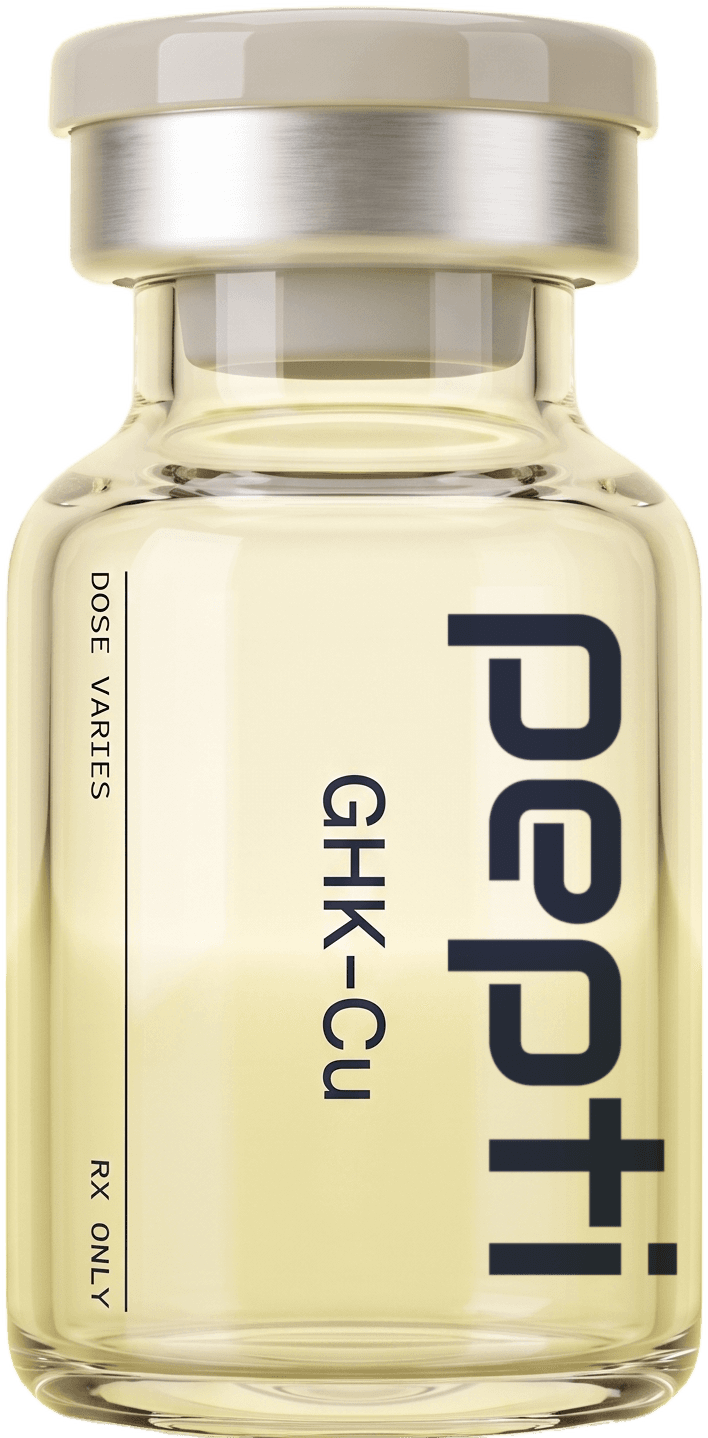
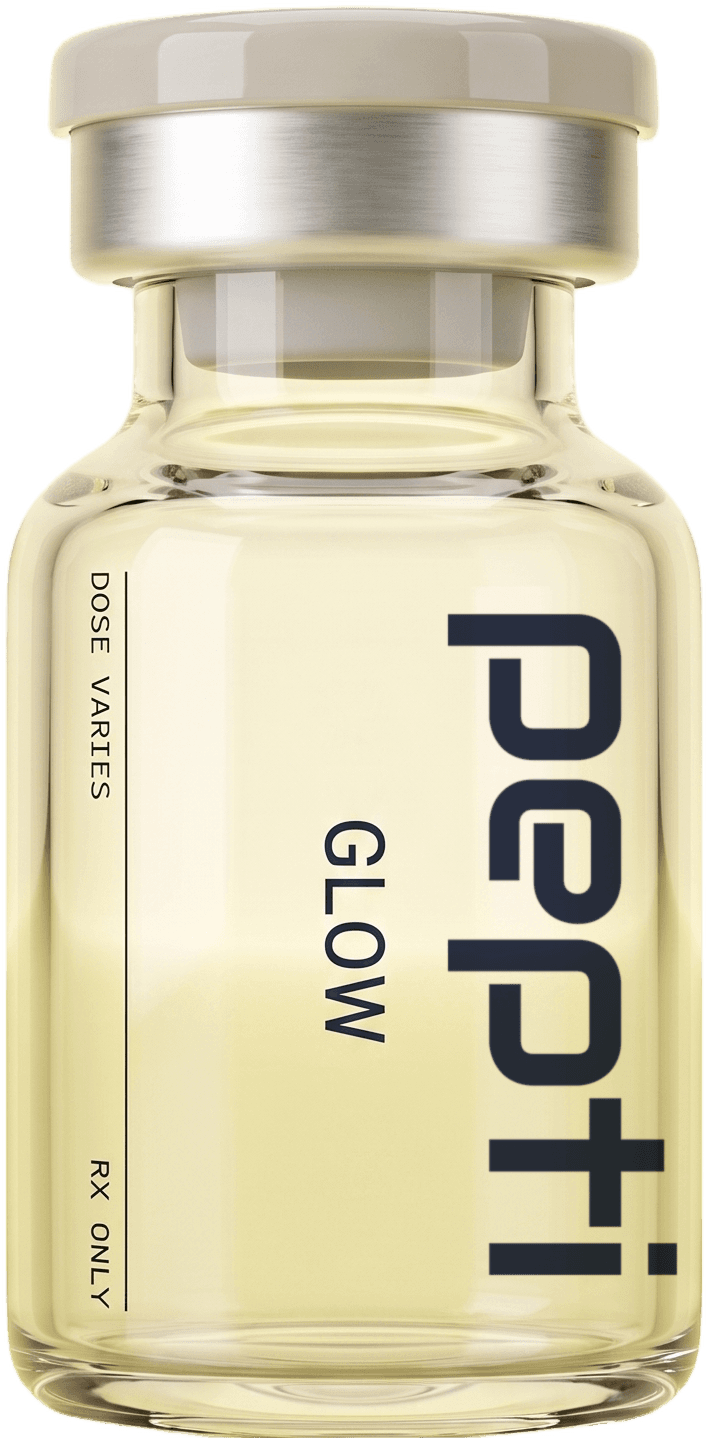
The peptide used for hair is GHK-Cu, a copper-carrying tripeptide, prescribed alone or blended with repair peptides in one vial. It is studied for follicular support, scalp tissue quality and wound repair, and most of that work is topical or preclinical rather than injectable human trials. It is prescription-only, compounded at a US FDA-registered pharmacy, and not FDA approved. Before any of it matters, the pattern of your hair loss has to be identified, because the four common patterns have four different answers and only some of them involve a peptide at all.
— Peptides for Hair Growth
The short answer
| If your situation is | The usual prescription | What is in it | Price |
|---|---|---|---|
| Scalp and hair support alone | GHK-Cu | 50 mg GHK-Cu in 5 mL | $239 |
| Hair and skin quality together | RADIANCE | 50 mg GHK-Cu, 10 mg Tesamorelin | $249 |
| Hair, skin and soft-tissue repair | GLOW | 50 mg GHK-Cu, 10 mg BPC-157, 10 mg TB-500 | $259 |
| The same, plus inflammation | KLOW | 50 mg GHK-Cu, 10 mg KPV, 10 mg BPC-157, 10 mg TB-500 | $259 |
| Hair within a broader anti-ageing plan | ETERNAL | 50 mg GHK-Cu, 10 mg BPC-157, 10 mg TB-500, 10 mg Epithalon | $279 |
Prices are all-in and monthly, covering medication, physician review, refill management and shipping, recurring while treatment continues.
Every row in that table has GHK-Cu in common. That is the honest summary of the peptide side of hair: there is one molecule with follicle-specific research behind it, and the blends differ in what else they address alongside it. Which row you land on is a physician's decision made with your pattern of loss and, usually, your bloodwork in front of them.
— Peptides for Hair Growth
What is actually going on when hair thins
Hair thins because something interrupts a cycle that every follicle runs independently, and the interruption can come from hormones, from a systemic shock, from the immune system or from mechanical tension. A peptide only makes sense once you know which of those is in play.
— The follicle cycle
Each follicle cycles through three phases: anagen, the active growth phase, which on the scalp lasts years; catagen, a brief regression of a few weeks; and telogen, a resting phase of a few months at the end of which the hair sheds and a new anagen hair pushes through. On a healthy scalp the large majority of follicles are in anagen at any moment, which is why shedding is steady and unnoticed rather than sudden.
Almost everything called "hair loss" is one of two things: follicles spending less time in anagen and shrinking with each cycle, or an abnormally large number of follicles being pushed into telogen at once. Those are different problems with different fixes.
— The dermal papilla
At the base of each follicle sits the dermal papilla, a cluster of specialized fibroblasts that signals to the surrounding cells when to grow, when to stop and how large a hair to make. It is the control center of the cycle, and it is the structure most of the peptide research is actually about: the Archives of Pharmacal Research 2007 paper on a copper tripeptide, for example, measured proliferation and survival of cultured human dermal papilla cells. When this page says a peptide is described as "supporting the follicle," it nearly always means supporting the dermal papilla and the blood supply feeding it.
— The follicle's blood supply
A growing follicle has real metabolic demand and is fed by a small vascular bed. Much of the mechanistic case for GHK-Cu, TB-500 and BPC-157 rests on angiogenesis, the growth of new small vessels. That is a tissue-environment argument, and it is not the same as reversing the hormone signal that drives pattern loss.
— The four patterns, and why the pattern decides everything
More than any other complaint on this site, hair is a diagnosis problem before it is a prescription problem. Four things get called "hair loss" and they behave differently.
Pattern What it looks like What actually drives it Where a peptide sits Androgenetic Receding temples, thinning crown, gradual over years Follicle sensitivity to DHT, strongly heritable Not the primary treatment; established options exist and should be discussed first Telogen effluvium Diffuse shedding, handfuls, starting two to four months after an event Illness, surgery, childbirth, crash dieting, thyroid disease, iron deficiency Fix the trigger; hair usually recovers on its own Alopecia areata Sharp, round, smooth bald patches Autoimmune attack on the follicle A dermatologist, not a wellness prescription Traction Loss where tension is applied, often the hairline Tight styling over years Change the styling; a peptide will not outrun the mechanics Androgenetic loss is the follicle-shrinking problem: genetically sensitive follicles respond to dihydrotestosterone with shorter anagen phases and progressively finer hairs. Telogen effluvium is the synchronized-shedding problem: a shock two to four months earlier tipped many follicles into telogen together. Alopecia areata is immune, and traction is mechanical.
If you cannot tell which one you have, resolve that first. A provider who prescribes without asking when the shedding started, whether anything preceded it, and what the pattern looks like is not assessing you.
— Peptides for Hair Growth
What physicians prescribe for hair and scalp support
Five Pepti products carry GHK-Cu. All are prescription-only, compounded by a state-licensed US pharmacy against a physician's prescription, and none is an FDA-approved drug product. Directions are on each product page and are set by the prescribing physician.
— GHK-Cu on its own
GHK-Cu is the single-ingredient option. Three amino acids, glycine, histidine and lysine, bound to a copper ion. It occurs naturally in human plasma and declines with age. Its described function is carrying copper to the enzymes that need it, including the ones that cross-link collagen and elastin into structure. The Nature: New Biology 1973 paper that first isolated the tripeptide from human serum is the origin of the literature, and the FEBS Letters 1988 and Journal of Clinical Investigation 1993 papers on collagen synthesis in fibroblasts and connective-tissue accumulation in rat wounds are the core of the repair case.
The hair relevance comes from a second line of work. GHK-Cu is described as supporting the dermal papilla and as promoting the blood-vessel supply around the follicle; the Journal of Cell Biology 1994 paper described copper-binding peptides derived from SPARC stimulating angiogenesis. That is the honest mechanistic case, and it is about the environment around the follicle rather than about blocking the hormone signal that drives pattern loss.
Who it suits: someone whose physician has identified diffuse thinning or scalp quality as the concern, with thyroid, iron and hormonal causes ruled out or separately treated.
— RADIANCE: GHK-Cu with tesamorelin
RADIANCE pairs GHK-Cu with tesamorelin, a stabilized analogue of growth-hormone-releasing hormone that prompts your pituitary to release a pulse of your own growth hormone. Tesamorelin has the deepest human trial record of anything on this page, but none of it is about hair: the New England Journal of Medicine 2007, Journal of Clinical Endocrinology and Metabolism 2010, JAMA 2014 and Lancet HIV 2019 trials all studied visceral or liver fat in HIV-infected patients with abdominal fat accumulation. Tesamorelin is in RADIANCE for skin and body composition rather than for hair specifically, and it should not be presented to you as a hair peptide.
Who it suits: someone for whom hair is one item on a list that also includes skin quality and body composition, and whose physician considers a growth-hormone-axis peptide appropriate.
— GLOW: GHK-Cu with BPC-157 and TB-500
GLOW is the hair, skin and soft-tissue combination: GHK-Cu alongside BPC-157 and TB-500 in one vial. All three are described around angiogenesis and cell migration, and TB-500 is the one other peptide on this page with direct follicle research behind it.
BPC-157 is a 15-amino-acid fragment of a protein found in human gastric juice. It is in the blend for the repair side: animal research describes it promoting new blood-vessel formation through the VEGF receptor pathway, and the Journal of Applied Physiology 2011 paper described tendon cell survival and migration. There is no BPC-157 research in hair follicles; its main body of work concerns tendon and gut tissue, covered in peptides for healing.
TB-500 is a synthetic fragment related to thymosin beta-4, an abundant intracellular protein that binds actin, the protein that lets cells move. Thymosin beta-4 has been described in follicle research, which is why it appears in this conversation, though that work is preclinical and used the full-length 43-amino-acid protein rather than the shorter TB-500 fragment; the FASEB Journal 2010 paper on the active sites of thymosin beta-4 is the bridge between the two.
Who it suits: someone whose physician sees hair and scalp alongside a repair need, such as skin recovering from a procedure or a soft-tissue issue, and would otherwise be prescribing two vials. It is the most common blend chosen for hair when the concern is not hair alone.
— KLOW: GLOW plus KPV
KLOW is GLOW with KPV added. KPV is the three-amino-acid C-terminal fragment of alpha-melanocyte-stimulating hormone. It has no hair research of its own; it is in KLOW for the inflammation side. The Gastroenterology 2008 and Inflammatory Bowel Disease 2008 papers describe KPV reducing intestinal inflammation in cell and mouse models, and the Endocrine Reviews 2008 review covers the anti-inflammatory biology of the alpha-MSH tripeptides.
Who it suits: someone with the GLOW picture plus a scalp that is itchy, red or reactive, where the physician wants an anti-inflammatory component in the same vial. An inflamed or scaly scalp still needs a diagnosis first; KPV is not a substitute for a dermatologist looking at it.
— ETERNAL: GLOW plus epithalon
ETERNAL is GLOW with epithalon added. Epithalon is a four-amino-acid pineal peptide studied for longevity endpoints rather than hair: the Bulletin of Experimental Biology and Medicine 2003 paper described telomerase activation in human somatic cells, and the Biogerontology 2003 mouse work described effects on markers of ageing. None of the epithalon literature concerns the follicle.
Who it suits: someone using a peptide within a broader anti-ageing plan who wants the GLOW components plus epithalon in one vial, rather than someone whose primary question is hair.
— Peptides for Hair Growth
What the evidence shows, and what it does not
The research behind GHK-Cu and hair is real, and it is also narrower than most marketing implies.
— The copper-peptide follicle work
The follicle line of research is old and mostly animal. The Annals of the New York Academy of Sciences 1991 paper from the group that originally commercialized copper peptides reported hair-follicle-stimulating properties of peptide copper complexes in C3H mice. The Journal of Investigative Dermatology 1993 review of agents affecting hair growth in primate and rodent models reported that a copper-binding peptide produced follicular enlargement on the back skin of fuzzy rats, an effect the authors described as similar to that of topical minoxidil in the same model. Both are topical, both are rodent, and neither is GHK-Cu given by injection.
The most-cited human-tissue study is the Archives of Pharmacal Research 2007 paper, which reported that a related copper tripeptide, AHK-Cu, stimulated elongation of human hair follicles ex vivo and proliferation of cultured dermal papilla cells, with a reduction in markers of programmed cell death. Two caveats: the peptide studied was AHK-Cu, an alanine analogue, not GHK-Cu; and ex vivo means follicles kept alive in a dish, not follicles in a scalp.
— The one human trial, and what it actually tested
There is a single randomized, placebo-controlled human study involving the GHK tripeptide and pattern hair loss: the Annals of Dermatology 2016 trial in 45 men, which tested a complex of 5-aminolevulinic acid and GHK, without copper, at two concentrations against placebo for six months and reported an increase in hair count in both treated groups with no significant change in hair length or thickness. It is a small trial of a combination product, the peptide was not copper-bound, and it was not an injection. It tells you something about GHK in follicles and nothing directly about injectable GHK-Cu.
— GHK-Cu's human skin data
GHK-Cu does have human data; it is just not hair data. The Wound Repair and Regeneration 1994 study reported enhanced healing of ulcers in patients with diabetes treated topically. The Archives of Facial Plastic Surgery 2006 study examined topical copper tripeptide on laser-resurfaced skin. The BioMed Research International 2015 and International Journal of Molecular Sciences 2018 reviews summarize the gene-expression and skin-regeneration work. This is why GHK-Cu is described as having the deepest research base of the repair peptides, and it is also why the honest position on hair is that the follicle-specific research is real but preclinical and topical.
— Thymosin beta-4 in follicles
The thymosin beta-4 hair work is the strongest mechanistic story on this page, and it is entirely animal and cell. The FASEB Journal 2004 paper reported that thymosin beta-4 increased hair growth in normal rats and mice and that it acted on bulge-region follicle stem cells, promoting their migration and differentiation and increasing matrix metalloproteinase-2. The Annals of the New York Academy of Sciences 2007 paper extended this across several rat and mouse models, including a transgenic overexpressing mouse, and the Mechanisms of Ageing and Development 2004 paper described the same molecule promoting angiogenesis, wound healing and hair follicle development. The Journal of Cellular and Molecular Medicine 2021 review collected the follicle literature and noted that the molecular mechanism is still not well characterized. No human trial of TB-500 for hair exists.
— What human data exists, in one paragraph
There are no randomized controlled trials of injectable GHK-Cu, TB-500 or BPC-157 for hair growth in humans, and BPC-157 has no follicle research at all. There is one small randomized trial of a non-copper GHK combination product in men with pattern loss. Tesamorelin's trial evidence concerns visceral fat, not hair. GHK-Cu has the deepest research base of the repair peptides, including human skin studies, and its follicular work is real. It is also mostly cell culture, animal models and topical application. There is no large randomized trial of injectable GHK-Cu for hair growth, and anyone citing one is misreading something.
— What the evidence does not establish
- It does not establish an effect size for hair. Nobody can tell you how much difference to expect, because that trial has not been run.
- It does not establish a human timeline. Windows described by prescribers are clinical experience, not trial endpoints.
- It does not establish that injectable GHK-Cu reaches the scalp follicle at a concentration comparable to the topical and ex vivo work. That is an assumption in the mechanistic argument.
- It does not establish any effect on the DHT signal that drives androgenetic loss. Nothing in the GHK-Cu literature describes one.
Response varies and no honest prescriber offers a timeline or a result. What a good one offers is a plain account of the evidence and a willingness to say a peptide is the wrong tool.
— Peptides for Hair Growth
Where these stand with the FDA right now
This has moved a great deal in 2026, and most of what is published online about copper peptides and the FDA is out of date. Everything below was checked against FDA's own documents in September 2026.
— How the 503A categories work
Compounded peptides are prepared by pharmacies under section 503A of the Federal Food, Drug, and Cosmetic Act. A bulk substance that is not a component of an approved drug and has no USP monograph can only be used if it appears on FDA's 503A bulks list, and while FDA builds that list it publishes three interim categories: Category 1, substances under evaluation; Category 2, substances that raise significant safety concerns; and Category 3, substances nominated without adequate support. FDA's current category document is dated 14 May 2026.
— GHK-Cu
GHK-Cu's status is split by route, and it changed twice this year.
On 15 April 2026 FDA gave notice that "GHK-Cu (except for injectable routes of administration)" would be removed from Category 1, and that "GHK-Cu (for injectable routes of administration)" would be removed from Category 2, in both cases "because the nominations were withdrawn by the nominators." The same notice stated that FDA "intends to consult the Pharmacy Compounding Advisory Committee (PCAC) before the end of February 2027 regarding the potential inclusion of GHK-Cu on the 503A bulks list."
FDA's 14 May 2026 update then put the non-injectable entry back, after one nominator clarified on 5 May that it had meant to withdraw only the injectable route.
So the accurate description in September 2026 is: GHK-Cu for non-injectable routes is in Category 1, under evaluation; injectable GHK-Cu is not listed in any category because its nomination was withdrawn, and it appears on FDA's page of substances previously in Category 2 whose nominations were withdrawn; and FDA has said it intends to bring GHK-Cu to its advisory committee before the end of February 2027. Pepti's GHK-Cu is dispensed by a state-licensed pharmacy against an individual physician's prescription; whether it is appropriate for you is that physician's decision, and this page will be updated when the committee meets.
— BPC-157, TB-500, KPV and epithalon
These four, which appear in GLOW, KLOW and ETERNAL, followed the same April path out of Category 2 and then went to the committee. FDA's 15 April 2026 notice stated that BPC-157, KPV, Epitalon and "Thymosin Beta-4, Fragment (LKKTETQ), also known as TB-500" would each be removed from Category 2 "because the nominations were withdrawn by the nominators," and that FDA intended to consult the PCAC on BPC-157, KPV and TB-500 on 23 July 2026 and on Epitalon on 24 July 2026. None of the four appears in Category 2 on the current 14 May 2026 document.
The Pharmacy Compounding Advisory Committee met on 23–24 July 2026. FDA's meeting page lists BPC-157, KPV, TB-500 and MOTS-c on 23 July and Emideltide (DSIP), Semax and Epitalon on 24 July, with a briefing document for each, and notes that "advisory committees make non-binding recommendations to the FDA, which generally follows the recommendations but is not legally bound to do so." As of this writing FDA has not published a final determination on any of the four. The accurate description is: no longer flagged in Category 2, reviewed by the advisory committee in July, awaiting FDA's own decision on the bulks list.
— Tesamorelin
Tesamorelin is different because a branded version is an approved drug. Egrifta (tesamorelin acetate) was approved by FDA on 10 November 2010 for Theratechnologies, and the application was converted to a biologics license in March 2020. The approved indication is narrow: "the reduction of excess abdominal fat in HIV-infected adult patients with lipodystrophy," and the label states it "is not indicated for weight loss management" and is contraindicated in patients with active malignancy. The tesamorelin in RADIANCE is compounded, not the branded product, and compounded tesamorelin is not FDA approved for anything, hair included.
— What "not FDA approved" means here
Compounded medications are prepared by licensed pharmacies pursuant to an individual prescription; they are not reviewed and approved by FDA as finished drug products, so no compounded GHK-Cu, GLOW, RADIANCE, KLOW or ETERNAL is FDA approved. What you can verify is the pharmacy's licensure and the batch's certificate of analysis, covered on quality and lab results.
— Anti-doping status
If you are a tested athlete, several components of these blends are on the World Anti-Doping Agency's 2026 Prohibited List, effective 1 January 2026. BPC-157 is named as an example under S0, non-approved substances. "Thymosin-ß4 and its derivatives e.g. TB-500" are listed under S2.3, growth factors and growth factor modulators. Tesamorelin is named under S2.2.4 as a growth hormone-releasing hormone analogue. All are prohibited at all times, in and out of competition. GHK-Cu is not named on the list; if you compete, tell your physician and check with your sport's authority before starting anything.
— Peptides for Hair Growth
What a physician rules out first
Hair is a sensitive early indicator of a handful of common, treatable problems. Prescribing a peptide over an untreated one wastes months.
| What is checked | Why it matters for hair |
|---|---|
| TSH and thyroid function | Both underactive and overactive thyroid cause diffuse shedding |
| Ferritin and iron studies | Low iron stores cause shedding, and ferritin can be low while haemoglobin is normal |
| Full blood count | Anaemia, and a general picture |
| Vitamin D and B12 | Deficiency is common and cheap to correct |
| Illness, surgery, childbirth, rapid weight loss | The telogen effluvium triggers, two to four months before shedding |
| Medications started in the last year | Many are associated with hair changes |
| Zinc supplementation | Competes with copper absorption, which matters with GHK-Cu specifically |
| Family history | Central to identifying androgenetic loss |
At-home blood testing covers the thyroid, metabolic and hormone side without a lab visit. Whether it is required is your physician's call, and do you need bloodwork before peptides explains the general rule.
The two labs that change the plan most often
Thyroid and ferritin. Both cause diffuse shedding that looks exactly like the thing people ask a peptide to fix, both are common, and both are corrected by treating the cause rather than the follicle. A ferritin that is technically in range but at the bottom of it is still worth a conversation, because the follicle appears to be sensitive to iron stores before frank anaemia develops.
The questions about timing and pattern
When did it start, and what happened two to four months before that? That interval is the fingerprint of telogen effluvium; a physician who hears about a surgery, a severe illness, a birth or a crash diet in that window will usually predict recovery without any prescription. Where is it? Temples and crown point to androgenetic loss, everywhere at once to effluvium, sharp round patches to alopecia areata, the hairline where it is pulled to traction. Itch, scale, redness, pain or pustules turn a hair question into a dermatology question.
— Peptides for Hair Growth
What to expect, and when
These are patterns described by prescribers, not trial endpoints. Individual response varies and a physician decides whether treatment is appropriate at all. Hair is slow because the follicle cycle is slow, and nothing on this page changes that.
— The first month
Nothing visible, and that is expected. A follicle that begins a new anagen phase this month will not push a hair long enough to notice for weeks. What some people report early is scalp-level: less tightness or dryness, or a general skin change if they are on GLOW, RADIANCE, KLOW or ETERNAL, because skin turns over faster than hair grows. Injection-site redness or mild soreness is the usual early complaint.
— Months two and three
Where shedding was the problem, this is the window in which prescribers describe it settling, with the caution that telogen effluvium from an event three to six months earlier typically settles in the same window on its own. Any new growth appears first as fine, short hairs along the margins.
— Months four to six
If a follicle-level change is going to be noticeable, prescribers generally describe this as the earliest window, because a new anagen hair needs that long to reach a visible length. A photograph taken at the start, in the same light and the same parting, is the only reliable comparison; memory is not.
— Beyond six months
Treatment is long-term, on 28-day refills, and whether it continues is a decision you make with your physician against the photographs. Hair gained by improving the follicle's environment is generally described as dependent on that environment continuing. How long do peptides take to work covers the general picture.
— Peptides for Hair Growth
When a peptide is the wrong tool
A reference that only ever recommends its own product is not much of a reference. Some honest cases where GHK-Cu, or any peptide, is not the first thing to reach for.
- Not a replacement for established hair-loss treatment. Androgenetic loss has treatments with decades of randomised evidence behind them. They work on the hormone pathway; GHK-Cu does not. A provider who does not mention they exist is selling rather than treating. A physician may reasonably prescribe both, but a peptide is not the substitute.
- Not a substitute for a dermatologist. Scarring alopecia, patchy loss, scalp inflammation or a rash needs diagnosis. Scarring loss is permanent once the follicle is gone, which is why delay costs.
- Not a copper peptide scalp serum. Those are cosmetics, regulated as cosmetics, and not what a physician prescribes. The difference is covered in peptides for skin.
- Not fast. A follicle cycles over months, and anything advertised as quick is not describing hair biology.
- Not a fix for an untreated thyroid or iron problem. Correct the cause; the follicle usually follows.
- Not the answer if the real goal is something else. If hair is a minor item and the main concern is soft-tissue recovery, BPC-157 or TB-500 alone may be the better conversation. If the scalp is inflamed and the physician wants the anti-inflammatory component specifically, KPV exists on its own. If skin is the priority and hair is secondary, peptides for skin walks through GHK-Cu from that angle.
Your physician will tell you if a peptide is not the right tool for what you have described. A consultation does not guarantee a prescription, and being declined is refunded.
— Peptides for Hair Growth
Monitoring and bloodwork
— Before starting
For hair specifically, most physicians want thyroid function and ferritin at minimum, because those two explain a large share of diffuse shedding and are treatable. At-home blood testing covers thyroid, metabolic and hormone markers without a lab visit. If RADIANCE is under consideration, tesamorelin adds its own questions: the branded label's contraindication in active malignancy is the reason a physician asks about cancer history and glucose before prescribing any growth-hormone-axis peptide.
— During treatment
Injection sites, rotated and watched for anything spreading. Any new scalp symptom, because a peptide does not diagnose an inflammatory or scarring process that was missed. For anyone on high-dose zinc, a conversation about the dose. Photographs at the start and at fixed intervals in the same light.
— Who should not take it, or should discuss it first
Situation Why Wilson's disease or any copper-metabolism disorder GHK-Cu delivers copper by design High-dose zinc supplementation Zinc competes with copper absorption; tell your physician the dose Personal history of cancer BPC-157 and TB-500 are described as supporting new blood-vessel growth Pregnancy or breastfeeding Not used; safety data is absent, and postpartum shedding usually resolves Anticoagulant therapy Discuss first, given the vascular mechanisms Undiagnosed patchy or scarring loss Needs a dermatologist before anything else Detail on the copper-specific cautions is in is GHK-Cu safe.
— References
What this is based on.
References
- Maquart FX, Pickart L, Laurent M, et al.. Stimulation of collagen synthesis in cultured fibroblasts by GHK-Cu · FEBS Letters (1988) · PMID 3169264
- Pickart L, Margolina A. GHK peptide as a natural modulator of multiple cellular pathways in skin regeneration · BioMed Research International (2015) · PMID 26236730
- Pickart L, Margolina A. Regenerative and protective actions of the GHK-Cu peptide in the light of the new gene data · International Journal of Molecular Sciences (2018) · PMID 29986520
- Pickart L. The human tri-peptide GHK and tissue remodeling · Journal of Biomaterials Science, Polymer Edition (2008) · PMID 18644225
- Pickart L, Thaler MM. Tripeptide in human serum which prolongs survival of normal liver cells and stimulates growth in neoplastic liver · Nature: New Biology (1973) · PMID 4349963
- Lane TF, et al.. SPARC is a source of copper-binding peptides that stimulate angiogenesis · Journal of Cell Biology (1994) · PMID 7514608
- Maquart FX, et al.. In vivo stimulation of connective tissue accumulation by the tripeptide-copper complex glycyl-L-histidyl-L-lysine-Cu2+ in rat experimental wounds · Journal of Clinical Investigation (1993) · PMID 8227353
- Mulder GD, et al.. Enhanced healing of ulcers in patients with diabetes by topical treatment with glycyl-l-histidyl-l-lysine copper · Wound Repair and Regeneration (1994) · PMID 17147644
- Siméon A, et al.. Expression and activation of matrix metalloproteinases in wounds: modulation by the tripeptide-copper complex glycyl-L-histidyl-L-lysine-Cu2+ · Journal of Investigative Dermatology (1999) · PMID 10383745
- Siméon A, et al.. The tripeptide-copper complex glycyl-L-histidyl-L-lysine-Cu2+ stimulates matrix metalloproteinase-2 expression by fibroblast cultures · Life Sciences (2000) · PMID 11045606
- Miller TR, et al.. Effects of topical copper tripeptide complex on CO2 laser-resurfaced skin · Archives of Facial Plastic Surgery (2006) · PMID 16847171
- Pyo HK, et al.. The effect of tripeptide-copper complex on human hair growth in vitro · Archives of Pharmacal Research (2007) · PMID 17703734
Citations are provided for educational purposes. They do not constitute medical advice. Always discuss any peptide protocol with your prescribing physician.
— Common questions
Peptides for Hair Growth, answered.
GHK-Cu is the only one in this catalogue with follicular research behind it, taken alone or inside GLOW, RADIANCE, KLOW or ETERNAL depending on what else you want addressed. TB-500 has animal follicle research through its parent protein, thymosin beta-4, and is in the three GLOW-based blends for that reason. GHK-Cu is not a treatment for androgenetic hair loss, which has better-evidenced options. A physician decides what fits with your pattern and labs in front of them.
Research describes it supporting the dermal papilla and the blood supply around a follicle, mostly in preclinical and topical work: mice and rats in the 1991 and 1993 papers above, and human follicles ex vivo in the Archives of Pharmacal Research 2007. That is a mechanism, not a demonstrated outcome in humans, and nobody can promise regrowth. Response varies considerably.
Hair cycles slowly, so any assessment is measured in months. Prescribers generally describe four to six months as the earliest point at which a follicle-level change would be visible, and shedding that started after an illness or childbirth often improves on its own in that window regardless. Photographs taken at the start in the same light are the only fair comparison. See how long do peptides take to work.
They are not competing for the same job. Established hair-loss medications act on the hormone and follicle pathways behind pattern loss; GHK-Cu acts on the tissue environment, and nothing in its literature describes an effect on DHT. Raise both with a physician rather than treating a peptide as a substitute; a physician may reasonably prescribe one, the other or both.
Reported tolerability is good, with injection-site reactions the usual complaint. The specific cautions are copper-related: Wilson's disease, copper-metabolism disorders and high-dose zinc. There are no randomized human trials of injectable GHK-Cu, so there is no trial-derived side-effect table; what exists is animal work, topical human studies and prescriber experience. Detail is in is GHK-Cu safe.
For hair specifically, yes in most cases, because thyroid disease and low ferritin are common causes of shedding and both are treatable. Treating around an untreated one wastes months of a subscription. If RADIANCE is being considered, tesamorelin adds questions about cancer history and glucose. At-home blood testing covers the panel without a lab visit.
GHK-Cu alone is $239 and the blends run $249 to $279, all-in. Current figures are on each product page and at /cost/ghk-cu. See how much do peptides cost.
No. No compounded peptide is FDA approved for anything. As of FDA's 14 May 2026 category document, GHK-Cu for non-injectable routes sits in 503A Category 1, under evaluation; injectable GHK-Cu is not listed in any category because its nomination was withdrawn in April 2026; and FDA has said it intends to consult its Pharmacy Compounding Advisory Committee on GHK-Cu before the end of February 2027.
Not of injectable GHK-Cu. The one randomized human study involving the GHK tripeptide and pattern hair loss is the Annals of Dermatology 2016 trial of 45 men, which tested a combination of 5-aminolevulinic acid and GHK without copper against placebo for six months and reported an increase in hair count with no significant change in hair length or thickness. It was a small trial of a combination product, not an injection and not GHK-Cu.
Its parent protein, thymosin beta-4, has animal research: the FASEB Journal 2004 and Annals of the New York Academy of Sciences 2007 papers reported increased hair growth in rats and mice and described the molecule acting on bulge-region follicle stem cells. That work used full-length thymosin beta-4, not the TB-500 fragment, and there is no human hair trial of either. TB-500 is in GLOW, KLOW and ETERNAL for its repair and follicle biology, not as a standalone hair treatment.
That pattern, telogen effluvium, usually resolves on its own once the trigger has passed, typically within months. A physician's first move is to confirm the trigger and check thyroid and ferritin, not to prescribe. Pregnancy and breastfeeding are situations in which these peptides are not used at all.
All four contain GHK-Cu. GLOW adds BPC-157 and TB-500 for repair; KLOW adds KPV for inflammation; ETERNAL adds epithalon for a broader anti-ageing plan; RADIANCE pairs GHK-Cu with tesamorelin for skin and body composition. If hair alone is the question, single-ingredient GHK-Cu is the simplest answer. The choice is your physician's.
No. Their nominations to FDA's 503A bulks list were withdrawn, and FDA gave notice on 15 April 2026 that it would remove them from the interim categories they had been in. BPC-157, TB-500 and KPV went before FDA's advisory committee on 23 July 2026; FDA's decision is pending, and it intends to bring GHK-Cu to the same committee before the end of February 2027. They remain prescription medications dispensed by state-licensed pharmacies. The free assessment goes to a physician licensed in your state. A consultation does not guarantee a prescription.
— Next step
See what a physician
recommends for you.
A licensed physician in your state reviews your intake and decides what is appropriate. A consultation does not guarantee a prescription.
Important legal & safety information
The assessment process available on the Pepti website asks a series of medical questions, and the answers provided are reviewed by an independent licensed physician affiliated with our partner physician network. The licensed providers have established exclusionary criteria, and the answers provided determine if the individual is screened out of eligibility for treatment. The licensed clinicians retain the sole decision to prescribe peptide therapy and other compounded medications to patients. Treatment may be denied at the physician's sole discretion. If a prescription is not approved, you will not be charged for the medication.
Pharmacy Providers. Pepti is a technology platform and is not a healthcare provider, pharmacy, or prescriber. All medications offered through the platform are compounded by independent FDA-registered 503A or 503B compounding pharmacies based on a valid prescription written by a licensed physician for an individual patient. Compounded medications are not FDA-approved as products. The active pharmaceutical ingredients used by our partner pharmacies are sourced from FDA-registered facilities. Compounded medications may not undergo the same testing or quality control as commercially manufactured FDA-approved drugs.
Results vary. Results from peptide therapy and other compounded treatments vary based on individual factors, including age, weight, medical history, adherence to the prescribed protocol, lifestyle factors, and physiological response. Pepti makes no guarantee of any specific outcome. Statements about peptide therapy and compounded medications offered through the platform have not been evaluated by the Food and Drug Administration. These products are not intended to diagnose, treat, cure, or prevent any disease.
Product images. Product photographs and renderings shown on this website are for illustrative purposes only. The appearance of vials, packaging, labeling, and other materials you receive may vary and is determined by the dispensing compounding pharmacy.
Off-label use.Many peptides offered through the platform are prescribed for off-label use. “Off-label” means the medication is being prescribed for a use, dose, or patient population that is not specifically approved by the FDA. Off-label prescribing is legal and common in U.S. medical practice when supported by clinical experience and judgment.
Mailing & shipping. Pepti currently dispenses prescription medication to patients in all 50 states and Washington, D.C.. All orders ship in unbranded, tamper-evident packaging via expedited delivery from our partner compounding pharmacies. Temperature-sensitive medications ship with insulated packaging and ice packs. Shipping is included at no additional cost. We do not currently ship medication outside all 50 states and Washington, D.C., internationally, or to APO/FPO addresses.
Not for emergencies. Pepti is not designed for medical emergencies. If you are experiencing a medical emergency, call 911 or go to your nearest emergency room immediately. For urgent but non-emergency medical questions, contact your primary care provider or use an urgent care service.
No doctor-patient relationship with Pepti. Your use of the platform does not create a doctor-patient relationship between you and pepti LLC. A doctor-patient relationship is established only between you and the independent licensed physician who reviews your intake and prescribes your treatment. The physicians who use the platform are independent contractors and are solely responsible for the medical care they provide.
Prescription medications. All prescription products require a valid prescription from a licensed healthcare provider. By using the platform, you acknowledge that you are at least 18 years old and that the information you provide is true, accurate, current, and complete. Providing false information may result in inappropriate treatment recommendations or denial of service.
Cosmetic & wellness products.Certain products offered through Pepti — including skincare, hair care, body care, supplements, men's grooming, sports recovery, and sexual wellness products — are cosmetic or dietary supplement products, not prescription medications. These products do not require a prescription and are not reviewed or prescribed by a physician. Statements regarding dietary supplements have not been evaluated by the Food and Drug Administration. These products are not intended to diagnose, treat, cure, or prevent any disease. Results vary by individual. Consult your healthcare provider before starting any new supplement or topical product, especially if you are pregnant, nursing, or taking other medications.
pepti LLC · Delaware Limited Liability Company · 131 Continental Dr, Suite 305, Newark, DE 19713 · For media or partnership inquiries, email hello@hellopepti.com. For patient support, email support@hellopepti.com. For privacy and HIPAA inquiries, email privacy@hellopepti.com.