Recovery · Reference
BAC Water for Peptides: What Bacteriostatic Water Is and Why Prescription Vials Do Not Need It
This page explains what bacteriostatic water is, why powder sellers tell you to buy it, why a prescription vial has nothing to add, what goes wrong when people mix their own, what a "peptide reconstitution calculator" can and cannot do, and the questions people ask most.
Medically reviewed by Dr. Gene, MD · November 4, 2026
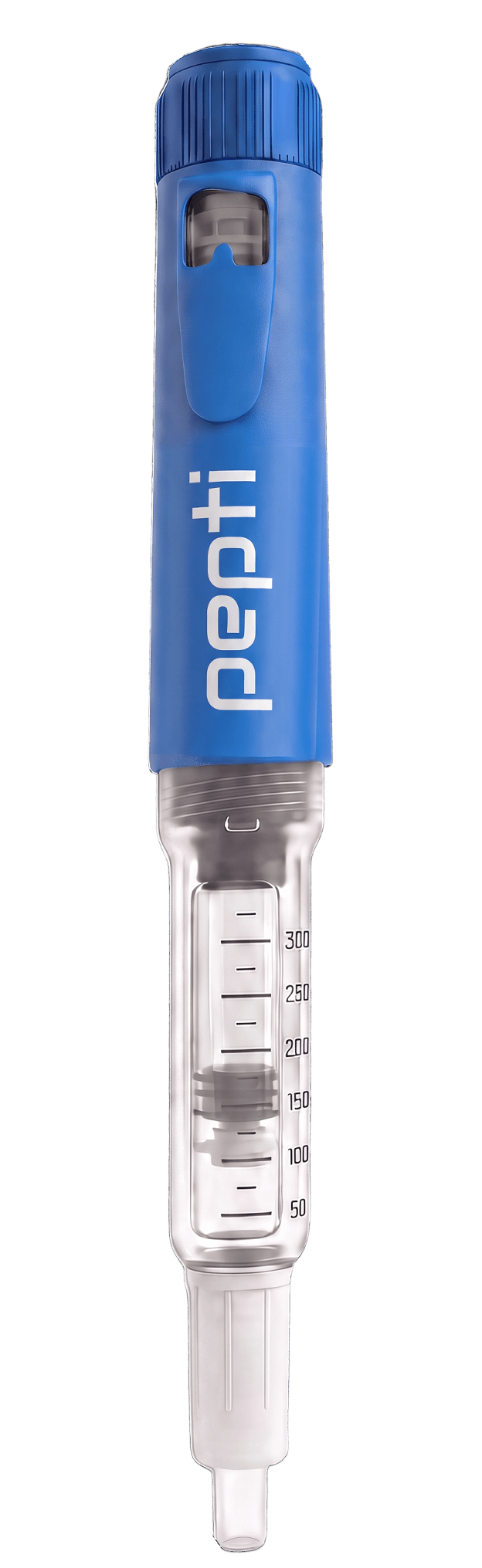
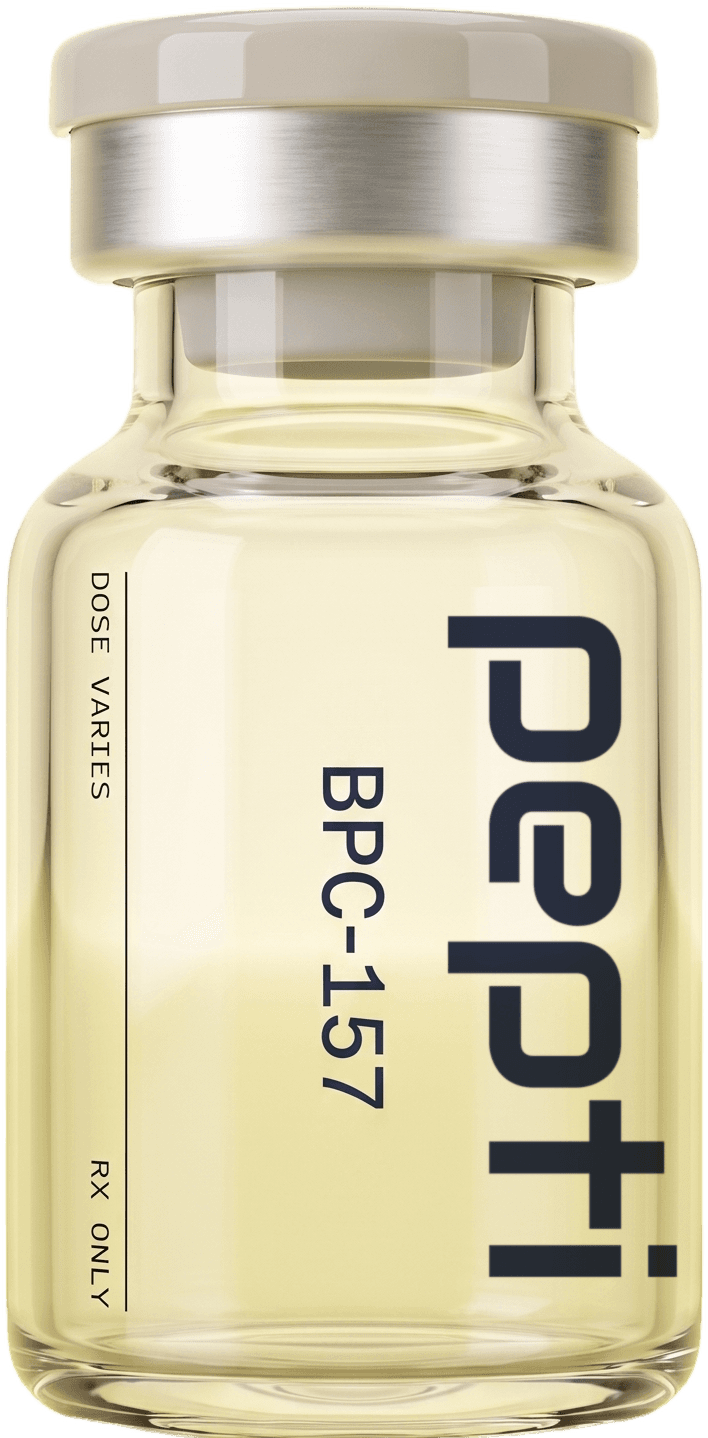
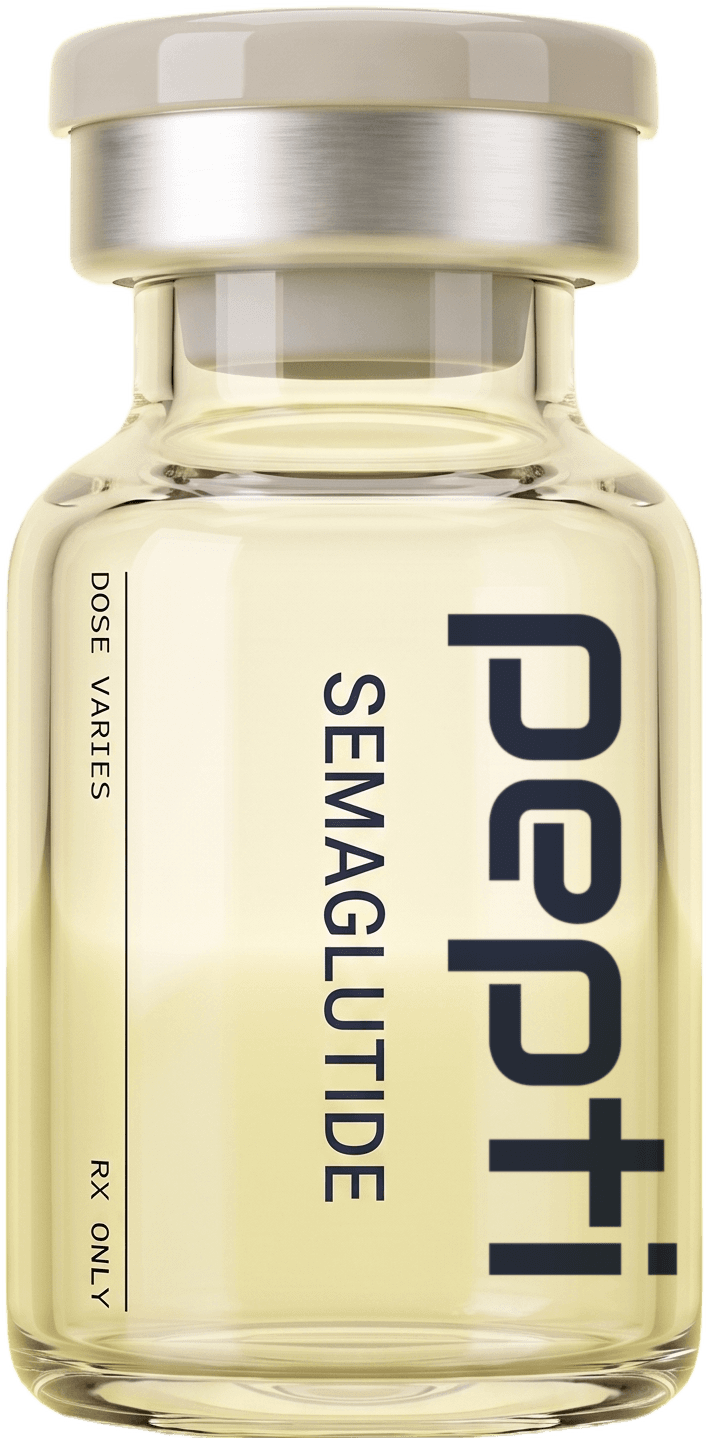
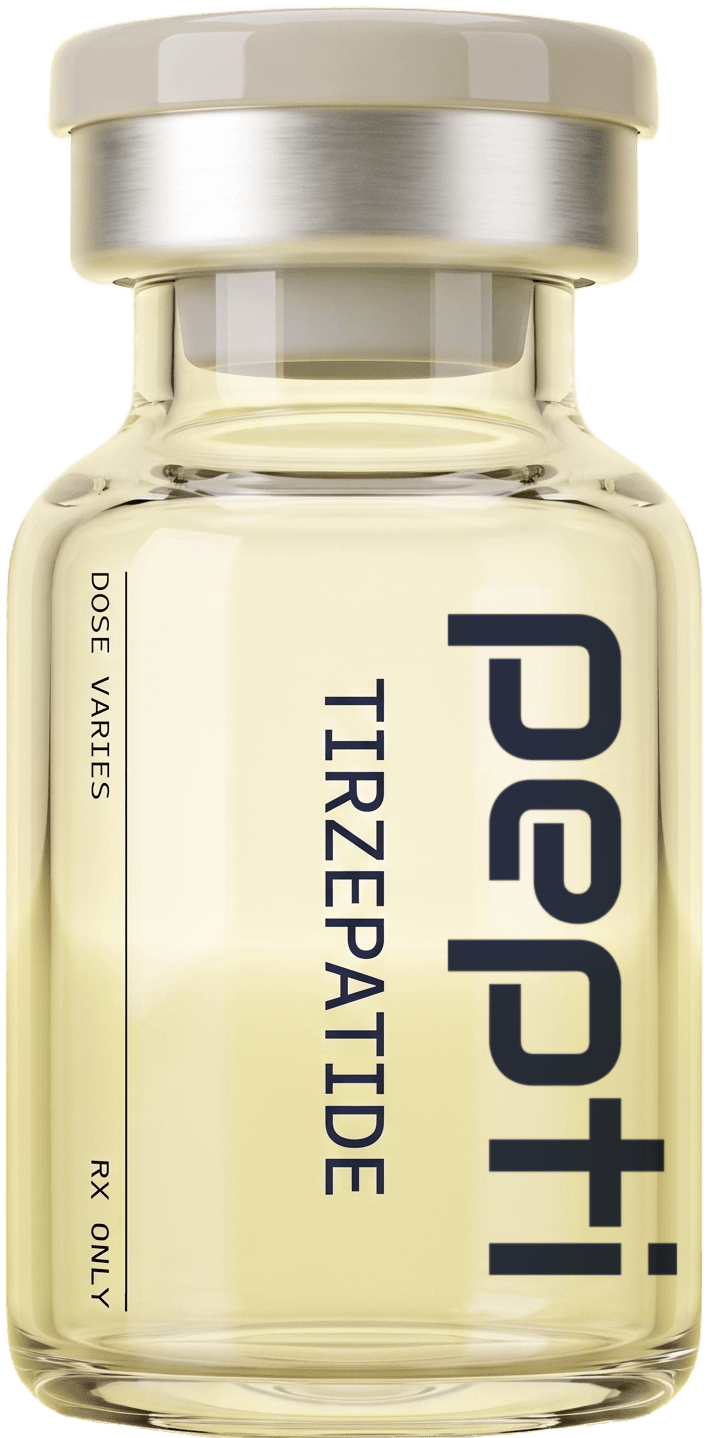
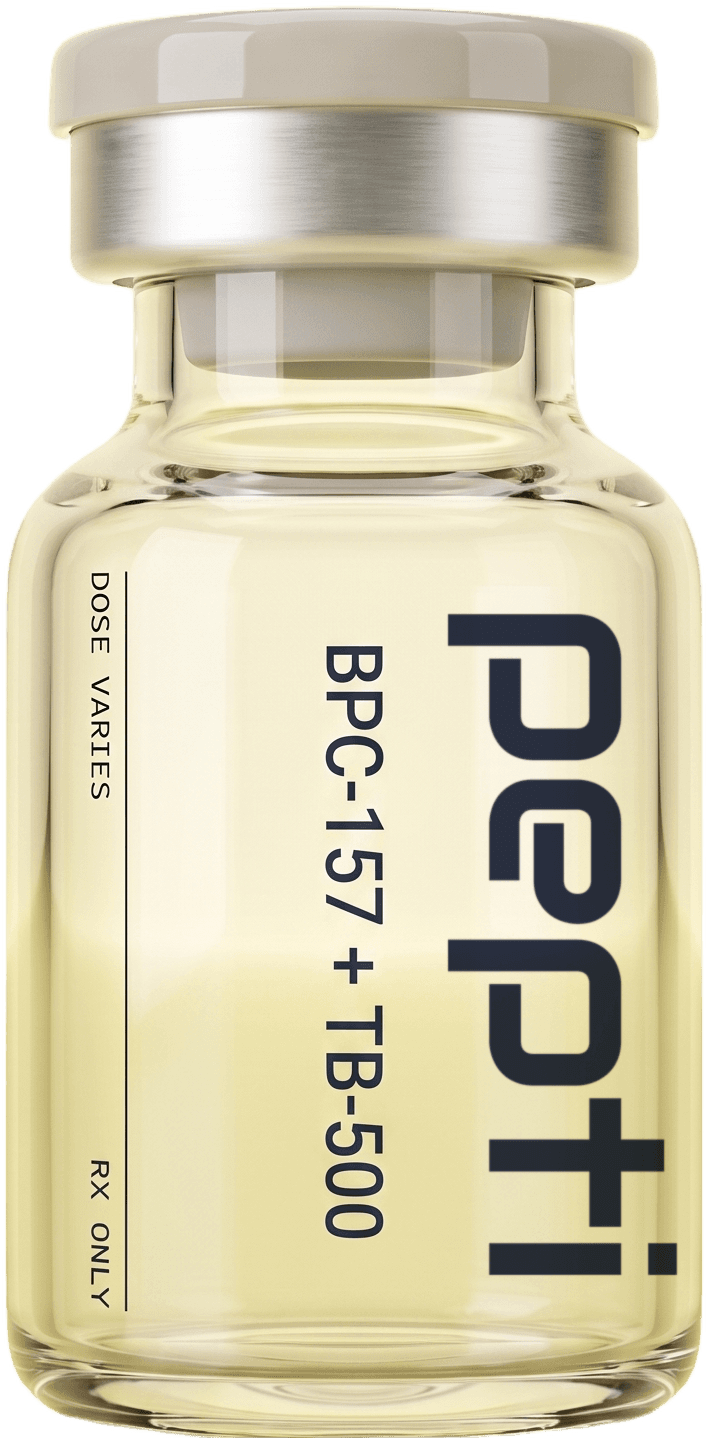
BAC water, short for bacteriostatic water, is sterile water containing 0.9% benzyl alcohol as a preservative, used to dissolve a freeze-dried powder into an injectable liquid. Research-peptide sellers require it because they ship peptides as dry powder, which leaves the buyer to choose a volume, mix it and work out every dose. Prescription peptides from Pepti do not need BAC water: each vial is compounded by a licensed pharmacy and arrives as a ready-to-use solution at a stated concentration, with your directions printed on the label. Mixing your own powder moves two of the riskiest steps in making an injectable, sterility and concentration, from a pharmacy cleanroom to a kitchen counter.
This page explains what bacteriostatic water is, why powder sellers tell you to buy it, why a prescription vial has nothing to add, what goes wrong when people mix their own, what a "peptide reconstitution calculator" can and cannot do, and the questions people ask most.
BAC Water for Peptides
The short answer
| Question | Pepti prescription vial | Research-use powder |
|---|---|---|
| Do I need BAC water? | No. The vial is already a solution | Yes. The powder must be dissolved before use |
| Who mixes it? | A pharmacist, in a controlled sterile environment | You |
| Is the concentration stated? | Yes, on the label, for example 1 mg/mL or 2 mg/mL | Only what you calculate from your own mixing |
| Is the dose written down? | Yes, in mL and in units on a U-100 syringe | No; you work it out |
| Is the finished liquid tested? | Each lot is tested for sterility, endotoxin and potency | No finished-product test exists |
| Do I need a calculator? | No | The seller expects you to use one |
| Who is accountable? | A physician licensed in your state and a licensed pharmacy | Nobody; human use is disclaimed |
Every Pepti price is all-in, covering medication, physician review, refill management and shipping, with no membership fee. Pepti is cash-pay and does not bill insurance.
BAC Water for Peptides
What is bacteriostatic water?
Bacteriostatic water is sterile water with 0.9% benzyl alcohol added as a preservative. "Bacteriostatic" means the preservative is there to hold back bacterial growth, so the container can be entered with a needle more than once. Plain sterile water has no preservative.
It is a diluent: its only job is to turn a dry powder into a liquid that can be drawn into a syringe. It contains no medication, it does not change what a peptide does, and it is not something you add to a vial that is already in solution.
BAC water vs sterile water
| Bacteriostatic water | Sterile water | |
|---|---|---|
| What it is | Sterile water with 0.9% benzyl alcohol | Sterile water with no preservative |
| Purpose | Dissolving a powder that will be drawn from more than once | Dissolving a powder for a single use |
| Needed with a Pepti vial | No | No |
Preservatives are also what make a multi-dose vial workable in manufactured medicines: the approved multi-dose presentations of tirzepatide, for example, list benzyl alcohol among their preservatives. In a compounded prescription, the pharmacy chooses the vehicle and preservative system as part of the formulation, and the beyond-use date on the label assumes that formulation. That is a pharmacy decision, not something to replicate at home.
BAC Water for Peptides
Why research-peptide sellers say you need BAC water
A research-use peptide is a lyophilised, or freeze-dried, powder sold under a written statement that it is "not for human consumption." The powder has no concentration until someone adds liquid. Sellers therefore tell buyers to buy bacteriostatic water separately, dissolve the powder, and calculate a dose.
That disclaimer is what makes the sale lawful, and it switches off every standard that would otherwise apply: no prescriber, no pharmacy licence, no required sterility process, no finished-product test, and nobody to contact if something goes wrong. A powder plus a bottle of bacteriostatic water plus a kitchen counter is not a sterile compounding process. Reconstituting such a powder at home is sterile compounding by an untrained person in a non-sterile environment, and the person calculating the concentration is you.
BAC Water for Peptides
Why Pepti vials need no BAC water
Every Pepti injectable arrives pre-mixed. The pharmacy compounds a multi-dose vial of ready-to-use solution at a stated concentration, so there is no powder to dissolve and nothing to add.
| What arrives | What it means for you |
|---|---|
| A multi-dose vial of solution | Nothing to mix; reconstitution has already been done by a pharmacist |
| A label with your name, the medication, the concentration, your directions and the beyond-use date | You draw the volume printed on the label, nothing else |
| Directions in mL and in units on a U-100 insulin syringe | You match a plunger to a printed line, not a calculation |
| Sterile syringes and alcohol prep pads | One fresh syringe and fresh pads for every dose |
| Insulated packaging with ice packs | The vial goes into the refrigerator when it arrives |
Pepti's pharmacies are PCAB-accredited, FDA-registered US 503A compounding pharmacies. Each lot of finished solution is tested by an independent laboratory for sterility, bacterial endotoxin and potency, and the certificates are published by lot at /quality/lab-results. Your physician sets your directions after reviewing your intake. Do not add anything to your vial, including BAC water: diluting a pre-mixed vial changes its concentration, so every dose drawn afterwards would no longer match the label. The full walk-through of what is in the box is at do peptides come pre-mixed.
Examples of what a ready-to-use vial looks like
| Product | Vial, as supplied | Typical directions | Price |
|---|---|---|---|
| BPC-157 | 5 mL, 1 mg/mL | 0.18 mL (18 units) once daily as directed | $209/mo |
| BPC-157 + TB-500 | 5 mL, 1 mg/mL of each | 0.25 mL (25 units) Monday through Friday mornings | $259/mo |
| MOTS-c | 5 mL, 2 mg/mL | 0.25 mL (25 units) Monday through Friday mornings | $259/mo |
| Tesamorelin | 5 mL, 2 mg/mL | 0.25 mL (25 units) Monday through Friday at bedtime | $249/mo |
| Tirzepatide | 2 mL, dose-specific | 0.50 mL (50 units) once weekly | From $159/mo |
| Semaglutide | Dose-specific; the 0.25 mg strength is 1 mL at 1 mg/mL | 0.25 mL (25 units) once weekly at that strength | From $99/mo |
Your own directions are printed on your vial and are the ones that apply. Almost every vial is sized to last about four weeks, which is why refills run every 28 days, one vial per fill. See how long does a peptide vial last.
BAC Water for Peptides
Why mixing your own powder is risky
Sterility
An injectable has to be sterile and free of bacterial endotoxin, and there is a written standard for how that is achieved: USP Chapter 797, which covers the classified cleanroom or segregated compounding area, the ISO 5 environment for open manipulations, gowning and environmental monitoring. Bacteriostatic water does not make a powder sterile; it only slows bacterial growth in liquid that is already sterile. If the powder, the vial, the stopper or the needle is contaminated, the preservative does not undo that. Sterility is the one attribute you can never check by looking, and a solution can be perfectly clear and still be wrong.
Combining several powders into one homemade blend is the exact scenario USP 797 exists to prevent. There is no research-use equivalent of a blend like KLOW; reproducing it means reconstituting four products and combining them with no sterility control at all.
Dose arithmetic
A powdered peptide has no concentration until someone adds liquid. Add twice the intended volume and every draw delivers half the intended amount; misplace a decimal and it is ten times. Ten-fold errors are easy, and the research-versus-prescription comparison treats dose arithmetic as the single biggest practical risk with research vials.
The FDA has documented how badly this goes even with liquid products. Its July 2024 alert on compounded injectable semaglutide described people given U-100 insulin syringes and a dose in units drawing up five to twenty times the intended amount, and clinicians miscalculating conversions between milligrams, units and millilitres. Adding a home-mixing step in front of that conversion adds another place for the same error.
The powder may not contain what the label says
A research vial states a nominal quantity, and the actual content may differ. Some vendors publish a purity certificate, but it usually describes bulk powder before it was portioned, not the amount in your vial, its sterility or its endotoxin content. A lyophilised peptide's mass also includes water and counterion, so net peptide content is a different number from HPLC purity. Analyses of seized black-market peptide products by accredited anti-doping laboratories found the label unreliable often enough that it cannot be treated as information. Mixing it carefully does not fix a wrong starting quantity.
Storage and dating
Once a powder is dissolved, its stability clock changes, and nobody has assigned a beyond-use date to your homemade solution. A compounded vial carries a beyond-use date assigned by the pharmacy that prepared it, which runs from first puncture and assumes the labelled storage conditions were followed. More is in how to store peptides.
Risk Homemade reconstitution Pepti prescription vial Contamination during mixing Depends on your kitchen and technique Compounded under USP 797 sterile conditions Wrong concentration Depends on your volume and maths Stated on the label and tested for potency by lot Wrong amount of peptide to start with Unverified nominal quantity Potency tested on the finished solution Endotoxin Untested Tested by lot How long it can be used Unknown Beyond-use date on the label Dosing directions None Printed in mL and units
BAC Water for Peptides
Do you need a peptide reconstitution calculator?
Not for a Pepti vial. The concentration is already stated on the label and your directions say exactly how much to draw, so there is nothing to calculate.
A reconstitution calculator only does arithmetic on the numbers you give it. It assumes the powder contains exactly what the label claims, that you measured the water exactly, and that the result is sterile. It cannot check any of those. It also cannot tell you what dose is appropriate for you; that is a clinical decision made after reviewing your history, medications and goals. This page deliberately gives no mixing ratios, because a ratio for an unverified powder is a guess presented as a number.
What does help with a prescription vial is reading the U-100 syringe correctly: 100 units is 1 mL, so move the decimal two places. 0.25 mL is 25 units and 0.50 mL is 50 units. Hold the syringe vertical at eye level and read the flat front edge of the plunger tip. If your directions and your syringe markings ever seem to disagree, do not dose; message your care team. How to inject peptides safely covers technique in full.
BAC Water for Peptides
What the evidence shows, honestly
Subcutaneous self-injection with a U-100 syringe is one of the best-established home techniques in medicine, built on decades of insulin use. What a pre-mixed vial changes is narrower and practical: it removes the reconstitution step where ten-fold errors start, and it moves the sterile preparation into a pharmacy whose finished product is tested by lot.
The prescription route does not change what the research on a molecule has established. For most peptides that research is preclinical, and compounded medications are not FDA approved. A ready-to-use vial is about getting the dose you were prescribed, sterile and at the stated strength; it is not evidence that the peptide works. Research peptides vs prescription peptides covers the wider comparison.
BAC Water for Peptides
How to get a ready-to-use prescription
- Complete a free online intake covering your history, medications and what you want help with.
- A physician licensed in your state reviews it, usually within 24 hours.
- If it is appropriate, a PCAB-accredited, FDA-registered US 503A pharmacy compounds it to that prescription as a ready-to-use solution. Lot test results are published at /quality/lab-results.
- It ships refrigerated with ice packs, sterile syringes and alcohol prep pads, with your directions printed on the vial.
- Your physician stays reachable for questions, and refills run every 28 days, one vial per fill.
Step-by-step pages: BPC-157, BPC-157 + TB-500, KLOW, tirzepatide and semaglutide.
References
What this is based on.
References
- Chang CH, Tsai WC, Hsu YH, Pang JH. Pentadecapeptide BPC 157 enhances the growth hormone receptor expression in tendon fibroblasts · Molecules (2014) · PMID 25415472
- Krivic A, Anic T, Seiwerth S, et al.. Achilles detachment of rat and stable gastric pentadecapeptide BPC 157 · Journal of Orthopaedic Research (2006) · PMID 16583442
- Sikiric P, Seiwerth S, Rucman R, et al.. Stable gastric pentadecapeptide BPC 157: novel therapy in gastrointestinal tract · Current Pharmaceutical Design (2011) · PMID 21548867
- Cerovecki T, Bojanic I, Brcic L, Radic B, et al.. Pentadecapeptide BPC 157 (PL 14736) improves ligament healing in the rat · J Orthop Res (2010) · PMID 20225319
- Sikiric P, Seiwerth S, Rucman R, Turkovic B, et al.. Stable gastric pentadecapeptide BPC 157-NO-system relation · Curr Pharm Des (2014) · PMID 23755725
- Cox HD, Miller GD, Eichner D. Detection and in vitro metabolism of the confiscated peptides BPC 157 and MGF R23H · Drug Test Anal (2017) · PMID 28035768
- Thomas A, Görgens C, Guddat S et al.. Simplifying and expanding the screening for peptides <2 kDa by direct urine injection, liquid chromatography, and ion mobility mass spectrometry · J Sep Sci (2016) · PMID 26578461
- Farrar JT, Young JP Jr, LaMoreaux L, Werth JL et al.. Clinical importance of changes in chronic pain intensity measured on an 11-point numerical pain rating scale · Pain (2001) · PMID 11690728
- Meyer JD, Ho B, Manning MC. Effects of conformation on the chemical stability of pharmaceutically relevant polypeptides · Pharm Biotechnol (2002) · PMID 11987755
- Xu C, Sun L, Ren F, Huang P, et al.. Preclinical Safety Evaluation of Body Protective Compound-157, a Potential Drug for Treating Various Wounds · Regul Toxicol Pharmacol (2020) · PMID 32334036
- He L, Feng D, Guo H, et al.. Pharmacokinetics, distribution, metabolism, and excretion of body-protective compound 157, a potential drug for treating various wounds, in rats and dogs · Front Pharmacol (2022) · PMID 36588717
- Lee E, Padgett B. Intra-Articular Injection of BPC 157 for Multiple Types of Knee Pain · Altern Ther Health Med (2021) · PMID 34324435
Citations are provided for educational purposes. They do not constitute medical advice. Always discuss any peptide protocol with your prescribing physician.
Common questions
BAC Water for Peptides, answered.
Bacteriostatic water: sterile water with 0.9% benzyl alcohol as a preservative, used to dissolve a freeze-dried peptide powder into a liquid. It is needed only when a peptide arrives as powder.
No. Every Pepti vial arrives as a ready-to-use solution compounded by a licensed pharmacy. Do not add anything to your vial.
Because they ship powder. Selling a dry powder "not for human consumption" leaves the mixing, the concentration and the dosing to the buyer.
No. Adding liquid changes the concentration, so every dose afterwards would deliver less than your directions intend, and it adds a contamination risk. Take the dose printed on the vial, on the schedule printed on the vial.
No. Both are sterile, but bacteriostatic water contains 0.9% benzyl alcohol as a preservative, and sterile water contains no preservative.
No. The preservative slows bacterial growth in a liquid that is already sterile. It does not sterilise a contaminated powder, vial or needle.
For a Pepti vial, none. For research powders, this page does not give ratios: the actual peptide content of a research vial is unverified, so any ratio is arithmetic on a number nobody has checked. A prescription vial arrives at a stated, tested concentration.
Not with a prescription vial, because the concentration and your dose are already on the label. A calculator cannot check what is in a research powder, whether it is sterile, or what dose suits you.
Yes. They ship refrigerated with ice packs and go into the refrigerator on arrival. The beyond-use date runs from first puncture and is printed on the label. See which peptides need refrigeration.
Yes. Each vial ships with sterile U-100 insulin syringes and alcohol prep pads. Some products are also available as a pre-filled pepti Pen cartridge, with nothing to draw.
No. Bloodwork is not required for any Pepti treatment. If your physician wants labs for your care, they'll ask through your account. The free assessment goes to a physician licensed in your state. A consultation does not guarantee a prescription.
Next step
See what a physician recommends for you.
A licensed physician in your state reviews your intake and decides what is appropriate. A consultation does not guarantee a prescription.