Recovery · Reference
BPC-157 for Women: What the Research Has Looked At, and What to Know First
This page covers what BPC-157 is, what research has and has not looked at, the considerations that change for women (pregnancy, conception, contraception, the menopause years), how it compares with the products women often ask about alongside it, and how Pepti supplies it.
BPC-157 has not been studied in women as a group: its research is mostly rodent and cell work on tendon, ligament, muscle and the gut lining, and the only human study enrolling women alone was a 2024 pilot of bladder-wall injections in 12 women with interstitial cystitis, which reported no adverse events but had no control group. None of the five small human studies used the subcutaneous injection that is prescribed, and none reported results by sex. BPC-157 is not a hormone and is not described as acting on estrogen, progesterone or the cycle. It is not used in pregnancy or while breastfeeding, it is prohibited at all times in tested sport, and it is a compounded prescription injection that is not FDA approved.
The general reference is what is BPC-157, the evidence benefit by benefit is in BPC-157 benefits, and the men's version of this page is BPC-157 for men.
BPC-157 for Women
The short answer
| Question | What the live research shows | Strength of evidence |
|---|---|---|
| Has BPC-157 been studied in women specifically? | One 2024 single-arm pilot, 12 women with interstitial cystitis, injections into the bladder wall | One small uncontrolled study, a different route |
| Tendon and ligament repair | Rat Achilles and knee ligament studies (Journal of Orthopaedic Research, 2003, 2006, 2010) | Animal only |
| Gut lining | Decades of rodent work; one inconclusive 2005 enema abstract in ulcerative colitis | Largest animal literature; weak in humans |
| Does it affect hormones or the cycle? | Not described as acting on any hormone axis | Not a hormone |
| Menopause symptoms | Not tested; not hormone therapy | None |
| Skin and collagen | Not a skin peptide; GHK-Cu is the component studied for that | Not its area |
| Pregnancy or breastfeeding | Not used; the only reproductive data is one rat study | Clear exclusion |
| Tested sport | Named under S0 of the 2026 WADA Prohibited List, prohibited at all times | Clear exclusion |
The honest summary: a coherent animal story for soft-tissue and gut repair, one tiny pilot in women by a route that is not prescribed, and nothing that makes BPC-157 a women's hormone product.
BPC-157 for Women
What BPC-157 is, in one paragraph
BPC-157 is a pentadecapeptide, a chain of fifteen amino acids, taken from a larger protein called Body Protection Compound that was first isolated from human gastric juice. Animal and cell research describes it promoting new blood-vessel growth through the VEGFR2 pathway (Journal of Molecular Medicine, 2017), interacting with the nitric oxide system, increasing growth hormone receptor expression in tendon fibroblasts (Molecules, 2014), and protecting the stomach and intestinal lining in rodents. It is not a hormone or a steroid, does not bind a hormone receptor, does not suppress anything your body already makes, and is not a painkiller.
BPC-157 for Women
What research has looked at
The one study in women
The FDA's 2026 review found five clinical studies in which BPC-157 was given to people. One enrolled women only: a 2024 single-arm pilot in Alternative Therapies in Health and Medicine in which 12 women with interstitial cystitis, a chronic bladder pain condition, received BPC-157 injections into the bladder wall in one procedure. No adverse events or post-procedure complications were reported.
What it shows. That a small group of women tolerated BPC-157 injected into the bladder wall during a procedure.
What it does not show. That it helps interstitial cystitis, or anything else. It had no control group, so it cannot separate an effect from time or placebo, and bladder-wall injection is not the under-the-skin route that is prescribed. BPC-157 is not a treatment for interstitial cystitis.
The other four human studies
A phase 1 enema tolerability study in 32 healthy volunteers, a 53-person randomised enema study in ulcerative colitis reported only as a 2005 meeting abstract (no statistically distinguishable difference from placebo), a 2021 chart review of 17 people given knee injections, and a 2025 two-person intravenous pilot. None reported serious adverse events, none reported results separately for women, and none used subcutaneous injection.
Tendon, ligament and muscle in rodents
The work most people mean when they ask about BPC-157. A 2003 paper in the Journal of Orthopaedic Research reported faster healing of a cut rat Achilles tendon, a 2006 paper reported improved reattachment after Achilles detachment from bone, and a 2010 paper reported improved healing of a cut knee ligament. Rat crush and transection models of muscle (2006, 2008) reported faster functional recovery. All of it is animal work, and there is no published human trial of BPC-157 by injection for any tendon, ligament or muscle injury. See peptides for tendon and ligament injuries.
The gut
The original and largest BPC-157 literature is rodent work on protecting the stomach and intestinal lining against NSAIDs and alcohol, reviewed in Current Pharmaceutical Design in 2011 and 2018. That is relevant to women who take anti-inflammatories regularly for joint pain or period pain, but no trial has tested whether BPC-157 protects the stomach of a person taking NSAIDs. A diagnosed bowel disease belongs with a gastroenterologist, with BPC-157 discussed alongside that care, never instead of it. See peptides for gut health.
BPC-157 for Women
What changes for women
Pregnancy and breastfeeding
BPC-157 is not used in pregnancy or while breastfeeding. The only reproductive safety data is a rat teratogenicity study by intramuscular injection, which found no effect on fetal number, weight or malformation rate. The FDA noted that nothing covered fertility, a full reproductive cycle, pre- and postnatal development, or the subcutaneous route, and there is no human lactation data of any kind. A mechanism described around new blood-vessel growth and tissue remodelling is not one to introduce electively into a pregnancy, which involves a great deal of both. If you become pregnant on treatment, stop and contact your physician the same day. See can you take peptides while pregnant.
Trying to conceive
There is no human fertility data on BPC-157, and nothing in its literature describes an effect on eggs, the reproductive axis or early pregnancy, because nothing looked. "Unknown" is the correct word. The cautious approach while actively trying is not to be on elective treatment, so raise conception plans with your physician before starting. Do peptides affect fertility covers the conversation.
Contraception and the cycle
BPC-157 is not a hormone and is not described as acting on estrogen, progesterone or the cycle, or as interacting with hormonal contraception. No study has looked at either directly, so list your contraception on the intake and report any cycle change on treatment, even if another cause is the likelier explanation.
The menopause years, and aching tendons
Tendon and joint aches cluster in the years around menopause, and the live guidance places BPC-157, usually with TB-500, in that conversation for a specific sore tendon alongside the loading and physiotherapy that have actual trial evidence. BPC-157 is not hormone therapy. It does not treat hot flashes or night sweats and does not protect bone density; those belong in a conversation about the transition itself. A joint that is swollen, hot or newly stiff needs investigating, not a vial. See peptides for menopause and peptides for women.
Skin
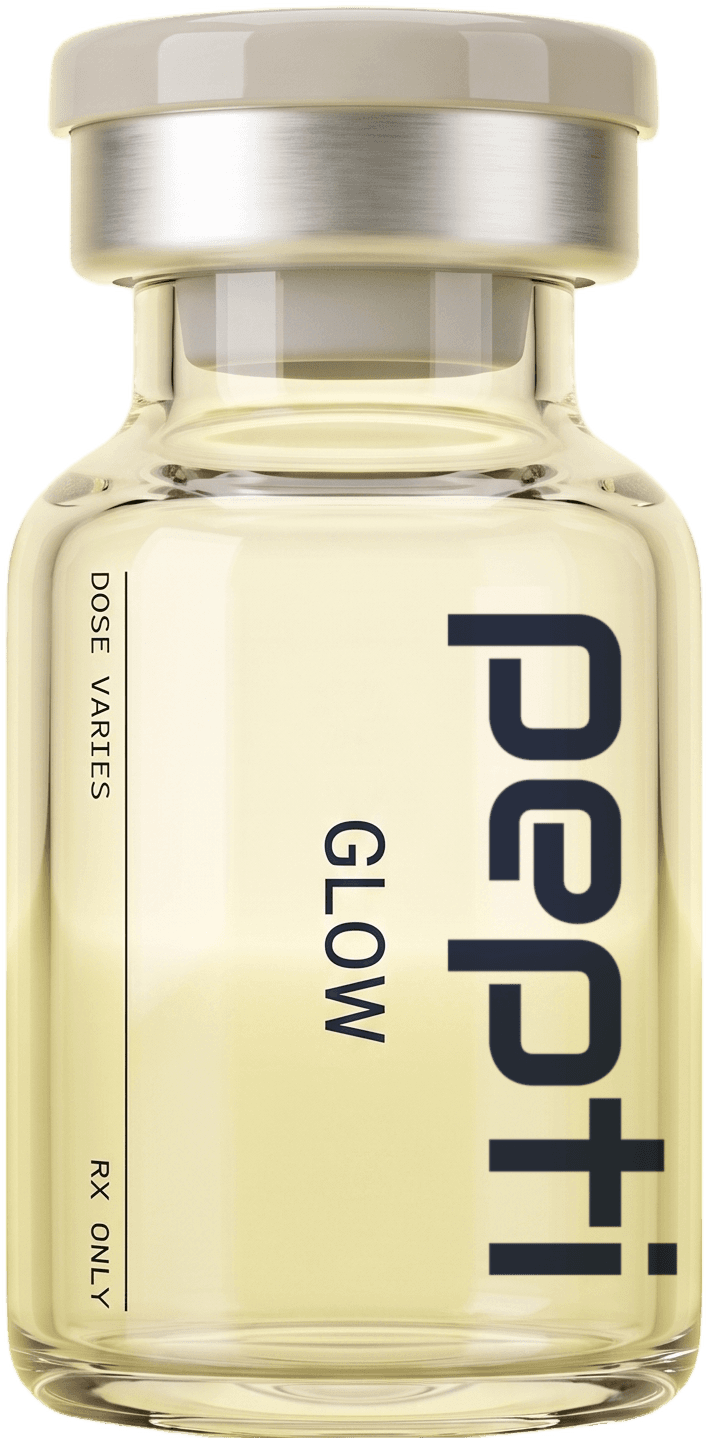
BPC-157 is sometimes marketed for skin, but its research is not skin research. GHK-Cu is the peptide studied around collagen synthesis, and the GLOW blend combines it with BPC-157 and TB-500 for people who want skin and connective tissue in the same vial. See what is GLOW.
Tested sport
The 2026 World Anti-Doping Agency Prohibited List names BPC-157 under S0, non-approved substances, prohibited at all times, in and out of competition. A prescription does not create an exemption. Women who compete in any tested sport should tell their physician before starting. See is BPC-157 banned.
BPC-157 for Women
What a physician considers first
| What it is | How it shows up | Why it comes first |
|---|---|---|
| A structural injury | Night pain, numbness, weakness, a locking joint | Needs imaging; a complete rupture or significant tear is a surgical question |
| Tendinopathy that has not been loaded properly | A tendon that flares with use | Progressive loading under a physical therapist has human trial evidence that BPC-157 does not |
| A swollen, hot or newly stiff joint | Inflammation rather than a sore tendon | Needs a diagnosis before anything else |
| A diagnosed bowel disease | Ongoing gut symptoms | Approved treatments exist; BPC-157 is discussed alongside them, never instead |
| Pregnancy, breastfeeding or trying to conceive | Before and during treatment | Not used; no data |
BPC-157 for Women
Safety and who should not take it
Nothing in the live research suggests the side-effect profile differs between women and men. Two of the three FDA adverse-event reports for injectable BPC-157 involved women: nine days of injection-site redness and swelling in a 55-year-old woman also injecting a thymosin product, and skin and gum darkening in a 40-year-old woman using a research-use-only vial labelled as BPC-157 plus TB-500, which the FDA could not attribute to either peptide and which has not been reported with pharmacy-compounded BPC-157.
| What is reported or relevant | How often | What to do |
|---|---|---|
| Injection-site redness, itching, tenderness, a small lump | Common | Rotate sites; mention it at follow-up |
| Mild tiredness or headache in the first week or two | Common | Usually settles; report it if it does not |
| Nausea, light-headedness or a warm flush after a dose | Uncommon | Report it |
| Unexplained bleeding or bruising, a new lump, a change in skin colour | Stop and call | Stop dosing and contact your physician |
| Facial or throat swelling, widespread rash, difficulty breathing | Rare | Call 911 first, then tell your physician |
| Active or recent cancer, including breast, ovarian or endometrial | Before treatment | Described as promoting new blood-vessel growth; not prescribed |
| Anticoagulant or antiplatelet therapy | Before treatment | Animal clotting-time changes; discuss first |
A cancer history goes on the intake in full, and a cancer in remission is a conversation that includes your oncologist. The full detail is in BPC-157 side effects and is BPC-157 safe.
BPC-157 for Women
Where BPC-157 stands with the FDA
BPC-157 was placed in Category 2 of the FDA's 503A bulks list in 2023 and removed from it on 15 April 2026. On 23 July 2026 the Pharmacy Compounding Advisory Committee voted 8 to 6, with one abstention, to recommend adding it to the 503A Bulks List, against the FDA staff recommendation; the FDA's final determination is pending. It remains legal to prescribe and compound against a valid prescription. No BPC-157 product is approved in any country, and compounded medications are not FDA approved.
BPC-157 for Women
How Pepti supplies BPC-157
| Product | What is in it | Typical directions | Price |
|---|---|---|---|
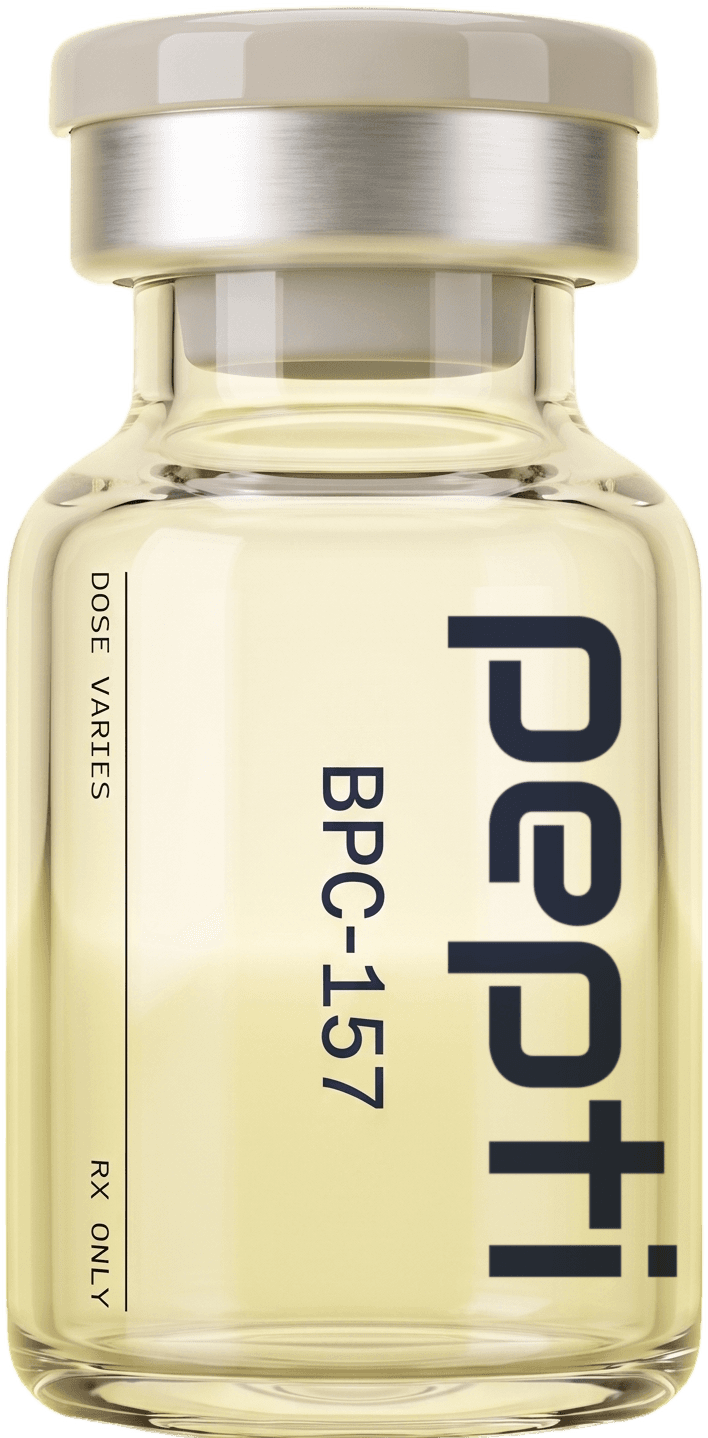
| BPC-157 | 5 mL vial, 1 mg/mL (5 mg BPC-157) | 0.18 mL (18 units) subcutaneously once daily; 0.18 mg per dose, 27 doses per vial | $209/mo |
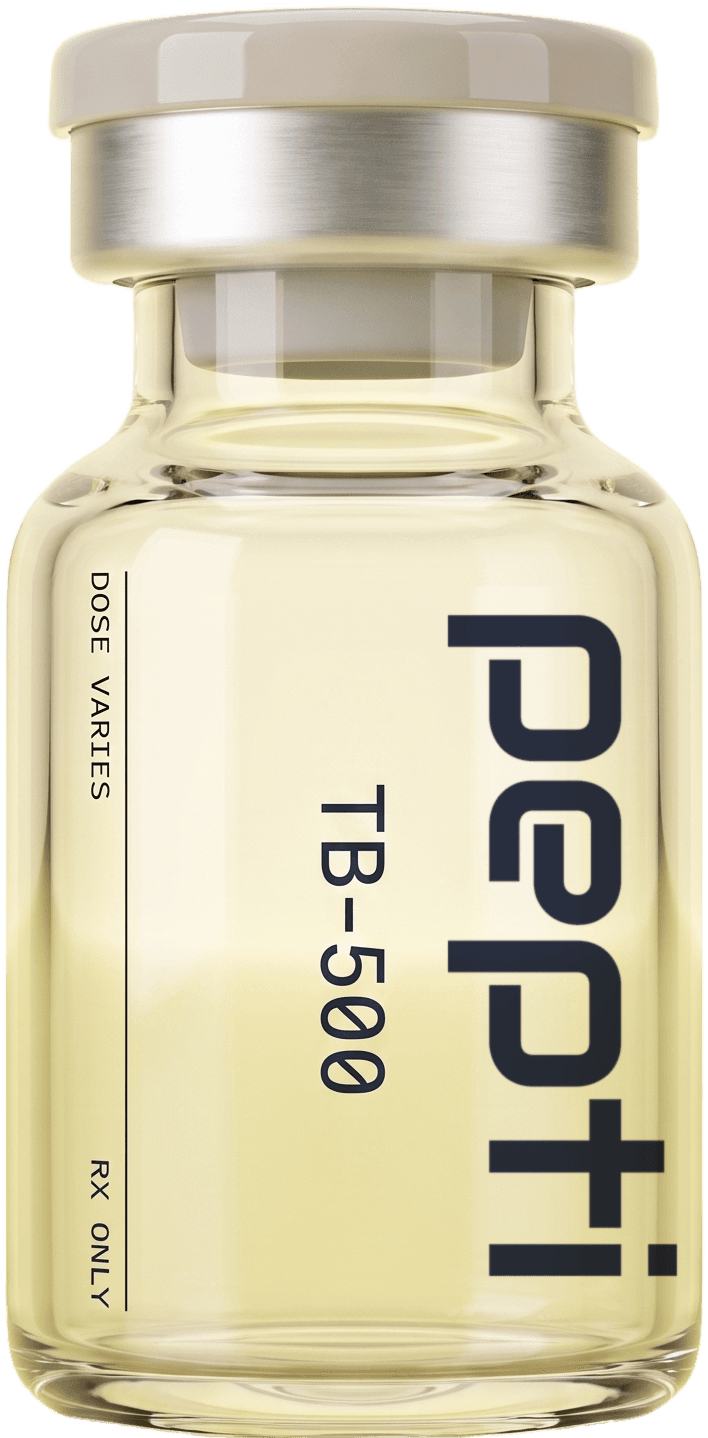
| BPC-157 + TB-500 | 5 mL vial, 1 mg/mL of each | 0.25 mL (25 units) Monday through Friday mornings; 0.25 mg of each per dose, 20 doses | $259/mo |
| GLOW | 50 mg GHK-Cu, 10 mg BPC-157, 10 mg TB-500 in 5 mL | 0.25 mL (25 units) Monday through Friday mornings | $259/mo |
| KLOW | 50 mg GHK-Cu, 10 mg KPV, 10 mg BPC-157, 10 mg TB-500 in 5 mL | 0.25 mL (25 units) Monday through Friday mornings | $259/mo |
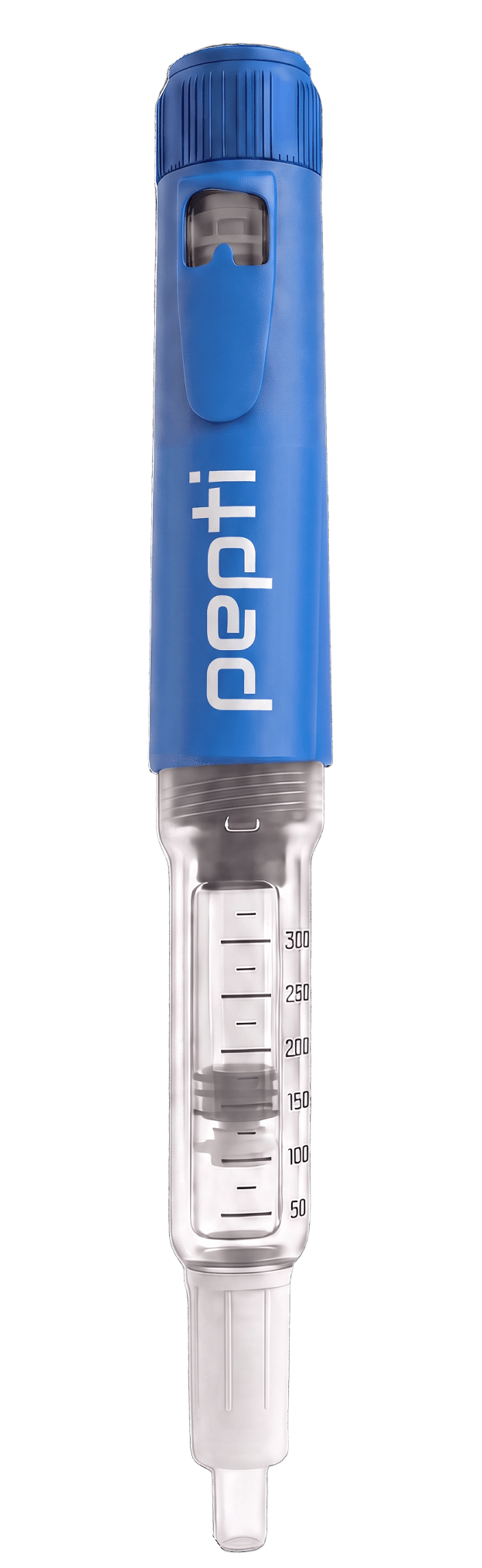
BPC-157 also comes as a 3 mL pre-filled pepti Pen cartridge containing 9 mg BPC-157, dosed by the pen's dial with directions written separately. The arithmetic for each vial is in BPC-157 dosage. Your physician sets your directions after reviewing your intake, and they are printed on the vial.
Every price is all-in, covering medication, physician review, refill management and shipping, with no membership fee. Pepti is cash-pay and does not bill insurance. Vials arrive as ready-to-use solutions with sterile syringes and alcohol prep pads, shipped refrigerated with ice packs. Refills run every 28 days, one vial per fill.
BPC-157 for Women
Where to get BPC-157 prescribed
BPC-157 cannot be bought legitimately without a prescription; vials sold without one are research-use-only products with no pharmacy accountable for what is in them. See research peptides vs prescription peptides. The prescription route:
- Complete a free online intake covering your history, medications, pregnancy and contraception status, any injury and imaging, and whether you are drug tested.
- A physician licensed in your state reviews it, usually within 24 hours.
- If it is appropriate, a PCAB-accredited, FDA-registered US 503A compounding pharmacy prepares it to that prescription. Lot test results are published at /quality/lab-results.
- It ships refrigerated with your directions printed on the vial.
- Your care team stays reachable for questions and side effects.
Step by step: how to get BPC-157 prescribed online. Bloodwork is not required for any Pepti treatment. If your physician wants labs for your care, they'll ask through your account.
References
What this is based on.
References
- Chang CH, Tsai WC, Hsu YH, Pang JH. Pentadecapeptide BPC 157 enhances the growth hormone receptor expression in tendon fibroblasts · Molecules (2014) · PMID 25415472
- Krivic A, Anic T, Seiwerth S, et al.. Achilles detachment of rat and stable gastric pentadecapeptide BPC 157 · Journal of Orthopaedic Research (2006) · PMID 16583442
- Sikiric P, Seiwerth S, Rucman R, et al.. Stable gastric pentadecapeptide BPC 157: novel therapy in gastrointestinal tract · Current Pharmaceutical Design (2011) · PMID 21548867
- Cerovecki T, Bojanic I, Brcic L, Radic B, et al.. Pentadecapeptide BPC 157 (PL 14736) improves ligament healing in the rat · J Orthop Res (2010) · PMID 20225319
- Sikiric P, Seiwerth S, Rucman R, Turkovic B, et al.. Stable gastric pentadecapeptide BPC 157-NO-system relation · Curr Pharm Des (2014) · PMID 23755725
- Cox HD, Miller GD, Eichner D. Detection and in vitro metabolism of the confiscated peptides BPC 157 and MGF R23H · Drug Test Anal (2017) · PMID 28035768
- Thomas A, Görgens C, Guddat S et al.. Simplifying and expanding the screening for peptides <2 kDa by direct urine injection, liquid chromatography, and ion mobility mass spectrometry · J Sep Sci (2016) · PMID 26578461
- Farrar JT, Young JP Jr, LaMoreaux L, Werth JL et al.. Clinical importance of changes in chronic pain intensity measured on an 11-point numerical pain rating scale · Pain (2001) · PMID 11690728
- Meyer JD, Ho B, Manning MC. Effects of conformation on the chemical stability of pharmaceutically relevant polypeptides · Pharm Biotechnol (2002) · PMID 11987755
- Xu C, Sun L, Ren F, Huang P, et al.. Preclinical Safety Evaluation of Body Protective Compound-157, a Potential Drug for Treating Various Wounds · Regul Toxicol Pharmacol (2020) · PMID 32334036
- He L, Feng D, Guo H, et al.. Pharmacokinetics, distribution, metabolism, and excretion of body-protective compound 157, a potential drug for treating various wounds, in rats and dogs · Front Pharmacol (2022) · PMID 36588717
- Lee E, Padgett B. Intra-Articular Injection of BPC 157 for Multiple Types of Knee Pain · Altern Ther Health Med (2021) · PMID 34324435
Citations are provided for educational purposes. They do not constitute medical advice. Always discuss any peptide protocol with your prescribing physician.
Common questions
BPC-157 for Women, answered.
It has not been studied in women as a group. The only human study enrolling women alone was a 12-person bladder-injection pilot with no control group. For women it is most often prescribed for a tendon, ligament or soft-tissue problem, on the strength of rodent work and prescriber experience rather than human trials.
Research describes the same things in everyone: rodent tendon, ligament, muscle and gut-lining repair and new blood-vessel growth. None of it reports findings specific to women, and none of it is a human trial of the injection.
It is not a hormone and is not described as acting on estrogen, progesterone or the cycle. No study has looked at cycle effects directly, so report any change to your physician.
No. The only reproductive data is a rat study by a different route, and there is no human pregnancy or lactation data. If you become pregnant on treatment, stop and contact your physician the same day.
Tell your physician before starting. There is no human fertility data, and the cautious approach while actively trying is not to be on elective treatment.
No interaction has been described, and BPC-157 does not act on hormones, but no study has looked at the combination. List your contraception on the intake.
It has not been tested for any menopause symptom and is not hormone therapy. It is sometimes prescribed, usually with TB-500, for a sore tendon in those years, alongside physiotherapy. Hot flashes, night sweats and bone loss belong in the conversation about the transition itself.
Its research is not skin research. GHK-Cu is the peptide studied around collagen, and GLOW combines it with BPC-157 and TB-500.
That has not been shown. A 2024 pilot gave bladder-wall injections to 12 women with interstitial cystitis and reported no adverse events, but it had no control group and used a route that is not prescribed.
The same as for men: mostly injection-site redness, itching or a small lump, and sometimes mild tiredness or headache in the first couple of weeks. Facial or throat swelling or difficulty breathing after a dose needs 911.
At Pepti, BPC-157 is $209 a month and BPC-157 + TB-500 is $259 a month, all-in, covering medication, physician review, refill management and shipping.
No. Bloodwork is not required for any Pepti treatment. If your physician wants labs for your care, they'll ask through your account. The free assessment goes to a physician licensed in your state. A consultation does not guarantee a prescription.
Related answers
Keep reading.
- What Is BPC-157? Research, Dosing, Safety & Cost
- BPC-157 Side Effects: What Is Reported, What to Watch For, and Who Should Avoid It
- BPC-157 vs GHK-Cu: Mechanism, Evidence, Dosing, Cost, and Which One Fits
- BPC-157 vs GLOW: One Peptide or Three, and Which One Fits
- BPC-157 + TB-500 for Men: What the Research Has Looked At, and What It Is Not
Next step
See what a physician recommends for you.
A licensed physician in your state reviews your intake to see whether treatment fits your history. A consultation does not guarantee a prescription.