Recovery · Reference
Peptides for Tendon and Ligament Injuries: What Is Used and Why
They are also an adjunct. Loading is what rebuilds a tendon, and no peptide substitutes for that.

Reviewed by Dr. Gene, MD · Board-certified Family Medicine
Every Pepti prescription is reviewed by a licensed U.S. physician before it's dispensed — and only provided if clinically appropriate.
Treatments mentioned
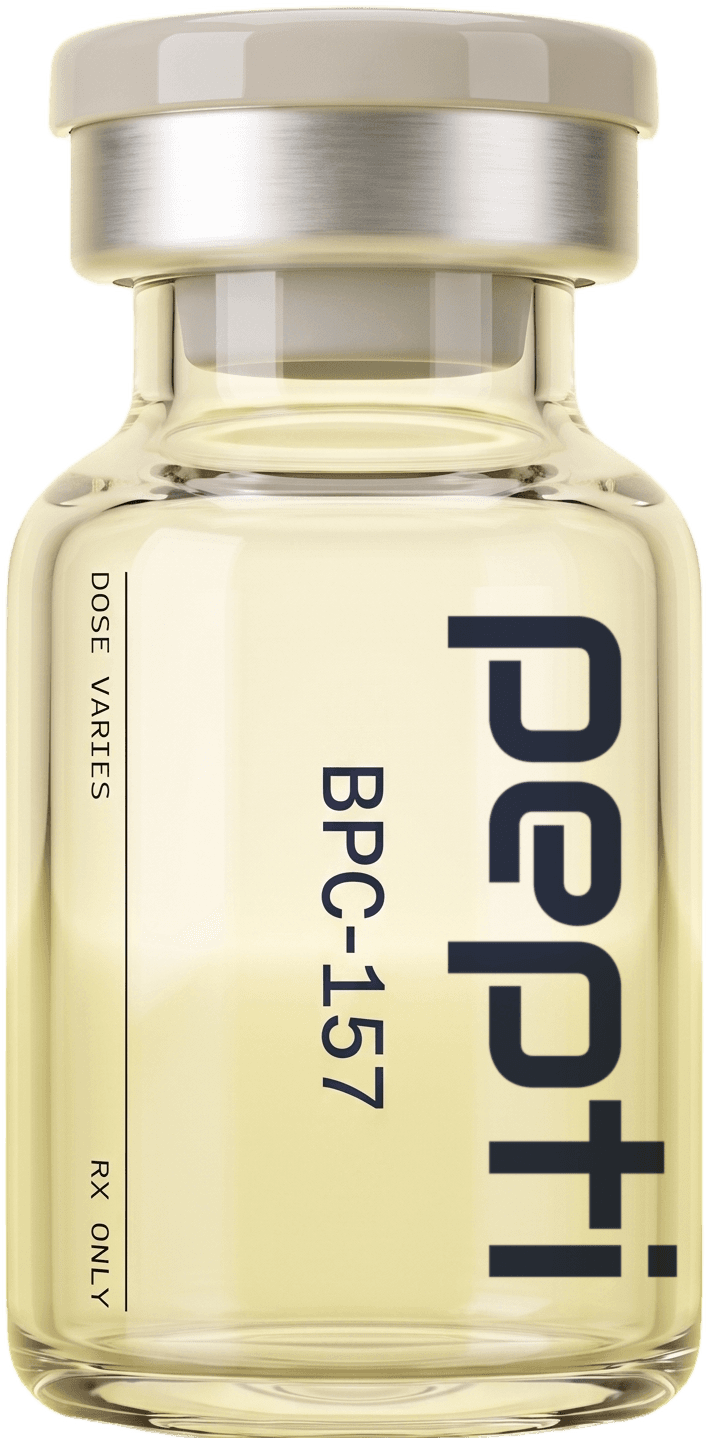
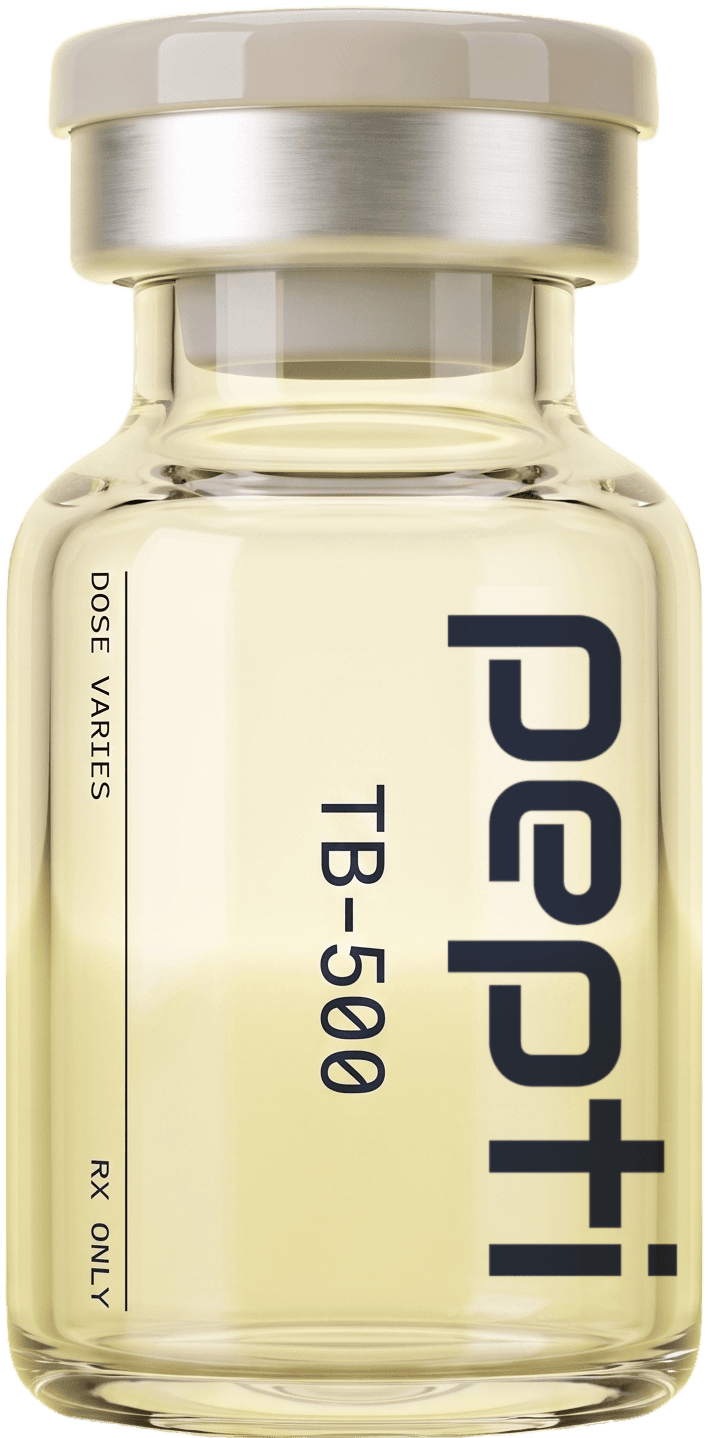
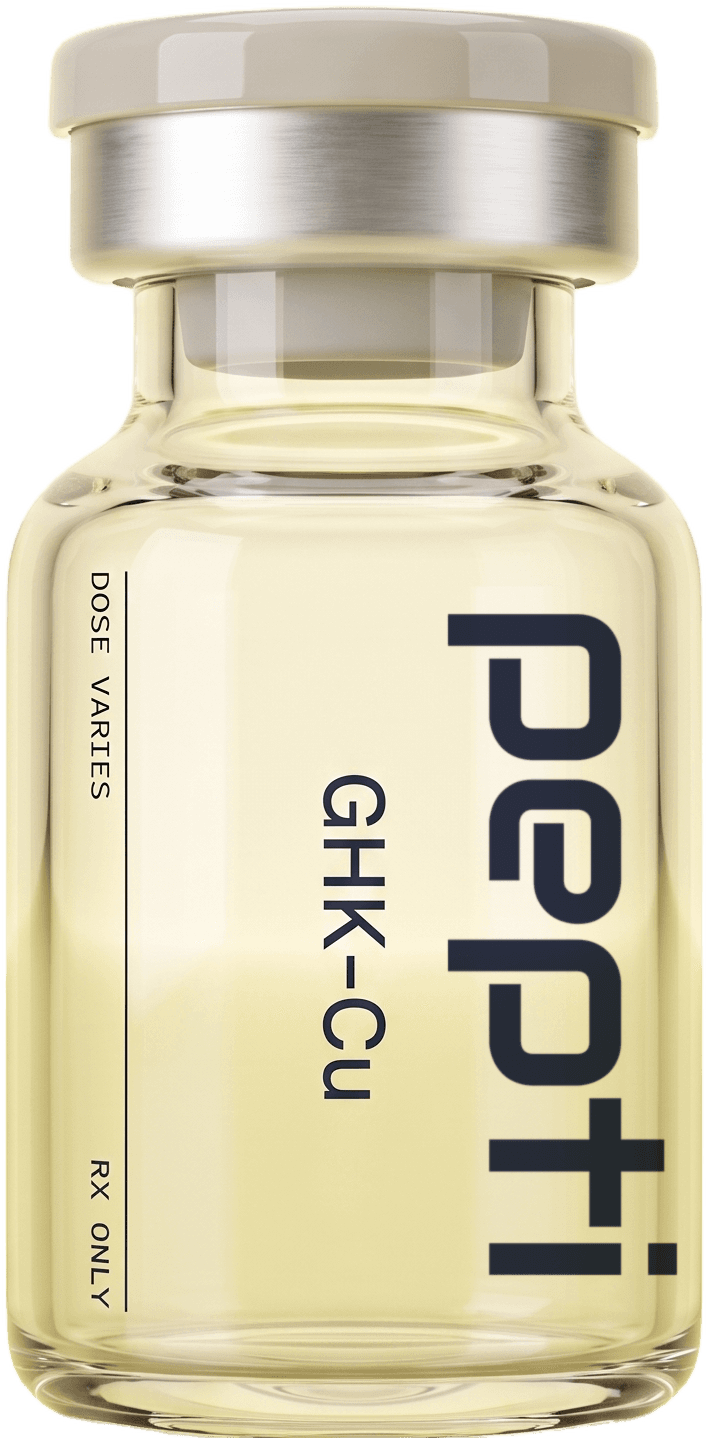
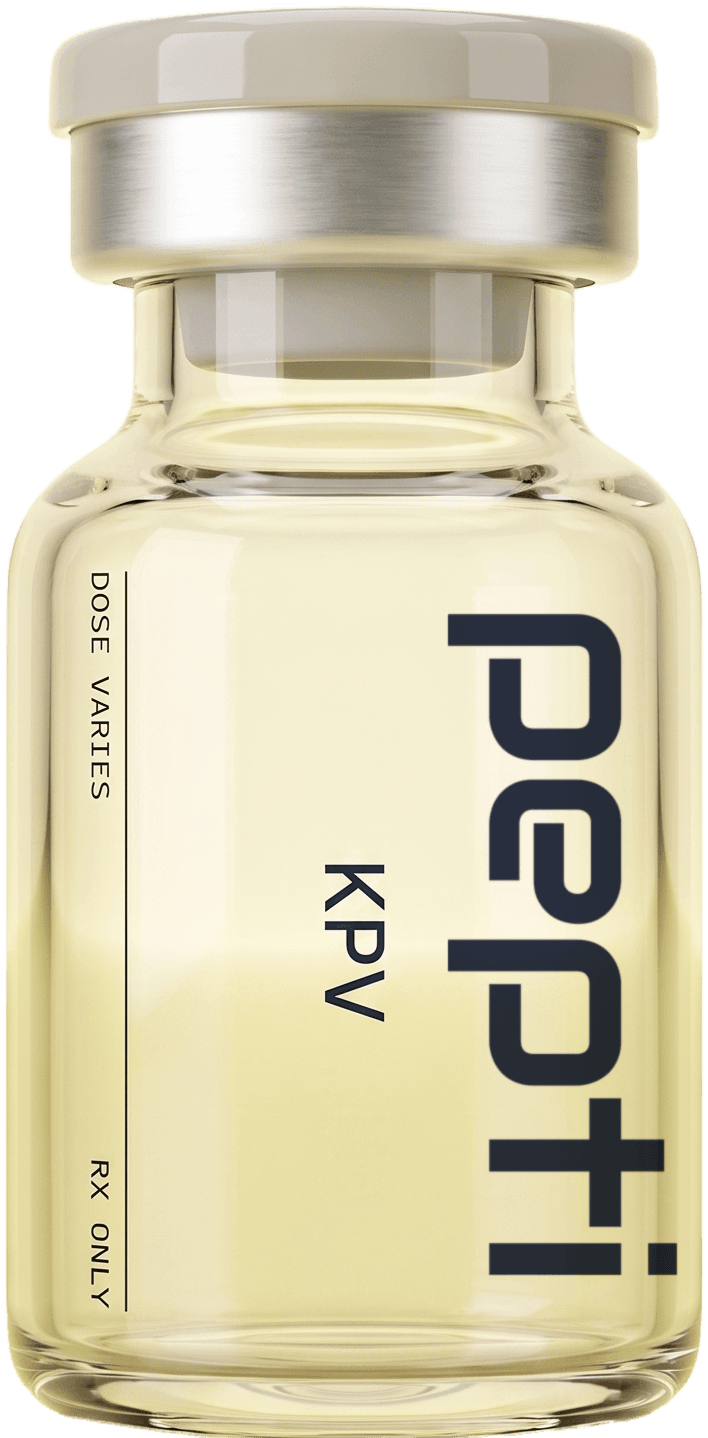
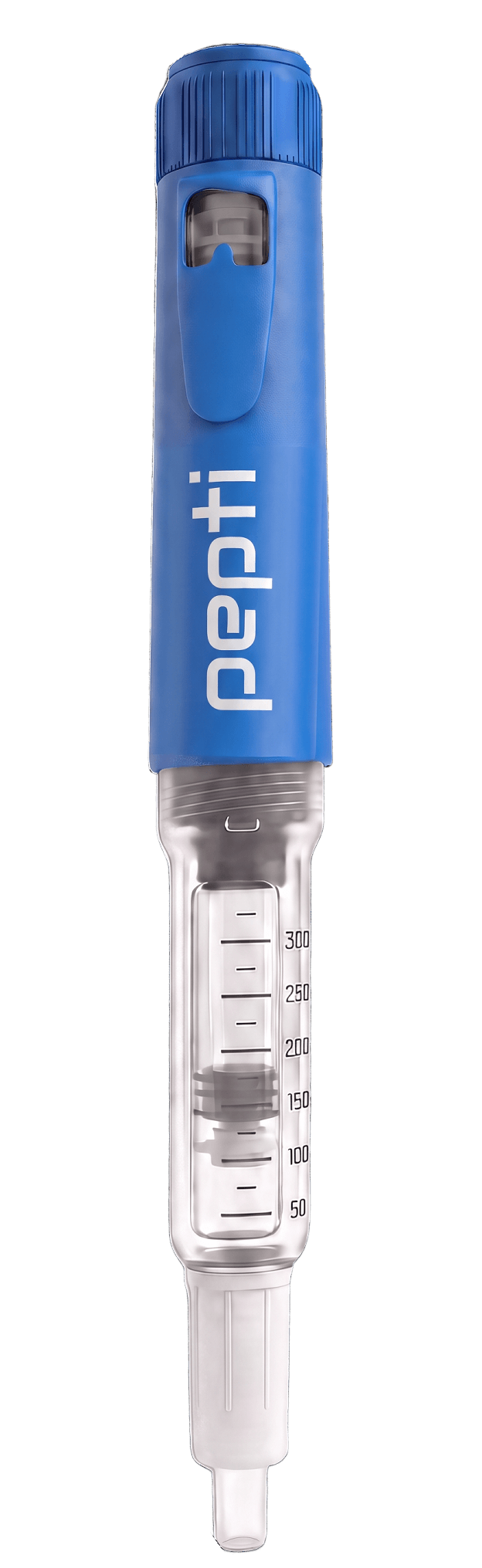
The peptides prescribed for tendon and ligament injuries are BPC-157 and TB-500, usually combined in one vial, with GHK-Cu added when collagen quality is the concern. The reason this specific combination is used is anatomical: tendons and ligaments have a poor blood supply and slow cell turnover, which is why they take months to heal when muscle takes weeks. These peptides are described in research as acting on exactly those limitations. They are prescription-only, compounded by licensed US pharmacies, and not FDA approved.
They are also an adjunct. Loading is what rebuilds a tendon, and no peptide substitutes for that.
Peptides for Tendon and Ligament Injuries
The short answer
| If your injury is | The usual prescription | What is in it | Price |
|---|---|---|---|
| Tendinopathy or a ligament sprain | BPC-157 + TB-500 | 5 mg BPC-157 and 5 mg TB-500 in 5 mL | $259 |
| The same, with stubborn local inflammation | KLOW | 50 mg GHK-Cu, 10 mg KPV, 10 mg BPC-157, 10 mg TB-500 | $259 |
| An injury where collagen quality is the concern | GLOW | 50 mg GHK-Cu, 10 mg BPC-157, 10 mg TB-500 | $259 |
| A long-standing injury alongside general recovery | REVIVE | 50 mg GHK-Cu, 6 mg CJC-1295, 12 mg Ipamorelin, 2 mg TB-500 | $279 |
| A first attempt at the simplest option | BPC-157 | 5 mg BPC-157 in 5 mL | $209 |
| Cell migration and scar quality specifically | TB-500 | 5 mg TB-500 in 5 mL | $209 |
| Collagen and matrix alone | GHK-Cu | 50 mg GHK-Cu in 5 mL | $239 |
Each is an all-in monthly price covering medication, physician review, refill management and shipping. Pepti is subscription based.
Two things frame everything below. The tendon and ligament research on BPC-157 and TB-500 is animal and cell work; there are no randomized human trials of either peptide for a tendon or ligament injury. And the regulatory position of all four molecules changed twice in 2026, so most online "banned peptides" content is out of date.
Peptides for Tendon and Ligament Injuries
What is actually going on in a tendon or ligament injury
Why tendons and ligaments are different
Muscle bleeds when you tear it, and that blood brings everything repair requires. Tendon does not. This is the whole reason the category exists.
Feature Muscle Tendon and ligament Blood supply Rich Sparse, and worse at the mid-portion of some tendons and at the insertion Resident cell density High Low. Tenocytes are relatively few and slow Collagen turnover Fast Slow, measured in months Typical recovery Weeks Months, and often incomplete What fails when it stalls Rare New vessels never reach the area, so nothing rebuilds A tendon is mostly type I collagen in parallel bundles with a small population of tenocytes between the fibers: few cells, far from any capillary, producing collagen that takes months to be laid down and realigned. A ligament is built the same way but runs bone to bone, and its job is restraint, which is why a ligament that repairs long and loose is a functional failure even when structurally intact.
Tendinopathy is not tendinitis
The second thing worth knowing is that chronic tendon pain is usually not inflammation. What imaging and biopsy describe in long-standing cases is a degenerative picture: disorganized collagen, increased ground substance, and abnormal new vessel and nerve ingrowth. That is why the word most clinicians now use is tendinopathy rather than tendinitis, and why anti-inflammatory strategies often disappoint after the first few weeks. It also decides which peptide has the clearer rationale: KPV early, when a tendon is genuinely reactive; the vessel, migration and matrix peptides in a long-standing degenerative tendon where repair never got going.
Where each molecule acts
Stage of repair What has to happen If it stalls Which peptide is described here Inflammatory Damage signalled, debris cleared Pain and swelling that never resolve KPV, BPC-157 Cell migration Repair cells physically reach the tissue Nothing rebuilds, however long you rest TB-500 Angiogenesis New vessels reach a poorly vascularised area The tissue starves. The core tendon problem BPC-157, GHK-Cu Matrix synthesis Collagen and proteoglycans laid down Thin, weak repair tissue GHK-Cu Remodelling Collagen realigns along lines of load Scar instead of function GHK-Cu, TB-500 The table is a map of the rationale, not a claim of proof. Each row is a pathway a peptide has been reported to act on in animal or cell work; whether that translates into a faster or stronger human tendon has not been tested in a trial. Underneath most of it is a load problem, and any plan that does not change the load is treating the symptom.
Peptides for Tendon and Ligament Injuries
What physicians prescribe for tendon and ligament injuries
BPC-157
A 15-amino-acid fragment of a protein found in human gastric juice. Animal research describes it promoting new blood-vessel formation through the VEGF receptor pathway and the nitric-oxide system, and upregulating growth-hormone receptor expression in tendon fibroblasts, which makes those cells more responsive to signals already circulating. Both of those map directly onto what a tendon lacks. The published tendon work is in rats, not people.
It is the most tendon-specific literature of any peptide on this page, and it is all in rats and rat cells. A 2003 paper in the Journal of Orthopaedic Research reported faster healing of a transected rat Achilles tendon; a 2006 paper in the same journal reported improved reattachment after Achilles detachment from bone; and a 2010 paper, again in the Journal of Orthopaedic Research, transected the medial collateral ligament of the rat knee and reported improved ligament healing over ninety days whether the peptide was injected, given in drinking water, or applied as a cream. The studies measure things a rat cannot fake: time to weight-bearing, tensile strength, collagen histology. At the cell level, a 2011 paper in the Journal of Applied Physiology reported increased survival, migration and outgrowth of cultured tendon fibroblasts, and a 2014 paper in Molecules reported increased growth hormone receptor expression in the same cells; a 2021 paper in Biomedicines extended the animal work to the myotendinous junction, and a 2026 review in Pharmaceuticals summarizes it. The FDA's own July 2026 briefing document puts it the same way: pharmacological studies have suggested BPC-157 "promotes healing of transected tendons in rodents." That is the ceiling of the evidence. BPC-157 suits the patient whose tendon or ligament has stalled, who has a loading program in place, and who wants the simplest single-molecule option first. Its reference is at what is BPC-157.
TB-500
Related to thymosin beta-4. It binds actin, the protein that gives a cell its structure and lets it move, which is the basis of its described effect on repair cells migrating into damaged tissue. Published work also reports new vessel formation, downregulation of inflammatory mediators, and reduced scar formation in some injury models. BPC-157 vs TB-500 compares the two directly, and what is BPC-157 + TB-500 covers the combination.
Thymosin beta-4 has a deeper general literature than BPC-157 but a thinner tendon one: directional migration of human endothelial cells in FASEB Journal in 1997, accelerated wound closure in rats in the Journal of Investigative Dermatology in 1999, and increased matrix metalloproteinase expression during repair in the Journal of Cellular Physiology in 2006. On the human side, a 2010 randomized placebo-controlled study in the Annals of the New York Academy of Sciences reported intravenous thymosin beta-4 was well tolerated in healthy volunteers, and a 2015 phase 2 trial in Cornea reported improvement in severe dry eye. The one study that tests TB-500 by name in a tendon is the 2026 rat paper below. TB-500 suits the patient whose picture is poor-quality repair tissue and scarring, and it is usually prescribed with BPC-157 rather than instead of it. Its reference is at what is TB-500.
BPC-157 + TB-500 in one vial
The BPC-157 + TB-500 stack exists because the two are described as acting on different limitations of the same tissue: BPC-157 on blood supply and the responsiveness of tendon cells, TB-500 on whether repair cells can reach and move through the injury. One vial means one injection and one set of pharmacy directions. What the combination does not have is evidence that it outperforms either peptide alone; the 2026 rat study reported no additional benefit from the pair. Pricing is at /cost/bpc-tb-stack.
GHK-Cu
A copper-binding tripeptide that delivers copper to the enzymes that depend on it. Research describes increased synthesis of collagen, elastin and proteoglycans, and modulation of the balance between matrix metalloproteinases and their inhibitors. Since a degenerative tendon is a matrix problem, this is the component aimed at the tissue quality rather than at the symptoms.
GHK-Cu has the oldest literature of the four: stimulated collagen synthesis in cultured fibroblasts in FEBS Letters in 1988, increased connective tissue accumulation in rat wounds in the Journal of Clinical Investigation in 1993, and a 1994 paper in Wound Repair and Regeneration reporting enhanced closure of diabetic ulcers with a topical copper-peptide preparation, which is human data, though for skin and by a different route. None of it is tendon-specific; the rationale is that a tendon is made of the collagen the peptide is described as acting on in skin, and it is untested in a tendon trial. GHK-Cu suits the patient whose imaging or history points to poor tissue quality: a thickened, disorganized tendon on ultrasound, a ligament that repaired lax, or someone in their fifties or sixties for whom collagen turnover is the limiting factor. It is why GLOW and KLOW add it to the base pair. Its reference is at what is GHK-Cu.
KPV
The last three amino acids of alpha-MSH, described as interfering with NF-kB and MAPK signalling and reducing cytokines such as TNF-alpha and IL-6. It earns a place when inflammation is genuinely part of the picture, which is more often true early than late.
KPV's research base is inflammatory bowel and skin, not tendon: a 2008 paper in Gastroenterology reported reduced intestinal inflammation in mice, and a 2008 paper in Inflammatory Bowel Diseases reported anti-inflammatory effects in murine colitis. There is no KPV tendon study. KPV suits the reactive tendon in its early weeks, the sprain that is still hot and swollen, or the chronic tendon that has flared, and it is why KLOW exists as a separate product from GLOW. Its reference is at what is KPV.
KLOW, GLOW and REVIVE
KLOW combines GHK-Cu, KPV, BPC-157 and TB-500 in one vial, covering all five stages in the table above; it is the blend for a long-standing injury that is still reactive. GLOW is the same without KPV, for the injury where inflammation has settled and tissue quality is the concern. REVIVE pairs GHK-Cu and a smaller amount of TB-500 with the growth-hormone secretagogues CJC-1295 and ipamorelin, for general recovery in someone who also has a slow injury. Which blend, if any, is a physician's decision; /cost/klow, /cost/glow and /cost/revive-blend carry current pricing.
Peptides for Tendon and Ligament Injuries
How this is injected, and how it is not
These are subcutaneous injections given into a clean area of fat, typically the abdomen, exactly as the pharmacy prints the directions on the vial. They are not injected into the tendon, not into the joint, and not into the injured site.
Injecting into or around a tendon is an imaging-guided procedure performed by a clinician who does it for a living. Doing it yourself with a multi-dose vial risks infection in a structure with a poor blood supply, which is one of the harder problems in orthopaedics to fix. Anyone telling you to inject locally for a better result is describing something that has not been demonstrated.
The mechanisms described in the research are systemic; the rat ligament study that compared routes reported effects by abdominal injection, by mouth and as a cream, none of which is an injection into the ligament. Directions are set by the prescribing physician and printed on the medication. Refills are 28-day, one vial per fill.
Peptides for Tendon and Ligament Injuries
What the evidence shows, and what it does not
The 2026 head-to-head study
A 2026 paper in Joint Diseases and Related Surgery is the first to test BPC-157 and TB-500 by name, alone and together, in a tendon model. Thirty-two rats had the Achilles tendon cut and repaired and were assigned to control, BPC-157, TB-500 or both, treated daily for four weeks. Maximum load to failure was higher in both peptide groups than in controls, reaching statistical significance for TB-500; TB-500 also produced significantly better tendon architecture scores, while BPC-157 alone showed numerically better scores that did not reach significance. The combination did not do better than either peptide by itself. The paper calls itself exploratory. Two things follow: TB-500 now has a tendon study of its own rather than an inference from skin and heart, and the "stack" has its first data point suggesting the pair is not additive in a rat at four weeks.
What the loading trials show, for comparison
The peptides are added to a treatment that has human trial evidence. A 2015 randomized controlled trial in the American Journal of Sports Medicine reported that both heavy slow resistance and eccentric training improved Achilles tendinopathy. A 2009 randomized trial in the Scandinavian Journal of Medicine and Science in Sports reported that a corticosteroid injection worked fastest in patellar tendinopathy but the loading programs held up at follow-up when the injection did not, and a 2010 systematic review in The Lancet reported the same pattern across tendinopathy trials. No peptide has been tested against those standards.
What human data exists for the peptides
There is no randomised human trial showing that any of these improves tendon healing. Animal work on BPC-157 describes a wide margin between effective and problematic doses, and reported tolerability is good, which is a different statement from proven efficacy. Neither GHK-Cu nor KPV has a tendon or ligament study in any species; their place in the blends rests on mechanism. Two 2026 reviews in the American Journal of Sports Medicine describe the musculoskeletal evidence for BPC-157 and TB-500 as animal-based and call for human trials. The FDA's July 2026 briefing document noted that BPC-157 had been nominated for tendonitis but that the agency did not evaluate that use, because the nomination lacked sufficient information and it "did not identify clinical studies using BPC-157 in these populations."
What the evidence does not establish
- An effect size in humans. Nobody can tell you how much faster or stronger a given tendon will recover, because that trial has not been run.
- A human timeline. The weeks quoted by prescribers are clinical experience, not trial endpoints.
- Superiority of the combination. The one rat study that tested it reported no additive benefit.
- Long-term safety over years of continuous use in humans.
- Any efficacy as an FDA-approved treatment. None of these is approved for anything.
None of these are FDA approved. They are compounded at a US FDA-registered pharmacy against a valid prescription. A provider offering you a healing timeline for a tendon is making it up. The broader repair picture is in peptides for healing and the joint-specific version in peptides for joint health.
Peptides for Tendon and Ligament Injuries
Where these stand with the FDA right now
This moved twice in 2026 and most of what is online, including a lot of "banned peptides" content from 2023 and 2024, is out of date. None of the four is an FDA-approved drug, and compounded medications never are; what changed is how the FDA treats the bulk substances a pharmacy compounds them from under section 503A.
BPC-157, TB-500 and KPV
In 2023 the FDA placed BPC-157, TB-500 and KPV, with other peptides, in Category 2 of its interim 503A bulk drug substances list, the category for nominated substances the agency said raised significant safety concerns. On 15 April 2026 the FDA announced it was removing twelve peptides from Category 2, including BPC-157, TB-500 and KPV, effective seven days later. The FDA's Category 2 page, current as of 22 April 2026, now shows BPC-157, TB-500 (thymosin beta-4 fragment), KPV and GHK-Cu under "nominated but withdrawn." Removal does not by itself establish that a substance meets the criteria for compounding; it removes the flag.
On 23 July 2026 the FDA's Pharmacy Compounding Advisory Committee reviewed BPC-157, KPV and TB-500 and voted 8 to 6, with one abstention, to recommend adding each of them to the 503A Bulks List. The committee recommended six of the seven peptides on its agenda. The votes went against the FDA's own staff position: the agency's briefing document had proposed that BPC-157, KPV and TB-500 each not be included, citing incomplete characterization and the absence of adequate clinical data. A committee vote is a recommendation; the FDA issues its own determination afterwards, and formal addition requires rulemaking. As of September 2026 that determination is pending.
GHK-Cu
Injectable GHK-Cu was one of the twelve peptides removed from Category 2 in April 2026. Non-injectable GHK-Cu sits in Category 1, the list of substances under evaluation: the FDA's 503A list updated 14 May 2026 carries "GHK-Cu (except for injectable routes of administration)" there, after a nominator withdrew and then partly reinstated its nomination in April and May, and states that the agency intends to consult the advisory committee about GHK-Cu before the end of February 2027. GHK-Cu was not on the July 2026 agenda.
What this means for a prescription today
All four peptides remain legal to prescribe and dispense under a valid prescription from a physician licensed in your state, compounded by a state-licensed pharmacy. None is FDA approved, none becomes approved by being added to a bulks list, and the position can change again; this page is dated September 2026.
Anti-doping status
The World Anti-Doping Agency's 2026 Prohibited List, in force from 1 January 2026, names BPC-157 under S0, non-approved substances, prohibited at all times in and out of competition. TB-500 is named under S2.3 as "Thymosin-β4 and its derivatives e.g. TB-500," a class that also covers any growth factor modulator "affecting muscle, tendon or ligament protein synthesis/degradation, vascularisation, energy utilization, regenerative capacity or fibre type switching," likewise prohibited at all times. GHK-Cu and KPV are not named, but S0 is a catch-all for any substance without regulatory approval for human use, so a tested athlete should treat both as questions for their anti-doping organization. See peptides for athletes.
Peptides for Tendon and Ligament Injuries
What a physician rules out first
A tendon or ligament that will not settle is a diagnosis before it is a prescription. The intake and the physician review are built to catch the situations where a vial is the wrong answer.
That it is actually a tendon or ligament problem
Lateral elbow pain can be a nerve entrapment. Posterior heel pain can be a bursa or a bone stress reaction. Groin "tendinopathy" is regularly a hip joint. The rationale above only applies if the tissue is a tendon or ligament, so the physician wants to know where it hurts, what provokes it, and whether anyone has imaged it.
That nothing is structurally torn
A full-thickness rupture, a ligament that has lost its integrity, an avulsion where the tendon has pulled a fragment of bone away: these are surgical questions, so the physician asks about a snap, a pop, a sudden loss of strength or a joint that gave way before anything else.
Red flags and history that change the answer
Night pain, pain unrelated to activity, fever, unexplained weight loss, or a hot swollen joint with no injury to explain it need a medical assessment first. So does a tendon problem in someone recently prescribed a fluoroquinolone antibiotic, a class with a documented association with tendon rupture. The physician also asks what changed in the weeks before the pain started, because if that load is still being applied the peptide question is premature, and goes through cancer history, anticoagulants, pregnancy, copper metabolism and competition drug testing.
Peptides for Tendon and Ligament Injuries
What to expect, and when
| Timeframe | What patients commonly describe |
|---|---|
| Week 1 to 2 | Little beyond injection-site tenderness |
| Week 2 to 4 | Less background ache, and a tendon that feels less reactive the morning after activity |
| Week 4 to 8 | Better tolerance to loading, which is where rehabilitation progress becomes visible |
| Week 8 onward | The point a physician reassesses whether this is earning its place |
These are patient reports, not trial endpoints. Response varies widely. How long do peptides take to work covers why this category is slow.
The morning-after test
The rat studies measured effects at two to four weeks in an animal whose tendon turnover runs far faster than a human's, so the first thing patients describe is background irritability settling rather than the injury changing, and noticing nothing in the first fortnight is not a sign that anything is wrong. The most useful marker prescribers describe is how the tendon feels the morning after a loading session: a tendon whose capacity is improving is less stiff and less reactive twenty-four hours after the same session it reacted to a month earlier. That is also the marker a physiotherapist uses to progress loading, so the peptide and the rehabilitation are judged by the same yardstick. Chronic degenerative tendinopathy is described as slower than a recent sprain, and the 28-day refill rhythm exists so that a physician is looking at the picture regularly. Treatment continues for as long as it is earning its place.
Peptides for Tendon and Ligament Injuries
What has to happen alongside it
- Progressive loading. Heavy slow resistance and eccentric programmes are the interventions with actual trial evidence in tendinopathy. The peptide is the adjunct, not the treatment.
- A load audit. Most tendon problems are a training-load problem. If the thing that caused it continues unchanged, nothing resolves.
- Patience with the timeline. Tendon adaptation is measured in months regardless of what else you do.
- A conversation about corticosteroid injections. They often relieve pain in the short term, and repeated injections into a tendon are associated with worse structural outcomes. That is a discussion to have with the clinician offering it.
Peptides for Tendon and Ligament Injuries
When a peptide is the wrong tool
| Situation | What it needs instead |
|---|---|
| A full-thickness tendon rupture, or an Achilles you felt snap | Urgent surgical assessment |
| A knee that gave way and swelled within an hour | Imaging for a cruciate ligament tear |
| A joint that locks or catches | Imaging, not a vial |
| Numbness, tingling or weakness | A nerve problem, which is a different diagnosis |
| Night pain, fever, or pain unrelated to activity | Medical assessment before anything else |
| Pain that has been worsening month on month | Re-examination, because the diagnosis may be wrong |
When a different Pepti product is the better conversation
- The problem is the joint, not the tendon. Cartilage and synovium are a different tissue, covered in peptides for joint health.
- The problem is a nerve. Burning, tingling or numbness along a nerve's territory is not a tendon problem; ARA-290 is the peptide Pepti prescribes for nerve and neuropathy support.
- Inflammation is the whole picture. A hot, swollen tendon in its first weeks is where KPV alone, or KLOW, is the more targeted start.
- You are recovering from the operation, not avoiding one. Nothing starts after a repair or reconstruction without the operating surgeon's agreement; see peptides for recovery after surgery.
- Skin, hair and connective tissue generally are the aim. GHK-Cu alone or GLOW is aimed at that more directly.
Being declined is refunded.
Peptides for Tendon and Ligament Injuries
Who should not take them
| Situation | Why |
|---|---|
| Personal history of cancer | BPC-157, TB-500 and GHK-Cu are all described as supporting new blood-vessel formation |
| Anticoagulant therapy | Discuss first, given the vascular mechanisms |
| Wilson's disease or a copper-metabolism disorder | GHK-Cu delivers copper |
| High-dose zinc supplementation | Zinc competes with copper absorption. Tell your physician |
| Pregnancy or breastfeeding | Not used. Safety data is absent |
| Tested athletes | BPC-157 and TB-500 are both prohibited in tested competition. See peptides for athletes and is BPC-157 banned |
The cancer row deserves a sentence. Angiogenesis is the mechanism most consistently described for BPC-157, TB-500 and GHK-Cu, and any tissue that needs a blood supply benefits from it. No study has shown these peptides promote a cancer; the caution is that no study has shown they do not.
Peptides for Tendon and Ligament Injuries
Monitoring and bloodwork
Bloodwork is not routinely required before BPC-157, TB-500, GHK-Cu or KPV; a physician decides from history. Where labs are wanted, the reasons are specific: copper and ceruloplasmin, and sometimes zinc, if GHK-Cu will be used for a long period; a metabolic panel and full blood count as baselines for long-term injectable treatment; occasionally CRP when the question is whether a "tendon" problem is a systemic inflammatory condition. At-home blood testing covers hormone, metabolic and thyroid markers without a lab visit.
Monitoring in practice is less about labs and more about the injury. The 28-day refill rhythm means a physician sees the picture monthly: whether morning-after reactivity is changing, whether loading is progressing, and whether anything has appeared that changes the diagnosis. Injection-site redness, mild soreness and occasional bruising are the reactions most commonly reported and are managed by rotating sites. Anything severe, spreading, or involving difficulty breathing is a reason to stop and contact the physician.
References
What this is based on.
References
- Chang CH, Tsai WC, Hsu YH, Pang JH. Pentadecapeptide BPC 157 enhances the growth hormone receptor expression in tendon fibroblasts · Molecules (2014) · PMID 25415472
- Krivic A, Anic T, Seiwerth S, et al.. Achilles detachment of rat and stable gastric pentadecapeptide BPC 157 · Journal of Orthopaedic Research (2006) · PMID 16583442
- Sikiric P, Seiwerth S, Rucman R, et al.. Stable gastric pentadecapeptide BPC 157: novel therapy in gastrointestinal tract · Current Pharmaceutical Design (2011) · PMID 21548867
- Cerovecki T, Bojanic I, Brcic L, Radic B, et al.. Pentadecapeptide BPC 157 (PL 14736) improves ligament healing in the rat · J Orthop Res (2010) · PMID 20225319
- Sikiric P, Seiwerth S, Rucman R, Turkovic B, et al.. Stable gastric pentadecapeptide BPC 157-NO-system relation · Curr Pharm Des (2014) · PMID 23755725
- Cox HD, Miller GD, Eichner D. Detection and in vitro metabolism of the confiscated peptides BPC 157 and MGF R23H · Drug Test Anal (2017) · PMID 28035768
- Thomas A, Görgens C, Guddat S et al.. Simplifying and expanding the screening for peptides <2 kDa by direct urine injection, liquid chromatography, and ion mobility mass spectrometry · J Sep Sci (2016) · PMID 26578461
- Farrar JT, Young JP Jr, LaMoreaux L, Werth JL et al.. Clinical importance of changes in chronic pain intensity measured on an 11-point numerical pain rating scale · Pain (2001) · PMID 11690728
- Meyer JD, Ho B, Manning MC. Effects of conformation on the chemical stability of pharmaceutically relevant polypeptides · Pharm Biotechnol (2002) · PMID 11987755
- Xu C, Sun L, Ren F, Huang P, et al.. Preclinical Safety Evaluation of Body Protective Compound-157, a Potential Drug for Treating Various Wounds · Regul Toxicol Pharmacol (2020) · PMID 32334036
- He L, Feng D, Guo H, et al.. Pharmacokinetics, distribution, metabolism, and excretion of body-protective compound 157, a potential drug for treating various wounds, in rats and dogs · Front Pharmacol (2022) · PMID 36588717
- Lee E, Padgett B. Intra-Articular Injection of BPC 157 for Multiple Types of Knee Pain · Altern Ther Health Med (2021) · PMID 34324435
Citations are provided for educational purposes. They do not constitute medical advice. Always discuss any peptide protocol with your prescribing physician.
Common questions
Peptides for Tendon and Ligament Injuries, answered.
BPC-157 combined with TB-500 is the usual prescription, because the two address different limitations of tendon healing: blood supply and cell migration. GHK-Cu is added when collagen quality is the concern. A physician decides with your history in front of them. The evidence is animal and cell research.
Nobody can tell you that honestly. Patients commonly describe changes between weeks two and eight, most often as better tolerance to loading rather than as pain disappearing. Tendon remodelling itself takes months regardless. There is no human trial establishing a timeline.
No. These are prescribed as subcutaneous injections given away from the injury, into a clean area, exactly as the pharmacy directions state. Injecting into or beside a tendon is an imaging-guided procedure with a real infection risk in poorly vascularised tissue. The mechanisms described in the research are systemic.
A complete cruciate ligament tear does not heal on its own and is a surgical decision. If surgery happens, nothing starts afterwards without the operating surgeon's agreement. See peptides for recovery after surgery.
Usually yes, and appropriate loading is the part that rebuilds the tissue. What counts as appropriate depends on the injury, which is a question for your physician or physiotherapist rather than for a protocol you read online.
Nobody has compared them head to head. PRP and shockwave have their own mixed trial literature in tendinopathy, and all three sit alongside loading rather than replacing it.
Between $209 and $279 a month all in, depending on which product. How much do peptides cost explains what sits inside that price. Current figures are on each product page and at /cost/bpc-tb-stack.
No. There are no randomized human trials of BPC-157, TB-500, GHK-Cu or KPV for a tendon or ligament injury. The tendon and ligament work is in rats and cultured tendon cells. Thymosin beta-4 has human safety data in healthy volunteers and a phase 2 trial in dry eye, and GHK-Cu has human skin data for topical use, but none of that concerns a tendon.
No. Both were placed in Category 2 of the FDA's 503A bulk substances list in 2023. On 15 April 2026 the FDA announced their removal from Category 2, and on 23 July 2026 the FDA's Pharmacy Compounding Advisory Committee voted 8 to 6 to recommend adding each of them, and KPV, to the 503A Bulks List. The FDA's final determination is pending. They remain legal to prescribe and dispense, and they are not FDA approved, because compounded medications are not approved as finished products.
Because they are described as acting on different steps: BPC-157 on new blood vessel formation and the responsiveness of tendon cells, TB-500 on whether repair cells can move into the injury and on scar quality. One vial covers both in one injection. The one rat study that tested the pair reported no additional benefit over either alone, so the combination is chosen for coverage.
GHK-Cu is added when tissue quality is the concern: a thickened, disorganized tendon on imaging, a ligament that repaired lax, or an older patient whose collagen turnover is the limiting factor. That is GLOW. KPV is added when the tendon is still genuinely reactive, which is more often true early or during a flare. That is KLOW.
BPC-157 is named under S0 on the 2026 WADA Prohibited List and TB-500 under S2.3, both prohibited at all times. GHK-Cu and KPV are not named, but S0 covers any substance without regulatory approval for human use. A tested athlete should ask their anti-doping organization before starting anything and tell their physician they are tested.
Not routinely for BPC-157, TB-500, GHK-Cu or KPV; a physician decides from your history. Copper-related labs come up when GHK-Cu is used for a long period, and a baseline metabolic panel and blood count are reasonable for anyone on long-term injectable treatment. At-home blood testing covers the common panels. The free assessment goes to a physician licensed in your state. A consultation does not guarantee a prescription.
Next step
See what a physician recommends for you.
A licensed physician in your state reviews your intake and decides what is appropriate. A consultation does not guarantee a prescription.