Recovery · Reference
BPC-157 vs GLOW: One Peptide or Three, and Which One Fits
This page sets out what is in each vial, how much BPC-157 each dose actually delivers, what GHK-Cu and TB-500 add and what they do not, what the research shows, where each stands with the FDA, how each is dosed at Pepti, what each costs, and who tends to suit which.
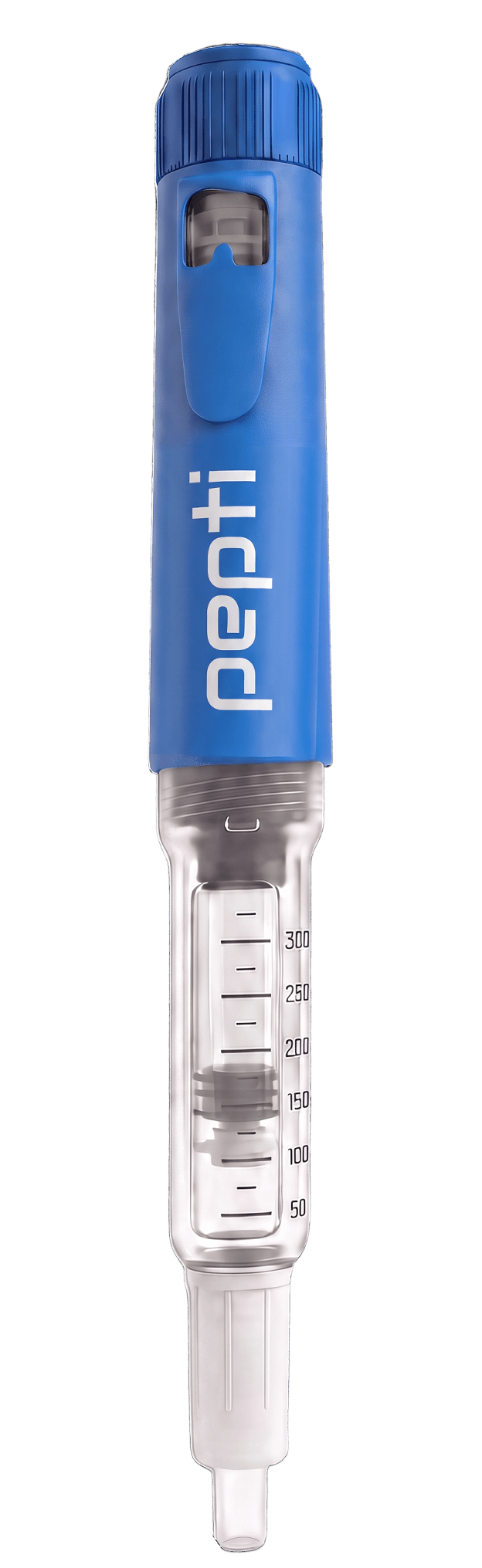
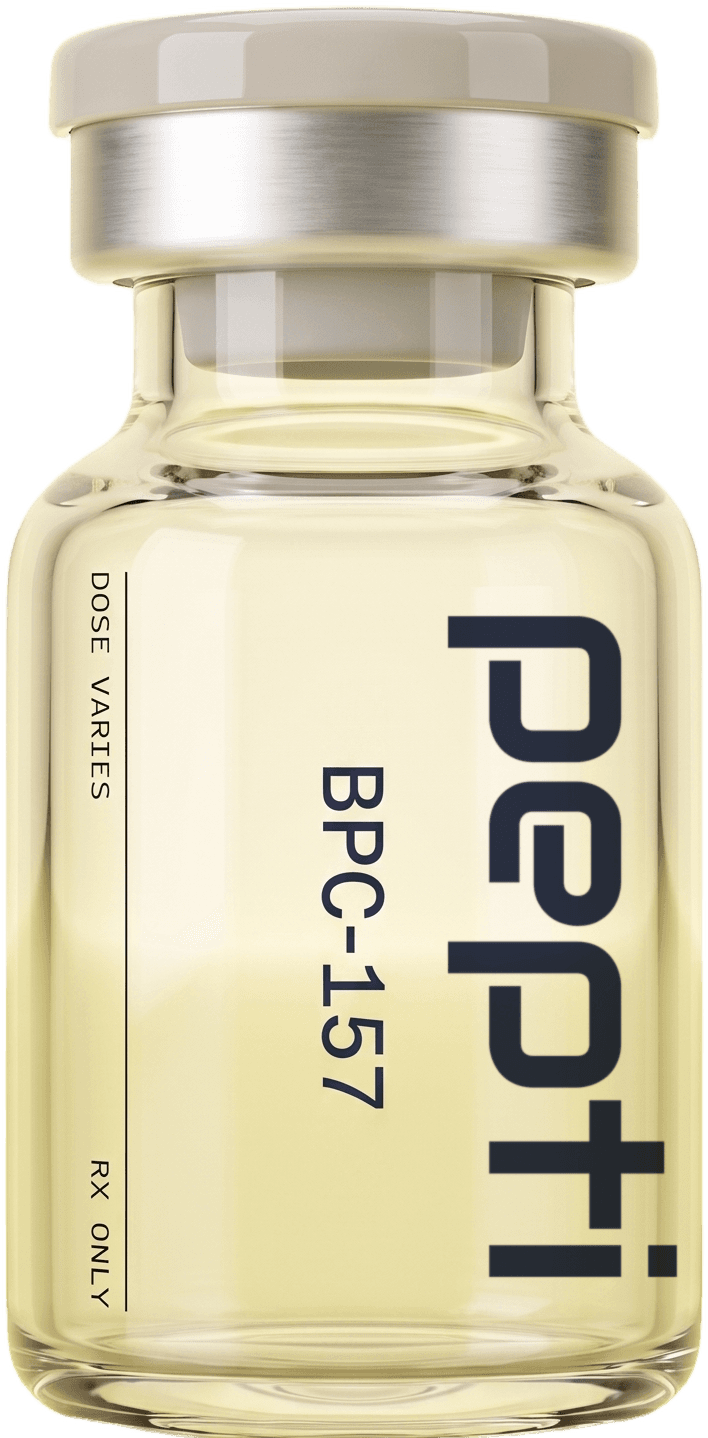
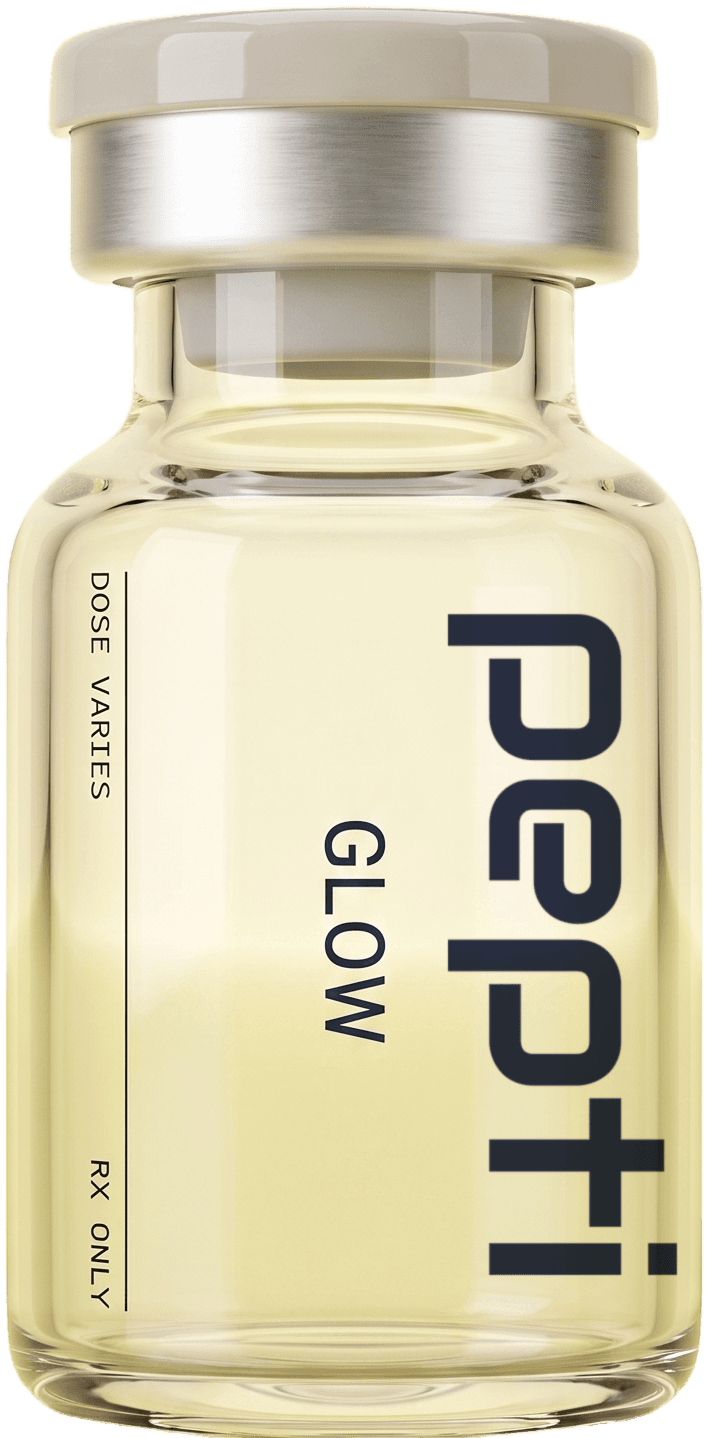
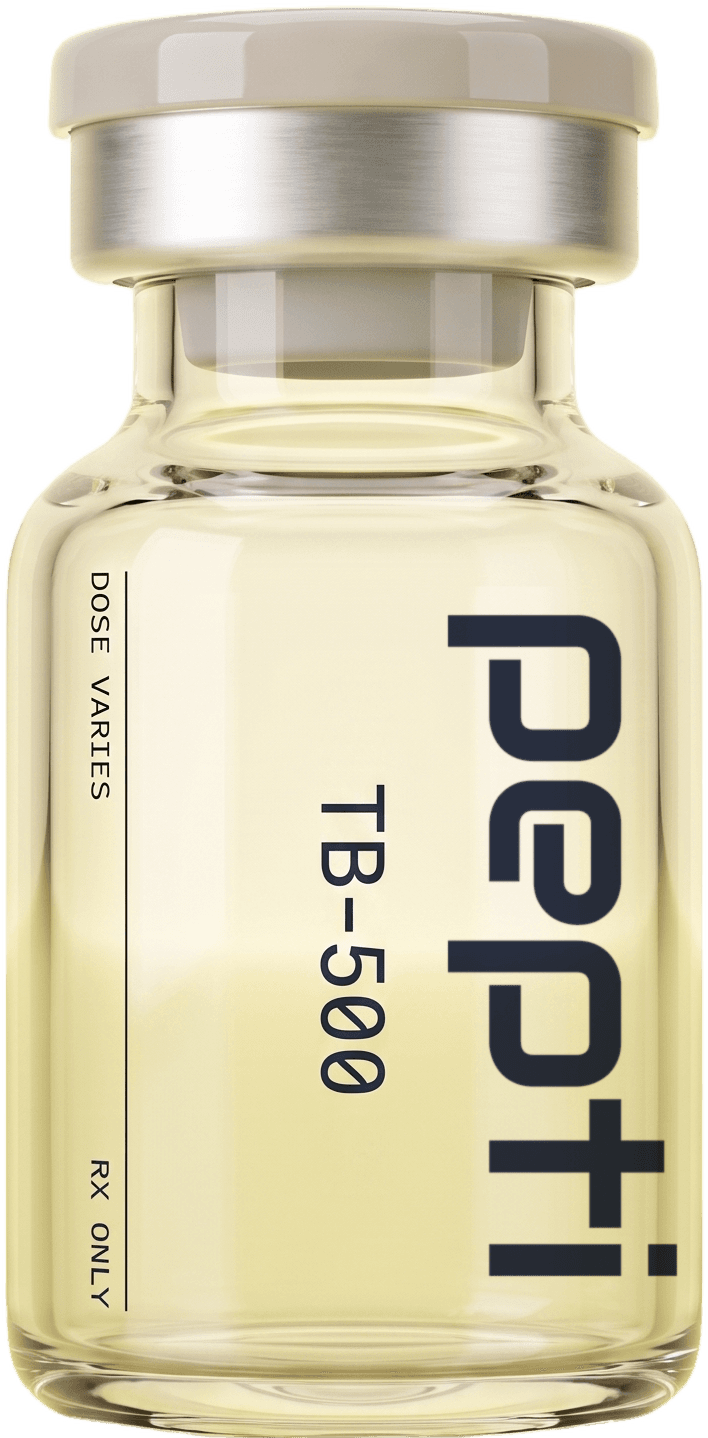
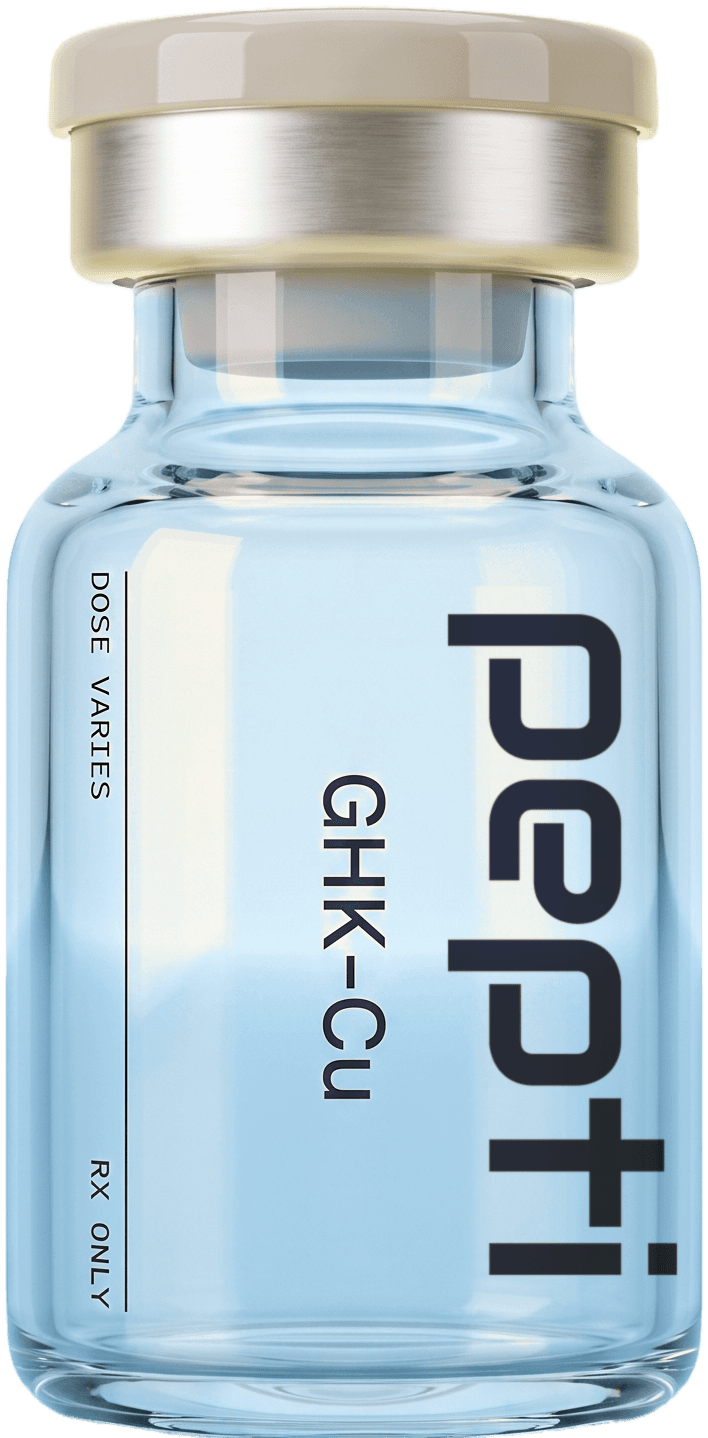
GLOW already contains BPC-157, so choosing between them is really choosing between one peptide and three. BPC-157 on its own is a 5 mg vial dosed once daily, prescribed mainly for a specific soft-tissue problem or a gut complaint. GLOW adds 50 mg of GHK-Cu, the collagen and skin component, and 10 mg of TB-500, a cell-migration fragment, to 10 mg of BPC-157 in the same 5 mL vial, and is dosed on weekday mornings. BPC-157 alone is the narrower and less expensive choice; GLOW suits a soft-tissue goal and a skin goal at the same time. Both are compounded prescriptions, and neither is FDA approved.
This page sets out what is in each vial, how much BPC-157 each dose actually delivers, what GHK-Cu and TB-500 add and what they do not, what the research shows, where each stands with the FDA, how each is dosed at Pepti, what each costs, and who tends to suit which.
BPC-157 vs GLOW
The short answer
| If your main goal is | The usual prescription | What is in it | Price |
|---|---|---|---|
| A gut complaint | BPC-157 | 5 mg BPC-157 in a 5 mL vial | $209/mo |
| One specific tendon, ligament or muscle problem | BPC-157, or BPC-157 + TB-500 | 5 mg BPC-157; or 5 mg each of BPC-157 and TB-500 | $209/mo or $259/mo |
| A soft-tissue problem plus a skin or connective-tissue goal | GLOW | 50 mg GHK-Cu, 10 mg BPC-157, 10 mg TB-500 in 5 mL | $259/mo |
| The same as GLOW, with inflammation that will not settle | KLOW | GLOW plus 10 mg KPV | $259/mo |
| Skin only, no injury | GHK-Cu | 50 mg GHK-Cu in 5 mL | $239/mo |
Every figure is an all-in monthly price covering the medication, physician review, refill management and shipping. There is no separate membership fee, and Pepti is cash-pay and does not bill insurance. Current pricing always lives on each product page.
BPC-157 vs GLOW
BPC-157 on its own terms
What it is
BPC-157 is a fifteen-amino-acid partial sequence of a protein originally isolated from human gastric juice. It is not a hormone, a steroid or a painkiller, and it does not raise growth hormone. The full reference is at what is BPC-157.
How it is described to work
All of the mechanism work is in animals and cells. Animal studies describe BPC-157 activating the VEGFR2 receptor and nitric oxide signalling, the axis the body uses to grow new blood vessels into healing tissue. A 2011 Journal of Applied Physiology paper, working with rat Achilles tendon explants and cultured tendon fibroblasts, reported faster cell migration and traced it to the FAK and paxillin pathway. The largest body of BPC-157 research concerns protection of the gastrointestinal lining in animal models, against damage from NSAIDs and alcohol, which is where the compound was first identified.
What human data exists
There are no randomized controlled trials of injectable BPC-157 in humans. The one randomized, placebo-controlled human study the FDA identified for its July 2026 review was a meeting abstract of a two-week enema trial in 53 people with ulcerative colitis, which the agency considered too incompletely reported to draw conclusions from. Nothing exists for the injectable route or for tendon injury in people.
BPC-157 vs GLOW
GLOW on its own terms
What it is
GLOW is three independently studied peptides dissolved together in one sterile multi-dose vial. The name is a brand name for the combination; it does not appear in any journal, and the three-peptide combination has never been studied as a combination. The full reference is at what is GLOW.
Component Per vial What it is Described in research around GHK-Cu 50 mg Copper-binding tripeptide found in human plasma Collagen and elastin synthesis, matrix remodelling BPC-157 10 mg The same fifteen-amino-acid fragment as above Angiogenesis, cell migration, gut-lining protection TB-500 10 mg Synthetic seven-amino-acid fragment of thymosin beta-4 Actin binding and cell movement into damaged tissue What GHK-Cu adds
GHK-Cu is 50 of the 70 mg in the vial, so by mass GLOW is mostly a GHK-Cu preparation. A 1988 FEBS Letters paper reported GHK-Cu stimulating collagen synthesis in cultured human fibroblasts, and later work describes it shifting the balance between the enzymes that break matrix down and their inhibitors. Its human data is topical: small studies of creams on photoaged facial skin and a 1994 study of a topical gel in diabetic ulcers. None used the injectable form. GHK-Cu is why GLOW is positioned toward skin and connective tissue as much as toward injury. More in what is GHK-Cu.
What TB-500 adds
TB-500 reproduces the actin-binding segment of thymosin beta-4, a protein abundant inside many human cells. A 1999 Journal of Investigative Dermatology paper reported faster wound closure and increased cell migration with thymosin beta-4 in rats and cultured human cells. Almost all of that literature concerns the full-length protein; the FDA's briefing document noted it could not find animal wound-healing studies of the fragment on its own, and found no published report of the fragment being given to patients. More in what is TB-500.
What GLOW does not add
GLOW adds nothing to BPC-157's gut case. Neither GHK-Cu nor TB-500 has gastrointestinal research behind it, which is why a gut complaint is usually a reason to consider BPC-157 on its own rather than GLOW. GLOW also has no dedicated anti-inflammatory component; that is the difference between GLOW and KLOW.
BPC-157 vs GLOW
Head to head
| BPC-157 | GLOW | |
|---|---|---|
| Components | BPC-157 | GHK-Cu, BPC-157, TB-500 |
| BPC-157 concentration | 1 mg/mL | 2 mg/mL |
| Total per 5 mL vial | 5 mg | 70 mg (50 mg GHK-Cu, 10 mg BPC-157, 10 mg TB-500) |
| Typical directions | 0.18 mL (18 units) once daily | 0.25 mL (25 units) Monday through Friday mornings |
| BPC-157 per dose | 0.18 mg (180 mcg) | 0.5 mg |
| Other peptides per dose | None | 2.5 mg GHK-Cu, 0.5 mg TB-500 |
| Doses per week | 7 | 5 |
| Doses per vial | 27 | 20 |
| BPC-157 per week at typical directions | 1.26 mg | 2.5 mg |
| Skin and matrix component | No | Yes, GHK-Cu |
| Gut research | Yes, the largest body of BPC-157 work | Only through its BPC-157 |
| Formats at Pepti | Vial, or 3 mL pre-filled Pen | Vial only |
| Price at Pepti | $209 a month | $259 a month |
What the numbers show
Three things stand out. First, a GLOW dose carries more BPC-157 than a BPC-157-only dose, 0.5 mg against 0.18 mg, because GLOW holds BPC-157 at twice the concentration and is drawn at a larger volume. That is a difference in the prescribing standard of each vial, not evidence that one amount works better: there is no human dose study of injectable BPC-157 at any amount. Second, GLOW is dosed five days a week and BPC-157 seven, and both vials are sized to last about four weeks. Third, the $50 difference buys GHK-Cu and TB-500; if you have no skin goal and no reason for TB-500, it buys components you do not need.
BPC-157 vs GLOW is not "weaker vs stronger"
GLOW is not a stronger BPC-157. It is a different prescription with a different purpose. No study has compared BPC-157 alone with GLOW, or with any combination of its components, in people or animals. A blend means one injection instead of several, at the cost of not knowing which component did what, and with fixed proportions that cannot be adjusted one component at a time.
BPC-157 vs GLOW
Who suits which
BPC-157 alone
BPC-157 on its own suits a gut complaint, which is where its deepest animal literature sits, and a single soft-tissue problem with nothing else in the picture. Starting with one compound also makes it easier to tell what is doing what. For a tendon or ligament problem, many physicians choose the BPC-157 + TB-500 stack, which adds TB-500 without GHK-Cu; the pairing is compared in BPC-157 vs TB-500.
GLOW
GLOW suits the person whose skin or connective-tissue goal sits alongside a soft-tissue one: a slow tendon, a surgical scar, or recovery that has lost pace, without inflammation as a separate complaint. It covers that case with one injection on weekdays.
KLOW instead of GLOW
KLOW is GLOW plus 10 mg KPV, an anti-inflammatory fragment of alpha-MSH studied in cell and mouse models, mostly of gut inflammation. It is the same price and has the same directions. The comparison is in KLOW vs GLOW, and BPC-157 against KLOW is covered in BPC-157 vs KLOW.
Can you take BPC-157 and GLOW together?
Not without raising it with your physician first. GLOW already contains BPC-157, so adding a BPC-157 vial would mean two sources of the same peptide, and no study informs that. The intake asks about everything you take for this reason. If a different balance of components is wanted, the components are prescribed separately rather than stacked on a blend.
BPC-157 vs GLOW
When neither is the right first step
| Situation | What makes more sense |
|---|---|
| A complete rupture, displaced fracture or locking joint | A surgical or imaging question; no peptide changes that |
| Tendinopathy you have not rehabilitated | Progressive loading with a physiotherapist, which has human trial evidence |
| Skin is the whole goal | GHK-Cu, or RADIANCE, which pairs it with tesamorelin |
| Systemic inflammation rather than a local problem | KPV or the FORTIFY Blend |
| Repair inside a longevity protocol | The ETERNAL Blend, which is GLOW's three plus epithalon |
BPC-157 vs GLOW
Where each stands with the FDA
GLOW has no regulatory status of its own; the FDA regulates the bulk substances a pharmacy compounds from, so the question is where each component stands. As of the FDA pages checked in September 2026:
| BPC-157 | TB-500 | GHK-Cu (injectable) | |
|---|---|---|---|
| 2023 | Category 2 | Category 2 | Category 2 |
| 15 April 2026 | Removal from Category 2 announced | Removal announced | Removal announced |
| Advisory committee | 23 July 2026: voted 8 to 6, one abstention, to recommend the 503A Bulks List | 23 July 2026: voted 8 to 6, one abstention, to recommend | Scheduled for a meeting before the end of February 2027 |
| Final FDA determination | Pending | Pending | Not yet reviewed |
In both July votes, the FDA's own scientists had proposed against inclusion, and the committee voted the other way. A committee vote is a recommendation, not a decision. None of the three is restricted, and all remain legal to prescribe and dispense as compounded medications. Compounded medications are not FDA approved, and neither BPC-157 nor GLOW is an FDA-approved drug. Are peptides FDA approved explains the difference.
BPC-157 vs GLOW
Dosing, side by side
| BPC-157 | GLOW | |
|---|---|---|
| Printed direction | Inject 0.18 mL (18 units) subcutaneously once daily as directed | Inject 0.25 mL (25 units) subcutaneously Monday through Friday mornings |
| Volume per dose | 0.18 mL | 0.25 mL |
| Doses per vial | 27 (5 mL divided by 0.18 mL, whole doses) | 20 (5 mL divided by 0.25 mL) |
| Time per vial | 27 days | 4 weeks |
Both are injected under the skin (subcutaneously) into the abdomen or thigh, rotating sites. You do not need to calculate anything: your directions are printed on the vial, and your physician sets them after reviewing your intake. Never carry a unit number from one vial to the other, because the concentrations differ. Refills run every 28 days, one vial per fill. Vials are multi-dose solutions shipped ready to use, refrigerated with ice packs, with sterile syringes and alcohol prep pads. GLOW's solution is blue from the copper in GHK-Cu, which is expected. The unit charts are in BPC-157 dosage and GLOW dosage.
Bloodwork is not required for any Pepti treatment. If your physician wants labs for your care, they'll ask through your account.
BPC-157 vs GLOW
Side effects
For both, what gets reported is mostly at the injection site: redness, mild soreness, occasional bruising. Some people report early nausea or light-headedness. With GLOW, a faint blue-green mark at the site can appear from the copper in GHK-Cu and clears on its own. GLOW also brings GHK-Cu's copper cautions, which BPC-157 alone does not: anyone with Wilson's disease or another copper-metabolism disorder should not use it, and high-dose zinc competes with copper.
There is no established interaction list for either, because the trials that would produce one have not been run. Stop and contact your physician for any reaction that is severe or spreading. Swelling of the face, lips or throat, a widespread rash or difficulty breathing needs emergency care first: call 911, then tell your care team. The detail is in is BPC-157 safe and GLOW side effects.
BPC-157 vs GLOW
Who should not take either, or should discuss it first
| Situation | BPC-157 | GLOW |
|---|---|---|
| Personal history of cancer | Discuss first: angiogenesis is a described mechanism | Discuss first: all three components are described as supporting blood-vessel growth |
| Anticoagulant therapy | Discuss first | Discuss first |
| Wilson's disease or another copper disorder | Not relevant | Should not use; GHK-Cu delivers copper |
| High-dose zinc | Not relevant | Raise it; zinc competes with copper |
| Pregnancy or breastfeeding | Not used | Not used |
| Tested athletes | BPC-157 is on the WADA Prohibited List | BPC-157 and TB-500 are on the WADA Prohibited List |
BPC-157 vs GLOW
What the evidence shows, honestly
There are no randomized controlled trials of injectable BPC-157 or of GLOW in humans, and no study has compared the blend with BPC-157 alone. BPC-157's evidence is rat tendon and gut work plus a two-week enema study reported only as an abstract. GLOW's evidence is per component: BPC-157's, GHK-Cu's topical skin studies and cell work, and TB-500's literature, which is almost entirely on the full-length protein. Physicians prescribe both on mechanism plus clinical experience. The accurate framing is "described in preclinical research and used clinically," not "shown to work in people." The claim-by-claim evidence is in BPC-157 benefits and GLOW benefits.
BPC-157 vs GLOW
Where to get BPC-157 or GLOW prescribed
Neither can be bought legitimately without a prescription. Sites selling them "for research use only" are not accountable for what is in the vial: identity, purity, sterility and concentration are untested. The prescription route:
- Complete a free online intake covering your history, medications and what you want help with.
- A physician licensed in your state reviews it, usually within 24 hours.
- If it is appropriate, a PCAB-accredited, FDA-registered US 503A compounding pharmacy prepares it to that prescription. Lot test results are published at /quality/lab-results.
- It ships refrigerated with your directions printed on the vial.
- Your physician stays reachable for questions and dose changes.
Pepti prescribes both in every state except Oklahoma, plus DC Step-by-step pages: how to get BPC-157 prescribed online and how to get BPC-157 + TB-500 prescribed online.
References
What this is based on.
References
- Chang CH, Tsai WC, Hsu YH, Pang JH. Pentadecapeptide BPC 157 enhances the growth hormone receptor expression in tendon fibroblasts · Molecules (2014) · PMID 25415472
- Krivic A, Anic T, Seiwerth S, et al.. Achilles detachment of rat and stable gastric pentadecapeptide BPC 157 · Journal of Orthopaedic Research (2006) · PMID 16583442
- Sikiric P, Seiwerth S, Rucman R, et al.. Stable gastric pentadecapeptide BPC 157: novel therapy in gastrointestinal tract · Current Pharmaceutical Design (2011) · PMID 21548867
- Cerovecki T, Bojanic I, Brcic L, Radic B, et al.. Pentadecapeptide BPC 157 (PL 14736) improves ligament healing in the rat · J Orthop Res (2010) · PMID 20225319
- Sikiric P, Seiwerth S, Rucman R, Turkovic B, et al.. Stable gastric pentadecapeptide BPC 157-NO-system relation · Curr Pharm Des (2014) · PMID 23755725
- Cox HD, Miller GD, Eichner D. Detection and in vitro metabolism of the confiscated peptides BPC 157 and MGF R23H · Drug Test Anal (2017) · PMID 28035768
- Thomas A, Görgens C, Guddat S et al.. Simplifying and expanding the screening for peptides <2 kDa by direct urine injection, liquid chromatography, and ion mobility mass spectrometry · J Sep Sci (2016) · PMID 26578461
- Farrar JT, Young JP Jr, LaMoreaux L, Werth JL et al.. Clinical importance of changes in chronic pain intensity measured on an 11-point numerical pain rating scale · Pain (2001) · PMID 11690728
- Meyer JD, Ho B, Manning MC. Effects of conformation on the chemical stability of pharmaceutically relevant polypeptides · Pharm Biotechnol (2002) · PMID 11987755
- Xu C, Sun L, Ren F, Huang P, et al.. Preclinical Safety Evaluation of Body Protective Compound-157, a Potential Drug for Treating Various Wounds · Regul Toxicol Pharmacol (2020) · PMID 32334036
- He L, Feng D, Guo H, et al.. Pharmacokinetics, distribution, metabolism, and excretion of body-protective compound 157, a potential drug for treating various wounds, in rats and dogs · Front Pharmacol (2022) · PMID 36588717
- Lee E, Padgett B. Intra-Articular Injection of BPC 157 for Multiple Types of Knee Pain · Altern Ther Health Med (2021) · PMID 34324435
Citations are provided for educational purposes. They do not constitute medical advice. Always discuss any peptide protocol with your prescribing physician.
Common questions
BPC-157 vs GLOW, answered.
Not in general. GLOW is the broader prescription, adding GHK-Cu and TB-500 for someone with a skin goal alongside a soft-tissue one. BPC-157 alone is the narrower choice and the usual one for a gut complaint. No study has compared them.
Yes. A GLOW vial contains 10 mg of BPC-157 at 2 mg/mL, alongside 50 mg GHK-Cu and 10 mg TB-500. Each 0.25 mL dose delivers 0.5 mg of BPC-157.
Per dose, yes: 0.5 mg in a GLOW dose against 0.18 mg in a BPC-157-only dose, and 10 mg per vial against 5 mg. That reflects each vial's prescribing standard; no human study has shown that one amount does more than the other.
For a single tendon, ligament or muscle problem with nothing else in the picture, BPC-157 alone or the BPC-157 + TB-500 stack is the more targeted prescription. GLOW makes more sense when there is a skin or connective-tissue goal too.
BPC-157 alone. Its gut-lining work in animals is the deepest part of its literature, and neither GHK-Cu nor TB-500 adds to that case.
Raise it with your physician before doing so. GLOW already contains BPC-157, so the two together would mean two sources of the same peptide, and no study informs that combination.
GLOW adds 50 mg of GHK-Cu and holds BPC-157 and TB-500 at twice the concentration, 2 mg/mL against 1 mg/mL. Both are $259 a month and both are drawn at 25 units on weekday mornings.
At Pepti, BPC-157 is $209 a month and GLOW is $259 a month, all-in, covering medication, physician review, refill management and shipping.
There is no trial-established timeline for either in people, so no one can tell you when, or whether, you will notice a change. The rat tendon studies measured reattachment and function over weeks; neither the blend nor injected BPC-157 has been studied in people. Each vial is sized at about four weeks to match the 28-day refill.
No. Compounded medications are not FDA approved. BPC-157 and TB-500 were recommended for the 503A Bulks List in July 2026, with the final determination pending, and GHK-Cu is scheduled for review before the end of February 2027. Both remain legal to prescribe.
No. Bloodwork is not required for any Pepti treatment. If your physician wants labs for your care, they'll ask through your account. The free assessment goes to a physician licensed in your state. A consultation does not guarantee a prescription.
Next step
See what a physician recommends for you.
A licensed physician in your state reviews your intake and decides what is appropriate. A consultation does not guarantee a prescription.