Recovery · Reference
BPC-157 vs GHK-Cu: Mechanism, Evidence, Dosing, Cost, and Which One Fits
BPC-157 and GHK-Cu are both called "repair peptides," but they are described around different jobs.
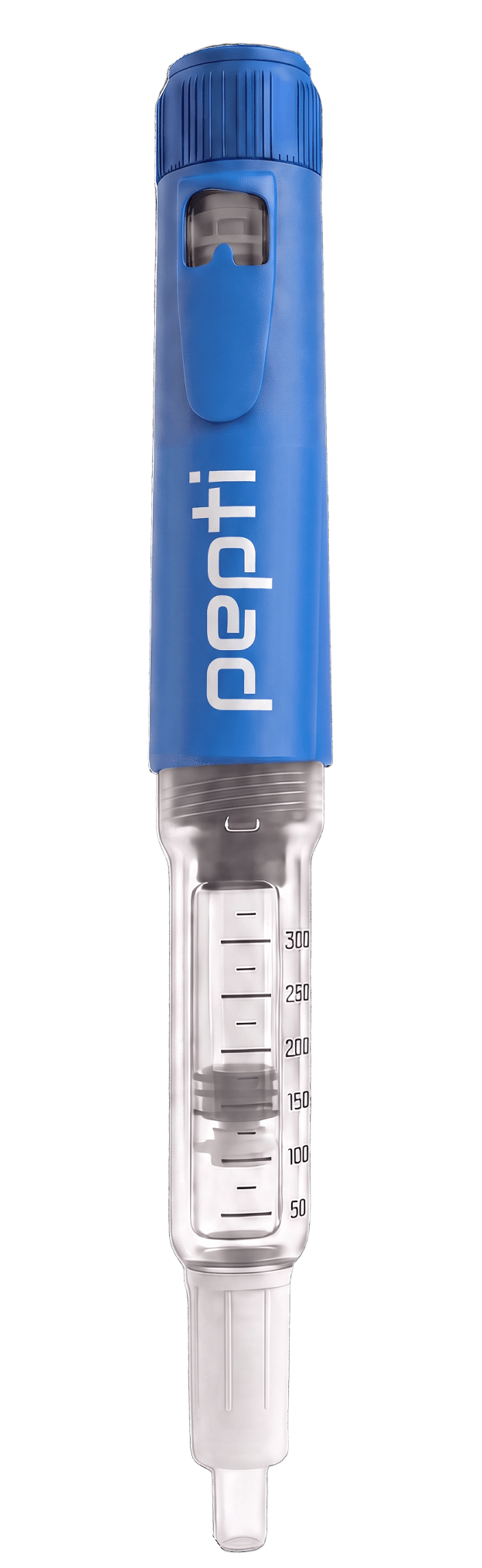
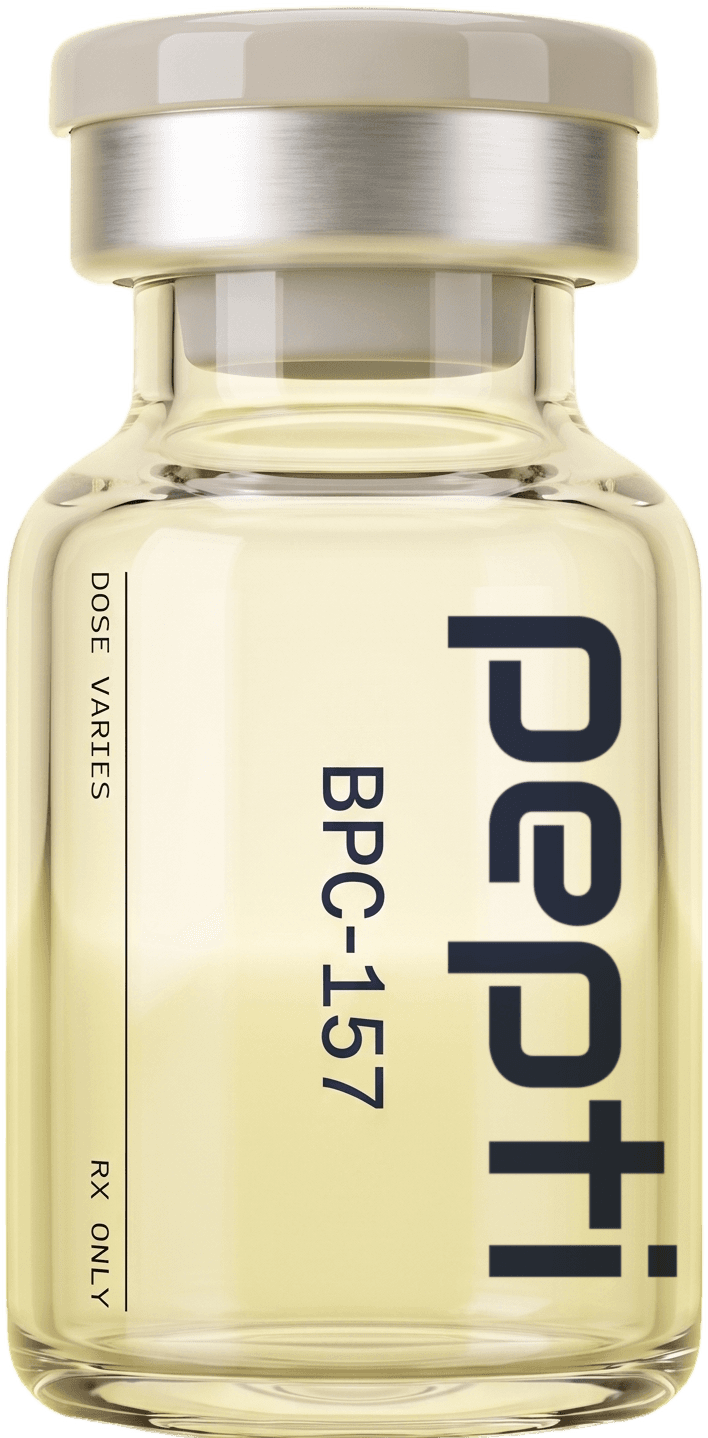
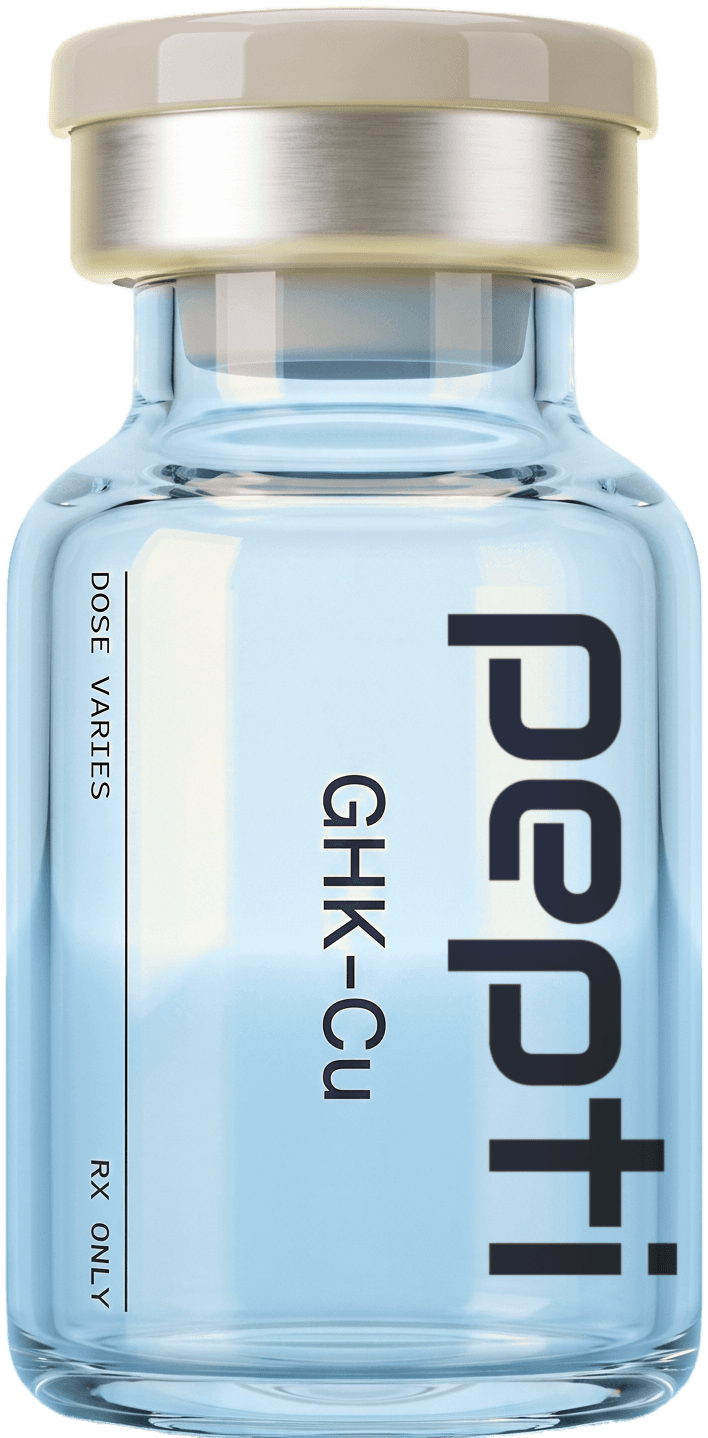
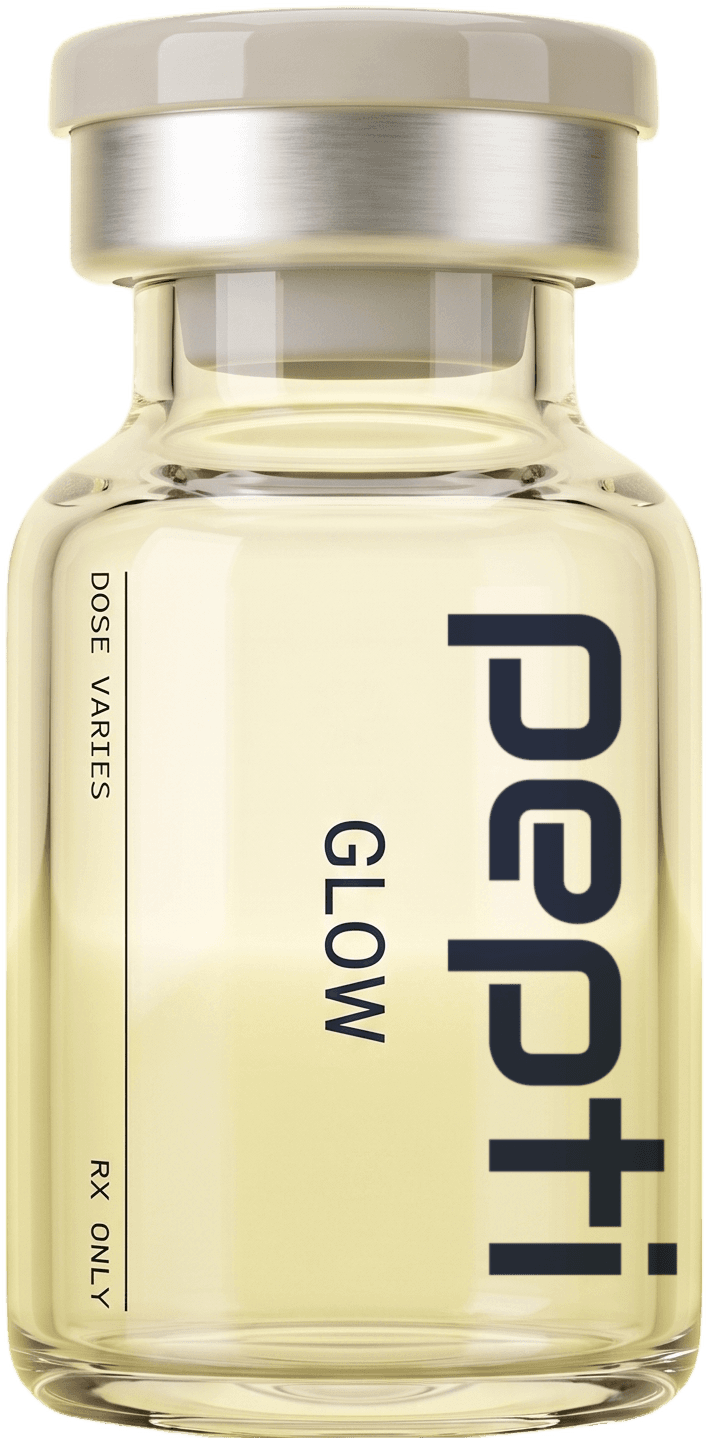
BPC-157 is a fifteen-amino-acid fragment of a protein from human gastric juice, described in animal work around blood supply, nitric oxide and tendon cell migration, and it is prescribed mainly for injury recovery and gut complaints. GHK-Cu is a three-amino-acid copper complex found in human plasma, described in cell work around collagen synthesis and matrix remodelling, and it is prescribed mainly for skin and connective-tissue quality. Neither has a human trial of the injectable form, both are compounded prescriptions that are not FDA approved, and they are frequently combined rather than chosen between.
This page explains each peptide on its own terms, puts them side by side, covers what the research does and does not show, where each stands with the FDA, how each is dosed at Pepti, what each costs, and when a blend that contains both is the better fit.
BPC-157 vs GHK-Cu
The short answer
| If your main goal is | The usual prescription | What is in it | Price |
|---|---|---|---|
| A tendon, ligament or muscle problem | BPC-157 | 5 mg BPC-157 in a 5 mL vial | $209/mo |
| A gut complaint | BPC-157 | 5 mg BPC-157 in a 5 mL vial | $209/mo |
| Skin, hair or connective-tissue quality | GHK-Cu | 50 mg GHK-Cu in a 5 mL vial | $239/mo |
| A soft-tissue problem and a skin goal together | GLOW | 50 mg GHK-Cu, 10 mg BPC-157, 10 mg TB-500 | $259/mo |
| The same, with persistent inflammation | KLOW | GLOW plus 10 mg KPV | $259/mo |
| An injury, with no skin goal | BPC-157 + TB-500 | 5 mg BPC-157, 5 mg TB-500 | $259/mo |
Every figure is an all-in monthly price covering the medication, physician review, refill management and shipping. There is no separate membership fee, and Pepti is cash-pay and does not bill insurance. Current pricing always lives on each product page; the table is a guide to which product fits which goal.
BPC-157 vs GHK-Cu
BPC-157 on its own terms
What it is
BPC-157 is a pentadecapeptide, a chain of fifteen amino acids with the sequence GEPPPGKPADDAGLV. It is a partial sequence of a larger protein called Body Protection Compound, originally isolated from human gastric juice. The literature often calls it "stable gastric pentadecapeptide BPC 157" because laboratory work reported it staying intact in gastric juice for hours. It is not a hormone, not a steroid and not a painkiller, and it does not raise growth hormone. The full reference is at what is BPC-157.
How BPC-157 is described to work
All of the mechanism detail is from animal and cell studies.
- New blood vessels through VEGFR2. Animal work reports BPC-157 activating the VEGFR2 receptor and the downstream Akt and eNOS pathway, the signalling the body uses to bring blood supply into healing tissue.
- Nitric oxide signalling. Several papers describe it counteracting the effects of nitric oxide synthase blockade in animal models.
- Growth hormone receptors in tendon cells. A 2014 paper in Molecules reported increased growth hormone receptor expression in cultured tendon fibroblasts. That makes those cells more responsive to growth hormone already present; it does not raise growth hormone.
- Cell migration. Cell studies describe activation of the FAK and paxillin pathway, which governs how cells move into a wound.
- The gut lining. The original and largest line of research, describing protection of the gastrointestinal lining against injury from NSAIDs and alcohol in animals.
What human data exists for BPC-157
There are no randomized controlled trials of injectable BPC-157 in humans. The FDA's 2026 review found human studies only by other routes: an enema study in 53 people with ulcerative colitis, reported as a 2005 conference abstract, plus small studies by injection into the knee joint, into the bladder wall, or by vein. None used subcutaneous injection. The tendon case rests on rat work, including a 2006 Journal of Orthopaedic Research paper on Achilles tendon detachment.
BPC-157 vs GHK-Cu
GHK-Cu on its own terms
What it is
GHK is a tripeptide, glycine, histidine and lysine, and GHK-Cu is that tripeptide bound to a copper ion. It was first described in 1973 in Nature: New Biology as a component of human plasma. It occurs naturally in plasma, saliva and urine, and reviews describe its plasma level falling with age; whether that decline causes anything has not been shown. Most of the research is built around the copper complex rather than the bare tripeptide. It is not a hormone and does not change growth hormone, IGF-1 or testosterone. The solution is blue because of the copper. The full reference is at what is GHK-Cu.
How GHK-Cu is described to work
Almost all of the detail comes from cell culture and animal studies.
- Collagen and matrix synthesis. A 1988 FEBS Letters paper reported GHK-Cu stimulating collagen synthesis in cultured human fibroblasts, and later cell work extended this to elastin and glycosaminoglycans.
- Remodelling. Papers from 1999 and 2000 describe it modulating matrix metalloproteinases, the enzymes that clear damaged matrix, so the proposed picture is a peptide that tunes turnover in both directions.
- Angiogenesis. A 1994 Journal of Cell Biology paper reported copper-binding GHK fragments stimulating new blood-vessel growth.
- Antioxidant and anti-inflammatory signalling. Cell and animal work describes reduced oxidative stress markers and reduced IL-6 secretion in cultured skin cells.
What human data exists for GHK-Cu
The human data is topical, not injected. Small cosmetic studies evaluated GHK-Cu creams in photoaged facial skin over 8 to 12 weeks, mostly reported in conference proceedings and industry reports, and a 1994 Wound Repair and Regeneration paper studied a topical gel in diabetic ulcers. There are no randomized controlled trials of injectable GHK-Cu in humans. The injectable has mouse studies of lung injury and fibrosis behind it, and nothing in people.
BPC-157 vs GHK-Cu
Head to head
| BPC-157 | GHK-Cu | |
|---|---|---|
| What it is | 15-amino-acid fragment of a gastric juice protein | 3-amino-acid peptide bound to copper |
| Found naturally in | Derived from a protein in gastric juice | Human plasma, saliva and urine |
| Main described mechanisms | Angiogenesis (VEGFR2), nitric oxide, tendon cell migration, gut-lining protection | Collagen and elastin synthesis, matrix remodelling, copper delivery |
| What it is usually chosen for | Tendon, ligament and muscle recovery; gut complaints | Skin, hair and connective-tissue quality |
| Strongest research area | Rat tendon and gut models | Cell culture and topical human skin studies |
| Human trials of the injection | None | None |
| Human data by any route | Enema, intra-articular, bladder and IV studies | Topical creams and a topical wound gel |
| Key safety questions | Cancer history (angiogenesis), blood thinners | Copper-metabolism disorders, high-dose zinc, cancer history |
| Vial at Pepti | 5 mL, 1 mg/mL (5 mg) | 5 mL, 10 mg/mL (50 mg) |
| Typical directions | 0.18 mL (18 units) once daily | 0.25 mL (25 units) once daily, Monday through Friday |
| Per dose | 0.18 mg (180 mcg) | 2.5 mg |
| Doses per vial | 27, just under four weeks | 20, about four weeks |
| Formats at Pepti | Vial, or pre-filled Pen | Vial only |
| Price at Pepti | $209 a month | $239 a month |
The real difference is the job, not the strength
People often ask which is "stronger." That is not a meaningful question. GHK-Cu is dosed in milligrams and BPC-157 in micrograms, but that reflects the molecules and their concentrations, not potency, and no study has compared the two in the same people or animals. The useful difference is what each is aimed at. BPC-157's research centres on blood supply and cells moving into injured tendon and gut tissue. GHK-Cu's research centres on building and remodelling collagen and matrix. They overlap only in angiogenesis, which both are described as supporting.
BPC-157 vs GHK-Cu
Who suits which
BPC-157
BPC-157 is the usual starting point when the complaint is a specific soft-tissue problem, such as a slow tendon or a strained muscle, or a gut complaint, which is where its deepest animal literature sits. It is the narrower choice, and starting with a single agent makes it easier to tell what is doing what.
GHK-Cu
GHK-Cu is the usual choice when skin, hair or connective-tissue quality is the whole goal and there is no injury in the picture. Hair goals are described by prescribers as slower than skin goals, because the hair cycle itself runs in months, and there is no human trial of GHK-Cu with hair growth as its endpoint.
Both, in one vial
Many prescribers use the two together rather than choosing. Pepti has several blends that contain both:
Blend What is in the 5 mL vial Typical directions Price GLOW 50 mg GHK-Cu, 10 mg BPC-157, 10 mg TB-500 0.25 mL (25 units) Monday through Friday mornings $259/mo KLOW 50 mg GHK-Cu, 10 mg KPV, 10 mg BPC-157, 10 mg TB-500 0.25 mL (25 units) Monday through Friday mornings $259/mo ETERNAL Blend 50 mg GHK-Cu, 10 mg BPC-157, 10 mg TB-500, 10 mg epithalon 0.25 mL (25 units) once daily Monday through Friday $279/mo EUPHORIA Blend 50 mg GHK-Cu, 10 mg MOTS-c, 10 mg BPC-157, 2 mg kisspeptin 0.25 mL (25 units) once daily Monday through Friday $279/mo Each blend delivers 2.5 mg of GHK-Cu per 0.25 mL dose, the same as GHK-Cu alone, and 0.5 mg of BPC-157, more than the 0.18 mg in a BPC-157-only dose, because the blends hold BPC-157 at 2 mg/mL. The proportions are fixed by the pharmacy's formulation, so a blend cannot be split into more of one and less of another. The trade-off is the usual one: one injection instead of several, at the cost of not knowing which component did what. The two most common blends are compared in KLOW vs GLOW.
Can you take BPC-157 and GHK-Cu as separate vials?
Some physicians prescribe the two separately, which allows each to be dosed on its own schedule. No study has tested the combination, in any form, so this means two unknowns at once. Do not add a second GHK-Cu product on top of a blend that already contains it: every GHK-Cu product carries a full dose, so two together doubles the copper. The intake asks about everything you use for this reason.
BPC-157 vs GHK-Cu
When neither is the right first step
| Situation | What makes more sense |
|---|---|
| A complete rupture, displaced fracture or locking joint | A surgical or imaging question; no peptide changes that |
| Tendinopathy you have not yet rehabilitated | Progressive loading with a physiotherapist, which has human trial evidence, first or alongside |
| Systemic inflammation rather than a local problem | KPV or the FORTIFY Blend |
| A broad soft-tissue injury | TB-500, or the BPC-157 + TB-500 stack |
| A skin goal you are already treating with a cream | Ask your physician whether an injection adds anything; no study has compared them |
BPC-157 vs GHK-Cu
Where each stands with the FDA
Both were placed in Category 2 of the FDA's 503A bulk substances list in 2023, the category for nominated substances with identified safety concerns. Both were removed from Category 2 on 15 April 2026, along with ten other peptides. As of the FDA pages checked in September 2026:
| BPC-157 | GHK-Cu (injectable) | |
|---|---|---|
| 2023 | Category 2 | Category 2 |
| 15 April 2026 | Removed from Category 2 | Removed from Category 2 |
| Advisory committee | 23 July 2026: voted 8 to 6 to recommend adding it to the 503A Bulks List | Scheduled for a Pharmacy Compounding Advisory Committee meeting before the end of February 2027 |
| Final FDA determination | Pending | Not yet reviewed |
An advisory committee vote is a recommendation, not a decision. Both remain legal to prescribe and dispense as compounded medications. Compounded medications are not FDA approved, and neither BPC-157 nor GHK-Cu is an FDA-approved drug. Are peptides FDA approved explains the difference between not approved and not legal.
BPC-157 vs GHK-Cu
Dosing, side by side
Both are injected under the skin (subcutaneously) into the abdomen or thigh, rotating sites. The directions differ:
| BPC-157 | GHK-Cu | |
|---|---|---|
| Printed direction | Inject 0.18 mL (18 units) subcutaneously once daily as directed | Inject 0.25 mL (25 units) subcutaneously once daily Monday through Friday |
| Concentration | 1 mg/mL | 10 mg/mL |
| Per dose | 0.18 mg (180 mcg) | 2.5 mg |
| Doses per week | 7 | 5 |
| Doses per vial | 27 | 20 |
| Time per vial | 27 days | 4 weeks |
You do not need to calculate anything: your directions are printed on the vial, and your physician sets them after reviewing your intake. Refills run every 28 days, one vial per fill. Vials are multi-dose solutions shipped ready to use, refrigerated with ice packs, with sterile syringes and alcohol prep pads. BPC-157 also comes as a 3 mL pre-filled Pen cartridge containing 9 mg; GHK-Cu is a vial only. The unit-by-unit charts are in BPC-157 dosage and GHK-Cu dosage.
Bloodwork is not required for any Pepti treatment. If your physician wants labs for your care, they'll ask through your account.
BPC-157 vs GHK-Cu
Side effects
BPC-157. Described as well tolerated in the published animal work, which reports a wide margin between effective doses and doses that cause problems. What gets reported clinically is mostly at the injection site: redness, mild soreness, occasional bruising. Some people report nausea or light-headedness early on. The FDA flagged clotting-time changes in animal studies, which is why blood thinners belong on the intake.
GHK-Cu. Topical GHK-Cu has a long cosmetic safety record; the injectable has animal data and prescriber experience. Reported with the injection: redness, mild soreness, occasional bruising, a faint blue-green mark at the site that clears on its own, and occasionally an early headache or light-headedness. The copper in a dose is small and chelated, but anyone with Wilson's disease or another copper-metabolism disorder should not use a copper-delivering peptide.
For both, there is no established interaction list, because the trials that would produce one have not been run. Stop and contact your physician for any reaction that is severe or spreading. Swelling of the face, lips or throat, a widespread rash or difficulty breathing needs emergency care first: call 911, then tell your care team. The full pictures are in is BPC-157 safe and is GHK-Cu safe.
BPC-157 vs GHK-Cu
Who should not take either, or should discuss it first
| Situation | Why |
|---|---|
| Personal history of cancer | Both are described as supporting new blood-vessel growth |
| Anticoagulant therapy | Especially for BPC-157, given its vascular mechanisms |
| Wilson's disease or another copper disorder | GHK-Cu delivers copper |
| High-dose zinc supplementation | Zinc competes with copper absorption |
| Pregnancy or breastfeeding | Not used; safety data is absent |
| Tested athletes | BPC-157 is named on the 2026 WADA Prohibited List; see is BPC-157 banned |
BPC-157 vs GHK-Cu
What the evidence shows, honestly
Neither peptide has been tested as an injection in a human trial. BPC-157 has a coherent animal story in tendon and gut tissue and a handful of small human studies by other routes. GHK-Cu has well-replicated cell work on collagen, small human studies of creams on skin, and mouse studies of the injected form. Neither has an established effect size or timeline in people, and no study has compared them. Physicians prescribe both on mechanism plus clinical experience. The accurate framing is "described in preclinical research and used clinically," not "shown to work in people." The claim-by-claim evidence is in BPC-157 benefits and GHK-Cu benefits.
BPC-157 vs GHK-Cu
Where to get BPC-157 or GHK-Cu prescribed
Neither can be bought legitimately without a prescription. Sites selling them "for research use only" are not accountable for what is in the vial: identity, purity, sterility and concentration are untested. The prescription route:
- Complete a free online intake covering your history, medications and what you want help with.
- A physician licensed in your state reviews it, usually within 24 hours.
- If it is appropriate, a PCAB-accredited, FDA-registered US 503A compounding pharmacy prepares it to that prescription. Lot test results are published at /quality/lab-results.
- It ships refrigerated with your directions printed on the vial.
- Your physician stays reachable for questions and dose changes.
Pepti prescribes both in every state except Oklahoma, plus DC Step-by-step pages: how to get BPC-157 prescribed online, how to get GHK-Cu prescribed online and how to get KLOW prescribed online.
References
What this is based on.
References
- Chang CH, Tsai WC, Hsu YH, Pang JH. Pentadecapeptide BPC 157 enhances the growth hormone receptor expression in tendon fibroblasts · Molecules (2014) · PMID 25415472
- Krivic A, Anic T, Seiwerth S, et al.. Achilles detachment of rat and stable gastric pentadecapeptide BPC 157 · Journal of Orthopaedic Research (2006) · PMID 16583442
- Sikiric P, Seiwerth S, Rucman R, et al.. Stable gastric pentadecapeptide BPC 157: novel therapy in gastrointestinal tract · Current Pharmaceutical Design (2011) · PMID 21548867
- Cerovecki T, Bojanic I, Brcic L, Radic B, et al.. Pentadecapeptide BPC 157 (PL 14736) improves ligament healing in the rat · J Orthop Res (2010) · PMID 20225319
- Sikiric P, Seiwerth S, Rucman R, Turkovic B, et al.. Stable gastric pentadecapeptide BPC 157-NO-system relation · Curr Pharm Des (2014) · PMID 23755725
- Cox HD, Miller GD, Eichner D. Detection and in vitro metabolism of the confiscated peptides BPC 157 and MGF R23H · Drug Test Anal (2017) · PMID 28035768
- Thomas A, Görgens C, Guddat S et al.. Simplifying and expanding the screening for peptides <2 kDa by direct urine injection, liquid chromatography, and ion mobility mass spectrometry · J Sep Sci (2016) · PMID 26578461
- Farrar JT, Young JP Jr, LaMoreaux L, Werth JL et al.. Clinical importance of changes in chronic pain intensity measured on an 11-point numerical pain rating scale · Pain (2001) · PMID 11690728
- Meyer JD, Ho B, Manning MC. Effects of conformation on the chemical stability of pharmaceutically relevant polypeptides · Pharm Biotechnol (2002) · PMID 11987755
- Xu C, Sun L, Ren F, Huang P, et al.. Preclinical Safety Evaluation of Body Protective Compound-157, a Potential Drug for Treating Various Wounds · Regul Toxicol Pharmacol (2020) · PMID 32334036
- He L, Feng D, Guo H, et al.. Pharmacokinetics, distribution, metabolism, and excretion of body-protective compound 157, a potential drug for treating various wounds, in rats and dogs · Front Pharmacol (2022) · PMID 36588717
- Lee E, Padgett B. Intra-Articular Injection of BPC 157 for Multiple Types of Knee Pain · Altern Ther Health Med (2021) · PMID 34324435
Citations are provided for educational purposes. They do not constitute medical advice. Always discuss any peptide protocol with your prescribing physician.
Common questions
BPC-157 vs GHK-Cu, answered.
They are described around different parts of repair. BPC-157's animal research centres on blood supply and cell migration in tendon, muscle and gut; GHK-Cu's centres on collagen and matrix. For a specific soft-tissue injury, BPC-157 is the usual choice. No human trial has tested either injection, and none has compared them.
GHK-Cu is the skin peptide. Its collagen research and its small human cream studies are about skin. BPC-157 has no skin-specific human data. Neither injection has a human skin trial.
Many physicians prescribe them together, either as separate vials or in a blend such as GLOW or KLOW. No study has tested the combination. Do not add a separate GHK-Cu product to a blend that already contains it, because that doubles the copper.
BPC-157 is a fifteen-amino-acid fragment of a gastric juice protein, described around angiogenesis, nitric oxide and tendon cell migration. GHK-Cu is a three-amino-acid copper complex from plasma, described around collagen synthesis and remodelling. They come from different sources and are aimed at different goals.
There is no meaningful way to say. A GHK-Cu dose is 2.5 mg and a BPC-157 dose is 0.18 mg, but milligrams do not measure strength across different molecules, and no study has compared them.
Both are generally described as well tolerated, mostly with injection-site reactions. Their cautions differ: blood thinners for BPC-157, copper disorders and high-dose zinc for GHK-Cu, and a cancer history for both. Neither has a human safety trial of the injection.
At Pepti, BPC-157 is $209 a month and GHK-Cu is $239 a month, all-in, covering medication, physician review, refill management and shipping. GLOW and KLOW, which contain both, are $259 a month each.
There is no trial-established timeline for either injection in people, so no one can tell you when, or whether, you will notice a change. The rat tendon studies measured reattachment and function over weeks; the topical GHK-Cu cream studies ran 8 to 12 weeks, by a different route. Each vial is sized at about four weeks to match the 28-day refill.
No. Compounded medications are not FDA approved. Both were removed from Category 2 on 15 April 2026; BPC-157 was recommended for the 503A Bulks List in July 2026, and GHK-Cu is scheduled for review before the end of February 2027. Both remain legal to prescribe.
No. Bloodwork is not required for any Pepti treatment. If your physician wants labs for your care, they'll ask through your account. The free assessment goes to a physician licensed in your state. A consultation does not guarantee a prescription.
Related answers
Keep reading.
- What Is BPC-157? Research, Dosing, Safety & Cost
- GHK-Cu: What It Is, Where to Get It Prescribed, and What It Costs
- BPC-157 vs GLOW: One Peptide or Three, and Which One Fits
- BPC-157 vs KLOW: BPC-157 Alone or the Four-Peptide Blend, and Which One Fits
- CJC-1295 vs Hexarelin: Two Receptors, Two Evidence Records, and Which One Fits
Next step
See what a physician recommends for you.
A licensed physician in your state reviews your intake to see whether treatment fits your history. A consultation does not guarantee a prescription.