Recovery · Reference
How to Reconstitute Peptides: What Reconstitution Is, and Why Prescription Vials Arrive Ready to Use
Reconstituting a peptide means dissolving a freeze-dried powder in a sterile liquid, usually bacteriostatic water, so that it becomes a solution you can draw into a syringe.
Treatments mentioned
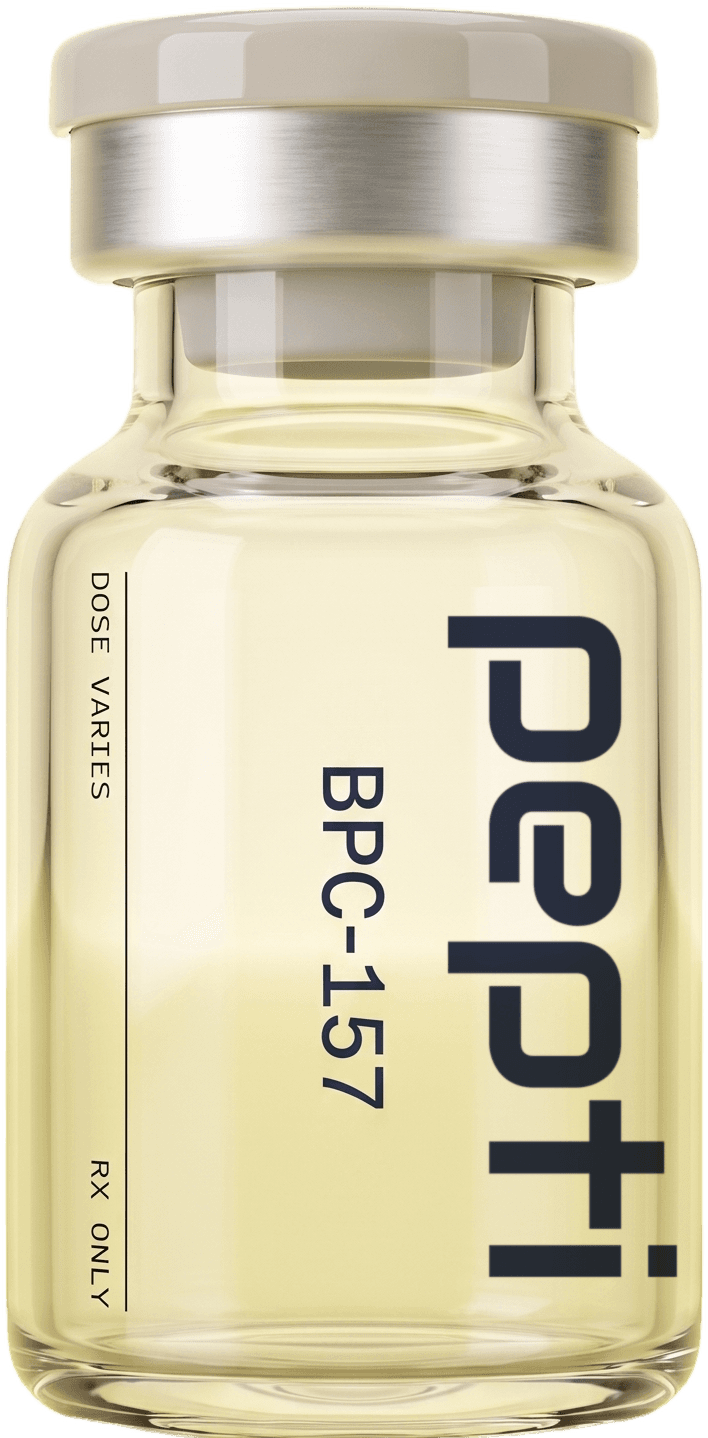
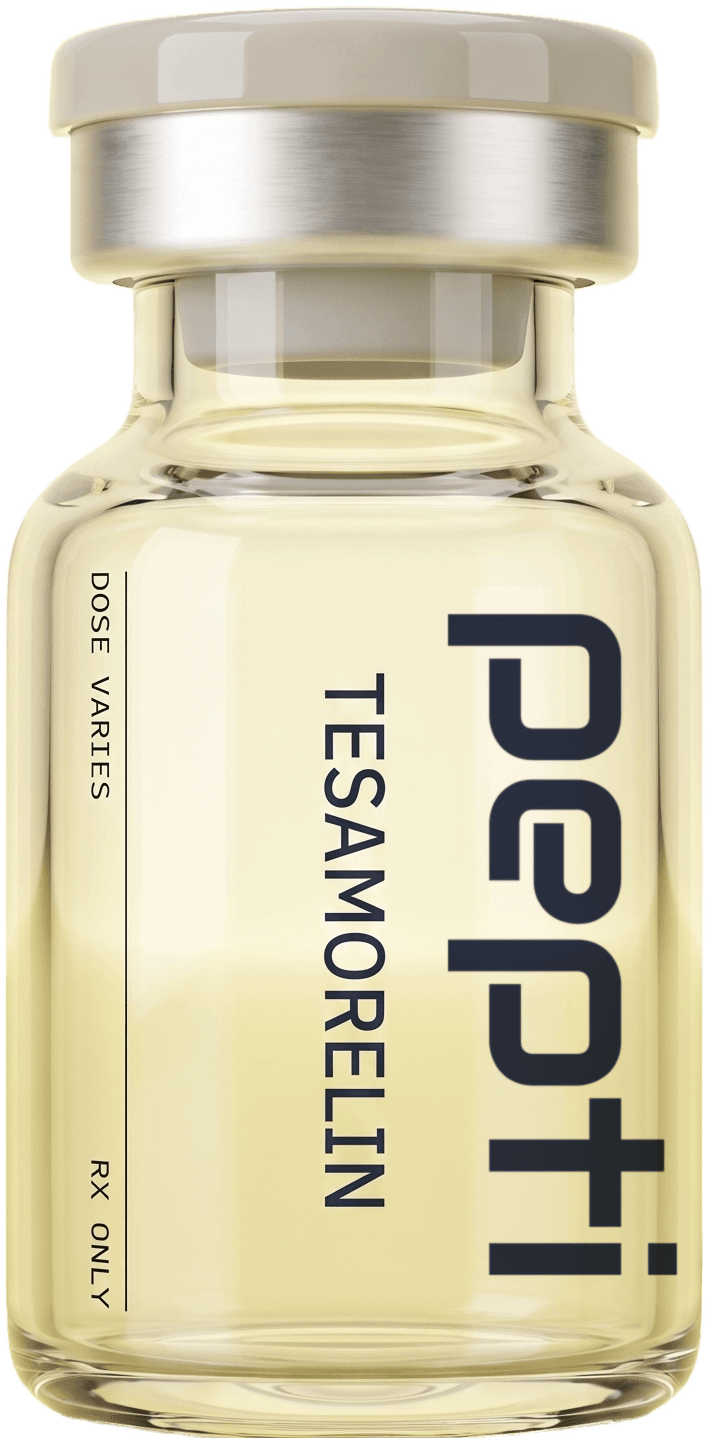
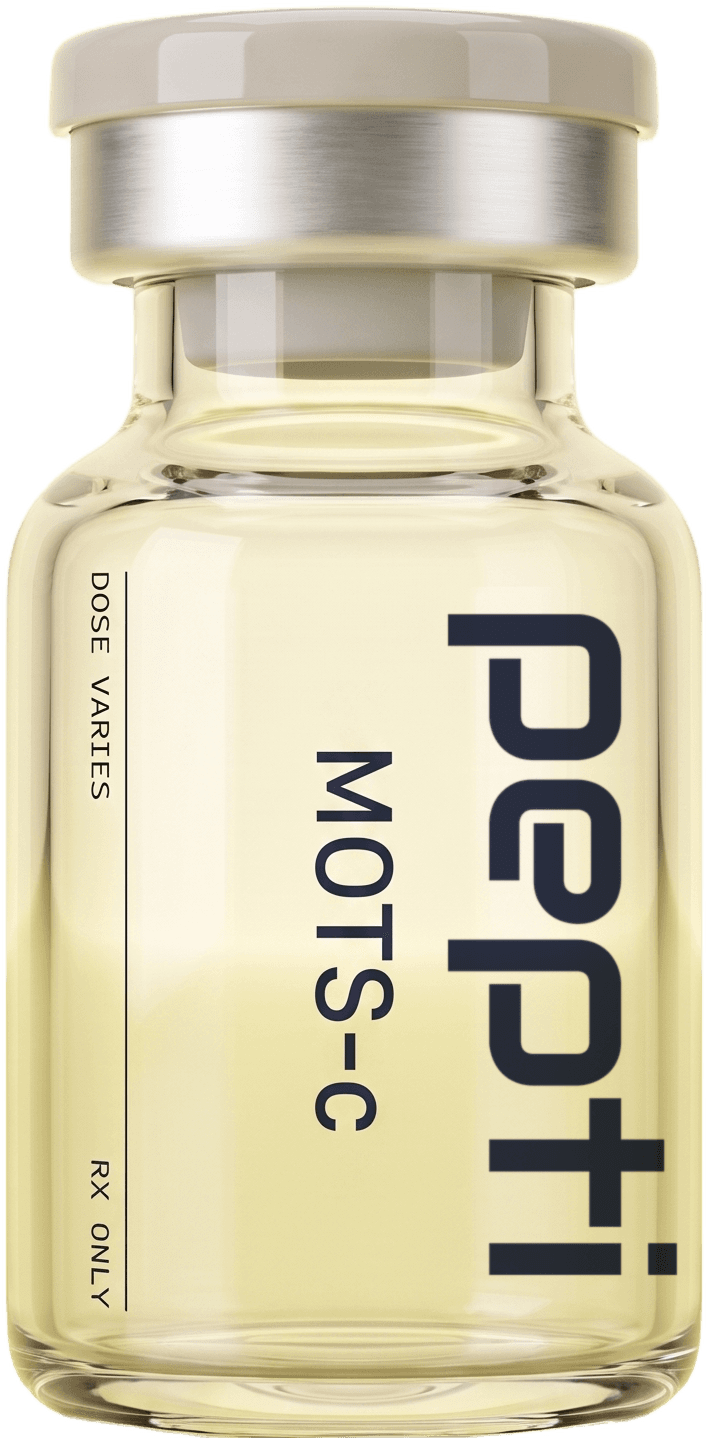
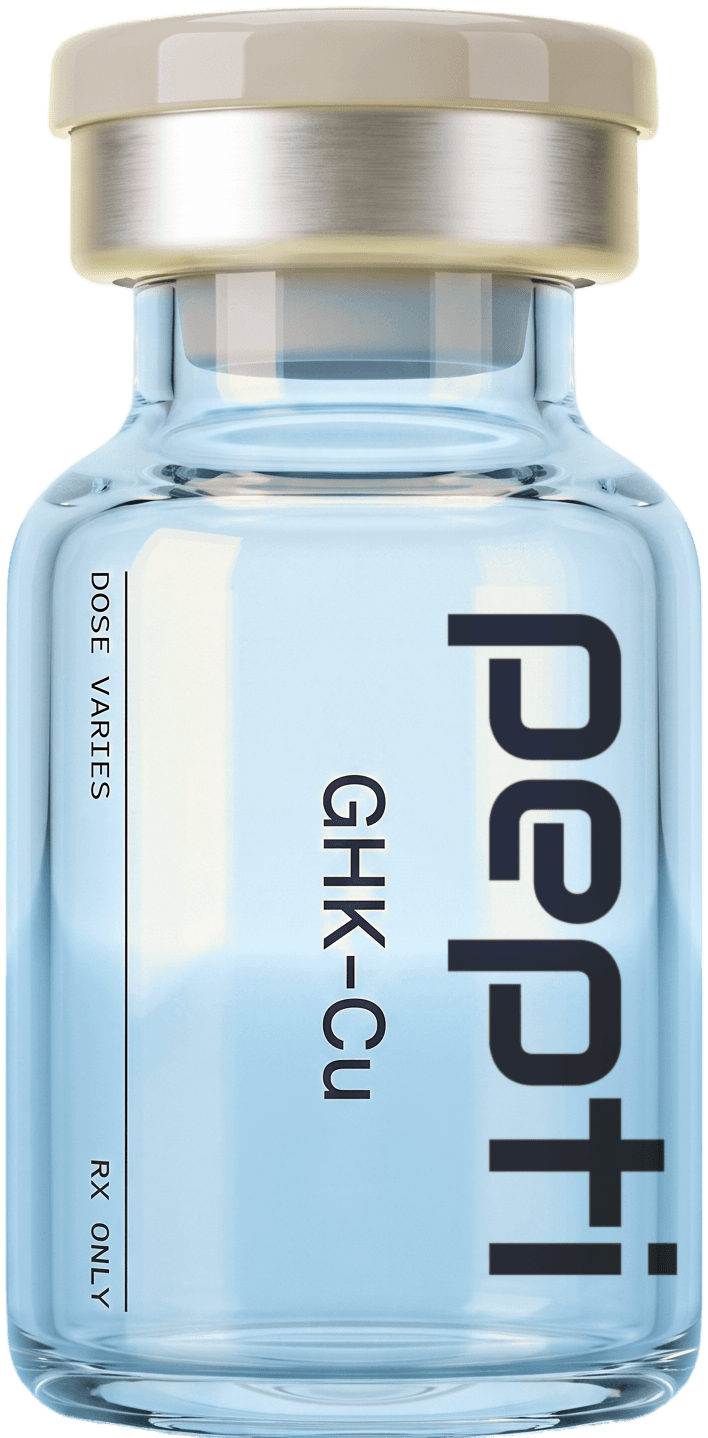
The volume of liquid added sets the concentration, and every dose afterwards depends on getting that volume, the arithmetic and the sterility right. Prescription peptides from Pepti do not need reconstituting: each vial is compounded by a licensed pharmacy and arrives as a ready-to-use solution at a stated concentration, with your directions printed on the label in millilitres and units. Powders that must be mixed at home are research-use products sold "not for human consumption," which is one of the main reasons they carry more risk.
This page explains what reconstitution is, how concentration works, what a pharmacy does that a kitchen counter cannot, why this page gives no mixing ratios, and what arrives in a Pepti box instead.
How to Reconstitute Peptides
The short answer
| Question | Pepti prescription vial | Research-use powder |
|---|---|---|
| Do I need to reconstitute it? | No. A pharmacist has already done it | Yes. You choose the liquid and the volume |
| What arrives? | A multi-dose vial of ready-to-use solution | A lyophilised (freeze-dried) powder |
| Is the concentration stated? | Yes, on the label, for example 2 mg/mL | Only what you calculate from your own mixing |
| Is the dose written down? | Yes, in mL and in units on a U-100 syringe | No; you work it out |
| Is the finished liquid tested? | Each lot is tested for sterility, endotoxin and potency | No finished-product test exists |
| Do I need BAC water? | No | Yes |
| Who is accountable? | A physician licensed in your state and a licensed pharmacy | Nobody; human use is disclaimed |
Every Pepti price is all-in, covering medication, physician review, refill management and shipping, with no membership fee. Pepti is cash-pay and does not bill insurance.
How to Reconstitute Peptides
What reconstitution is
Many peptides are made and stored as a lyophilised, or freeze-dried, powder, because a dry powder is easier to keep stable than a solution. A powder cannot be injected. Reconstitution is the step that turns it into an injectable liquid: a sterile diluent is added to the vial, the powder dissolves, and the result is a solution with a concentration.
The diluent
The usual diluent is bacteriostatic water, sterile water containing 0.9% benzyl alcohol as a preservative, which holds back bacterial growth so the vial can be entered with a needle more than once. Plain sterile water has no preservative. A diluent contains no medication and does not change what a peptide does; its only job is to dissolve the powder. The full explanation is in BAC water for peptides.
| Bacteriostatic water | Sterile water | |
|---|---|---|
| What it is | Sterile water with 0.9% benzyl alcohol | Sterile water with no preservative |
| Purpose | Dissolving a powder that will be drawn from more than once | Dissolving a powder for a single use |
| Needed with a Pepti vial | No | No |
Where the concentration comes from
A powder has no concentration until liquid is added. The concentration is the amount of peptide divided by the volume of liquid. That arithmetic is easiest to see on a finished prescription vial, where the pharmacy has already done it and printed the result:
| Pepti vial | Total contents | Volume | Concentration on the label |
|---|---|---|---|
| BPC-157 | 5 mg | 5 mL | 1 mg/mL |
| Tesamorelin | 10 mg | 5 mL | 2 mg/mL |
| MOTS-c | 10 mg | 5 mL | 2 mg/mL |
| GHK-Cu | 50 mg | 5 mL | 10 mg/mL |
| NAD+ Injection | 1000 mg | 10 mL | 100 mg/mL |
That is the whole reason reconstitution is unforgiving. Add twice the intended volume and every draw delivers half the intended amount. Misplace a decimal and it is ten times. The comparison of research and prescription peptides treats dose arithmetic as the single biggest practical risk with research vials.
How to Reconstitute Peptides
Why this page gives no mixing ratios
People searching "how to reconstitute peptides" usually want a ratio: how many millilitres of water for how many milligrams of powder. This page deliberately does not give one, for three reasons.
The starting quantity is unverified
A research vial states a nominal quantity, and the actual content may differ. A lyophilised peptide's mass also includes water and counterion, so the net peptide content is a different number from its HPLC purity. Where a vendor publishes a certificate, it usually describes bulk powder before it was portioned, not the amount in your vial. Analyses of seized black-market peptide products by accredited anti-doping laboratories found labels unreliable often enough that they cannot be treated as information. A ratio applied to an unverified quantity is arithmetic on a number nobody has checked.
A ratio is not a dose
A reconstitution calculator only divides one number by another. It cannot tell you what dose is appropriate for you; that is a clinical decision made after reviewing your history, medications and goals.
The diluent does not make it sterile
Bacteriostatic water slows bacterial growth in a liquid that is already sterile. It does not sterilise a contaminated powder, vial, stopper or needle. Sterility is the one attribute you can never check by looking; a solution can be perfectly clear and still be wrong.
How to Reconstitute Peptides
What a pharmacy does that a kitchen cannot
Making an injectable from a powder is sterile compounding, and there is a written standard for it: USP Chapter 797. It covers the classified cleanroom or segregated compounding area, the ISO 5 environment for open manipulations, gowning and environmental monitoring. Reconstituting a powder at home skips all of it. Combining several powders into one homemade blend is the exact scenario that standard exists to prevent.
| Step | At a compounding pharmacy | At home with a research powder |
|---|---|---|
| Environment | Cleanroom or segregated compounding area, ISO 5 for open manipulations | A kitchen or bathroom counter |
| Concentration | Set by the formulation and stated on the label | Whatever your volume and maths produce |
| Starting material | Bulk drug substance with documentation | An unverified nominal quantity |
| Finished-product testing | Each lot tested for sterility, endotoxin and potency | None |
| Beyond-use date | Assigned by the pharmacy and printed on the label | Nobody has assigned one |
| Directions | Printed in mL and units for you | None |
Pepti's pharmacies are PCAB-accredited, FDA-registered US 503A compounding pharmacies, and each lot of finished solution is tested by an independent laboratory. The certificates are published by lot at /quality/lab-results.
Errors happen even with liquids
The FDA has documented how badly dose conversions go even with ready-made liquid products. Its July 2024 alert on compounded injectable semaglutide described people given U-100 insulin syringes and a dose in units drawing up five to twenty times the intended amount, and clinicians miscalculating conversions between milligrams, units and millilitres. Adding a home-mixing step in front of that conversion adds another place for the same error.
How to Reconstitute Peptides
Pepti vials arrive ready to use
Every Pepti injectable arrives pre-mixed: a multi-dose vial of ready-to-use solution at a stated concentration, so there is no powder to dissolve and no water to add.
| What arrives | What it means for you |
|---|---|
| A multi-dose vial of solution | Nothing to mix; reconstitution has already been done by a pharmacist |
| A label with your name, the medication, the concentration, your directions and the beyond-use date | You draw the volume printed on the label, nothing else |
| Directions in mL and in units on a U-100 insulin syringe | You match a plunger to a printed line |
| Sterile syringes and alcohol prep pads | One fresh syringe and fresh pads for every dose |
| Insulated packaging with ice packs | The vial goes into the refrigerator when it arrives |
Examples of standard directions:
| Product | Vial, as supplied | Typical directions | Price |
|---|---|---|---|
| BPC-157 | 5 mL, 1 mg/mL | 0.18 mL (18 units) once daily as directed | $209/mo |
| BPC-157 + TB-500 | 5 mL, 1 mg/mL of each | 0.25 mL (25 units) Monday through Friday mornings | $259/mo |
| Tesamorelin | 5 mL, 2 mg/mL | 0.25 mL (25 units) Monday through Friday nights at bedtime | $249/mo |
| MOTS-c | 5 mL, 2 mg/mL | 0.25 mL (25 units) Monday through Friday mornings | $259/mo |
| NAD+ Injection | 10 mL, 100 mg/mL | 0.83 mL (83 units) three times per week | $249/mo |
| Tirzepatide | 2 mL, dose-specific | 0.50 mL (50 units) once weekly | From $159/mo |
Your own directions are printed on your vial and are the ones that apply. Almost every vial is sized to last about four weeks, which is why refills run every 28 days, one vial per fill; see how long does a peptide vial last. The full walk-through of what is in the box is at do peptides come pre-mixed.
Do not add anything to your vial
Adding BAC water or any other liquid to a pre-mixed vial changes its concentration, so every dose drawn afterwards would no longer match the label, and it adds a contamination route. Take the dose printed on the vial, on the schedule printed on the vial.
Blends arrive in one vial
Where a combination is prescribed, the pharmacy compounds it into a single vial. KLOW holds 50 mg GHK-Cu, 10 mg KPV, 10 mg BPC-157 and 10 mg TB-500 in one 5 mL vial at $259 a month. There is no research-use equivalent of a blend like that; reproducing it would mean reconstituting four powders and combining them with no sterility control at all. Do not mix two vials in one syringe yourself; see can you take two peptides together.
The pen option
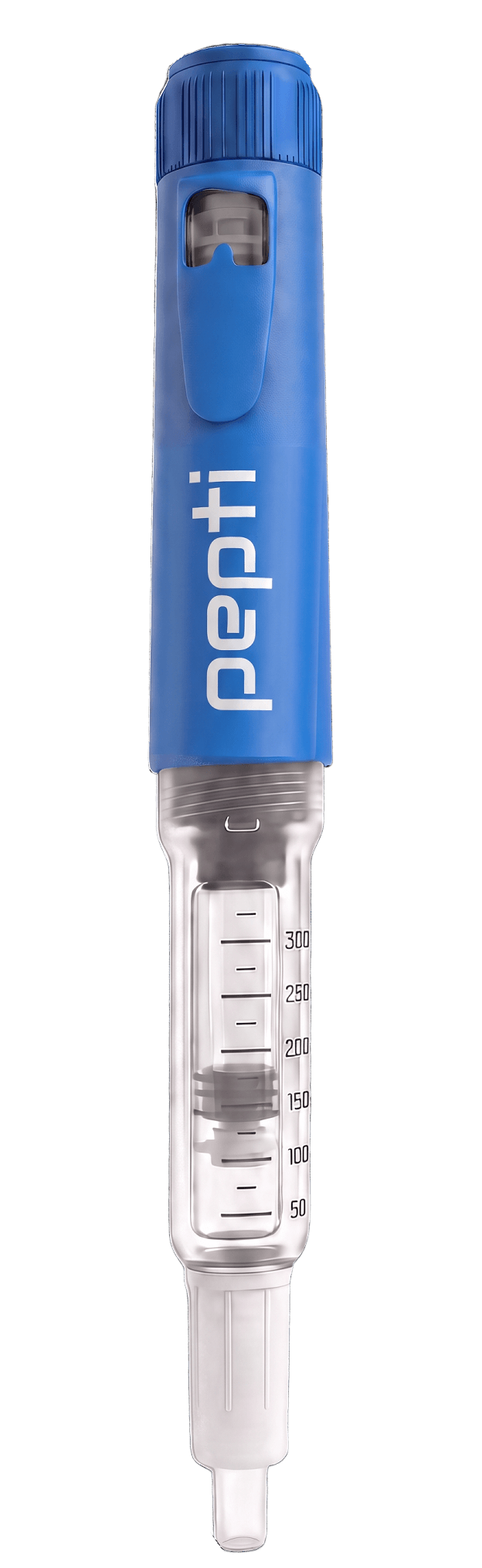
For some products, a pre-filled pepti Pen cartridge is an alternative to the vial. The cartridge is filled and sealed by the pharmacy to your prescription; you dial the dose and press, with no draw, no vial entry and nothing to mix. The comparison is in vial vs pen.
How to Reconstitute Peptides
Reading the units instead of doing the maths
With a prescription vial, the only arithmetic left is the syringe conversion, and it never changes. U-100 means 100 units per millilitre, so move the decimal two places.
| Directions in mL | On a U-100 syringe |
|---|---|
| 0.18 mL | 18 units |
| 0.25 mL | 25 units |
| 0.50 mL | 50 units |
| 0.83 mL | 83 units |
| 1.0 mL | 100 units, the whole barrel |
Hold the syringe vertical at eye level and read the flat front edge of the plunger tip against the marking. If your directions and your syringe markings ever seem to disagree, do not dose; message your care team. Technique in full is in how to inject peptides safely.
How to Reconstitute Peptides
Storage after reconstitution
Once a powder is dissolved, its stability clock changes, and nobody has assigned a beyond-use date to a homemade solution. A compounded vial carries a beyond-use date assigned by the pharmacy that prepared it, which runs from first puncture and assumes the labelled storage conditions were followed. Pepti vials ship refrigerated with ice packs and go into the refrigerator on arrival. More is in how to store peptides and which peptides need refrigeration.
How to Reconstitute Peptides
What the evidence shows, honestly
Subcutaneous self-injection with a U-100 syringe is one of the best-established home techniques in medicine. What a pre-mixed vial changes is narrower and practical: it removes the reconstitution step where ten-fold errors start, and it moves the sterile preparation into a pharmacy whose finished product is tested by lot.
The prescription route does not change what the research on a molecule has established. For most peptides that research is preclinical, and compounded medications are not FDA approved. A ready-to-use vial is about getting the dose you were prescribed, sterile and at the stated strength; it is not evidence that the peptide works. Research peptides vs prescription peptides covers the wider comparison.
How to Reconstitute Peptides
How to get a ready-to-use prescription
- Complete a free online intake covering your history, medications and what you want help with.
- A physician licensed in your state reviews it, usually within 24 hours.
- If it is appropriate, a PCAB-accredited, FDA-registered US 503A pharmacy compounds it to that prescription as a ready-to-use solution. Lot test results are published at /quality/lab-results.
- It ships refrigerated with ice packs, sterile syringes and alcohol prep pads, with your directions printed on the vial.
- Your physician stays reachable for questions, and refills run every 28 days, one vial per fill.
Step-by-step pages: BPC-157, KLOW, tesamorelin, MOTS-c and NAD+.
References
What this is based on.
References
- Chang CH, Tsai WC, Hsu YH, Pang JH. Pentadecapeptide BPC 157 enhances the growth hormone receptor expression in tendon fibroblasts · Molecules (2014) · PMID 25415472
- Krivic A, Anic T, Seiwerth S, et al.. Achilles detachment of rat and stable gastric pentadecapeptide BPC 157 · Journal of Orthopaedic Research (2006) · PMID 16583442
- Sikiric P, Seiwerth S, Rucman R, et al.. Stable gastric pentadecapeptide BPC 157: novel therapy in gastrointestinal tract · Current Pharmaceutical Design (2011) · PMID 21548867
- Cerovecki T, Bojanic I, Brcic L, Radic B, et al.. Pentadecapeptide BPC 157 (PL 14736) improves ligament healing in the rat · J Orthop Res (2010) · PMID 20225319
- Sikiric P, Seiwerth S, Rucman R, Turkovic B, et al.. Stable gastric pentadecapeptide BPC 157-NO-system relation · Curr Pharm Des (2014) · PMID 23755725
- Cox HD, Miller GD, Eichner D. Detection and in vitro metabolism of the confiscated peptides BPC 157 and MGF R23H · Drug Test Anal (2017) · PMID 28035768
- Thomas A, Görgens C, Guddat S et al.. Simplifying and expanding the screening for peptides <2 kDa by direct urine injection, liquid chromatography, and ion mobility mass spectrometry · J Sep Sci (2016) · PMID 26578461
- Farrar JT, Young JP Jr, LaMoreaux L, Werth JL et al.. Clinical importance of changes in chronic pain intensity measured on an 11-point numerical pain rating scale · Pain (2001) · PMID 11690728
- Meyer JD, Ho B, Manning MC. Effects of conformation on the chemical stability of pharmaceutically relevant polypeptides · Pharm Biotechnol (2002) · PMID 11987755
- Xu C, Sun L, Ren F, Huang P, et al.. Preclinical Safety Evaluation of Body Protective Compound-157, a Potential Drug for Treating Various Wounds · Regul Toxicol Pharmacol (2020) · PMID 32334036
- He L, Feng D, Guo H, et al.. Pharmacokinetics, distribution, metabolism, and excretion of body-protective compound 157, a potential drug for treating various wounds, in rats and dogs · Front Pharmacol (2022) · PMID 36588717
- Lee E, Padgett B. Intra-Articular Injection of BPC 157 for Multiple Types of Knee Pain · Altern Ther Health Med (2021) · PMID 34324435
Citations are provided for educational purposes. They do not constitute medical advice. Always discuss any peptide protocol with your prescribing physician.
Common questions
How to Reconstitute Peptides, answered.
Reconstitution means adding a sterile diluent, usually bacteriostatic water, to a freeze-dried powder so it dissolves into an injectable solution. With a Pepti prescription there is nothing to reconstitute: the pharmacy has already done it and the vial arrives ready to use.
No. Every Pepti injectable arrives as a ready-to-use solution at a stated concentration. Draw the volume printed on your vial with the syringes supplied.
Turning a dry powder into a liquid by dissolving it in a measured volume of sterile water. The volume added sets the concentration, which is why the step is so easy to get wrong.
For a Pepti vial, none. For research powders this page gives no ratios, because the actual peptide content of a research vial is unverified and any ratio is arithmetic on a number nobody has checked.
Both are sterile; bacteriostatic water contains a preservative so a vial can be entered more than once. Neither is needed or should be added to a Pepti vial.
No. It slows bacterial growth in a liquid that is already sterile. It does not sterilise a contaminated powder, vial or needle.
Not with a prescription vial, because the concentration and your dose are already on the label. A calculator cannot check what is in a research powder, whether it is sterile, or what dose suits you.
No. Adding liquid changes the concentration, so every dose afterwards would deliver less than your directions intend, and it adds a contamination risk.
A dry powder is easier to keep stable, and selling it "not for human consumption" leaves the mixing, the concentration and the dosing to the buyer.
A homemade solution has no assigned beyond-use date. A Pepti vial carries a beyond-use date from the pharmacy, running from first puncture, printed on the label.
No. Bloodwork is not required for any Pepti treatment. If your physician wants labs for your care, they'll ask through your account. The free assessment goes to a physician licensed in your state. A consultation does not guarantee a prescription.
Related answers
Keep reading.
- Insulin Syringe Units Explained: 1 mL Is How Many Units on a U-100 Syringe?
- Is Glutathione a Peptide? Yes, a Tripeptide, but Not a Signalling One
- Is HGH a Peptide? Growth Hormone vs the Peptides That Prompt It
- Is NAD+ a Peptide? What NAD+ Actually Is, and Why It Sits Beside Peptides
- List of Peptides and What They Do: Every Peptide Pepti Prescribes, in One Table
Next step
See what a physician recommends for you.
A licensed physician in your state reviews your intake to see whether treatment fits your history. A consultation does not guarantee a prescription.