Weight Loss · Reference
What Is Compounded Semaglutide? Semaglutide vs Compounded Semaglutide Explained
Compounded semaglutide is semaglutide, the same active ingredient as the FDA-approved versions, prepared by a state-licensed pharmacy for one identified patient against a physician's prescription.
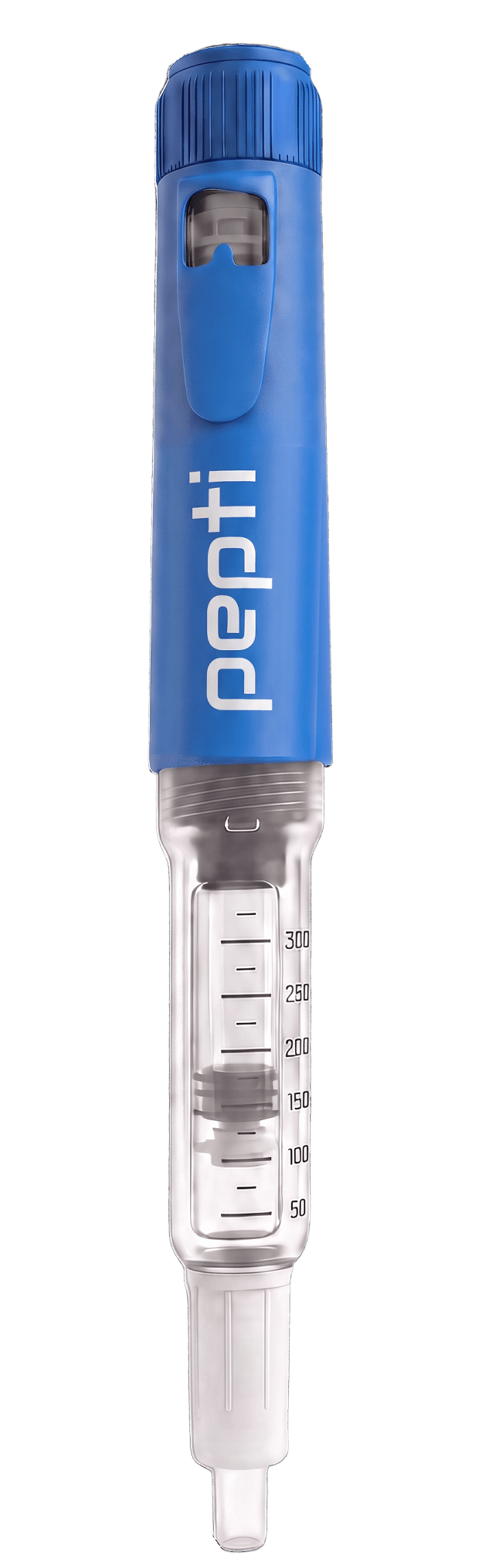
Treatments mentioned
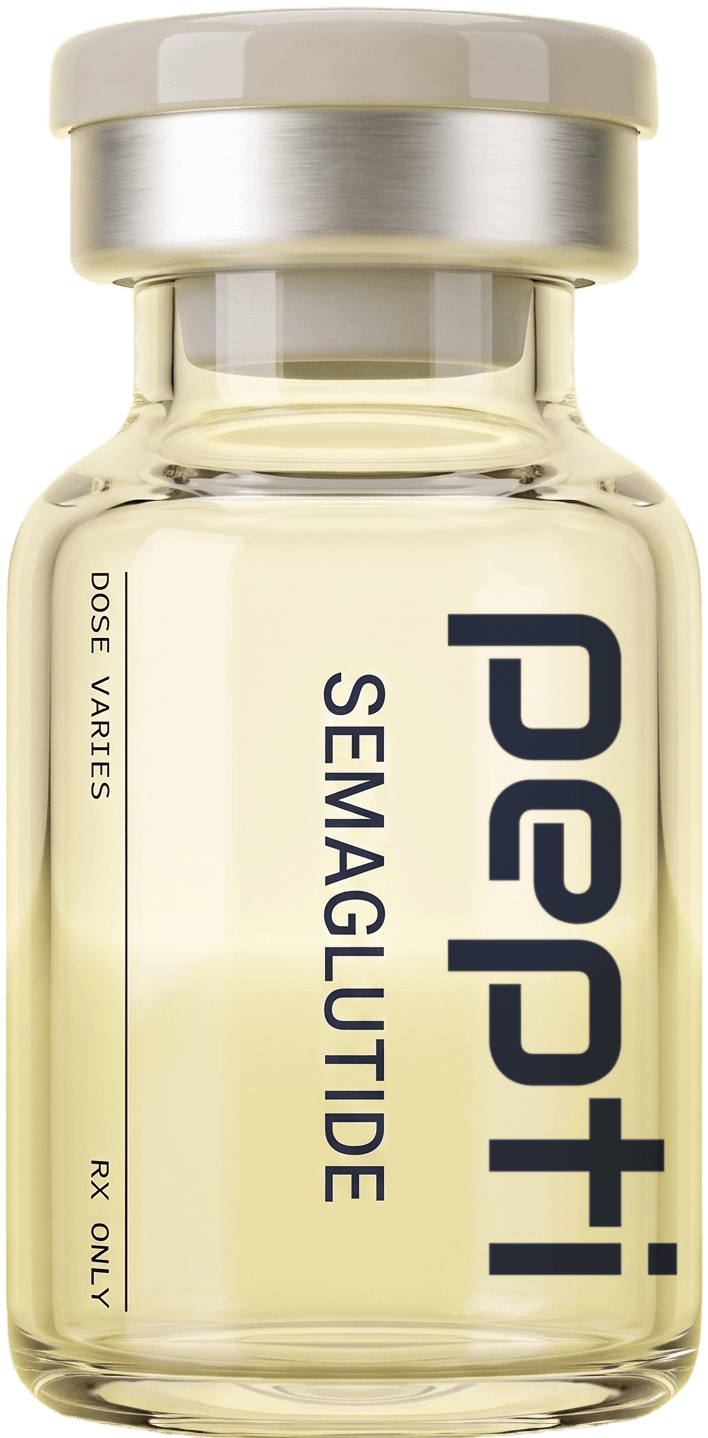
It is not FDA approved, no clinical trial has been run on it, and it comes as a multi-dose vial drawn with an insulin syringe rather than a manufactured pen or tablet. The molecule, its side effects and its warnings are the same; what differs is the product, and the quality of that product rests on the pharmacy that made it. At Pepti it is supplied as six dose-specific vials, from $99 a month all-in.
This page explains what "compounded" means, what is and is not different between semaglutide and compounded semaglutide, how Pepti's vials work, where compounding stands with the FDA as of September 2026, and what to ask before you start.
What Is Compounded Semaglutide? Semaglutide vs Compounded Semaglutide Explained
The short answer
| Question | FDA-approved semaglutide | Compounded semaglutide |
|---|---|---|
| Active ingredient | Semaglutide | Semaglutide, the same molecule |
| Who makes it | The manufacturer, under an approved application | A state-licensed pharmacy, for an individual prescription |
| FDA approved | Yes, as a finished product | No. Compounded medications are not FDA approved |
| Clinical trials | The STEP, SUSTAIN, SELECT and ESSENCE trials were run on it | None. No compounded preparation has been trialled |
| Format | Fixed-dose pen or tablet | Multi-dose vial and insulin syringe |
| Strength | Set by the manufacturer | Set by the prescription; concentration varies between pharmacies |
| Quality assurance | Manufacturing standards and a stability programme | The pharmacy's sterile process, beyond-use dating and lot testing |
| At Pepti | Not supplied | Semaglutide, dose-specific vials, from $99/mo |
Every Pepti price is all-in, covering medication, physician review, refill management and shipping, with no membership fee. Pepti is cash-pay and does not bill insurance.
What Is Compounded Semaglutide? Semaglutide vs Compounded Semaglutide Explained
What "compounded" actually means
Compounding is a pharmacy preparing a medication for a specific patient against a specific prescription. It is a long-established, regulated practice. A 503A compounding pharmacy works under section 503A of the Federal Food, Drug, and Cosmetic Act, is licensed and inspected by a state board of pharmacy, and prepares each vial for a named patient. A 503B outsourcing facility is a different category that compounds in larger batches and registers with the FDA under separate rules. The distinction matters because most regulatory headlines about semaglutide apply to one route and not the other. The full picture is in what is a 503A compounding pharmacy.
Compounding is not manufacturing. There is no approved specification for your vial, no batch-level FDA release and no dedicated stability programme. A reputable compounder works to pharmacy standards with tested ingredients and documented processes. That is a real standard, just not the same one.
Compounding is also not the grey market. Semaglutide sold online "for research purposes" or "not for human consumption" is not compounded medication, whatever the label says. There is no prescriber, no pharmacy, and nobody accountable for identity, purity, sterility or concentration. See research peptides vs prescription peptides.
What Is Compounded Semaglutide? Semaglutide vs Compounded Semaglutide Explained
Semaglutide vs compounded semaglutide: what stays the same
The molecule and how it works
Semaglutide is a GLP-1 receptor agonist: a modified copy of glucagon-like peptide-1, a hormone the small intestine releases after a meal. Native GLP-1 is cleared within minutes by the enzyme DPP-4. Semaglutide keeps most of the native sequence and changes three things, including a fatty-acid chain that binds it to albumin in the blood, which stretches its half-life to roughly a week and makes once-weekly injection possible. It prompts insulin release when glucose is high, suppresses glucagon, slows stomach emptying and acts on appetite centres in the brain. It is not a stimulant. The background is in what is semaglutide and what is a GLP-1.
The side effects and warnings
Because the molecule is the same, its documented safety profile transfers to a compounded vial unchanged. The common effects are gastrointestinal: nausea, diarrhea, vomiting, constipation and abdominal pain, most often in the days after a dose increase. The serious risks named in the approved labelling, pancreatitis, gallbladder disease, dehydration that can affect the kidneys, low blood sugar alongside insulin or a sulfonylurea, and a boxed warning about thyroid C-cell tumours seen in rodents, apply equally. A personal or family history of medullary thyroid carcinoma or MEN 2 rules it out whether the vial is compounded or not. The detail is in semaglutide side effects and is semaglutide safe.
What Is Compounded Semaglutide? Semaglutide vs Compounded Semaglutide Explained
Semaglutide vs compounded semaglutide: what is different
| What differs | Why it matters |
|---|---|
| No approval and no trial of the preparation | The trial evidence belongs to the manufactured product. The case that a compounded vial behaves the same is pharmacological inference |
| Concentration is not standardized | Different pharmacies fill different concentrations, so a unit count never carries over between vials or providers |
| Added ingredients | Many compounded GLP-1 preparations add a B vitamin or another ingredient. These need to be disclosed |
| Beyond-use date, not an expiry date | Assigned by the pharmacy under compendial rules, usually much shorter than a manufactured product's expiry |
| Salt forms | Regulators have warned about products made from semaglutide sodium or semaglutide acetate, which are not the approved active ingredient |
| Format | A multi-dose vial drawn with a syringe rather than a fixed-dose pen |
Concentration, and the dosing-error risk
There is no standard strength for compounded semaglutide. The same weekly dose can be a different number of units on an insulin syringe depending on the concentration in the vial. The FDA issued an alert in July 2024 describing patients drawing five to twenty times the intended amount of compounded injectable semaglutide, and clinicians miscalculating conversions between milligrams, units and millilitres. The rule that follows is simple: dose only from the directions printed on your own vial, and read the label again every time the strength changes.
Added ingredients
A 2026 survey in the Annals of Pharmacotherapy catalogued compounded semaglutide and tirzepatide products and found a wide range of formulations, many with a B vitamin or an antiemetic added. No trial shows that an added vitamin reduces nausea. Pepti's GLP-1 vials contain no B12, and the semaglutide vials are listed in the catalogue as semaglutide alone.
Impurities and the salt-form problem
A 2026 paper in Pharmaceutical Research compared follow-on and compounded GLP-1 products against the originator formulations and reported distinct impurity profiles. Neither that paper nor this page says compounded semaglutide is unsafe. Both say the difference lives in the chemistry of a specific batch, which is what lot testing is for. Separately, the FDA states it is not aware of any lawful basis for using semaglutide salt forms. You are entitled to ask, in writing, whether a prescription is compounded from semaglutide base.
What Is Compounded Semaglutide? Semaglutide vs Compounded Semaglutide Explained
How Pepti supplies compounded semaglutide
Pepti's semaglutide is supplied as six dose-specific vials. Each strength is its own vial, concentrated so that one weekly dose is a single draw. These are the vials and the directions printed on them:
| Weekly dose | Vial | Concentration | Directions on the vial | Doses per vial |
|---|---|---|---|---|
| 0.25 mg | 1 mg in 1 mL | 1 mg/mL | Inject 0.25 mL (25 units) once weekly | 4 |
| 0.5 mg | 2 mg in 2 mL | 1 mg/mL | Inject 0.50 mL (50 units) once weekly | 4 |
| 1 mg | 4 mg in 2 mL | 2 mg/mL | Inject 0.50 mL (50 units) once weekly | 4 |
| 1.7 mg | 7.5 mg in 3 mL | 2.5 mg/mL | Inject 0.68 mL (68 units) once weekly | 4, with a small remainder |
| 2 mg | 10 mg in 2 mL | 5 mg/mL | Inject 0.40 mL (40 units) once weekly | 5 |
| 2.5 mg | 10 mg in 2 mL | 5 mg/mL | Inject 0.50 mL (50 units) once weekly | 4 |
Units are on a U-100 insulin syringe, where 100 units is 1 mL. Because the concentration differs between strengths, the units for one strength are not the units for another; never carry a number over from a previous fill. Your physician sets your dose after reviewing your intake, and your directions are printed on the vial. The full ladder is in the semaglutide dosing chart, and the arithmetic of reading a label is in how long does a peptide vial last.
Semaglutide is priced "from $99 a month" because it is priced by dose; a higher strength is a vial with more medication in it. The current figure for each strength is on the semaglutide product page. The price covers one vial per 28-day fill, physician review, refill management, and refrigerated shipping with ice packs, sterile syringes and alcohol prep pads. Pepti's pharmacies are PCAB-accredited, FDA-registered US 503A compounding pharmacies, and lot test results are published at /quality/lab-results.
Why compounded semaglutide costs less
A different supply chain, no brand pricing and direct dispensing rather than retail distribution. That is explained in why are compounded peptides cheaper. Cheap on its own is not evidence of quality or of its absence, and under FDA guidance a lower price is expressly not a reason that justifies compounding a copy of an approved drug.
What Is Compounded Semaglutide? Semaglutide vs Compounded Semaglutide Explained
Where compounded semaglutide stands with the FDA
This summary reflects Pepti's reference pages, checked in September 2026. The rules in this area have changed several times since 2022.
| Date | What happened |
|---|---|
| 2022 | Semaglutide injection placed on the FDA drug shortage list, which allowed compounding of copies |
| 21 February 2025 | FDA declared the semaglutide shortage resolved |
| 22 April 2025 | End of the wind-down period for 503A pharmacies |
| 22 May 2025 | End of the wind-down period for 503B outsourcing facilities |
| 1 April 2026 | FDA updated its guidance on what counts as "essentially a copy" |
| 30 April 2026 | FDA proposed excluding semaglutide, tirzepatide and liraglutide from the 503B bulks list; published in the Federal Register on 1 May 2026, comment period extended to 30 July 2026, no final determination as of September 2026 |
Shortage-based compounding has ended. What remains is the ordinary 503A pathway: a state-licensed pharmacy may compound for an identified patient where the prescriber determines and documents that a change in the compounded product produces a significant difference for that patient. The 503B proposal concerns outsourcing facilities that compound in bulk without patient-specific prescriptions; it does not by itself change the 503A framework. The FDA has also issued warning letters to telehealth companies, in September 2025, March 2026 and June 2026, over websites implying a compounded product was equivalent to or approved like the brand. That is why this page says plainly that compounded semaglutide is not FDA approved and is not the branded product. More on the difference between "not approved" and "not legal" is in are peptides FDA approved.
What Is Compounded Semaglutide? Semaglutide vs Compounded Semaglutide Explained
What to ask any provider
| Question | A good answer | A bad answer |
|---|---|---|
| Who prescribes it? | A named physician licensed in your state, after a medical intake | A form with no clinician |
| Which pharmacy compounds it? | A named, state-licensed pharmacy you can look up | "Our pharmacy partner" |
| Is it semaglutide base? | Yes, stated plainly | Evasion |
| What is the concentration? | A specific mg per mL on the label | Only a dose in units |
| What else is in the vial? | A full list | "Proprietary" |
| How does it ship? | Refrigerated, with a beyond-use date on the label | Ambient, no date |
| Is the lot tested? | Published potency, endotoxin and sterility results | No results available |
The fuller checklist is in is compounded semaglutide safe and how to tell if a peptide seller is legitimate.
What Is Compounded Semaglutide? Semaglutide vs Compounded Semaglutide Explained
What the evidence shows, honestly
Semaglutide has one of the largest human evidence bases of any medication in this category: large randomized trials in weight management, type 2 diabetes, cardiovascular disease and liver disease. Every one of those trials used the manufactured product. No trial has tested compounded semaglutide, and none will, because trials are designed around a defined product rather than a molecule in the abstract.
So the honest answer to "is compounded semaglutide the same as semaglutide" is: the same molecule, a different product. A compounded vial from a physician licensed in your state, filled by a named pharmacy, shipped cold and labelled with its concentration and beyond-use date, carries the documented risks of the molecule and little else. The same molecule from an unnamed source carries those risks plus every preparation risk in the table above.
What Is Compounded Semaglutide? Semaglutide vs Compounded Semaglutide Explained
Where to get compounded semaglutide prescribed
Semaglutide cannot be bought legitimately without a prescription. The prescription route:
- Complete a free online intake covering your history, medications and what you want help with.
- A physician licensed in your state reviews it, usually within 24 hours.
- If it is appropriate, a PCAB-accredited, FDA-registered US 503A pharmacy compounds it to that prescription.
- It ships refrigerated with ice packs, sterile syringes and alcohol prep pads, with your directions printed on the vial.
- Your care team stays reachable for side effects and dose questions. Refills run every 28 days, one vial per fill.
Bloodwork is not required for any Pepti treatment. If your physician wants labs for your care, they'll ask through your account. The step-by-step page is how to get semaglutide prescribed online.
References
What this is based on.
References
- Wilding JPH, Batterham RL, Calanna S, et al.. Once-Weekly Semaglutide in Adults with Overweight or Obesity (STEP 1) · New England Journal of Medicine (2021) · PMID 33567185
- Lincoff AM, Brown-Frandsen K, Colhoun HM, et al.. Semaglutide and Cardiovascular Outcomes in Obesity without Diabetes (SELECT) · New England Journal of Medicine (2023) · PMID 37952131
- Wadden TA, Bailey TS, Billings LK, et al.. Effect of subcutaneous semaglutide vs placebo as an adjunct to intensive behavioral therapy on body weight in adults with overweight or obesity (STEP 3) · JAMA (2021) · PMID 33625476
- Rubino D, Abrahamsson N, Davies M, et al.. Effect of Continued Weekly Subcutaneous Semaglutide vs Placebo on Weight Loss Maintenance in Adults With Overweight or Obesity: The STEP 4 Randomized Clinical Trial · JAMA (2021) · PMID 33755728
- Marso SP, Bain SC, Consoli A, et al.. Semaglutide and Cardiovascular Outcomes in Patients with Type 2 Diabetes (SUSTAIN-6) · New England Journal of Medicine (2016) · PMID 27633186
- Davies M, Færch L, Jeppesen OK, et al.. Semaglutide 2.4 mg once a week in adults with overweight or obesity, and type 2 diabetes (STEP 2): a randomised, double-blind, double-dummy, placebo-controlled, phase 3 trial · The Lancet (2021) · PMID 33667417
- Garvey WT, Batterham RL, Bhatta M, et al.. Two-year effects of semaglutide in adults with overweight or obesity: the STEP 5 trial · Nature Medicine (2022) · PMID 36216945
- Rubino DM, Greenway FL, Khalid U, et al.. Effect of Weekly Subcutaneous Semaglutide vs Daily Liraglutide on Body Weight in Adults With Overweight or Obesity Without Diabetes: The STEP 8 Randomized Clinical Trial · JAMA (2022) · PMID 35015037
- Aronne LJ, Horn DB, le Roux CW, et al.. Tirzepatide as Compared with Semaglutide for the Treatment of Obesity (SURMOUNT-5) · New England Journal of Medicine (2025) · PMID 40353578
- Sanyal AJ, Newsome PN, Kliers I, et al.. Phase 3 Trial of Semaglutide in Metabolic Dysfunction-Associated Steatohepatitis (ESSENCE) · New England Journal of Medicine (2025) · PMID 40305708
- Wilding JPH, Batterham RL, Davies M, Van Gaal LF, Kandler K et al.. Weight regain and cardiometabolic effects after withdrawal of semaglutide: The STEP 1 trial extension · Diabetes Obes Metab (2022) · PMID 35441470
- Batsis JA, Gavras A, Gross DC, Cheever CR, Da Silva BR et al.. Effect of Incretin-Based and Nonpharmacologic Weight Loss on Body Composition: A Systematic Review · Ann Intern Med (2026) · PMID 41996180
Citations are provided for educational purposes. They do not constitute medical advice. Always discuss any peptide protocol with your prescribing physician.
Common questions
What Is Compounded Semaglutide? Semaglutide vs Compounded Semaglutide Explained, answered.
Semaglutide prepared by a state-licensed pharmacy for one identified patient on a physician's prescription. It contains the same active ingredient as the FDA-approved versions but is not itself FDA approved and has not been through clinical trials as a product.
The molecule is the same; the product is not. The approved versions are manufactured pens and tablets with their own approval and trial data. Compounded semaglutide is a multi-dose vial made by a pharmacy, with a concentration, added ingredients and beyond-use date set by that pharmacy.
No. Compounded medications are not FDA approved. Approval attaches to a specific manufactured product, and no compounded preparation of anything is approved. A provider calling a compounded vial FDA approved is misrepresenting it.
It should be, if the concentration on the label is accurate and the dose is prescribed correctly. The variable is the pharmacy. A published potency result for your lot, measured against the labelled concentration, is the version of this answer you can check.
Yes, on an individual prescription. Shortage-based compounding ended in 2025, and a 503A pharmacy may now compound semaglutide for an identified patient where the prescriber documents a patient-specific reason. The April 2026 503B proposal concerns bulk outsourcing facilities and was still pending as of September 2026.
Yes. The gastrointestinal effects, the serious risks and the contraindications belong to the molecule and apply unchanged. See semaglutide side effects.
No. Pepti's GLP-1 vials contain no B12. The exact contents are on the product page and on your vial's label.
The number printed on your vial. At Pepti it ranges from 25 units at the 0.25 mg strength to 68 units at 1.7 mg, because each strength is a different concentration. Never use a unit count from another vial, another provider or the internet.
From $99 a month, all-in, priced by dose. The price covers medication, physician review, refill management and shipping, with no membership fee.
No. Tirzepatide is a different molecule that acts on two receptors, GIP and GLP-1, rather than one. See what is compounded tirzepatide and semaglutide vs tirzepatide.
No. Bloodwork is not required for any Pepti treatment. If your physician wants labs for your care, they'll ask through your account. The free assessment goes to a physician licensed in your state. A consultation does not guarantee a prescription.
Related answers
Keep reading.
- Semaglutide: What It Is, Where to Get It Prescribed, and What It Costs
- Semaglutide Side Effects: Common, Serious, and What to Report
- Semaglutide Dosing Chart: Every Dose Step, Units to Draw, and Price
- Semaglutide vs Tirzepatide: Mechanism, Dosing, Side Effects and Cost
- What Is Compounded Tirzepatide? How It Differs From the Approved Versions
Next step
See what a physician recommends for you.
A licensed physician in your state reviews your intake to see whether treatment fits your history. A consultation does not guarantee a prescription.