— Recovery · Reference
What Is a 503A Compounding Pharmacy? 503A vs 503B Explained for Peptides
What section 503A permits, how it differs from a 503B outsourcing facility, which rules decide what a pharmacy may compound, and the five questions that test any provider.
— Treatments mentioned
A 503A compounding pharmacy prepares a medication for one named patient against one valid prescription, under section 503A of the Federal Food, Drug, and Cosmetic Act, licensed and inspected by a state board of pharmacy and registered with the FDA. A 503B outsourcing facility is a different category: it makes batches without patient-specific prescriptions, registers with the FDA as an outsourcing facility, and works to current good manufacturing practice with direct FDA inspection. Neither produces an FDA-approved drug. Nearly all patient-specific peptide prescriptions in telehealth are filled by 503A pharmacies, which is why the phrase appears on provider websites without ever being explained.
— What Is a 503A Compounding Pharmacy? 503A vs 503B Explained for Peptides
The short answer
| What you are dealing with | What it is | Who oversees it | What you get |
|---|---|---|---|
| 503A pharmacy | Compounds per patient, per prescription | State board of pharmacy, FDA registration and inspection authority | A vial with your name, your sig and a beyond-use date |
| 503B outsourcing facility | Compounds in batches, no patient-specific prescription needed | Registers with FDA as an outsourcing facility, works to CGMP, FDA inspected | Stock a clinic keeps on the shelf |
| Manufacturer of an approved drug | Makes an approved product to a filed specification | FDA approval plus ongoing inspection | A branded or generic product on a formulary |
| A "research use only" seller | Not a pharmacy at all | Nobody | A vial and a disclaimer |
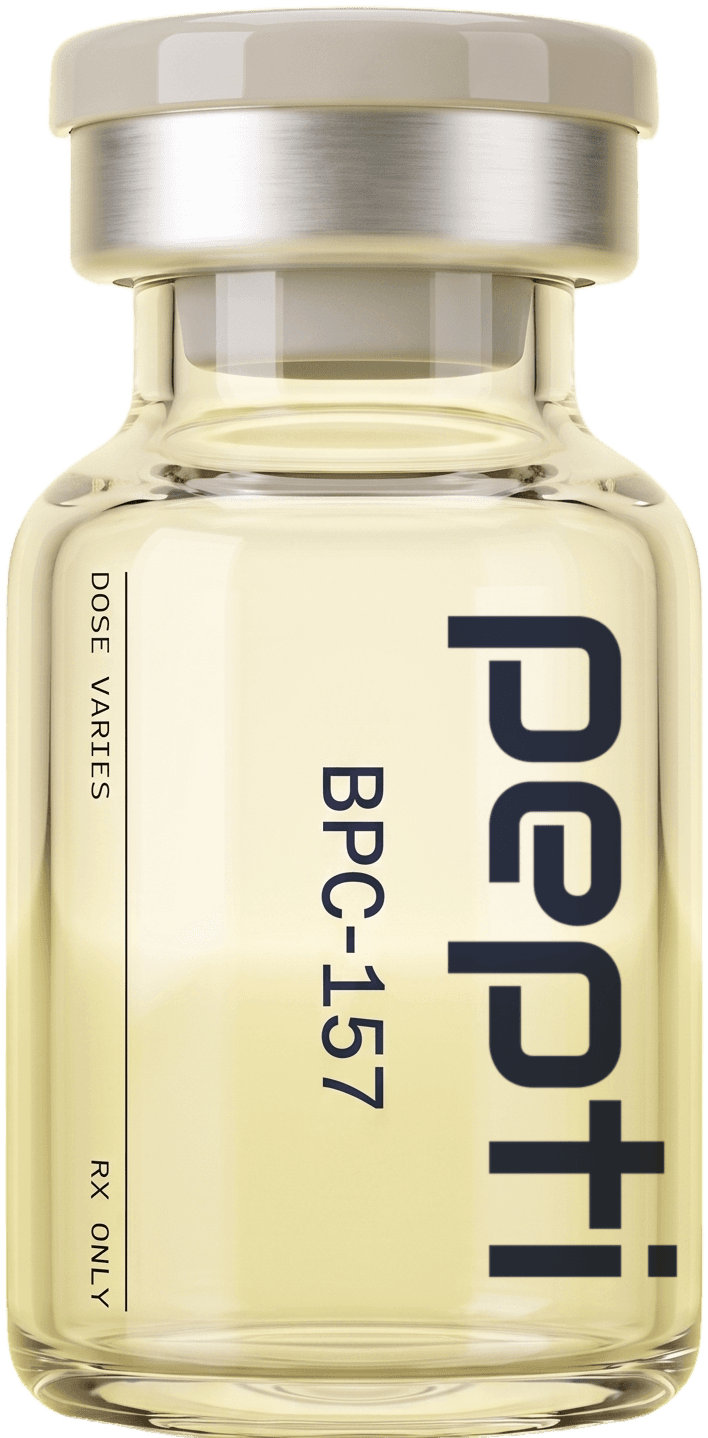
A single-peptide prescription from a 503A pharmacy such as BPC-157 is $209 a month all-in, and a four-peptide blend such as FORTIFY is $279. Those prices cover the medication, the physician review, refill management and shipping.
— What Is a 503A Compounding Pharmacy? 503A vs 503B Explained for Peptides
What section 503A actually permits
Section 503A entered the Act through the Food and Drug Administration Modernization Act of 1997 and was substantially amended by the Drug Quality and Security Act of 2013, passed after a fungal meningitis outbreak traced to a compounder made the gap in oversight impossible to ignore.
A preparation compounded under 503A is exempt from three requirements that otherwise apply to drugs: new drug approval, current good manufacturing practice, and the requirement for adequate directions for use in labelling. Those exemptions come with conditions.
| Condition under 503A | What it means for your prescription |
|---|---|
| Compounded by a licensed pharmacist or physician | A named professional is responsible for the preparation |
| For an identified individual patient | Against a valid prescription written for you |
| Bulk drug substances must qualify | Either the subject of a USP or NF monograph, or a component of an FDA-approved drug, or on the FDA's permitted list |
| Ingredients from registered suppliers, with a certificate of analysis | The pharmacy has documentation on what it started from |
| Not a substance withdrawn for safety reasons | Withdrawn drugs cannot be compounded back into circulation |
| Not essentially a copy of a commercially available drug | With limited exceptions, compounding is not a route around an existing product |
| Not on the list of preparations demonstrably difficult to compound | Some dosage forms are off limits |
| Limited interstate distribution without a state agreement | Which is why pharmacy licensure in your state matters |
The third row is the one that decides peptide menus. A substance reaches the permitted list by being nominated and reviewed, and while review is pending the FDA sorts nominated substances into interim categories: those it does not intend to act against pending review, those it has identified as raising significant safety risks, and those with insufficient information to evaluate. Substances move as evidence arrives. A pharmacy that stops filling something has followed that movement, and a provider that keeps selling it has not.
— What Is a 503A Compounding Pharmacy? 503A vs 503B Explained for Peptides
503A versus 503B, side by side
| 503A pharmacy | 503B outsourcing facility | |
|---|---|---|
| Patient-specific prescription required | Yes | No, may compound for office stock |
| Registration | State pharmacy licence plus FDA registration | Registers with FDA specifically as an outsourcing facility |
| Manufacturing standard | Compendial sterile compounding standards | Current good manufacturing practice |
| Routine FDA inspection | Inspection authority exists; state board is the primary inspector | Yes, on a risk-based schedule |
| Adverse event reporting to FDA | Not required in the same way | Required |
| Who it serves | Individual patients | Clinics, hospitals, surgery centres |
| Typical peptide use | Telehealth prescriptions, multi-dose vials | Clinic stock, some standardised preparations |
| FDA approved? | No | No |
The last row is the important one. 503B facilities operate to a higher manufacturing standard than 503A pharmacies, and still nothing they make is an approved drug. A provider implying that a 503B origin means FDA approval is making the same error described in are peptides FDA approved.
— What Is a 503A Compounding Pharmacy? 503A vs 503B Explained for Peptides
What a compounded peptide vial actually is
For peptides, 503A compounding is usually a sterile multi-dose vial at a stated concentration, sometimes combining several peptides so you take one injection instead of three or four.
| On a legitimate label | Why it is there |
|---|---|
| Your name | It is your prescription, not stock |
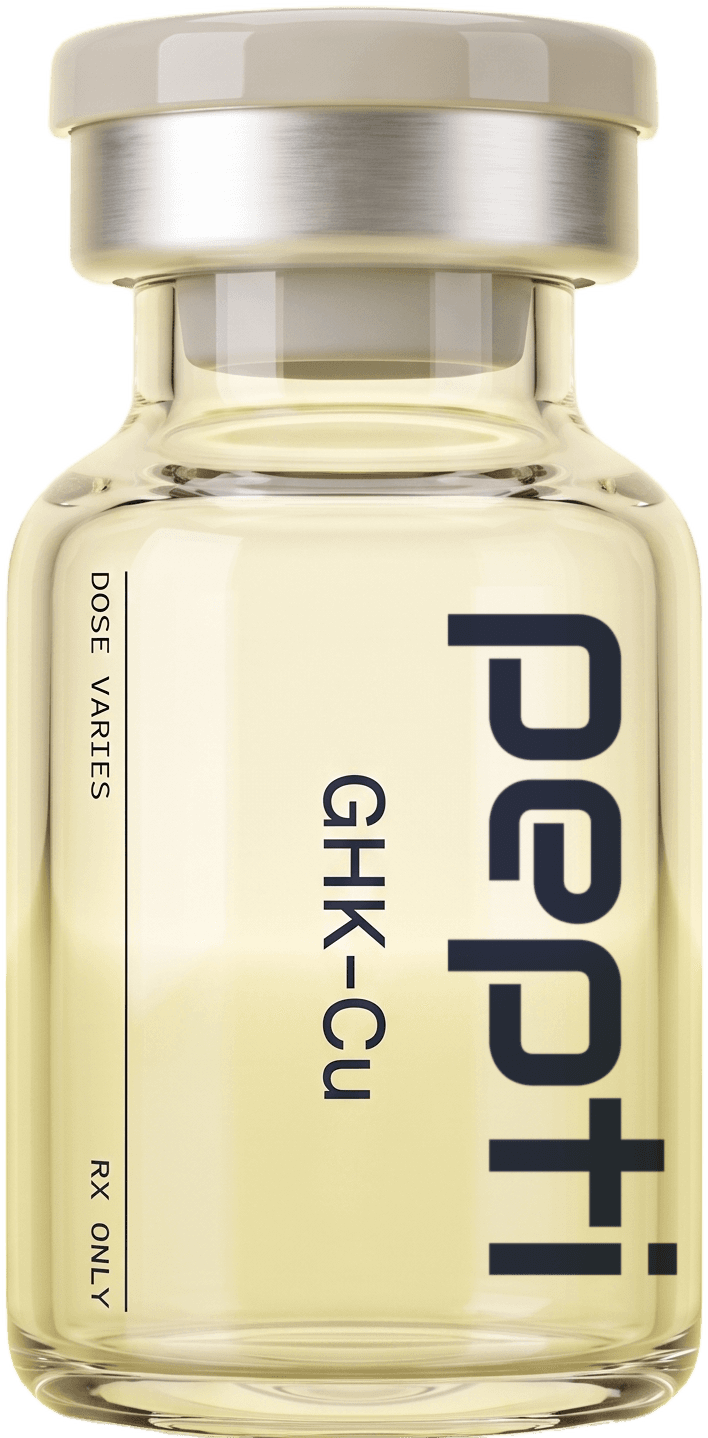
| The medication and concentration, for example GHK-Cu 10 mg/mL | Tells you what you are drawing and lets you check the dose |
| Total contents, for example 50 mg per 5 mL vial | Lets you work out how long the vial should last |
| Your directions, the sig | The dose and frequency your physician set |
| A beyond-use date | The date after which the preparation should not be used |
| Storage conditions | What the beyond-use date assumes |
| The pharmacy name | Somebody accountable, verifiable with a state board |
KLOW, for instance, is a 5 mL vial containing GHK-Cu 10 mg/mL, KPV 2 mg/mL, BPC-157 2 mg/mL and TB-500 2 mg/mL. That combination does not exist as a manufactured product, which is precisely the clinical need compounding was created to meet. Your vial label and your pharmacy's directions govern your storage and beyond-use date, not a rule from a website: see how to store peptides.
— What Is a 503A Compounding Pharmacy? 503A vs 503B Explained for Peptides
Five questions that test any provider
- Which pharmacy fills my prescription, and in which state is it licensed?
- Is the prescriber a physician licensed in my state, and what is their name?
- What is in the vial, at what concentration, and how many doses does it hold?
- What documentation exists for the preparation, and what will be on my label?
- What is the beyond-use date and the storage condition, and who do I message if a shipment arrives warm?
A legitimate provider answers all five without hesitating, because all five are matters of record. A provider that deflects any of them has told you what you needed to know. How Pepti answers is on the quality page.
— What Is a 503A Compounding Pharmacy? 503A vs 503B Explained for Peptides
What the evidence shows, honestly
The statutory framework above is documentable and stable: section 503A as amended by the Drug Quality and Security Act, state pharmacy licensure, compendial standards for sterile compounding. What is not stable is which peptide substances may be compounded, because that review is live and moves.
What compounding oversight does not give you is what approval gives you. There is no trial programme behind a compounded peptide, no approved indication, and no product-specific stability dossier. The beyond-use date on your vial is set under compounding standards rather than derived from manufacturer stability studies. Compounded medications are not FDA approved.
It is also worth saying plainly that a 503A pharmacy compounding a peptide to a high standard does not make the peptide effective. For most of the wellness molecules the published research is preclinical. Good pharmacy answers the question of what is in the vial. It does not answer the question of whether the vial will help you, which is what a physician is for.
— Common questions
What Is a 503A Compounding Pharmacy? 503A vs 503B Explained for Peptides, answered.
It refers to section 503A of the Federal Food, Drug, and Cosmetic Act, the provision under which a pharmacy compounds a medication for one named patient against one prescription. Seeing it is a reasonable sign the provider is describing a real pharmacy route, though you should still ask which pharmacy.
Better is the wrong axis. A 503B outsourcing facility works to current good manufacturing practice and is FDA inspected, which suits batch production for clinics. A 503A pharmacy is the route for a prescription written for you specifically, including combinations no manufacturer makes. Neither produces an approved drug.
No. Nothing compounded under either section is FDA approved. The pharmacy may be FDA registered, which is a fact about the facility rather than the drug.
Almost always because the substance no longer qualifies under the bulk drug substance rules, or its category changed while under review. A pharmacy that will not fill something is following the rule. If another seller still offers it, ask what pharmacy they are using, and see are peptides legal in the US.
Generally not. Compounding a preparation that is essentially a copy of a commercially available product is restricted, with limited exceptions such as a documented clinical difference for a specific patient. This is one reason compounded and branded routes are not interchangeable.
Ask for the name and licence state, then search that state board of pharmacy's licence lookup. It takes about two minutes and it is the single most useful check a patient can run. More checks are in how to tell if a peptide seller is legitimate.
A compounding pharmacy works from ingredients supplied with certificates of analysis and operates under compendial standards for sterile preparation, with its own quality processes and state board oversight. That is different from testing every finished vial the way an approved manufacturer tests a batch, and what a certificate does and does not prove is covered in how to read a peptide certificate of analysis. The free assessment goes to a physician licensed in your state. A consultation does not guarantee a prescription.
— Next step
See what a physician
recommends for you.
A licensed physician in your state reviews your intake and decides what is appropriate. A consultation does not guarantee a prescription.
Important legal & safety information
The assessment process available on the Pepti website asks a series of medical questions, and the answers provided are reviewed by an independent licensed physician affiliated with our partner physician network. The licensed providers have established exclusionary criteria, and the answers provided determine if the individual is screened out of eligibility for treatment. The licensed clinicians retain the sole decision to prescribe peptide therapy and other compounded medications to patients. Treatment may be denied at the physician's sole discretion. If a prescription is not approved, you will not be charged for the medication.
Pharmacy Providers. Pepti is a technology platform and is not a healthcare provider, pharmacy, or prescriber. All medications offered through the platform are compounded by independent FDA-registered 503A or 503B compounding pharmacies based on a valid prescription written by a licensed physician for an individual patient. Compounded medications are not FDA-approved as products. The active pharmaceutical ingredients used by our partner pharmacies are sourced from FDA-registered facilities. Compounded medications may not undergo the same testing or quality control as commercially manufactured FDA-approved drugs.
Results vary. Results from peptide therapy and other compounded treatments vary based on individual factors, including age, weight, medical history, adherence to the prescribed protocol, lifestyle factors, and physiological response. Pepti makes no guarantee of any specific outcome. Statements about peptide therapy and compounded medications offered through the platform have not been evaluated by the Food and Drug Administration. These products are not intended to diagnose, treat, cure, or prevent any disease.
Product images. Product photographs and renderings shown on this website are for illustrative purposes only. The appearance of vials, packaging, labeling, and other materials you receive may vary and is determined by the dispensing compounding pharmacy.
Off-label use.Many peptides offered through the platform are prescribed for off-label use. “Off-label” means the medication is being prescribed for a use, dose, or patient population that is not specifically approved by the FDA. Off-label prescribing is legal and common in U.S. medical practice when supported by clinical experience and judgment.
Mailing & shipping. Pepti currently dispenses prescription medication to patients in all 50 states and Washington, D.C.. All orders ship in unbranded, tamper-evident packaging via expedited delivery from our partner compounding pharmacies. Temperature-sensitive medications ship with insulated packaging and ice packs. Shipping is included at no additional cost. We do not currently ship medication outside all 50 states and Washington, D.C., internationally, or to APO/FPO addresses.
Not for emergencies. Pepti is not designed for medical emergencies. If you are experiencing a medical emergency, call 911 or go to your nearest emergency room immediately. For urgent but non-emergency medical questions, contact your primary care provider or use an urgent care service.
No doctor-patient relationship with Pepti. Your use of the platform does not create a doctor-patient relationship between you and pepti LLC. A doctor-patient relationship is established only between you and the independent licensed physician who reviews your intake and prescribes your treatment. The physicians who use the platform are independent contractors and are solely responsible for the medical care they provide.
Prescription medications. All prescription products require a valid prescription from a licensed healthcare provider. By using the platform, you acknowledge that you are at least 18 years old and that the information you provide is true, accurate, current, and complete. Providing false information may result in inappropriate treatment recommendations or denial of service.
Cosmetic & wellness products.Certain products offered through Pepti — including skincare, hair care, body care, supplements, men's grooming, sports recovery, and sexual wellness products — are cosmetic or dietary supplement products, not prescription medications. These products do not require a prescription and are not reviewed or prescribed by a physician. Statements regarding dietary supplements have not been evaluated by the Food and Drug Administration. These products are not intended to diagnose, treat, cure, or prevent any disease. Results vary by individual. Consult your healthcare provider before starting any new supplement or topical product, especially if you are pregnant, nursing, or taking other medications.
pepti LLC · Delaware Limited Liability Company · 131 Continental Dr, Suite 305, Newark, DE 19713 · For media or partnership inquiries, email hello@hellopepti.com. For patient support, email support@hellopepti.com. For privacy and HIPAA inquiries, email privacy@hellopepti.com.