Weight Loss · Reference
What Is Compounded Tirzepatide? How It Differs From the Approved Versions
Compounded tirzepatide is tirzepatide, the same once-weekly GIP and GLP-1 receptor agonist as the FDA-approved versions, prepared by a state-licensed pharmacy for one identified patient against a physician's prescription.
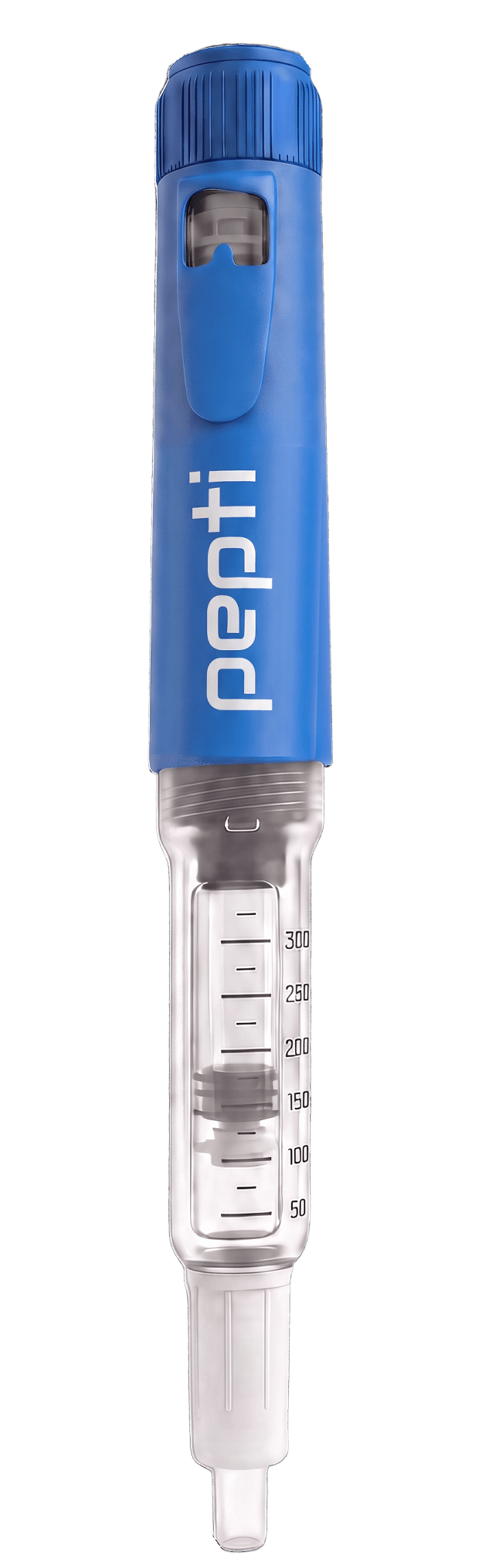
Treatments mentioned
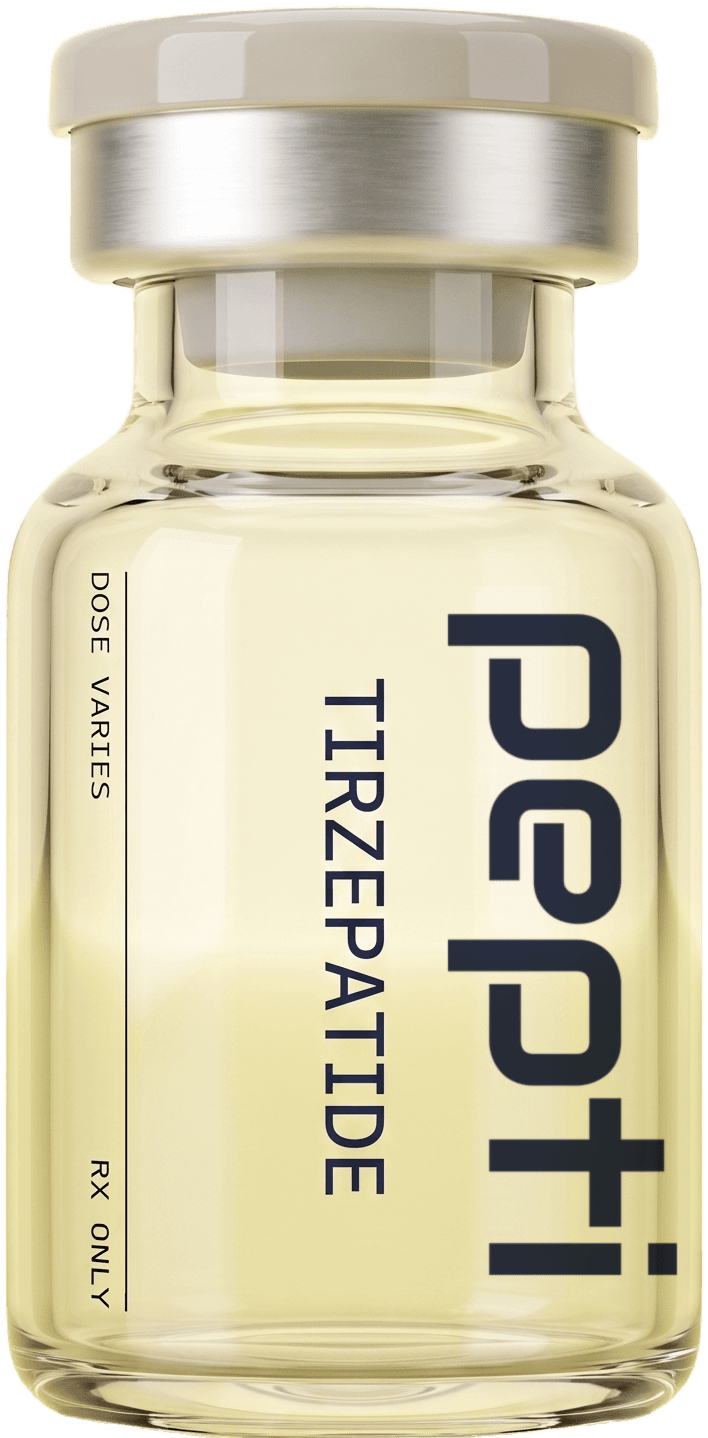
It is not FDA approved and no trial has been run on it; it comes as a multi-dose vial drawn with an insulin syringe rather than a manufactured pen. The molecule, its side effects and its warnings are the same, while the concentration, inactive ingredients and quality assurance depend on the pharmacy. At Pepti it is supplied as six dose-specific vials, each drawn at 50 units, from $159 a month all-in.
This page covers what compounding means for tirzepatide, how the compounded and approved versions compare, how Pepti's vials are built, where compounded tirzepatide stands with the FDA as of September 2026, and what to check before you start.
What Is Compounded Tirzepatide? How It Differs From the Approved Versions
The short answer
| Question | FDA-approved tirzepatide | Compounded tirzepatide |
|---|---|---|
| Active ingredient | Tirzepatide | Tirzepatide, the same molecule |
| Who makes it | The manufacturer, under an approved application | A state-licensed pharmacy, for an individual prescription |
| FDA approved | Yes, as a finished product | No. Compounded medications are not FDA approved |
| Clinical trials | The SURPASS and SURMOUNT programmes, SURMOUNT-OSA and SURPASS-CVOT | None. No compounded preparation has been trialled |
| Format | Manufactured pens and vials | Multi-dose vial and insulin syringe |
| Inactive ingredients | Set by the manufacturer | Set by the pharmacy; must be disclosed |
| Quality assurance | Manufacturing standards and a stability programme | The pharmacy's sterile process, beyond-use dating and lot testing |
| At Pepti | Not supplied | Tirzepatide, dose-specific vials, from $159/mo |
Every Pepti price is all-in, covering medication, physician review, refill management and shipping, with no membership fee. Pepti is cash-pay and does not bill insurance.
What Is Compounded Tirzepatide? How It Differs From the Approved Versions
What tirzepatide is
Tirzepatide is a 39-amino-acid synthetic peptide built on the backbone of GIP, glucose-dependent insulinotropic polypeptide, one of the two hormones the gut releases after a meal. It is engineered to activate both the GIP receptor and the GLP-1 receptor, which is why it is called a dual GIP/GLP-1 receptor agonist. A fatty-acid side chain lets it bind albumin in the blood, which gives it a half-life of about five days and allows once-weekly injection.
The GLP-1 arm increases insulin release when glucose is high, suppresses glucagon, slows stomach emptying and acts on appetite centres in the brain. The proposed contributions of the GIP arm include effects on insulin sensitivity and on how fat tissue handles energy; some of that remains hypothesis. It is not a stimulant. The full reference is in what is tirzepatide, and whether it counts as a peptide is answered in is tirzepatide a peptide.
What Is Compounded Tirzepatide? How It Differs From the Approved Versions
What stays the same when it is compounded
Everything that belongs to the molecule. The pharmacology is the same, so the side effects are the same: nausea, diarrhea, vomiting, constipation and reduced appetite are the most common, mostly mild to moderate and concentrated around dose increases. The serious risks are the same: pancreatitis, gallbladder events, kidney injury secondary to dehydration, low blood sugar alongside insulin or a sulfonylurea, and a boxed warning on the approved labels about thyroid C-cell tumours seen in rats. A personal or family history of medullary thyroid carcinoma or MEN 2 is a contraindication either way, and tirzepatide is not used in pregnancy.
The cautions are the same too. Slower stomach emptying can reduce absorption of oral contraceptives for four weeks after starting and four weeks after each dose increase, and any surgeon or anaesthesiologist should know you take it. The full list is in tirzepatide side effects and is tirzepatide safe.
What Is Compounded Tirzepatide? How It Differs From the Approved Versions
What is different when it is compounded
| What differs | What it means for you |
|---|---|
| No approval and no trial of the preparation | The trial evidence describes the manufactured product. The molecule's pharmacology transfers; product-specific data does not |
| Concentration varies between pharmacies | A unit count from one provider's vial means nothing for another's |
| Inactive ingredients | The pharmacy chooses them. Many compounded tirzepatide preparations add B12; Pepti's do not |
| Beyond-use date | Assigned by the pharmacy, runs from first puncture, printed on the label |
| Format | A multi-dose vial drawn with a syringe, not a fixed-dose pen |
| Who is accountable for quality | The pharmacy that made the vial, through its sterile process and lot testing |
The inactive ingredients in Pepti's vials
Pepti's tirzepatide contains no B12. According to the current catalogue, the 2.5 mg and 7.5 mg vials include glycine, an amino acid, and the 5 mg, 10 mg, 12.5 mg and 15 mg vials are tirzepatide alone. Glycine is added for formulation reasons rather than for any effect on weight, and no trial shows it changes how tirzepatide works or how it feels to take. The label on your vial lists exactly what is in it.
Why compounded GLP-1 dosing errors happen
The FDA has received adverse event reports for compounded tirzepatide and semaglutide, with dosing error the recurring theme: patients drawing the wrong volume from a multi-dose vial. Concentrations differ between pharmacies, and the same weekly dose can be a different number of units from a different vial. Pepti's vials are built to remove most of that arithmetic, as the next section explains.
What Is Compounded Tirzepatide? How It Differs From the Approved Versions
How Pepti supplies compounded tirzepatide
Each of the six strengths is its own 2 mL vial, concentrated so that 0.50 mL delivers that vial's weekly dose. That is 50 units on a U-100 insulin syringe at every strength.
| Weekly dose | Vial | Concentration | Directions on the vial | Doses per vial |
|---|---|---|---|---|
| 2.5 mg | 10 mg in 2 mL, with glycine | 5 mg/mL | Inject 0.50 mL (50 units) once weekly | 4 |
| 5 mg | 20 mg in 2 mL | 10 mg/mL | Inject 0.50 mL (50 units) once weekly | 4 |
| 7.5 mg | 30 mg in 2 mL, with glycine | 15 mg/mL | Inject 0.50 mL (50 units) once weekly | 4 |
| 10 mg | 40 mg in 2 mL | 20 mg/mL | Inject 0.50 mL (50 units) once weekly | 4 |
| 12.5 mg | 50 mg in 2 mL | 25 mg/mL | Inject 0.50 mL (50 units) once weekly | 4 |
| 15 mg | 60 mg in 2 mL | 30 mg/mL | Inject 0.50 mL (50 units) once weekly | 4 |
When the dose changes, the vial changes and the line you draw to does not. A new strength always arrives as a new vial with its own label; you never move up by drawing more from the vial you have. Your physician sets your dose after reviewing your intake, and your directions are printed on the vial. The milligram figure in the first column is per week; the larger figure on the vial is the whole vial, so the 15 mg vial holds four 15 mg weekly doses. The ladder is set out in full in the tirzepatide dosing chart.
Tirzepatide is priced from $159 a month, by dose, because a higher strength is a vial with more medication in it; the figure for each strength is on the tirzepatide product page. The price covers one vial per 28-day fill, physician review, refill management, and refrigerated shipping with ice packs, sterile syringes and alcohol prep pads. Tirzepatide is supplied as a vial only, not a pen. Pepti's pharmacies are PCAB-accredited, FDA-registered US 503A compounding pharmacies, and lot test results are published at /quality/lab-results.
What Is Compounded Tirzepatide? How It Differs From the Approved Versions
Where compounded tirzepatide stands with the FDA
This summary reflects Pepti's reference pages, checked in September 2026.
Tirzepatide was approved by the FDA for type 2 diabetes in May 2022 and for chronic weight management in November 2023, and in December 2024 the weight-management version was also approved for moderate-to-severe obstructive sleep apnoea in adults with obesity. From late 2022 tirzepatide was on the FDA's shortage list, which allowed compounding of copies. The FDA declared the shortage resolved on 2 October 2024 and reaffirmed that decision on 19 December 2024, setting wind-down dates of 18 February 2025 for 503A pharmacies and 19 March 2025 for 503B outsourcing facilities.
Since then, the ordinary 503A rules apply: a state-licensed pharmacy may compound tirzepatide for an identified patient where the prescriber determines and documents that a change produces a significant difference for that patient. On 30 April 2026 the FDA proposed excluding tirzepatide, semaglutide and liraglutide from the 503B bulks list; that concerns bulk outsourcing facilities, not patient-specific prescriptions, and no final determination had been published as of September 2026. The dated timeline, including the court challenge, is in is compounded tirzepatide legal.
What Is Compounded Tirzepatide? How It Differs From the Approved Versions
What to ask any provider
| Question | A good answer |
|---|---|
| Who prescribes it? | A named physician licensed in your state, after a medical intake |
| Which pharmacy compounds it? | A named, state-licensed pharmacy you can look up with the state board |
| What is the concentration? | A specific mg per mL, matching your directions |
| What else is in the vial? | A full list of added ingredients |
| How does it ship? | Refrigerated, with a beyond-use date on the label |
| Is each lot tested? | Published potency, endotoxin and sterility results |
| Who answers side-effect questions? | A named clinical team you can message |
The fuller checklist is in is compounded semaglutide safe, which applies equally to tirzepatide, and in how to tell if a peptide seller is legitimate.
What Is Compounded Tirzepatide? How It Differs From the Approved Versions
What the evidence shows, honestly
Tirzepatide has a very large human evidence base: randomized trials in type 2 diabetes, weight management, sleep apnoea and cardiovascular outcomes, run on the manufactured product. What that evidence does not cover is the compounded preparation. A compounded vial contains the same active ingredient at the same weekly dose steps, but it has not been through a trial, and no compounded medication has.
The honest summary: same molecule, same pharmacology, same warnings; a different product whose quality rests on the pharmacy. That is why the name of the pharmacy, the concentration on the label and the lot test results matter more than any claim about the medication itself. What the research on the molecule has looked at is set out in tirzepatide benefits.
What Is Compounded Tirzepatide? How It Differs From the Approved Versions
Where to get compounded tirzepatide prescribed
Tirzepatide cannot be bought legitimately without a prescription. Products sold "for research use only" have no pharmacy accountable for identity, purity, sterility or concentration. The prescription route:
- Complete a free online intake covering your history, medications and what you want help with.
- A physician licensed in your state reviews it, usually within 24 hours.
- If it is appropriate, a PCAB-accredited, FDA-registered US 503A pharmacy compounds it to that prescription.
- It ships refrigerated with ice packs, sterile syringes and alcohol prep pads, with your directions printed on the vial.
- Your care team stays reachable for side effects and dose questions. Refills run every 28 days, one vial per fill.
Bloodwork is not required for any Pepti treatment. If your physician wants labs for your care, they'll ask through your account. The step-by-step page is how to get tirzepatide prescribed online.
References
What this is based on.
References
- Jastreboff AM, Aronne LJ, Ahmad NN, et al.. Tirzepatide Once Weekly for the Treatment of Obesity (SURMOUNT-1) · New England Journal of Medicine (2022) · PMID 35658024
- Garvey WT, Frias JP, Jastreboff AM, et al.. Tirzepatide once weekly for the treatment of obesity in people with type 2 diabetes (SURMOUNT-2) · Lancet (2023) · PMID 37385275
- Frías JP, Davies MJ, Rosenstock J, et al.. Tirzepatide versus Semaglutide Once Weekly in Patients with Type 2 Diabetes (SURPASS-2) · New England Journal of Medicine (2021) · PMID 34170647
- Inagaki N, Takeuchi M, Oura T, et al.. Effects of subcutaneous tirzepatide versus placebo or semaglutide on pancreatic islet function and insulin sensitivity in adults with type 2 diabetes: a multicentre, randomised, double-blind, parallel-arm, phase 1 clinical trial · The Lancet Diabetes & Endocrinology (2022) · PMID 35468322
- Malhotra A, Grunstein RR, Fietze I, et al.. Tirzepatide for the Treatment of Obstructive Sleep Apnea and Obesity (SURMOUNT-OSA) · New England Journal of Medicine (2024) · PMID 38912654
- Nicholls SJ, Pavo I, Bhatt DL, et al.. Cardiovascular Outcomes with Tirzepatide versus Dulaglutide in Type 2 Diabetes (SURPASS-CVOT) · New England Journal of Medicine (2025) · PMID 41406444
- Aronne LJ, Sattar N, Horn DB, et al.. Continued Treatment With Tirzepatide for Maintenance of Weight Reduction in Adults With Obesity: The SURMOUNT-4 Randomized Clinical Trial · JAMA (2024) · PMID 38078870
- Pasternak B, Wintzell V, Hviid A et al.. Glucagon-like peptide 1 receptor agonist use and risk of thyroid cancer: Scandinavian cohort study · BMJ (2024) · PMID 38683947
- Quddos F, Hubshman Z, Tegge A, et al.. Semaglutide and Tirzepatide reduce alcohol consumption in individuals with obesity · Scientific Reports (2023) · PMID 38017205
- Drummond RF, Seif KE, Reece EA. Glucagon-like peptide-1 receptor agonist use in pregnancy: a review · Am J Obstet Gynecol (2025) · PMID 39181497
- Wang S, Sun J, Wang J, et al.. Does obesity based on body mass index affect semen quality? A meta-analysis and systematic review from the general population rather than the infertile population · Andrologia (2021) · PMID 34028074
- Urva S, Coskun T, Loghin C, et al.. The novel dual glucose-dependent insulinotropic polypeptide and glucagon-like peptide-1 (GLP-1) receptor agonist tirzepatide transiently delays gastric emptying similarly to selective long-acting GLP-1 receptor agonists · Diabetes, Obesity and Metabolism (2020) · PMID 32519795
Citations are provided for educational purposes. They do not constitute medical advice. Always discuss any peptide protocol with your prescribing physician.
Common questions
What Is Compounded Tirzepatide? How It Differs From the Approved Versions, answered.
Tirzepatide prepared by a state-licensed pharmacy for one identified patient on a physician's prescription. It is the same active ingredient as the FDA-approved versions, supplied as a multi-dose vial, and it is not FDA approved.
Same molecule, same weekly dose steps, different product. The approved versions are manufactured products with their own approval and trial data. Compounded tirzepatide is made by a pharmacy, with a concentration and inactive ingredients set by that pharmacy, and no trial has been run on it.
No. Compounded medications are not FDA approved, and no compounded preparation of any drug is. A provider describing compounded tirzepatide as FDA approved is misrepresenting it.
It contains the same molecule, so the mechanism is the same: it acts at the GIP and GLP-1 receptors. Whether a given vial performs like the manufactured product depends on it containing what the label says, which is what lot testing checks.
No. Shortage-based compounding ended in early 2025, but a 503A pharmacy may still compound tirzepatide on an individual prescription where the prescriber documents a patient-specific reason. See is compounded tirzepatide legal.
No. According to the current catalogue, the 2.5 mg and 7.5 mg vials include glycine and the other strengths are tirzepatide alone. Your vial's label lists exactly what is in it.
At Pepti, 50 units (0.50 mL) once weekly at every strength, because each vial is concentrated to its dose. Always follow the units printed on your own vial; a vial from another pharmacy may be a different concentration.
Four weeks. Each 2 mL vial holds four 0.50 mL weekly doses, which is one 28-day fill.
At Pepti, from $159 a month, all-in, priced by dose. The price covers medication, physician review, refill management and shipping, with no membership fee.
No. Pepti's tirzepatide is supplied as a vial drawn with an insulin syringe.
No. Bloodwork is not required for any Pepti treatment. If your physician wants labs for your care, they'll ask through your account. The free assessment goes to a physician licensed in your state. A consultation does not guarantee a prescription.
Related answers
Keep reading.
- Tirzepatide: What It Is, Where to Get It Prescribed, and What It Costs
- What Peptides Can You Take With Tirzepatide? Safe Pairings
- Tirzepatide Side Effects: Common, Serious, and What to Report
- Tirzepatide Dosing Chart: Every Dose Step, Units to Draw, and Price
- What to Eat on a GLP-1: Practical Eating Guidance for Semaglutide and Tirzepatide
Next step
See what a physician recommends for you.
A licensed physician in your state reviews your intake to see whether treatment fits your history. A consultation does not guarantee a prescription.