Recovery · Reference
TB-500 vs GLOW: The Single Peptide or the Three-Peptide Blend?
TB-500 on its own is a single repair peptide; GLOW is TB-500 in one vial with BPC-157 and GHK-Cu, and by mass it is mostly GHK-Cu.
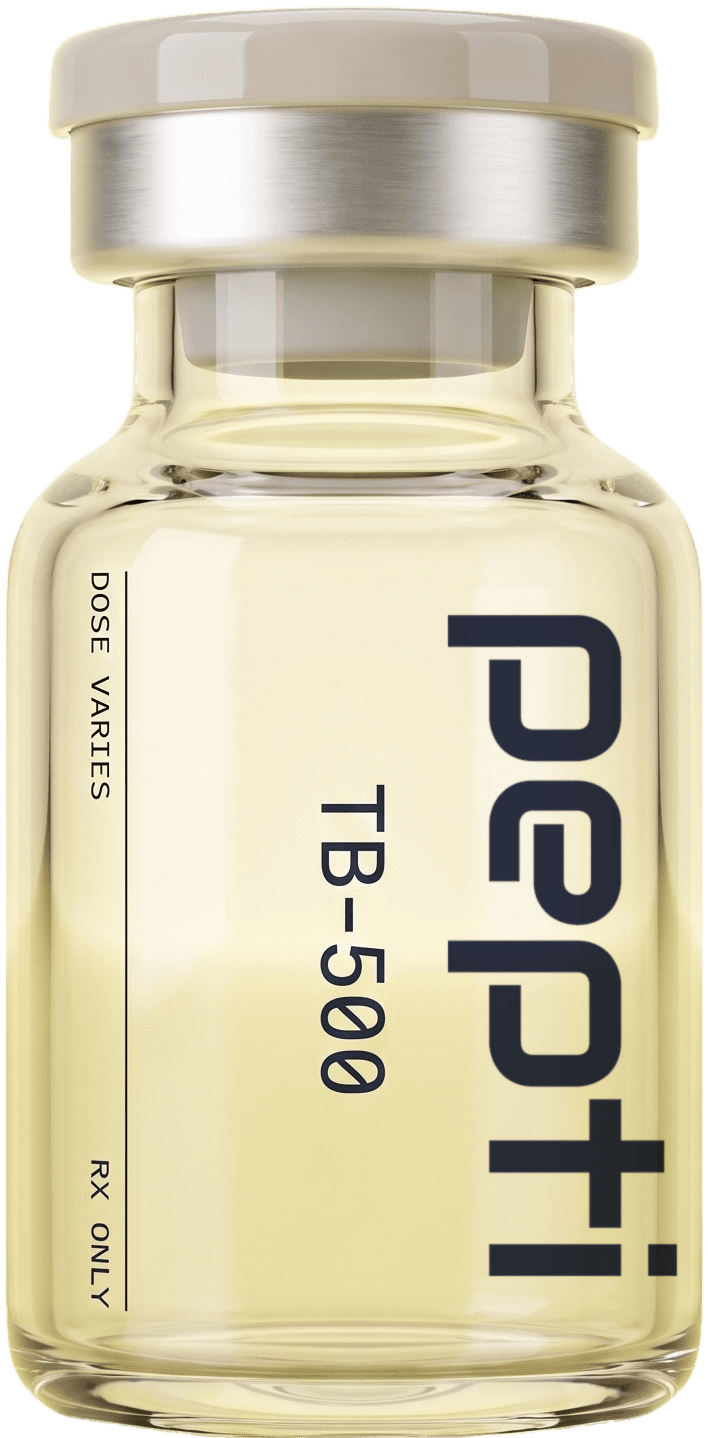
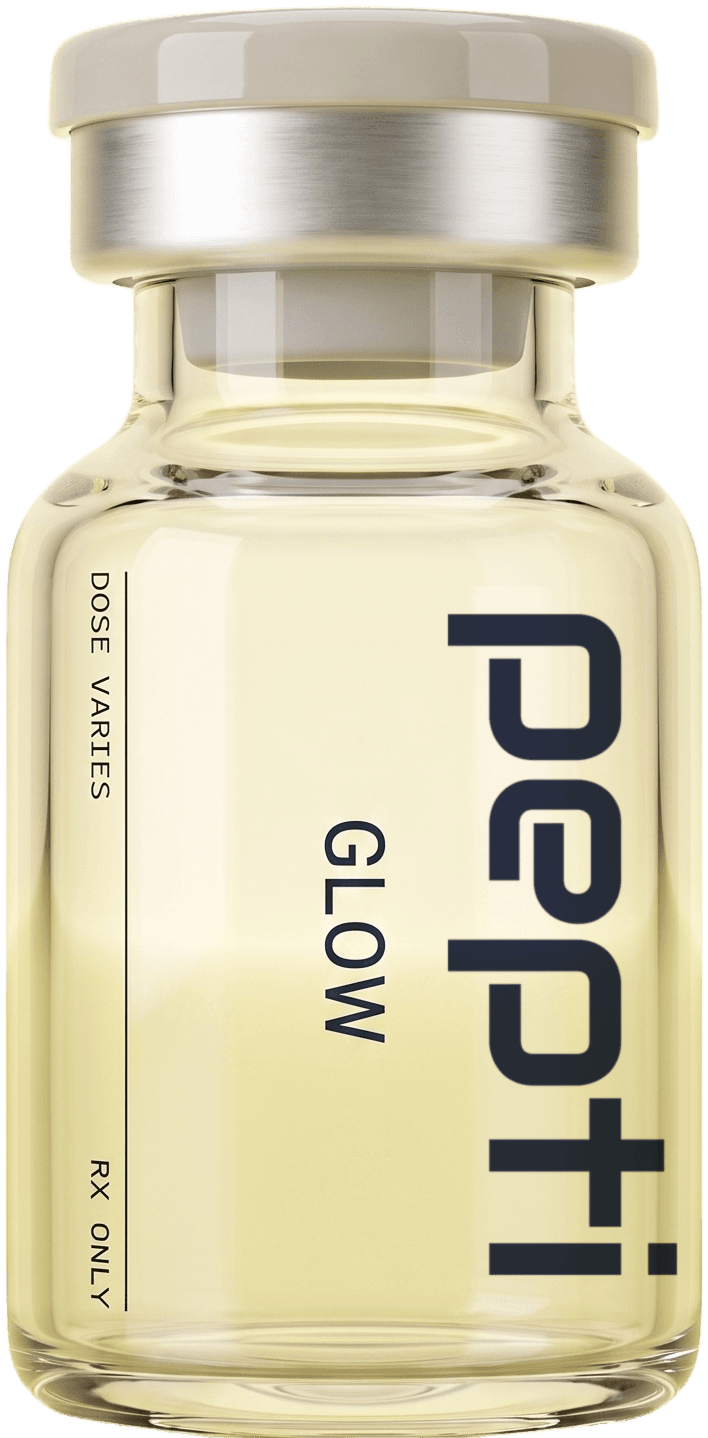
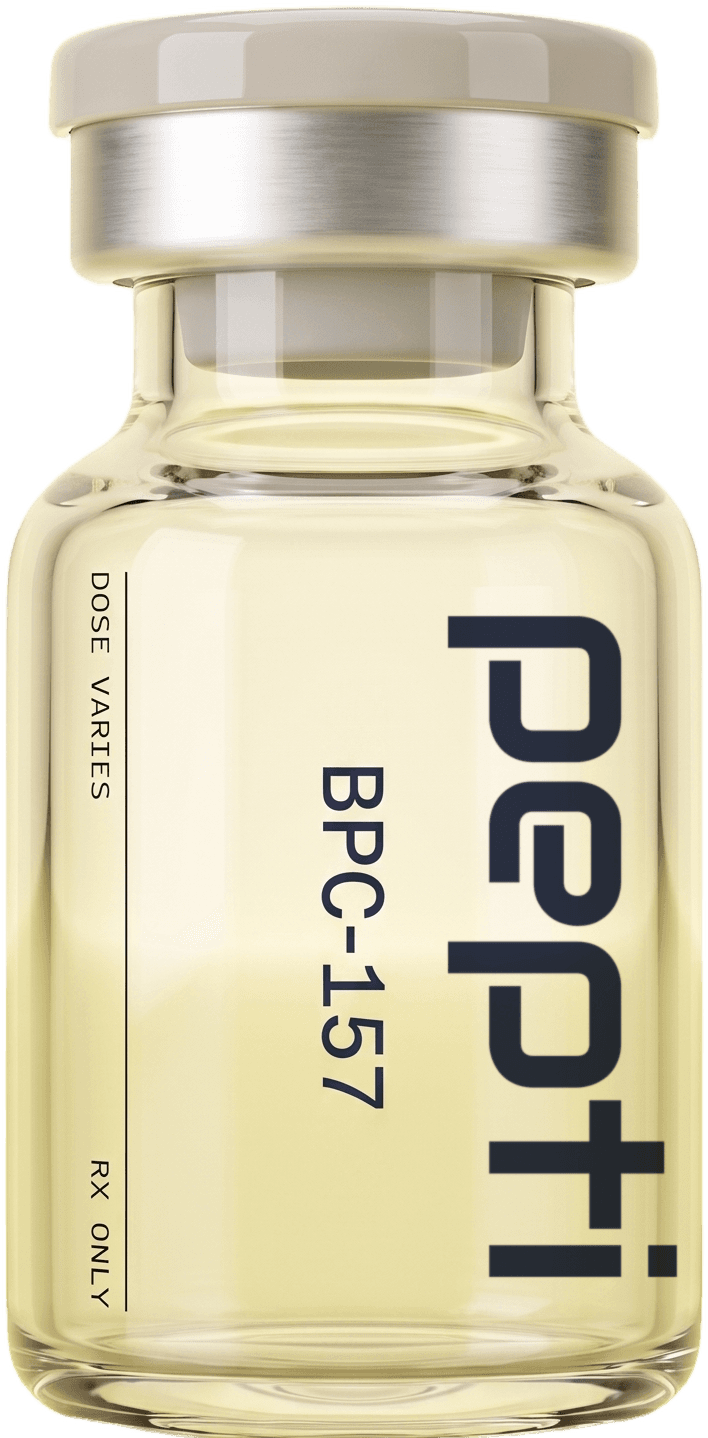
TB-500, a fragment of thymosin beta-4 described around cell migration, is usually prescribed alone for a soft-tissue injury when it is the one thing being prescribed. GLOW adds BPC-157, described around blood supply and tendon repair, and GHK-Cu, described around collagen and skin, so it suits an injury and a skin or tissue-quality goal together. One detail people miss: at Pepti's typical directions a dose of GLOW carries 0.5 mg of TB-500, twice the 0.25 mg in a dose of the single TB-500 vial. Neither has been tested in a human trial; both are prescription-only, compounded, and not FDA approved.
This page explains what is in each, compares them line by line, covers the evidence, where each component stands with the FDA, how each is dosed, what each costs, and who tends to suit which.
TB-500 vs GLOW
The short answer
| If your situation is | The usual prescription | What is in it | Price |
|---|---|---|---|
| A soft-tissue injury, and TB-500 is the one thing being prescribed | TB-500 | 5 mg TB-500 in a 5 mL vial | $209/mo |
| An injury plus a skin or connective-tissue goal | GLOW | 50 mg GHK-Cu, 10 mg BPC-157, 10 mg TB-500 in a 5 mL vial | $259/mo |
| An injury, without the skin component | BPC-157 + TB-500 | 5 mg BPC-157 and 5 mg TB-500 in a 5 mL vial | $259/mo |
| GLOW plus an anti-inflammatory | KLOW Blend | GLOW's three plus 10 mg KPV | $259/mo |
| Skin only, no injury | GHK-Cu | 50 mg GHK-Cu in a 5 mL vial | $239/mo |
Every figure is an all-in monthly price covering the medication, physician review, refill management and shipping, with no separate membership fee. Pepti is cash-pay and does not bill insurance.
TB-500 vs GLOW
TB-500 on its own terms
What it is
TB-500 is a synthetic peptide built around LKKTETQ, the actin-binding segment at positions 17 to 23 of thymosin beta-4, a 43-amino-acid protein present in almost every cell. Actin is the scaffolding cells use to change shape and move, and thymosin beta-4 is released by platelets where tissue is injured. Most published research used the full protein; a smaller body tested the fragment. The full reference is at what is TB-500.
How it is described to work
Animal and cell studies describe thymosin beta-4 drawing repair cells into a wound by regulating actin (FASEB Journal, 1997), promoting new blood vessels (Mechanisms of Ageing and Development, 2004), activating a cell-survival pathway in the mouse heart (Nature, 2004), dampening NF-kB inflammatory signalling in corneal cells, and stimulating laminin-5 in wound repair. None of this has been demonstrated in a human trial of the fragment.
What human data exists
There are no randomised controlled trials of TB-500 in humans. Full-length thymosin beta-4 has been through Phase 2 trials as eye drops for severe dry eye and in chronic skin ulcers. Those used the whole protein, by a different route, for different conditions. More in TB-500 benefits.
TB-500 vs GLOW
GLOW on its own terms
What it is
GLOW is not a molecule. It is three separately studied peptides dissolved together in one sterile 5 mL vial by a compounding pharmacy. The name is a brand name for the combination and appears in no journal. The full reference is at what is GLOW.
Component Per vial Per 0.25 mL dose Described around GHK-Cu 50 mg 2.5 mg Collagen and elastin synthesis, matrix remodelling, skin BPC-157 10 mg 0.5 mg Blood-vessel growth, tendon cell migration, gut lining TB-500 10 mg 0.5 mg Actin regulation and cell migration GHK-Cu is 50 of the 70 mg in the vial, so GLOW is positioned toward skin and connective tissue as much as toward injury. The ratio is fixed by the formulation and cannot be adjusted per component.
Why the three are combined
The rationale prescribers give is that repair runs in phases, and each component is described in separate research as acting on a different one: TB-500 and BPC-157 on cells moving in, BPC-157 and GHK-Cu on new blood vessels, GHK-Cu on laying down and remodelling matrix. That is a rationale, not a finding. No study has tested the three together, in people or in animals. What GLOW lacks is a dedicated anti-inflammatory component; that is what KPV adds in KLOW.
What human data exists
There are no randomised controlled trials of GLOW. Evidence is per component: GHK-Cu has small human studies, mostly of topical creams on skin; BPC-157 has early-phase human work for inflammatory bowel indications and none for tendon injury or the injectable route; TB-500 has none. More in GLOW benefits.
TB-500 vs GLOW
Head to head
| TB-500 | GLOW | |
|---|---|---|
| What is in the vial | TB-500 only | GHK-Cu, BPC-157 and TB-500 |
| Total per vial | 5 mg | 70 mg (50 + 10 + 10) |
| TB-500 concentration | 1 mg/mL | 2 mg/mL |
| TB-500 per 0.25 mL dose | 0.25 mg | 0.5 mg |
| Other ingredients per dose | None | 2.5 mg GHK-Cu, 0.5 mg BPC-157 |
| Typical directions | 0.25 mL (25 units) Monday through Friday mornings | 0.25 mL (25 units) Monday through Friday mornings |
| Doses per vial | 20, about four weeks | 20, about four weeks |
| What it is usually prescribed for | A soft-tissue injury | An injury plus skin or connective-tissue goals |
| Can one ingredient be adjusted alone | Yes, it is the only ingredient | No, the ratio is fixed |
| Extra cautions | Cancer history, anticoagulants | The same, plus Wilson's disease, copper disorders and high-dose zinc (GHK-Cu) |
| Formats at Pepti | Vial | Vial |
| Price at Pepti | $209 a month | $259 a month |
The real difference is scope, and the TB-500 dose
Choosing between them is mostly about how much of the picture you want covered. TB-500 alone is one variable, which makes it easier to judge and lets your physician change it without changing anything else. GLOW covers more ground in one injection and brings GHK-Cu, which is the skin and matrix component and most of the vial.
The second difference is easy to miss. Both are drawn at 0.25 mL, but GLOW's TB-500 is at 2 mg/mL against 1 mg/mL in the single vial, so a GLOW dose carries twice as much TB-500 as Pepti's 5 mg single vial. None of these amounts has been compared in a study, so "more" is a statement about milligrams, not about effect.
TB-500 vs GLOW
Who suits which
TB-500 alone
TB-500 alone tends to suit someone with one soft-tissue problem whose physician wants to prescribe a single, adjustable ingredient, or who wants to add one compound at a time and see what changes. Many prescribers pair it with BPC-157 rather than GHK-Cu for a straightforward injury, which is what the BPC-157 + TB-500 vial is; see BPC-157 vs TB-500.
GLOW
GLOW tends to suit someone with a soft-tissue complaint and a skin or connective-tissue goal at the same time, who prefers one injection to two or three. It is not the most targeted choice for a single tendon with nothing else going on, and it is not the gut option: BPC-157 alone is the component with the gastrointestinal literature.
When KLOW fits better
If inflammation that never quite settles is part of the picture, KLOW is GLOW plus 10 mg KPV at the same price. The full comparison is in KLOW vs GLOW.
TB-500 vs GLOW
When neither is the right first step
| Situation | What makes more sense |
|---|---|
| A complete rupture, displaced fracture or locking joint | Imaging and a surgical opinion |
| Tendinopathy that has not been loaded | Progressive loading under a physiotherapist, which has human trial evidence |
| A gut complaint | BPC-157 on its own |
| Skin is the whole goal | GHK-Cu alone, or RADIANCE, which pairs it with tesamorelin |
| You meant the immune peptide | Thymosin Alpha-1; see thymosin alpha-1 vs TB-500 |
TB-500 vs GLOW
Where each stands with the FDA
GLOW has no regulatory status of its own; the FDA regulates the bulk substances a pharmacy compounds from. As of the FDA pages checked in September 2026:
| Component | April 2026 | July 2026 advisory committee | Next |
|---|---|---|---|
| TB-500 | Removed from Category 2 | Voted 8 to 6, one abstention, to recommend for the 503A bulks list | Final FDA determination pending |
| BPC-157 | Removed from Category 2 | Voted 8 to 6, one abstention, to recommend for the bulks list | Final FDA determination pending |
| GHK-Cu (injectable) | Removed from Category 2 | Not on the agenda | Review scheduled before the end of February 2027 |
So the single TB-500 vial depends on one regulatory file and GLOW depends on three. None of the components is restricted, and neither product is FDA approved; compounded medications never are. See are peptides FDA approved.
TB-500 vs GLOW
Dosing, side by side
| TB-500 | GLOW | |
|---|---|---|
| Printed direction | Inject 0.25 mL (25 units) subcutaneously Monday through Friday mornings | Inject 0.25 mL (25 units) subcutaneously Monday through Friday mornings |
| On a U-100 syringe | 25 units | 25 units |
| Per dose | 0.25 mg TB-500 | 2.5 mg GHK-Cu, 0.5 mg BPC-157, 0.5 mg TB-500 |
| Doses per vial | 20 (5 mL divided by 0.25 mL) | 20 |
| One vial lasts | 4 weeks at five doses a week | 4 weeks at five doses a week |
The milligram figures are arithmetic from the label concentrations, not a way to set a dose. Your physician sets your directions after reviewing your intake, and your exact dose is printed on the vial. Both are injected under the skin of the abdomen or thigh, rotating sites. Vials are multi-dose solutions shipped ready to use, refrigerated with ice packs, with sterile syringes and alcohol prep pads; refills run every 28 days, one vial per fill. Detail in TB-500 dosage and GLOW dosage.
TB-500 vs GLOW
Side effects
TB-500. Mostly injection-site redness, mild soreness or bruising; some people report a brief headache or head-rush after a dose, or tiredness in the first week. A cancer history and anticoagulant therapy are raised at intake. See is TB-500 safe.
GLOW. Mostly injection-site redness, soreness or bruising; some people report early nausea or light-headedness. Because of the GHK-Cu, anyone with Wilson's disease or another copper-metabolism disorder should not take it, and high-dose zinc belongs on the intake. See GLOW side effects.
For either, a reaction that is severe, spreading or involves difficulty breathing needs emergency care: call 911, then tell your care team.
TB-500 vs GLOW
Who should not take either, or should discuss it first
| Situation | Why |
|---|---|
| Personal history of cancer | Cell migration and new blood vessels are described mechanisms of both |
| Anticoagulant therapy | Raised at intake for both |
| Wilson's disease or a copper disorder | GLOW contains GHK-Cu |
| Pregnancy or breastfeeding | Neither is used; safety data is absent |
| Tested athletes | TB-500 and BPC-157 are on the WADA Prohibited List at all times |
TB-500 vs GLOW
What the evidence shows, honestly
Neither TB-500 nor GLOW has a human trial. TB-500's case rests on animal and cell work on thymosin beta-4. GLOW's rests on three separate animal and cell literatures and the idea that they complement each other, which no study has tested. Nothing published shows that the blend does more than TB-500 alone, or the reverse.
TB-500 vs GLOW
Where to get TB-500 or GLOW prescribed
Neither can be bought legitimately without a prescription. Sites selling them "for research use only" are not accountable for identity, purity, sterility or concentration. The prescription route:
- Complete a free online intake covering your history, medications and what you want help with.
- A physician licensed in your state reviews it, usually within 24 hours.
- If it is appropriate, a PCAB-accredited, FDA-registered US 503A compounding pharmacy prepares it to that prescription. Lot test results are published at /quality/lab-results.
- It ships refrigerated with your directions printed on the vial.
- Your physician stays reachable for questions and dose changes.
Pepti prescribes both in every state except Oklahoma, plus DC Step by step: how to get TB-500 prescribed online. GLOW is prescribed through the same intake from its product page.
References
What this is based on.
References
- Goldstein AL, Hannappel E, Kleinman HK. Thymosin beta4: actin-sequestering protein moonlights to repair injured tissues · Trends Mol Med (2005) · PMID 16099219
- Malinda KM, Sidhu GS, Mani H et al.. Thymosin beta4 accelerates wound healing · J Invest Dermatol (1999) · PMID 10469335
- Malinda KM, Goldstein AL, Kleinman HK. Thymosin beta 4 stimulates directional migration of human umbilical vein endothelial cells · FASEB J (1997) · PMID 9194528
- Philp D, Badamchian M, Scheremeta B et al.. Thymosin beta 4 and a synthetic peptide containing its actin-binding domain promote dermal wound repair in db/db diabetic mice and in aged mice · Wound Repair Regen (2003) · PMID 12581423
- Philp D, Goldstein AL, Kleinman HK. Thymosin beta4 promotes angiogenesis, wound healing, and hair follicle development · Mech Ageing Dev (2004) · PMID 15037013
- Philp D, Scheremeta B, Sibliss K et al.. Thymosin beta4 promotes matrix metalloproteinase expression during wound repair · J Cell Physiol (2006) · PMID 16607611
- Smart N, Risebro CA, Melville AA et al.. Thymosin beta4 induces adult epicardial progenitor mobilization and neovascularization · Nature (2007) · PMID 17108969
- Sosne G, Szliter EA, Barrett R et al.. Thymosin beta 4 promotes corneal wound healing and decreases inflammation in vivo following alkali injury · Exp Eye Res (2002) · PMID 11950239
- Sosne G, Hafeez S, Greenberry AL 2nd et al.. Thymosin beta4 promotes human conjunctival epithelial cell migration · Curr Eye Res (2002) · PMID 12324865
- Sosne G, Xu L, Prach L et al.. Thymosin beta 4 stimulates laminin-5 production independent of TGF-beta · Exp Cell Res (2004) · PMID 14729067
- Sosne G, Qiu P, Christopherson PL et al.. Thymosin beta 4 suppression of corneal NFkappaB: a potential anti-inflammatory pathway · Exp Eye Res (2007) · PMID 17254567
- Sosne G, Qiu P, Goldstein AL et al.. Biological activities of thymosin beta4 defined by active sites in short peptide sequences · FASEB J (2010) · PMID 20179146
Citations are provided for educational purposes. They do not constitute medical advice. Always discuss any peptide protocol with your prescribing physician.
Common questions
TB-500 vs GLOW, answered.
TB-500 is one peptide. GLOW is TB-500 plus BPC-157 and GHK-Cu in one vial: 50 mg GHK-Cu, 10 mg BPC-157 and 10 mg TB-500. GLOW adds the blood-supply and skin components; TB-500 alone keeps it to one ingredient.
Per dose, yes. GLOW's TB-500 is at 2 mg/mL, so a 0.25 mL dose carries 0.5 mg. Pepti's single TB-500 vial is 1 mg/mL, so the same draw carries 0.25 mg. No study shows what either amount does in people.
For a single soft-tissue injury with nothing else in the picture, prescribers often choose TB-500, or TB-500 with BPC-157. GLOW suits an injury with a skin or tissue-quality goal alongside. No study has compared them.
GLOW already contains TB-500, so taking both would mean two sources of the same peptide. Your physician sets your directions after reviewing your intake; do not add a second product on your own.
KPV. KLOW is the same three peptides at the same amounts plus 10 mg KPV, an anti-inflammatory tripeptide. See KLOW vs GLOW.
At Pepti, TB-500 is $209 a month and GLOW is $259 a month, all-in, covering medication, physician review, refill management and shipping.
No. The three-peptide combination has never been studied as a combination. Evidence is per component, and none of the three has a randomised human trial as an injection.
No human trial of either gives a timeline. The human thymosin beta-4 trials used the full protein as eye drops or on chronic skin ulcers; the human GHK-Cu studies were topical creams over 8 to 12 weeks. None measured what a person injecting these vials would notice, or when.
At Pepti, GLOW is supplied as a vial with sterile syringes, and TB-500 is a vial too.
No. TB-500 and BPC-157 are named on the WADA Prohibited List at all times, and a prescription does not change that.
Bloodwork is not required for any Pepti treatment. If your physician wants labs for your care, they'll ask through your account. The free assessment goes to a physician licensed in your state. A consultation does not guarantee a prescription.
Related answers
Keep reading.
- TB-500: What It Is, Where to Get It Prescribed, and What It Costs
- GLOW (BPC-157 / GHK-Cu / TB-500): What It Is, Where to Get It Prescribed, and What It Costs
- TB-500 vs KLOW: One Repair Peptide or the Four-Peptide Blend?
- TB-500 vs KPV: Repair Signal vs Inflammation Brake, Compared
- Tesamorelin vs Hexarelin: Two Growth Hormone Secretagogues, Compared
Next step
See what a physician recommends for you.
A licensed physician in your state reviews your intake to see whether treatment fits your history. A consultation does not guarantee a prescription.