Recovery · Reference
Thymosin Alpha-1 vs TB-500 (Thymosin Beta-4): Immune Peptide vs Repair Peptide
This page explains why the names cause so much confusion, describes each peptide on its own terms, puts them side by side, covers what the evidence does and does not show, where each stands with the FDA and with anti-doping bodies, how each is dosed, what each costs at Pepti, and which blends contain which.
Medically reviewed by Dr. Gene, MD · November 4, 2026
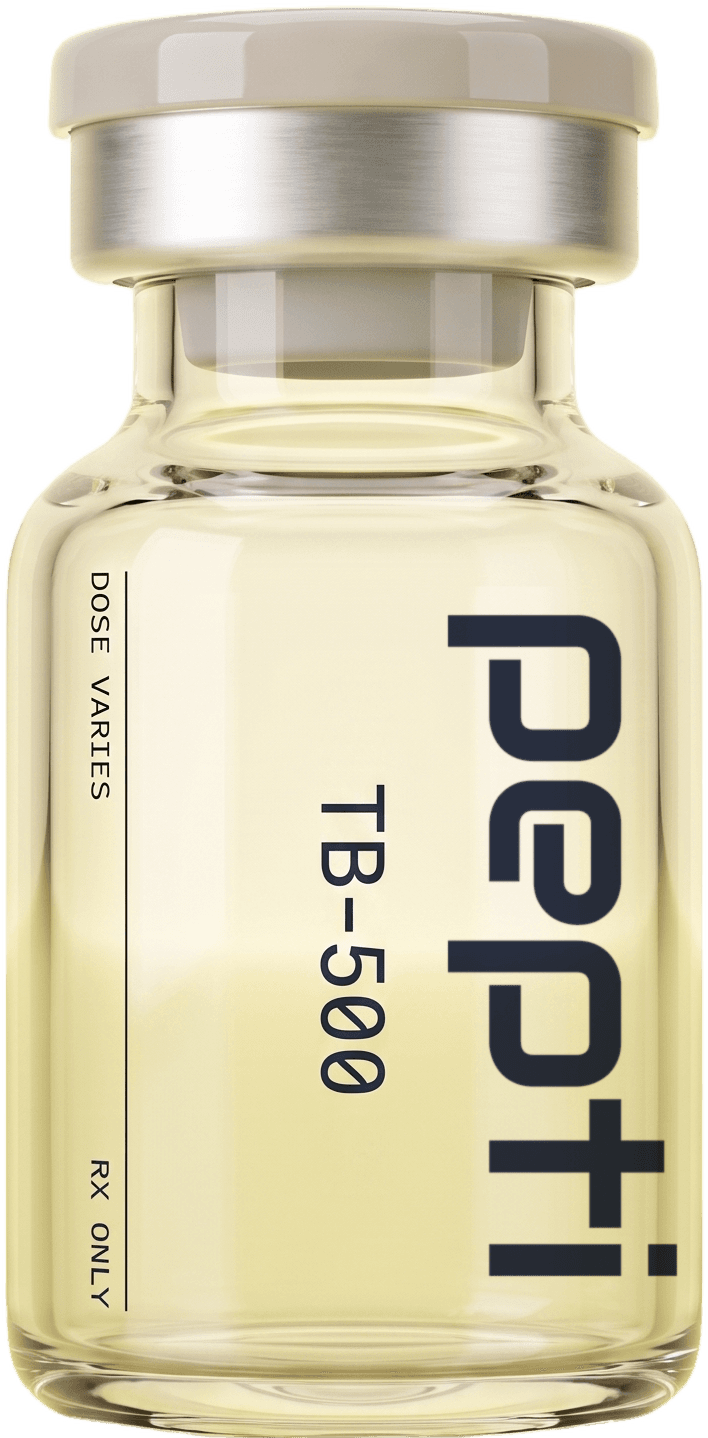
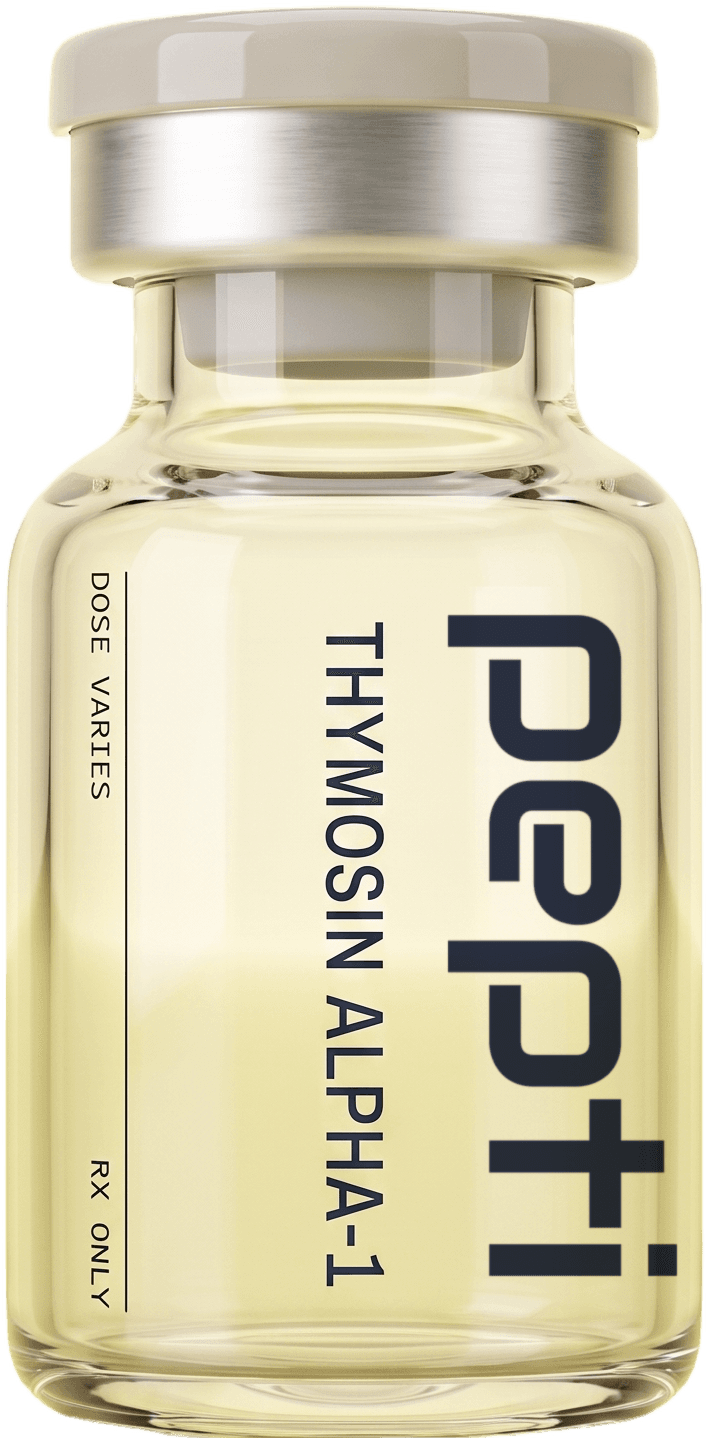
Thymosin alpha-1 and TB-500 are not two versions of the same peptide; they are unrelated molecules that happen to share the word "thymosin." Thymosin alpha-1 is a 28-amino-acid immune-signalling peptide, studied in randomised human trials for more than thirty years. TB-500 is a seven-amino-acid fragment of thymosin beta-4, an actin-binding protein studied around tissue repair, with no human trials of the fragment itself. One is chosen for immune modulation, the other for soft-tissue recovery, and they are not interchangeable. Both are prescription-only, compounded by a licensed US pharmacy, and neither is FDA approved.
This page explains why the names cause so much confusion, describes each peptide on its own terms, puts them side by side, covers what the evidence does and does not show, where each stands with the FDA and with anti-doping bodies, how each is dosed, what each costs at Pepti, and which blends contain which.
Thymosin Alpha-1 vs TB-500 (Thymosin Beta-4)
The short answer
| If your main goal is | The usual prescription | What is in it | Price |
|---|---|---|---|
| Immune modulation, with the most human data | Thymosin Alpha-1 | 10 mg thymosin alpha-1 in a 5 mL vial | $249/mo |
| Immune signalling plus gut lining and inflammation | FORTIFY Blend | 5 mg thymosin alpha-1, 5 mg BPC-157, 2 mg KPV, 1 mg LL-37 | $289/mo |
| Soft-tissue repair with one agent | TB-500 | 5 mg TB-500 in a 5 mL vial | $209/mo |
| A tendon, ligament or muscle injury | BPC-157 + TB-500 | 5 mg BPC-157 and 5 mg TB-500 in a 5 mL vial | $259/mo |
| Injury plus skin and collagen | GLOW | 50 mg GHK-Cu, 10 mg BPC-157, 10 mg TB-500 | $259/mo |
Every figure is an all-in monthly price covering the medication, physician review, refill management and shipping. There is no separate membership fee. Current pricing always lives on each product page; the table is a guide to which product fits which goal.
Thymosin Alpha-1 vs TB-500 (Thymosin Beta-4)
Why the names confuse people
Both names go back to the 1960s and 1970s, when researchers fractionated extracts of calf thymus and named the peptides they found "thymosins," with a Greek letter for the fraction each came from. Thymosin alpha-1 was isolated in 1977 from a preparation called thymosin fraction 5. Thymosin beta-4 was found in the same kind of extract. The shared word records where they were first noticed, not what they do.
What happened next is where they part ways:
- Thymosin alpha-1 turned out to be a genuine immune peptide. It is cut from a larger precursor, prothymosin alpha, and everything studied since has been about its effect on immune cells. Its generic drug name is thymalfasin.
- Thymosin beta-4 turned out not to be a thymus-specific molecule at all. It is one of the most abundant small proteins inside many human cells, its main job is holding actin in reserve, and platelets release it at a wound. Its research is about cell movement and repair.
- TB-500 is a product name, not a scientific one. It refers to a synthetic fragment of thymosin beta-4, the seven-amino-acid actin-binding sequence LKKTETQ.
So "thymosin alpha vs thymosin beta" is two unrelated molecules sharing a prefix, not one family doing related jobs. Ordering one when you meant the other gets you a peptide aimed at a different body system.
Thymosin Alpha-1 vs TB-500 (Thymosin Beta-4)
Thymosin alpha-1 on its own terms
What it is
Thymosin alpha-1 is a 28-amino-acid peptide with an acetyl group on its N-terminus. It is not a hormone, a steroid or a growth factor; it is a signalling peptide that changes how certain immune cells respond. A synthetic version has been sold since the 1990s as a branded 1.6 mg injection, approved in a number of countries, principally in the Asia-Pacific region, Latin America, Eastern Europe, the Middle East and Italy, mainly for hepatitis B and as a vaccine adjuvant. It is not approved in the United States. A compounded thymosin alpha-1 prescribed in the US is the same sequence but is not that branded product and carries none of its approvals. The full reference is at what is thymosin alpha-1.
How it is described to work
- Toll-like receptor signalling in dendritic cells. The most-cited mechanism is action on TLR9 and TLR2 on dendritic cells, the cells that decide what the rest of the immune system responds to, described as increasing cytokine production and antigen presentation.
- T-cell maturation. The original thymic-factor work describes it promoting maturation of immature T cells into functional CD4 and CD8 populations, with increased interleukin-2. A 2020 report on severe COVID-19 measured a rise in circulating CD4 and CD8 T cells in treated patients.
- A regulatory direction. A 2010 review in the Annals of the New York Academy of Sciences called it "the regulator of regulators." In mouse work it pushes dendritic cells toward regulatory T cells and tolerance. The picture is modulation, not a blanket boost.
What human data exists
More than for almost any other compounded peptide. A 1998 randomised trial in Hepatology in 98 patients with chronic hepatitis B reported complete virological response at 18 months of 40.6 percent with a 26-week course against 9.4 percent with no treatment. A 2026 Cochrane review of ten trials and 1,349 participants found it may reduce mortality and serious adverse events, but graded certainty as very low. A 2012 hepatitis C trial in 552 patients was negative. In sepsis, the 2013 ETASS trial in 361 patients reported a borderline mortality difference, and the much larger 2025 TESTS trial in the BMJ, 1,106 adults, double-blind and placebo-controlled, found no clear reduction in 28-day mortality.
What does not exist: any randomised trial of thymosin alpha-1 for immune support in otherwise healthy adults, for frequent infections, long COVID or fatigue. That use rests on clinical judgement.
Thymosin Alpha-1 vs TB-500 (Thymosin Beta-4)
TB-500 (thymosin beta-4) on its own terms
What it is
TB-500 is the synthetic seven-amino-acid peptide Ac-Leu-Lys-Lys-Thr-Glu-Thr-Gln, the actin-binding region of thymosin beta-4. Actin is the protein that gives a cell its internal scaffolding and lets it change shape and move. Injured tissue needs repair cells to migrate into the damaged area, and moving requires rearranging actin, which is why thymosin beta-4 is studied in repair. TB-500 is not a hormone or steroid, does not act through growth hormone or IGF-1, and is not a painkiller. The full reference is at what is TB-500.
How it is described to work
Every mechanism below comes from animal and cell studies, mostly of the full 43-amino-acid protein:
- Actin regulation and cell migration. A 1997 paper in the FASEB Journal reported thymosin beta-4 stimulating directional migration of human endothelial cells in culture. A 2005 review in Trends in Molecular Medicine describes it as an actin buffer that "moonlights" as a repair signal after injury.
- New blood vessels. A 2004 paper in Mechanisms of Ageing and Development reported angiogenesis and wound healing in mice; a 2007 paper in Nature described new vessel growth in the mouse heart.
- Inflammatory signalling and matrix. Corneal studies in 2007 and 2011 describe suppression of NF-kB; 2004 and 2006 papers describe laminin-5 production and matrix remodelling.
A 2003 paper in Wound Repair and Regeneration tested the LKKTETQ fragment itself alongside the full protein in aged and diabetic mice and reported it promoted repair comparably. A July 2026 paper in Joint Diseases and Related Surgery tested TB-500 by name in a rat Achilles tendon model, one of the first orthopaedic studies of the compound.
What human data exists
For the TB-500 fragment, none. There are no randomised trials of injected TB-500 in people for any indication. Full-length thymosin beta-4 has a small clinical programme: a 2010 randomised safety study of intravenous dosing in healthy volunteers, two phase 2 trials in pressure and venous ulcers reported in 2012, and a 2015 phase 2 randomised trial of eye drops in severe dry eye. Those are a different molecule, by different routes, for indications that are not tendon injury.
Thymosin Alpha-1 vs TB-500 (Thymosin Beta-4)
Head to head
| Thymosin Alpha-1 | TB-500 | |
|---|---|---|
| What it is | 28-amino-acid immune peptide cut from prothymosin alpha | 7-amino-acid fragment of thymosin beta-4 (LKKTETQ) |
| Parent molecule | Itself; it is the active peptide | Thymosin beta-4, a 43-amino-acid actin-binding protein |
| Body system | Immune system | Cell movement, blood vessels, tissue repair |
| Main described mechanism | Toll-like receptors on dendritic cells, T-cell maturation, regulatory T cells | Actin regulation driving repair-cell migration; angiogenesis |
| What it is usually chosen for | Immune modulation | Tendon, ligament, muscle and soft-tissue recovery |
| Human trials | Randomised trials in hepatitis B and C, sepsis, melanoma, vaccine response | None of the fragment; parent protein in eye and skin trials |
| Approved anywhere | Branded thymalfasin in a number of countries outside the US | No |
| FDA path | Advisory committee voted 4 to 17 against, December 2024 | Advisory committee voted to recommend, July 2026 |
| Anti-doping (WADA 2026) | Not named; S0 is defined by approval status, so check first | Named under S2.3, prohibited at all times |
| Vial at Pepti | 5 mL, 2 mg/mL (10 mg) | 5 mL, 1 mg/mL (5 mg) |
| Standard directions | 0.25 mL (25 units) once daily, Monday to Friday | 0.25 mL (25 units) Monday to Friday mornings |
| Pen option | Yes, a 3 mL cartridge with 15 mg | No, vial and syringe only |
| Price at Pepti | $249 a month | $209 a month |
The real difference is the job, not the strength
They are not on the same scale, so "stronger" does not apply. Thymosin alpha-1 is chosen when the question is how the immune system is responding. TB-500 is chosen when the question is why an injury is not repairing. A physician choosing between them is really choosing which problem to address. The evidence bases also differ in kind: thymosin alpha-1 has decades of human trials in sick populations but none in healthy adults; TB-500 has a broad animal literature and no human trials of the fragment at all.
Thymosin Alpha-1 vs TB-500 (Thymosin Beta-4)
Which products contain which
This is the second most common source of confusion: people assume a blend with "thymosin" on the label contains both. It does not.
| Product | Contains thymosin alpha-1 | Contains TB-500 | Price |
|---|---|---|---|
| Thymosin Alpha-1 | 10 mg | No | $249/mo |
| FORTIFY Blend | 5 mg, with BPC-157, KPV and LL-37 | No | $289/mo |
| TB-500 | No | 5 mg | $209/mo |
| BPC-157 + TB-500 | No | 5 mg, with 5 mg BPC-157 | $259/mo |
| GLOW | No | 10 mg, with GHK-Cu and BPC-157 | $259/mo |
| KLOW | No | 10 mg, with GHK-Cu, KPV and BPC-157 | $259/mo |
| REVIVE Blend | No | 2 mg, with GHK-Cu, CJC-1295 and ipamorelin | $279/mo |
| ETERNAL Blend | No | 10 mg, with GHK-Cu, BPC-157 and Epithalon | $279/mo |
No product at Pepti contains both. FORTIFY is the only blend with thymosin alpha-1, and it holds half the thymosin alpha-1 of the single-agent vial. The blend has not been studied as a blend; what it offers is breadth of mechanism, not a stronger evidence base. The full reference is at what is FORTIFY.
Thymosin Alpha-1 vs TB-500 (Thymosin Beta-4)
Who suits which
Thymosin alpha-1
The usual choice when the question is immune signalling itself and the person wants the compound with human trial data. Prescribers describe it suiting adults with unexplained frequent infections after the obvious causes have been ruled out. It is not for anyone with autoimmune disease, on immunosuppression, or in active cancer treatment without their oncologist involved. Peptides for immune support covers the wider category.
FORTIFY
Chosen when the picture is broader: frequent illness plus an unsettled gut plus inflammation that is slow to calm down.
TB-500
TB-500 alone is less common than the combined vial. It is the choice when there is a reason to avoid BPC-157, or when a soft-tissue problem has plateaued and the working idea is that repair cells are not arriving. BPC-157 vs TB-500 explains how the two repair peptides divide the work.
BPC-157 + TB-500, GLOW or KLOW
For a tendon, ligament or muscle injury most prescriptions contain both repair peptides in one vial; GLOW and KLOW add GHK-Cu, and KLOW adds KPV.
Thymalin, the other thymus peptide
If what you were actually searching for is a thymus peptide for age-related immune decline, Thymalin is a third, separate option: a polypeptide extract of calf thymus developed in Russia, with a long Russian clinical history and no randomised trials. It is $209 a month. See what is thymalin.
Thymosin Alpha-1 vs TB-500 (Thymosin Beta-4)
When neither is the right first step
| Situation | What makes more sense |
|---|---|
| Frequent infections with a findable cause (diabetes, a structural sinus problem, a medication) | Treating the cause; no immune peptide addresses it |
| Autoimmune disease or immunosuppressive therapy | A specialist; immune modulation can go either way |
| A complete tendon rupture or displaced fracture | A surgeon; no injection substitutes for the operation |
| Tendinopathy that has not had proper loading | Progressive loading under a physiotherapist, which has human trial evidence |
| Inflammation rather than infection or injury | KPV, described around inflammatory signalling |
| A tested athlete | Check the current prohibited list; TB-500 is prohibited at all times |
Thymosin Alpha-1 vs TB-500 (Thymosin Beta-4)
Where each stands with the FDA
They have taken very different routes through the FDA's 503A bulk substances process. As of the FDA pages checked in September 2026:
| Thymosin Alpha-1 | TB-500 | |
|---|---|---|
| 2023 | Category 2 (safety concerns identified) | Category 2 (possible immunogenicity, no human exposure data) |
| Left Category 2 | September 2024, after the nomination was withdrawn | April 2026, one of twelve peptides removed |
| Advisory committee | 4 December 2024: voted 4 to 17 against adding it to the 503A Bulks List | 23 July 2026: voted narrowly to recommend adding it, against the FDA staff proposal |
| Final FDA determination | None issued | Pending |
| Current category | None | None; listed as nominated but withdrawn |
An advisory committee vote is a recommendation, not a decision. Both remain legal to prescribe and dispense as compounded medications. Neither is an FDA-approved drug, and compounded medications never are. Are peptides FDA approved explains the difference between not approved and not legal.
Thymosin Alpha-1 vs TB-500 (Thymosin Beta-4)
Anti-doping
This is one place the two really differ for athletes. On the World Anti-Doping Agency's 2026 Prohibited List, in force since 1 January 2026, thymosin beta-4 and its derivatives are named under S2.3, "e.g. TB-500," prohibited at all times. Every blend containing TB-500 is prohibited by virtue of that component. Thymosin alpha-1 is not named on the 2026 list, but the S0 class covers substances without regulatory approval for human therapeutic use, so a tested athlete should confirm with their anti-doping organisation before starting. FORTIFY contains BPC-157, which is named under S0, so FORTIFY is prohibited. Do peptides show up on a drug test covers the detail.
Thymosin Alpha-1 vs TB-500 (Thymosin Beta-4)
Dosing, side by side
Both are injected under the skin (subcutaneously) into the abdomen or thigh, rotating sites, at 0.25 mL, which is 25 units on a U-100 insulin syringe. Both run Monday to Friday with weekends off. Because the vials differ in strength, that volume delivers 0.5 mg of thymosin alpha-1 or 0.25 mg of TB-500. You do not need to calculate anything: your physician sets your directions after reviewing your intake, and they are printed on the vial.
Twenty doses per vial covers about four weeks, which is why refills run every 28 days, one vial per fill. Both ship refrigerated with ice packs, along with sterile syringes and alcohol prep pads, and stay in the fridge between doses. Thymosin alpha-1 is also available as a pre-filled Pen cartridge; TB-500 is vial only.
Thymosin Alpha-1 vs TB-500 (Thymosin Beta-4)
Side effects
Thymosin alpha-1. An unusually long human safety record for a compounded peptide: the randomised trials, including the 1,106-patient sepsis trial, report adverse-event rates similar to placebo. Clinically, mostly injection-site redness, mild soreness and occasional bruising. Because it acts on immune signalling, autoimmune disease and immunosuppressive treatment are asked about at intake.
TB-500. The animal work describes it as well tolerated. Clinically, mostly injection-site reactions, with some people reporting a brief headache or head-rush after a dose, or tiredness in the first week. Because thymosin beta-4 is described as promoting cell migration and new blood vessels, a personal history of cancer is raised at intake.
For both, the FDA's earlier concern was immunogenicity from aggregated or impure peptide, a manufacturing-quality question. Lot test results are published at /quality/lab-results. Stop and contact your physician for any reaction that is severe, spreading, or involves difficulty breathing.
Thymosin Alpha-1 vs TB-500 (Thymosin Beta-4)
Who should not take either, or should discuss it first
| Situation | Thymosin Alpha-1 | TB-500 |
|---|---|---|
| Autoimmune disease or immunosuppression | Discuss first; needs specialist input | Raised at intake |
| Cancer history or active cancer treatment | Active treatment is coordinated with the oncologist | Discuss first, given the vessel-growth mechanism |
| Anticoagulant therapy | Listed with every other medication at intake | Raised at intake |
| Pregnancy or breastfeeding | Not used | Not used |
| Tested athletes | Check the current list | Prohibited at all times |
Thymosin Alpha-1 vs TB-500 (Thymosin Beta-4)
What the evidence shows, honestly
Thymosin alpha-1 has real human trials, a long tolerability record and approvals outside the US, but its largest and best-designed trial was negative, the hepatitis B evidence is graded very low certainty, and none of it was done in healthy adults seeking immune support. TB-500 has a coherent mechanism and a broad animal literature, mostly on the full protein, and no human trials of the fragment for anything. Any provider describing either as established for what most people want it for is overstating it. Neither is FDA approved.
Thymosin Alpha-1 vs TB-500 (Thymosin Beta-4)
Where to get thymosin alpha-1 or TB-500 prescribed
Neither can be bought legitimately without a prescription; "research use only" sellers are accountable for nothing in the vial. The prescription route:
- Complete a free online intake covering your history, medications and what you want help with.
- A physician licensed in your state reviews it, usually within 24 hours.
- If it is appropriate, a PCAB-accredited, FDA-registered US 503A pharmacy compounds it to that prescription. Lot test results are published at /quality/lab-results.
- It ships refrigerated with your directions printed on the vial.
- Your physician stays reachable for questions and dose changes.
Pepti is cash-pay and does not bill insurance. Step-by-step pages: how to get thymosin alpha-1 prescribed online, how to get TB-500 prescribed online and how to get BPC-157 + TB-500 prescribed online.
References
What this is based on.
References
- Goldstein AL, Hannappel E, Kleinman HK. Thymosin beta4: actin-sequestering protein moonlights to repair injured tissues · Trends Mol Med (2005) · PMID 16099219
- Malinda KM, Sidhu GS, Mani H et al.. Thymosin beta4 accelerates wound healing · J Invest Dermatol (1999) · PMID 10469335
- Malinda KM, Goldstein AL, Kleinman HK. Thymosin beta 4 stimulates directional migration of human umbilical vein endothelial cells · FASEB J (1997) · PMID 9194528
- Philp D, Badamchian M, Scheremeta B et al.. Thymosin beta 4 and a synthetic peptide containing its actin-binding domain promote dermal wound repair in db/db diabetic mice and in aged mice · Wound Repair Regen (2003) · PMID 12581423
- Philp D, Goldstein AL, Kleinman HK. Thymosin beta4 promotes angiogenesis, wound healing, and hair follicle development · Mech Ageing Dev (2004) · PMID 15037013
- Philp D, Scheremeta B, Sibliss K et al.. Thymosin beta4 promotes matrix metalloproteinase expression during wound repair · J Cell Physiol (2006) · PMID 16607611
- Smart N, Risebro CA, Melville AA et al.. Thymosin beta4 induces adult epicardial progenitor mobilization and neovascularization · Nature (2007) · PMID 17108969
- Sosne G, Szliter EA, Barrett R et al.. Thymosin beta 4 promotes corneal wound healing and decreases inflammation in vivo following alkali injury · Exp Eye Res (2002) · PMID 11950239
- Sosne G, Hafeez S, Greenberry AL 2nd et al.. Thymosin beta4 promotes human conjunctival epithelial cell migration · Curr Eye Res (2002) · PMID 12324865
- Sosne G, Xu L, Prach L et al.. Thymosin beta 4 stimulates laminin-5 production independent of TGF-beta · Exp Cell Res (2004) · PMID 14729067
- Sosne G, Qiu P, Christopherson PL et al.. Thymosin beta 4 suppression of corneal NFkappaB: a potential anti-inflammatory pathway · Exp Eye Res (2007) · PMID 17254567
- Sosne G, Qiu P, Goldstein AL et al.. Biological activities of thymosin beta4 defined by active sites in short peptide sequences · FASEB J (2010) · PMID 20179146
Citations are provided for educational purposes. They do not constitute medical advice. Always discuss any peptide protocol with your prescribing physician.
Common questions
Thymosin Alpha-1 vs TB-500 (Thymosin Beta-4), answered.
No. Thymosin alpha-1 is a 28-amino-acid immune peptide. TB-500 is a seven-amino-acid fragment of thymosin beta-4, an unrelated actin-binding protein studied for tissue repair. They share a name because both were first found in thymus extracts, not because they do similar things.
Not exactly. Thymosin beta-4 is the full 43-amino-acid protein your cells make. TB-500 is a synthetic peptide built around its actin-binding region, LKKTETQ. Most of the published research used the full protein.
The Greek letters come from the thymus fractions each was first found in. Thymosin alpha-1 acts on immune cells such as dendritic cells and T cells. Thymosin beta-4 is found in most cells, binds actin, and is studied for cell migration and repair.
TB-500 is the one prescribed for soft-tissue repair, usually combined with BPC-157. Thymosin alpha-1 has no repair literature; it is an immune peptide.
Thymosin alpha-1, which has decades of human trials in specific diseases. TB-500 is not an immune peptide. No trial has tested thymosin alpha-1 for immune support in healthy adults.
Some physicians prescribe them together when someone has both an immune question and an injury, because they act on different systems. No study has tested the combination, and no Pepti product contains both, so it means two vials.
No. FORTIFY contains thymosin alpha-1, BPC-157, KPV and LL-37. The blends that contain TB-500 are BPC-157 + TB-500, GLOW, KLOW, REVIVE and ETERNAL.
At Pepti, thymosin alpha-1 is $249 a month and TB-500 is $209 a month, all-in, covering the medication, physician review, refill management and shipping. FORTIFY is $289 and BPC-157 + TB-500 is $259.
No. Neither is FDA approved, and compounded medications never are. Thymosin alpha-1 has a branded version approved in several countries outside the US, but not by the FDA. Both are legal to prescribe and dispense with a valid prescription.
Yes. Thymosin beta-4 and its derivatives, including TB-500, are named under S2.3 of the 2026 WADA Prohibited List and prohibited at all times. Thymosin alpha-1 is not named, but tested athletes should confirm with their anti-doping organisation first.
No. Bloodwork is not required for any Pepti treatment. If your physician wants labs for your care, they'll ask through your account. The free assessment goes to a physician licensed in your state. A consultation does not guarantee a prescription.
Next step
See what a physician recommends for you.
A licensed physician in your state reviews your intake and decides what is appropriate. A consultation does not guarantee a prescription.