Recovery · Reference
GLOW Peptide Benefits: What the Research Actually Shows
This page goes benefit by benefit: what each claim is, which component it comes from, what was studied, in what, and how strong it is. It also gives the dosage printed on the vial. For the full specification and how the three components are described to fit together, read what is GLOW.
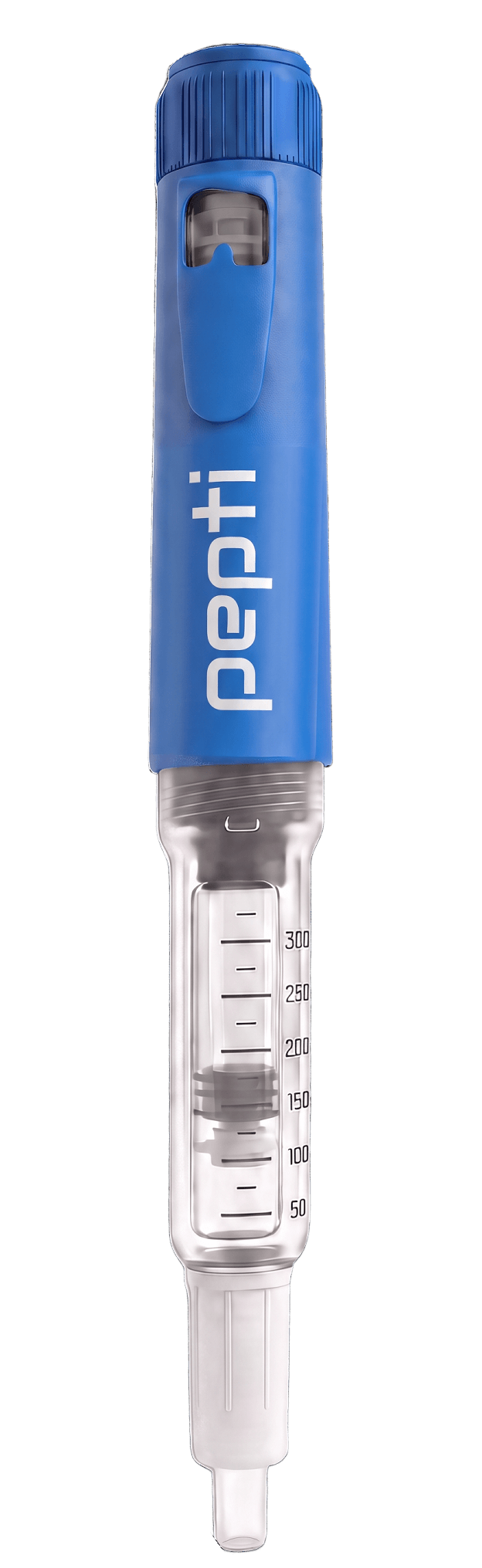
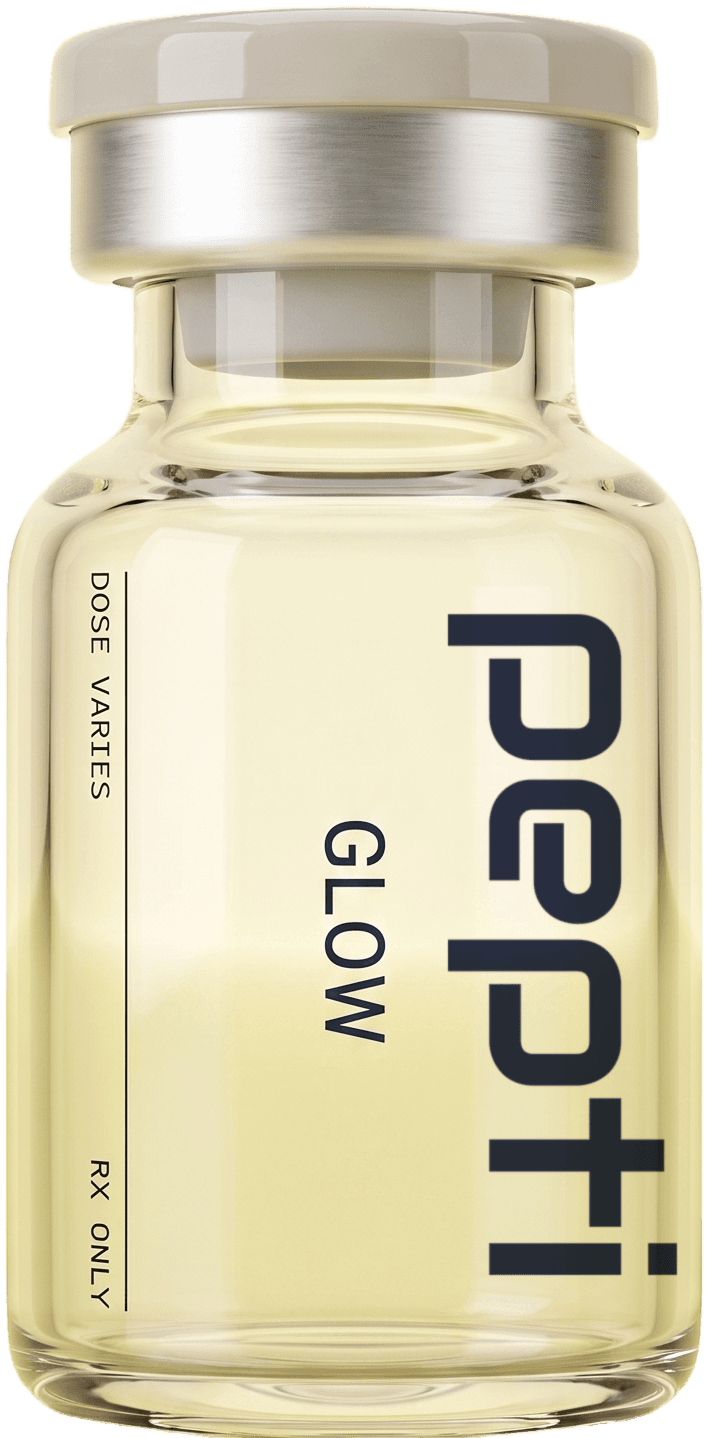
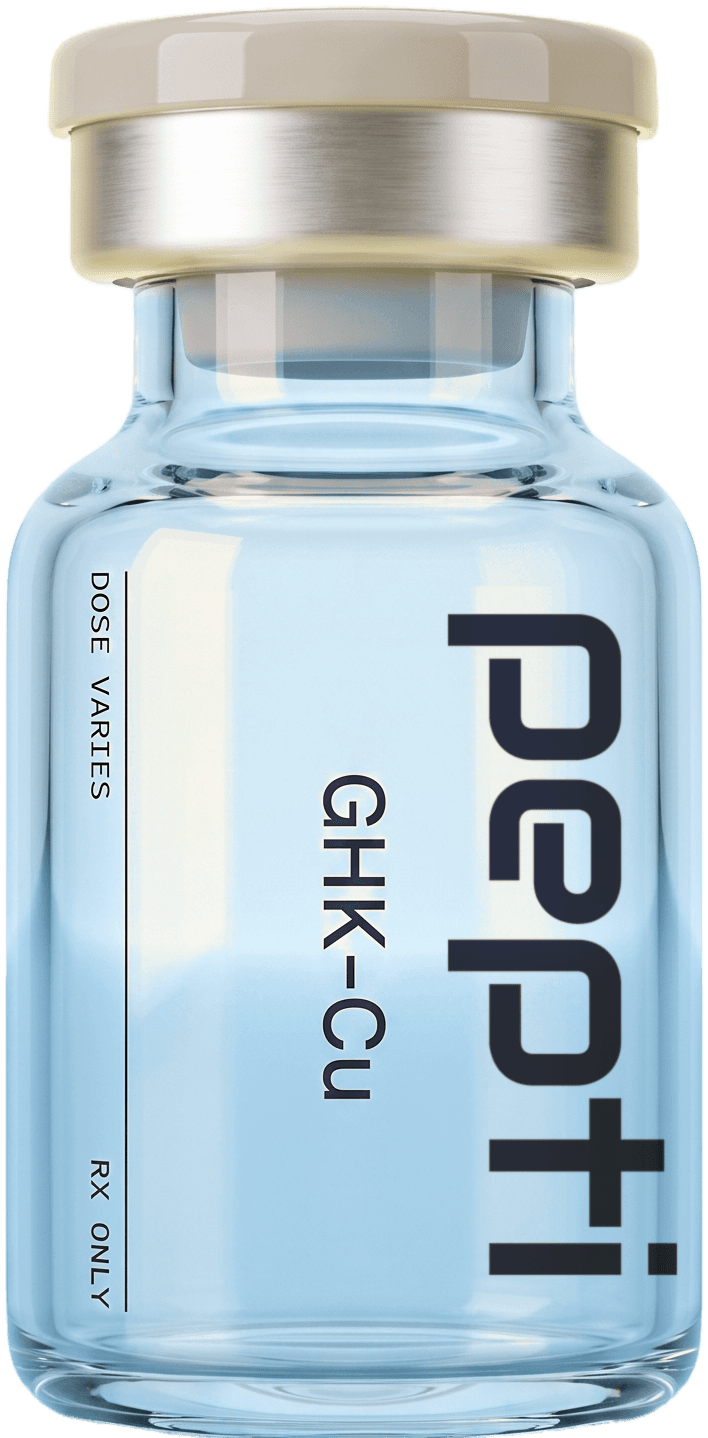
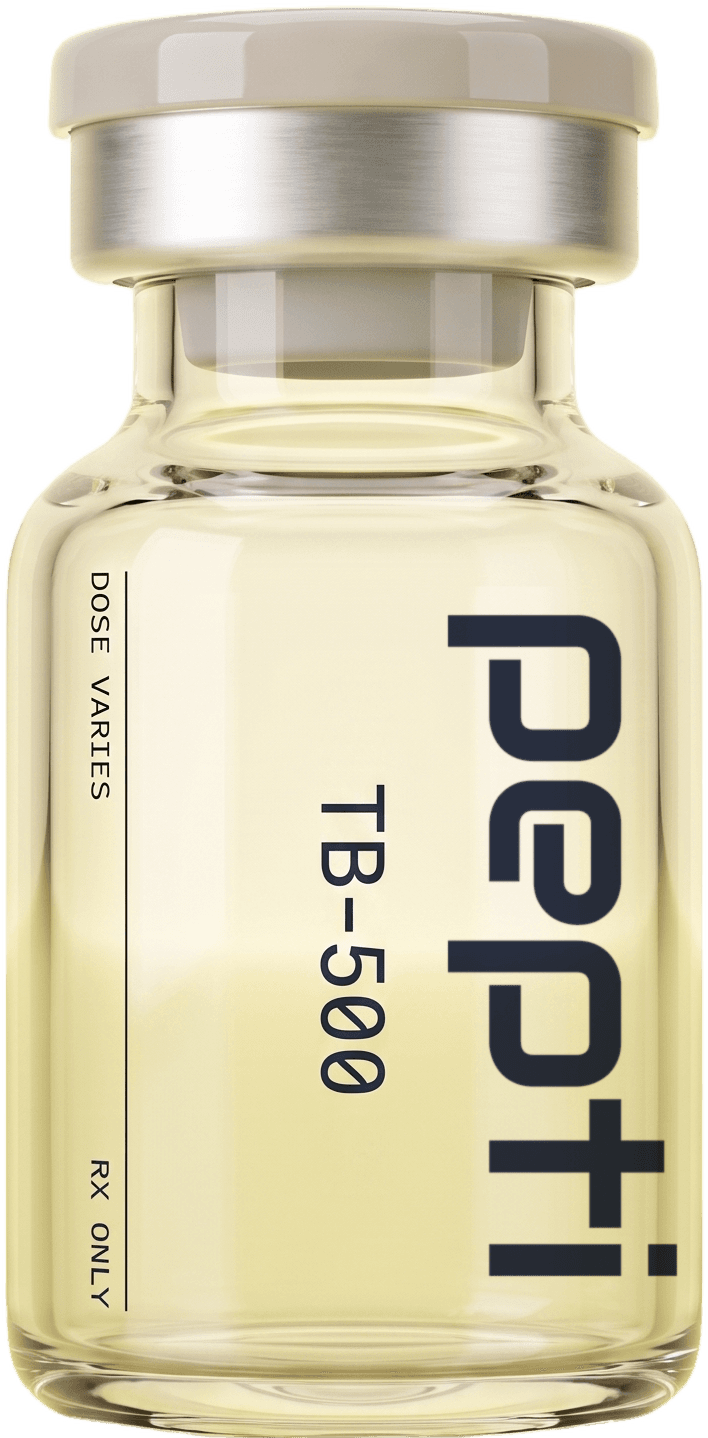
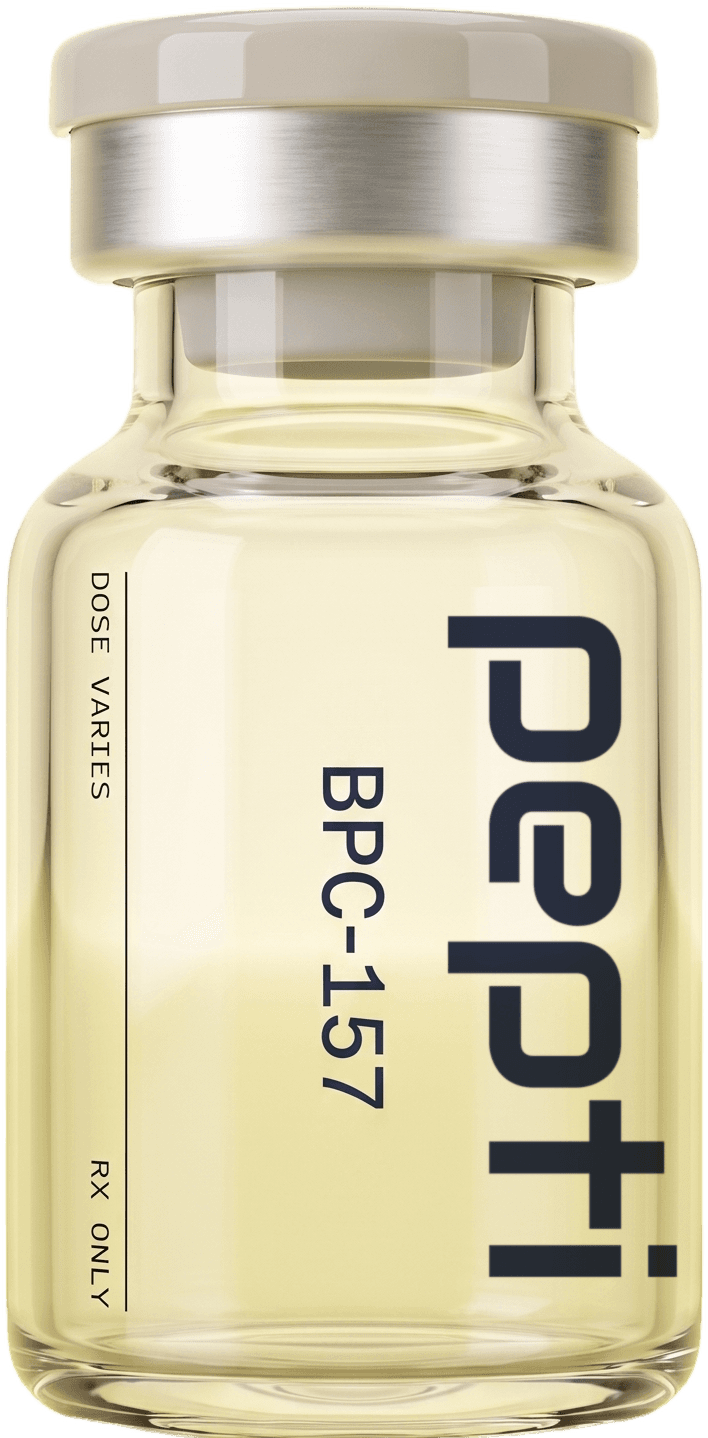
GLOW is three peptides in one vial, 50 mg GHK-Cu, 10 mg BPC-157 and 10 mg TB-500, and every benefit claimed for it is really a benefit described for one of those three components, mostly in animal and cell studies. The blend has never been studied as a blend, in people or in animals, and there are no randomised controlled trials of GLOW or of any combination of its components. The only human data behind any part of it is small: topical GHK-Cu studies on skin, one 2005 conference abstract for BPC-157, and early trials of the full-length protein TB-500 is derived from. GLOW is a compounded prescription injection, and compounded medications are not FDA approved.
This page goes benefit by benefit: what each claim is, which component it comes from, what was studied, in what, and how strong it is. It also gives the dosage printed on the vial. For the full specification and how the three components are described to fit together, read what is GLOW.
GLOW Peptide Benefits
The short answer
| Claimed benefit | Component it comes from | What the evidence is | Strength of evidence |
|---|---|---|---|
| Skin quality and collagen | GHK-Cu | Cell and animal (collagen synthesis, 1988, 1993); human topical creams on facial skin | Limited human data, topical only; no injectable trials |
| Tendon, ligament and muscle repair | BPC-157, TB-500 | Animal (rat Achilles, ligament and muscle models, 2003 to 2010; one rat study of both, 2026) | Preclinical only |
| Wound repair | TB-500, GHK-Cu | Animal (thymosin beta-4 in rat and mouse wounds); human phase 2 of the full-length protein; human topical GHK-Cu gel (1994) | Limited human data, none for the injected blend or its fragments |
| Gut-lining protection | BPC-157 | Animal (NSAID and alcohol damage models); human: one 2005 enema abstract in ulcerative colitis | Very limited human data, not for the injection |
| Blood supply to healing tissue | BPC-157, GHK-Cu | Cell and animal (VEGFR2, 2017; GHK fragments, 1994) | Preclinical only, and also a caution |
| Hair and scalp | GHK-Cu, TB-500 | Animal and cell (copper peptides 1991, 1993, 2007; thymosin beta-4 2004) | Weak |
| Calmer inflammatory signalling | TB-500, GHK-Cu | Cell and animal (NF-kB in corneal cells, 2007 and 2011; GHK-Cu in fibroblasts and mouse lung models) | Preclinical only; GLOW has no dedicated anti-inflammatory component |
| The three together doing more than one alone | The blend | None; never studied as a combination | No evidence either way |
Read the last row first. "GLOW benefits" is shorthand for three separate literatures, and none of them tested the three peptides together.
GLOW Peptide Benefits
What is in GLOW
| Component | Per vial | Per 0.25 mL dose | What it is |
|---|---|---|---|
| GHK-Cu | 50 mg | 2.5 mg | Copper-binding tripeptide found in human plasma |
| BPC-157 | 10 mg | 0.5 mg | 15-amino-acid fragment of a protein from human gastric juice |
| TB-500 | 10 mg | 0.5 mg | Synthetic seven-amino-acid fragment of thymosin beta-4, an actin-binding protein |
By mass GLOW is mostly a GHK-Cu preparation: 50 of the 70 mg in the vial. The proportions are fixed by the pharmacy's formulation and cannot be adjusted per component. The rationale prescribers give is that tissue repair runs in overlapping phases (cell migration, new blood-vessel growth, matrix synthesis, remodelling) and each component is described as acting on a different one: TB-500 on cell motility, BPC-157 on blood supply and cell migration, GHK-Cu on collagen and matrix. That is a rationale, not a finding.
GLOW Peptide Benefits
Benefit 1: Skin quality and collagen (GHK-Cu)
What the research describes. A 1988 paper in FEBS Letters reported that GHK-Cu stimulated collagen synthesis in cultured human fibroblasts, and a 1993 Journal of Clinical Investigation paper reported more connective tissue in rat wound chambers treated with it. Reviews in BioMed Research International (2015) and the International Journal of Molecular Sciences (2018) describe increased synthesis of collagen, elastin and glycosaminoglycans and a shift in the balance between the enzymes that break tissue down and their inhibitors. The copper-carrying role is the basis for most of this, because collagen cross-linking, elastin formation and several antioxidant enzymes are copper-dependent.
The human data. GHK-Cu is the only GLOW component with human studies of any size, and they are topical: small studies of creams on facial skin reporting changes in firmness, fine lines and elasticity, mostly industry-funded. A 2006 paper in Archives of Facial Plastic Surgery looked at a topical copper tripeptide after laser resurfacing.
Evidence type. Cell, animal, and human topical.
What it means for GLOW. GHK-Cu is the skin component and the bulk of the vial. No study has shown injected GHK-Cu does what the creams were reported to do, and skin-penetration work (Inflammation Research, 2011) shows how different topical and injected exposure are. Benefit by benefit for GHK-Cu alone is in GHK-Cu benefits, and the wider skin picture is in peptides for skin.
GLOW Peptide Benefits
Benefit 2: Tendon, ligament and muscle repair (BPC-157 and TB-500)
What the research describes. For BPC-157, a 2003 Journal of Orthopaedic Research paper reported faster healing of a transected rat Achilles tendon; a 2006 paper in the same journal reported accelerated reattachment of Achilles tendon to bone in rats; a 2010 paper reported improved healing of a transected medial collateral ligament in rats; and 2006 and 2008 papers reported functional recovery after rat quadriceps transection and crush injury. A 2011 Journal of Applied Physiology paper described tendon fibroblast survival and migration, traced to the FAK and paxillin pathway that governs how cells attach and move.
For TB-500, most of the literature is on the full-length thymosin beta-4 protein, and the tendon case is an inference from its dermal and cardiac work. A July 2026 paper in Joint Diseases and Related Surgery was the first controlled study to put BPC-157, TB-500 and the combination in one experiment: 32 rats with a repaired Achilles tendon, four weeks of daily treatment. TB-500 reached statistical significance on load-to-failure and histology; BPC-157 trended better without reaching significance on total scores; the combination did not outperform either alone.
Evidence type. Animal.
What it means for GLOW. There are no randomised human trials of BPC-157 or TB-500 for tendon, ligament or muscle injury. For a single soft-tissue injury with nothing else in the picture, physicians frequently prefer the two-peptide BPC-157 + TB-500 stack, which skips the GHK-Cu. Progressive loading under a physiotherapist has human trial evidence for tendinopathy, which none of GLOW's components has, and no peptide changes a complete rupture. BPC-157 vs TB-500 covers the two in depth.
GLOW Peptide Benefits
Benefit 3: Wound repair (TB-500 and GHK-Cu)
What the research describes. A 1999 paper in the Journal of Investigative Dermatology reported faster wound closure and increased cell migration with thymosin beta-4 in rats and in cultured human cells. A 2003 paper in Wound Repair and Regeneration reported that a synthetic peptide containing the actin-binding domain, the region TB-500 reproduces, promoted dermal wound repair in diabetic and aged mice. On the GHK-Cu side, a 1994 Wound Repair and Regeneration paper reported improved closure of diabetic ulcers with a topical gel.
The human data. Full-length thymosin beta-4 has been given to people in trials: a 2010 randomised study reported intravenous thymosin beta-4 well tolerated in healthy volunteers, and a 2012 paper reported phase 2 results in chronic pressure and venous stasis ulcers. Those used the whole protein, not the TB-500 fragment, and the FDA's 2026 review found no human data for TB-500 by any route.
Evidence type. Animal, plus human data for related molecules and routes.
Strength. Limited, and none of it for the injected blend.
GLOW Peptide Benefits
Benefit 4: The gut lining (BPC-157)
What the research describes. BPC-157's original and largest literature is gastrointestinal: animal work describing protection of the stomach and intestinal lining against NSAID- and alcohol-induced damage and improvement in inflammatory bowel models.
The human data. One randomised, placebo-controlled study: a two-week enema trial in 53 people with mild to moderate ulcerative colitis, reported only as a 2005 conference abstract, which the FDA judged inadequate to support efficacy.
Evidence type. Animal, plus one incomplete human abstract by a different route.
What it means for GLOW. Neither GHK-Cu nor TB-500 adds to the gut case. A gut complaint is usually a reason to consider BPC-157 on its own rather than GLOW. Blood in the stool, unintentional weight loss or symptoms that wake you at night need investigation before any peptide. BPC-157 benefits covers this line of research in more detail.
GLOW Peptide Benefits
Benefit 5: Blood supply to healing tissue (BPC-157 and GHK-Cu)
What the research describes. A 2017 paper in the Journal of Molecular Medicine reported BPC-157 activating the VEGFR2 receptor and downstream nitric-oxide signalling in endothelial cells and a rat model. A 1994 Journal of Cell Biology paper reported copper-binding GHK fragments stimulating new blood-vessel growth. Thymosin beta-4, the parent of TB-500, is also described promoting angiogenesis in mice (Mechanisms of Ageing and Development, 2004).
Evidence type. Cell and animal.
Why this one cuts both ways. Tendons and ligaments have a poor blood supply, which is part of why they heal slowly, so new vessel growth is the point of the repair rationale. Tumours also need blood supply, which is why a personal history of cancer is raised with your physician before GLOW. See can peptides cause cancer.
GLOW Peptide Benefits
Benefit 6: Hair and scalp (GHK-Cu and TB-500)
What the research describes. Copper-peptide follicle work in mice and rats (1991, 1993), a 2007 ex vivo study of human follicles using a related copper tripeptide, and a 2004 FASEB Journal paper reporting that thymosin beta-4 increased hair growth in rats and mice by acting on follicle stem cells. BPC-157 has no hair research.
Evidence type. Animal and cell.
Strength. Weak. No human trial of injected GHK-Cu or TB-500 for hair exists, and nothing in either literature acts on the hormone signal behind pattern hair loss. Peptides for hair growth covers what a physician checks first.
GLOW Peptide Benefits
Benefit 7: Inflammatory signalling (TB-500 and GHK-Cu)
What the research describes. A corneal research group describes thymosin beta-4 suppressing NF-kB, the transcription factor that switches on many inflammatory genes, in corneal cells (Experimental Eye Research, 2007) and against TNF-alpha-driven activation (FASEB Journal, 2011). GHK-Cu is reported to affect TNF-alpha-driven IL-6 secretion in human dermal fibroblasts (Acta Poloniae Pharmaceutica, 2012), and mouse studies with systemic dosing reported it ameliorating induced lung injury (Oncotarget, 2016).
Evidence type. Cell and animal.
What it means for GLOW. These are described pathways in cells and animal tissue, not a demonstrated anti-inflammatory effect in a human joint or tendon. GLOW has no component whose main purpose is inflammation. That gap is the whole difference between GLOW and KLOW, which adds KPV for that phase; KLOW vs GLOW covers whether KPV belongs in your vial.
GLOW Peptide Benefits
Benefit 8: Three peptides doing more than one
This is the benefit the blend exists to deliver, and it is the one with the least evidence. No study has compared GLOW with its components, and the one rat study that compared BPC-157, TB-500 and the pair found the combination did not outperform either alone at four weeks. A blend is a convenience: one injection, one schedule, one refill, one copper dose. It is not a stronger version of its parts, and it makes it harder to tell which component did what.
GLOW Peptide Benefits
What the evidence does not establish
- That GLOW does anything in people that its components do in animals. The blend has never been tested.
- An effect size for any benefit above. Those trials have not been run.
- A human timeline. What prescribers describe is experience, not a trial endpoint.
- That injected GHK-Cu does for skin what topical GHK-Cu is reported to do, or that the TB-500 fragment does everything the full-length protein does.
- Long-term safety over years of continuous use.
- Efficacy for any condition as an FDA-approved treatment. Neither GLOW nor any component is approved for anything.
The accurate framing, the same one the live reference pages use: described in preclinical research and used clinically, not shown to work in people.
Where the components stand with the FDA
All three were placed in Category 2 of the FDA's interim 503A list in 2023, and all three were removed on 15 April 2026. On 23 July 2026 the FDA's Pharmacy Compounding Advisory Committee voted 8 to 6, with one abstention, to recommend adding BPC-157, and by the same margin TB-500, to the 503A Bulks List, against the recommendation of the FDA's own reviewers; the final determination is pending. GHK-Cu is scheduled for the committee before the end of February 2027. None of the three is restricted, and none is an FDA-approved drug. GLOW has no regulatory status of its own; the FDA regulates the substances a pharmacy compounds from.
GLOW Peptide Benefits
Side effects, in brief
| What is reported | What it means |
|---|---|
| Injection-site redness, mild soreness, occasional bruising | The most common reports; rotate sites |
| A faint blue-green mark at the site | Copper from the GHK-Cu that has not yet dispersed; clears on its own |
| Early nausea or light-headedness | Tell your physician if it persists |
| A reaction that is severe, spreading, or involves difficulty breathing | Stop and contact your physician; call 911 for breathing difficulty |
The solution is blue because of the copper, which is expected; why is GHK-Cu blue explains what a normal vial looks like. Who should not take GLOW, or should discuss it first: anyone with Wilson's disease or another copper-metabolism disorder, anyone on high-dose zinc, anyone with a personal history of cancer, anyone on anticoagulants, anyone pregnant or breastfeeding, and tested athletes, because BPC-157 and TB-500 are named on the WADA Prohibited List at all times (see is BPC-157 banned). Because every GHK-Cu blend carries a full GHK-Cu dose, GLOW alongside another GHK-Cu product doubles the copper. The component safety pages go further: is GHK-Cu safe, is BPC-157 safe and is TB-500 safe.
GLOW Peptide Benefits
GLOW dosage, and how Pepti supplies it
| GLOW vial | |
|---|---|
| What is in it | 5 mL multi-dose vial: GHK-Cu 10 mg/mL, BPC-157 2 mg/mL, TB-500 2 mg/mL |
| Directions printed on it | Inject 0.25 mL (25 units) subcutaneously Monday through Friday mornings |
| Per dose | 2.5 mg GHK-Cu, 0.5 mg BPC-157, 0.5 mg TB-500 |
| Doses | 20, about 4 weeks |
| Price | $259/mo |
The "GLOW peptide dosage" people search for is the line printed on the vial: 0.25 mL, which is 25 units on a U-100 insulin syringe, under the skin, Monday through Friday mornings, weekends off. Your physician sets your directions after reviewing your intake, and the directions printed on your vial are the ones that apply. Because the three are in fixed proportion, every dose delivers the same split. How long does a peptide vial last explains the mL, units and mg on a label.
The price is all-in, covering medication, physician review, refill management and shipping, with no separate membership fee. Pepti is cash-pay and does not bill insurance. Vials are multi-dose solutions shipped ready to use, refrigerated with ice packs, with sterile syringes and alcohol prep pads. Refills run every 28 days, one vial per fill.
When a narrower prescription makes more sense
| Situation | What makes more sense |
|---|---|
| A single tendon or ligament problem, nothing else | BPC-157 + TB-500, $259/mo |
| Repair and skin, with inflammation that will not settle | KLOW, $259/mo, the same blend plus KPV |
| Skin is the whole goal | GHK-Cu, $239/mo, or RADIANCE, $249/mo, which pairs it with tesamorelin |
| TB-500 on its own | TB-500, $209/mo |
| A gut complaint | BPC-157, $209/mo |
| Repair inside a longevity protocol | ETERNAL, $279/mo, which is GLOW's three plus epithalon |
GLOW Peptide Benefits
Where to get GLOW prescribed
GLOW cannot be bought legitimately without a prescription. Sites selling it "for research use only" are not accountable for identity, purity, sterility or concentration. The prescription route:
- Complete a free online intake covering your history, medications and what you want help with.
- A physician licensed in your state reviews it, usually within 24 hours.
- If it is appropriate, a PCAB-accredited, FDA-registered US 503A compounding pharmacy prepares it to that prescription. Lot test results are published at /quality/lab-results.
- It ships refrigerated with your directions printed on the vial.
- Your physician stays reachable for questions and side effects.
Pepti prescribes GLOW in every state except Oklahoma, plus DC Related step-by-step pages: how to get GHK-Cu prescribed online and how to get BPC-157 + TB-500 prescribed online.
References
What this is based on.
References
- Chang CH, Tsai WC, Hsu YH, Pang JH. Pentadecapeptide BPC 157 enhances the growth hormone receptor expression in tendon fibroblasts · Molecules (2014) · PMID 25415472
- Krivic A, Anic T, Seiwerth S, et al.. Achilles detachment of rat and stable gastric pentadecapeptide BPC 157 · Journal of Orthopaedic Research (2006) · PMID 16583442
- Sikiric P, Seiwerth S, Rucman R, et al.. Stable gastric pentadecapeptide BPC 157: novel therapy in gastrointestinal tract · Current Pharmaceutical Design (2011) · PMID 21548867
- Cerovecki T, Bojanic I, Brcic L, Radic B, et al.. Pentadecapeptide BPC 157 (PL 14736) improves ligament healing in the rat · J Orthop Res (2010) · PMID 20225319
- Sikiric P, Seiwerth S, Rucman R, Turkovic B, et al.. Stable gastric pentadecapeptide BPC 157-NO-system relation · Curr Pharm Des (2014) · PMID 23755725
- Cox HD, Miller GD, Eichner D. Detection and in vitro metabolism of the confiscated peptides BPC 157 and MGF R23H · Drug Test Anal (2017) · PMID 28035768
- Thomas A, Görgens C, Guddat S et al.. Simplifying and expanding the screening for peptides <2 kDa by direct urine injection, liquid chromatography, and ion mobility mass spectrometry · J Sep Sci (2016) · PMID 26578461
- Farrar JT, Young JP Jr, LaMoreaux L, Werth JL et al.. Clinical importance of changes in chronic pain intensity measured on an 11-point numerical pain rating scale · Pain (2001) · PMID 11690728
- Meyer JD, Ho B, Manning MC. Effects of conformation on the chemical stability of pharmaceutically relevant polypeptides · Pharm Biotechnol (2002) · PMID 11987755
- Xu C, Sun L, Ren F, Huang P, et al.. Preclinical Safety Evaluation of Body Protective Compound-157, a Potential Drug for Treating Various Wounds · Regul Toxicol Pharmacol (2020) · PMID 32334036
- He L, Feng D, Guo H, et al.. Pharmacokinetics, distribution, metabolism, and excretion of body-protective compound 157, a potential drug for treating various wounds, in rats and dogs · Front Pharmacol (2022) · PMID 36588717
- Lee E, Padgett B. Intra-Articular Injection of BPC 157 for Multiple Types of Knee Pain · Altern Ther Health Med (2021) · PMID 34324435
Citations are provided for educational purposes. They do not constitute medical advice. Always discuss any peptide protocol with your prescribing physician.
Common questions
GLOW Peptide Benefits, answered.
GLOW's claimed benefits come from its three components: GHK-Cu for skin and collagen, and BPC-157 and TB-500 for tendon, ligament, muscle and wound repair, with BPC-157 also behind the gut-lining claims. Almost all of that evidence is animal and cell work, the human data is small and mostly topical or for related molecules, and the three-peptide blend has never been studied as a combination.
A compounded prescription injection containing 50 mg GHK-Cu, 10 mg BPC-157 and 10 mg TB-500 in one 5 mL vial. See what is GLOW.
The directions printed on the vial are: inject 0.25 mL (25 units on a U-100 insulin syringe) subcutaneously Monday through Friday mornings. Each dose delivers 2.5 mg GHK-Cu, 0.5 mg BPC-157 and 0.5 mg TB-500, and a vial holds 20 doses.
Its GHK-Cu component has the skin research: collagen synthesis in cells and animals, and small human studies of topical creams. No study has tested injected GHK-Cu, or GLOW, for skin quality in people.
Its BPC-157 and TB-500 components have rat studies of tendon, ligament and muscle healing. There are no human trials of either for injury, and the blend itself has not been studied. For a single soft-tissue injury, the two-peptide BPC-157 + TB-500 stack is the more targeted prescription.
GLOW has no dedicated anti-inflammatory component. TB-500's parent protein and GHK-Cu are described in cell and animal work as affecting inflammatory signalling, but that is a mechanism, not a demonstrated effect in people. KLOW adds KPV for that purpose.
The hair evidence is weak: copper-peptide follicle work in rodents and one ex vivo human follicle study, plus a 2004 rodent study of thymosin beta-4. Nothing has tested injected GLOW, or its components, for hair in people.
There is no trial-established timeline in humans. Prescribers describe little beyond injection-site tenderness in the first two weeks, with any change in a problem area or in skin developing over the following weeks and months. Those are clinical patterns, not trial endpoints, and nobody can promise a timeline.
KPV. KLOW contains the same 50 mg GHK-Cu, 10 mg BPC-157 and 10 mg TB-500 as GLOW, plus 10 mg KPV. Both are $259 a month at Pepti. See KLOW vs GLOW.
No. Compounded medications are not FDA approved. All three components were removed from the FDA's Category 2 list in April 2026; BPC-157 and TB-500 were recommended for the 503A Bulks List in July 2026, with the final determination pending, and GHK-Cu is due for review before the end of February 2027. GLOW remains legal to prescribe.
No. BPC-157 and TB-500 are named on the WADA Prohibited List at all times, and a prescription does not change that.
At Pepti, GLOW is $259 a month, all-in, covering medication, physician review, refill management and shipping.
No. Bloodwork is not required for any Pepti treatment. If your physician wants labs for your care, they'll ask through your account. The free assessment goes to a physician licensed in your state. A consultation does not guarantee a prescription.
Next step
See what a physician recommends for you.
A licensed physician in your state reviews your intake and decides what is appropriate. A consultation does not guarantee a prescription.