Recovery · Reference
GLOW Peptide Dosage: How Pepti Prescribes the GLOW Blend
This page explains the GLOW peptide dosage Pepti prescribes, what the units on the syringe mean, how much of each of the three peptides is in a dose, a dosage chart for the GLOW vial, how GLOW's dose compares with KLOW and the narrower products, when it is taken, what can change your directions, and the side effects to know about. It covers how Pepti prescribes GLOW, not online protocols. Nothing here is a reason to change your own dose.
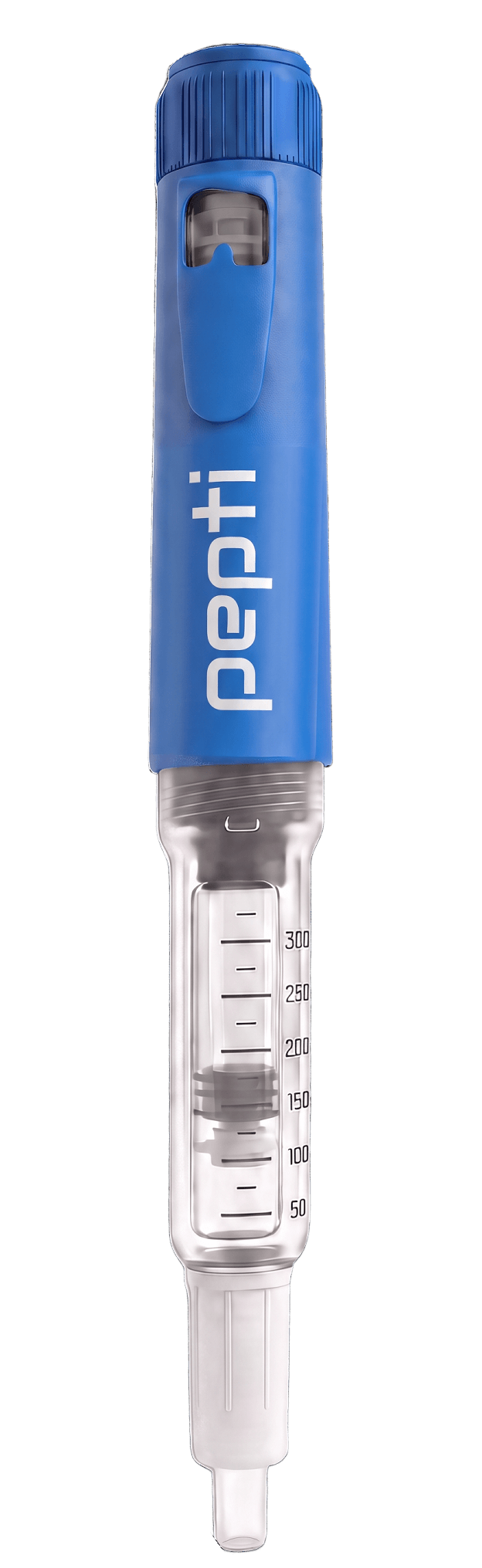
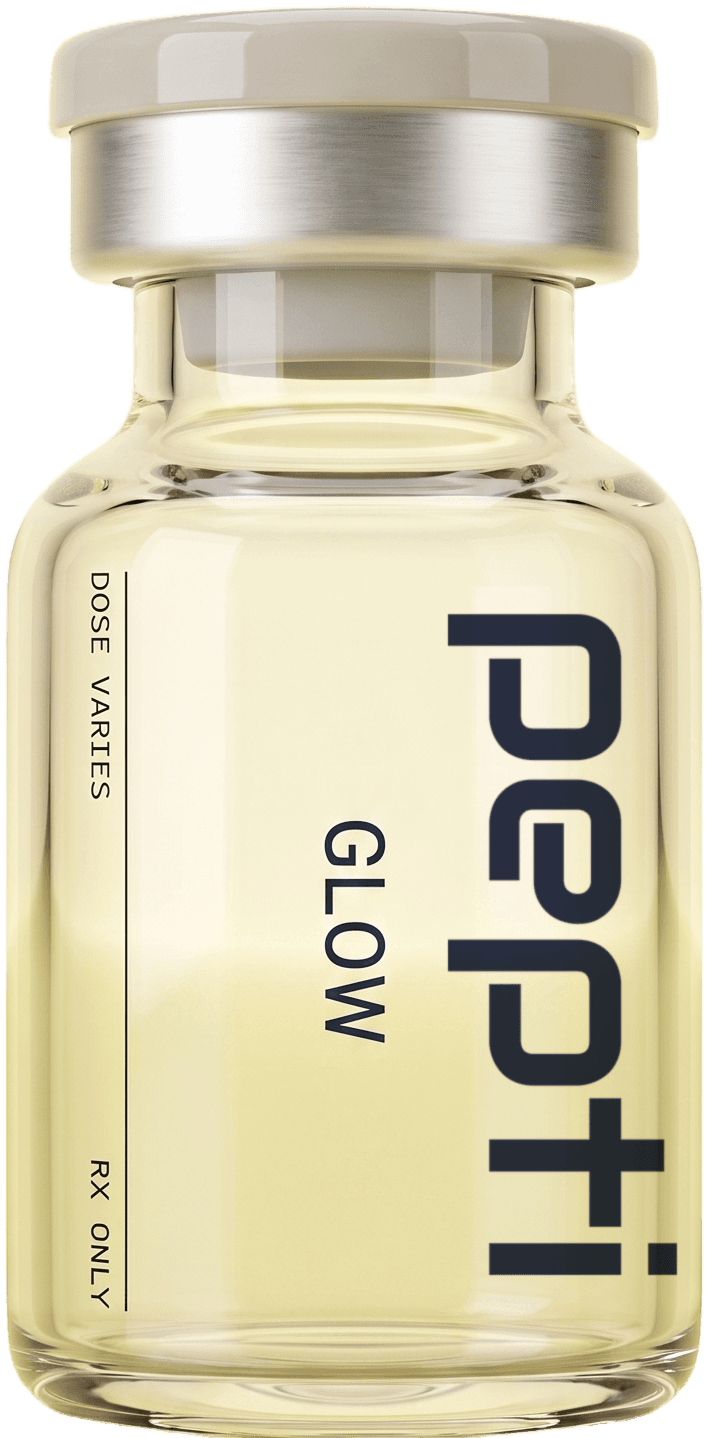
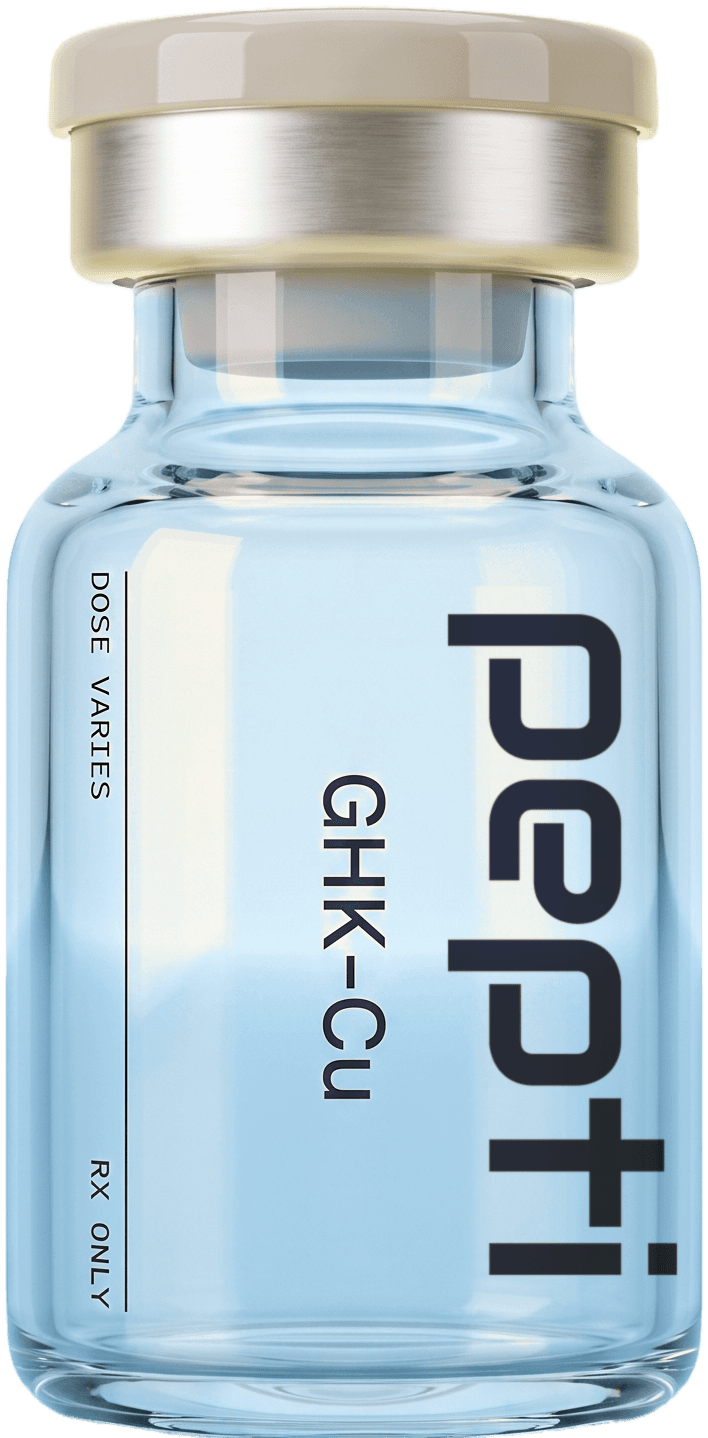
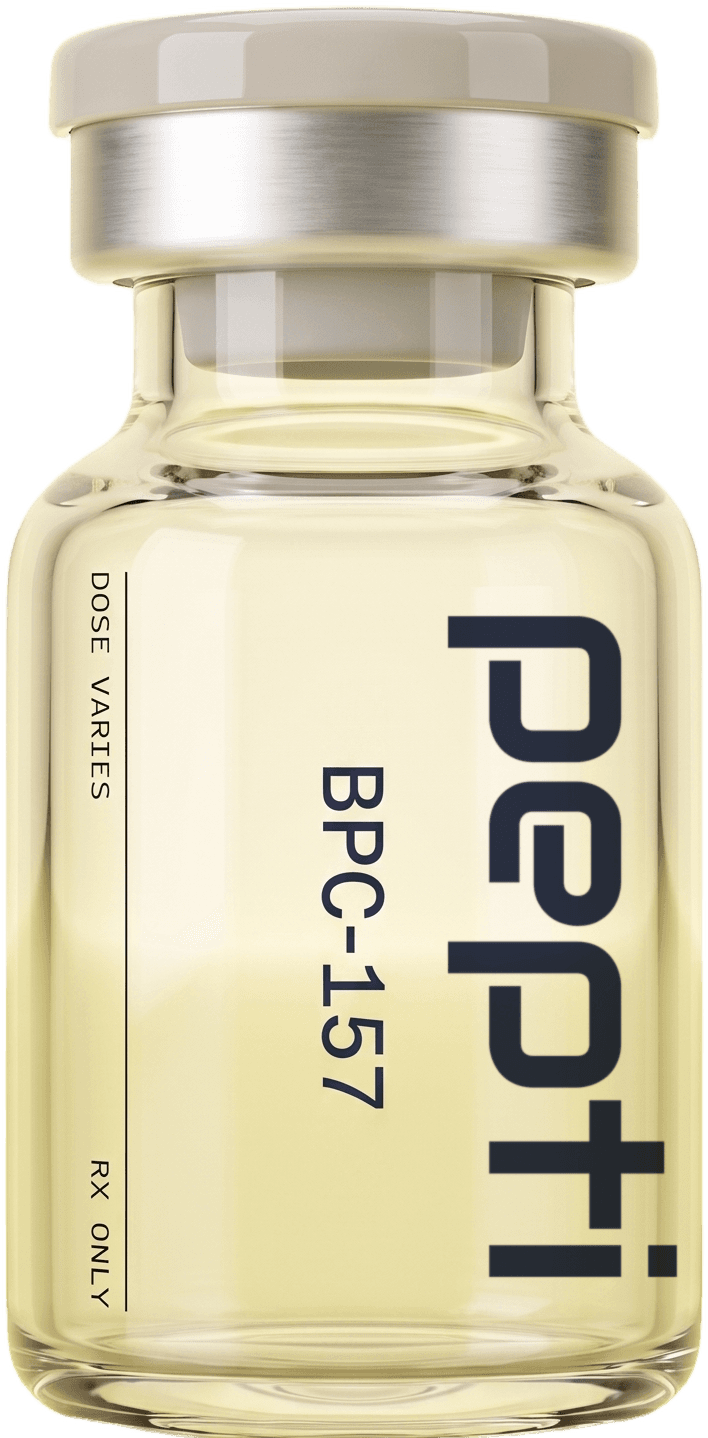
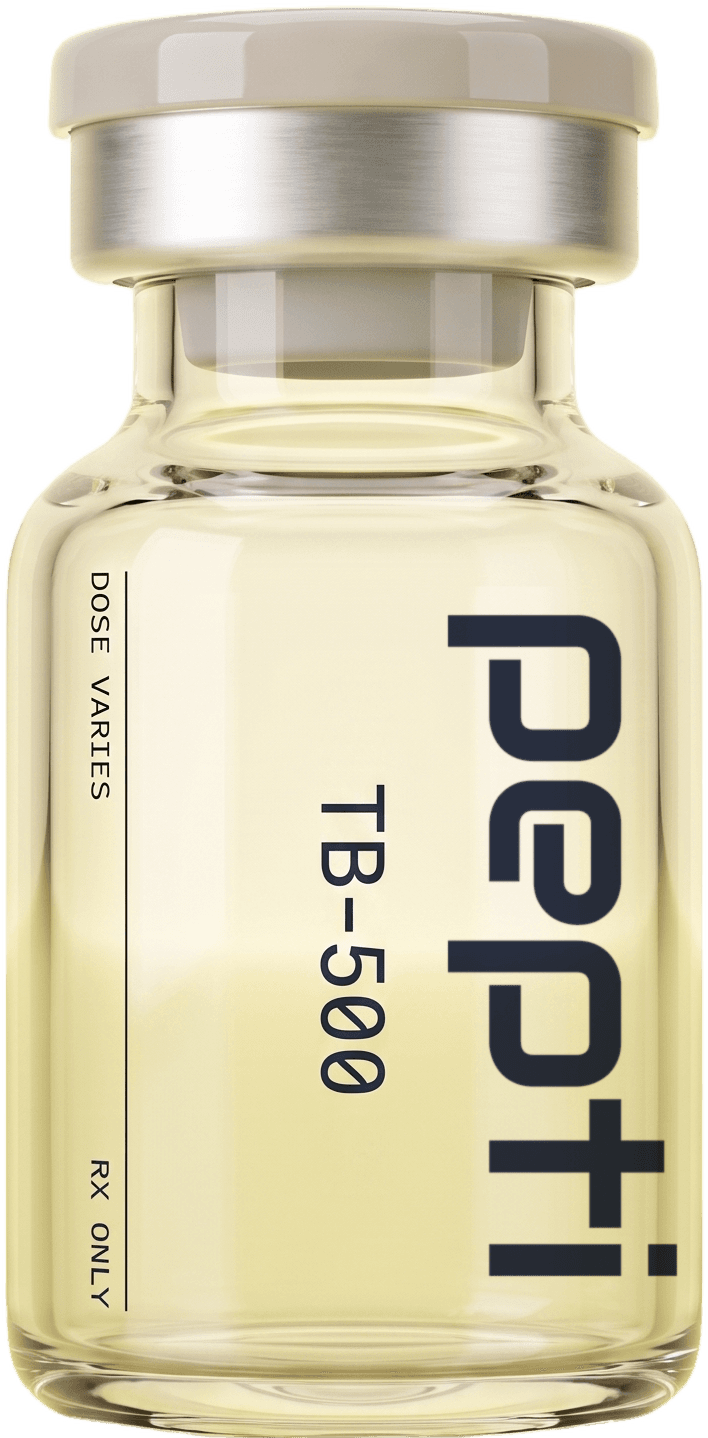
At Pepti, GLOW is prescribed as 0.25 mL, which is 25 units on a U-100 insulin syringe, injected under the skin Monday through Friday mornings. The 5 mL vial holds 50 mg GHK-Cu, 10 mg BPC-157 and 10 mg TB-500, so every 0.25 mL dose delivers 2.5 mg GHK-Cu, 0.5 mg BPC-157 and 0.5 mg TB-500, and the vial holds 20 doses, about four weeks. Your physician sets your directions after reviewing your intake, and your exact dose and units are printed on the vial.
This page explains the GLOW peptide dosage Pepti prescribes, what the units on the syringe mean, how much of each of the three peptides is in a dose, a dosage chart for the GLOW vial, how GLOW's dose compares with KLOW and the narrower products, when it is taken, what can change your directions, and the side effects to know about. It covers how Pepti prescribes GLOW, not online protocols. Nothing here is a reason to change your own dose.
GLOW Peptide Dosage
The short answer
| Product | Vial | Directions | Per dose | Doses per vial | Price |
|---|---|---|---|---|---|
| GLOW | 5 mL: GHK-Cu 10 mg/mL, BPC-157 2 mg/mL, TB-500 2 mg/mL | Inject 0.25 mL (25 units) subcutaneously Monday through Friday mornings | 2.5 mg GHK-Cu, 0.5 mg BPC-157, 0.5 mg TB-500 | 20 | $259/mo |
Every price is all-in, covering medication, physician review, refill management and shipping, with no separate membership fee. Pepti is cash-pay and does not bill insurance. Your own directions are the ones printed on your vial.
GLOW Peptide Dosage
GLOW dosage in units, mL and mg
Pepti's directions are written in millilitres and units, because prescriptions are written in millilitres and insulin syringes are marked in units. On a U-100 insulin syringe, 1 unit is 0.01 mL, so 100 units is 1 mL and 25 units is 0.25 mL. A unit is a volume mark on the barrel, not a measure of how strong the medication is.
GLOW is three peptides dissolved together in one vial, so one draw carries all three. The milligrams per dose come from each component's concentration multiplied by 0.25 mL:
| Component | Concentration | Per vial | Per 0.25 mL dose |
|---|---|---|---|
| GHK-Cu | 10 mg/mL | 50 mg | 2.5 mg |
| BPC-157 | 2 mg/mL | 10 mg | 0.5 mg |
| TB-500 | 2 mg/mL | 10 mg | 0.5 mg |
| Total | 70 mg | 3.5 mg |
That arithmetic is a way to read a label, not a way to set a dose. A vial labelled 70 mg in total is not a 70 mg dose: it is twenty doses of 3.5 mg combined. If your label and your syringe seem to disagree, do not dose; message your care team. How long does a peptide vial last explains every number on a vial label.
Fixed proportions
The three peptides are in a ratio fixed by the pharmacy's formulation. Every dose delivers the same split, and there is no way to take more of one and less of another from the same vial. GHK-Cu is 50 of the 70 mg, five-sevenths of the vial by mass, so GLOW is mostly a GHK-Cu preparation with two smaller repair components alongside it. That is why it is positioned toward skin and connective tissue as much as toward injury. If a different balance is wanted, the components are prescribed separately.
GLOW Peptide Dosage
GLOW peptide dosage chart: units to mL to mg
The chart below is the conversion for the GLOW vial, drawn with a U-100 insulin syringe. It is math only. It is not a menu of doses, and the only line that applies to you is the one that matches the number printed on your vial.
| Syringe mark (U-100) | Volume | GHK-Cu | BPC-157 | TB-500 |
|---|---|---|---|---|
| 5 units | 0.05 mL | 0.5 mg | 0.1 mg | 0.1 mg |
| 10 units | 0.1 mL | 1 mg | 0.2 mg | 0.2 mg |
| 15 units | 0.15 mL | 1.5 mg | 0.3 mg | 0.3 mg |
| 20 units | 0.2 mL | 2 mg | 0.4 mg | 0.4 mg |
| 25 units (Pepti's typical directions) | 0.25 mL | 2.5 mg | 0.5 mg | 0.5 mg |
| 50 units | 0.5 mL | 5 mg | 1 mg | 1 mg |
| 100 units | 1 mL | 10 mg | 2 mg | 2 mg |
The rule behind every row: units divided by 100 gives millilitres; multiply millilitres by 10 for GHK-Cu and by 2 for BPC-157 and TB-500. Those multipliers only hold for this vial. A chart written for a different blend or a different concentration gives different milligram figures for the same units, which is the main reason not to dose from a chart, including this one.
GLOW Peptide Dosage
GLOW compared with the products next to it
People often compare a GLOW dose with KLOW, with the BPC-157 + TB-500 stack, or with GHK-Cu on its own. The draw is 25 units in each, but what that draw delivers is different:
| GLOW | KLOW | BPC-157 + TB-500 | GHK-Cu | |
|---|---|---|---|---|
| What is in the vial | 5 mL: 50 mg GHK-Cu, 10 mg BPC-157, 10 mg TB-500 | 5 mL: 50 mg GHK-Cu, 10 mg KPV, 10 mg BPC-157, 10 mg TB-500 | 5 mL: 5 mg BPC-157, 5 mg TB-500 | 5 mL: 50 mg GHK-Cu |
| Typical directions | 0.25 mL, Monday through Friday mornings | 0.25 mL, Monday through Friday mornings | 0.25 mL, Monday through Friday mornings | 0.25 mL, once daily Monday through Friday |
| Per dose | 2.5 mg GHK-Cu, 0.5 mg BPC-157, 0.5 mg TB-500 | The same, plus 0.5 mg KPV | 0.25 mg BPC-157, 0.25 mg TB-500 | 2.5 mg GHK-Cu |
| Doses per vial | 20 | 20 | 20 | 20 |
| Price | $259/mo | $259/mo | $259/mo | $239/mo |
What the numbers show
Three things stand out. First, GLOW and KLOW deliver exactly the same amounts of GHK-Cu, BPC-157 and TB-500 per dose; KLOW adds KPV without diluting the other three. Second, the two-peptide stack delivers half as much BPC-157 and TB-500 per 0.25 mL as GLOW, because its vial is half the strength (1 mg/mL of each against 2 mg/mL). Third, GHK-Cu on its own delivers the same 2.5 mg of GHK-Cu per dose as GLOW, without the repair components.
GLOW vs KLOW dosage
The only difference between the two is KPV. KLOW is the same three repair peptides plus the anti-inflammatory tripeptide. The directions, the draw and the number of doses are identical. Which one fits is set by your physician after reviewing your intake; the full comparison is in KLOW vs GLOW. There is no reason to take both: KLOW already contains everything in GLOW, and both together would double three components.
GLOW Peptide Dosage
When GLOW is taken
Mornings, Monday through Friday
Pepti's GLOW directions say Monday through Friday mornings, with weekends off. Weekends off are part of the schedule, not missed doses. Twenty doses at five a week is four working weeks, which is why refills run on a 28-day cycle.
Under the skin, and where
Subcutaneous means into the fat layer, not the muscle. Abdomen and thigh are the usual sites, rotated so the same spot is not used repeatedly. Some prescribers direct injection near the affected area on the theory that local concentration matters; others do not, because the mechanisms described are systemic. Your directions will say. Technique is covered in how to inject peptides safely.
| Directions say | What it means in practice |
|---|---|
| 0.25 mL (25 units) | Draw to the 25 mark on a U-100 insulin syringe |
| Subcutaneously | Into the fat layer, abdomen or thigh, rotating sites |
| Monday through Friday | Five doses a week, weekends off |
| Mornings | Early in the day |
| 20 doses per vial | About four weeks, then the next refill |
GLOW Peptide Dosage
How long a GLOW vial lasts, storage and refills
| Step | Value |
|---|---|
| Dose | 25 units, 0.25 mL |
| Doses per week | 5 (Monday through Friday) |
| Doses per vial | 20 (5 mL divided by 0.25 mL) |
| Used over the vial | 50 mg GHK-Cu, 10 mg BPC-157, 10 mg TB-500, the whole vial |
| Time per vial | 20 doses divided by 5 per week = 4 weeks |
Vials are multi-dose solutions shipped ready to use, refrigerated with ice packs, with sterile syringes and alcohol prep pads. Nothing is mixed at home. The solution is blue because of the copper in GHK-Cu, which is expected; why is GHK-Cu blue explains what a normal vial looks like. Cloudiness, particles or a colour change from what you received is a reason to message rather than inject. Keep it in the fridge and follow the beyond-use date on the label; a multi-peptide vial is not something to keep past it. One vial per fill, every 28 days. How to store peptides covers storage.
If a vial runs short before the refill, message your care team rather than adjusting anything yourself. If you miss a weekday dose, follow your directions and do not take two doses to make up for one.
GLOW Peptide Dosage
Why the research cannot give you a GLOW dose
GLOW has never been studied as a blend, in people or in animals, so there is no trial dose for it. The evidence is per component, and none of it is a human dose study of the injectable form. GHK-Cu's human data is mostly topical creams on skin; BPC-157's only randomised human study was a two-week enema trial in ulcerative colitis, reported as a 2005 conference abstract; TB-500 has no human trials of any kind. The directions on the vial are a prescribing standard set to deliver one vial in four weeks, and the benefit-by-benefit evidence is in what is GLOW.
GLOW Peptide Dosage
What changes the directions
Your physician sets your directions after reviewing your intake. Things that can lead to different directions, or a different product, include:
| What can change | How it shows up |
|---|---|
| Whether GLOW is the right formula | A single tendon problem may point to BPC-157 + TB-500; skin alone to GHK-Cu; persistent inflammation to KLOW; a gut complaint to BPC-157 |
| Where to inject | Some directions name a site near the affected area |
| Your medical history | Wilson's disease or another copper disorder, liver disease, a cancer history, anticoagulants or pregnancy change the conversation |
| Your supplements and other products | High-dose zinc competes with copper; another GHK-Cu product doubles the copper |
| How you respond | Reactions you report go to your physician, who may revise your directions |
When directions change, the new numbers are printed on the new label. Never carry a number over from a previous fill. Bloodwork is not required for any Pepti treatment. If your physician wants labs for your care, they'll ask through your account.
GLOW Peptide Dosage
Side effects, in summary
| What is reported | What it means | What to do |
|---|---|---|
| Injection-site redness, mild soreness, occasional bruising | The most common reports | Rotate sites |
| A faint blue-green mark at the site | Copper from the GHK-Cu that has not yet dispersed | Clears on its own |
| Early nausea or light-headedness | Reported by some people early on | Tell your physician if it persists |
| Persistent nausea and vomiting, abdominal pain, jaundice or new confusion | The pattern copper excess would produce; not reported at prescribed doses in people with normal copper handling | Stop dosing and contact your physician |
| Facial or throat swelling, widespread rash, breathing difficulty | Rare | Call 911 first, then tell your physician |
Who should not take GLOW, or should discuss it first: anyone with Wilson's disease or another copper-metabolism disorder, anyone on high-dose zinc, anyone with a personal history of cancer, anyone on anticoagulants, anyone pregnant or breastfeeding, and tested athletes, because BPC-157 and TB-500 are named on the WADA Prohibited List at all times. There is no established interaction list for the blend or any component, which is why the intake asks for every medication and supplement you take. Component by component, the safety detail is in is GHK-Cu safe, is BPC-157 safe and is TB-500 safe.
GLOW is a compounded prescription; compounded medications are not FDA approved. BPC-157 and TB-500 were recommended for the 503A Bulks List by the FDA's advisory committee in July 2026, with the final determination pending, and GHK-Cu is scheduled for review before the end of February 2027.
GLOW Peptide Dosage
Where to get GLOW prescribed
GLOW cannot be bought legitimately without a prescription. Sites selling it "for research use only" are not accountable for what is in the vial: identity, purity, sterility and concentration are untested, so the per-dose figures above would not hold. The prescription route:
- Complete a free online intake covering your history, medications and what you want help with.
- A physician licensed in your state reviews it, usually within 24 hours.
- If it is appropriate, a PCAB-accredited, FDA-registered US 503A compounding pharmacy prepares it to that prescription. Lot test results are published at /quality/lab-results.
- It ships refrigerated with your directions printed on the vial.
- Your physician stays reachable for questions and dose changes.
Pepti prescribes GLOW in every state except Oklahoma, plus DC The full product reference is what is GLOW. The components on their own: GHK-Cu benefits, BPC-157 benefits and what is TB-500.
References
What this is based on.
References
- Chang CH, Tsai WC, Hsu YH, Pang JH. Pentadecapeptide BPC 157 enhances the growth hormone receptor expression in tendon fibroblasts · Molecules (2014) · PMID 25415472
- Krivic A, Anic T, Seiwerth S, et al.. Achilles detachment of rat and stable gastric pentadecapeptide BPC 157 · Journal of Orthopaedic Research (2006) · PMID 16583442
- Sikiric P, Seiwerth S, Rucman R, et al.. Stable gastric pentadecapeptide BPC 157: novel therapy in gastrointestinal tract · Current Pharmaceutical Design (2011) · PMID 21548867
- Cerovecki T, Bojanic I, Brcic L, Radic B, et al.. Pentadecapeptide BPC 157 (PL 14736) improves ligament healing in the rat · J Orthop Res (2010) · PMID 20225319
- Sikiric P, Seiwerth S, Rucman R, Turkovic B, et al.. Stable gastric pentadecapeptide BPC 157-NO-system relation · Curr Pharm Des (2014) · PMID 23755725
- Cox HD, Miller GD, Eichner D. Detection and in vitro metabolism of the confiscated peptides BPC 157 and MGF R23H · Drug Test Anal (2017) · PMID 28035768
- Thomas A, Görgens C, Guddat S et al.. Simplifying and expanding the screening for peptides <2 kDa by direct urine injection, liquid chromatography, and ion mobility mass spectrometry · J Sep Sci (2016) · PMID 26578461
- Farrar JT, Young JP Jr, LaMoreaux L, Werth JL et al.. Clinical importance of changes in chronic pain intensity measured on an 11-point numerical pain rating scale · Pain (2001) · PMID 11690728
- Meyer JD, Ho B, Manning MC. Effects of conformation on the chemical stability of pharmaceutically relevant polypeptides · Pharm Biotechnol (2002) · PMID 11987755
- Xu C, Sun L, Ren F, Huang P, et al.. Preclinical Safety Evaluation of Body Protective Compound-157, a Potential Drug for Treating Various Wounds · Regul Toxicol Pharmacol (2020) · PMID 32334036
- He L, Feng D, Guo H, et al.. Pharmacokinetics, distribution, metabolism, and excretion of body-protective compound 157, a potential drug for treating various wounds, in rats and dogs · Front Pharmacol (2022) · PMID 36588717
- Lee E, Padgett B. Intra-Articular Injection of BPC 157 for Multiple Types of Knee Pain · Altern Ther Health Med (2021) · PMID 34324435
Citations are provided for educational purposes. They do not constitute medical advice. Always discuss any peptide protocol with your prescribing physician.
Common questions
GLOW Peptide Dosage, answered.
At Pepti, 0.25 mL, which is 25 units on a U-100 insulin syringe, injected subcutaneously Monday through Friday mornings. Your physician sets your directions after reviewing your intake, and your exact dose is printed on the vial.
At 0.25 mL: 2.5 mg GHK-Cu, 0.5 mg BPC-157 and 0.5 mg TB-500, 3.5 mg combined. The split is fixed by the formulation.
The number printed on your vial. Pepti's typical directions are 25 units, which is 0.25 mL on a U-100 insulin syringe, where 1 unit is 0.01 mL.
Twenty. A 5 mL vial divided by 0.25 mL per dose is 20 doses, four working weeks on a Monday to Friday schedule.
The chart above converts units to millilitres to milligrams of each component for the GLOW vial. It is a conversion, not a list of doses to choose from. Your own label is the one that applies.
At Pepti there is one set of directions on the label, set by your physician after reviewing your intake: 25 units on weekday mornings. There is no separate starter protocol to work out yourself.
Pepti's GLOW directions say mornings, Monday through Friday, with weekends off.
Yes, the directions are the same: 0.25 mL (25 units) Monday through Friday mornings, 20 doses per vial, with the same GHK-Cu, BPC-157 and TB-500 per dose. The difference is that GLOW has no KPV.
At Pepti, GLOW is supplied as a vial with sterile syringes. If a different format suits you better, ask your physician through your account; vial vs pen explains how the formats differ.
Raise it with your physician first. Every GHK-Cu blend carries a full GHK-Cu dose, so GLOW alongside another GHK-Cu product doubles the copper. The intake asks about everything you take for this reason.
No. Take the dose printed on your vial, on the schedule printed on your vial. If you have questions about your dose, message your care team.
No. Pepti vials are multi-dose solutions shipped ready to use, with sterile syringes and alcohol prep pads.
Bloodwork is not required for any Pepti treatment. If your physician wants labs for your care, they'll ask through your account. The free assessment goes to a physician licensed in your state. A consultation does not guarantee a prescription.
Next step
See what a physician recommends for you.
A licensed physician in your state reviews your intake and decides what is appropriate. A consultation does not guarantee a prescription.