Anti-Aging · Reference
Tesamorelin vs Hexarelin: Two Growth Hormone Secretagogues, Compared
This page explains each, compares them side by side, covers the evidence, where each stands with the FDA, how each is dosed at Pepti, what each costs, and who tends to suit which.
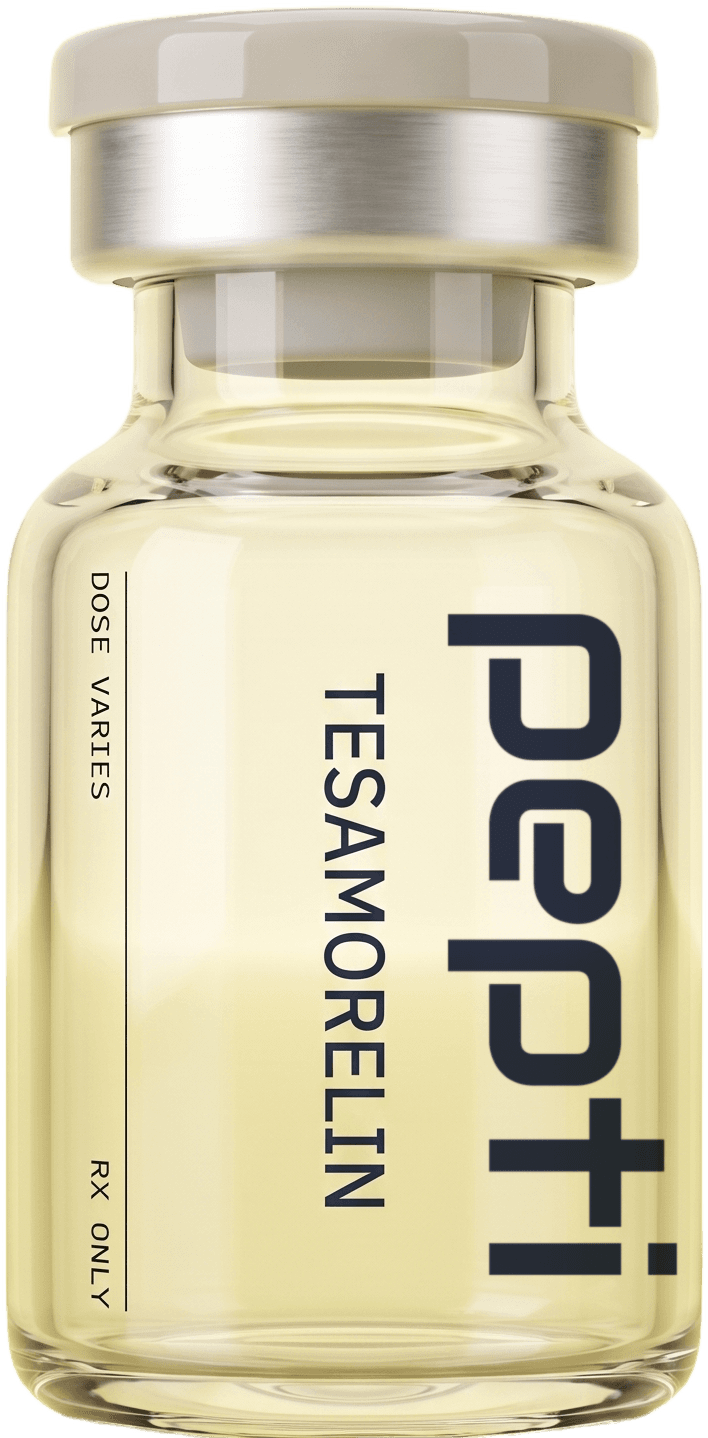
Treatments mentioned
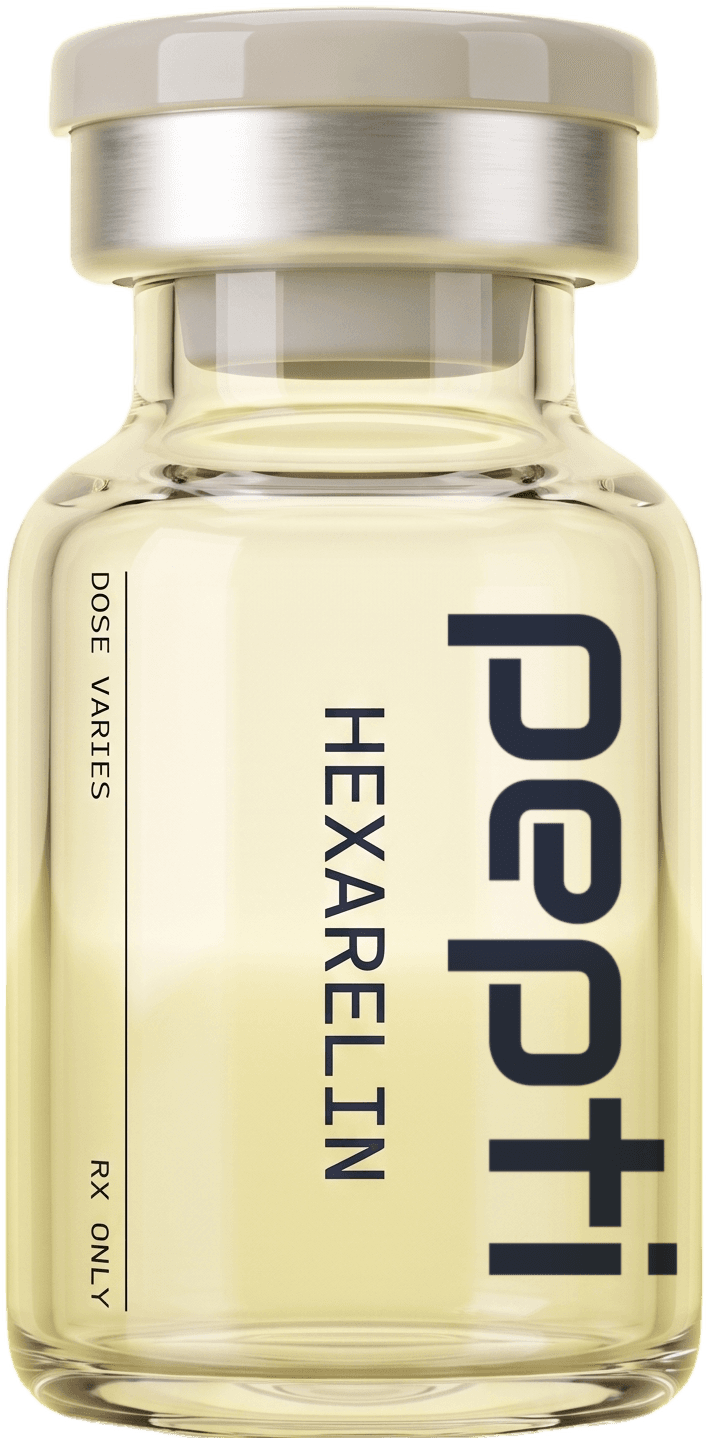
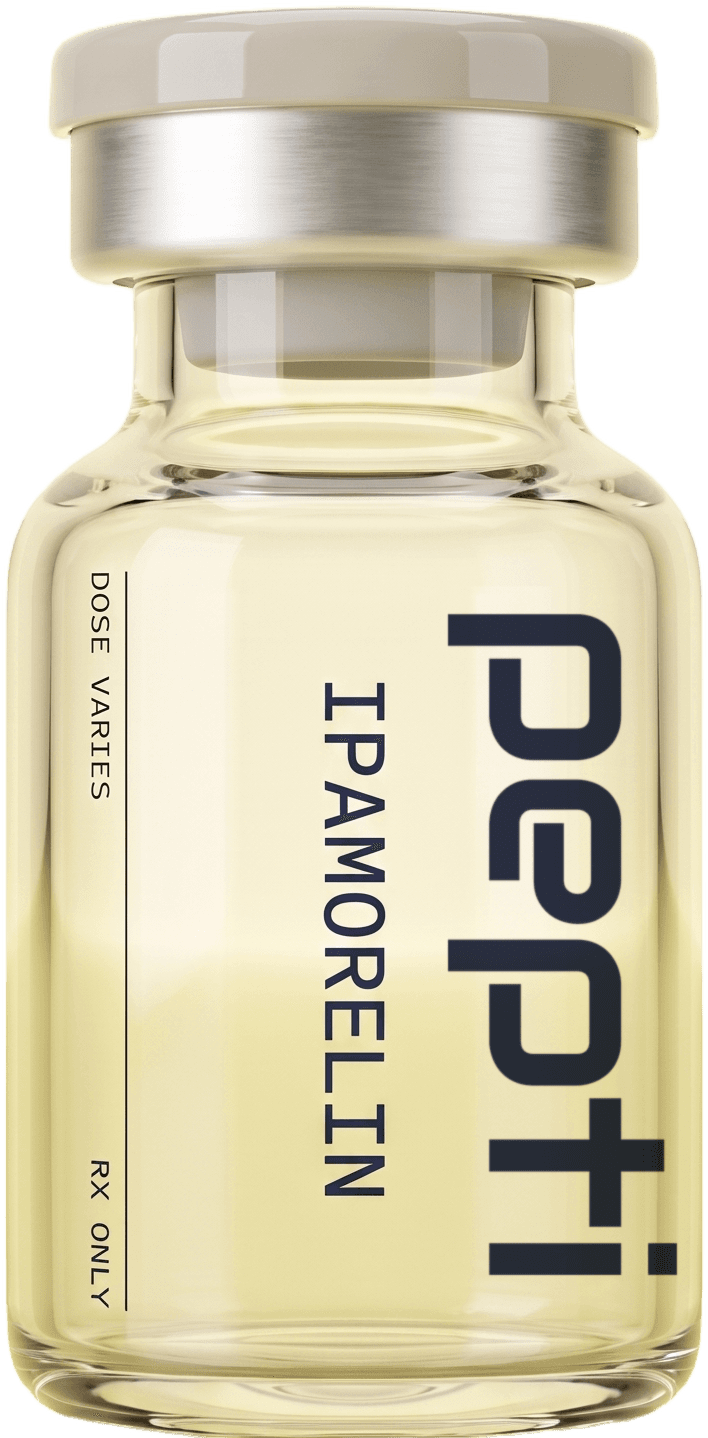
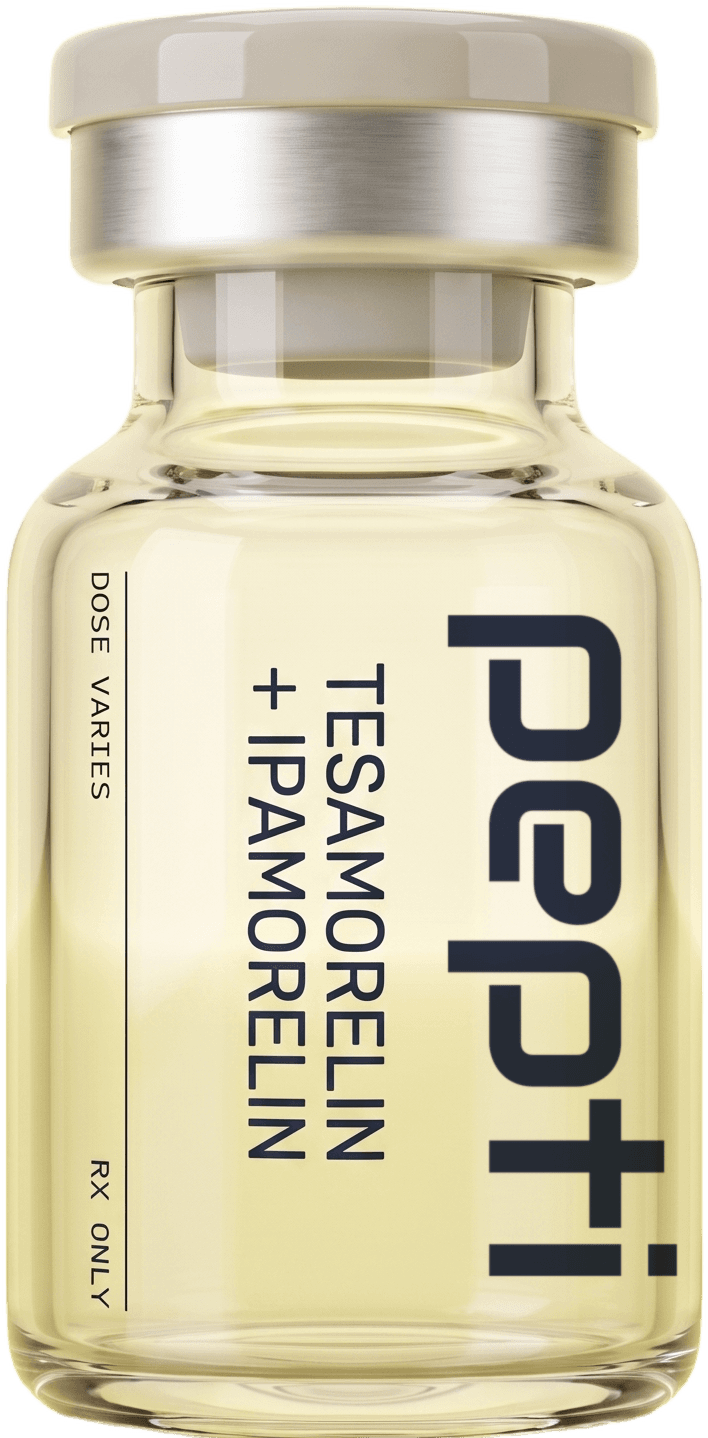
Tesamorelin and hexarelin both ask the pituitary to release your own growth hormone, but they pull different levers and rest on different kinds of evidence. Tesamorelin is a stabilised version of growth-hormone-releasing hormone (GHRH), with randomised phase 3 trials and an FDA-approved product for one narrow indication, abdominal fat in HIV-associated lipodystrophy. Hexarelin is a six-amino-acid ghrelin-receptor agonist from the 1990s, more potent per dose but less selective, since it also raises cortisol and prolactin, and its response fades with continuous use; its human record is pharmacology, not treatment trials. Both are prescription-only, and the compounded vials are not FDA approved.
This page explains each, compares them side by side, covers the evidence, where each stands with the FDA, how each is dosed at Pepti, what each costs, and who tends to suit which.
Tesamorelin vs Hexarelin
The short answer
| If your main interest is | The usual prescription | What is in it | Price |
|---|---|---|---|
| Visceral fat, the secretagogue with phase 3 trials | Tesamorelin | 10 mg tesamorelin in a 5 mL vial | $249/mo |
| The strongest single-agent ghrelin-receptor pulse, with breaks built in | Hexarelin | 12.5 mg hexarelin in a 5 mL vial | $209/mo |
| Both pituitary routes in one vial | Tesamorelin + Ipamorelin | 10 mg tesamorelin and 5 mg ipamorelin | $259/mo |
| A selective ghrelin-receptor agonist without the cortisol pulse | Ipamorelin | 5 mg ipamorelin in a 5 mL vial | $239/mo |
| The most commonly prescribed GH-axis combination | CJC-1295 / Ipamorelin | 6 mg CJC-1295 and 12 mg ipamorelin | $239/mo |
Every figure is an all-in monthly price covering the medication, physician review, refill management and shipping, with no separate membership fee. Pepti is cash-pay and does not bill insurance.
Tesamorelin vs Hexarelin
Tesamorelin on its own terms
What it is
GHRH is the 44-amino-acid signal the hypothalamus sends to the pituitary to trigger a growth hormone pulse. Tesamorelin is that entire sequence with a trans-3-hexenoic acid group attached to one end, which protects it from the enzyme DPP-4 that otherwise cuts native GHRH apart within minutes. It contains no growth hormone; it delivers the instruction, and the pituitary decides how much to release. The full reference is at what is tesamorelin.
How it is described to work
Tesamorelin binds the GHRH receptor on the pituitary and triggers a pulse of growth hormone that is still subject to somatostatin and IGF-1 feedback. Growth hormone acts on the liver to produce IGF-1, which carries much of the signal to tissue; IGF-1 rose by 81% over 26 weeks in a 2007 New England Journal of Medicine trial and by 117% in a 2012 Archives of Neurology trial in older adults, staying within the physiological range. Growth hormone is lipolytic, and visceral fat responds more than subcutaneous fat, which is the pattern every trial reported.
What human data exists
Tesamorelin has randomised, double-blind, placebo-controlled trials, including two phase 3 trials in people with HIV and abdominal fat accumulation (New England Journal of Medicine 2007; Journal of Acquired Immune Deficiency Syndromes 2010) that supported FDA approval. They measured visceral fat on CT and reported a reduction against placebo, with no significant change in subcutaneous fat. Smaller randomised trials report reductions in liver fat (JAMA 2014; Lancet HIV 2019), one trial in 60 abdominally obese adults without HIV (2012), and a cognitive signal in older adults (2012). Roughly 1,100 people were randomised across them. Every trial used 1 mg or 2 mg daily; none used Pepti's 0.5 mg weekday schedule. More in tesamorelin benefits.
Tesamorelin vs Hexarelin
Hexarelin on its own terms
What it is
Hexarelin is a hexapeptide, His-D-2-methyl-Trp-Ala-Trp-D-Phe-Lys-NH2, with two D-amino acids and a methyl group that let it survive in the body. It imitates ghrelin, the stomach hormone that signals hunger and tells the pituitary to release growth hormone. It was designed in the early 1990s by a European group as a "super-analogue" of GHRP-6 and was used as a research tool in hundreds of adults and children. The full reference is at what is hexarelin.
How it is described to work
- The ghrelin receptor. Hexarelin binds GHS-R1a and triggers a growth hormone pulse. In the founding 1994 study in twelve healthy volunteers, an intravenous dose released about twice as much growth hormone as GHRH, and the subcutaneous route delivered 77% of the intravenous response.
- Less selective. A 1997 study in Peptides reported hexarelin raising prolactin, ACTH and cortisol alongside growth hormone, with an ACTH and cortisol response similar in size to that from corticotropin-releasing hormone.
- Desensitisation. In a 1998 study in the Journal of Clinical Endocrinology and Metabolism, twice-daily subcutaneous hexarelin for sixteen weeks in healthy elderly volunteers saw the growth hormone response fall by nearly half, returning to baseline four weeks after stopping. Shorter intermittent schedules did not show it.
- The heart. Single intravenous doses raised left ventricular ejection fraction for about an hour in three small Turin studies, independent of growth hormone, through cardiac ghrelin receptors and CD36. This is research, not a heart treatment.
What human data exists
Hexarelin has a large body of human pharmacology from 1994 to 2003, two small open-label courses in short children, one sixteen-week subcutaneous study in elderly adults and three single-dose cardiac studies. There are no randomised controlled trials for sleep, recovery, body composition or any wellness use, and the sixteen-week study found no significant change in body fat, lean mass or bone density.
Tesamorelin vs Hexarelin
Head to head
| Tesamorelin | Hexarelin | |
|---|---|---|
| Receptor | GHRH receptor | Ghrelin receptor (GHS-R1a), plus CD36 in the heart |
| Size | 44 amino acids plus a stabilising cap | 6 amino acids, synthetic |
| What it imitates | Hypothalamic GHRH | Gut hormone ghrelin |
| Selectivity | Growth hormone, through normal feedback | Growth hormone plus transient cortisol, ACTH and prolactin |
| Desensitisation | Not a feature of the trial record | Partial and reversible with continuous dosing |
| Human trials | Randomised phase 3 trials, about 1,100 people | Pharmacology studies; no randomised treatment trials |
| Endpoint with trial data | Visceral fat on CT; liver fat | None for any treatment use |
| Approved anywhere | An FDA-approved tesamorelin product, for HIV-associated lipodystrophy only | No |
| FDA compounding position | Active ingredient of an approved product; never on the 503A category lists | Not on any 503A category list; never reviewed |
| Anti-doping | Named on the 2026 WADA list under S2.2.4, prohibited at all times | Check your sport's current list |
| Vial at Pepti | 5 mL, 2 mg/mL (10 mg) | 5 mL, 2.5 mg/mL (12.5 mg) |
| Typical directions | 0.25 mL (25 units) Monday through Friday nights at bedtime | 0.25 mL (25 units) Monday through Friday nights at bedtime |
| Per dose | 0.5 mg | 0.625 mg |
| Doses per vial | 20, about four weeks | 20, about four weeks |
| Price at Pepti | $249 a month | $209 a month |
The real difference is the lever and the evidence
The pituitary listens to two inputs: GHRH from the hypothalamus and ghrelin-type signals from the gut. Tesamorelin supplies the first and hexarelin the second. They are not rivals for the same receptor; a 1996 study in Clinical Endocrinology found hexarelin given with GHRH produced a larger peak than the sum of the two alone, though the synergy faded on repeat dosing. That is why GH-axis prescriptions often pair the two routes.
Where they part company is evidence and side profile. Tesamorelin is the most heavily trialled growth hormone secretagogue prescribed as a compounded peptide, for one specific endpoint. Hexarelin's human data tells you a great deal about what one dose does to hormones and very little about whether a course does anything useful, and it brings a cortisol and prolactin pulse and a response that turns down with continuous use. "Stronger per dose" and "better" are not the same claim.
Tesamorelin vs Hexarelin
Who suits which
Tesamorelin
Tesamorelin tends to suit someone whose goal is specifically visceral fat, the fat around the organs, and who wants the secretagogue with randomised trials behind that endpoint. It is not a weight-loss drug: the approved label calls it weight-neutral. Anyone in a tested sport should know it is named on the WADA list.
Hexarelin
Hexarelin tends to suit someone whose physician wants the strongest single-agent ghrelin-receptor pulse and is prepared to structure the course with breaks, which is what the five-nights-on, two-off schedule is for. It is not the first choice for long courses, or for anyone with a condition sensitive to cortisol or prolactin; ipamorelin was designed to keep the growth hormone pulse without them. See what is ipamorelin.
Both routes at once
Pepti does not supply tesamorelin and hexarelin together in one vial. The combination of tesamorelin's GHRH signal with a ghrelin-receptor agonist is Tesamorelin + Ipamorelin, which uses the more selective ipamorelin. Comparisons across the class are in sermorelin vs tesamorelin vs ipamorelin and CJC-1295 vs tesamorelin.
Tesamorelin vs Hexarelin
When neither is the right first step
| Situation | What makes more sense |
|---|---|
| Scale weight is the goal | Semaglutide or tirzepatide, with large human trials for weight |
| Sleep is the only goal | DSIP or the SERENITY Blend, aimed at sleep more directly |
| A soft-tissue injury | BPC-157 or TB-500; secretagogues are not injury treatments |
| A pituitary disorder, pituitary surgery or head irradiation | A secretagogue needs a pituitary that can respond; tesamorelin's approved label is contraindicated here |
| Borderline fasting glucose | Either can push it further; your physician may want it addressed first |
Tesamorelin vs Hexarelin
Where each stands with the FDA
Neither was touched by the 2026 changes that moved many peptides, for different reasons. As of the FDA documents checked in September 2026:
| Tesamorelin | Hexarelin | |
|---|---|---|
| Approved product | Yes, approved in November 2010 for excess abdominal fat in adults with HIV-associated lipodystrophy, later deemed a biologics licence | None |
| 503A category lists | Never listed, because it is the active ingredient of an approved product | Not listed in Category 1, 2 or 3 |
| April 2026 Category 2 removals | Not involved | Not involved; never in Category 2 |
| Advisory committee | Never on an agenda | Never reviewed |
Compounded tesamorelin is not the approved product: it is prepared to an individual prescription, at a dose and schedule your physician sets, and prescribing it outside HIV-associated lipodystrophy is off-label. Compounded hexarelin has no approved counterpart at all. Neither compounded vial is FDA approved; compounded medications never are. See are peptides FDA approved.
Tesamorelin vs Hexarelin
Dosing, side by side
Both are injected under the skin, usually the abdomen, rotating sites, five nights a week at bedtime, because the largest natural growth hormone pulse comes in deep sleep.
| Tesamorelin | Hexarelin | |
|---|---|---|
| Printed direction | Inject 0.25 mL (25 units) subcutaneously Monday through Friday nights at bedtime | Inject 0.25 mL (25 units) subcutaneously Monday through Friday nights at bedtime |
| Concentration | 2 mg/mL | 2.5 mg/mL |
| Per dose | 0.5 mg (2 x 0.25) | 0.625 mg (2.5 x 0.25) |
| Doses per vial | 20 (5 mL divided by 0.25 mL) | 20 |
| One vial lasts | 4 weeks at five nights a week | 4 weeks at five nights a week |
| Why weekdays only | A prescriber convention giving the axis two nights off | The practical answer to the desensitisation data |
That arithmetic reads a label; it does not set a dose. Your physician sets your directions after reviewing your intake, and your exact dose is printed on the vial. Vials are multi-dose solutions shipped ready to use, refrigerated with ice packs, with sterile syringes and alcohol prep pads; refills run every 28 days, one vial per fill. See tesamorelin dosage.
Tesamorelin vs Hexarelin
Side effects
Tesamorelin. The approved product's pooled data, at 2 mg daily, list injection-site reactions (17% against 6% on placebo), joint pain, limb pain, muscle aches, swelling and tingling, and hypersensitivity reactions in 4%. The label also records new-onset diabetes in 5% of treated patients against 1% on placebo, which is why diabetes or borderline glucose belongs on your intake. See tesamorelin side effects.
Hexarelin. Reported at compounded doses: warmth or flushing after the injection, hunger, a transient headache, light-headedness and injection-site redness. Each dose raises cortisol and prolactin for an hour or two, and the acute effect on the heart's contractility is real, so a cardiac diagnosis belongs on your intake. Growth hormone class risks, glucose intolerance and fluid retention, apply until shown otherwise.
For either, a reaction that is severe, spreading or involves difficulty breathing needs emergency care: call 911, then tell your care team.
Tesamorelin vs Hexarelin
Who should not take either, or should discuss it first
| Situation | Why |
|---|---|
| Pituitary disorder, surgery, head irradiation or trauma | Tesamorelin's approved label is contraindicated; a secretagogue needs a responsive pituitary |
| Active cancer, or a cancer history | Contraindicated on tesamorelin's label; raised at intake for hexarelin |
| Diabetes or impaired glucose tolerance | Growth hormone reduces insulin sensitivity |
| Conditions sensitive to cortisol or prolactin | Hexarelin raises both transiently |
| Pregnancy or breastfeeding | Neither is used |
| Tested athletes | Tesamorelin is prohibited at all times; check the list for hexarelin |
Tesamorelin vs Hexarelin
What the evidence shows, honestly
Tesamorelin has real randomised evidence for one thing: a reduction in visceral fat measured on CT, mostly in people with HIV, at doses higher than the compounded one. Hexarelin has decades of reliable pharmacology showing it releases growth hormone, and the one sustained adult course that measured body composition found no change. Neither has been tested for sleep, recovery or ageing in healthy adults.
Tesamorelin vs Hexarelin
Where to get tesamorelin or hexarelin prescribed
Neither can be bought legitimately without a prescription. Sites selling them "for research use only" are not accountable for identity, purity, sterility or concentration. The prescription route:
- Complete a free online intake covering your history, medications and what you want help with.
- A physician licensed in your state reviews it, usually within 24 hours.
- If it is appropriate, a PCAB-accredited, FDA-registered US 503A compounding pharmacy prepares it to that prescription. Lot test results are published at /quality/lab-results.
- It ships refrigerated with your directions printed on the vial.
- Your physician stays reachable for questions and dose changes.
Pepti prescribes both in every state except Oklahoma, plus DC Step by step: how to get tesamorelin prescribed online and how to get hexarelin prescribed online.
References
What this is based on.
References
- Ghigo E, Arvat E, Gianotti L et al.. Growth hormone-releasing activity of hexarelin, a new synthetic hexapeptide, after intravenous, subcutaneous, intranasal, and oral administration in man · J Clin Endocrinol Metab (1994) · PMID 8126144
- Rahim A, O'Neill PA, Shalet SM. Growth hormone status during long-term hexarelin therapy · J Clin Endocrinol Metab (1998) · PMID 9589671
- Rahim A, Shalet SM. Does desensitization to hexarelin occur? · Growth Horm IGF Res (1998) · PMID 10990150
- Ghigo E, Arvat E, Gianotti L et al.. Short-term administration of intranasal or oral Hexarelin, a synthetic hexapeptide, does not desensitize the growth hormone responsiveness in human aging · Eur J Endocrinol (1996) · PMID 8921821
- Klinger B, Silbergeld A, Deghenghi R et al.. Desensitization from long-term intranasal treatment with hexarelin does not interfere with the biological effects of this growth hormone-releasing peptide in short children · Eur J Endocrinol (1996) · PMID 8766941
- Laron Z, Frenkel J, Deghenghi R et al.. Intranasal administration of the GHRP hexarelin accelerates growth in short children · Clin Endocrinol (Oxf) (1995) · PMID 8548949
- Loche S, Cambiaso P, Carta D et al.. The growth hormone-releasing activity of hexarelin, a new synthetic hexapeptide, in short normal and obese children and in hypopituitary subjects · J Clin Endocrinol Metab (1995) · PMID 7852535
- Massoud AF, Hindmarsh PC, Matthews DR, Brook CG. The effect of repeated administration of hexarelin, a growth hormone releasing peptide, and growth hormone releasing hormone on growth hormone responsivity · Clin Endocrinol (Oxf) (1996) · PMID 8762732
- Maccario M, Veldhuis JD, Broglio F et al.. Impact of two or three daily subcutaneous injections of hexarelin, a synthetic growth hormone (GH) secretagogue, on 24-h GH, prolactin, adrenocorticotropin and cortisol secretion in humans · Eur J Endocrinol (2002) · PMID 11888836
- Arvat E, di Vito L, Maccagno B et al.. Effects of GHRP-2 and hexarelin, two synthetic GH-releasing peptides, on GH, prolactin, ACTH and cortisol levels in man. Comparison with the effects of GHRH, TRH and hCRH · Peptides (1997) · PMID 9285939
- Ghigo E, Arvat E, Ramunni J et al.. Adrenocorticotropin- and cortisol-releasing effect of hexarelin, a synthetic growth hormone-releasing peptide, in normal subjects and patients with Cushing's syndrome · J Clin Endocrinol Metab (1997) · PMID 9253314
- Arvat E, Ramunni J, Bellone J et al.. The GH, prolactin, ACTH and cortisol responses to Hexarelin, a synthetic hexapeptide, undergo different age-related variations · Eur J Endocrinol (1997) · PMID 9437229
Citations are provided for educational purposes. They do not constitute medical advice. Always discuss any peptide protocol with your prescribing physician.
Common questions
Tesamorelin vs Hexarelin, answered.
Tesamorelin is a stabilised GHRH analogue that acts on the pituitary's GHRH receptor. Hexarelin is a ghrelin-receptor agonist that acts on a different pituitary receptor and also raises cortisol and prolactin. Tesamorelin has phase 3 trials; hexarelin has pharmacology studies.
Per dose, hexarelin produced a larger single-dose growth hormone response than GHRH in the human studies, and it is grouped with the more potent secretagogues. That is not the same as better: it is less selective, it desensitises with continuous use, and the one sustained adult course found no body-composition change.
Tesamorelin is the one with trial evidence, specifically for visceral fat measured on CT, and its approved label calls it weight-neutral. Hexarelin's sixteen-week adult study found no change in body fat. For weight loss itself, GLP-1 medications have far more evidence.
The two act through different receptors, and a GHRH analogue plus a ghrelin-type peptide is a pharmacologically sound pairing, but Pepti does not supply this pair in one vial and no trial has tested it. The combined product Pepti supplies is Tesamorelin + Ipamorelin. Your physician sets your directions after reviewing your intake.
The body's largest natural growth hormone pulse comes during slow-wave sleep, so a bedtime dose adds to a pulse already under way. For hexarelin, food was also reported to modulate the response.
Partly, and reversibly. In a sixteen-week twice-daily study, the growth hormone response fell by nearly half and returned to baseline four weeks after stopping. Intermittent schedules in shorter studies did not show it, which is the reason for five nights on and two off.
An FDA-approved tesamorelin product exists for one indication: excess abdominal fat in adults with HIV-associated lipodystrophy. Compounded tesamorelin is not FDA approved, and hexarelin is not approved for anything.
At Pepti, tesamorelin is $249 a month and hexarelin is $209 a month, all-in, covering medication, physician review, refill management and shipping.
No study gives a timeline at the compounded doses. The tesamorelin trials measured visceral fat at 26 weeks, with some running to 12 months, at 1 to 2 mg daily. The longest hexarelin course in adults ran sixteen weeks and measured hormone responses and body composition.
The 2026 WADA Prohibited List names tesamorelin under S2.2.4, prohibited at all times. Tested athletes should check their sport's current list before starting hexarelin or anything else.
Bloodwork is not required for any Pepti treatment. If your physician wants labs for your care, they'll ask through your account. The free assessment goes to a physician licensed in your state. A consultation does not guarantee a prescription.
Next step
See what a physician recommends for you.
A licensed physician in your state reviews your intake and decides what is appropriate. A consultation does not guarantee a prescription.