Anti-Aging · Reference
TB-500 vs GHK-Cu: Repair Peptide vs Copper Peptide, Compared
TB-500 and GHK-Cu both come up for tissue repair, but they act on different stages of it and are usually chosen for different goals.
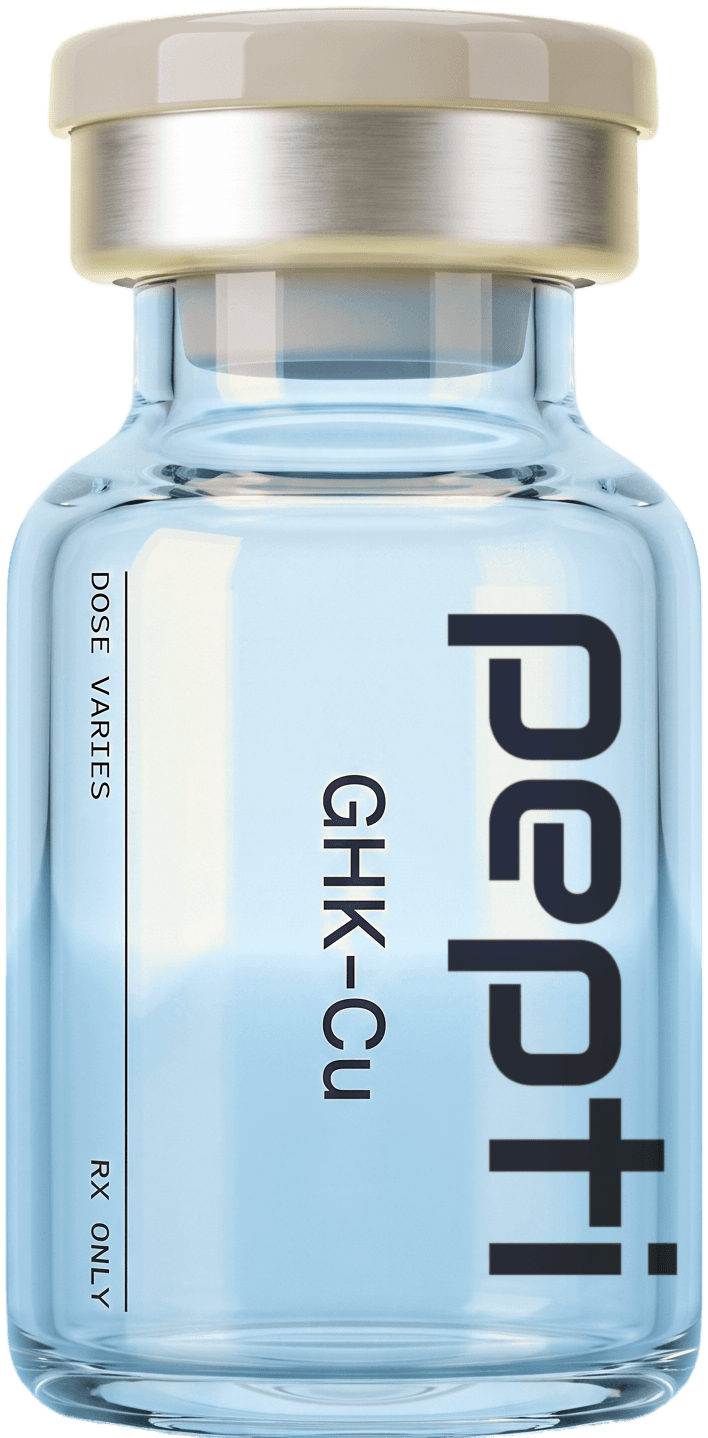
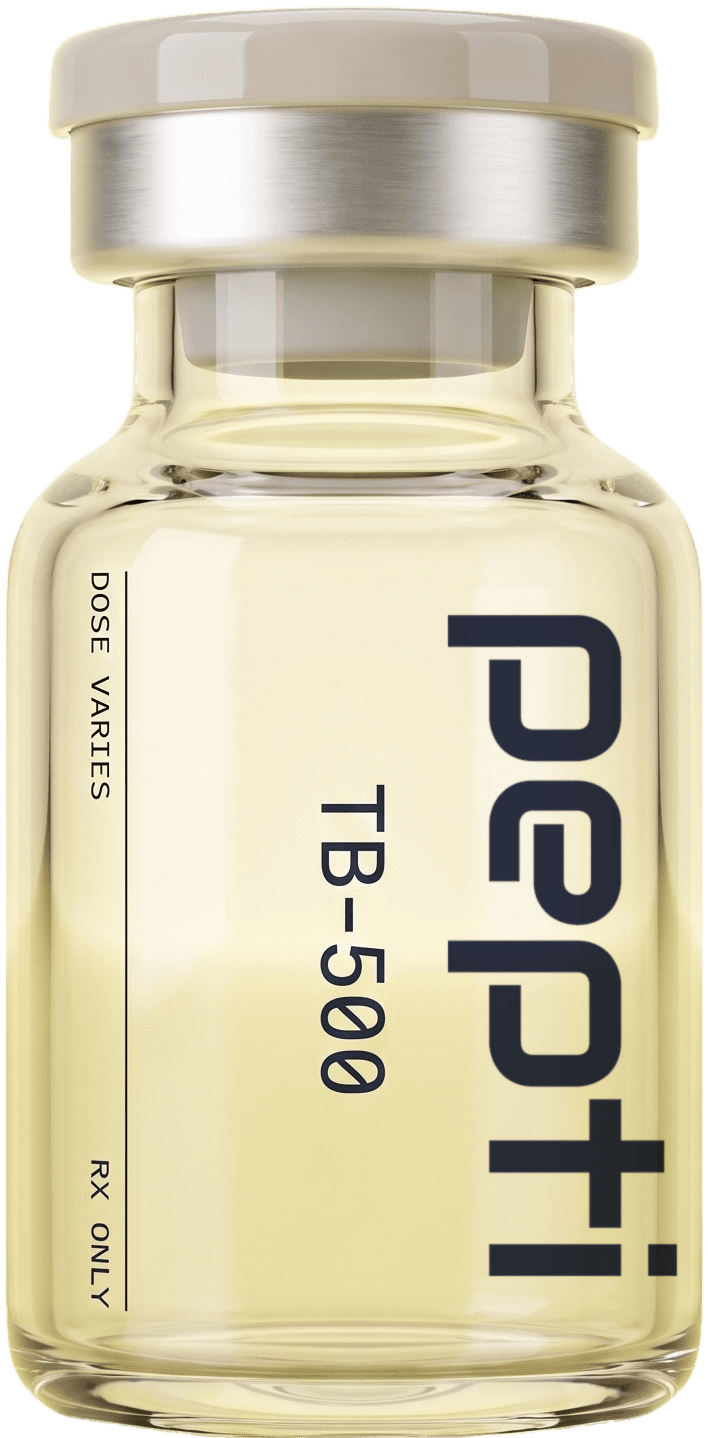
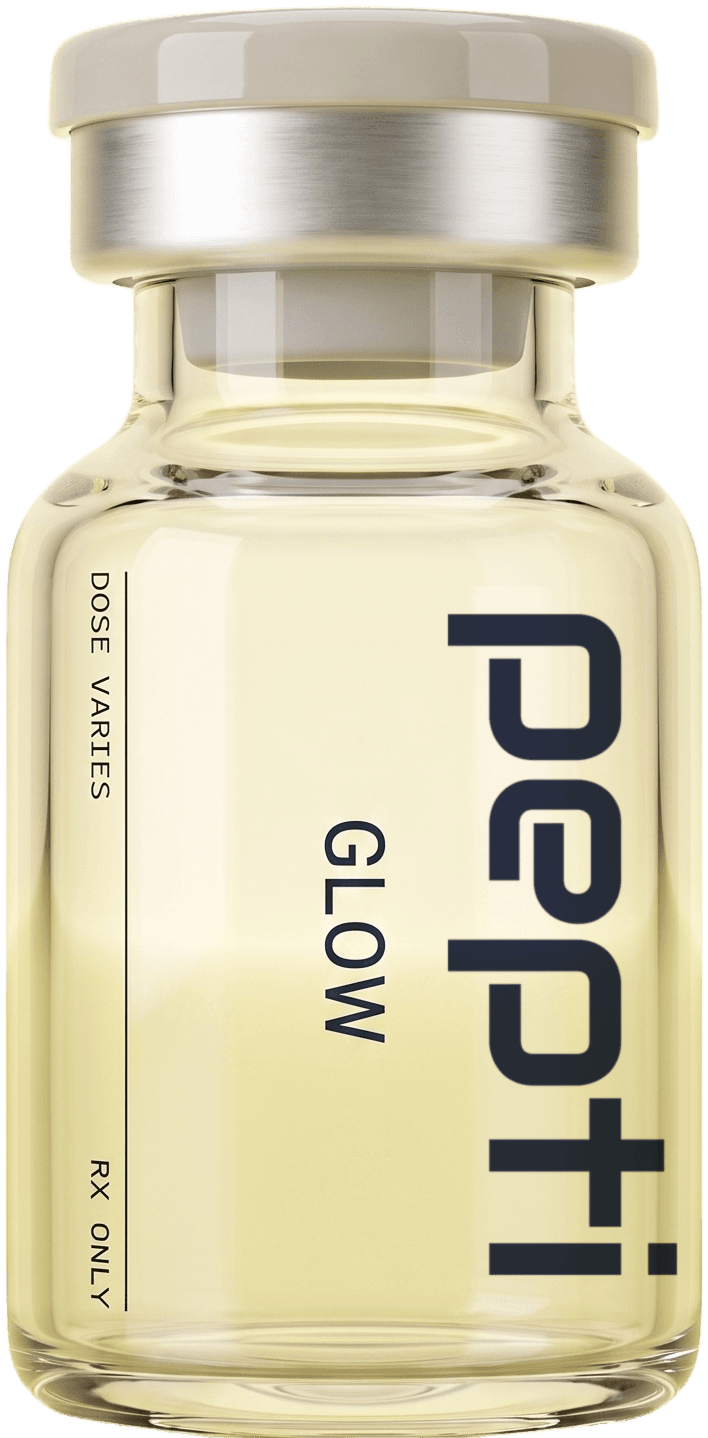
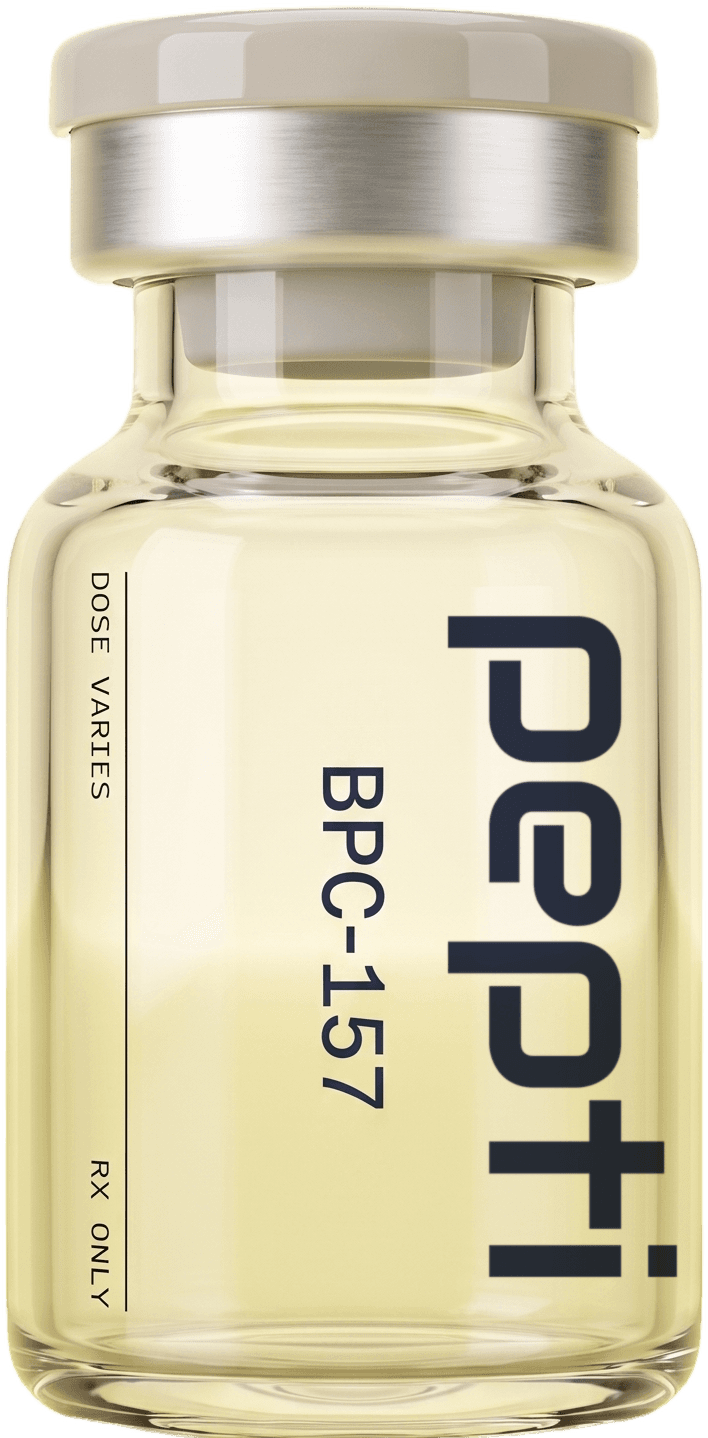
TB-500 is a synthetic fragment of thymosin beta-4, described around actin, cell migration and new blood vessels, and prescribers use it mainly for soft-tissue injury. GHK-Cu is a copper-binding tripeptide found in human plasma, described around collagen synthesis and matrix remodelling, and prescribers use it mainly for skin and connective-tissue quality. Neither has a human trial as an injection; both are prescription-only, compounded by a licensed US pharmacy, and not FDA approved. Because they are described as complementary, they are often prescribed together, which is what GLOW and KLOW are.
This page explains each, puts them side by side, covers the evidence honestly, where each stands with the FDA, how each is dosed at Pepti, what each costs, and who tends to suit which.
TB-500 vs GHK-Cu
The short answer
| If your main goal is | The usual prescription | What is in it | Price |
|---|---|---|---|
| A soft-tissue injury | TB-500 | 5 mg TB-500 in a 5 mL vial | $209/mo |
| Skin, hair or connective-tissue quality | GHK-Cu | 50 mg GHK-Cu in a 5 mL vial | $239/mo |
| Both, in one injection | GLOW | 50 mg GHK-Cu, 10 mg BPC-157, 10 mg TB-500 in a 5 mL vial | $259/mo |
| Both, plus an anti-inflammatory | KLOW Blend | GLOW's three plus 10 mg KPV | $259/mo |
| An injury, without the skin component | BPC-157 + TB-500 | 5 mg BPC-157 and 5 mg TB-500 in a 5 mL vial | $259/mo |
Every figure is an all-in monthly price covering the medication, physician review, refill management and shipping, with no separate membership fee. Pepti is cash-pay and does not bill insurance.
TB-500 vs GHK-Cu
TB-500 on its own terms
What it is
TB-500 is a synthetic peptide built around LKKTETQ, the actin-binding stretch at positions 17 to 23 of thymosin beta-4. Thymosin beta-4 is a 43-amino-acid protein found in almost every cell, whose main job is holding actin, the cell's internal scaffolding, in reserve. Platelets release it at the site of an injury. "TB-500" is a product name; most published papers studied the full protein, and a smaller set tested the fragment. It is not thymosin alpha-1, which is a different immune peptide. The full reference is at what is TB-500.
How it is described to work
- Cell migration. By controlling the free actin supply, thymosin beta-4 influences how readily cells crawl into damaged tissue; a 1997 FASEB Journal paper reported it stimulating directional migration of human endothelial cells in culture.
- New blood vessels. A 2004 paper in Mechanisms of Ageing and Development reported angiogenesis and wound healing in mice.
- Cell survival. A 2004 Nature paper reported activation of integrin-linked kinase and Akt in cardiac cells after an induced heart attack in mice.
- Inflammation and matrix. Cell and animal-eye work describes NF-kB suppression and laminin-5 production.
All of this is from animal and cell studies, almost all on the full protein.
What human data exists
There are no randomised controlled trials of TB-500 in humans for any indication. Full-length thymosin beta-4 has human trials as eye drops for severe dry eye (a Phase 2 randomised trial, Cornea 2015) and in chronic skin ulcers, but those used the whole protein, by a different route, in different conditions. The tendon and muscle case is animal and cell research plus prescribing experience. More in TB-500 benefits.
TB-500 vs GHK-Cu
GHK-Cu on its own terms
What it is
GHK is a tripeptide, glycine, histidine and lysine, and GHK-Cu is that tripeptide bound to a copper ion. It was first described in 1973 as a component of human plasma, and its plasma level is reported to fall with age, from roughly 200 ng/mL in a person's twenties to around 80 ng/mL by their sixties. Whether that decline causes anything has not been shown. The copper complex is what the research is built around: copper is a cofactor for the enzymes that cross-link collagen and elastin. The solution is blue because of the copper, which is normal. The full reference is at what is GHK-Cu.
How it is described to work
- Collagen and matrix. A 1988 FEBS Letters paper reported GHK-Cu stimulating collagen synthesis in cultured human fibroblasts; later work extended this to elastin and glycosaminoglycans.
- Remodelling. Papers from 1999 and 2000 describe GHK-Cu modulating matrix metalloproteinases, the enzymes that clear damaged matrix.
- Angiogenesis. A 1994 Journal of Cell Biology paper reported copper-binding GHK fragments stimulating new blood-vessel growth.
- Gene expression. A 2012 Genome Medicine paper used a gene-expression database to describe broad effects across many genes.
What human data exists
The human evidence is topical. Small cosmetic studies of GHK-Cu creams in photoaged facial skin over 8 to 12 weeks, and a 1994 study of a topical gel in diabetic ulcers. There are no randomised controlled trials of injectable GHK-Cu in humans; the injectable has animal data and prescribing experience. A source that quotes the cream studies as evidence for the injection is mixing two routes. See GHK-Cu topical vs injection.
TB-500 vs GHK-Cu
Head to head
| TB-500 | GHK-Cu | |
|---|---|---|
| What it is | Seven-amino-acid fragment of thymosin beta-4 | Copper-bound tripeptide found in plasma |
| Main described mechanism | Actin regulation and cell migration | Collagen synthesis and matrix remodelling |
| Repair phase it is linked to | Cells moving in; new vessels | Matrix laid down and reorganised; new vessels |
| What it is usually prescribed for | Tendon, ligament and muscle injury | Skin, hair and connective-tissue quality |
| Human data | None for the fragment; parent protein trialled as eye drops and on skin ulcers | Topical cosmetic and ulcer studies; none for the injection |
| Specific caution | Cancer history, anticoagulants | Wilson's disease or copper disorders; high-dose zinc; cancer history |
| FDA status | Out of Category 2 April 2026; advisory committee voted 8 to 6 for the bulks list, July 2026 | Out of Category 2 April 2026; advisory committee review due before end of February 2027 |
| Anti-doping | Prohibited at all times under WADA S2.3 | Check your sport's current list |
| Vial at Pepti | 5 mL, 1 mg/mL (5 mg) | 5 mL, 10 mg/mL (50 mg) |
| Typical directions | 0.25 mL (25 units) Monday through Friday mornings | 0.25 mL (25 units) once daily Monday through Friday |
| Per dose | 0.25 mg | 2.5 mg |
| Doses per vial | 20, about four weeks | 20, about four weeks |
| Price at Pepti | $209 a month | $239 a month |
The real difference is which part of repair
Tissue repair runs in overlapping phases: cells move into the damaged area, blood vessels grow in, new matrix is laid down, and the early disorganised collagen is remodelled. The research places TB-500 mostly at the front of that sequence, getting cells to move, and GHK-Cu mostly at the back, building and reorganising matrix. That is a rationale drawn from separate animal and cell literatures, not a finding from any study that gave both. It is also why the question is often "which first" or "both" rather than "which is better."
Why the milligrams look so different
A dose of GHK-Cu at Pepti carries 2.5 mg; a dose of TB-500 carries 0.25 mg. That is ten times more by mass, and it says nothing about strength. They are different molecules with different working ranges, and GHK-Cu is typically used at higher amounts. The two numbers simply come from the two vial concentrations at the same 0.25 mL draw.
TB-500 vs GHK-Cu
Who suits which
TB-500
TB-500 tends to suit someone with a defined soft-tissue problem, a tendon, ligament or muscle, where the interest is in the cell-migration side of repair. It is often paired with BPC-157, which has the deeper tendon-specific animal literature; see BPC-157 vs TB-500. It is not an option for tested athletes.
GHK-Cu
GHK-Cu tends to suit someone whose goal is skin texture, hair or connective-tissue quality, with no particular injury in the picture. Someone already using a GHK-Cu cream should know that the cream has the human skin data, and that whether an injection adds anything has not been tested.
Both together
When the picture is an injury and a skin or tissue-quality goal together, prescribers often reach for a blend rather than two vials. GLOW holds GHK-Cu, BPC-157 and TB-500; KLOW adds KPV for persistent inflammation; REVIVE pairs GHK-Cu and TB-500 with CJC-1295 and ipamorelin; ETERNAL adds epithalon. A blend means one injection at a fixed ratio, at the cost of not knowing which component did what. The blend trade-offs are in KLOW vs GLOW.
TB-500 vs GHK-Cu
When neither is the right first step
| Situation | What makes more sense |
|---|---|
| A complete rupture, displaced fracture or locking joint | Imaging and a surgical opinion; peptides do not replace the operation |
| Tendinopathy you have not loaded | Progressive loading under a physiotherapist, which has human trial evidence |
| A gut complaint | BPC-157, the component with the gastrointestinal literature |
| Inflammation that will not settle | KPV |
| You wanted the immune peptide | Thymosin Alpha-1, a different molecule from TB-500 |
TB-500 vs GHK-Cu
Where each stands with the FDA
Both were in Category 2 of the FDA's 503A bulks list from 2023, and both were removed on 15 April 2026 along with ten other peptides after their nominations were withdrawn. They have since moved on different timetables. As of the FDA pages checked in September 2026:
| TB-500 | GHK-Cu | |
|---|---|---|
| 2023 | Category 2 (immunogenicity concern) | Injectable in Category 2; non-injectable in Category 1 |
| April 2026 | Removed from Category 2 | Removed from Category 2; Category 1 listing withdrawn |
| July 2026 | Advisory committee voted 8 to 6, one abstention, to recommend it for the bulks list, against the staff proposal | Not on the agenda |
| Next | Final FDA determination pending | Advisory committee review scheduled before the end of February 2027 |
Removal from Category 2 lifts the safety-risk flag; it does not by itself place a substance on the bulks list. Both remain legal to prescribe and dispense, and neither is FDA approved. See are peptides FDA approved.
TB-500 vs GHK-Cu
Dosing, side by side
Both are injected under the skin, abdomen or thigh, rotating sites, five days a week with weekends off, at the same 0.25 mL volume.
| TB-500 | GHK-Cu | |
|---|---|---|
| Draw | 25 units (0.25 mL) on a U-100 syringe | 25 units (0.25 mL) on a U-100 syringe |
| Concentration | 1 mg/mL | 10 mg/mL |
| Per dose | 0.25 mg (1 x 0.25) | 2.5 mg (10 x 0.25) |
| Timing | Mornings | Once daily, weekdays |
| Doses per vial | 20 (5 mL divided by 0.25 mL) | 20 |
| One vial lasts | 4 weeks | 4 weeks |
That arithmetic is for reading a label, not setting a dose. Your physician sets your directions after reviewing your intake, and your exact dose is printed on the vial. Vials ship ready to use, refrigerated with ice packs, with sterile syringes and alcohol prep pads; refills run every 28 days, one vial per fill. More in TB-500 dosage and GHK-Cu dosage.
TB-500 vs GHK-Cu
Side effects
TB-500. Mostly injection-site redness, mild soreness or bruising. Some people report a brief headache or head-rush after a dose, or tiredness in the first week. Because thymosin beta-4 is described as promoting cell migration and new blood vessels, a personal history of cancer is raised at intake, as is anticoagulant therapy. See is TB-500 safe.
GHK-Cu. Mostly injection-site redness, soreness or bruising, occasionally a faint transient blue tint from the copper. Some people report an early headache or light-headedness. Anyone with Wilson's disease or another copper-metabolism disorder should not use it, high-dose zinc competes with copper and belongs on the intake, and a cancer history should be raised because angiogenesis is a described mechanism. See is GHK-Cu safe.
For either, any reaction that is severe, spreading or involves difficulty breathing needs emergency care: call 911, then tell your care team.
TB-500 vs GHK-Cu
Who should not take either, or should discuss it first
| Situation | Why |
|---|---|
| Personal history of cancer | Both are described around new blood-vessel growth |
| Wilson's disease or a copper disorder | GHK-Cu delivers copper |
| Anticoagulant therapy | Raised at intake for TB-500 |
| Pregnancy or breastfeeding | Neither is used; safety data is absent |
| Tested athletes | TB-500 is prohibited at all times; check the list for GHK-Cu |
TB-500 vs GHK-Cu
What the evidence shows, honestly
Neither peptide has a human trial as an injection. TB-500's case rests on animal and cell work on thymosin beta-4, plus human trials of the full protein in eye and skin conditions. GHK-Cu's human evidence is topical and cosmetic, with the injectable resting on animal work. Both are prescribed on mechanism plus clinical experience. No study has compared them or tested them together, so any claim that one outperforms the other, or that the pair works better than either, is not supported by published data.
TB-500 vs GHK-Cu
Where to get TB-500 or GHK-Cu prescribed
Neither can be bought legitimately without a prescription. Sites selling them "for research use only" are not accountable for identity, purity, sterility or concentration. The prescription route:
- Complete a free online intake covering your history, medications and what you want help with.
- A physician licensed in your state reviews it, usually within 24 hours.
- If it is appropriate, a PCAB-accredited, FDA-registered US 503A compounding pharmacy prepares it to that prescription. Lot test results are published at /quality/lab-results.
- It ships refrigerated with your directions printed on the vial.
- Your physician stays reachable for questions and dose changes.
Pepti prescribes both in every state except Oklahoma, plus DC Step by step: how to get TB-500 prescribed online and how to get GHK-Cu prescribed online.
References
What this is based on.
References
- Goldstein AL, Hannappel E, Kleinman HK. Thymosin beta4: actin-sequestering protein moonlights to repair injured tissues · Trends Mol Med (2005) · PMID 16099219
- Malinda KM, Sidhu GS, Mani H et al.. Thymosin beta4 accelerates wound healing · J Invest Dermatol (1999) · PMID 10469335
- Malinda KM, Goldstein AL, Kleinman HK. Thymosin beta 4 stimulates directional migration of human umbilical vein endothelial cells · FASEB J (1997) · PMID 9194528
- Philp D, Badamchian M, Scheremeta B et al.. Thymosin beta 4 and a synthetic peptide containing its actin-binding domain promote dermal wound repair in db/db diabetic mice and in aged mice · Wound Repair Regen (2003) · PMID 12581423
- Philp D, Goldstein AL, Kleinman HK. Thymosin beta4 promotes angiogenesis, wound healing, and hair follicle development · Mech Ageing Dev (2004) · PMID 15037013
- Philp D, Scheremeta B, Sibliss K et al.. Thymosin beta4 promotes matrix metalloproteinase expression during wound repair · J Cell Physiol (2006) · PMID 16607611
- Smart N, Risebro CA, Melville AA et al.. Thymosin beta4 induces adult epicardial progenitor mobilization and neovascularization · Nature (2007) · PMID 17108969
- Sosne G, Szliter EA, Barrett R et al.. Thymosin beta 4 promotes corneal wound healing and decreases inflammation in vivo following alkali injury · Exp Eye Res (2002) · PMID 11950239
- Sosne G, Hafeez S, Greenberry AL 2nd et al.. Thymosin beta4 promotes human conjunctival epithelial cell migration · Curr Eye Res (2002) · PMID 12324865
- Sosne G, Xu L, Prach L et al.. Thymosin beta 4 stimulates laminin-5 production independent of TGF-beta · Exp Cell Res (2004) · PMID 14729067
- Sosne G, Qiu P, Christopherson PL et al.. Thymosin beta 4 suppression of corneal NFkappaB: a potential anti-inflammatory pathway · Exp Eye Res (2007) · PMID 17254567
- Sosne G, Qiu P, Goldstein AL et al.. Biological activities of thymosin beta4 defined by active sites in short peptide sequences · FASEB J (2010) · PMID 20179146
Citations are provided for educational purposes. They do not constitute medical advice. Always discuss any peptide protocol with your prescribing physician.
Common questions
TB-500 vs GHK-Cu, answered.
TB-500 is a fragment of thymosin beta-4 described around cell migration into injured tissue. GHK-Cu is a copper-bound tripeptide described around collagen synthesis and matrix remodelling. TB-500 is usually prescribed for injury; GHK-Cu for skin and connective-tissue quality.
TB-500 is the one prescribers usually reach for with a soft-tissue injury, often alongside BPC-157. GHK-Cu is more often chosen for skin and tissue quality. Neither has a human trial for injury, and no study has compared them.
GHK-Cu is the skin peptide of the two, and it is the only one with human skin data, though that data is for topical creams, not the injection. TB-500's skin evidence is animal wound-healing work on the parent protein.
They are frequently prescribed together because they are described as acting on different phases of repair. Pepti supplies both in one vial as GLOW (with BPC-157) and KLOW (with BPC-157 and KPV). No study has tested the combination. Your physician sets your directions after reviewing your intake.
Because the vials are made at different concentrations: 10 mg/mL for GHK-Cu and 1 mg/mL for TB-500, drawn at the same 0.25 mL. They are different molecules with different working amounts, so milligrams do not compare strength.
No. Compounded medications are not FDA approved. Both were removed from Category 2 of the FDA's 503A bulks list in April 2026. The advisory committee recommended TB-500 for the bulks list in July 2026; GHK-Cu is due for review before the end of February 2027.
At Pepti, TB-500 is $209 a month and GHK-Cu is $239 a month, all-in. GLOW, which contains both plus BPC-157, is $259 a month.
No human trial of either injection gives a timeline. The human GHK-Cu studies were topical cosmetic studies that ran 8 to 12 weeks and measured skin density, firmness and fine lines. The human thymosin beta-4 trials used the full protein as eye drops or on skin ulcers. Neither tells you when a person injecting the compounded peptide would notice anything.
No. The 2026 WADA Prohibited List names thymosin beta-4 and its derivatives, including TB-500, under S2.3, prohibited at all times. Tested athletes should check their sport's current list for anything they take.
The copper. GHK bound to copper(II) forms a blue-violet complex. It is normal; see why is GHK-Cu blue.
Bloodwork is not required for any Pepti treatment. If your physician wants labs for your care, they'll ask through your account. The free assessment goes to a physician licensed in your state. A consultation does not guarantee a prescription.
Related answers
Keep reading.
- TB-500: What It Is, Where to Get It Prescribed, and What It Costs
- GHK-Cu: What It Is, Where to Get It Prescribed, and What It Costs
- TB-500 vs GLOW: The Single Peptide or the Three-Peptide Blend?
- TB-500 vs KLOW: One Repair Peptide or the Four-Peptide Blend?
- TB-500 vs KPV: Repair Signal vs Inflammation Brake, Compared
Next step
See what a physician recommends for you.
A licensed physician in your state reviews your intake to see whether treatment fits your history. A consultation does not guarantee a prescription.