Anti-Aging · Reference
GHK-Cu Dosage: How Pepti Prescribes the Injection, in Units, mL and mg
This page explains the GHK-Cu dosage Pepti prescribes, what the units on the syringe mean, a chart that converts units to millilitres and milligrams, every Pepti product that contains GHK-Cu, how the GHK-Cu peptide injection is given, how long a vial lasts, what can change your directions, and the side effects to know about. It covers how Pepti prescribes GHK-Cu, not dosing protocols from the internet. Nothing here is a reason to change your own dose.
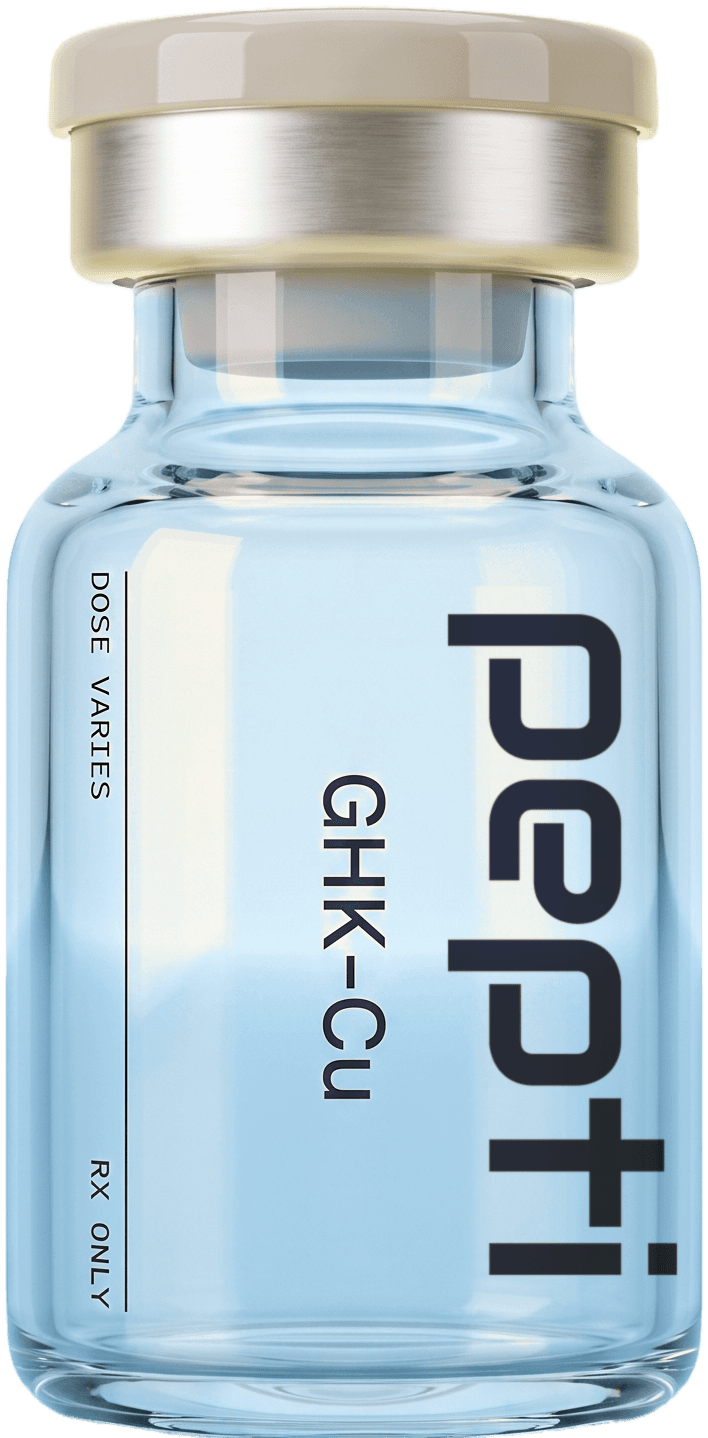
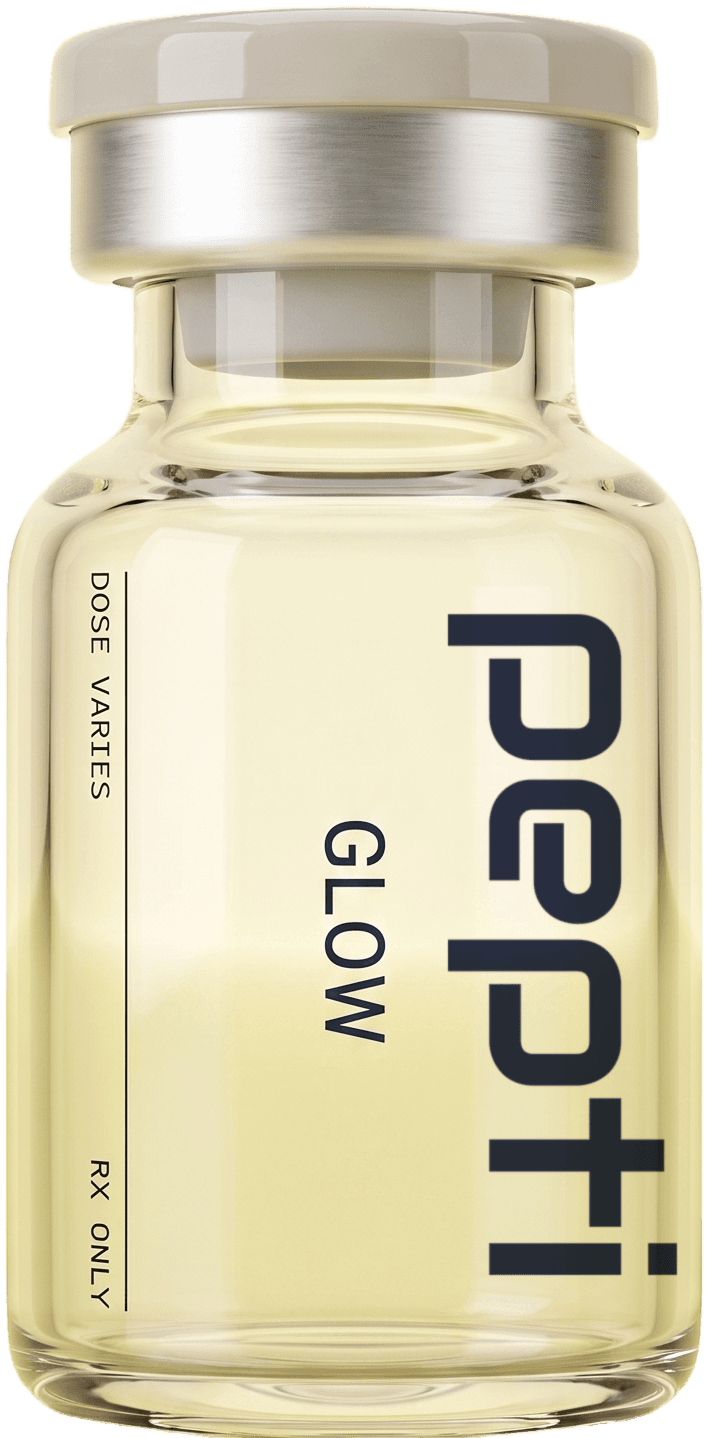
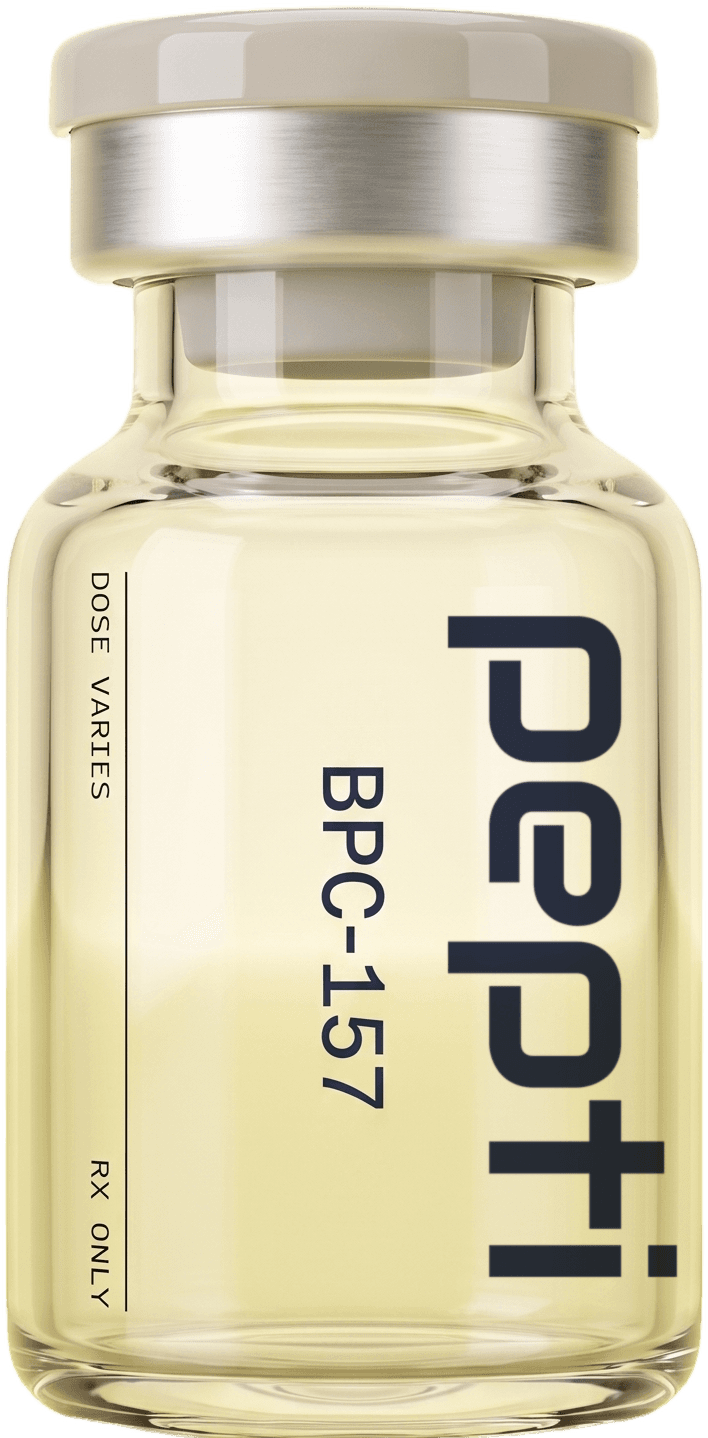
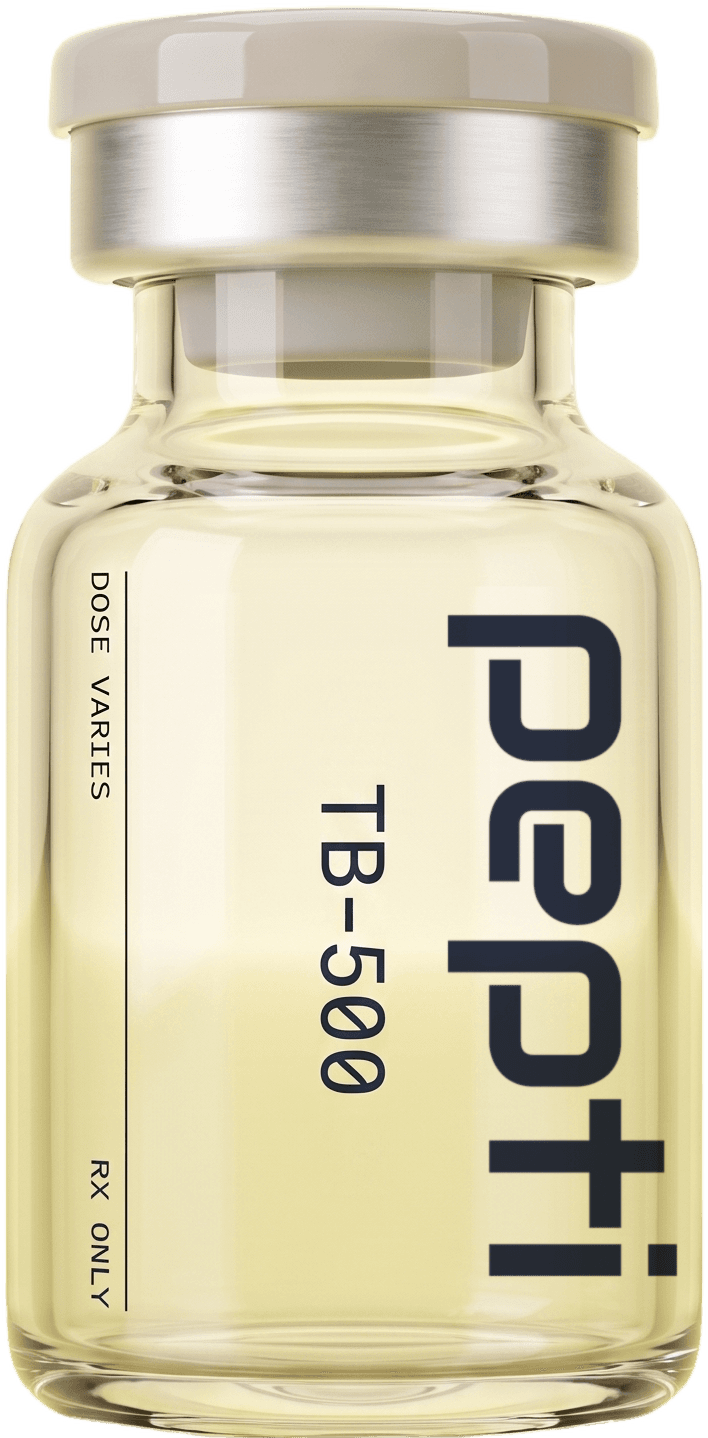
At Pepti, GHK-Cu is prescribed as 0.25 mL, which is 25 units on a U-100 insulin syringe, injected under the skin once daily Monday through Friday. The vial is 5 mL at 10 mg/mL, so each 0.25 mL dose carries 2.5 mg of GHK-Cu and the vial holds 20 doses, about four weeks. Your physician sets your directions after reviewing your intake, and your exact dose and units are printed on the vial. Every Pepti blend that contains GHK-Cu holds it at the same 10 mg/mL and uses the same 25 unit draw, so each of them also delivers 2.5 mg of GHK-Cu per dose.
This page explains the GHK-Cu dosage Pepti prescribes, what the units on the syringe mean, a chart that converts units to millilitres and milligrams, every Pepti product that contains GHK-Cu, how the GHK-Cu peptide injection is given, how long a vial lasts, what can change your directions, and the side effects to know about. It covers how Pepti prescribes GHK-Cu, not dosing protocols from the internet. Nothing here is a reason to change your own dose.
GHK-Cu Dosage
The short answer
| Product | Vial | Typical directions | GHK-Cu per dose | Doses per vial | Price |
|---|---|---|---|---|---|
| GHK-Cu | 5 mL, 10 mg/mL (50 mg per vial) | Inject 0.25 mL (25 units) subcutaneously once daily Monday through Friday | 2.5 mg | 20 | $239/mo |
Every price is all-in, covering medication, physician review, refill management and shipping, with no separate membership fee. Pepti is cash-pay and does not bill insurance. These are the typical printed directions; your own directions are the ones on your vial.
GHK-Cu Dosage
GHK-Cu dosage in units, mL and mg
Pepti's directions are written in two forms, millilitres and units, because prescriptions are written in millilitres and insulin syringes are marked in units. On a U-100 insulin syringe, 1 unit is 0.01 mL, so 100 units is 1 mL and 25 units is 0.25 mL. A unit is a volume mark on the barrel, not a measure of how strong the medication is.
The milligram figure comes from the concentration on the label. Pepti's GHK-Cu is supplied at 10 mg/mL, so:
| What you read | Value | Where it comes from |
|---|---|---|
| Dose volume | 0.25 mL | Printed on the vial |
| On a U-100 insulin syringe | 25 units | 0.25 mL x 100 units per mL |
| Concentration | 10 mg/mL | Printed on the vial |
| GHK-Cu per dose | 2.5 mg | 10 mg/mL x 0.25 mL |
| Total in the vial | 50 mg in 5 mL | Printed on the vial |
| Doses per vial | 20 | 5 mL divided by 0.25 mL |
| How long the vial lasts | About 4 weeks | 20 doses at 5 a week |
That arithmetic is a way to read a label, not a way to set a dose. A vial labelled 50 mg is not a 50 mg dose: it is twenty 2.5 mg doses. If your label and your syringe seem to disagree, do not dose; message your care team. How long does a peptide vial last explains every number on a vial label in more detail.
GHK-Cu Dosage
GHK-Cu dosage chart: units to mL to mg
Online GHK-Cu dosing advice mixes micrograms, milligrams and units, and the numbers only line up if you know the concentration. A "20 units" figure from a forum may refer to a solution of a completely different strength. The chart below is the conversion for a 10 mg/mL vial, drawn with a U-100 insulin syringe. It is math only. It is not a menu of doses, and the only line that applies to you is the one that matches the number printed on your vial.
| Syringe mark (U-100) | Volume | GHK-Cu from a 10 mg/mL vial |
|---|---|---|
| 10 units | 0.10 mL | 1.0 mg |
| 20 units | 0.20 mL | 2.0 mg |
| 25 units | 0.25 mL | 2.5 mg (Pepti's typical printed direction) |
| 30 units | 0.30 mL | 3.0 mg |
| 50 units | 0.50 mL | 5.0 mg |
At 10 mg/mL, every unit on the syringe carries 0.1 mg of GHK-Cu. That is a much higher concentration than most of Pepti's single peptides, which is why a GHK-Cu number cannot be carried over from another vial, and why a number from a different product is never a guide to this one.
GHK-Cu Dosage
GHK-Cu dosage chart: every Pepti product that contains it
GHK-Cu appears in more Pepti products than any other single peptide. Each one is a 5 mL vial with GHK-Cu at 10 mg/mL, drawn at 0.25 mL, 20 doses per vial. The timing printed on the label differs between products.
| Product | GHK-Cu per vial | What else is in it | Typical directions | GHK-Cu per dose | Price |
|---|---|---|---|---|---|
| GHK-Cu | 50 mg | Nothing | 0.25 mL (25 units) once daily Monday through Friday | 2.5 mg | $239/mo |
| RADIANCE Blend | 50 mg | 10 mg tesamorelin | 0.25 mL (25 units) once daily Monday through Friday | 2.5 mg | $249/mo |
| GLOW | 50 mg | 10 mg BPC-157, 10 mg TB-500 | 0.25 mL (25 units) Monday through Friday mornings | 2.5 mg | $259/mo |
| KLOW Blend | 50 mg | 10 mg KPV, 10 mg BPC-157, 10 mg TB-500 | 0.25 mL (25 units) Monday through Friday mornings | 2.5 mg | $259/mo |
| REVIVE Blend | 50 mg | 6 mg CJC-1295, 12 mg ipamorelin, 2 mg TB-500 | 0.25 mL (25 units) Monday through Friday nights at bedtime | 2.5 mg | $279/mo |
| ETERNAL Blend | 50 mg | 10 mg BPC-157, 10 mg TB-500, 10 mg epithalon | 0.25 mL (25 units) once daily Monday through Friday | 2.5 mg | $279/mo |
| EUPHORIA Blend | 50 mg | 10 mg MOTS-c, 10 mg BPC-157, 2 mg kisspeptin | 0.25 mL (25 units) once daily Monday through Friday | 2.5 mg | $279/mo |
Two things stand out. First, the GHK-Cu per dose never changes: every product in the chart delivers 2.5 mg in 25 units. Second, because every one of them carries a full GHK-Cu dose, two of them at once means twice the copper. That is the most common way people end up on more GHK-Cu than intended, and it is why the intake asks about every product you use.
In a blend, every ingredient is in fixed proportion. One draw delivers all of them in the ratio the pharmacy compounded, and there is no way to take more GHK-Cu and less of something else from the same vial. If a different balance is wanted, that is a different prescription. The KLOW split is set out in KLOW dosage, and the two repair blends are compared in KLOW vs GLOW.
GHK-Cu Dosage
The GHK-Cu peptide injection: how it is given
People search for "GHK-Cu peptide injection" because most of what is written about GHK-Cu is about creams. The injection is a different product, and it is given like this.
Under the skin, not into the muscle
Subcutaneous means into the fat layer just under the skin. The abdomen and thigh are the usual sites, rotated so the same spot is not used repeatedly. Pull up to the mark printed on your label, inject at the angle you were shown, and use a fresh syringe every time. Technique is covered step by step in how to inject peptides safely.
Once daily, Monday through Friday
The directions specify weekdays, not seven days. Twenty doses at five a week is four weeks, which is why refills run on a 28-day cycle, one vial per fill. The two-day break is a prescribing convention; there is no human pharmacokinetic study of injected GHK-Cu to derive a schedule from. Weekends off are part of the schedule, not missed doses.
A blue solution is normal
GHK bound to copper forms a blue complex, so the solution in the vial is blue or blue-green. That is the copper, not a contaminant. A faint blue-green mark at the injection site can appear and clears on its own; it is copper that has not yet dispersed, not a bruise. Cloudiness, particles or a colour change from what you received is a reason to message rather than inject. Why is GHK-Cu blue explains what a normal vial looks like.
Directions say What it means in practice 0.25 mL (25 units) Draw to the 25 mark on a U-100 insulin syringe Subcutaneously Into the fat layer, abdomen or thigh, rotating sites Once daily One injection a day on dosing days Monday through Friday Five doses a week, weekends off 20 doses per vial About four weeks, then the next refill Injection vs cream
The topical route is where the human GHK-Cu research lives: small cosmetic studies of creams in photoaged facial skin over 8 to 12 weeks, and a 1994 study of a topical gel in diabetic ulcers. There are no randomised controlled trials of injectable GHK-Cu in humans, and no study has compared the injection with a cream. The injection is a prescription medication with animal data and prescriber experience behind it; the dose printed on your vial is not something that can be translated from a cream's percentage. The research, benefit by benefit, is in GHK-Cu benefits.
GHK-Cu Dosage
Storage and refills
Vials are multi-dose solutions shipped ready to use, refrigerated with ice packs, with sterile syringes and alcohol prep pads. Nothing is mixed at home. Keep the vial in the fridge and follow the beyond-use date printed on the label, which runs from first puncture. How to store peptides covers storage.
If a vial runs short before the refill, message your care team rather than adjusting anything yourself. If you miss a weekday dose, follow your directions and do not take two doses to make up for one.
GHK-Cu Dosage
What changes the directions
Your physician sets your directions after reviewing your intake. Things that can lead to different directions, or a different product, include:
| What can change | How it shows up |
|---|---|
| Which product is prescribed | GHK-Cu alone or a blend; each has its own label and timing |
| Your medical history | Wilson's disease or another copper-metabolism disorder, significant liver disease, or a cancer history change the conversation |
| Your supplements | High-dose zinc competes with copper; iron and high-dose vitamin C belong on the intake too |
| Other GHK-Cu products | A second GHK-Cu product doubles the copper |
| How you respond | Nausea, a metallic taste or light-headedness you report goes to your physician, who may revise your directions |
When directions change, the new numbers are printed on the new label. Never carry a number over from a previous fill. Bloodwork is not required for any Pepti treatment. If your physician wants labs for your care, they'll ask through your account.
GHK-Cu Dosage
Side effects, in summary
The full picture is in is GHK-Cu safe.
| What is reported | How often | What to do |
|---|---|---|
| Injection-site redness, itching, stinging or a small lump | Common | Rotate sites; mention it at follow-up |
| A faint blue-green mark at the site | Common | Copper that has not yet dispersed; clears on its own |
| Nausea or a metallic taste | Uncommon | Message your care team; do not change the dose yourself |
| Headache or light-headedness after dosing | Uncommon | Message your care team, especially if you take blood-pressure medication |
| A site that is hot, spreading or worse after 48 hours | Uncommon | Same-day message; it can be infection rather than irritation |
| Persistent vomiting, abdominal pain, yellowing skin or eyes, or new confusion | Not reported at prescribed doses | The pattern of copper excess; stop and contact your care team the same day |
| Facial or throat swelling, widespread rash, difficulty breathing | Rare | Call 911 or go to emergency care first, then tell your care team |
Who should not take GHK-Cu, or should discuss it first: anyone with Wilson's disease or another copper-metabolism disorder, anyone with significant liver disease, anyone on high-dose zinc, anyone already using another GHK-Cu product, anyone with an active or recent cancer, and anyone pregnant or breastfeeding. There is no established interaction list, which is why the intake asks for every medication and supplement you take.
GHK-Cu Dosage
What the evidence shows, honestly
There is no trial-derived dose for injectable GHK-Cu. The human studies were topical, so they say nothing about how many milligrams to inject. The mouse studies that used systemic dosing were efficacy models, not dose-finding studies for people. And no one has published how long injected GHK-Cu circulates under the skin, how the copper partitions once the peptide is cleared, or whether weekday dosing produces any accumulation.
What exists instead is a prescribing convention: a small subcutaneous volume on weekdays, at a dose whose copper content is a small fraction of what an ordinary diet supplies and that a working liver excretes. Pepti's 2.5 mg direction sits inside that convention. It is a reasonable basis for a physician to prescribe; it is not evidence that 2.5 mg is better than any other amount, and no page that quotes an "optimal" GHK-Cu dose has a trial behind it.
GHK-Cu is a compounded prescription, and compounded medications are not FDA approved. The FDA removed injectable GHK-Cu from Category 2 of its interim 503A bulks list on 15 April 2026 and has said its Pharmacy Compounding Advisory Committee will review GHK-Cu before the end of February 2027. It remains legal to prescribe and dispense.
GHK-Cu Dosage
Where to get GHK-Cu prescribed
GHK-Cu cannot be bought legitimately without a prescription. Sites selling it "for research use only" are not accountable for what is in the vial: identity, purity, sterility and concentration are untested, and an unknown concentration makes any unit number meaningless. The prescription route:
- Complete a free online intake covering your history, medications and what you want help with.
- A physician licensed in your state reviews it, usually within 24 hours.
- If it is appropriate, a PCAB-accredited, FDA-registered US 503A compounding pharmacy prepares it to that prescription. Lot test results are published at /quality/lab-results.
- It ships refrigerated with your directions printed on the vial.
- Your physician stays reachable for questions and dose changes.
Pepti prescribes GHK-Cu in every state except Oklahoma, plus DC Step by step: how to get GHK-Cu prescribed online. The full product reference is what is GHK-Cu, and what to check on any seller is in where to buy GHK-Cu online.
References
What this is based on.
References
- Maquart FX, Pickart L, Laurent M, et al.. Stimulation of collagen synthesis in cultured fibroblasts by GHK-Cu · FEBS Letters (1988) · PMID 3169264
- Pickart L, Margolina A. GHK peptide as a natural modulator of multiple cellular pathways in skin regeneration · BioMed Research International (2015) · PMID 26236730
- Pickart L, Margolina A. Regenerative and protective actions of the GHK-Cu peptide in the light of the new gene data · International Journal of Molecular Sciences (2018) · PMID 29986520
- Pickart L. The human tri-peptide GHK and tissue remodeling · Journal of Biomaterials Science, Polymer Edition (2008) · PMID 18644225
- Pickart L, Thaler MM. Tripeptide in human serum which prolongs survival of normal liver cells and stimulates growth in neoplastic liver · Nature: New Biology (1973) · PMID 4349963
- Lane TF, et al.. SPARC is a source of copper-binding peptides that stimulate angiogenesis · Journal of Cell Biology (1994) · PMID 7514608
- Maquart FX, et al.. In vivo stimulation of connective tissue accumulation by the tripeptide-copper complex glycyl-L-histidyl-L-lysine-Cu2+ in rat experimental wounds · Journal of Clinical Investigation (1993) · PMID 8227353
- Mulder GD, et al.. Enhanced healing of ulcers in patients with diabetes by topical treatment with glycyl-l-histidyl-l-lysine copper · Wound Repair and Regeneration (1994) · PMID 17147644
- Siméon A, et al.. Expression and activation of matrix metalloproteinases in wounds: modulation by the tripeptide-copper complex glycyl-L-histidyl-L-lysine-Cu2+ · Journal of Investigative Dermatology (1999) · PMID 10383745
- Siméon A, et al.. The tripeptide-copper complex glycyl-L-histidyl-L-lysine-Cu2+ stimulates matrix metalloproteinase-2 expression by fibroblast cultures · Life Sciences (2000) · PMID 11045606
- Miller TR, et al.. Effects of topical copper tripeptide complex on CO2 laser-resurfaced skin · Archives of Facial Plastic Surgery (2006) · PMID 16847171
- Pyo HK, et al.. The effect of tripeptide-copper complex on human hair growth in vitro · Archives of Pharmacal Research (2007) · PMID 17703734
Citations are provided for educational purposes. They do not constitute medical advice. Always discuss any peptide protocol with your prescribing physician.
Common questions
GHK-Cu Dosage, answered.
At Pepti, 0.25 mL, which is 25 units on a U-100 insulin syringe, injected subcutaneously once daily Monday through Friday. From the 10 mg/mL vial that is 2.5 mg per dose. Your physician sets your directions after reviewing your intake, and your exact dose is printed on the vial.
The number printed on your vial. Pepti's typical directions are 25 units, which is 0.25 mL on a U-100 insulin syringe, where 1 unit is 0.01 mL.
From a 10 mg/mL vial, 2.5 mg. Every Pepti blend that contains GHK-Cu holds it at 10 mg/mL, so the same 25 units carries 2.5 mg of GHK-Cu there too.
Twenty. A 5 mL vial divided by 0.25 mL per dose is 20 doses, about four weeks at five days a week.
Subcutaneously, into the fat layer of the abdomen or thigh, rotating sites, with a U-100 insulin syringe drawn to the mark printed on your label. The solution is blue because of the copper, which is expected.
The charts above convert units to millilitres and milligrams for a 10 mg/mL vial, and list every Pepti product that contains GHK-Cu with its directions. Your own label is the one that applies.
Standalone GHK-Cu is directed once daily Monday through Friday without a stated time. GLOW and KLOW are directed in the morning and REVIVE at bedtime; follow the timing on your label.
No. Take the dose printed on your vial, on the schedule printed on your vial. There is no human trial that tells anyone what a higher injected dose would do, and more GHK-Cu means more copper. If you have questions about your dose, message your care team.
Yes, for the GHK-Cu: 2.5 mg in every 25 unit dose, because every blend holds it at 10 mg/mL. Each blend also delivers its other ingredients in fixed proportion, and taking two GHK-Cu products together doubles the copper.
No. Pepti vials are multi-dose solutions shipped ready to use, with sterile syringes and alcohol prep pads. Nothing is reconstituted at home.
No. A cream is labelled by percentage and acts on the skin surface; the injection is labelled in mg/mL and is systemic. No study has compared them, and neither dose translates into the other.
Bloodwork is not required for any Pepti treatment. If your physician wants labs for your care, they'll ask through your account. The free assessment goes to a physician licensed in your state. A consultation does not guarantee a prescription.
Next step
See what a physician recommends for you.
A licensed physician in your state reviews your intake and decides what is appropriate. A consultation does not guarantee a prescription.