Weight Loss · Reference
5-Amino-1MQ vs L-Carnitine: Two Non-Peptide Fat-Metabolism Injections, the Evidence, Cost, and Which One Fits
This page explains each on its own terms, puts them side by side, covers what the research does and does not show, where each stands with the FDA, how each is injected and dosed, what each costs at Pepti, and who tends to suit which.
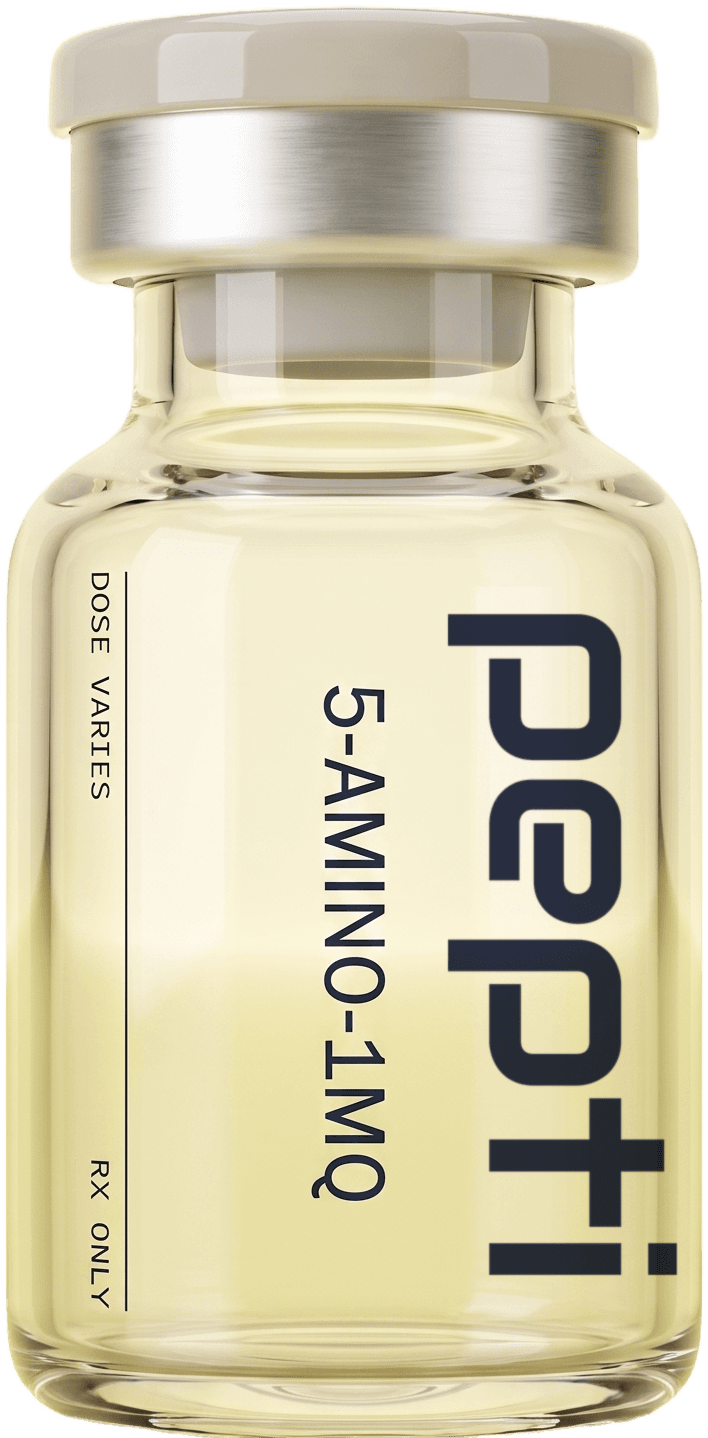
Treatments mentioned
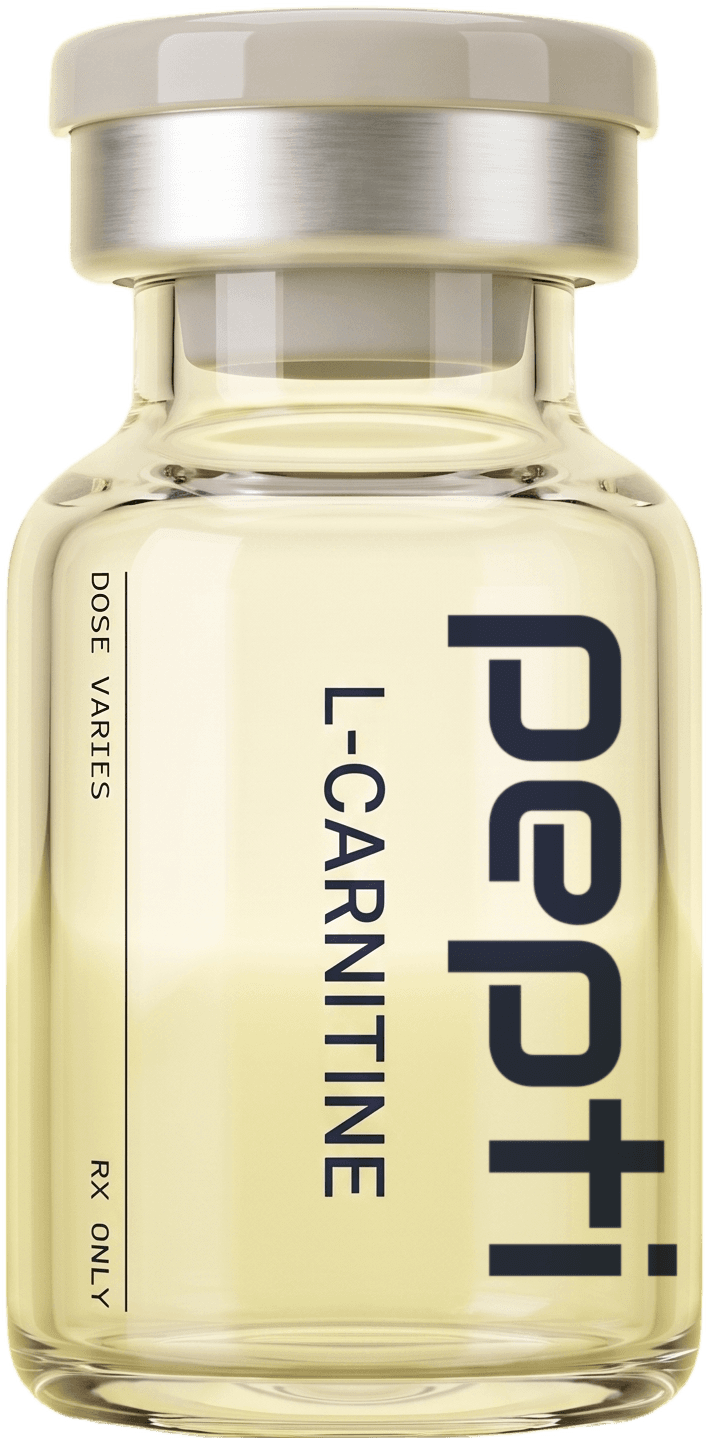
5-Amino-1MQ and L-carnitine are both non-peptide injections prescribed around fat metabolism, but they sit at opposite ends of the evidence scale. L-carnitine is a small transport molecule the body already makes, which carries fatty acids into mitochondria to be burned; it is the active ingredient of an approved drug for carnitine deficiency, and meta-analyses of its mostly oral trials report a modest effect on body weight alongside diet and exercise. 5-Amino-1MQ is a synthetic molecule that blocks the fat-cell enzyme NNMT; it limited fat gain in obese mice and has never been tested in a human trial. Neither acts on appetite, and as compounded medications neither is FDA approved.
This page explains each on its own terms, puts them side by side, covers what the research does and does not show, where each stands with the FDA, how each is injected and dosed, what each costs at Pepti, and who tends to suit which.
5-Amino-1MQ vs L-Carnitine
The short answer
| If your main goal is | The usual prescription | What is in it | Price |
|---|---|---|---|
| A fat-transport cofactor alongside training, with human trials behind the molecule | L-Carnitine Injection | 10 mL vial, L-carnitine 2 mg/mL (20 mg per vial) | $219/mo |
| Fat-cell metabolism through the NNMT enzyme and the NAD+ angle | 5-Amino-1MQ | 5 mg 5-Amino-1MQ in a 5 mL vial | $219/mo |
| 5-Amino-1MQ with BPC-157, MOTS-c and tesamorelin | FUSION Blend | Four actives in one 5 mL vial | $279/mo |
| NAD+ itself | NAD+ Injection | 10 mL vial, NAD+ 100 mg/mL (1000 mg per vial) | $249/mo |
| A B12 and lipotropic nutrient injection | Lipo-B (B12 + MIC) | 10 mL vial; methionine, inositol, choline and B12 | $209/mo |
| Appetite and body weight, with large human trials | Semaglutide or tirzepatide | Dose-specific vials | From $99/mo or from $159/mo |
Every figure is an all-in monthly price covering the medication, physician review, refill management and shipping. There is no separate membership fee. GLP-1 prices are "from" prices because the vials are dose-specific. Current pricing always lives on each product page.
5-Amino-1MQ vs L-Carnitine
Neither is a peptide
Both are often lumped in with "peptides for weight loss", and neither is one. L-carnitine is a small quaternary ammonium compound made from two amino acids but not a chain of them. 5-Amino-1MQ is a quinolinium ring with no amino acids at all. They sit in a peptide catalog because they are prescribed, compounded and injected through the same channels. Is 5-Amino-1MQ a peptide and peptides vs GLP-1 cover the chemistry.
5-Amino-1MQ vs L-Carnitine
L-carnitine on its own terms
What it is
L-carnitine is a small compound the liver and kidneys make from the amino acids lysine and methionine. Most of the body's supply sits in skeletal and heart muscle, the tissues that rely most on fat for fuel, and the kidneys reabsorb 90 to 99 percent of what is filtered to keep the pool steady. Only the L form is biologically active, which is why the approved drug is called levocarnitine. Dietary carnitine comes mostly from red meat and dairy. The full reference is at what is L-carnitine.
How L-carnitine is described to work
- The carnitine shuttle. CPT1 attaches a long-chain fatty acid to carnitine on the outer mitochondrial membrane, a transporter carries it through, and CPT2 releases it inside for oxidation. This is the rate-limiting step in long-chain fat oxidation, which is why genuine deficiency causes muscle weakness.
- Buffering during hard exercise. Free carnitine soaks up excess acetyl groups as acetyl-carnitine, limiting lactate build-up, as described in a 2007 Journal of Physiology review.
- Muscle fuel selection, in humans. A 2011 Journal of Physiology study gave fourteen healthy men oral L-carnitine with carbohydrate for 24 weeks, with biopsies. Muscle carnitine rose 21 percent, but only with the carbohydrate, because insulin drives carnitine into muscle, and only over months.
It is a cofactor, not a driver. Having more carnitine does not make the body oxidise more fat than its energy demand calls for.
What human data exists for L-carnitine
Randomised human trials exist in large numbers, and three meta-analyses have pooled them: Obesity Reviews 2016 (nine trials), Pharmacological Research 2020 (43 trials) and Clinical Nutrition ESPEN 2020 (37 trials). They report a modest effect on body weight in overweight adults who were also changing diet and activity, with the effect shrinking the longer a trial ran and no consistent change in body-fat percentage or waist circumference. A 2007 trial in the American Journal of Clinical Nutrition reported reduced fatigue scores in centenarians on oral carnitine. Nearly every trial was oral, at gram doses; there are no randomised trials of low-dose intramuscular L-carnitine in healthy adults.
5-Amino-1MQ vs L-Carnitine
5-Amino-1MQ on its own terms
What it is
5-Amino-1MQ is short for 5-amino-1-methylquinolinium. It came from a medicinal chemistry programme at the University of Texas Medical Branch in Galveston, which screened compounds against the enzyme nicotinamide N-methyltransferase (NNMT) in a 2017 Journal of Medicinal Chemistry paper. The reason anyone looked was a 2014 paper in Nature reporting that knocking NNMT down protected mice against diet-induced obesity. It is not a hormone, not a stimulant and not NAD+. The full reference is at what is 5-Amino-1MQ.
How 5-Amino-1MQ is described to work
- Blocking NNMT. NNMT takes nicotinamide, the form of vitamin B3 cells recycle into NAD+, and attaches a methyl group from SAM, so the product is excreted rather than reused. Blocking it is proposed to keep the NAD+ precursor and SAM in the cell.
- NAD+ and SAM in cultured fat cells. A 2018 paper in Biochemical Pharmacology reported higher intracellular NAD+ and SAM and less fat-building in cultured adipocytes.
- Energy expenditure in fat tissue. The 2014 Nature work, which used gene knockdown rather than this molecule, reported increased energy expenditure in fat cells.
What human data exists for 5-Amino-1MQ
None. There are no human trials of any design and, as of September 2026, none registered under its name. The efficacy work is in mice: lower body weight and white fat mass in diet-induced obese mice with food intake unchanged (2018), and limited fat gain with improved glucose tolerance over 28 days of daily dosing (2024, Diabetes, Obesity and Metabolism). The only human data concerns the target: a 2015 Diabetologia study reported higher NNMT expression in the fat tissue of people with type 2 diabetes.
5-Amino-1MQ vs L-Carnitine
Head to head
| L-carnitine | 5-Amino-1MQ | |
|---|---|---|
| Chemically | Small transport molecule, not a peptide | Small synthetic molecule, not a peptide |
| Made by the body? | Yes, from lysine and methionine | No |
| Target | The mitochondrial carnitine shuttle | The enzyme NNMT inside cells |
| Main tissue | Skeletal and heart muscle | Fat tissue, also liver and aged muscle in mice |
| Appetite effect | No | No; mouse food intake unchanged |
| Human trials | Three meta-analyses of mostly oral trials; modest effect on body weight | None of any kind |
| Trials of the format Pepti supplies | None for low-dose intramuscular injection | None |
| Approved active ingredient? | Yes, for carnitine deficiency | No |
| Route | Intramuscular, into the muscle | Subcutaneous, under the skin |
| Vial at Pepti | 10 mL, 2 mg/mL (20 mg) | 5 mL, 1 mg/mL (5 mg) |
| Standard directions | 0.50 mL (50 units) once daily, Monday to Friday | 0.25 mL (25 units) once daily, Monday to Friday |
| Doses per vial | 20, about 4 weeks | 20, about 4 weeks |
| Also found in | Single vial only | FUSION Blend |
| Price at Pepti | $219 a month | $219 a month |
The real difference is how much is known
They cost the same and run on the same weekday schedule, so the choice comes down to evidence and mechanism. L-carnitine does one well-characterised job, has decades of human use and a large trial base, and the honest result of that trial base for weight is "modest, with lifestyle change". 5-Amino-1MQ has a newer and more interesting mechanism, the NAD+ and fat-cell angle, and no human data at all. One is a known quantity with a small effect; the other is an open question.
5-Amino-1MQ vs L-Carnitine
Who suits which
L-carnitine
L-carnitine suits someone who is training and wants a cofactor for the fuel pathway training uses, described by prescribers around training tolerance and recovery between sessions. It has the longer safety record and is a common add-on to a weight program, including alongside a GLP-1; L-carnitine vs GLP-1 covers that.
5-Amino-1MQ
5-Amino-1MQ suits someone whose interest is fat-cell metabolism or the NAD+ angle, with diet and activity already in place, who is comfortable with mouse-only evidence. Both of its main mouse studies paired it with a diet switch or exercise and reported the combination doing more than either alone.
Both together
They act on different targets, and some physicians prescribe both. No study has tested the combination, and no Pepti product contains both. They are separate vials with different injection types, never mixed in one syringe. Starting on different dates makes it easier to tell which one caused any change.
5-Amino-1MQ vs L-Carnitine
When neither is the right first step
| Situation | What makes more sense |
|---|---|
| Clinically meaningful weight loss is the goal | Semaglutide or tirzepatide; see 5-Amino-1MQ vs semaglutide |
| Diagnosed carnitine deficiency, kidney disease on dialysis, or a metabolic disorder | Specialist care with the approved levocarnitine product, not a compounded intramuscular vial |
| NAD+ itself is the interest | NAD+ Injection, which supplies the molecule directly |
| Muscle fuel use and the exercise signal | MOTS-c; see MOTS-c vs SLU-PP-332 vs 5-Amino-1MQ |
| Energy is the complaint and B12 status is unknown | Methylcobalamin |
5-Amino-1MQ vs L-Carnitine
Where each stands with the FDA
| L-carnitine (levocarnitine) | 5-Amino-1MQ | |
|---|---|---|
| Approved active ingredient? | Yes, approved for carnitine deficiency, including in end-stage renal disease on dialysis | No; not a component of any approved drug |
| USP monograph | Yes | No |
| 503A compounding basis | Meets the 503A conditions as a component of approved products with a USP monograph; no bulks listing needed | Not on the 503A bulks list and not in Category 1, 2 or 3 of the nominated list updated 14 May 2026 |
| FDA safety finding | None | None; never evaluated |
| Advisory committee | Not applicable | Never reviewed |
| What it is prescribed for at Pepti | Off-label; weight, training and energy are not approved indications | Off-label; no approved use exists |
The approval of levocarnitine for deficiency does not transfer to a compounded intramuscular vial, and 5-Amino-1MQ has not been through the FDA's evaluation process at all. Compounded medications are not FDA approved. Are peptides FDA approved explains the difference between not approved and not legal.
5-Amino-1MQ vs L-Carnitine
Dosing, side by side
Both run once daily Monday through Friday, with weekends off, and both vials hold 20 doses, about four weeks. The injections are different.
L-carnitine is drawn at 0.50 mL (50 units on a U-100 insulin syringe) and injected into the muscle: the deltoid, upper outer thigh or upper outer buttock, rotated. An intramuscular injection uses a longer needle, and the pharmacy supplies the right one. Carnitine clears quickly, so there is no accumulation to manage across the weekend gap.
5-Amino-1MQ is drawn at 0.25 mL (25 units) and injected under the skin of the abdomen or thigh, rotating sites. From the 1 mg/mL vial that is 0.25 mg per dose. 5-Amino-1MQ dosage has the conversion table.
You do not need to calculate anything: your physician sets your directions after reviewing your intake, and your directions are printed on the vial. Both ship refrigerated with ice packs, with sterile syringes and alcohol prep pads, and refills run every 28 days, one vial per fill. Bloodwork is not required for any Pepti treatment. If your physician wants labs for your care, they'll ask through your account.
5-Amino-1MQ vs L-Carnitine
Side effects
L-carnitine. One of the longer safety records of anything Pepti prescribes. Reported: injection-site soreness or bruising, transient nausea, and a faint fishy body odour from trimethylamine, more common with large oral doses than with injection. The approved product's label reports seizures in people with and without a prior seizure history, and INR increases in people taking warfarin, so both belong on the intake.
5-Amino-1MQ. There is no human safety database. The mouse studies reported no observable adverse effects at the doses used, though they were not toxicology studies. Clinically, mostly injection-site redness, mild soreness or occasional bruising. NNMT also methylates some foreign compounds, a theoretical reason to list every medication and supplement you take. 5-Amino-1MQ side effects has more.
For either, stop and contact your physician for any reaction that is severe, spreading or involves difficulty breathing. For swelling of the face or throat or trouble breathing, call 911.
5-Amino-1MQ vs L-Carnitine
Who should not take them, or should discuss it first
| Situation | Why |
|---|---|
| Pregnancy or breastfeeding | Not used |
| Seizure disorder | Raise it at intake for L-carnitine, from its label |
| Taking warfarin | Raise it at intake for L-carnitine, which can raise INR |
| Severe kidney impairment | Raise it for L-carnitine; trimethylamine and TMAO can accumulate with chronic high oral dosing |
| Taking several prescription medications | Raise it for 5-Amino-1MQ, because of the theoretical NNMT interaction point |
| Tested athletes | L-carnitine is not prohibited, but some bodies restrict injections above a certain volume; check the current list for 5-Amino-1MQ |
5-Amino-1MQ vs L-Carnitine
What the evidence shows, honestly
L-carnitine has a real, reproducible but modest effect on body weight in meta-analyses of oral trials run alongside lifestyle change, no consistent effect on body-fat percentage or waist circumference, and no trials of the low-dose injection. 5-Amino-1MQ has mouse and cell studies from essentially one research group and human data only on its target enzyme. No trial has tested them together, and neither is a substitute for a medication built for weight management. Anyone describing either as a fat-burner that works on its own is overstating what exists. Best peptides for weight loss has the wider picture.
5-Amino-1MQ vs L-Carnitine
Where to get 5-Amino-1MQ or L-carnitine prescribed
Neither can be bought legitimately without a prescription. Sites selling them "for research use only" are not accountable for identity, purity, sterility or concentration. The prescription route:
- Complete a free online intake covering your history, medications and what you want help with.
- A physician licensed in your state reviews it, usually within 24 hours.
- If it is appropriate, a PCAB-accredited, FDA-registered US 503A pharmacy compounds it to that prescription. Lot test results are published at /quality/lab-results.
- It ships refrigerated with your directions printed on the vial.
- Your physician stays reachable for questions and dose changes.
Pepti prescribes both in every state except Oklahoma, plus DC, cash-pay, without billing insurance. Step-by-step pages: how to get 5-Amino-1MQ prescribed online and how to get L-carnitine prescribed online.
References
What this is based on.
References
- Neelakantan H, Vance V, Wetzel MD et al.. Selective and membrane-permeable small molecule inhibitors of nicotinamide N-methyltransferase reverse high fat diet-induced obesity in mice · Biochem Pharmacol (2018) · PMID 29155147
- Neelakantan H, Wang HY, Vance V et al.. Structure-Activity Relationship for Small Molecule Inhibitors of Nicotinamide N-Methyltransferase · J Med Chem (2017) · PMID 28548833
- Neelakantan H, Brightwell CR, Graber TG et al.. Small molecule nicotinamide N-methyltransferase inhibitor activates senescent muscle stem cells and improves regenerative capacity of aged skeletal muscle · Biochem Pharmacol (2019) · PMID 30753815
- Babula JJ, Bui D, Stevenson HL, Watowich SJ, Neelakantan H. Nicotinamide N-methyltransferase inhibition mitigates obesity-related metabolic dysfunction · Diabetes Obes Metab (2024) · PMID 39161060
- Dimet-Wiley AL, Latham CM, Brightwell CR et al.. Nicotinamide N-methyltransferase inhibition mimics and boosts exercise-mediated improvements in muscle function in aged mice · Sci Rep (2024) · PMID 38969654
- Dimet-Wiley A, Wu Q, Wiley JT et al.. Reduced calorie diet combined with NNMT inhibition establishes a distinct microbiome in DIO mice · Sci Rep (2022) · PMID 35013352
- Kraus D, Yang Q, Kong D et al.. Nicotinamide N-methyltransferase knockdown protects against diet-induced obesity · Nature (2014) · PMID 24717514
- Kannt A, Pfenninger A, Teichert L et al.. Association of nicotinamide-N-methyltransferase mRNA expression in human adipose tissue and the plasma concentration of its product, 1-methylnicotinamide, with insulin resistance · Diabetologia (2015) · PMID 25596852
Citations are provided for educational purposes. They do not constitute medical advice. Always discuss any peptide protocol with your prescribing physician.
Common questions
5-Amino-1MQ vs L-Carnitine, answered.
Neither is a weight-loss medication in the way a GLP-1 is. L-carnitine's oral trials report a modest effect alongside diet and exercise; 5-Amino-1MQ has only been tested in mice. No study has compared them.
L-carnitine is a molecule the body makes that carries fatty acids into mitochondria. 5-Amino-1MQ is a synthetic molecule that blocks the enzyme NNMT inside fat cells. Different targets, and very different amounts of human evidence.
No. Neither is a peptide. Both are small molecules that are prescribed and injected through the same channels as peptides.
Some physicians prescribe both because they act on different targets. No study has tested the combination. They are separate vials, one under the skin and one into the muscle, never mixed in one syringe.
L-carnitine has a trial in centenarians reporting reduced fatigue scores on oral dosing, and some people describe feeling more energetic on injection days. 5-Amino-1MQ is described around NAD+ in cultured cells, which has not been measured in people. Neither is a stimulant.
No. L-carnitine works only where fat is already being used for fuel, and the 5-Amino-1MQ mouse work reported food intake unchanged.
Levocarnitine is an approved active ingredient, but only for carnitine deficiency. The compounded intramuscular vial is not that approved drug and is not FDA approved. 5-Amino-1MQ has no approved product and has never been evaluated by the FDA.
L-carnitine, which has been prescribed for decades and studied in thousands of trial participants. 5-Amino-1MQ has no human safety data.
At Pepti, both are $219 a month, all-in, covering medication, physician review, refill management and shipping. The FUSION Blend, which contains 5-Amino-1MQ, is $279 a month.
No. Bloodwork is not required for any Pepti treatment. If your physician wants labs for your care, they'll ask through your account. The free assessment goes to a physician licensed in your state. A consultation does not guarantee a prescription.
Next step
See what a physician recommends for you.
A licensed physician in your state reviews your intake and decides what is appropriate. A consultation does not guarantee a prescription.