Supplements · Reference
L-Carnitine Injection: What It Is, Where to Get It Prescribed, and What It Costs
This page covers what L-carnitine is, the pathways researchers have described, what the published human trials do and do not establish, where it stands with the FDA — a different answer than for most compounds on this site — how it is dosed, and how to get it prescribed.

Reviewed by Dr. Gene, MD · Board-certified Family Medicine
Every Pepti prescription is reviewed by a licensed U.S. physician before it's dispensed — and only provided if clinically appropriate.
Treatments mentioned
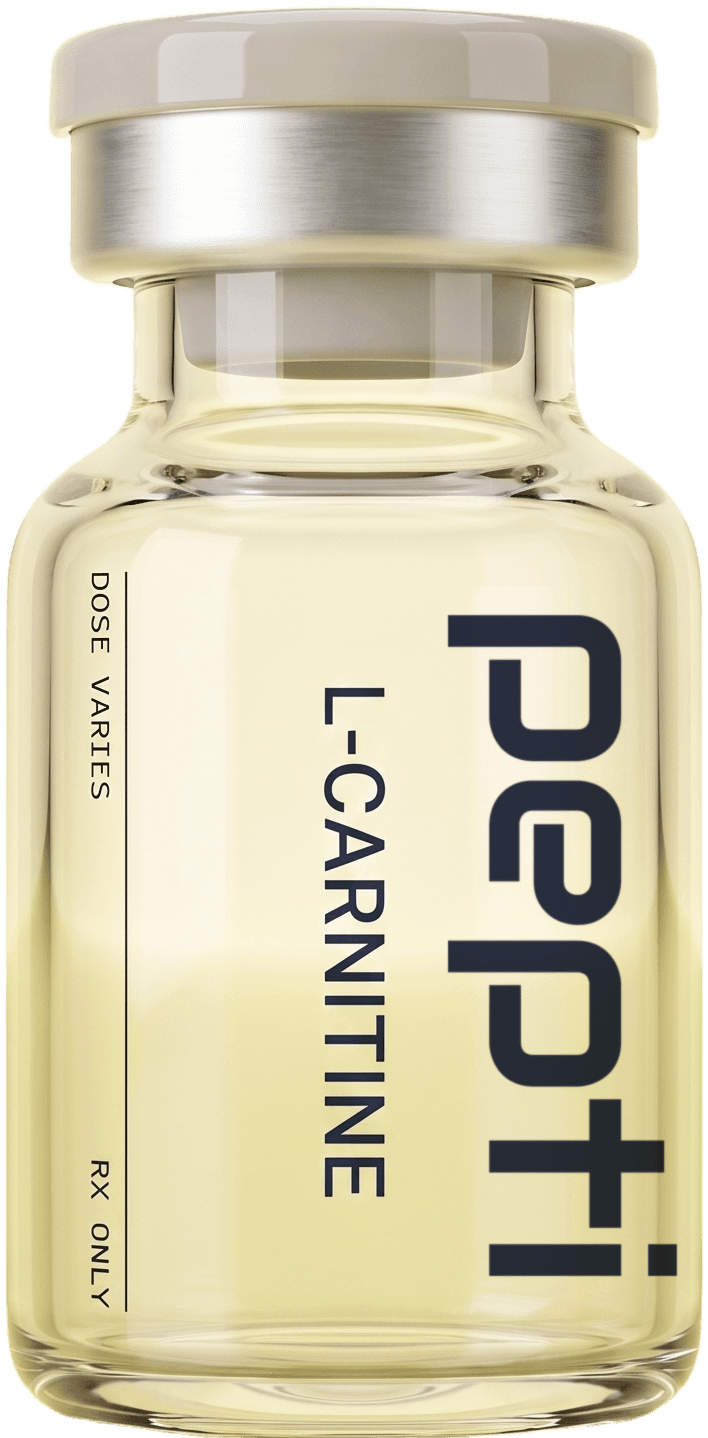
L-Carnitine Injection is a prescription injection supplied as 10 mL multi-dose vial, L-Carnitine 2 mg/mL (20 mg L-Carnitine per vial). The reviewed directions are: Inject 0.50 mL (50 units) intramuscularly once daily Monday through Friday. That is 20 doses per vial, about 4 weeks at Monday through Friday. It requires a prescription from a physician licensed in your state, is compounded by a state-licensed US pharmacy, and is not FDA approved.
This page covers what L-carnitine is, the pathways researchers have described, what the published human trials do and do not establish, where it stands with the FDA — a different answer than for most compounds on this site — how it is dosed, and how to get it prescribed.
L-Carnitine Injection
What L-carnitine actually is
A transport molecule the body makes from two amino acids
L-carnitine is not a peptide. It is a small quaternary ammonium compound — 3-hydroxy-4-N-trimethylaminobutyrate — that the liver and kidneys synthesise from the amino acids lysine and methionine. Its job is narrow and well characterised: it carries long-chain fatty acids across the inner mitochondrial membrane so they can be oxidised for energy. Without carnitine, long-chain fats cannot reach the part of the cell that oxidises them.
The body keeps a pool of it, and the large majority sits in skeletal and cardiac muscle, the tissues that rely most on fat as fuel. A 2004 review in the Annals of the New York Academy of Sciences describes how the pool is maintained: dietary absorption, a modest rate of synthesis, and very efficient renal reabsorption — 90 to 99 percent of what is filtered is taken back at normal concentrations.
Why the "L" matters, and where it comes from
Carnitine exists as two mirror-image forms. Only the L form is biologically active, and pharmaceutical carnitine is always the L form, which is why the approved drug is named levocarnitine. Dietary carnitine comes mostly from red meat and, to a lesser extent, dairy; the body makes the rest. People absorb 54 to 87 percent of what is in food, while large oral supplement doses are absorbed at only 14 to 18 percent, because active transport saturates and the remainder is degraded by gut bacteria.
What it is not
It is not a stimulant, not a hormone and not a thermogenic. It is not a fat-loss drug in the sense that a GLP-1 medication is: it does not suppress appetite, and its presence does not make the body oxidise more fat than the demand for energy calls for. It is a cofactor in a pathway, and the pathway still has to be driven by activity.
L-Carnitine Injection
How L-carnitine is described to work
Four mechanisms account for most of the published work, and several have been studied directly in humans with muscle biopsies rather than in animal models.
The carnitine shuttle
The core mechanism is textbook biochemistry. A long-chain fatty acid is attached to carnitine by the enzyme CPT1 on the outer mitochondrial membrane, carried through the inner membrane by a dedicated transporter, and released by CPT2 inside for beta-oxidation. This is the rate-limiting step in long-chain fat oxidation, and it is why genuine carnitine deficiency produces muscle weakness and, in severe cases, cardiomyopathy: fat cannot be used, so the body runs on glucose alone.
Buffering acetyl groups during exercise
A second role was described by the Nottingham group in a 2007 review in the Journal of Physiology. During hard exercise the pyruvate dehydrogenase complex produces acetyl-CoA faster than mitochondria can use it. Free carnitine soaks up the excess as acetyl-carnitine, keeping the enzyme running and limiting lactate accumulation. Free carnitine in muscle therefore drops during intense exercise, and the hypothesis is that raising muscle carnitine content gives more buffering capacity.
Changing muscle fuel selection, in humans
The same group tested this in people. A 2011 paper in the Journal of Physiology gave fourteen healthy men either 2 g of L-carnitine tartrate with 80 g of carbohydrate, or carbohydrate alone, twice a day for 24 weeks, with muscle biopsies. Muscle total carnitine rose 21 percent in the carnitine group and did not change in controls; at low intensity the carnitine group used 55 percent less muscle glycogen, at high intensity muscle lactate was 44 percent lower, and work output in a 30-minute performance trial rose 11 percent from baseline. Two details are essential. The carbohydrate was there to raise insulin, which is what drives carnitine into muscle; without it, oral carnitine does not change muscle content. And it took 24 weeks. Muscle carnitine loading is slow.
Blood flow, oxidative stress and recovery
A 2018 review in Nutrients, supported by a carnitine manufacturer, summarises smaller human trials describing lower markers of muscle damage and free-radical formation after exercise, and less reported soreness, in supplemented volunteers. The proposed mechanism is improved endothelial function and oxygen delivery to working muscle. The review also notes studies in older adults reporting reduced fatigue.
L-Carnitine Injection
What the research actually shows
Carnitine deficiency
This is the only indication where the evidence is definitive, and it is the one the approved drug exists for: inborn errors of metabolism that cause secondary carnitine deficiency, and end-stage renal disease where dialysis strips carnitine from the blood. That is replacement of something measurably missing, a different proposition from supplementing someone whose levels are normal.
Body weight and composition
There is a lot of human data here, and it should be described exactly. A 2016 meta-analysis in Obesity Reviews pooled nine randomised controlled trials (911 participants) and reported that people receiving carnitine lost on average 1.33 kg more than controls, with the effect shrinking the longer a trial ran. A 2020 update in Pharmacological Research pooled 43 trials and reported differences of 1.13 kg in body weight and 1.16 kg in fat mass, with no significant difference in body-fat percentage or waist circumference, and with the effect confined to overweight and obese participants in trials that added lifestyle change. A separate 2020 meta-analysis of 37 trials in Clinical Nutrition ESPEN reported 1.21 kg in body weight, found that only that result held when restricted to high-quality trials, and placed the maximum oral dose-response at 2,000 mg per day.
Three things follow. The effect is reproducible across dozens of trials. It is modest — around a kilogram over a study period, alongside diet and exercise. And every one of those trials used oral carnitine, so the numbers describe a different product and route than the one on this page.
Exercise performance and recovery
The 2011 biopsy study above is the clearest performance result, and it required six months of oral loading with carbohydrate. The recovery literature summarised in Nutrients in 2018 consists of smaller trials with biochemical endpoints — creatine kinase, oxidative-stress markers, soreness ratings — rather than return-to-training times.
Fatigue
A 2007 randomised controlled trial in the American Journal of Clinical Nutrition gave 2 g of oral L-carnitine daily for six months to centenarians and reported reduced physical and mental fatigue scores versus placebo — a specific population, but a properly controlled trial. In dialysis patients, the CHIEF trials in the American Journal of Kidney Diseases in 2001 gave intravenous L-carnitine after each session for 24 weeks; the primary endpoint of peak oxygen uptake was not met, and patient-rated fatigue improved on the secondary analysis.
What human data exists
Randomised controlled trials of L-carnitine in humans exist in large numbers, and three meta-analyses of them have been published. That puts it in a different evidence tier from most peptides on this site. The trials are almost entirely oral, mostly 1 to 3 g per day for 8 to 24 weeks; the intravenous trials are in dialysis patients. There are no randomised trials of low-dose intramuscular L-carnitine in healthy adults, which is the format on this page, so what the injectable version does in that population is extrapolated rather than measured.
What the evidence does not establish
- It does not establish that injecting carnitine produces the changes the oral trials describe. That trial has not been run.
- It does not establish an effect in people whose carnitine status is already normal.
- It does not establish a meaningful change in body-fat percentage or waist circumference — two of the three meta-analyses looked and did not find one.
- It does not establish a performance benefit without prolonged loading with carbohydrate.
- It does not establish efficacy for weight, exercise or fatigue as an approved indication. The approved product is approved for carnitine deficiency and nothing else.
L-Carnitine Injection
Where L-carnitine stands with the FDA right now
This is where L-carnitine differs from almost everything else in the catalogue, and the distinction is worth stating precisely.
Levocarnitine is an FDA-approved active ingredient. Carnitor (levocarnitine) Injection, 200 mg/mL, is approved under NDA 020182 to Leadiant Biosciences, with four approved generic injections, the newest labelled by Baxter in July 2026, and approved tablets and oral solution. The approved indications are narrow: inborn errors of metabolism that cause secondary carnitine deficiency, and prevention and treatment of carnitine deficiency in end-stage renal disease patients on dialysis.
The compounded product on this page is not that drug. It is prepared by a licensed pharmacy to an individual prescription, for intramuscular rather than intravenous use, and like every compounded medication it is not FDA approved as a finished product. Because levocarnitine is a component of FDA-approved drug products and has a USP monograph, it meets the statutory conditions for compounding under section 503A without needing to appear on the 503A bulks list. It is not in Category 1, 2 or 3 of the nominated-substances list, was not affected by the removals from Category 2 on 15 April 2026 or the Pharmacy Compounding Advisory Committee meeting in July 2026, and the FDA's 503A page, current as of 14 May 2026, does not mention it.
So the accurate description as of September 2026 is: approved active, approved for carnitine deficiency, legal to compound under 503A, and prescribed for anything else as an off-label decision by a physician — common and lawful, but the physician's judgement rather than an approved claim.
L-Carnitine Injection
Realistic expectations
These are patterns described by prescribers, not trial endpoints. Individual response varies and a physician decides whether treatment is appropriate at all.
The first week
An intramuscular injection puts carnitine into circulation quickly, and plasma levels fall back within a day or two because renal reabsorption saturates and the excess is cleared. Most people notice nothing in the first week beyond the injection itself. Some describe feeling slightly more energetic on injection days; some notice a faint body odour, a known and dose-related effect of carnitine metabolism.
Weeks two to four
If muscle carnitine content is going to change, the human biopsy work says it changes slowly and in the presence of insulin. A four-week vial is therefore the start of a course rather than the whole of it, and what prescribers describe in this window is subjective — training tolerance, recovery between sessions — rather than measurable.
Beyond the first vial
The oral trials that produced measurable results ran 8 to 24 weeks. Prescribers generally describe carnitine as a background intervention over months, reviewed at refill against whether the person is doing the work it is meant to support.
After stopping
There is no withdrawal and no rebound. Circulating carnitine returns to the body's own set point within days, because synthesis and renal reabsorption were never switched off. Whether anything persists depends on whether training or body composition changed during the course.
L-Carnitine Injection
When something else makes more sense
A reference that only ever recommends its own product is not much of a reference. Some honest cases where L-carnitine is not the first thing to reach for:
- The goal is clinically meaningful weight loss. The carnitine trials describe about a kilogram. Semaglutide and tirzepatide are FDA-approved actives with large randomised trials for weight management; if that is the conversation, have it with the physician.
- You want a broader lipotropic injection. Lipo-B combines B12 with methionine, inositol and choline, and Lipo-Mino-Mix-C is the multi-ingredient version.
- Energy is the complaint and B12 status is unknown. Methylcobalamin addresses a specific, testable deficiency, and at-home blood testing can settle the question first.
- Cellular energy is the target rather than fat transport. NAD+, MOTS-c and SS-31 work on different axes, though none has carnitine's human trial base.
- You have kidney disease or a diagnosed metabolic disorder. That is the population the approved drug is for, with weight-based intravenous dosing and plasma monitoring; a compounded intramuscular product is not the right tool for it.
Your physician will tell you if L-carnitine is not the right tool for what you have described. A consultation does not guarantee a prescription, and being declined is refunded.
L-Carnitine Injection
Dosing, and how a vial is actually used
Why the dose is measured in units
The directions are written in millilitres and in insulin-syringe units because that is what you can read off the barrel. 0.50 mL is 50 units on a U-100 syringe. There is no calculation to do; the number is printed on your medication, and your physician sets it.
Intramuscular, and where
Intramuscular means into the muscle, not the fat layer under the skin. The usual sites are the deltoid, the upper outer thigh, or the upper outer quadrant of the buttock, rotated between doses. An intramuscular injection uses a longer needle than a subcutaneous one, and the pharmacy supplies the right one.
Why it is Monday through Friday
Once daily on weekdays gives 20 doses per vial and about four weeks of coverage. Two days off is a practical schedule rather than a pharmacological one; carnitine clears quickly and there is no accumulation to manage. One vial per fill, always — refills run on a 28-day cycle.
Storage
Refrigerated, and it ships that way in insulated packaging with ice packs. Beyond-use dating runs from first puncture and is on the label. Do not freeze it.
L-Carnitine Injection
Safety and side effects
L-carnitine has one of the longer safety records of anything on this site: the approved product has been prescribed for decades and the oral supplement has been studied in thousands of trial participants. The approved injection's prescribing information lists no known contraindications and no reports of toxicity from overdose.
What is described, from the label and the trials: transient nausea and vomiting, gastritis, and a fishy body odour from bacterial breakdown of unabsorbed carnitine to trimethylamine, which is more of an issue with large oral doses than with injection. Intramuscular injection adds the usual site reactions — soreness, occasional bruising. The label's post-marketing section reports seizures in patients with and without a prior seizure history, and increased frequency in people who already had them; anyone with a seizure disorder should raise it at intake. The label also reports INR increases in people taking warfarin, with a recommendation to monitor INR after starting or changing the dose, and serious hypersensitivity reactions with the intravenous product, mostly in dialysis patients.
Two further cautions. In severely impaired kidney function, trimethylamine and TMAO, normally excreted in urine, can accumulate with chronic high oral dosing. And a 2013 paper in Nature Medicine reported that gut bacteria convert dietary carnitine to TMAO, which promoted atherosclerosis in mice and was associated with cardiovascular events in a human cohort. That concerns oral carnitine and red meat, and its relevance to a low-dose injection that bypasses the gut is unclear; anyone with established cardiovascular disease should raise it with their physician.
Stop and contact your physician for any reaction that is severe, spreading, or involves difficulty breathing.
L-Carnitine Injection
How L-carnitine compares
L-carnitine vs Lipo-B and Lipo-Mino-Mix-C
Lipo-B is B12 with the methionine–inositol–choline lipotropic trio, and Lipo-Mino-Mix-C is the extended multi-ingredient version. Both are described around liver fat handling and B-vitamin status rather than the mitochondrial fatty-acid shuttle. L-carnitine is a single active with a single well-characterised job and a much deeper trial base. Whether one, the other or both is appropriate is the physician's decision.
L-carnitine vs NAD+
NAD+ is a coenzyme in the electron-transport and sirtuin pathways, so both sit in the "cellular energy" conversation. They act at different points: carnitine gets fat into the mitochondrion, NAD+ is consumed in oxidising it. NAD+ has a smaller human trial base. There is no head-to-head trial.
Injectable vs oral supplement
The oral supplement is what nearly all the trial evidence used, at 1 to 3 g a day. The trade-off is absorption — roughly 14 to 18 percent of a large oral dose — and, for muscle loading, months of carbohydrate alongside. The injection delivers the full dose with physician oversight. Neither route has been shown superior for the off-label uses people actually ask about.
L-carnitine is supplied as a vial and syringe only; there is no pepti Pen cartridge for it.
L-Carnitine Injection
Availability and formats
| Question | Answer |
|---|---|
| Can I get it by telehealth? | Yes, where a physician licensed in your state prescribes it |
| Which states? | All 50 states and DC |
| Does it come as a pen? | No, this one is a vial and syringe only |
| Does it come as a capsule? | No |
| Does it come as a nasal spray? | No |
| Is bloodwork required first? | Not routinely; your physician decides |
L-Carnitine Injection
Where to get L-Carnitine Injection prescribed
L-Carnitine Injection cannot be bought legitimately without a prescription. Sites shipping it with no prescription are selling a research-use-only product, where no pharmacy is accountable for identity, purity, sterility or concentration.
The prescription route works like this:
- Complete a medical intake covering your history, medications, allergies and what you are treating.
- A physician licensed in your state reviews it.
- If appropriate, a state-licensed, FDA-registered pharmacy compounds it to that prescription.
- It ships refrigerated with your directions printed on the vial.
- Your physician stays reachable afterwards for dose questions and side effects.
Current all-in pricing for L-Carnitine Injection is published: medication, physician review, refill management and shipping in one figure, with no separate membership fee. What to check on any provider is in how to tell if a peptide seller is legitimate.
L-Carnitine Injection
Who should not take it, or should discuss it first
| Situation | Why |
|---|---|
| Pregnancy or breastfeeding | Not used; safety data is absent |
| Tested athletes | Many peptides are prohibited in competition; check the current list |
Full specification
Everything on the label.
Product
L-Carnitine Injection
How supplied
10 mL multi-dose vial, L-Carnitine 2 mg/mL (20 mg L-Carnitine per vial)
Typical directions
Inject 0.50 mL (50 units) intramuscularly once daily Monday through Friday.
Dose volume
0.5 mL (50 units on a U-100 insulin syringe)
Doses per vial
20
Coverage per vial
about 4 weeks at Monday through Friday
Formats
Vial and syringe
Available in
All 50 states and DC
Bloodwork
Not routinely required; your physician decides
Legal status
Prescription-only, compounded, not FDA approved
Category
Supplements
References
What this is based on.
References
- Fielding R, Riede L, Lugo JP et al.. l-Carnitine Supplementation in Recovery after Exercise · Nutrients (2018) · PMID 29534031
- Rebouche CJ. Kinetics, pharmacokinetics, and regulation of L-carnitine and acetyl-L-carnitine metabolism · Ann N Y Acad Sci (2004) · PMID 15591001
- Pooyandjoo M, Nouhi M, Shab-Bidar S et al.. The effect of (L-)carnitine on weight loss in adults: a systematic review and meta-analysis of randomized controlled trials · Obes Rev (2016) · PMID 27335245
- Askarpour M, Hadi A, Miraghajani M et al.. Beneficial effects of l-carnitine supplementation for weight management in overweight and obese adults: An updated systematic review and dose-response meta-analysis of randomized controlled trials · Pharmacol Res (2020) · PMID 31743774
- Talenezhad N, Mohammadi M, Ramezani-Jolfaie N et al.. Effects of l-carnitine supplementation on weight loss and body composition: A systematic review and meta-analysis of 37 randomized controlled clinical trials with dose-response analysis · Clin Nutr ESPEN (2020) · PMID 32359762
- Wall BT, Stephens FB, Constantin-Teodosiu D et al.. Chronic oral ingestion of L-carnitine and carbohydrate increases muscle carnitine content and alters muscle fuel metabolism during exercise in humans · J Physiol (2011) · PMID 21224234
- Stephens FB, Constantin-Teodosiu D, Greenhaff PL. New insights concerning the role of carnitine in the regulation of fuel metabolism in skeletal muscle · J Physiol (2007) · PMID 17331998
- Malaguarnera M, Cammalleri L, Gargante MP et al.. L-Carnitine treatment reduces severity of physical and mental fatigue and increases cognitive functions in centenarians: a randomized and controlled clinical trial · Am J Clin Nutr (2007) · PMID 18065594
- Brass EP, Adler S, Sietsema KE et al.. Intravenous L-carnitine increases plasma carnitine, reduces fatigue, and may preserve exercise capacity in hemodialysis patients · Am J Kidney Dis (2001) · PMID 11325685
- Koeth RA, Wang Z, Levison BS et al.. Intestinal microbiota metabolism of L-carnitine, a nutrient in red meat, promotes atherosclerosis · Nat Med (2013) · PMID 23563705
Citations are provided for educational purposes. They do not constitute medical advice. Always discuss any peptide protocol with your prescribing physician.
Common questions
L-Carnitine Injection, answered.
Through a telehealth provider where a physician licensed in your state reviews a medical intake and a licensed US pharmacy compounds the prescription. Pepti prescribes L-Carnitine Injection in all 50 states and DC; start with the free assessment.
10 mL multi-dose vial, L-Carnitine 2 mg/mL (20 mg L-Carnitine per vial)
Inject 0.50 mL (50 units) intramuscularly once daily Monday through Friday. Your physician sets your own dose and it is printed on your medication.
20 at the standard volume, about 4 weeks at Monday through Friday.
L-Carnitine Injection is supplied as a vial, drawn with an insulin syringe. It is not available as a pen or capsule.
Not routinely, though your physician may want labs depending on your history. at-home blood testing covers hormone, metabolic and thyroid markers without a lab visit.
It is legal to prescribe and dispense in the United States with a valid prescription. It is not FDA approved: compounded medications are prepared by licensed pharmacies pursuant to a prescription rather than approved as manufactured products. See are peptides FDA approved.
Pricing is published on the L-Carnitine Injection page as one all-in figure covering medication, physician review, refill management and shipping. What drives peptide pricing generally is in how much do peptides cost.
No. It is a small quaternary ammonium compound the body makes from lysine and methionine, and it works as a transport molecule for fatty acids rather than as a signalling fragment. It sits alongside peptides because it is prescribed and injected the same way.
The active ingredient is. Levocarnitine injection is approved as Carnitor and as generics for carnitine deficiency. The compounded intramuscular product on this page is not that approved drug, and prescribing it for weight, recovery or energy is an off-label decision by your physician. Compounded medications are never FDA approved as finished products.
Three meta-analyses of randomised trials — nine, 37 and 43 trials — report that oral L-carnitine was associated with about one kilogram more weight loss than control in overweight adults who were also changing diet and activity, with no consistent change in body-fat percentage or waist circumference. That is a modest, reproducible finding from oral dosing. It has not been tested with an intramuscular injection at this dose, and it is not a substitute for a medication built for weight management such as semaglutide or tirzepatide.
The clearest human result is a 2011 muscle-biopsy study in which six months of oral carnitine with carbohydrate raised muscle carnitine by 21 percent and increased work output by 11 percent. It required prolonged loading and insulin from carbohydrate. Smaller trials describe lower markers of muscle damage and less soreness after exercise. None of this has been replicated with an injection at the dose on this page.
Absorption. Large oral doses are absorbed at roughly 14 to 18 percent, and the rest is broken down by gut bacteria. An injection delivers the full dose. Oral supplements are what most of the trial evidence used, though, so the injection is a bioavailability and convenience choice rather than a proven upgrade.
Carnitine that is not absorbed or reabsorbed is converted by gut bacteria to trimethylamine, which has a fish-like odour and can come through in sweat and breath. It is dose-related, far more common with large oral doses than with injection, harmless, and listed in the approved product's prescribing information.
Both need to be raised at intake. The approved product's label reports INR increases in people on warfarin and seizures in patients with and without a prior history, including increased frequency in people who already have them. Your physician decides whether it is appropriate.
L-carnitine itself is not a prohibited substance, but some anti-doping bodies restrict injections above a certain volume regardless of contents. If you are a tested athlete, check the current rules for your sport before starting, and tell your physician.
Next step
See what a physician recommends for you.
A licensed physician in your state reviews your intake and decides what is appropriate. A consultation does not guarantee a prescription.