Anti-Aging · Reference
What Are Peptides in Skincare? Topical Peptides vs Injectable Peptides
Peptides in skincare are short chains of amino acids added to serums, creams and eye products, usually to signal skin cells or to carry a trace metal such as copper into the skin.
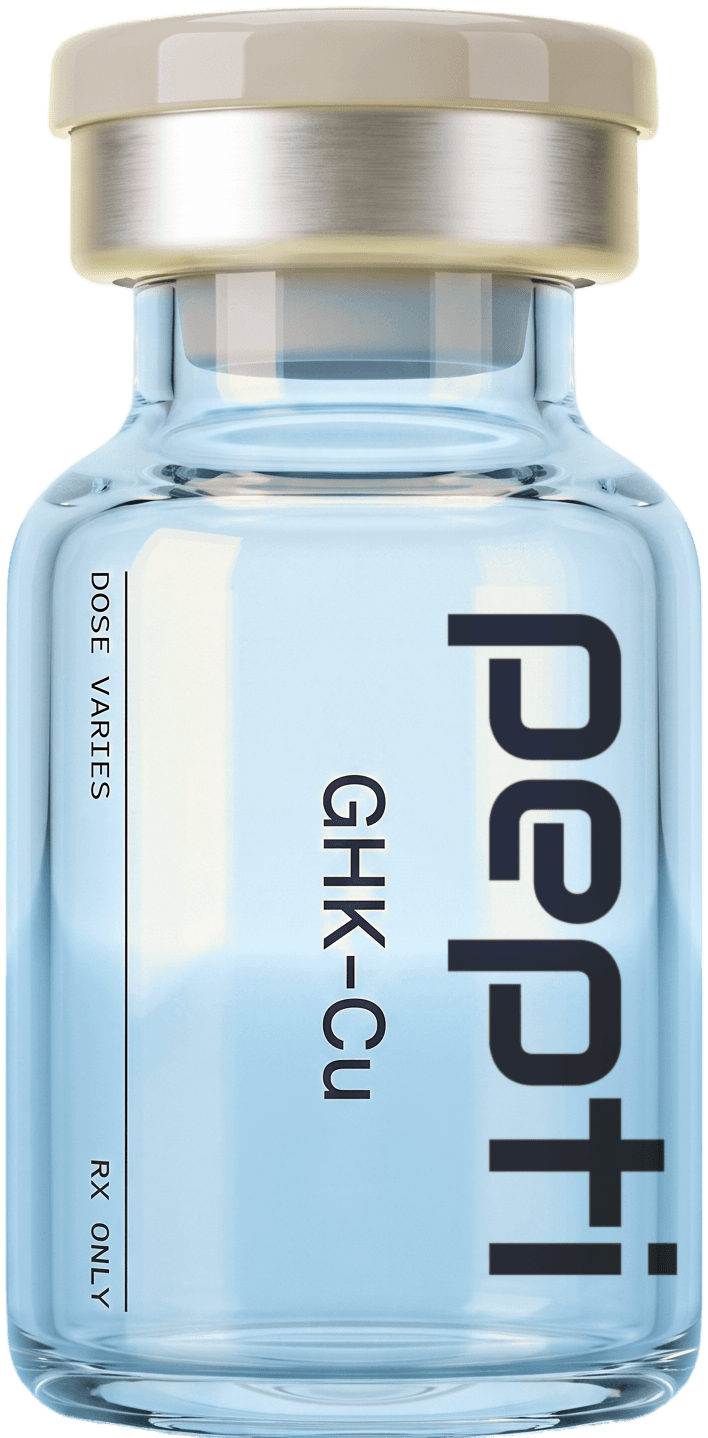
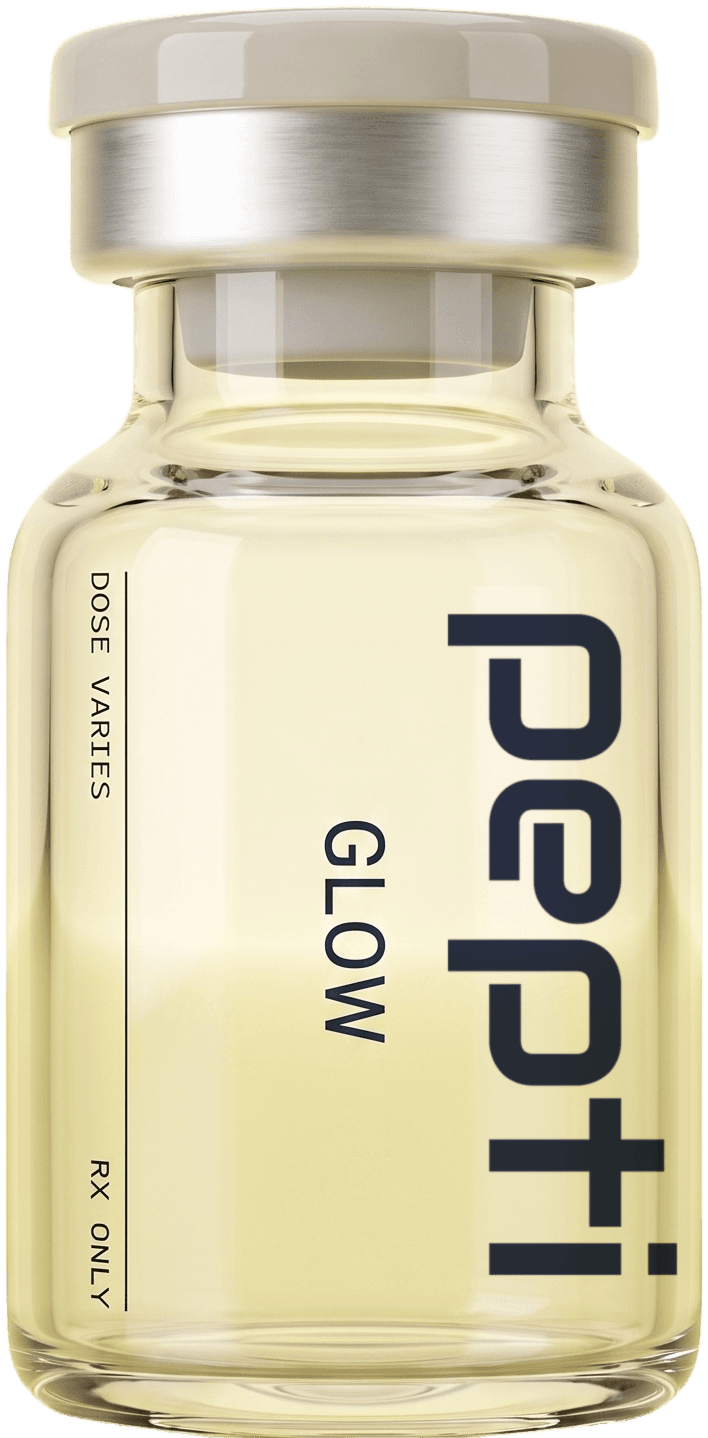
The best-known example is GHK-Cu, the copper peptide, and much of the human research on peptides for skin is on topical products like these. They are cosmetics, sold without a prescription and allowed to make appearance claims only, and how much of a topical peptide gets past the skin's outer barrier is limited. Injectable peptides are a different category: prescription medications compounded by a licensed pharmacy and injected under the skin, acting through the body rather than at the surface. Pepti prescribes injectable peptides, not skincare products.
This page explains what skincare peptides are, the main types, how far they get into skin, what the research shows and does not show, how they compare with prescribed injectable peptides, and how to think about choosing between them. Cosmetic products are described neutrally and generally, and no products or brands are named.
What Are Peptides in Skincare? Topical Peptides vs Injectable Peptides
The short answer
| Question | Skincare peptides | Injectable peptides |
|---|---|---|
| What are they? | Short amino-acid chains in a topical product | Defined peptide medications in sterile solution |
| Where they act | At the surface, limited by what crosses the skin | Systemically, from under the skin |
| Regulated as | Cosmetics | Prescription medications compounded to order |
| Claims allowed | Appearance claims | Prescriber-directed use, no efficacy promises |
| Who decides you get it | You, at checkout | A physician licensed in your state |
| Concentration known | Varies, often undisclosed | Stated on the vial |
| Main human evidence for skin | Small topical studies | No randomised trials of injectable GHK-Cu |
| Example at Pepti | Not sold | GHK-Cu, $239/mo |
Pepti prices are all-in, covering medication, physician review, refill management and shipping, with no separate membership fee.
What Are Peptides in Skincare? Topical Peptides vs Injectable Peptides
What a peptide is, in skincare terms
A peptide is a short chain of amino acids, the building blocks of protein. Collagen and elastin, the proteins that give the dermis its firmness and spring, are made of very long chains; peptides are short pieces, usually a handful to a few dozen amino acids. The idea behind skincare peptides is that some short sequences act as messages to skin cells, telling them, for example, to make more matrix, or that they can deliver something the skin needs. The general background is in what are peptides.
What Are Peptides in Skincare? Topical Peptides vs Injectable Peptides
The main types of skincare peptide
Cosmetic chemists usually sort topical peptides into four broad groups. The groups describe what each is designed to do, not what it has been shown to do in people.
| Type | What it is designed to do | Example of the idea |
|---|---|---|
| Signal peptides | Mimic fragments of matrix proteins to signal fibroblasts to make collagen and elastin | Short sequences modelled on collagen breakdown fragments |
| Carrier peptides | Deliver a trace metal, usually copper, to the skin | GHK-Cu, the copper peptide |
| Neurotransmitter-inhibiting peptides | Marketed to soften expression lines by damping muscle signalling | Short sequences sold as "topical" alternatives to injectable muscle relaxants |
| Enzyme-inhibiting peptides | Slow the enzymes that break down skin's matrix | Sequences aimed at matrix metalloproteinases |
Many topical peptides are attached to a fatty acid, often labelled "palmitoyl," to help them move into the oily outer layer of the skin. Product labels frequently use trade names for these ingredients rather than the sequence, which is one reason it can be hard to tell what a serum actually contains.
What Are Peptides in Skincare? Topical Peptides vs Injectable Peptides
How far a topical peptide gets
Skin is built to keep things out. The outermost layer, the stratum corneum, is a tight barrier of flattened cells and lipids, and peptides are relatively large, water-loving molecules compared with what crosses skin easily. A 2011 study in Inflammation Research measured how much of a copper tripeptide actually penetrates human skin in vitro, layer by layer, and it is useful precisely because it shows how little reaches the deeper layers. That is why a topical copper peptide does not carry the systemic copper question an injection does, and also why what a serum can do is limited by what crosses intact skin.
What Are Peptides in Skincare? Topical Peptides vs Injectable Peptides
What the research on skincare peptides shows
The honest summary is that the topical literature is the human literature for skin peptides, and it is small.
| Study | What was tested | What it shows |
|---|---|---|
| 2009 review, International Journal of Cosmetic Science | The peptides used in anti-ageing topicals, copper peptides included | Most supporting studies small, short and industry-run |
| 1994, Wound Repair and Regeneration | Topical GHK-Cu on diabetic ulcers | A controlled study reporting improved healing |
| 2006, Archives of Facial Plastic Surgery | Topical copper tripeptide skin care after CO2 laser resurfacing, 13 patients | Blinded evaluators found no objective difference in redness or wrinkles; patient-reported satisfaction was higher |
| 2011, Inflammation Research | Penetration of a copper tripeptide into human skin, in vitro | Little reaches the deeper layers |
| 2007, Archives of Pharmacal Research | Effects on cultured human hair follicle cells | Cell work, not a clinical trial |
That is a real body of work, and it is mostly about copper peptides. For other cosmetic peptide types, the support in the 2009 review was mostly small, short, manufacturer-run studies. What is not established: large, independent, long-term randomised trials showing a topical peptide changes the structure of skin.
What Are Peptides in Skincare? Topical Peptides vs Injectable Peptides
Injectable peptides for skin
GHK-Cu
GHK-Cu is three amino acids, glycine, histidine and lysine, bound to a copper ion. It occurs naturally in human plasma and its concentration falls with age. Its described job is carrying copper to the enzymes that need it, including lysyl oxidase, which cross-links collagen and elastin into fibres. Research describes increased synthesis of collagen, elastin and the water-holding molecules of the dermis: the founding study is a 1988 paper in FEBS Letters on collagen synthesis in cultured fibroblasts, and gene-expression work is reviewed in BioMed Research International in 2015 and the International Journal of Molecular Sciences in 2018. It is also described as shifting the balance between matrix metalloproteinases and their inhibitors.
There are no randomised controlled trials of injectable GHK-Cu in humans. The injectable route rests on the same mechanism as the topical work plus prescriber experience. The full picture is in GHK-Cu benefits and is GHK-Cu safe.
What Pepti prescribes for skin
| If the goal is | The usual prescription | What is in it | Price |
|---|---|---|---|
| Skin quality and collagen alone | GHK-Cu | 50 mg GHK-Cu in a 5 mL vial | $239/mo |
| Skin plus soft-tissue repair | GLOW | 50 mg GHK-Cu, 10 mg BPC-157, 10 mg TB-500 | $259/mo |
| Skin plus body composition | RADIANCE | 50 mg GHK-Cu, 10 mg tesamorelin | $249/mo |
| Skin plus inflammation plus repair | KLOW | 50 mg GHK-Cu, 10 mg KPV, 10 mg BPC-157, 10 mg TB-500 | $259/mo |
| Skin within a longevity protocol | ETERNAL | 50 mg GHK-Cu, 10 mg BPC-157, 10 mg TB-500, 10 mg Epithalon | $279/mo |
Every row has GHK-Cu in it. The other ingredients are there for what sits alongside the skin goal, not for skin evidence of their own. The blends are compared in peptides for skin and KLOW vs GLOW.
What Are Peptides in Skincare? Topical Peptides vs Injectable Peptides
Skincare peptides vs injectable peptides, side by side
| Copper-peptide serum or cream | Injectable GHK-Cu | |
|---|---|---|
| Requires a prescription | No | Yes |
| Who makes it | A cosmetics manufacturer | A licensed compounding pharmacy |
| Concentration disclosed | Often not | On the prescription label |
| Sterility | Not applicable | Required, to sterile-compounding standards |
| Copper load assessed against your history | Not applicable | Yes |
| Where it acts | Locally, limited by penetration | Systemically |
| Human evidence | Small topical studies | No randomised trials of the injection |
| Accountability | Consumer product regulation | Pharmacy and prescriber, to state boards |
| What it is for | Topical skin care | Systemic use under directions |
The real difference is route and purpose, not strength
A serum is not a weaker injection, and an injection is not a stronger serum. They are different products for different purposes. Skin is an organ you can reach from the outside, and if your goal is purely surface texture, a well-formulated topical may be the more sensible purchase. The injectable conversation makes more sense when skin quality sits alongside something else, such as recovery that has slowed or an injury that will not settle, which is why the blends exist. There is no head-to-head trial comparing the two.
What Are Peptides in Skincare? Topical Peptides vs Injectable Peptides
Can you use a peptide serum with an injectable peptide?
People do. Nothing about using a topical alongside an injectable is established as a problem, and no study has tested the combination either. If you use retinoids or other active topicals, mention them; it changes nothing about the injectable but may change how you sequence your topicals. Put high-dose zinc on the intake too, because zinc competes with copper absorption.
What Are Peptides in Skincare? Topical Peptides vs Injectable Peptides
What neither replaces
- Sunscreen, the highest-value intervention for how skin ages, and the cheapest.
- A topical retinoid, which has the deepest evidence base in dermatology for photoageing; a peptide does not substitute for one.
- A dermatologist for a changing mole, a lesion that bleeds or will not heal, acne, rosacea, eczema or psoriasis.
- Sleep, protein and not smoking. Unglamorous, and they outperform most of what is sold.
What Are Peptides in Skincare? Topical Peptides vs Injectable Peptides
Side effects and cautions
Topical peptides. Cosmetic products are generally used without medical supervision; any irritation or rash is a reason to stop and, if it persists, see a clinician.
Injectable GHK-Cu and its blends. Reported tolerability is good, with injection-site redness or mild soreness the most common complaint. The cautions:
| Situation | Why |
|---|---|
| Wilson's disease or any copper-metabolism disorder | GHK-Cu delivers copper |
| High-dose zinc supplementation | Zinc competes with copper absorption; tell your physician the dose |
| Personal history of cancer | BPC-157 and TB-500, in the blends, are described in animal work as supporting new blood-vessel growth |
| Pregnancy or breastfeeding | Not used; safety data is absent |
| Tested athletes | Several blend ingredients are prohibited in competition |
Stop and contact your physician for any reaction that is severe, spreading or involves difficulty breathing. For swelling of the face or throat or trouble breathing, call 911.
What Are Peptides in Skincare? Topical Peptides vs Injectable Peptides
Where GHK-Cu stands with the FDA
Injectable GHK-Cu was placed in Category 2 of the FDA's 503A bulk substances list in 2023 and was among twelve peptides removed from Category 2 in April 2026 after their nominations were withdrawn; the FDA said removal does not by itself place a substance on the bulks list or in Category 1. Non-injectable GHK-Cu was restored to Category 1, "GHK-Cu (except for injectable routes of administration)," on the list dated 14 May 2026. The FDA has announced that its Pharmacy Compounding Advisory Committee will consider GHK-Cu before the end of February 2027. Cosmetic peptide products are regulated as cosmetics, not drugs. Compounded GHK-Cu is not FDA approved. Are peptides FDA approved explains the difference between not approved and not legal.
What Are Peptides in Skincare? Topical Peptides vs Injectable Peptides
How Pepti supplies injectable GHK-Cu
GHK-Cu comes as a 5 mL multi-dose vial at 10 mg/mL, 50 mg per vial, shipped ready to use with directions printed on the vial, sterile syringes and alcohol prep pads, refrigerated with ice packs. GHK-Cu solution is blue because of the copper, which is normal; see why is GHK-Cu blue. Each vial is sized for about four weeks at the printed directions, so refills run every 28 days, one vial per fill. Your physician sets your directions after reviewing your intake. Dosing detail is in GHK-Cu dosage.
What Are Peptides in Skincare? Topical Peptides vs Injectable Peptides
What the evidence shows, honestly
Skincare peptides are a real category with a plausible rationale, and the human evidence for them is small: short, often industry-run studies, with the most work on copper peptides and limits on how much crosses the skin. Injectable GHK-Cu has cell, animal and topical human work behind its mechanism and no randomised human trials of the injection. Neither route has a head-to-head comparison with the other, an effect size anyone can quote, or a human timeline. Any provider or brand telling you a serum works like an injection, or that an injection has been shown to rebuild skin, is running ahead of the evidence.
What Are Peptides in Skincare? Topical Peptides vs Injectable Peptides
Where to get GHK-Cu prescribed
Injectable GHK-Cu cannot be bought legitimately without a prescription. Vials sold "for research use only" are not accountable for identity, purity, sterility or concentration, which matters more with a peptide that carries a metal. The prescription route:
- Complete a free online intake covering your history, medications, supplements and what you want help with.
- A physician licensed in your state reviews it, usually within 24 hours.
- If it is appropriate, a PCAB-accredited, FDA-registered US 503A pharmacy compounds it to that prescription. Lot test results are published at /quality/lab-results.
- It ships refrigerated with your directions printed on the vial.
- Your physician stays reachable for questions and dose changes.
Pepti is cash-pay and does not bill insurance. Step by step: how to get GHK-Cu prescribed online and how to get KLOW prescribed online.
References
What this is based on.
References
- Chang CH, Tsai WC, Hsu YH, Pang JH. Pentadecapeptide BPC 157 enhances the growth hormone receptor expression in tendon fibroblasts · Molecules (2014) · PMID 25415472
- Krivic A, Anic T, Seiwerth S, et al.. Achilles detachment of rat and stable gastric pentadecapeptide BPC 157 · Journal of Orthopaedic Research (2006) · PMID 16583442
- Sikiric P, Seiwerth S, Rucman R, et al.. Stable gastric pentadecapeptide BPC 157: novel therapy in gastrointestinal tract · Current Pharmaceutical Design (2011) · PMID 21548867
- Cerovecki T, Bojanic I, Brcic L, Radic B, et al.. Pentadecapeptide BPC 157 (PL 14736) improves ligament healing in the rat · J Orthop Res (2010) · PMID 20225319
- Sikiric P, Seiwerth S, Rucman R, Turkovic B, et al.. Stable gastric pentadecapeptide BPC 157-NO-system relation · Curr Pharm Des (2014) · PMID 23755725
- Cox HD, Miller GD, Eichner D. Detection and in vitro metabolism of the confiscated peptides BPC 157 and MGF R23H · Drug Test Anal (2017) · PMID 28035768
- Thomas A, Görgens C, Guddat S et al.. Simplifying and expanding the screening for peptides <2 kDa by direct urine injection, liquid chromatography, and ion mobility mass spectrometry · J Sep Sci (2016) · PMID 26578461
- Farrar JT, Young JP Jr, LaMoreaux L, Werth JL et al.. Clinical importance of changes in chronic pain intensity measured on an 11-point numerical pain rating scale · Pain (2001) · PMID 11690728
- Meyer JD, Ho B, Manning MC. Effects of conformation on the chemical stability of pharmaceutically relevant polypeptides · Pharm Biotechnol (2002) · PMID 11987755
- Xu C, Sun L, Ren F, Huang P, et al.. Preclinical Safety Evaluation of Body Protective Compound-157, a Potential Drug for Treating Various Wounds · Regul Toxicol Pharmacol (2020) · PMID 32334036
- He L, Feng D, Guo H, et al.. Pharmacokinetics, distribution, metabolism, and excretion of body-protective compound 157, a potential drug for treating various wounds, in rats and dogs · Front Pharmacol (2022) · PMID 36588717
- Lee E, Padgett B. Intra-Articular Injection of BPC 157 for Multiple Types of Knee Pain · Altern Ther Health Med (2021) · PMID 34324435
Citations are provided for educational purposes. They do not constitute medical advice. Always discuss any peptide protocol with your prescribing physician.
Common questions
What Are Peptides in Skincare? Topical Peptides vs Injectable Peptides, answered.
Short chains of amino acids added to serums, creams and eye products. Most are designed either to signal skin cells to make matrix proteins such as collagen, or to carry a trace metal, usually copper, into the skin.
That depends on the type. Signal peptides are designed to prompt collagen and elastin production, carrier peptides such as GHK-Cu deliver copper, and others are marketed for expression lines or matrix breakdown. The human studies are mostly small and short, and how much of a topical peptide penetrates is limited.
Usually GHK-Cu, a three-amino-acid peptide bound to a copper ion that occurs naturally in human plasma. It is used in topical products and, on prescription, as an injection.
No. Skincare peptides are cosmetic ingredients that act at the surface. Injectable peptides are prescription medications compounded by a licensed pharmacy that act systemically. They can share a molecule, such as GHK-Cu, but they are different products for different purposes.
There is no head-to-head trial. A serum acts where it lands and has a small risk profile; an injection is systemic and belongs with a physician. The human studies of GHK-Cu are almost all topical.
Only to a limited degree. A 2011 study in Inflammation Research measured a copper tripeptide moving through human skin in vitro and found little reached the deeper layers.
Many people do. If you are prescribed an injectable peptide, mention your topicals to your prescriber; it changes nothing about the injection but may change how you sequence your skincare.
They are regulated as cosmetics, which are allowed appearance claims only. Prescription peptides are compounded medications, and compounded medications are not FDA approved.
No. Pepti prescribes injectable peptides, including GHK-Cu and the GLOW, RADIANCE, KLOW and ETERNAL blends.
GHK-Cu alone is $239 a month, and the skin blends run from $249 to $279 a month, all-in, covering medication, physician review, refill management and shipping.
No. Bloodwork is not required for any Pepti treatment. If your physician wants labs for your care, they'll ask through your account. The free assessment goes to a physician licensed in your state. A consultation does not guarantee a prescription.
Related answers
Keep reading.
- SLU-PP-332 vs L-Carnitine: Exercise Mimetic vs Fat-Transport Molecule, Compared
- SLU-PP-332 vs Semaglutide: Exercise Mimetic vs GLP-1, Compared
- SLU-PP-332 vs Tirzepatide: Exercise Mimetic vs Dual GIP/GLP-1 Agonist, Compared
- SS-31 vs FOXO4-DRI: Mitochondrial Protector vs Senolytic, Compared
- SS-31 vs Glutathione: Targeted Mitochondrial Peptide vs the Body's Main Antioxidant
Next step
See what a physician recommends for you.
A licensed physician in your state reviews your intake to see whether treatment fits your history. A consultation does not guarantee a prescription.