— Anti-Aging · Reference
Peptides for Skin: Which Ones Are Prescribed, What They Do, What They Cost
If you searched "peptides for skin" without knowing a single molecule name, this page starts from zero: what these things are, which one matches which complaint, and what a prescriber will and will not claim.
— Treatments mentioned
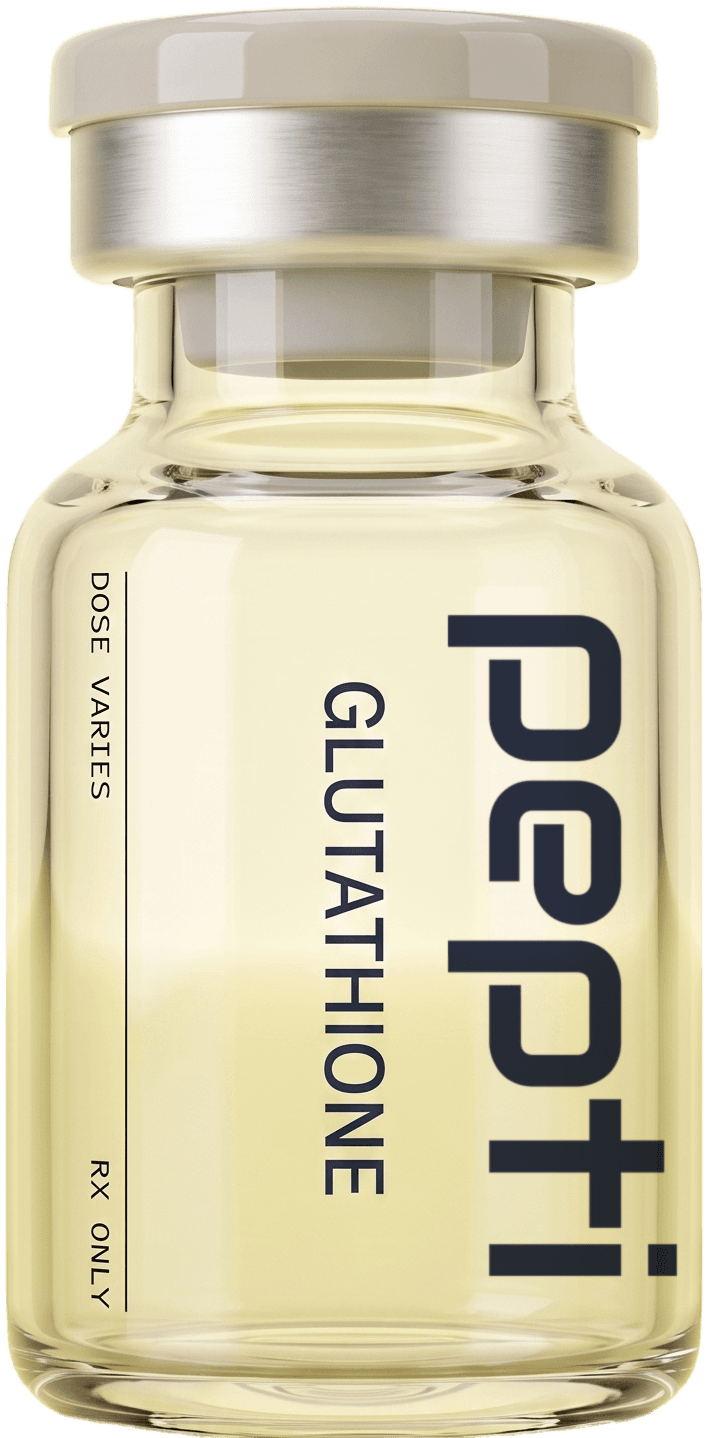
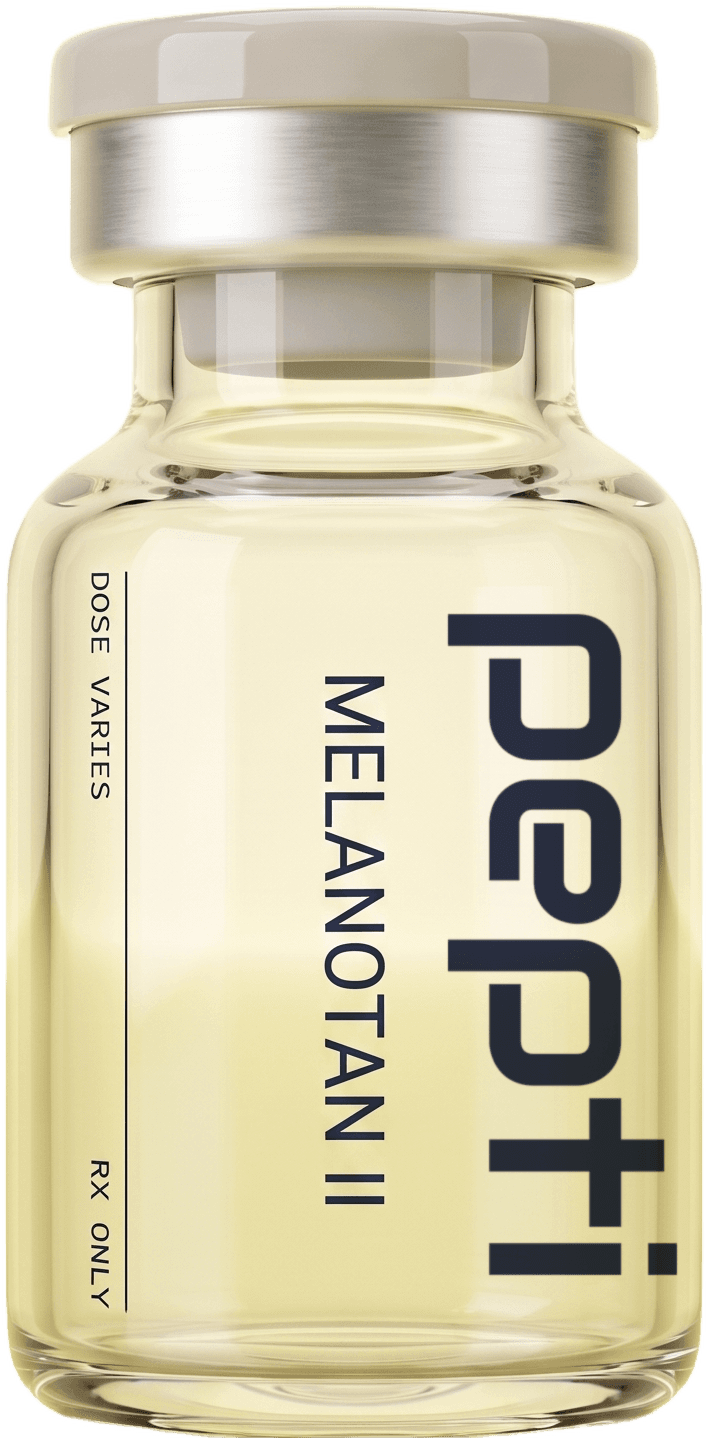
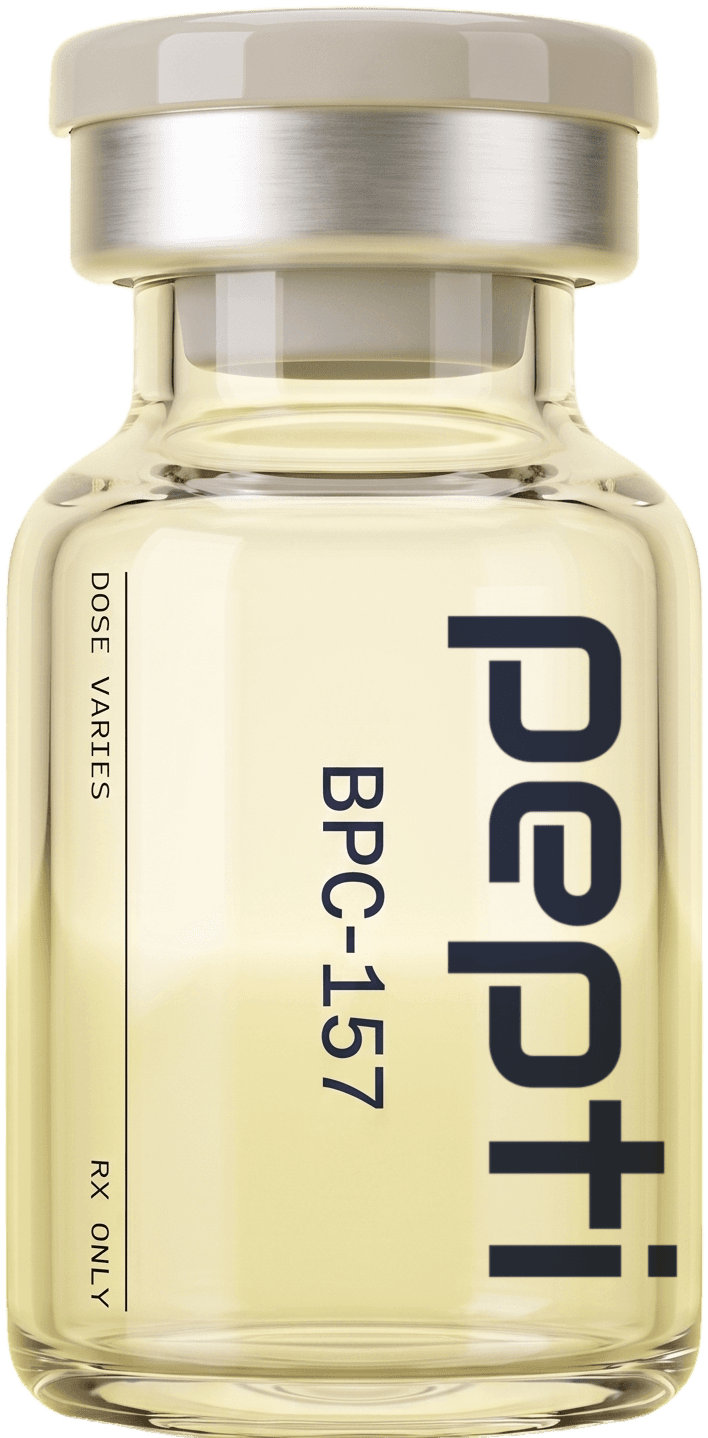
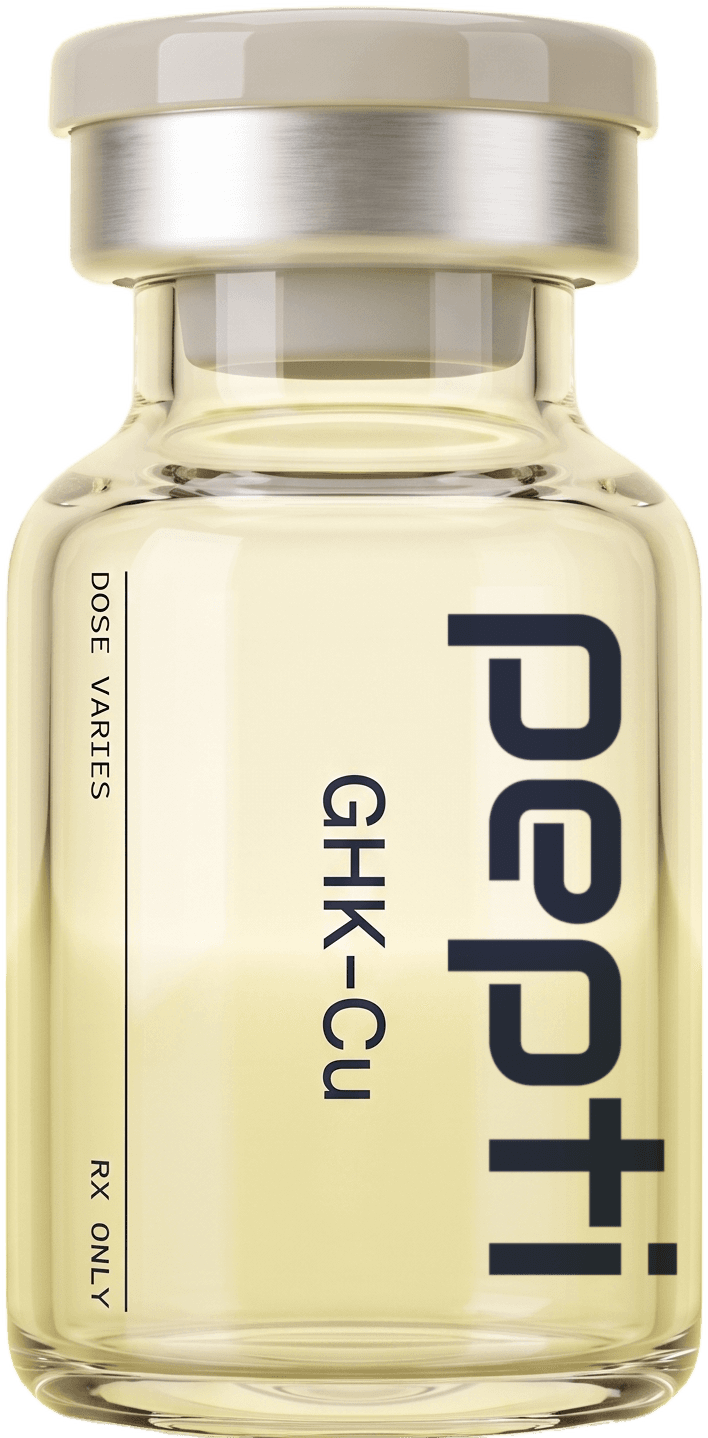
The peptide prescribed for skin is GHK-Cu, a copper-carrying tripeptide, used alone or blended with repair peptides in a single vial. It is studied for collagen and elastin synthesis and for the enzyme balance that governs how quickly skin breaks its own structure down. It is prescription-only, compounded by licensed US pharmacies, and not FDA approved. Glutathione appears in the same conversation for tone rather than structure.
If you searched "peptides for skin" without knowing a single molecule name, this page starts from zero: what these things are, which one matches which complaint, and what a prescriber will and will not claim.
— Peptides for Skin
The short answer
| If your goal is | The usual prescription | What is in it | Price |
|---|---|---|---|
| Skin quality and collagen alone | GHK-Cu | 50 mg GHK-Cu in 5 mL | $239 |
| Skin plus soft-tissue repair | GLOW | 50 mg GHK-Cu, 10 mg BPC-157, 10 mg TB-500 | $259 |
| Skin plus body composition | RADIANCE | 50 mg GHK-Cu, 10 mg Tesamorelin | $249 |
| Skin plus inflammation plus repair | KLOW | 50 mg GHK-Cu, 10 mg KPV, 10 mg BPC-157, 10 mg TB-500 | $259 |
| Skin within a longevity protocol | ETERNAL | 50 mg GHK-Cu, 10 mg BPC-157, 10 mg TB-500, 10 mg Epithalon | $279 |
| Tone and oxidative stress | Glutathione | 1000 mg Glutathione in 5 mL | $199 |
Each figure is the all-in monthly price covering medication, physician review, refill management and shipping, recurring while treatment continues.
Every row above has GHK-Cu in it except the last. If the complaint is skin structure, the conversation is about GHK-Cu, and the only question is what rides alongside it. If the complaint is tone, glutathione is a different conversation. Pigment is a third, and a narrower one.
— Peptides for Skin
What is actually going on in aging skin
Peptides are easier to judge once you know what they are being asked to change.
— The dermis loses collagen faster than it makes it
The epidermis renews itself every few weeks. The dermis under it does not. It is a mesh of collagen and elastin built by fibroblasts, and it turns over very slowly: a 2000 paper in the Journal of Biological Chemistry estimated the half-life of skin collagen at around fifteen years. A 2006 paper in the American Journal of Pathology reported that fibroblasts in chronologically aged human skin make less collagen, partly for a mechanical reason: as the surrounding matrix fragments, the cells lose the tension they need to keep producing. A 2015 mini-review in Gerontology describes the resulting loop, where a damaged matrix under-stimulates fibroblasts, which lay down less matrix. Skin does not run out of collagen so much as stop replacing it.
— The enzymes that dismantle skin drift out of balance
Skin is constantly remodeled by matrix metalloproteinases, which cut old collagen and elastin so new material can be laid down, and by tissue inhibitors of metalloproteinases, which hold them in check. A 2002 paper in Archives of Dermatology set out the accepted mechanism of photoaging: ultraviolet light drives up metalloproteinase activity in the dermis, the fragments are imperfectly repaired, and the damage accumulates. Chronological aging runs a slower version of the same process. This is the balance the opening paragraph refers to, and it is the specific thing GHK-Cu is described as acting on. Newly made collagen is not useful until lysyl oxidase, a copper-dependent enzyme, cross-links it into fibers, which is where a copper carrier comes in.
— Pigment and tone are separate from structure
Uneven tone, dullness and hyperpigmentation are not collagen problems. They are about melanin, produced by melanocytes under the enzyme tyrosinase, and about oxidative stress in the tissue. A peptide that rebuilds dermal matrix does nothing for a pigment problem, and a compound that shifts melanin does nothing for collagen. That is why glutathione and Melanotan II sit on this page as separate tools rather than alternatives to GHK-Cu.
— Peptides for Skin
What physicians prescribe for skin
One product per heading. The active ingredient across the structural products is the same, so read the GHK-Cu section first.
— GHK-Cu
GHK-Cu is three amino acids, glycine, histidine and lysine, bound to a copper ion. It occurs naturally in human plasma and its concentration falls with age, which is the observation that started the research interest. It was first described in Nature: New Biology in 1973 as a factor in human serum acting on liver cells in culture, and a 1994 paper in the Journal of Cell Biology reported the same sequence being released from SPARC, a matrix protein, when tissue is broken down, which suggests the body uses it as a repair signal.
Its described job is carrying copper. Copper is not decorative: enzymes central to connective tissue, including lysyl oxidase, which cross-links collagen and elastin into something that holds its shape, will not work without it. GHK-Cu binds copper with high affinity and delivers it where those enzymes operate.
Beyond delivery, research describes increased synthesis of collagen, elastin, proteoglycans and glycosaminoglycans, the water-holding molecules that give skin its plumpness. The founding study is a 1988 paper in FEBS Letters reporting collagen synthesis in cultured fibroblasts; a 1993 paper in the Journal of Clinical Investigation reported connective-tissue accumulation in rat wounds. It is also described as shifting the balance between matrix metalloproteinases and their inhibitors (Journal of Investigative Dermatology, 1999; Life Sciences, 2000), and a 2009 paper in Archives of Dermatological Research reported increased integrin expression in cultured keratinocytes. Gene-expression work, reviewed in BioMed Research International in 2015 and the International Journal of Molecular Sciences in 2018, reports effects across a large number of genes rather than one tidy pathway, which is why nobody can give you a single clean mechanism sentence.
Who it suits: the person whose complaint is skin quality on its own. It is the reference point for every blend. Directions are on the GHK-Cu product page; the physician sets the dose. Its safety profile has its own page, is GHK-Cu safe.
— GLOW
GLOW is GHK-Cu with BPC-157 and TB-500 in the same vial. It is the blend for someone whose skin goal sits alongside a soft-tissue one: a tendon that is slow, a surgical scar, recovery that has lost pace. The three are frequently prescribed together anyway, and one vial is one injection.
— RADIANCE
RADIANCE is GHK-Cu with tesamorelin, a growth-hormone-releasing-hormone analogue with real human trial data. It is in RADIANCE because people asking about skin often ask about body composition in the same breath. It suits someone whose physician judges the growth-hormone axis worth engaging, and it is the one blend here where bloodwork is more likely to be requested first.
— KLOW
KLOW is GLOW plus KPV, a three-amino-acid fragment of alpha-melanocyte-stimulating hormone. A 2008 paper in Gastroenterology described KPV reducing intestinal inflammation in mice, and a 2008 review in Endocrine Reviews covers the anti-inflammatory biology of the parent hormone and its fragments. None of that is skin-specific. KLOW suits the person whose skin complaint has an inflammatory component, on the rationale that inflammation is the common enemy of every kind of repair.
— ETERNAL
ETERNAL is GLOW plus epithalon, a synthetic tetrapeptide modeled on a pineal extract. A 2003 paper in the Bulletin of Experimental Biology and Medicine reported telomerase activation in cultured human cells, a 2025 paper in Biogerontology reported telomere lengthening in human cell lines, and a 2025 overview in the International Journal of Molecular Sciences notes how much of the field comes from one research group. There are no randomized human trials of epithalon for skin. It suits someone running a longevity protocol who wants skin covered within it.
— Glutathione
Glutathione is not a skin-structure peptide. It is a tripeptide of glutamate, cysteine and glycine, the body's principal intracellular antioxidant and a cofactor for the enzymes running phase II detoxification in the liver. It is prescribed in skin conversations for tone and oxidative stress. The biochemistry is solid; the evidence that supplementing it changes a specific skin outcome is weaker, and an honest prescriber says so. That evidence is set out below, because unlike most of this page it includes randomized human trials.
— Melanotan II
Melanotan II is a synthetic analogue of alpha-melanocyte-stimulating hormone that activates melanocortin receptors and stimulates melanin production. It is a pigmentation compound, not a collagen compound, and it is $249 a month. Because it drives pigment, moles and lesions should be examined by a clinician first, and a history of melanoma or atypical moles is a reason not to use it. It answers a different question from every other product on the page.
— Peptides for Skin
The repair peptides inside the blends
These do not have skin evidence of their own the way GHK-Cu does. They are in the blends for what they are described as doing to healing tissue generally.
— BPC-157
A 15-amino-acid fragment of a protein found in human gastric juice. It is in skin blends because animal research describes it promoting new blood-vessel formation through the VEGF receptor pathway, and remodelling tissue needs supply. A 2017 paper in the Journal of Molecular Medicine reported VEGFR2 activation in rat and cell models; a 2011 paper in the Journal of Applied Physiology described tendon cell survival and migration. There are no randomized human trials of BPC-157 for skin or anything else. Its wider role is covered in peptides for healing.
— TB-500
A synthetic fragment related to thymosin beta-4, one of the most abundant proteins inside human cells. Its central described action is binding actin, the protein that lets a cell change shape and move, which is the basis of its reported effect on repair cells reaching damaged tissue. Published work also reports upregulation of laminin-5 in wound repair and reduced scar formation in some models, which is why it appears where scarring is part of the complaint. Thymosin beta-4 has the most skin-relevant literature of the repair peptides: accelerated dermal wound closure in rats (Journal of Investigative Dermatology, 1999) and in diabetic and aged mice (Wound Repair and Regeneration, 2003), and laminin-5 production in keratinocytes (Experimental Cell Research, 2004). In humans, a 2010 randomized placebo-controlled study in Annals of the New York Academy of Sciences reported intravenous thymosin beta-4 well tolerated in healthy volunteers, and a 2012 review in the same journal summarized early human wound-healing work. Those concern the full-length protein, not the compounded fragment, and none is a trial of skin quality.
— Tesamorelin
A stabilised analogue of growth-hormone-releasing hormone. It prompts the pituitary to release a pulse of your own growth hormone rather than supplying hormone from outside. Unlike everything else here, tesamorelin is the active ingredient of an FDA-approved product: the New England Journal of Medicine published its phase 3 trials in 2007, in HIV-infected adults with abdominal fat accumulation, reporting reduced visceral fat against placebo. There is no trial of tesamorelin for skin. Its presence in RADIANCE is about the growth-hormone axis, not a skin finding.
— Peptides for Skin
Injectable versus the serum on the shelf
This is the question that brings most people to this page, because "copper peptide" is printed on bottles in every pharmacy.
| Cosmetic serum | Compounded injectable | |
|---|---|---|
| Regulated as | A cosmetic | A prescription medication compounded to order |
| Claims allowed | Appearance claims | Prescriber-directed use, no efficacy promises |
| Where it acts | The surface, limited by what crosses skin | Systemic, from the inside |
| Who decides you get it | You, at a checkout | A physician licensed in your state |
| Concentration known | Varies, often undisclosed | Stated on the vial |
| Accountability | The brand | A licensed pharmacy and a named prescriber |
Neither is automatically right. Skin is an organ you can reach from the outside, and if your goal is purely surface texture, a well-formulated topical may be the more sensible purchase. The injectable conversation makes more sense when skin quality sits alongside something else: recovery that has slowed, an injury that will not settle, or repair after illness. That overlap is why the blends exist.
It is worth being precise, because the topical literature is the human literature. A 2009 review in the International Journal of Cosmetic Science surveyed the peptides used in anti-aging topicals, copper peptides included, and found most supporting studies small, short and industry-run. A 1994 paper in Wound Repair and Regeneration reported a controlled study of topical GHK-Cu on diabetic foot ulcers, a 2006 paper in Archives of Facial Plastic Surgery examined topical copper tripeptide after laser resurfacing, and a 2007 paper in Archives of Pharmacal Research reported effects on cultured human hair follicle cells. That is a real body of work, and it is topical. Nobody has run a randomized trial of injectable GHK-Cu for skin quality in humans; the injectable route rests on the same mechanism plus prescriber experience.
— Peptides for Skin
What peptides will not replace
- A retinoid. Topical retinoids have the deepest evidence base in dermatology for photoaging. A peptide does not substitute for one.
- Sunscreen. The highest-value intervention for how skin ages, and the cheapest.
- A dermatologist. A changing mole, a lesion that bleeds or will not heal, persistent acne or rosacea needs a diagnosis, not a vial.
- Sleep, protein and not smoking. Unglamorous, and they outperform most of what is sold.
— Peptides for Skin
Who should not take these
| Situation | Why |
|---|---|
| Wilson's disease or any copper-metabolism disorder | GHK-Cu delivers copper, which is the whole point of it |
| High-dose zinc supplementation | Zinc competes with copper absorption, so tell your physician the dose |
| History of melanoma or atypical moles | Relevant to Melanotan II specifically, before any pigmentation compound |
| Personal history of cancer | BPC-157 and TB-500 are described as supporting new blood-vessel growth |
| Anticoagulant therapy | Discuss first, given the vascular mechanisms |
| Pregnancy or breastfeeding | Not used; safety data is absent |
| Tested athletes | Several of these are prohibited in competition |
— Peptides for Skin
What the evidence shows, honestly
GHK-Cu has the deepest literature of the repair peptides, including human skin work, but a large share of that is topical application and cell culture rather than randomised trials of an injectable. Clinical trial data for injectable use specifically remains limited.
BPC-157 and TB-500 are largely preclinical: animal and cell models, no large randomised human trials. Glutathione's biochemistry is established while its clinical skin outcomes are not. Melanotan II has limited evidence and a real caution attached. Epithalon, in ETERNAL, rests on a narrow and frequently overstated body of work.
None of these is FDA approved. They are compounded at a US FDA-registered pharmacy against a valid prescription, which is a different statement and the only accurate one. Response varies, and any provider offering a timeline or an outcome is inventing it. See are peptides FDA approved.
— Glutathione has trials, and they are about pigment
Glutathione is the exception on this page in having randomized human trials, and they answer a narrower question than most people assume. A 2012 randomized, double-blind, placebo-controlled study in the Journal of Dermatologic Treatment gave oral glutathione to healthy medical students for four weeks and measured melanin index at sun-exposed sites. A 2014 placebo-controlled trial in Clinical, Cosmetic and Investigational Dermatology tested a topical oxidized-glutathione lotion in healthy women over ten weeks, and a 2017 study in the same journal followed healthy adults on oral glutathione for twelve weeks with instrumental measures of melanin, wrinkles and elasticity. All three were small and short. A 2016 review in the Indian Journal of Dermatology, Venereology and Leprology titled "Facts, myths, evidence and controversies" is the right framing: some signal on melanin index in short trials, no long-term data, and no controlled trial of injectable glutathione for skin. Separately, a 2015 randomized trial in the European Journal of Nutrition reported oral supplementation raising body stores of glutathione over six months, against the assumption from a 1992 pharmacokinetic study that oral glutathione was not absorbed.
— Melanotan II
The human data is a 1996 phase 1 pilot in Life Sciences reporting tanning in fair-skinned volunteers, plus erectile-function trials from the late 1990s. The cautions are case reports: melanoma arising during use (Dermatology, 2014; Australasian Journal of Dermatology, 2012), systemic toxicity with rhabdomyolysis (Clinical Toxicology, 2012), and a 2017 review in the International Journal of Dermatology of the risks of unregulated use. Those reports concern unregulated product; they are nonetheless why a physician examines your skin first.
— What the evidence does not establish
- An effect size for injectable GHK-Cu on any measure of skin quality. That trial has not been run.
- A human timeline. What prescribers describe is experience, not a trial endpoint.
- Long-term safety data for continuous injectable use over years, for any of the repair peptides.
- Any FDA-approved indication. None of these is approved for anything as a compounded preparation, and tesamorelin's approval belongs to a manufactured product with a different indication.
— Peptides for Skin
Where these stand with the FDA right now
A blend has no regulatory status of its own; the FDA regulates the bulk substances a pharmacy compounds from. So the question is where each ingredient stands, and it has moved twice in 2026. A lot of what is published online is out of date.
— How the 503A list works
The FDA keeps a list of bulk drug substances nominated for use in compounding by state-licensed pharmacies under section 503A of the Food, Drug, and Cosmetic Act, sorted into three interim categories. Category 1 is substances under evaluation, which the FDA does not intend to take action against pharmacies for compounding while it decides. Category 2 is substances the FDA has flagged as raising significant safety risks. Category 3 is nominations without adequate support. The current version is dated 14 May 2026.
— GHK-Cu and Melanotan II
Injectable GHK-Cu and Melanotan II were both placed in Category 2 in 2023. On 15 April 2026 the FDA announced it would remove twelve peptides from Category 2 because their nominations had been withdrawn, and both were among them; the removal took effect about a week later. The FDA was explicit that removal from Category 2 does not by itself place a substance on the 503A bulks list or in Category 1. The FDA's safety-risk page, updated 22 April 2026, now lists both among substances previously in Category 2 whose nominations were withdrawn, keeping Melanotan II's original note on file about possible immunogenicity and published case reports.
Non-injectable GHK-Cu had a separate history: removed from Category 1 on 22 April 2026 in the same clean-up, then restored as "GHK-Cu (except for injectable routes of administration)" on the 14 May 2026 list after a nominator clarified on 5 May that it had only meant to withdraw the injectable route. The FDA has announced that its Pharmacy Compounding Advisory Committee will meet before the end of February 2027 to consider GHK-Cu and Melanotan II for the 503A bulks list, alongside LL-37, Dihexa and PEG-MGF.
— BPC-157, TB-500, KPV and epithalon
All four were in Category 2 from 2023 and all four were among the twelve peptides removed in April 2026. The FDA then took them to its Pharmacy Compounding Advisory Committee on 23 and 24 July 2026: BPC-157, KPV and TB-500 on the first day, epitalon on the second, each as the free base and the acetate. The committee voted 8–6 with one abstention to recommend adding each of BPC-157, KPV and TB-500 to the 503A bulks list, and 7–4 with one abstention for epitalon.
An advisory committee makes non-binding recommendations; the FDA generally follows them but is not required to. Adding a substance to the list requires notice-and-comment rulemaking, and as of September 2026 no proposed rule has been published. So GLOW, KLOW and ETERNAL contain ingredients that are no longer flagged, have been recommended for the positive list, and await final FDA action.
— Tesamorelin
Tesamorelin is the active ingredient of Egrifta, approved in 2010; the current formulation, Egrifta WR, is indicated for the reduction of excess abdominal fat in HIV-infected adults with lipodystrophy. Its label carries three limitations of use: long-term cardiovascular safety has not been established, it is not indicated for weight-loss management because its effect on weight is neutral, and there is no evidence it improves antiretroviral adherence. Because it is a component of an approved product it was never nominated to the 503A category list and does not appear on the 14 May 2026 version. Compounded tesamorelin, as in RADIANCE, is not Egrifta, has not been reviewed by the FDA as a finished product, and is prescribed off-label for any purpose other than the approved one. That is a physician's decision and common across medicine, but it should be understood as such.
— Glutathione
Glutathione is in 503A Category 1, "Bulk Drug Substances Under Evaluation," on the list dated 14 May 2026. It was never in Category 2 and the April 2026 removals did not involve it. One FDA action does concern it directly: on 7 June 2019 the FDA warned compounders against a dietary-supplement-grade L-glutathione powder from one distributor that had been used to make intravenous injections, after testing found bacterial endotoxin at up to five times the appropriate limit and eight patients had reactions ranging from nausea and chills to hospitalization. The point was that a sterile injectable must be compounded from an ingredient made for that route, not from a supplement. How Pepti's pharmacies source and test is on the quality page.
— What that adds up to
Nothing on this page is restricted. Nothing on this page is FDA approved as a compounded product, and compounded medications never are; they are prepared by a licensed pharmacy to a physician's prescription rather than approved as manufactured products. Four ingredients have a favorable committee vote behind them and await rulemaking; two are scheduled for review; one is under evaluation; one is a compounded version of an approved product. Any page telling you GHK-Cu or BPC-157 is "banned" is describing 2023.
— Peptides for Skin
What a physician rules out first
Skin is the organ most often used to look for something else, which is why the intake asks more than "what do you want to fix."
— A lesion or a diagnosis
A changing mole, a sore that will not close, a patch that bleeds or scales: these are examined and, if necessary, biopsied before anything is prescribed, and with particular care before Melanotan II. Rosacea, eczema, psoriasis and acne are diagnoses with treatments of their own; a peptide is not one of them, and KLOW is not a workaround.
— A thyroid, hormonal or nutritional cause
Dry, thinning, slow-healing skin is a common presentation of hypothyroidism, low protein intake, iron deficiency and poorly controlled blood sugar. A physician who suspects any of these will want labs before a peptide, because the peptide would be treating the wrong problem.
— Copper, cancer history and anticoagulants
Wilson's disease is rare, but the intake asks about it and about any copper-metabolism disorder, because GHK-Cu is a copper carrier; high-dose zinc is asked about because zinc competes with copper absorption. BPC-157 and TB-500 are described in animal work as supporting new blood-vessel growth, which is why a personal history of cancer is a discussion rather than an automatic yes for GLOW, KLOW or ETERNAL, and anticoagulant therapy is discussed for the vascular mechanisms. Neither is necessarily disqualifying; both are the physician's call.
— Peptides for Skin
What to expect, and when
These are patterns described by prescribers, not trial endpoints. No human trial of injectable GHK-Cu has measured a timeline, and the animal and cell work does not translate into weeks for a person.
— The first month
Most of what is reported early is not structural. Injection-site redness or mild soreness in the first days is the most common report. Some people describe changes in how skin feels or in how quickly small blemishes settle within the first few weeks, and many describe nothing. Neither is a signal about what comes later. For glutathione, the oral and topical trials measured melanin index over four to twelve weeks; the injectable has no trial timeline.
— Two to three months
Collagen turnover is slow; the dermis does not rebuild on a four-week cycle. If structural change occurs, this is the window in which prescribers describe texture and firmness changes being noticed, usually by the person before anyone else. Photographs taken at the start become useful here, because day-to-day comparison in a mirror is unreliable.
— Beyond three months
Treatment is long-term, with refills every 28 days and the physician in the loop on how it is going. Whether any change persists depends on whether the dermis actually changed. The long half-life of skin collagen cuts both ways: what is built is not quickly lost, and what is not yet built takes time.
— Peptides for Skin
When a peptide is the wrong tool
A reference that only recommends its own product is not much of a reference.
- The problem is on the surface and you have not tried the basics. Daily sunscreen, a retinoid and a decent moisturizer have more human evidence behind them than anything on this page. Start there, or do both.
- The problem is a diagnosis. Acne, rosacea, eczema, psoriasis, a suspicious lesion: a dermatologist, not a vial.
- The problem is pigment, not structure. GHK-Cu is not a pigment tool. Glutathione is the tone conversation and Melanotan II is a tanning conversation with real cautions; a physician decides whether either is appropriate.
- Skin is really a proxy for recovery. If the honest complaint is a tendon or an injury that will not settle, the conversation is BPC-157, TB-500 or the BPC-157 + TB-500 stack, covered in peptides for healing.
- Skin is really a proxy for the growth-hormone axis. If what you are describing is body composition and recovery with skin as an afterthought, tesamorelin alone or CJC-1295 / Ipamorelin may be the more direct conversation than RADIANCE.
- You want to combine several of these. Use a blend rather than stacking separate vials. GLOW, KLOW, RADIANCE and ETERNAL exist so that one prescription covers it, and a physician decides which.
Your physician will tell you if a skin peptide is not the right tool for what you have described. A consultation does not guarantee a prescription, and being declined is refunded.
— Peptides for Skin
Monitoring and bloodwork
For GHK-Cu alone, or for GLOW, KLOW or ETERNAL, bloodwork is not routinely required before a prescription; your physician may ask for it based on your history. RADIANCE is the exception: tesamorelin acts on the growth-hormone axis, and prescribers commonly want IGF-1 and a metabolic picture including glucose before and during treatment, because the approved product's label describes IGF-1 elevation and glucose intolerance as things to monitor.
During treatment, what is watched is injection sites, for reactions beyond mild redness; any new or changing skin lesion, on any product and particularly on Melanotan II; and any symptom suggestive of copper excess, which is a reason to contact your physician even though copper status is not routinely measured. At-home blood testing covers hormone, metabolic and thyroid markers without a lab visit, and do you need bloodwork before peptides explains when it is required.
— References
What this is based on.
References
- Chang CH, Tsai WC, Hsu YH, Pang JH. Pentadecapeptide BPC 157 enhances the growth hormone receptor expression in tendon fibroblasts · Molecules (2014) · PMID 25415472
- Krivic A, Anic T, Seiwerth S, et al.. Achilles detachment of rat and stable gastric pentadecapeptide BPC 157 · Journal of Orthopaedic Research (2006) · PMID 16583442
- Sikiric P, Seiwerth S, Rucman R, et al.. Stable gastric pentadecapeptide BPC 157: novel therapy in gastrointestinal tract · Current Pharmaceutical Design (2011) · PMID 21548867
- Cerovecki T, Bojanic I, Brcic L, Radic B, et al.. Pentadecapeptide BPC 157 (PL 14736) improves ligament healing in the rat · J Orthop Res (2010) · PMID 20225319
- Sikiric P, Seiwerth S, Rucman R, Turkovic B, et al.. Stable gastric pentadecapeptide BPC 157-NO-system relation · Curr Pharm Des (2014) · PMID 23755725
- Cox HD, Miller GD, Eichner D. Detection and in vitro metabolism of the confiscated peptides BPC 157 and MGF R23H · Drug Test Anal (2017) · PMID 28035768
- Thomas A, Görgens C, Guddat S et al.. Simplifying and expanding the screening for peptides <2 kDa by direct urine injection, liquid chromatography, and ion mobility mass spectrometry · J Sep Sci (2016) · PMID 26578461
- Farrar JT, Young JP Jr, LaMoreaux L, Werth JL et al.. Clinical importance of changes in chronic pain intensity measured on an 11-point numerical pain rating scale · Pain (2001) · PMID 11690728
- Meyer JD, Ho B, Manning MC. Effects of conformation on the chemical stability of pharmaceutically relevant polypeptides · Pharm Biotechnol (2002) · PMID 11987755
- Xu C, Sun L, Ren F, Huang P, et al.. Preclinical Safety Evaluation of Body Protective Compound-157, a Potential Drug for Treating Various Wounds · Regul Toxicol Pharmacol (2020) · PMID 32334036
- He L, Feng D, Guo H, et al.. Pharmacokinetics, distribution, metabolism, and excretion of body-protective compound 157, a potential drug for treating various wounds, in rats and dogs · Front Pharmacol (2022) · PMID 36588717
- Lee E, Padgett B. Intra-Articular Injection of BPC 157 for Multiple Types of Knee Pain · Altern Ther Health Med (2021) · PMID 34324435
Citations are provided for educational purposes. They do not constitute medical advice. Always discuss any peptide protocol with your prescribing physician.
— Common questions
Peptides for Skin, answered.
GHK-Cu is the one with the most skin-specific research behind it, and it is the active component in every skin-oriented blend here. Whether you take it alone or in GLOW, RADIANCE, KLOW or ETERNAL depends on what else you want addressed at the same time. A physician makes that call with your history in front of them. If the goal is tone rather than structure, glutathione is the different conversation.
There is no head-to-head trial answering this. A serum acts where it lands and is limited by what crosses intact skin; an injectable is systemic and goes through a prescriber and a pharmacy. If your only goal is surface texture, a topical is a reasonable place to start. The human studies of GHK-Cu are almost all topical, which is worth knowing before assuming the injection is the stronger evidence.
Skin remodelling is slow, because collagen turnover is measured in months rather than days, and the half-life of skin collagen has been estimated at around fifteen years. Patients commonly describe texture and tone changes before anything structural, usually over the first two to three months, and treatment continues long-term on 28-day refills with the physician in the loop. Response varies and nobody can promise a date. See how long do peptides take to work.
Raise it with your prescriber. It changes nothing about the injectable but may change how you sequence your topicals. What matters clinically is that the peptide is an addition to an evidence-based skincare routine rather than a replacement for one.
Reported tolerability is good, with injection-site reactions the most common complaint. The real cautions are copper-specific: Wilson's disease, any copper-metabolism disorder, and high-dose zinc supplementation, which competes with copper. There are no randomized human trials of injectable GHK-Cu, so the safety picture is prescriber experience plus the topical and animal literature. Full detail is in is GHK-Cu safe.
Not routinely for a skin-only goal, though your physician may want labs depending on your history. RADIANCE is the exception, because tesamorelin acts on the growth-hormone axis and IGF-1 and glucose are commonly checked. At-home blood testing covers the usual markers, and do you need bloodwork before peptides explains when it is required.
Between $199 and $279 all-in, covering medication, physician review, refill management and shipping. GHK-Cu alone is $239 and the blends sit above it. Current figures are on each product page and at /cost/ghk-cu. See how much do peptides cost.
No, and no compounded medication is. Injectable GHK-Cu was in Category 2 of the FDA's 503A bulk substances list from 2023 and was removed in April 2026 after its nomination was withdrawn; non-injectable GHK-Cu sits in Category 1, under evaluation, on the list dated 14 May 2026. The FDA's Pharmacy Compounding Advisory Committee is scheduled to consider GHK-Cu before the end of February 2027. It has never been illegal to prescribe or dispense with a valid prescription. See are peptides FDA approved.
By what sits alongside the skin goal. Soft-tissue repair or a scar: GLOW. The same plus an inflammatory component: KLOW. Body composition and the growth-hormone axis: RADIANCE. A longevity protocol: ETERNAL. Skin alone: GHK-Cu by itself. A physician makes the final choice with your history and may reasonably prefer the single peptide.
Chemically it is a tripeptide, but it is not a skin-structure peptide. Its short randomized trials measured melanin index and tone in healthy adults using oral and topical forms; there is no controlled trial of injectable glutathione for skin, and the 2016 review in the Indian Journal of Dermatology, Venereology and Leprology is candid that the injectable route is where the evidence is thinnest. It is prescribed for tone and oxidative stress, with that understood.
A history of melanoma or atypical moles rules out Melanotan II. For the repair blends, a personal history of any cancer is a discussion with the physician, because BPC-157 and TB-500 are described in animal work as supporting new blood-vessel growth. None of this is automatic in either direction; it is the physician's decision with your history in front of them.
Several are not. Thymosin beta-4 and its fragments, growth-hormone-releasing factors such as tesamorelin, and unapproved substances generally are prohibited by anti-doping bodies, and a prescription does not change that. If you compete in a tested sport, check the current prohibited list for your sport before starting anything, and tell your physician.
The published work is a 2007 in-vitro study in Archives of Pharmacal Research on cultured human hair follicle cells, plus thymosin beta-4 animal work describing hair follicle development. There is no human trial of injectable GHK-Cu for hair. Prescribers describe hair as a secondary report from some patients; it is not what the product is prescribed for. The free assessment goes to a physician licensed in your state. A consultation does not guarantee a prescription.
— Next step
See what a physician
recommends for you.
A licensed physician in your state reviews your intake and decides what is appropriate. A consultation does not guarantee a prescription.
Important legal & safety information
The assessment process available on the Pepti website asks a series of medical questions, and the answers provided are reviewed by an independent licensed physician affiliated with our partner physician network. The licensed providers have established exclusionary criteria, and the answers provided determine if the individual is screened out of eligibility for treatment. The licensed clinicians retain the sole decision to prescribe peptide therapy and other compounded medications to patients. Treatment may be denied at the physician's sole discretion. If a prescription is not approved, you will not be charged for the medication.
Pharmacy Providers. Pepti is a technology platform and is not a healthcare provider, pharmacy, or prescriber. All medications offered through the platform are compounded by independent FDA-registered 503A or 503B compounding pharmacies based on a valid prescription written by a licensed physician for an individual patient. Compounded medications are not FDA-approved as products. The active pharmaceutical ingredients used by our partner pharmacies are sourced from FDA-registered facilities. Compounded medications may not undergo the same testing or quality control as commercially manufactured FDA-approved drugs.
Results vary. Results from peptide therapy and other compounded treatments vary based on individual factors, including age, weight, medical history, adherence to the prescribed protocol, lifestyle factors, and physiological response. Pepti makes no guarantee of any specific outcome. Statements about peptide therapy and compounded medications offered through the platform have not been evaluated by the Food and Drug Administration. These products are not intended to diagnose, treat, cure, or prevent any disease.
Product images. Product photographs and renderings shown on this website are for illustrative purposes only. The appearance of vials, packaging, labeling, and other materials you receive may vary and is determined by the dispensing compounding pharmacy.
Off-label use.Many peptides offered through the platform are prescribed for off-label use. “Off-label” means the medication is being prescribed for a use, dose, or patient population that is not specifically approved by the FDA. Off-label prescribing is legal and common in U.S. medical practice when supported by clinical experience and judgment.
Mailing & shipping. Pepti currently dispenses prescription medication to patients in all 50 states and Washington, D.C.. All orders ship in unbranded, tamper-evident packaging via expedited delivery from our partner compounding pharmacies. Temperature-sensitive medications ship with insulated packaging and ice packs. Shipping is included at no additional cost. We do not currently ship medication outside all 50 states and Washington, D.C., internationally, or to APO/FPO addresses.
Not for emergencies. Pepti is not designed for medical emergencies. If you are experiencing a medical emergency, call 911 or go to your nearest emergency room immediately. For urgent but non-emergency medical questions, contact your primary care provider or use an urgent care service.
No doctor-patient relationship with Pepti. Your use of the platform does not create a doctor-patient relationship between you and pepti LLC. A doctor-patient relationship is established only between you and the independent licensed physician who reviews your intake and prescribes your treatment. The physicians who use the platform are independent contractors and are solely responsible for the medical care they provide.
Prescription medications. All prescription products require a valid prescription from a licensed healthcare provider. By using the platform, you acknowledge that you are at least 18 years old and that the information you provide is true, accurate, current, and complete. Providing false information may result in inappropriate treatment recommendations or denial of service.
Cosmetic & wellness products.Certain products offered through Pepti — including skincare, hair care, body care, supplements, men's grooming, sports recovery, and sexual wellness products — are cosmetic or dietary supplement products, not prescription medications. These products do not require a prescription and are not reviewed or prescribed by a physician. Statements regarding dietary supplements have not been evaluated by the Food and Drug Administration. These products are not intended to diagnose, treat, cure, or prevent any disease. Results vary by individual. Consult your healthcare provider before starting any new supplement or topical product, especially if you are pregnant, nursing, or taking other medications.
pepti LLC · Delaware Limited Liability Company · 131 Continental Dr, Suite 305, Newark, DE 19713 · For media or partnership inquiries, email hello@hellopepti.com. For patient support, email support@hellopepti.com. For privacy and HIPAA inquiries, email privacy@hellopepti.com.