Anti-Aging · Reference
Sermorelin Benefits: What the Research Actually Shows
This page takes each claimed benefit in turn and says what kind of evidence sits behind it: human trial, small human study, mechanism only, or prescriber report. It then covers sermorelin side effects in full, who should not take it, and how Pepti supplies it. For the molecule itself, its FDA history and full dosing detail, see what is sermorelin.
Medically reviewed by Dr. Gene, MD · November 4, 2026
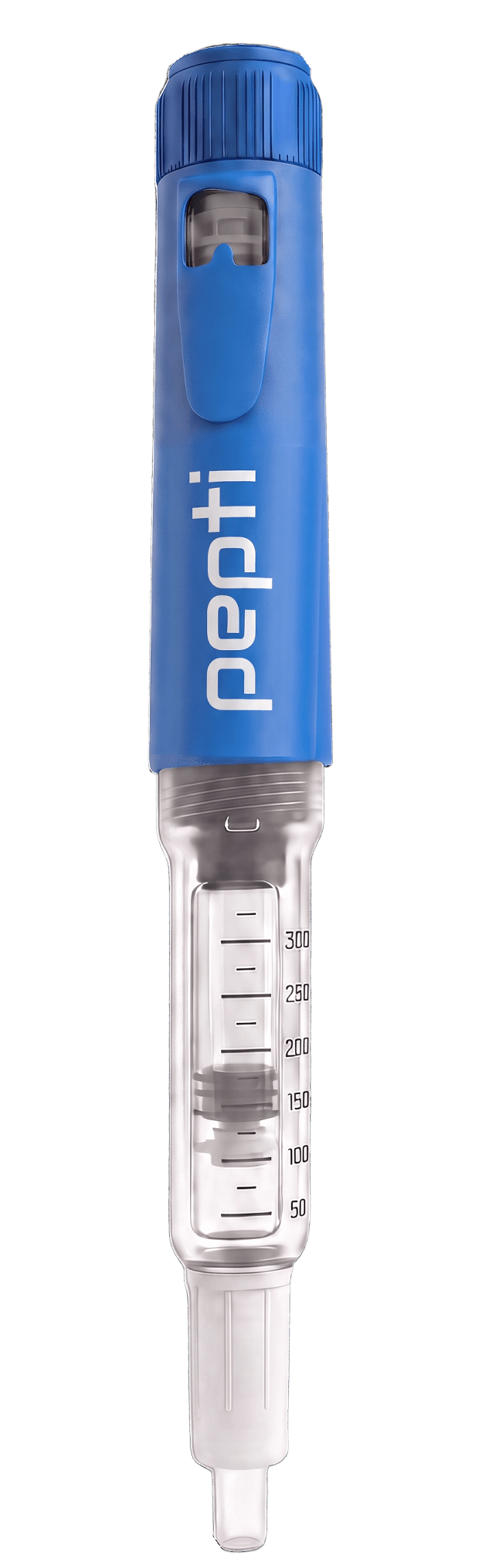
Treatments mentioned
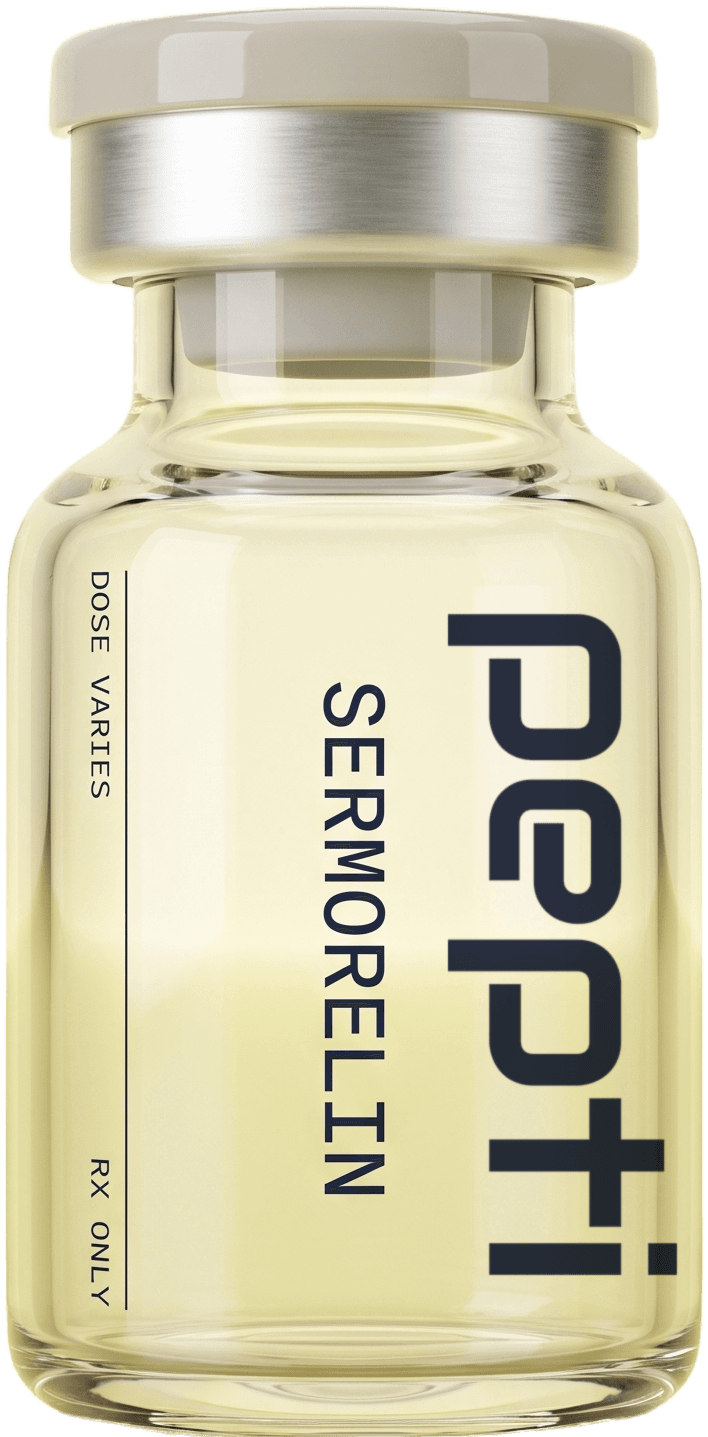
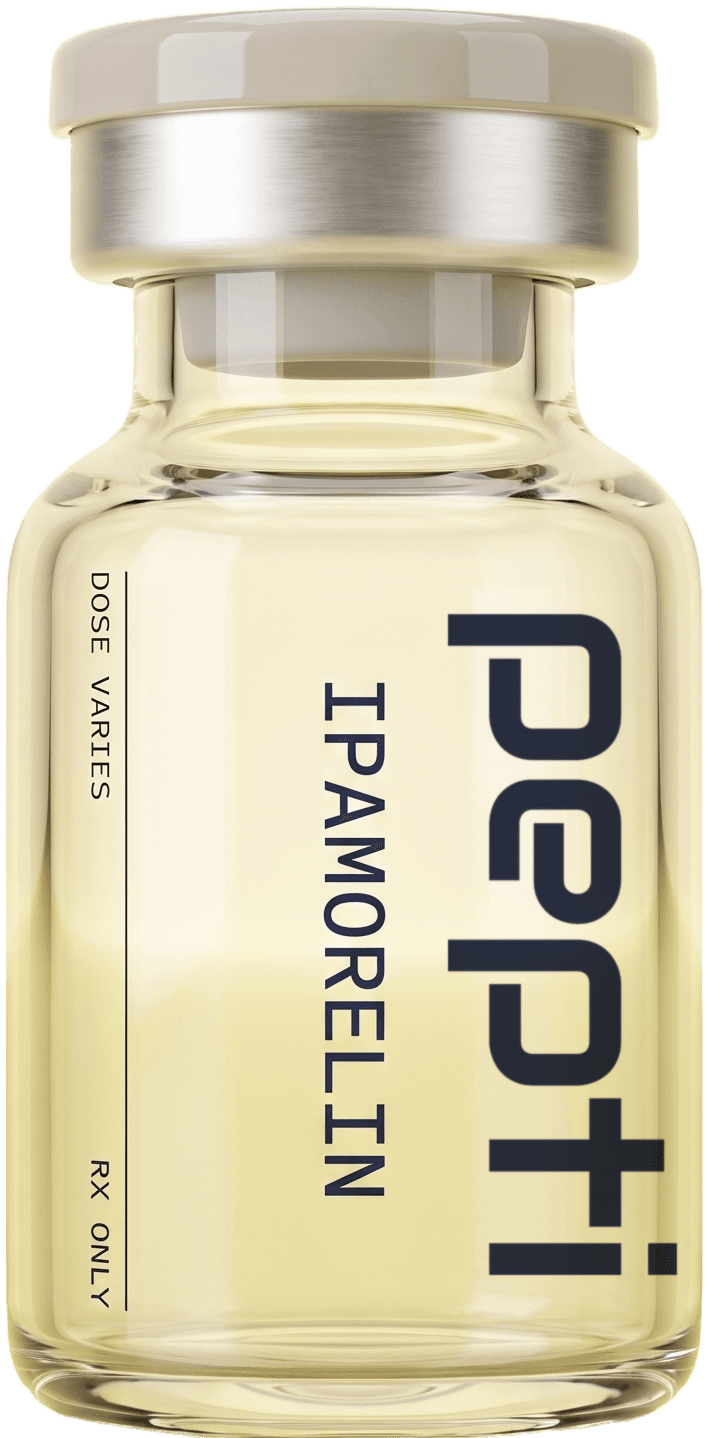
The benefit of sermorelin with the strongest human evidence is the most basic one: it prompts your own pituitary to release growth hormone, in a pulse, with the body's feedback controls still working, and with adequate dosing it raises IGF-1. That is established in human trials, in children with growth hormone deficiency and in small placebo-controlled studies of healthy older adults. The benefits people usually search for, better sleep, recovery, lean mass, skin and energy, rest on that mechanism plus small trials and prescriber experience; no large randomised trial in adults has measured them as outcomes. Compounded sermorelin is not FDA approved.
This page takes each claimed benefit in turn and says what kind of evidence sits behind it: human trial, small human study, mechanism only, or prescriber report. It then covers sermorelin side effects in full, who should not take it, and how Pepti supplies it. For the molecule itself, its FDA history and full dosing detail, see what is sermorelin.
Sermorelin Benefits
The short answer
Benefits at a glance. "Human" means the finding comes from people; nothing here comes only from animals, which is unusual for a compounded peptide.
| Claimed benefit | What the evidence is | Strength of evidence |
|---|---|---|
| Raises your own growth hormone | Human: decades of diagnostic use; a 1997 trial measured a rise within ten minutes of a dose | Strong |
| Raises IGF-1 | Human: small trials in older adults; rose at the higher dose in one, within two weeks in another, not at all in a third | Moderate, dose-dependent |
| Keeps the natural pulse pattern | Human: a 1992 trial in older men reported larger peaks with the pulsatile pattern intact | Moderate |
| Growth in children with growth hormone deficiency | Human: an open-label trial in 110 children supported a former FDA approval | Strong, but a paediatric use Pepti does not prescribe for |
| Lean mass and body composition | Human: one 16-week trial reported more lean mass in men; a six-week trial found no change | Mixed and small |
| Skin thickness | Human: the same 16-week trial reported thicker skin in both sexes | Single small trial |
| Strength and endurance | Human: three of seven measures better in a six-week trial of 11 men | Weak |
| Cognition in older adults | Human: one six-month trial of GHRH in 89 adults reported better scores on several tests | Single trial, not repeated with sermorelin |
| Better sleep | Mechanism plus prescriber reports; a review found a short-acting GHRH did not improve measured sleep | Weak; reported, not demonstrated |
| Recovery, energy, "anti-aging" | Prescriber reports only | No trial evidence |
The closer a claim sits to the hormone itself, the better the evidence; the closer it gets to how someone looks, sleeps or feels, the thinner it gets.
Sermorelin Benefits
What sermorelin is, in one paragraph
Sermorelin is the first 29 of the 44 amino acids of growth-hormone-releasing hormone (GHRH), the signal your hypothalamus sends to the pituitary. It binds the GHRH receptor on the cells that make growth hormone and triggers release of what they have stored. It contains no growth hormone and is not a steroid. It was once the active ingredient of an FDA-approved drug for children, discontinued in 2008 for commercial reasons; in 2013 the FDA determined the withdrawal was not for safety or effectiveness reasons. More on what is sermorelin.
Sermorelin Benefits
The benefits, one by one
1. It raises your own growth hormone
This is the benefit everything else depends on, and the best established. Before sermorelin was a treatment it was a diagnostic test: a single dose, then a blood draw, showed whether a child's pituitary could release growth hormone. That is settled human pharmacology.
In adults, the Khorram trial in the Journal of Clinical Endocrinology and Metabolism in 1997 reported that a nightly subcutaneous dose of a GHRH(1-29) analogue produced a measurable rise in growth hormone within about ten minutes, lasting around two hours, after which levels fell back. The Johns Hopkins trial (Vittone and colleagues, Metabolism, 1997) found nocturnal growth hormone rose in eleven healthy men aged 64 to 76 given single nightly injections for six weeks.
What this does not mean: a growth hormone rise is a laboratory finding, not something a person feels. Nobody notices a single pulse.
2. It raises IGF-1, if the dose is adequate
Growth hormone does most of its work in adults indirectly, by prompting the liver to make insulin-like growth factor 1 (IGF-1), which carries the signal to muscle, bone and connective tissue. IGF-1 is the number that reflects how the whole axis is responding.
Here the human data is real but uneven:
- The National Institute on Aging study (Journal of Clinical Endocrinology and Metabolism, 1992) gave healthy older men GHRH(1-29) twice daily for fourteen days at two doses. IGF-1 rose into the young-adult range only at the higher dose.
- The Khorram trial (sixteen weeks, randomised, placebo-controlled, nineteen adults aged 55 to 71) saw IGF-1 rise within two weeks, stay up for twelve, then drift back toward baseline by sixteen.
- The Vittone trial, using a single nightly dose, found nocturnal growth hormone went up but IGF-1 did not. The authors concluded a single nightly dose was less effective than multiple daily doses at producing IGF-1-mediated effects.
So the accurate version of this benefit is: sermorelin can raise IGF-1, the effect depends on dose and schedule, and in the longest trial it faded on continued treatment. That fade is a reminder that the feedback loops sermorelin preserves also limit it.
3. It keeps the natural pulse pattern
Growth hormone is released in bursts, the largest in the first hours of deep sleep. Injected growth hormone replaces that pattern with a sustained level. Sermorelin produces a pulse and then the signal is gone. The 1992 National Institute on Aging work described GHRH(1-29) in older men as raising the amplitude of their growth hormone peaks toward those of young men while keeping the pulsatile pattern intact.
Why that is presented as a benefit: the body's brakes, somatostatin and IGF-1 feedback, still apply, giving a lower ceiling than supplied growth hormone. A 2018 review in Sexual Medicine Reviews made that point. It is a mechanism argument, not a head-to-head trial, and it does not mean the dose cannot be too high. The full comparison is in peptides vs HGH.
4. Growth in children with growth hormone deficiency
This is where the strongest outcome evidence sits, and it is worth being clear that it is not an adult benefit. The international study group trial (Journal of Clinical Endocrinology and Metabolism, 1996) treated 110 previously untreated prepubertal children with growth hormone deficiency with once-daily bedtime injections for up to a year. Mean height velocity roughly doubled over the first six months, fasting glucose did not change, and the drug was reported as well tolerated. A 1999 review in BioDrugs summarised the programme: growth in most children, somewhat less than recombinant growth hormone produced.
Pepti prescribes to adults only. This evidence matters because it shows the molecule works in people and produced an adverse-event record collected under a regulator's eye.
5. Lean mass and body composition
This is the benefit most adults want, and the evidence is genuinely mixed.
In favour: the Khorram trial reported increased lean body mass in men over sixteen weeks, along with a rise in insulin sensitivity in men. A 2003 review in Endocrine concluded that several months of GHRH increases lean mass.
Against: the Vittone trial found no change in body composition, weight, glucose, insulin or lipids after six weeks of single nightly injections.
The Khorram anabolic changes appeared in men but not women, and nobody has followed that up. So there is no established body-composition effect in adults and no trial in younger adults. Sermorelin is not a weight-loss medication; for scale weight, semaglutide and tirzepatide have large randomised trials.
6. Skin thickness
The Khorram trial reported that skin thickness increased in both men and women over sixteen weeks. One finding, in nineteen people, and not a cosmetic study: nothing measured appearance. If skin is the main goal, GHK-Cu is aimed at it more directly; see peptides for skin.
7. Strength and endurance
In the six-week Vittone trial, three of seven strength and endurance measures were reported as better in eleven older men. The other four were not, and IGF-1 did not rise. A weak signal.
8. Cognition in older adults
A University of Washington group reported in Neurobiology of Aging in 2006 that six months of daily GHRH versus placebo in 89 healthy adults around age 68 was associated with better scores on several cognitive measures. The larger 2012 follow-on trial in Archives of Neurology used tesamorelin, a different GHRH analogue, so it belongs to the class rather than to sermorelin. One trial, not repeated with sermorelin itself: an interesting signal, not an established benefit.
9. Sleep
Sleep is the benefit people most often report first, and the one with the biggest gap between what is described and what is measured. The physiology linking GHRH and deep sleep is real: the largest natural growth hormone pulse arrives in slow-wave sleep, and a 2000 paper in JAMA described slow-wave sleep and that pulse declining together with age. Sermorelin is dosed at bedtime to add to that pulse.
But the 2003 Endocrine review notes that a short-acting GHRH did not improve measured sleep under trial conditions. Patients commonly describe sleep feeling deeper; that is a report, not a demonstrated outcome. If sleep is the whole point, DSIP is aimed at it more directly, and peptides for sleep covers the options.
10. Recovery, energy and "anti-aging"
No trial has measured recovery between training sessions, energy or ageing as an outcome for sermorelin. These are things prescribers describe in some patients, consistent with the mechanism, and they vary widely between people. Anyone quoting you a percentage or a timeline for them is inventing it.
Sermorelin Benefits
What the evidence shows, honestly
Sermorelin has a better evidence base than most compounded peptides: randomised and controlled human trials, an adverse-event record from its years as an approved drug, and a mechanism confirmed in people rather than inferred from animals. That is worth saying plainly.
It is also worth saying plainly what those trials were. They were run in children with growth hormone deficiency and in small groups of healthy older adults, and their endpoints were height velocity, hormone levels and laboratory measures. The longest placebo-controlled adult exposure is about six months.
| What exists | What does not exist |
|---|---|
| Human trials showing a growth hormone rise and, with adequate dosing, an IGF-1 rise | A large randomised trial of sermorelin in adults for body composition, recovery, sleep or ageing |
| Small trials reporting lean mass and skin changes in older adults | Any trial in adults under about 55 |
| A paediatric trial programme that supported FDA approval | Long-term outcome or safety data over years of adult use |
| A 2013 FDA determination that the approved product was not withdrawn for safety reasons | An FDA-approved sermorelin product on the US market today |
So the accurate summary is: the pathway is understood, the hormonal effect is real, and the lifestyle benefits are plausible but unmeasured. Response varies between people.
Sermorelin Benefits
Sermorelin side effects
Sermorelin has a documented side-effect profile from its approved-drug years and from the trials above, which most compounded peptides do not. In the paediatric programme, transient facial flushing and injection-site pain were the most commonly reported adverse events. The placebo-controlled older-adult trials recorded no significant adverse effects apart from a transient lipid rise in one study that resolved by its end.
| How often | What is reported | What to do |
|---|---|---|
| Common | Injection-site redness, itching, a small lump | Rotate sites; mention it at follow-up |
| Common | Flushing or warmth shortly after a dose | Usually settles; report it if marked |
| Common | Vivid dreams, especially with evening dosing | Report it; timing can be adjusted by your care team |
| Common | Headache in the first weeks | Report it if it persists |
| Uncommon | Fluid retention, puffy hands or ankles | Report it; it usually means the dose is above what you need |
| Uncommon | Joint aches, stiffness on waking | Same; a dose question rather than an emergency |
| Uncommon | Tingling or numbness in the hands | Report it the same day; the classic signal of too much |
| Stop and call | Facial or throat swelling, widespread rash, breathing difficulty | Emergency care first, then tell your prescriber |
| Stop and call | Severe persistent headache, vision change, fainting | Same-day contact |
Why the middle rows matter
Fluid retention, joint aches and hand tingling are not signs that something rare has gone wrong. They are the recognised pattern of growth hormone above your requirement. With sermorelin they are uncommon, because feedback caps the release, but not impossible. The right response is a message to your care team, not pushing through and not changing the dose yourself.
Blood sugar
Growth hormone reduces insulin sensitivity, so blood glucose can drift up. In the published sermorelin trials fasting glucose was unchanged, and insulin sensitivity rose in men in the Khorram trial. The effect is real, small at physiological doses, and larger in people whose glucose handling is already strained, which is why diabetes or prediabetes needs discussing at intake.
No study has shown sermorelin causes cancer in humans, though long-term cancer-incidence data for the class do not exist; see can peptides cause cancer. The full safety picture, including monitoring, interactions and anti-doping status, is in is sermorelin safe.
Sermorelin Benefits
Who should not take it, or should discuss it first
| Situation | Why |
|---|---|
| Active cancer, or a cancer history | Growth signalling is avoided with active disease; a history is a conversation |
| Diabetes or impaired glucose tolerance | Growth hormone reduces insulin sensitivity |
| Untreated severe sleep apnoea | Fluid retention can worsen it |
| Active proliferative retinopathy | Growth signalling is avoided here |
| Pregnancy or breastfeeding | Not used; safety data is absent |
| Tested athletes | The 2026 WADA Prohibited List names sermorelin under S2.2.4, prohibited at all times |
Sermorelin Benefits
How Pepti supplies sermorelin
| Product | What is in it | Standard directions | Price |
|---|---|---|---|
| Sermorelin | 5 mL multi-dose vial, 2 mg/mL (10 mg per vial) | 0.25 mL (25 units) subcutaneously Monday through Friday nights | $229/mo |
| Ipamorelin + Sermorelin | 5 mL vial, 10 mg ipamorelin and 10 mg sermorelin | Printed on your vial | $219/mo |
| CJC-1295 / Ipamorelin | 5 mL vial, 6 mg CJC-1295 and 12 mg ipamorelin | Printed on your vial | $239/mo |
The sermorelin vial holds 20 doses at 0.25 mL, about four weeks of weekday-night dosing, which is why refills run every 28 days, one vial per fill. Each 0.25 mL dose delivers 0.5 mg. Bedtime dosing lines the pulse up with the body's largest natural one. Your physician sets your directions after reviewing your intake, and they are printed on the vial.
Every price is all-in: medication, physician review, refill management and shipping, with no membership fee. Pepti is cash-pay and does not bill insurance. Vials ship refrigerated with ice packs, ready to use, with sterile syringes and alcohol prep pads. They are compounded by PCAB-accredited, FDA-registered US 503A pharmacies, and lot test results are published at /quality/lab-results. Compounded medications are not FDA approved.
Ipamorelin acts on the ghrelin receptor, a second route into the same pituitary cells; no trial has measured outcomes for the pairing. Comparisons are in sermorelin vs tesamorelin vs ipamorelin and CJC-1295 vs sermorelin.
Bloodwork is not required for any Pepti treatment. If your physician wants labs for your care, they'll ask through your account.
Sermorelin Benefits
Where to get sermorelin prescribed
Sermorelin cannot be bought legitimately without a prescription. Sites selling it "for research use only" are not accountable for what is in the vial: identity, purity, sterility and concentration are untested. The prescription route:
- Complete a free online intake covering your history, medications and what you want help with.
- A physician licensed in your state reviews it, usually within 24 hours.
- If it is appropriate, a state-licensed, FDA-registered US pharmacy compounds it to that prescription. Lot test results are published at /quality/lab-results.
- It ships refrigerated with your directions printed on the vial.
- Your physician stays reachable for questions and dose changes.
Pepti prescribes sermorelin in all 50 states and DC. Step by step: how to get sermorelin prescribed online.
References
What this is based on.
References
- Khorram O, Laughlin GA, Yen SS. Endocrine and metabolic effects of long-term administration of [Nle27]growth hormone-releasing hormone-(1-29)-NH2 in age-advanced men and women · The Journal of clinical endocrinology and metabolism (1997) · PMID 9141536
- Vittone J, Blackman MR, Busby-Whitehead J, et al.. Effects of single nightly injections of growth hormone-releasing hormone (GHRH 1-29) in healthy elderly men · Metabolism: clinical and experimental (1997) · PMID 9005976
- Thorner M, Rochiccioli P, Colle M, et al.. Once daily subcutaneous growth hormone-releasing hormone therapy accelerates growth in growth hormone-deficient children during the first year of therapy. Geref International Study Group · Journal of Clinical Endocrinology & Metabolism (1996) · PMID 8772599
- Prakash A, Goa KL. Sermorelin: a review of its use in the diagnosis and treatment of children with idiopathic growth hormone deficiency · BioDrugs (1999) · PMID 18031173
- Corpas E, Harman SM, Piñeyro MA, Roberson R, Blackman MR. Growth hormone (GH)-releasing hormone-(1-29) twice daily reverses the decreased GH and insulin-like growth factor-I levels in old men · Journal of Clinical Endocrinology & Metabolism (1992) · PMID 1379256
- Khorram O, Yeung M, Vu L, Yen SS. Effects of [norleucine27]growth hormone-releasing hormone (GHRH) (1-29)-NH2 administration on the immune system of aging men and women · Journal of Clinical Endocrinology & Metabolism (1997) · PMID 9360512
- Vitiello MV, Moe KE, Merriam GR, et al.. Growth hormone releasing hormone improves the cognition of healthy older adults · Neurobiology of Aging (2006) · PMID 16399214
- Baker LD, Barsness SM, Borson S, et al.. Effects of growth hormone-releasing hormone on cognitive function in adults with mild cognitive impairment and healthy older adults: results of a controlled trial · Archives of Neurology (2012) · PMID 22869065
- Johannsson G, Touraine P, Feldt-Rasmussen U, Pico A, Vila G et al.. Long-term Safety of Growth Hormone in Adults With Growth Hormone Deficiency: Overview of 15 809 GH-Treated Patients · J Clin Endocrinol Metab (2022) · PMID 35368070
- Münzer T, Rosen CJ, Harman SM et al.. Effects of GH and/or sex steroids on circulating IGF-I and IGFBPs in healthy, aged women and men · Am J Physiol Endocrinol Metab (2006) · PMID 16390864
- Roelfsema F, Yang RJ, Takahashi PY et al.. Aromatized Estrogens Amplify Nocturnal Growth Hormone Secretion in Testosterone-Replaced Older Hypogonadal Men · J Clin Endocrinol Metab (2018) · PMID 30032193
- Merriam GR, Schwartz RS, Vitiello MV. Growth hormone-releasing hormone and growth hormone secretagogues in normal aging · Endocrine (2003) · PMID 14610297
Citations are provided for educational purposes. They do not constitute medical advice. Always discuss any peptide protocol with your prescribing physician.
Common questions
Sermorelin Benefits, answered.
The best-established benefit is that it prompts your pituitary to release its own growth hormone in a pulse, with feedback intact, and with adequate dosing raises IGF-1. Small trials in older adults also reported more lean mass in men, thicker skin and better cognitive scores. Sleep, recovery and energy are reported by patients but have not been measured as trial outcomes.
Most commonly injection-site reactions, flushing, vivid dreams and headache. Less commonly fluid retention, joint aches and tingling in the hands, which usually mean the dose is higher than you need and should be reported to your care team.
It is not a weight-loss medication, and the trials did not measure weight loss. A six-week trial found no change in weight or body composition; a sixteen-week trial reported more lean mass in men. For scale weight, semaglutide and tirzepatide have the trial evidence.
One sixteen-week placebo-controlled trial in older adults reported increased lean body mass in men but not women, and a six-week trial found no change. That is a small, mixed evidence base, and there is no trial in younger adults.
Many people report deeper sleep, and the dose is given at bedtime to add to the natural deep-sleep growth hormone pulse. Under trial conditions, though, a short-acting GHRH did not improve measured sleep. Treat it as reported rather than demonstrated.
The hormonal effect, a rise in growth hormone and IGF-1, was seen in both sexes in the sixteen-week trial, and skin thickness increased in both. The lean-mass and insulin-sensitivity changes were reported in men only. The investigators called for more work on the difference, and none has been done.
They are different interventions. Sermorelin prompts your own pituitary, so feedback still limits how high growth hormone goes; supplied growth hormone bypasses that. That gives sermorelin a lower ceiling, which is a mechanism argument rather than a head-to-head trial. See peptides vs HGH.
The growth hormone pulse begins within minutes of the first dose, and in one trial IGF-1 rose within two weeks. There is no trial-established timeline for anything a person would notice, and nobody can promise one.
Compounded sermorelin is not FDA approved, and no approved sermorelin product is on the US market today. Sermorelin acetate was the active ingredient of a drug approved in 1990 and 1997 for use in children, discontinued in 2008 for commercial reasons. See are peptides FDA approved.
At Pepti, sermorelin is $229 a month and Ipamorelin + Sermorelin is $219 a month, all-in, including medication, physician review, refill management and shipping.
No. Bloodwork is not required for any Pepti treatment. If your physician wants labs for your care, they'll ask through your account. The free assessment goes to a physician licensed in your state. A consultation does not guarantee a prescription.
Next step
See what a physician recommends for you.
A licensed physician in your state reviews your intake and decides what is appropriate. A consultation does not guarantee a prescription.