— Anti-Aging · Reference
Sermorelin: What It Is, Where to Get It Prescribed, and What It Costs
This page covers what sermorelin is, how it was once an approved drug and why it no longer is, what the human trials do and do not establish, where it currently stands with the FDA, how it is dosed, and how to get it prescribed.
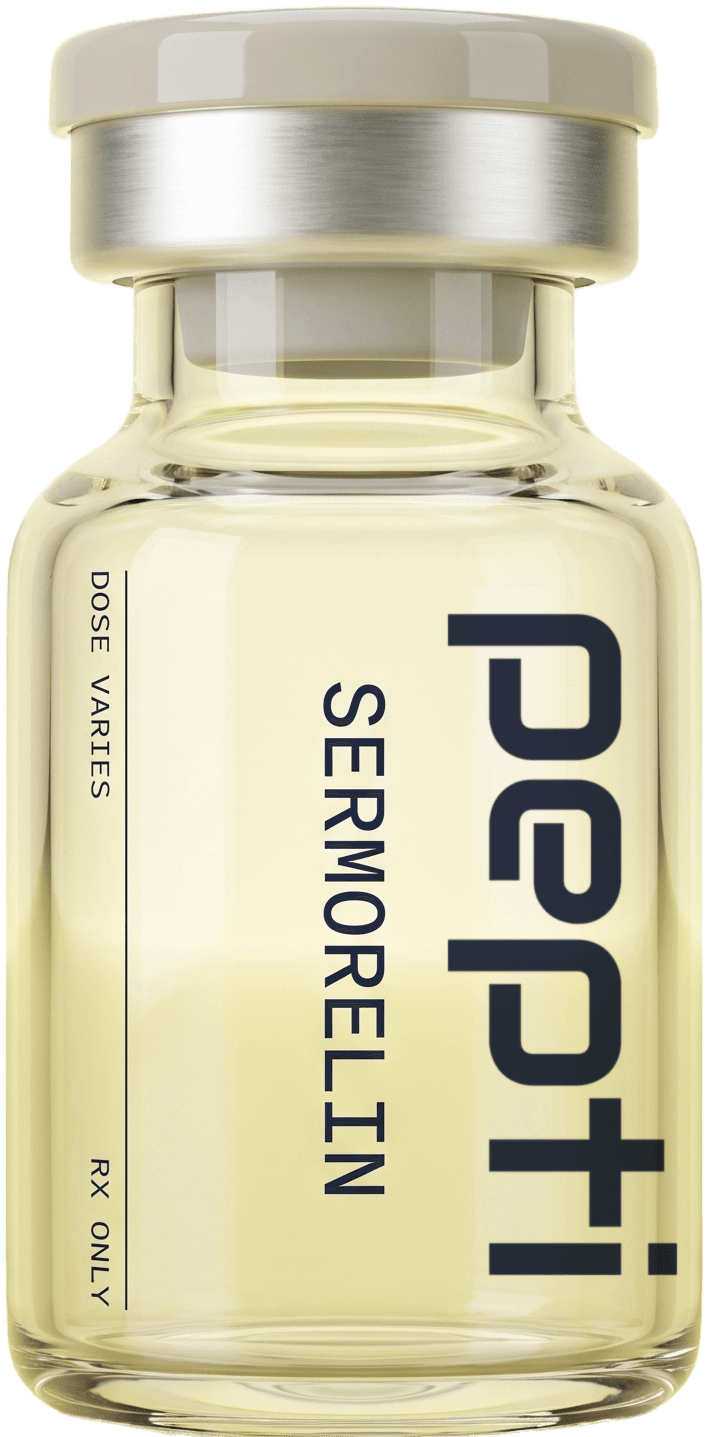
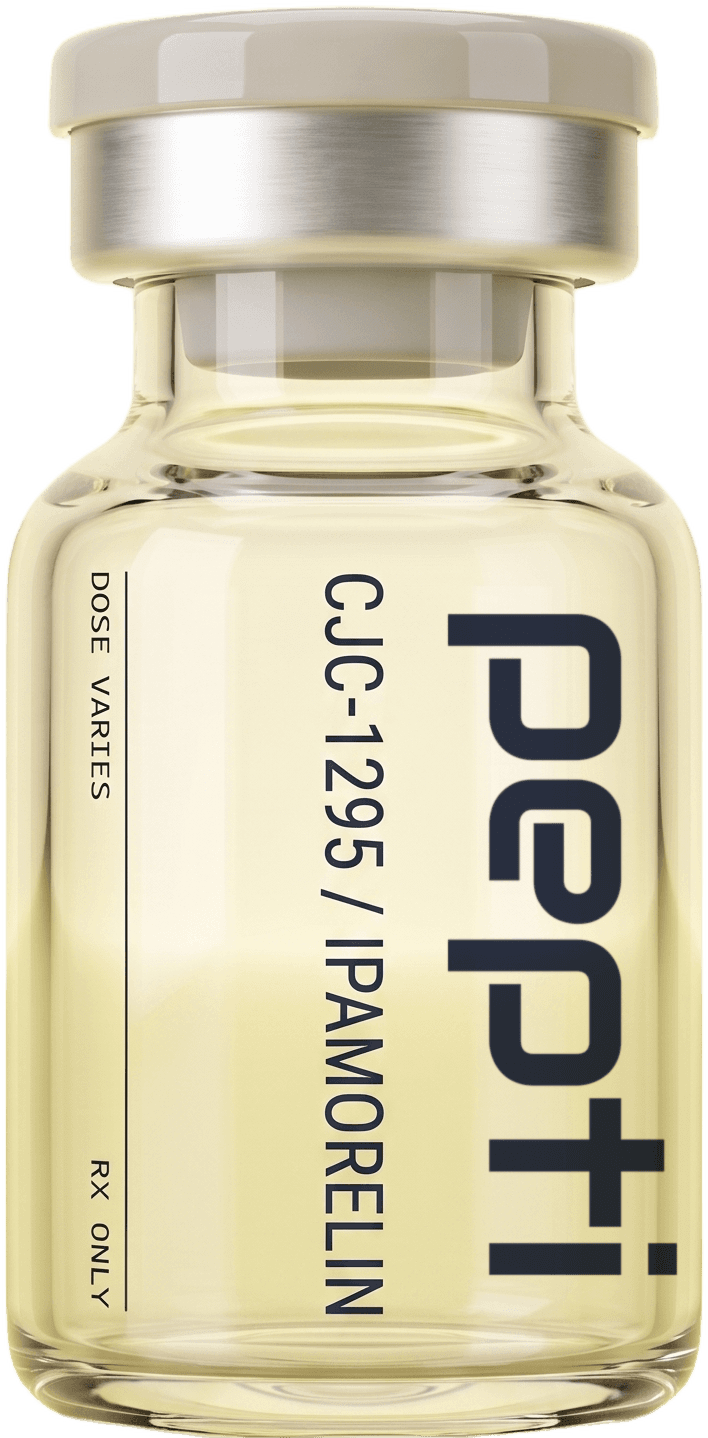
Sermorelin is a prescription injection supplied as 5 mL multi-dose vial, Sermorelin 2 mg/mL (10 mg Sermorelin per vial). The reviewed directions are: Inject 0.25 mL (25 units) subcutaneously Monday through Friday nights. That is 20 doses per vial, about 4 weeks at Monday through Friday. It requires a prescription from a physician licensed in your state, is compounded by a state-licensed US pharmacy, and is not FDA approved.
This page covers what sermorelin is, how it was once an approved drug and why it no longer is, what the human trials do and do not establish, where it currently stands with the FDA, how it is dosed, and how to get it prescribed.
— Sermorelin
What sermorelin actually is
— The first 29 amino acids of a hormone you already make
Growth-hormone-releasing hormone, GHRH, is a 44-amino-acid peptide made in the hypothalamus whose job is to tell the pituitary to release growth hormone. Sermorelin is the first 29 of those 44 amino acids with an amide on the end — GHRH(1-29)-NH2 in the literature — the shortest fragment of the native hormone that keeps its full activity. It is supplied as an acetate salt. The practical point is that sermorelin is a truncated copy of a signal the hypothalamus sends to the pituitary every night, acting on the same receptor the natural hormone acts on.
— It was an FDA-approved drug called Geref
Sermorelin is unusual among compounded peptides because it has a full regulatory history. As Geref it was approved by the FDA twice: in 1990 as a diagnostic test of whether a child's pituitary could secrete growth hormone, and in 1997 as a treatment for idiopathic growth hormone deficiency in children with growth failure. It was discontinued by its manufacturer in 2008 for commercial reasons — not for any safety or effectiveness problem, as the FDA later stated in writing. The full history is under "Where sermorelin stands with the FDA right now." That matters for reading the research here: sermorelin has randomised human trials and an adverse-event profile collected under a regulator's eye, which most peptides on this site do not.
— What it is not
It is not growth hormone. Sermorelin contains none; it asks the pituitary to release what it makes, and if the pituitary cannot respond it does nothing — which is why it worked as a diagnostic. It is not an anabolic steroid and does not suppress testosterone. It is not a GLP-1 medication or a weight-loss drug. And it is not the same as ipamorelin or CJC-1295, even though it is often prescribed alongside them; those act through different receptors, as explained under "How sermorelin compares."
— Sermorelin
How sermorelin is described to work
The mechanism is better characterised than for most peptides, because much of GHRH physiology was confirmed in people rather than inferred from animals.
— Binding the GHRH receptor on pituitary somatotrophs
Somatotrophs are the pituitary cells that make and store growth hormone, and they carry a GHRH receptor. Sermorelin binds it, raises cyclic AMP inside the cell and triggers release of stored growth hormone. Human studies describe this as fast: in the Khorram trial in the Journal of Clinical Endocrinology and Metabolism in 1997, a nightly subcutaneous dose of a GHRH(1-29) analogue produced a measurable rise in growth hormone within ten minutes, lasting about two hours.
— A pulse, not a plateau
Growth hormone is released in bursts, the largest in the first hours of deep sleep. Injected growth hormone replaces that pattern with a sustained elevation, which is part of why it produces fluid retention, joint pain and insulin resistance at higher doses. Sermorelin produces a pulse followed by a return to baseline: National Institute on Aging work in 1992 described GHRH(1-29) in older men as raising the amplitude of their growth hormone peaks toward those of young men while keeping the pulsatile pattern intact.
— Feedback stays intact: somatostatin and IGF-1
Because the pituitary is still doing the releasing, the body's brakes still work: somatostatin still inhibits release, and rising IGF-1 still feeds back on the hypothalamus and pituitary. That is why a secretagogue is described as self-limiting in a way exogenous growth hormone is not. It does not mean "cannot be overdone" — physicians still monitor IGF-1.
— Growth hormone acts largely through IGF-1
Most of what growth hormone does in adults it does indirectly, by stimulating the liver to produce insulin-like growth factor 1, which carries the signal to muscle, bone and connective tissue. This is why IGF-1 is the marker physicians track: a single growth hormone sample is nearly meaningless because of pulsatility, while IGF-1 integrates the previous days' secretion. Human trials report IGF-1 rising within two to four weeks of nightly GHRH dosing in older adults.
— Sermorelin
What the research actually shows
— Children with growth hormone deficiency: the Geref trials
This is where the strongest evidence sits, and the population was children. The pivotal work was the Geref International Study Group trial in the Journal of Clinical Endocrinology and Metabolism in 1996: 110 previously untreated prepubertal children with growth hormone deficiency received once-daily bedtime GHRH(1-29) for up to a year in a multicentre open-label study. Mean height velocity roughly doubled over the first six months, bone age advanced in proportion to height rather than ahead of it, fasting glucose did not change, and the drug was reported as well tolerated. A 1999 review in BioDrugs (Prakash and Goa) summarised the programme: sermorelin produced growth in most children with idiopathic GHD, though somewhat less than recombinant growth hormone did — one reason it lost the commercial argument.
Before Geref was a treatment it was a test: a single dose with blood drawn afterwards showed whether the pituitary could release growth hormone when told to. That diagnostic use is settled human pharmacology and the clearest demonstration that sermorelin does what it is described as doing.
— Older adults with reduced growth hormone output
Growth hormone secretion falls with age, and a series of 1990s trials asked whether GHRH could reverse that. The National Institute on Aging study (Journal of Clinical Endocrinology and Metabolism, 1992) gave GHRH(1-29) twice daily to healthy men in their late sixties for fourteen days and reported 24-hour growth hormone and IGF-1 rising to levels no longer significantly different from men in their twenties, with no change in fasting glucose or blood pressure.
The Johns Hopkins group (Vittone and colleagues, Metabolism, 1997) gave single nightly injections to eleven healthy men aged 64 to 76 for six weeks: nocturnal growth hormone rose, IGF-1 and body composition did not change, and three of seven strength and endurance measures were reported as better. The authors concluded a single nightly dose was less effective than multiple daily doses at producing IGF-1-mediated effects.
The Khorram, Laughlin and Yen trial (Journal of Clinical Endocrinology and Metabolism, 1997) is the longest: randomised, placebo-controlled, sixteen weeks of nightly GHRH(1-29) analogue in nineteen men and women aged 55 to 71. Nocturnal growth hormone rose in both sexes; IGF-1 rose within two weeks, stayed up for twelve, then drifted back toward baseline by sixteen. These are endocrine endpoints, not reports of people feeling or performing differently.
A University of Washington group also reported in Neurobiology of Aging in 2006 that six months of daily GHRH versus placebo in 89 healthy adults around age 68 was associated with better scores on several cognitive measures; the larger 2012 follow-on trial used tesamorelin, a different GHRH analogue, and belongs to the class rather than to this product.
— What human data exists
The precise statement is this. Sermorelin has randomised and controlled human trials, but they were run in children with growth hormone deficiency and in small groups of healthy older adults, and their endpoints were height velocity, hormone levels and laboratory measures. There is no large randomised trial of sermorelin in adults for body composition, recovery, sleep quality or "anti-aging" as an outcome. What exists for those uses is the endocrine trials above — which establish that sermorelin raises a person's own growth hormone and, with adequate dosing, IGF-1 — plus prescriber experience. That is a much better evidence base than "animal and cell studies," and it is honest to say so. It is also honest to say the trials that would show whether an adult on sermorelin for six months looks, sleeps or recovers differently from one on placebo have not been done.
— What the evidence does not establish
- It does not establish a body-composition effect in adults. The trials that measured it were short, and the six-week nightly-dose trial found no change.
- It does not establish an effect on sleep quality as a treatment endpoint. The physiology linking GHRH and slow-wave sleep is real; that is not the same as an outcome.
- It does not establish how long the endocrine change persists. The sixteen-week trial saw IGF-1 drift back toward baseline on treatment.
- It does not establish safety over years of continuous adult use.
- It does not establish efficacy for any adult indication as an FDA-approved treatment. The approved indication was in children, and that approval no longer exists.
— Sermorelin
Where sermorelin stands with the FDA right now
Sermorelin's position is different from almost every other peptide on this site, and most of what is written about it online muddles the timeline. Verified as of September 2026.
It was an FDA-approved drug. Sermorelin acetate was the active ingredient of Geref, held by EMD Serono. The diagnostic presentation (NDA 19-863) was approved on 28 December 1990 and the treatment presentation for idiopathic growth hormone deficiency in children (NDA 20-443) on 26 September 1997. In 2008 EMD Serono discontinued both and asked for the applications to be withdrawn; the FDA withdrew approval effective 18 June 2009. In March 2013, after a citizen petition, the FDA published a formal determination in the Federal Register that Geref was not withdrawn from sale for reasons of safety or effectiveness, having reviewed its files and the post-marketing adverse-event data for both products. That determination allows generic applications referencing Geref; none has come to market, and Drugs@FDA lists both applications as discontinued.
It is not on the 503A category lists at all. The FDA's list of bulk drug substances nominated for compounding under section 503A, updated 14 May 2026, does not contain sermorelin in Category 1, 2 or 3. It was not among the twelve peptides removed from Category 2 on 15 April 2026, nor among the seven the Pharmacy Compounding Advisory Committee voted on at its 23–24 July 2026 meeting. The Category 2 episode that affected BPC-157, TB-500 and others never involved sermorelin.
Why it can be compounded. Section 503A allows compounding with a bulk substance that meets a USP monograph, is a component of an FDA-approved drug, or appears on the FDA's bulks list. Sermorelin's footing is its history as the active ingredient of an approved drug whose withdrawal the FDA itself determined was not for safety or effectiveness. On that basis 503A pharmacies have compounded it and physicians have prescribed it continuously for years, including while other peptides were restricted; the FDA's own advisory committee materials from October 2024 describe it matter-of-factly as a peptide compounded in combination with others.
What it is not. A compounded sermorelin vial is not an FDA-approved drug product, and no compounded medication ever is. There is no currently marketed FDA-approved sermorelin product in the United States. If a sales page says "FDA approved," the accurate version is "was the active ingredient of an FDA-approved drug, discontinued in 2008 for commercial reasons."
— Sermorelin
Realistic expectations
These are patterns described by prescribers, not trial endpoints. Individual response varies and a physician decides whether treatment is appropriate at all.
— The first two weeks
The pharmacology is immediate — the growth hormone pulse happens the first night — but nothing you can feel tracks a single pulse. What people most often report early is sleep: falling asleep faster or sleeping more deeply on injection nights. Some report nothing at all, which is normal. The trials show IGF-1 beginning to rise within two weeks where dosing is adequate, a blood-test change rather than a felt one.
— Weeks two to eight
This is the window in which prescribers describe the things people started for — recovery between training sessions, energy, skin — if they occur. It is also when a physician would typically recheck IGF-1. If it has not moved, the dose or the schedule is the conversation, not more weeks of the same.
— Three months and beyond
The sixteen-week trial saw IGF-1 drift back toward baseline on treatment, a reminder that the feedback loops sermorelin preserves also limit it. Prescribers manage this in different ways, and the 28-day refill cycle exists partly so the physician sees the pattern. Body-composition change, where prescribers describe it, is gradual and depends on training and diet as much as on the injection.
— After stopping
No rebound suppression is described, because sermorelin does not shut down the axis the way exogenous growth hormone does. Pulses return to whatever they were before. Whatever changed on treatment persists only to the extent the underlying tissue changed.
— Sermorelin
When something else makes more sense
A reference that only ever recommends its own product is not much of a reference. Some honest cases where sermorelin is not the first thing to reach for:
- The goal is weight loss. Sermorelin is not a weight-loss medication. Semaglutide and tirzepatide have large randomised trials for that.
- You want more than one receptor. GHRH-receptor and ghrelin-receptor agonists reach the somatotroph through different doors, and combining them is the usual clinical approach: CJC-1295 / Ipamorelin, Ipamorelin + Sermorelin or CJC-1295 / Ipamorelin / Sermorelin.
- You want the GHRH analogue with adult trial data. Tesamorelin is the active ingredient of a currently FDA-approved drug and has randomised adult trials. It costs more; the comparison is below.
- Sleep is the whole point. DSIP or the SERENITY blend are aimed at that more directly.
- The problem is a specific injury. A sore tendon is a BPC-157 or TB-500 conversation, not a growth hormone one.
Your physician will tell you if sermorelin is not the right tool for what you have described. A consultation does not guarantee a prescription, and being declined is refunded.
— Sermorelin
Strengths available
| Strength | Directions |
|---|---|
| Sermorelin 10mg/5mL | Inject 0.25 mL (25 units) subcutaneously Monday through Friday nights. |
| Sermorelin 15mg/5mL | Inject 0.25 mL (25 units) subcutaneously Monday through Friday nights. |
A higher strength delivers more medication in the same volume. Which one you are prescribed is your physician's decision.
— Sermorelin
Dosing, and how a vial is actually used
— Why the dose is measured in units
The directions are written in millilitres and in insulin-syringe units because that is what you can read off the barrel. 0.25 mL is 25 units on a U-100 syringe. You are not calculating anything — the number is printed on your medication.
— Subcutaneous, at night, five nights a week
Subcutaneous means into the fat layer, not the muscle. Abdomen and thigh are the usual sites, rotated. The dose is given at night because that is when the pituitary's own largest pulse occurs, and Monday through Friday rather than every day because prescribers commonly build in two nights off each week. Your directions are what apply.
— Why a vial covers about four weeks
20 doses at five nights a week is four weeks, which is why refills run on a 28-day cycle. One vial per fill, always — not a stockpile.
— Storage
Refrigerated, and it ships that way in insulated packaging with ice packs. Beyond-use dating runs from first puncture and is on the label. How to store peptides covers this properly.
— Sermorelin
Safety and side effects
Sermorelin has a documented adverse-event profile from its years as an approved drug and from the trials above, which most compounded peptides do not. In the Geref paediatric programme the most common reactions were at the injection site — redness, swelling, pain — with headache, flushing and a transient warm feeling after injection also reported. The older-adult trials reported no significant adverse effects at the doses studied.
Two things follow from the mechanism. Growth hormone reduces insulin sensitivity, so diabetes or impaired glucose tolerance needs discussing before starting and monitoring during. And because the point is to raise a growth signal, a personal history of cancer is a reason to discuss it first. Medications that affect the growth hormone axis — glucocorticoids, thyroid medication, insulin and other diabetes drugs — are why the intake asks for every medication you take and a physician reviews it rather than a form.
Stop and contact your physician for any reaction that is severe, spreading, or involves difficulty breathing.
— Sermorelin
How sermorelin compares
— Sermorelin vs tesamorelin
Both act on the GHRH receptor. Tesamorelin is the full 44-amino-acid GHRH with a modification that slows its breakdown. It is the active ingredient of Egrifta, an FDA-approved drug for excess abdominal fat in HIV-associated lipodystrophy, and has randomised adult trials including the 152-person cognition trial above. Sermorelin is the shorter, older, less expensive molecule with paediatric trials and a discontinued approval. A physician choosing between them is weighing cost against adult trial data.
— Sermorelin vs CJC-1295 / Ipamorelin
Different receptors. Sermorelin and CJC-1295 both act on the GHRH receptor; CJC-1295 is a longer-acting analogue, and a 2006 paper in the Journal of Clinical Endocrinology and Metabolism reported growth hormone pulsatility persisting during continuous stimulation with it. Ipamorelin acts on the ghrelin receptor, a separate door into the same cell, and is usually combined with a GHRH analogue rather than used instead of one — hence CJC-1295 / Ipamorelin and Ipamorelin + Sermorelin, which uses sermorelin as the GHRH side. Neither combination has adult outcome trials.
— Vial vs Pen
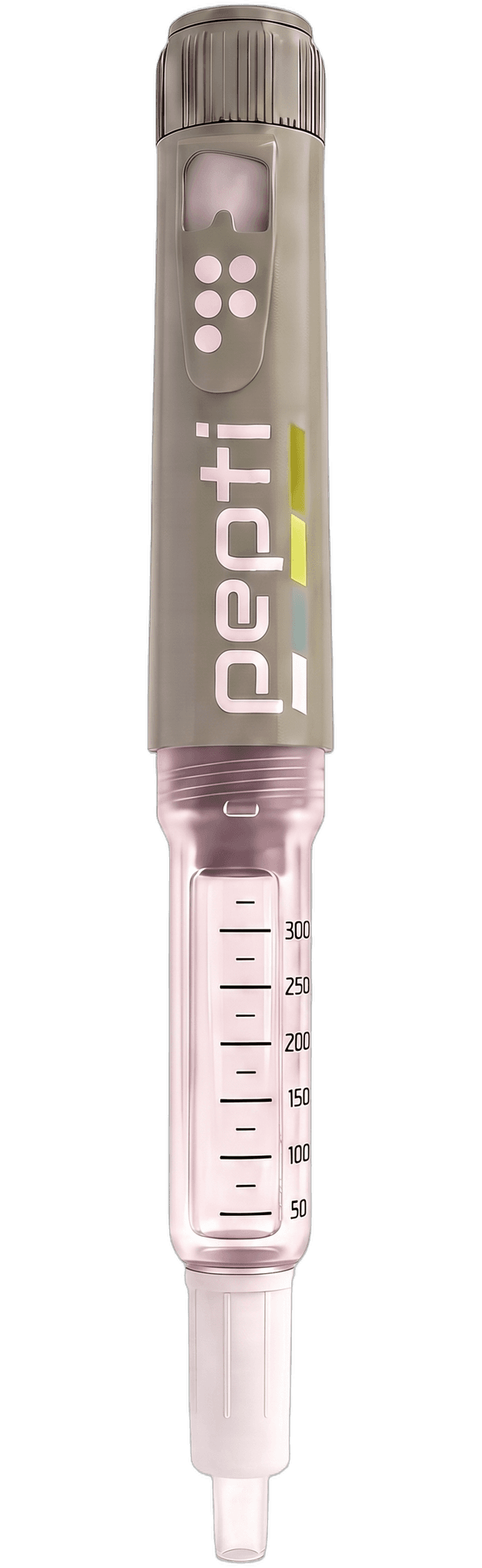
Identical medication. The pepti Pen is a pre-filled cartridge in a reusable click-dial injector, dosed in clicks rather than drawn from a vial with a syringe. It costs more and it removes the draw step. Neither is clinically better.
— Sermorelin
Availability and formats
| Question | Answer |
|---|---|
| Can I get it by telehealth? | Yes, where a physician licensed in your state prescribes it |
| Which states? | All 50 states and DC |
| Does it come as a pen? | Yes, as a pre-filled pepti Pen cartridge with a reusable click-dial injector |
| Does it come as a capsule? | No |
| Does it come as a nasal spray? | No |
| Is bloodwork required first? | Usually, for this medication |
— Sermorelin
Where to get Sermorelin prescribed
Sermorelin cannot be bought legitimately without a prescription. Sites shipping it with no prescription are selling a research-use-only product, where no pharmacy is accountable for identity, purity, sterility or concentration.
The prescription route works like this:
- Complete a medical intake covering your history, medications, allergies and what you are treating.
- A physician licensed in your state reviews it and will usually want baseline bloodwork before prescribing this one.
- If appropriate, a state-licensed, FDA-registered pharmacy compounds it to that prescription.
- It ships refrigerated with your directions printed on the vial.
- Your physician stays reachable afterwards for dose questions and side effects.
Current all-in pricing for Sermorelin is published: medication, physician review, refill management and shipping in one figure, with no separate membership fee. What to check on any provider is in how to tell if a peptide seller is legitimate.
— Sermorelin
Who should not take it, or should discuss it first
| Situation | Why |
|---|---|
| Personal history of cancer | standard for growth signalling |
| Diabetes or impaired glucose tolerance | since GH reduces insulin sensitivity |
| Pregnancy or breastfeeding | Not used; safety data is absent |
| Tested athletes | Many peptides are prohibited in competition; check the current list |
— Full specification
Everything on the label.
— Product
Sermorelin (Injectable)
— How supplied
5 mL multi-dose vial, Sermorelin 2 mg/mL (10 mg Sermorelin per vial); as the Pen: 3 mL pre-filled Pen cartridge containing 9 mg Sermorelin
— Typical directions
Inject 0.25 mL (25 units) subcutaneously Monday through Friday nights.
— Dose volume
0.25 mL (25 units on a U-100 insulin syringe)
— Doses per vial
20
— Coverage per vial
about 4 weeks at Monday through Friday
— Formats
Vial and syringe · pepti Pen cartridge with a reusable injector
— Available in
All 50 states and DC
— Bloodwork
Commonly required before prescribing
— Strengths available
2
— Legal status
Prescription-only, compounded, not FDA approved
— Category
Anti-Aging
— References
What this is based on.
References
- Khorram O, Laughlin GA, Yen SS. Endocrine and metabolic effects of long-term administration of [Nle27]growth hormone-releasing hormone-(1-29)-NH2 in age-advanced men and women · The Journal of clinical endocrinology and metabolism (1997) · PMID 9141536
- Vittone J, Blackman MR, Busby-Whitehead J, et al.. Effects of single nightly injections of growth hormone-releasing hormone (GHRH 1-29) in healthy elderly men · Metabolism: clinical and experimental (1997) · PMID 9005976
- Thorner M, Rochiccioli P, Colle M, et al.. Once daily subcutaneous growth hormone-releasing hormone therapy accelerates growth in growth hormone-deficient children during the first year of therapy. Geref International Study Group · Journal of Clinical Endocrinology & Metabolism (1996) · PMID 8772599
- Prakash A, Goa KL. Sermorelin: a review of its use in the diagnosis and treatment of children with idiopathic growth hormone deficiency · BioDrugs (1999) · PMID 18031173
- Corpas E, Harman SM, Piñeyro MA, Roberson R, Blackman MR. Growth hormone (GH)-releasing hormone-(1-29) twice daily reverses the decreased GH and insulin-like growth factor-I levels in old men · Journal of Clinical Endocrinology & Metabolism (1992) · PMID 1379256
- Khorram O, Yeung M, Vu L, Yen SS. Effects of [norleucine27]growth hormone-releasing hormone (GHRH) (1-29)-NH2 administration on the immune system of aging men and women · Journal of Clinical Endocrinology & Metabolism (1997) · PMID 9360512
- Vitiello MV, Moe KE, Merriam GR, et al.. Growth hormone releasing hormone improves the cognition of healthy older adults · Neurobiology of Aging (2006) · PMID 16399214
- Baker LD, Barsness SM, Borson S, et al.. Effects of growth hormone-releasing hormone on cognitive function in adults with mild cognitive impairment and healthy older adults: results of a controlled trial · Archives of Neurology (2012) · PMID 22869065
- Johannsson G, Touraine P, Feldt-Rasmussen U, Pico A, Vila G et al.. Long-term Safety of Growth Hormone in Adults With Growth Hormone Deficiency: Overview of 15 809 GH-Treated Patients · J Clin Endocrinol Metab (2022) · PMID 35368070
- Münzer T, Rosen CJ, Harman SM et al.. Effects of GH and/or sex steroids on circulating IGF-I and IGFBPs in healthy, aged women and men · Am J Physiol Endocrinol Metab (2006) · PMID 16390864
- Roelfsema F, Yang RJ, Takahashi PY et al.. Aromatized Estrogens Amplify Nocturnal Growth Hormone Secretion in Testosterone-Replaced Older Hypogonadal Men · J Clin Endocrinol Metab (2018) · PMID 30032193
- Merriam GR, Schwartz RS, Vitiello MV. Growth hormone-releasing hormone and growth hormone secretagogues in normal aging · Endocrine (2003) · PMID 14610297
Citations are provided for educational purposes. They do not constitute medical advice. Always discuss any peptide protocol with your prescribing physician.
— Common questions
Sermorelin, answered.
Through a telehealth provider where a physician licensed in your state reviews a medical intake and a licensed US pharmacy compounds the prescription. Pepti prescribes Sermorelin in all 50 states and DC; start with the free assessment.
5 mL multi-dose vial, Sermorelin 2 mg/mL (10 mg Sermorelin per vial); as the Pen: 3 mL pre-filled Pen cartridge containing 9 mg Sermorelin
Inject 0.25 mL (25 units) subcutaneously Monday through Friday nights. Your physician sets your own dose and it is printed on your medication.
20 at the standard volume, about 4 weeks at Monday through Friday.
Sermorelin is available as a vial with syringes and as a pre-filled pepti Pen cartridge with a reusable injector.
Usually yes for this medication. A physician will generally want baseline labs before prescribing, and at-home blood testing covers hormone, metabolic and thyroid markers without a lab visit.
It is legal to prescribe and dispense in the United States with a valid prescription. It is not FDA approved: compounded medications are prepared by licensed pharmacies pursuant to a prescription rather than approved as manufactured products. See are peptides FDA approved.
Pricing is published on the Sermorelin page as one all-in figure covering medication, physician review, refill management and shipping. What drives peptide pricing generally is in how much do peptides cost.
Yes, as the active ingredient of Geref: approved in 1990 as a diagnostic test of pituitary function and in 1997 as a treatment for growth hormone deficiency in children. The manufacturer discontinued it in 2008, the FDA withdrew the approvals in 2009, and in 2013 the FDA determined the withdrawal was not for reasons of safety or effectiveness. Compounded sermorelin today is not an FDA-approved product, and no approved sermorelin product is currently on the US market.
For commercial reasons. Recombinant growth hormone had become the standard treatment for childhood growth hormone deficiency and produced more growth than sermorelin did, so the market for Geref shrank until its manufacturer stopped making it. The FDA reviewed its files and the adverse-event record and concluded in writing that safety and effectiveness were not the reason.
No. Sermorelin was never in Category 2 of the 503A bulks list, was not among the twelve peptides removed from it on 15 April 2026, and was not among those the Pharmacy Compounding Advisory Committee voted on in July 2026. It does not appear on the 503A category lists at all; its footing is its history as the active ingredient of an approved drug.
Yes, more than for most compounded peptides: controlled trials in children with growth hormone deficiency, which supported its approval, and several small placebo-controlled trials in healthy older adults measuring growth hormone, IGF-1 and laboratory endpoints. There is no large randomised trial in adults for body composition, recovery, sleep or anti-aging outcomes.
Different receptors on the same pituitary cell. Sermorelin acts on the GHRH receptor; ipamorelin acts on the ghrelin receptor. They are usually combined rather than chosen between — Ipamorelin + Sermorelin is that combination in one vial. Whether a combination is appropriate for you is your physician's decision.
Growth hormone releasing factors are prohibited in competition by anti-doping bodies, and sermorelin is specifically named in that class. If you are a tested athlete, check the current prohibited list for your sport before starting, and tell your physician.
— Next step
See what a physician
recommends for you.
A licensed physician in your state reviews your intake and decides what is appropriate. A consultation does not guarantee a prescription.
Important legal & safety information
The assessment process available on the Pepti website asks a series of medical questions, and the answers provided are reviewed by an independent licensed physician affiliated with our partner physician network. The licensed providers have established exclusionary criteria, and the answers provided determine if the individual is screened out of eligibility for treatment. The licensed clinicians retain the sole decision to prescribe peptide therapy and other compounded medications to patients. Treatment may be denied at the physician's sole discretion. If a prescription is not approved, you will not be charged for the medication.
Pharmacy Providers. Pepti is a technology platform and is not a healthcare provider, pharmacy, or prescriber. All medications offered through the platform are compounded by independent FDA-registered 503A or 503B compounding pharmacies based on a valid prescription written by a licensed physician for an individual patient. Compounded medications are not FDA-approved as products. The active pharmaceutical ingredients used by our partner pharmacies are sourced from FDA-registered facilities. Compounded medications may not undergo the same testing or quality control as commercially manufactured FDA-approved drugs.
Results vary. Results from peptide therapy and other compounded treatments vary based on individual factors, including age, weight, medical history, adherence to the prescribed protocol, lifestyle factors, and physiological response. Pepti makes no guarantee of any specific outcome. Statements about peptide therapy and compounded medications offered through the platform have not been evaluated by the Food and Drug Administration. These products are not intended to diagnose, treat, cure, or prevent any disease.
Product images. Product photographs and renderings shown on this website are for illustrative purposes only. The appearance of vials, packaging, labeling, and other materials you receive may vary and is determined by the dispensing compounding pharmacy.
Off-label use.Many peptides offered through the platform are prescribed for off-label use. “Off-label” means the medication is being prescribed for a use, dose, or patient population that is not specifically approved by the FDA. Off-label prescribing is legal and common in U.S. medical practice when supported by clinical experience and judgment.
Mailing & shipping. Pepti currently dispenses prescription medication to patients in all 50 states and Washington, D.C.. All orders ship in unbranded, tamper-evident packaging via expedited delivery from our partner compounding pharmacies. Temperature-sensitive medications ship with insulated packaging and ice packs. Shipping is included at no additional cost. We do not currently ship medication outside all 50 states and Washington, D.C., internationally, or to APO/FPO addresses.
Not for emergencies. Pepti is not designed for medical emergencies. If you are experiencing a medical emergency, call 911 or go to your nearest emergency room immediately. For urgent but non-emergency medical questions, contact your primary care provider or use an urgent care service.
No doctor-patient relationship with Pepti. Your use of the platform does not create a doctor-patient relationship between you and pepti LLC. A doctor-patient relationship is established only between you and the independent licensed physician who reviews your intake and prescribes your treatment. The physicians who use the platform are independent contractors and are solely responsible for the medical care they provide.
Prescription medications. All prescription products require a valid prescription from a licensed healthcare provider. By using the platform, you acknowledge that you are at least 18 years old and that the information you provide is true, accurate, current, and complete. Providing false information may result in inappropriate treatment recommendations or denial of service.
Cosmetic & wellness products.Certain products offered through Pepti — including skincare, hair care, body care, supplements, men's grooming, sports recovery, and sexual wellness products — are cosmetic or dietary supplement products, not prescription medications. These products do not require a prescription and are not reviewed or prescribed by a physician. Statements regarding dietary supplements have not been evaluated by the Food and Drug Administration. These products are not intended to diagnose, treat, cure, or prevent any disease. Results vary by individual. Consult your healthcare provider before starting any new supplement or topical product, especially if you are pregnant, nursing, or taking other medications.
pepti LLC · Delaware Limited Liability Company · 131 Continental Dr, Suite 305, Newark, DE 19713 · For media or partnership inquiries, email hello@hellopepti.com. For patient support, email support@hellopepti.com. For privacy and HIPAA inquiries, email privacy@hellopepti.com.