Recovery · Reference
REVIVE Blend Dosage: How Pepti Prescribes the REVIVE Peptide Blend
This page explains the REVIVE dosage Pepti prescribes, what the units on the syringe mean, how much of each of the four peptides is in a dose, a dosage chart for the REVIVE vial, how its dose compares with the products next to it, why it is taken at bedtime on weekdays, what can change your directions, and the side effects to know about. It covers how Pepti prescribes REVIVE, not online protocols. Nothing here is a reason to change your own dose.

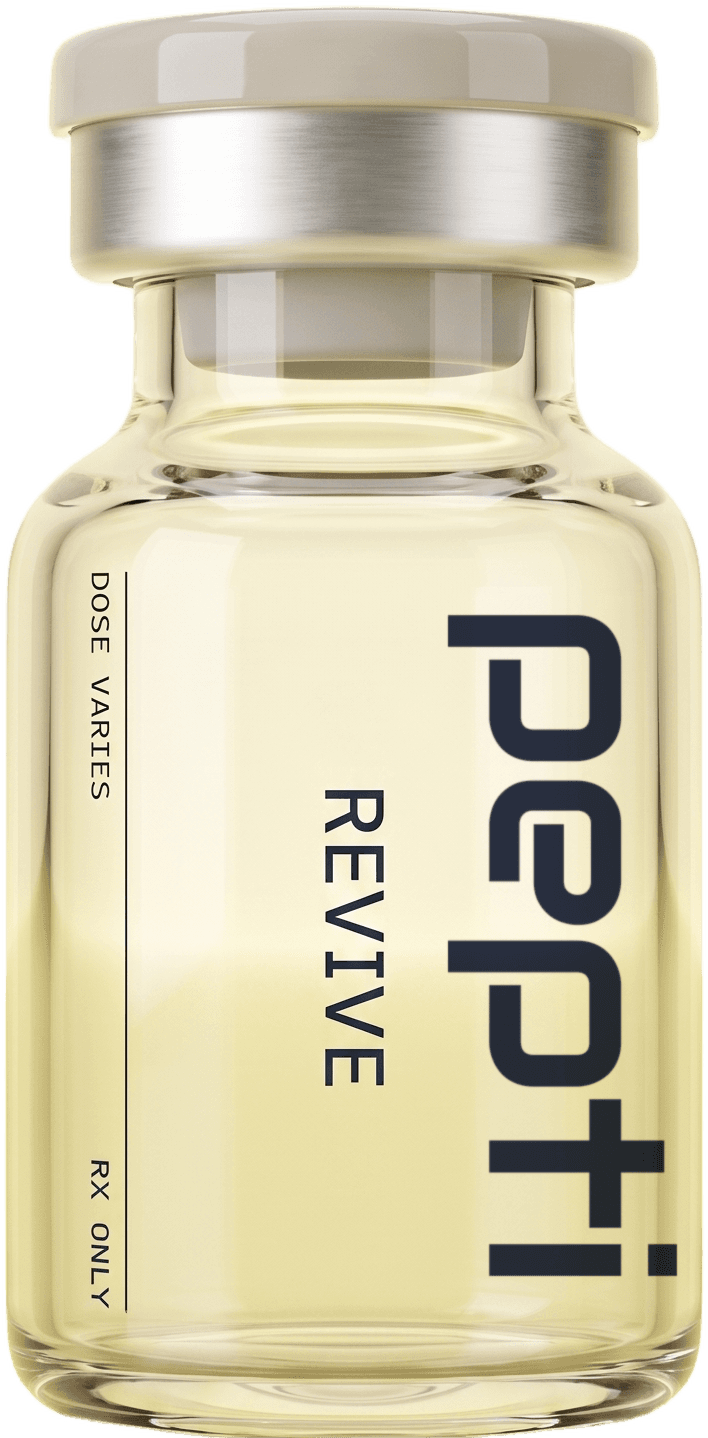
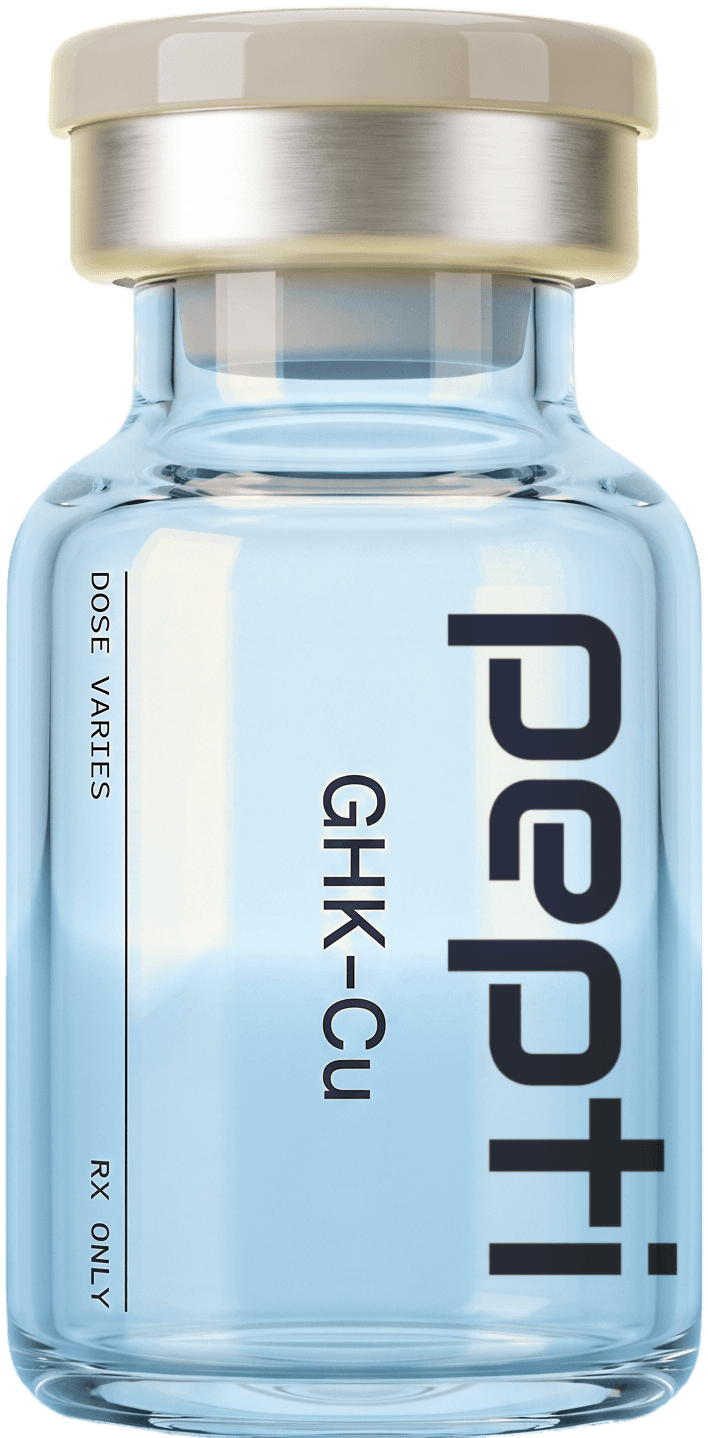
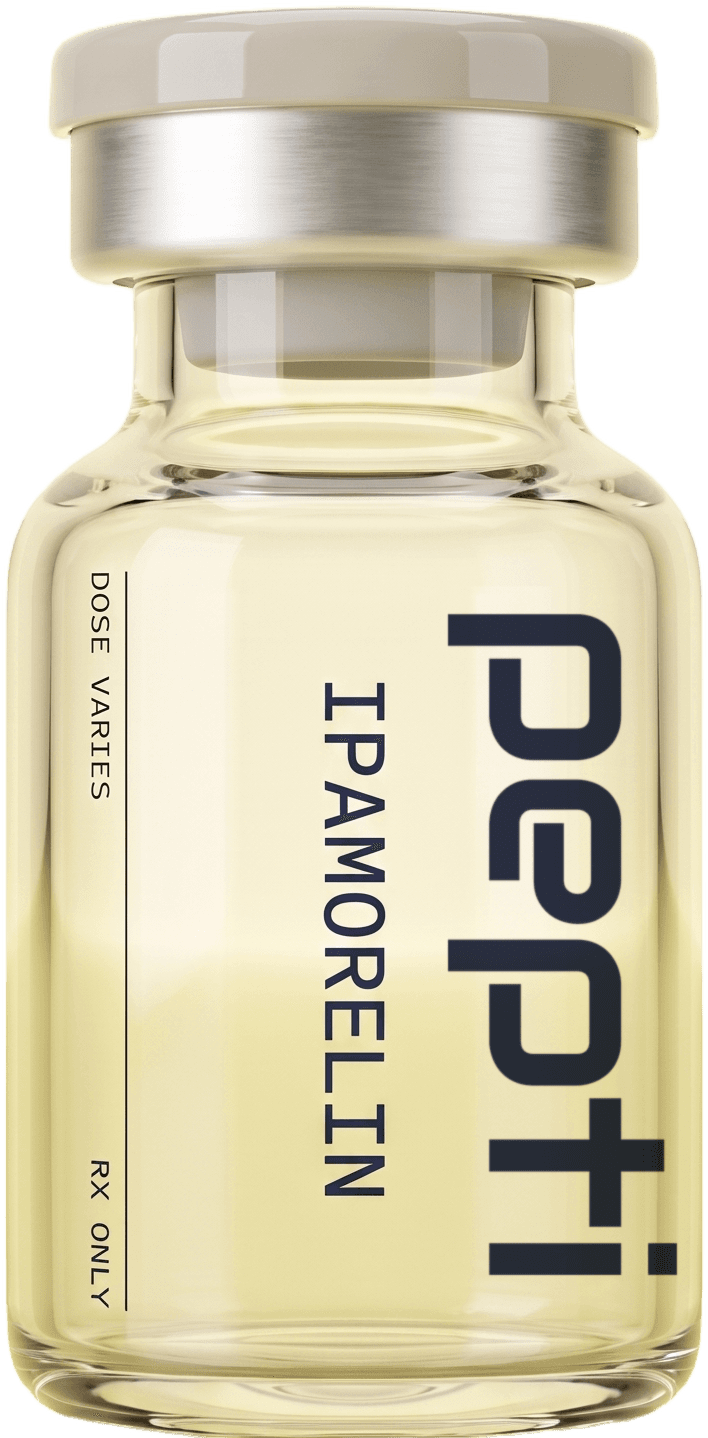
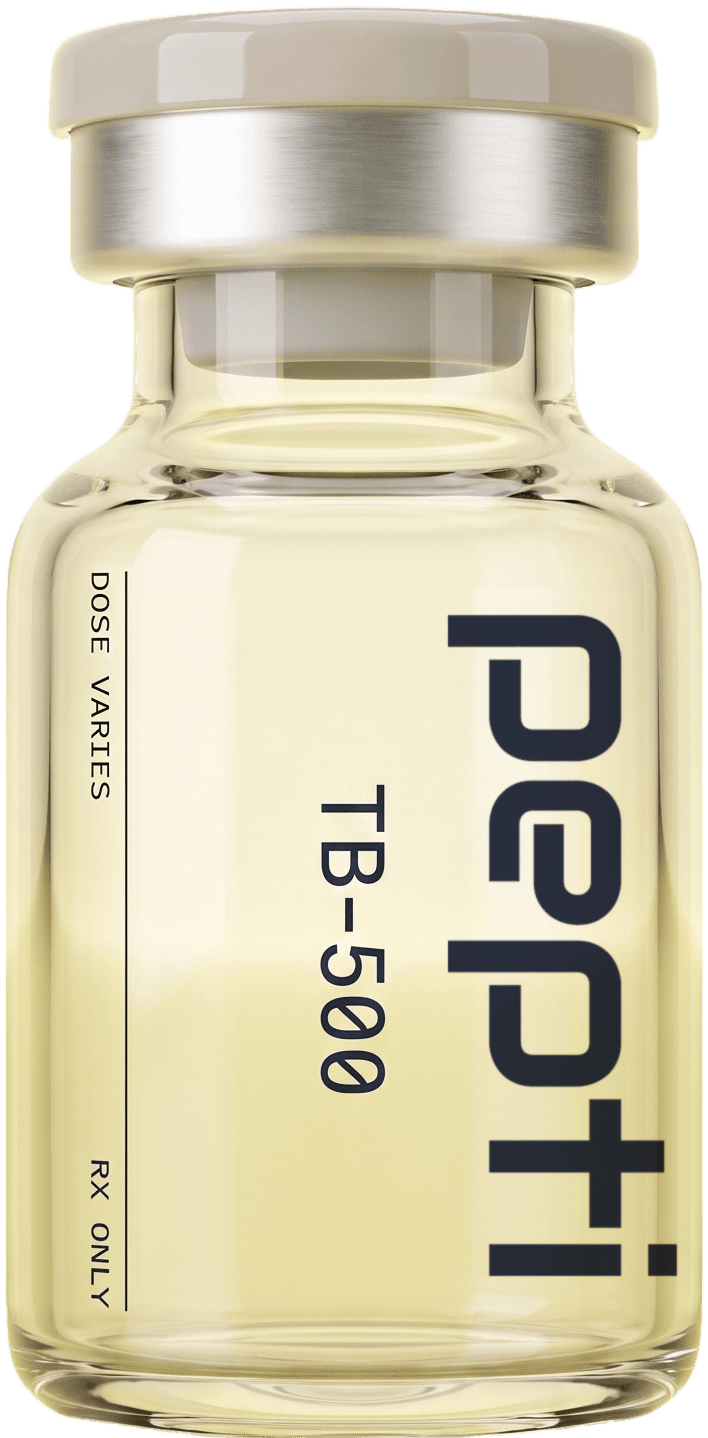
At Pepti, the REVIVE blend is prescribed as 0.25 mL, which is 25 units on a U-100 insulin syringe, injected under the skin Monday through Friday nights at bedtime. The 5 mL vial holds 50 mg GHK-Cu, 6 mg CJC-1295, 12 mg ipamorelin and 2 mg TB-500, so every 0.25 mL dose delivers 2.5 mg GHK-Cu, 0.3 mg CJC-1295, 0.6 mg ipamorelin and 0.1 mg TB-500, and the vial holds 20 doses, about four weeks. Your physician sets your directions after reviewing your intake, and your exact dose and units are printed on the vial.
This page explains the REVIVE dosage Pepti prescribes, what the units on the syringe mean, how much of each of the four peptides is in a dose, a dosage chart for the REVIVE vial, how its dose compares with the products next to it, why it is taken at bedtime on weekdays, what can change your directions, and the side effects to know about. It covers how Pepti prescribes REVIVE, not online protocols. Nothing here is a reason to change your own dose.
REVIVE Blend Dosage
The short answer
| Product | Vial | Directions | Per dose | Doses per vial | Price |
|---|---|---|---|---|---|
| REVIVE Blend | 5 mL: GHK-Cu 10 mg/mL, CJC-1295 1.2 mg/mL, ipamorelin 2.4 mg/mL, TB-500 0.4 mg/mL | Inject 0.25 mL (25 units) subcutaneously Monday through Friday nights at bedtime | 2.5 mg GHK-Cu, 0.3 mg CJC-1295, 0.6 mg ipamorelin, 0.1 mg TB-500 | 20 | $279/mo |
Every price is all-in, covering medication, physician review, refill management and shipping, with no separate membership fee. Pepti is cash-pay and does not bill insurance. Your own directions are the ones printed on your vial.
REVIVE Blend Dosage
REVIVE dosage in units, mL and mg
Pepti's directions are written in millilitres and units, because prescriptions are written in millilitres and insulin syringes are marked in units. On a U-100 insulin syringe, 1 unit is 0.01 mL, so 100 units is 1 mL and 25 units is 0.25 mL. A unit is a volume mark on the barrel, not a measure of how strong the medication is. Insulin syringe units explained goes through the markings.
REVIVE is four peptides dissolved together in one vial, so one draw carries all four. The milligrams per dose come from each component's concentration multiplied by 0.25 mL:
| Component | Concentration | Per vial | Per 0.25 mL dose | What it is |
|---|---|---|---|---|
| GHK-Cu | 10 mg/mL | 50 mg | 2.5 mg | Copper-binding tripeptide found in human plasma |
| CJC-1295 | 1.2 mg/mL | 6 mg | 0.3 mg | Growth-hormone-releasing hormone analogue |
| Ipamorelin | 2.4 mg/mL | 12 mg | 0.6 mg | Growth hormone secretagogue acting at the ghrelin receptor |
| TB-500 | 0.4 mg/mL | 2 mg | 0.1 mg | Synthetic fragment related to thymosin beta-4 |
| Total | 70 mg | 3.5 mg |
That arithmetic is a way to read a label, not a way to set a dose. A vial labelled 70 mg in total is not a 70 mg dose: it is twenty doses of 3.5 mg combined. If your label and your syringe seem to disagree, do not dose; message your care team. How long does a peptide vial last explains every number on a vial label.
Fixed proportions
The four peptides are in a ratio fixed by the pharmacy's formulation. Every dose delivers the same split, and there is no way to take more of one and less of another from the same vial. Two things about the split are worth knowing. GHK-Cu is 50 of the 70 mg, so by mass REVIVE is mostly a GHK-Cu preparation. And TB-500 is the smallest component at 0.1 mg per dose, much less than a standalone TB-500 prescription delivers. The two growth hormone secretagogues sit in a two-to-one ipamorelin-to-CJC-1295 ratio, the same ratio as the standalone CJC-1295 / Ipamorelin product. If a different balance is wanted, the components are prescribed separately.
Which CJC-1295 is in the vial
CJC-1295 exists in two forms. The form used in the published 2006 human trials carried a "drug affinity complex" (DAC) that keeps it circulating for about a week. The form in compounded blends is CJC-1295 without DAC, also called modified GRF (1-29), which lasts roughly half an hour. That short duration is why it is dosed on a schedule rather than weekly, and why it is paired with ipamorelin to produce one pulse. The full background is in what is REVIVE.
REVIVE Blend Dosage
REVIVE dosage chart: units to mL to mg
The chart below is the conversion for the REVIVE vial, drawn with a U-100 insulin syringe. It is math only. It is not a menu of doses, and the only line that applies to you is the one that matches the number printed on your vial.
| Syringe mark (U-100) | Volume | GHK-Cu | CJC-1295 | Ipamorelin | TB-500 |
|---|---|---|---|---|---|
| 5 units | 0.05 mL | 0.5 mg | 0.06 mg | 0.12 mg | 0.02 mg |
| 10 units | 0.1 mL | 1 mg | 0.12 mg | 0.24 mg | 0.04 mg |
| 15 units | 0.15 mL | 1.5 mg | 0.18 mg | 0.36 mg | 0.06 mg |
| 20 units | 0.2 mL | 2 mg | 0.24 mg | 0.48 mg | 0.08 mg |
| 25 units (Pepti's typical directions) | 0.25 mL | 2.5 mg | 0.3 mg | 0.6 mg | 0.1 mg |
| 50 units | 0.5 mL | 5 mg | 0.6 mg | 1.2 mg | 0.2 mg |
| 100 units | 1 mL | 10 mg | 1.2 mg | 2.4 mg | 0.4 mg |
The rule behind every row: units divided by 100 gives millilitres; multiply millilitres by 10 for GHK-Cu, by 1.2 for CJC-1295, by 2.4 for ipamorelin and by 0.4 for TB-500. Those multipliers only hold for this vial. A chart written for a different blend or concentration gives different milligram figures for the same units, which is the main reason not to dose from a chart, including this one.
Some people convert to micrograms, because the secretagogue amounts are small: 0.3 mg is 300 mcg of CJC-1295, 0.6 mg is 600 mcg of ipamorelin and 0.1 mg is 100 mcg of TB-500. Those are the same amounts written a different way.
REVIVE Blend Dosage
REVIVE compared with the products next to it
People often compare a REVIVE dose with GLOW, with the two-peptide CJC-1295 / Ipamorelin vial, or with GHK-Cu or TB-500 on their own. The comparison that matters is concentration, because that is what a draw delivers:
| REVIVE | GLOW | CJC-1295 / Ipamorelin | GHK-Cu | TB-500 | |
|---|---|---|---|---|---|
| What is in the 5 mL vial | 50 mg GHK-Cu, 6 mg CJC-1295, 12 mg ipamorelin, 2 mg TB-500 | 50 mg GHK-Cu, 10 mg BPC-157, 10 mg TB-500 | 6 mg CJC-1295, 12 mg ipamorelin | 50 mg GHK-Cu | 5 mg TB-500 |
| GHK-Cu per mL | 10 mg | 10 mg | None | 10 mg | None |
| Secretagogues per mL | 1.2 mg CJC-1295, 2.4 mg ipamorelin | None | 1.2 mg CJC-1295, 2.4 mg ipamorelin | None | None |
| TB-500 per mL | 0.4 mg | 2 mg | None | None | 1 mg |
| Price | $279/mo | $259/mo | $239/mo | $239/mo | $209/mo |
What the numbers show
Three things stand out. First, REVIVE carries GHK-Cu at the same strength as standalone GHK-Cu and GLOW, so a 0.25 mL dose of any of the three delivers 2.5 mg of it. Second, its two secretagogues are at exactly the concentrations in CJC-1295 / Ipamorelin, so REVIVE is in effect that product with GHK-Cu and a small amount of TB-500 added. Third, its TB-500 is a fifth of GLOW's strength and less than half of standalone TB-500, so REVIVE is not the product to reach for when TB-500 is the point.
REVIVE vs GLOW dosage
The draw is the same 25 units, but the products are different in kind. GLOW is an all-repair formula with BPC-157 and five times as much TB-500 per dose; it is taken on weekday mornings. REVIVE swaps BPC-157 for the two secretagogues and is taken at bedtime. Which fits is set by your physician after reviewing your intake. There is no reason to take both without your physician planning it: both carry a full GHK-Cu dose, so together they double the copper.
REVIVE Blend Dosage
When REVIVE is taken
Bedtime, Monday through Friday
Pepti's REVIVE directions say Monday through Friday nights at bedtime, with weekends off. Bedtime is not arbitrary. The largest natural growth hormone pulse of the day occurs in the first hours of sleep, and CJC-1295 and ipamorelin are timed to add to it. The REVIVE reference also notes that the insulin rise after a meal blunts growth hormone release, which is why some directions mention dosing away from a meal; follow what your label says.
Weekends off are part of the schedule, not missed doses. Prescribers describe intermittent dosing as keeping the pituitary responsive. Twenty doses at five a week is four working weeks, which is why refills run on a 28-day cycle.
Under the skin, and where
Subcutaneous means into the fat layer, not the muscle. Abdomen and thigh are the usual sites, rotated so the same spot is not used repeatedly. The mechanisms described are systemic, so there is no reason to inject near an injury. Your directions will say. Technique is covered in how to inject peptides safely and sites in peptide injection sites.
| Directions say | What it means in practice |
|---|---|
| 0.25 mL (25 units) | Draw to the 25 mark on a U-100 insulin syringe |
| Subcutaneously | Into the fat layer, abdomen or thigh, rotating sites |
| Monday through Friday | Five doses a week, weekends off |
| Nights at bedtime | Shortly before sleep, to sit alongside the overnight growth hormone pulse |
| 20 doses per vial | About four weeks, then the next refill |
REVIVE Blend Dosage
How long a REVIVE vial lasts, storage and refills
| Step | Value |
|---|---|
| Dose | 25 units, 0.25 mL |
| Doses per week | 5 (Monday through Friday) |
| Doses per vial | 20 (5 mL divided by 0.25 mL) |
| Used over the vial | 50 mg GHK-Cu, 6 mg CJC-1295, 12 mg ipamorelin, 2 mg TB-500, the whole vial |
| Time per vial | 20 doses divided by 5 per week = 4 weeks |
Vials are multi-dose solutions shipped ready to use, refrigerated with ice packs, with sterile syringes and alcohol prep pads. Nothing is mixed at home. The solution is blue because of the copper in GHK-Cu, which is expected; why is GHK-Cu blue explains what a normal vial looks like. Cloudiness, particles or a colour change from what you received is a reason to message rather than inject. Keep it in the fridge and follow the beyond-use date on the label; a multi-peptide vial is not something to keep past it. One vial per fill, every 28 days. How to store peptides covers storage.
If a vial runs short before the refill, message your care team rather than adjusting anything yourself. If you miss a weeknight dose, follow your directions and do not take two doses to make up for one.
REVIVE Blend Dosage
Why the research cannot give you a REVIVE dose
REVIVE has never been studied as a blend, in people or in animals, so there is no trial dose for it. The evidence is per component, and it is uneven:
| Component | Human dose data that exists | What it does not cover |
|---|---|---|
| CJC-1295 | 2006 healthy-adult trials of the DAC form, reporting dose-dependent rises in growth hormone and IGF-1 | The no-DAC form in the vial, daily or weekday dosing, any wellness use |
| Ipamorelin | A 1999 intravenous study in healthy men; a 2014 phase 2 trial in bowel-resection patients that did not meet its endpoints | The subcutaneous route, sleep, recovery or body composition |
| GHK-Cu | Small human studies, mostly topical application to skin | Any injectable dose |
| TB-500 | None; early-phase trials used the full-length thymosin beta-4 protein | Any dose of the fragment |
So the directions on the vial are a prescribing standard set to deliver one vial in four weeks of weeknight dosing, not a dose found in a trial. The research, component by component, is in what is REVIVE, CJC-1295 / Ipamorelin benefits and GHK-Cu benefits.
REVIVE Blend Dosage
What changes the directions
Your physician sets your directions after reviewing your intake. Things that can lead to different directions, or a different product, include:
| What can change | How it shows up |
|---|---|
| Whether REVIVE is the right formula | A single soft-tissue injury may point to BPC-157 + TB-500 or TB-500 alone; the growth hormone pulse alone to CJC-1295 / Ipamorelin; repair without a secretagogue to GLOW or KLOW |
| Blood sugar | Growth hormone opposes insulin, so diabetes or impaired glucose tolerance changes the conversation |
| Your medical history | Wilson's disease or another copper disorder, a cancer history, anticoagulants or pregnancy |
| Your supplements and other products | High-dose zinc competes with copper; another GHK-Cu product doubles the copper |
| How you respond | Water retention, tingling hands or joint aches go to your physician, who may revise your directions |
When directions change, the new numbers are printed on the new label. Never carry a number over from a previous fill. Bloodwork is not required for any Pepti treatment. If your physician wants labs for your care, they'll ask through your account.
REVIVE Blend Dosage
Side effects, in summary
| What is reported | What it means | What to do |
|---|---|---|
| Injection-site redness, mild soreness, occasional bruising | The most common reports | Rotate sites |
| A faint blue-green mark at the site | Copper from the GHK-Cu that has not yet dispersed | Clears on its own |
| A brief flush or tingling after injecting, headache | Reported with the secretagogue half | Tell your physician if it persists |
| Hunger after a dose | Ipamorelin acts at the receptor ghrelin uses | Report it |
| Water retention, tingling in the hands, joint aches | Growth hormone above what you need | Message your care team |
| Facial or throat swelling, widespread rash, breathing difficulty | Rare | Call 911 first, then tell your physician |
The full picture is in REVIVE blend side effects. Tested athletes should know that WADA's 2026 Prohibited List names CJC-1295 and ipamorelin under S2.2.4, prohibited at all times, and TB-500 is also on the list at all times; a prescription is not an exemption.
REVIVE is a compounded prescription; compounded medications are not FDA approved. None of the four components is currently in 503A Category 2. TB-500 was recommended for the 503A Bulks List by the FDA's advisory committee in July 2026, with the final determination pending; GHK-Cu is scheduled for review before the end of February 2027; the committee voted against CJC-1295 and ipamorelin in late 2024 for the specific uses it examined, with no final FDA rule issued for either.
REVIVE Blend Dosage
Where to get REVIVE prescribed
REVIVE cannot be bought legitimately without a prescription. Sites selling it "for research use only" are not accountable for what is in the vial: identity, purity, sterility and concentration are untested, so the per-dose figures above would not hold. The prescription route:
- Complete a free online intake covering your history, medications and what you want help with.
- A physician licensed in your state reviews it, usually within 24 hours.
- If it is appropriate, a PCAB-accredited, FDA-registered US 503A compounding pharmacy prepares it to that prescription. Lot test results are published at /quality/lab-results.
- It ships refrigerated with your directions printed on the vial.
- Your physician stays reachable for questions and dose changes.
The full product reference is what is REVIVE. The components on their own: ipamorelin dosage, GHK-Cu dosage and TB-500 dosage.
References
What this is based on.
References
- Goldstein AL, Hannappel E, Kleinman HK. Thymosin beta4: actin-sequestering protein moonlights to repair injured tissues · Trends Mol Med (2005) · PMID 16099219
- Pickart L, Vasquez-Soltero JM, Margolina A. GHK Peptide as a Natural Modulator of Multiple Cellular Pathways in Skin Regeneration · Biomed Res Int (2015) · PMID 26236730
- Teichman SL, Neale A, Lawrence B et al.. Prolonged stimulation of growth hormone (GH) and insulin-like growth factor I secretion by CJC-1295, a long-acting analog of GH-releasing hormone, in healthy adults · J Clin Endocrinol Metab (2006) · PMID 16352683
Citations are provided for educational purposes. They do not constitute medical advice. Always discuss any peptide protocol with your prescribing physician.
Common questions
REVIVE Blend Dosage, answered.
At Pepti, 0.25 mL, which is 25 units on a U-100 insulin syringe, injected subcutaneously Monday through Friday nights at bedtime. Your physician sets your directions after reviewing your intake, and your exact dose is printed on the vial.
At 0.25 mL: 2.5 mg GHK-Cu, 0.3 mg CJC-1295, 0.6 mg ipamorelin and 0.1 mg TB-500, 3.5 mg combined. The split is fixed by the formulation.
The number printed on your vial. Pepti's typical directions are 25 units, which is 0.25 mL on a U-100 insulin syringe, where 1 unit is 0.01 mL.
Twenty. A 5 mL vial divided by 0.25 mL per dose is 20 doses, four working weeks on a Monday to Friday schedule.
The chart above converts units to millilitres to milligrams of each component for the REVIVE vial. It is a conversion, not a list of doses to choose from. Your own label is the one that applies.
Because the body's largest natural growth hormone pulse comes in the first hours of sleep, and the CJC-1295 and ipamorelin in the vial are timed to add to it. The GHK-Cu and TB-500 are carried in the same draw.
The weekday schedule is part of the prescription, not missed doses. Prescribers describe intermittent dosing as keeping the pituitary responsive, and twenty doses at five a week fits one vial into a 28-day refill cycle.
The secretagogue part is. REVIVE carries CJC-1295 and ipamorelin at the same concentrations as the two-peptide vial, and adds GHK-Cu and a small amount of TB-500. Which product fits is set by your physician after reviewing your intake.
Raise it with your physician first. REVIVE carries a full GHK-Cu dose, so another GHK-Cu product alongside it doubles the copper. The intake asks about everything you take for this reason.
No. Take the dose printed on your vial, on the schedule printed on your vial. If you have questions about your dose, message your care team.
No. Pepti vials are multi-dose solutions shipped ready to use, with sterile syringes and alcohol prep pads.
Bloodwork is not required for any Pepti treatment. If your physician wants labs for your care, they'll ask through your account. The free assessment goes to a physician licensed in your state. A consultation does not guarantee a prescription.
Next step
See what a physician recommends for you.
A licensed physician in your state reviews your intake and decides what is appropriate. A consultation does not guarantee a prescription.