Recovery · Reference
REVIVE Blend Side Effects: What Is Reported, What to Report, and Who Should Avoid It
This page sets out what REVIVE is, which side effects are reported and which component they are attributed to, the growth-hormone and copper signals to watch, what needs urgent care, who should not take REVIVE, and what nobody knows yet. REVIVE is a compounded prescription injection, and compounded medications are not FDA approved.

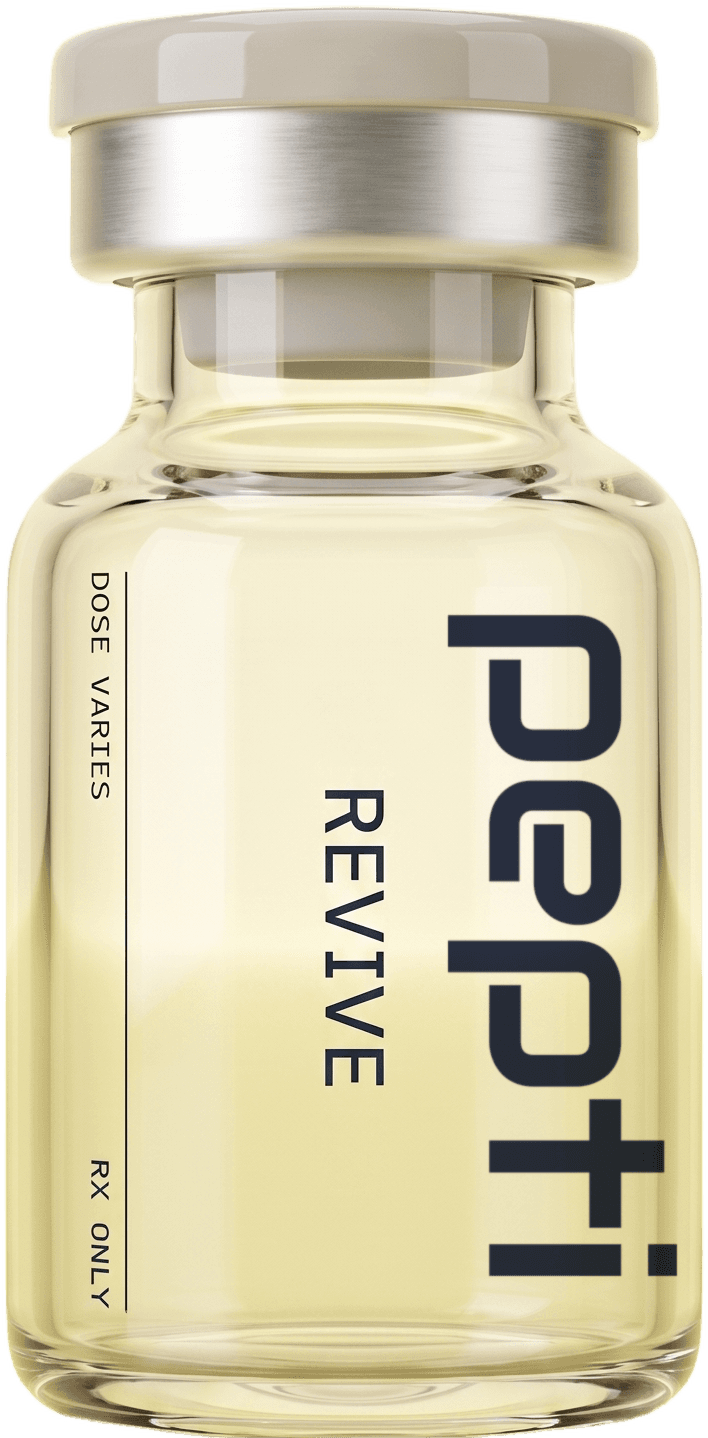
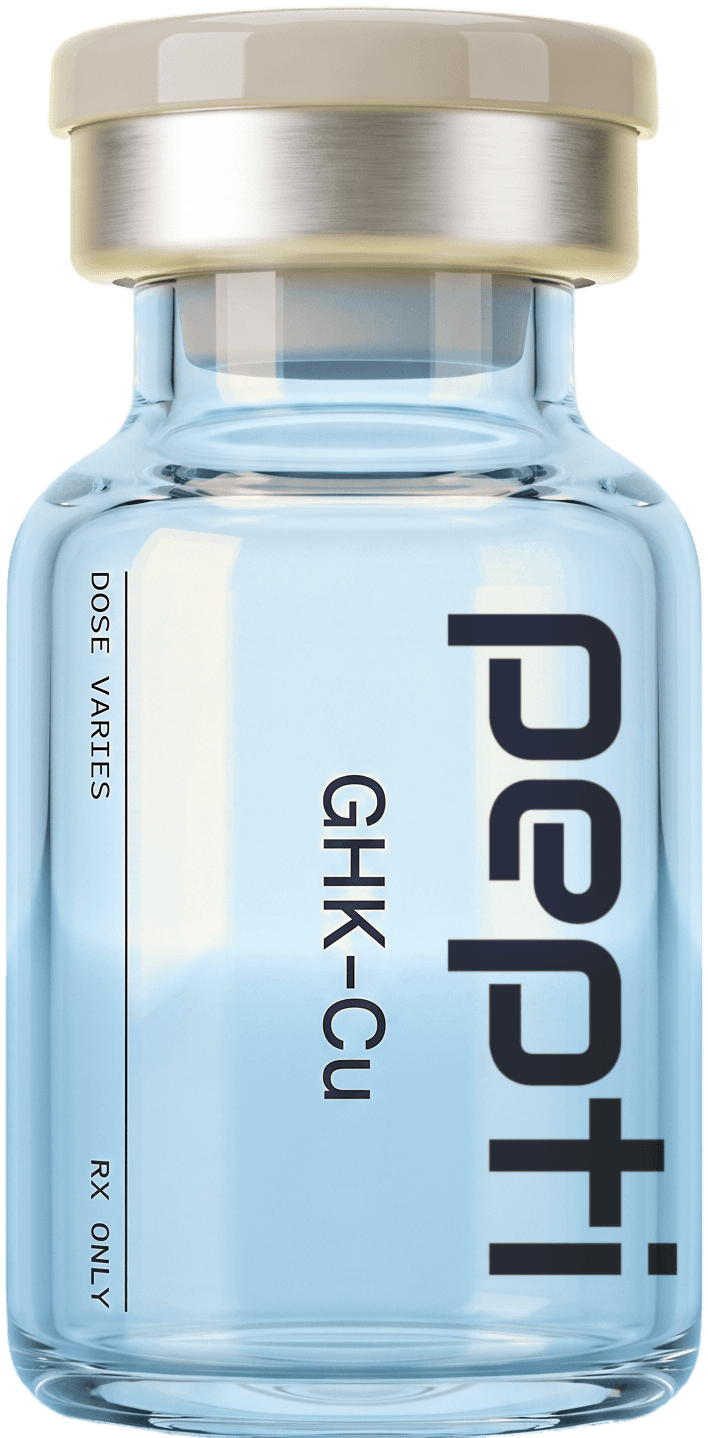
The side effects reported with REVIVE are mostly mild: injection-site redness, soreness or bruising, sometimes a faint blue-green mark from the copper in GHK-Cu, and, from the growth hormone half, a brief flush or tingling after a dose, headache, hunger and vivid dreams with bedtime dosing. The effects that matter most are the ones that signal more growth hormone than a person needs, fluid retention, tingling hands and joint aches, along with a possible rise in blood sugar; those go to your care team. Copper adds its own warning signs, and anyone with Wilson's disease should not take it. REVIVE has never been studied as a blend in people, and facial or throat swelling or difficulty breathing after a dose is a reason to call 911.
This page sets out what REVIVE is, which side effects are reported and which component they are attributed to, the growth-hormone and copper signals to watch, what needs urgent care, who should not take REVIVE, and what nobody knows yet. REVIVE is a compounded prescription injection, and compounded medications are not FDA approved.
REVIVE Blend Side Effects
The short answer
| How often | What is reported | Usually attributed to | What to do |
|---|---|---|---|
| Common | Injection-site redness, itching, mild soreness, a small lump, occasional bruising | Any subcutaneous injection; all four components | Rotate sites; mention it at follow-up |
| Common | A faint blue-green mark at the injection site | GHK-Cu, copper that has not yet dispersed | Expected; clears on its own |
| Common | Flushing, warmth or tingling within minutes of a dose | CJC-1295 and ipamorelin | Usually settles; report if marked |
| Common, mostly early | Headache | Reported in the 2006 CJC-1295 trials and with ipamorelin | Report if it persists |
| Common | Hunger after a dose | Ipamorelin, which acts at the receptor ghrelin uses | Report it |
| Common with bedtime dosing | Vivid dreams | Evening growth-axis dosing | Report it |
| Some people | Light-headedness, tiredness or a head-fog feeling early on | Ipamorelin; TB-500 | Report if it persists |
| Uncommon | Fluid retention, puffy hands, ankles or face; joint aches; tingling or numbness in the hands | Growth hormone above what you need | Message your care team |
| Uncommon | Higher blood sugar | Growth hormone opposes insulin | Tell your physician if you have diabetes or take glucose-lowering medication |
| Stop and call | Persistent nausea and vomiting, abdominal pain, jaundice or new confusion | The pattern copper excess would produce | Stop dosing and contact your physician the same day |
| Emergency | Facial or throat swelling, widespread rash or hives, wheeze or breathing difficulty | A possible allergic reaction to any injected peptide | Call 911 first, then tell your physician |
There are no placebo-controlled rates for REVIVE side effects, so this page gives descriptions, not percentages.
REVIVE Blend Side Effects
What is in REVIVE, and why that shapes the side effects
REVIVE is four peptides dissolved together in one 5 mL vial: 50 mg GHK-Cu, 6 mg CJC-1295, 12 mg ipamorelin and 2 mg TB-500. Pepti's typical directions are 0.25 mL, which is 25 units on a U-100 insulin syringe, under the skin Monday through Friday nights at bedtime, so each dose delivers 2.5 mg GHK-Cu, 0.3 mg CJC-1295, 0.6 mg ipamorelin and 0.1 mg TB-500. Your physician sets your directions after reviewing your intake, and they are printed on the vial. REVIVE is $279 a month, all-in. Dosing detail is in REVIVE blend dosage.
| Component | Per dose | What it adds to the side-effect picture |
|---|---|---|
| GHK-Cu | 2.5 mg | Copper: the blue colour, the occasional blue-green mark, a metallic taste, and the copper-disorder contraindication |
| CJC-1295 | 0.3 mg | The growth hormone signal: flushing, headache, and at a larger signal fluid retention, joint aches, tingling hands and higher blood sugar |
| Ipamorelin | 0.6 mg | Adds to the same signal; hunger, vivid dreams and light-headedness are reported with it |
| TB-500 | 0.1 mg | Early tiredness or head-fog in some people; cell-migration and blood-vessel mechanisms, which is why a cancer history matters |
So REVIVE's side effects come in two families: the growth hormone half and the copper-carrying repair half. There is no side-effect data for the four together, because the blend has never been studied as a blend. The component detail is in is CJC-1295 / Ipamorelin safe, is GHK-Cu safe and is TB-500 safe.
REVIVE Blend Side Effects
Common REVIVE side effects
Injection-site reactions
The most frequent report by a wide margin, and common to every subcutaneous peptide. A small red, itchy or firm area that fades within a day or two is expected. What separates irritation from something that needs attention is the direction of travel: a site that is larger, hotter or more painful at 48 hours than at 24 is behaving like an infection and should be looked at the same day. Rotating between abdomen and thigh, letting the alcohol dry, and using a fresh needle every time reduce how often reactions happen. Technique is covered in how to inject peptides safely.
The blue-green mark
GHK-Cu solutions are blue because of the copper, and a REVIVE vial is blue for the same reason. A faint blue-green mark at the site is copper that has not yet dispersed, and it clears on its own; people who have not been told about it often assume it is a bruise. Why is GHK-Cu blue explains what a normal vial looks like. Cloudiness, particles or a colour change from what you received is a reason to message rather than inject.
Flushing, tingling and headache
A brief warm, flushed or tingling feeling within minutes of a dose is a recognised effect of growth hormone secretagogues and usually settles. The 2006 CJC-1295 trials reported mainly transient injection-site reactions and headache, and headache is also reported with ipamorelin, mostly early in a course. A headache that persists, becomes severe, or comes with a change in vision is a same-day message.
Hunger and vivid dreams
Ipamorelin acts at the growth hormone secretagogue receptor, the receptor ghrelin uses, so some people notice hunger after a dose. Because REVIVE is taken at bedtime, that hunger can arrive just before sleep. Vivid dreams are reported with evening growth-axis dosing. Neither is dangerous, but both are worth reporting, particularly if body weight is part of why you are being treated.
Light-headedness and early tiredness
Light-headedness is reported with ipamorelin, and tiredness or a foggy feeling in the first one to two weeks is described for TB-500. Both usually settle; anything that persists beyond a few weeks should be reported rather than attributed to the peptide.
REVIVE Blend Side Effects
The growth hormone signals
CJC-1295 and ipamorelin prompt your own pituitary to release growth hormone in pulses. Nothing in the vial is the hormone itself, and the 2006 human studies of CJC-1295 reported the pituitary's pulsatile pattern being preserved. But a larger pulse has the same family of effects as growth hormone, and the pattern is recognisable:
| Sign | What it can mean | What to do |
|---|---|---|
| Puffy hands, ankles or face, rings feeling tight | Fluid retention from more growth hormone than you need | Message your care team |
| Joint aches or morning stiffness | Same category | Message your care team |
| Tingling or numbness in the hands | Same category, the classic pattern | Message your care team; stop and call if it has not resolved after your directions were adjusted |
| Higher fasting glucose, or more thirst than usual | Growth hormone opposes insulin | Tell your physician, especially with diabetes or prediabetes |
Blood sugar
Growth hormone is counter-regulatory to insulin, so sustained increases reduce insulin sensitivity and can raise fasting glucose. The closest long-duration human data in the class comes from a different compound, an oral ghrelin mimetic given daily to healthy adults aged 60 to 81 for one to two years in a 2008 Annals of Internal Medicine trial, which reported fasting glucose rising by an average of 5 mg/dL and insulin sensitivity falling. In practice, diabetes or impaired glucose tolerance is raised at intake and means closer attention rather than an automatic no. Anyone on insulin or a sulfonylurea who has shakiness, sweating or confusion should treat the low blood sugar, then report it the same day.
REVIVE Blend Side Effects
The copper-specific warning signs
This is the part of REVIVE's safety picture that separates it from the two-peptide CJC-1295 / Ipamorelin vial. Copper is essential in small amounts and harmful in excess, and the liver is the body's route for excreting it.
| Sign | What it can mean | What to do |
|---|---|---|
| Persistent nausea and vomiting | Copper excess shows up in the gut first | Stop dosing and contact your physician |
| Abdominal pain | Same pattern | Stop dosing and contact your physician |
| Yellowing of the skin or eyes (jaundice) | Liver involvement | Stop dosing and contact your physician the same day |
| New confusion | Severe accumulation affecting the brain | Call 911 if it is sudden or severe |
This pattern is not reported at prescribed GHK-Cu doses in people with normal copper handling. It belongs to identifiable people: anyone with Wilson's disease, anyone whose liver cannot excrete copper normally, and anyone unknowingly taking two copper-containing products at once. Every GHK-Cu blend carries a full GHK-Cu dose, so REVIVE alongside standalone GHK-Cu, GLOW or KLOW doubles the copper. High-dose zinc competes with copper absorption, so your physician needs to know your zinc dose too. Do not change your supplements on your own in either direction; tell your physician what you take.
REVIVE Blend Side Effects
The cancer question
Two separate reasons put a cancer history on the intake. Growth hormone and IGF-1 are growth signals; no evidence shows them causing cancer, but a tissue that is already malignant can respond to growth signals. And GHK-Cu and TB-500 are described in cell and animal work as supporting new blood-vessel growth, and thymosin beta-4, the parent of TB-500, as promoting cell migration, which are processes a healing tissue needs and a growing tumour also uses. There is no human evidence that any component causes or accelerates cancer. A physician will decline REVIVE with an active cancer, and a cancer in remission is a cautious conversation that includes your oncologist. See can peptides cause cancer.
REVIVE Blend Side Effects
Serious side effects: what to report urgently
| Symptom | What to do |
|---|---|
| Swelling of the face, lips or throat, widespread hives, wheeze or difficulty breathing | Call 911. Then tell your physician |
| Sudden or severe confusion | Call 911 |
| Jaundice, persistent vomiting or abdominal pain | Stop dosing; contact your physician the same day |
| Shakiness, sweating or confusion if you take insulin or a sulfonylurea | Treat the low blood sugar, then report it the same day |
| Persistent severe headache, a change in vision, or fainting | Contact your care team the same day |
| An injection site that is hot, spreading or worse after 48 hours | Same-day message to your care team |
| Anything that frightens you | Stop and contact your physician rather than deciding on your own whether it counts |
If you think you may have taken too much, for example by drawing the wrong amount, call Poison Control at 1-800-222-1222 and message your care team. Do not skip, double or change a dose to compensate.
REVIVE Blend Side Effects
When to message your care team
Not every side effect is urgent. Message your care team through your account for:
- Injection-site reactions that keep happening despite rotating sites.
- Puffiness, joint aches or tingling hands, even if mild.
- Headache, light-headedness or tiredness that has not settled after the first couple of weeks.
- A metallic taste, or nausea that seems to follow each dose.
- Any change in your medications or supplements, especially glucose-lowering medication, blood thinners, testosterone, zinc, or another GHK-Cu product.
- A new diagnosis, a pregnancy, or a planned surgery.
Your physician may revise your directions, change the product, or stop treatment. Do not change the dose yourself. When directions change, the new numbers are printed on the new label. Bloodwork is not required for any Pepti treatment. If your physician wants labs for your care, they'll ask through your account.
REVIVE Blend Side Effects
Who should not take REVIVE, or should discuss it first
| Situation | Why it matters |
|---|---|
| Wilson's disease or any other copper-metabolism disorder | The body cannot excrete copper normally; an absolute reason to avoid GHK-Cu blends |
| Significant liver disease | The liver is the copper exit route |
| Already taking another GHK-Cu product | Doubles the copper without meaning to |
| High-dose zinc supplementation | Zinc competes with copper; your physician needs to know your dose |
| Active cancer | Growth signalling and blood-vessel mechanisms are avoided with active disease |
| Cancer history in remission | A cautious conversation, taken with your oncologist's view |
| Diabetes or impaired glucose tolerance | Not a bar; growth hormone reduces insulin sensitivity, so it needs closer attention |
| Untreated severe sleep apnoea | Fluid retention and soft-tissue change can worsen it |
| Anticoagulant therapy | Raised at intake |
| Pregnancy or breastfeeding | Not used; safety data is absent. See can you take peptides while pregnant |
| Tested athletes | WADA's 2026 list names CJC-1295 and ipamorelin under S2.2.4, prohibited at all times, and TB-500 is on the list at all times; a prescription is not an exemption |
There is no established interaction list for REVIVE or any component, because the trials that would produce one have not been run. Two combinations are worth naming: anything that lowers blood glucose, and testosterone, where growth hormone and testosterone have additive effects on the side-effect pattern.
REVIVE Blend Side Effects
What is genuinely unknown
- Side effects of the four together. REVIVE has never been studied as a combination, in people or in animals.
- Long-term human outcomes. No cohort has been followed for years on REVIVE or any component by injection.
- Subcutaneous data. There are no human data for subcutaneous ipamorelin, the 2006 trials used the long-acting DAC form of CJC-1295 rather than the form in the vial, and TB-500 has no human trials at all.
- Whether the theoretical cancer concern is real. It is mechanistic reasoning, not an observed human signal, and it has not been ruled out.
- Immunogenicity rates. No study has measured how often any component produces antibodies.
REVIVE Blend Side Effects
What the evidence shows, honestly
Each component is generally described as well tolerated in its own published work, and clinical reports on the blend are consistent with that: mostly injection-site reactions, with the flushing, headache and hunger of the secretagogue half. The 2006 CJC-1295 trials in healthy adults described it as well tolerated, and the two human ipamorelin studies, a 1999 volunteer study and a seven-day surgical trial, did the same. GHK-Cu's human data is mostly topical; TB-500 has none.
So the honest statement is narrow: short-term tolerability looks good where REVIVE's components have been used, there is a recognisable pattern when the growth hormone signal is larger than a person needs, and long-term safety is not characterised. The separate and non-theoretical risk is supply: research-use-only blends are sold openly with no pharmacy accountable for identity, purity, sterility or concentration. The distinction is set out in research peptides vs prescription peptides.
Where the components stand with the FDA: none is currently in 503A Category 2. TB-500 was recommended for the 503A Bulks List by the advisory committee in July 2026, with the final determination pending; GHK-Cu is scheduled for review before the end of February 2027; the committee voted against CJC-1295 and ipamorelin in late 2024 for the uses it examined, with no final FDA rule for either. Compounded medications are not FDA approved, and REVIVE is not an FDA-approved drug.
REVIVE Blend Side Effects
Where to get REVIVE prescribed
REVIVE cannot be bought legitimately without a prescription. The prescription route:
- Complete a free online intake covering your history, medications and what you want help with.
- A physician licensed in your state reviews it, usually within 24 hours.
- If it is appropriate, a PCAB-accredited, FDA-registered US 503A compounding pharmacy prepares it to that prescription. Lot test results are published at /quality/lab-results.
- It ships refrigerated with ice packs, with sterile syringes, alcohol prep pads and your directions printed on the vial.
- Your physician stays reachable for questions and side effects.
REVIVE is $279 a month, all-in, covering medication, physician review, refill management and shipping, with no separate membership fee. Pepti is cash-pay and does not bill insurance. Refills run every 28 days, one vial per fill. The full reference is what is REVIVE, and the secretagogue half on its own is covered in ipamorelin side effects.
References
What this is based on.
References
- Goldstein AL, Hannappel E, Kleinman HK. Thymosin beta4: actin-sequestering protein moonlights to repair injured tissues · Trends Mol Med (2005) · PMID 16099219
- Pickart L, Vasquez-Soltero JM, Margolina A. GHK Peptide as a Natural Modulator of Multiple Cellular Pathways in Skin Regeneration · Biomed Res Int (2015) · PMID 26236730
- Teichman SL, Neale A, Lawrence B et al.. Prolonged stimulation of growth hormone (GH) and insulin-like growth factor I secretion by CJC-1295, a long-acting analog of GH-releasing hormone, in healthy adults · J Clin Endocrinol Metab (2006) · PMID 16352683
Citations are provided for educational purposes. They do not constitute medical advice. Always discuss any peptide protocol with your prescribing physician.
Common questions
REVIVE Blend Side Effects, answered.
Mostly injection-site redness, soreness or bruising, and sometimes a faint blue-green mark from the copper. From the growth hormone half, some people report a brief flush or tingling after a dose, headache, hunger and vivid dreams. Fluid retention, joint aches and tingling hands signal more growth hormone than you need and go to your care team.
Short-term tolerability looks good in the settings where its components have been used, but there is no human safety trial of REVIVE, and long-term safety is not characterised. It is not appropriate for anyone with a copper-metabolism disorder, an active cancer, or a pregnancy.
It can, because the CJC-1295 and ipamorelin in it raise growth hormone, and fluid retention is one of the signs of more growth hormone than a person needs. Puffy hands, ankles or face are worth a message to your care team rather than pushing through.
Tingling or numbness in the hands is the classic sign of a growth hormone signal larger than you need. Message your care team. If it has not resolved after your directions were adjusted, stop and contact your physician.
It can. Growth hormone opposes insulin, so sustained increases can raise fasting glucose. Diabetes or impaired glucose tolerance is raised at intake and means closer attention, and anyone on glucose-lowering medication should say so.
Ipamorelin acts at the receptor ghrelin, the hunger hormone, uses. Some people notice hunger after a dose, and because REVIVE is taken at bedtime it can arrive just before sleep. Report it, especially if weight matters to your treatment.
It is not reported at prescribed doses in people with normal copper handling. It is a real concern for anyone with Wilson's disease, significant liver disease, or two copper-containing products at once. Tell your physician everything you take.
There is no human evidence that it does. The caution exists because growth hormone and IGF-1 are growth signals and GHK-Cu and TB-500 are described as supporting new blood-vessel growth, which tumours also use. That is why REVIVE is not prescribed with an active cancer.
Swelling of the face, lips or throat, widespread hives, wheeze or difficulty breathing after a dose: call 911. Sudden or severe confusion: call 911. For a possible overdose, call Poison Control at 1-800-222-1222 and message your care team.
Yes. WADA's 2026 Prohibited List names CJC-1295 and ipamorelin under S2.2.4, prohibited at all times, and TB-500 is also on the list. A prescription does not change that. The free assessment goes to a physician licensed in your state. A consultation does not guarantee a prescription.
Next step
See what a physician recommends for you.
A licensed physician in your state reviews your intake and decides what is appropriate. A consultation does not guarantee a prescription.